
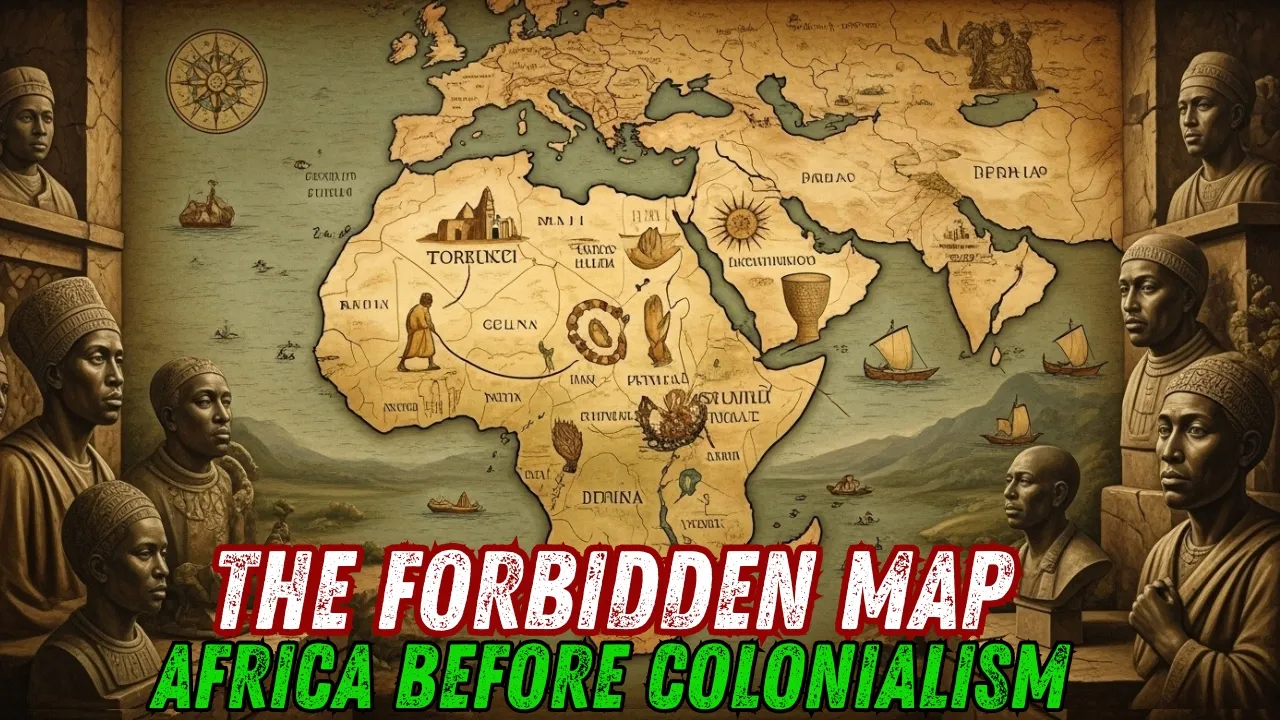























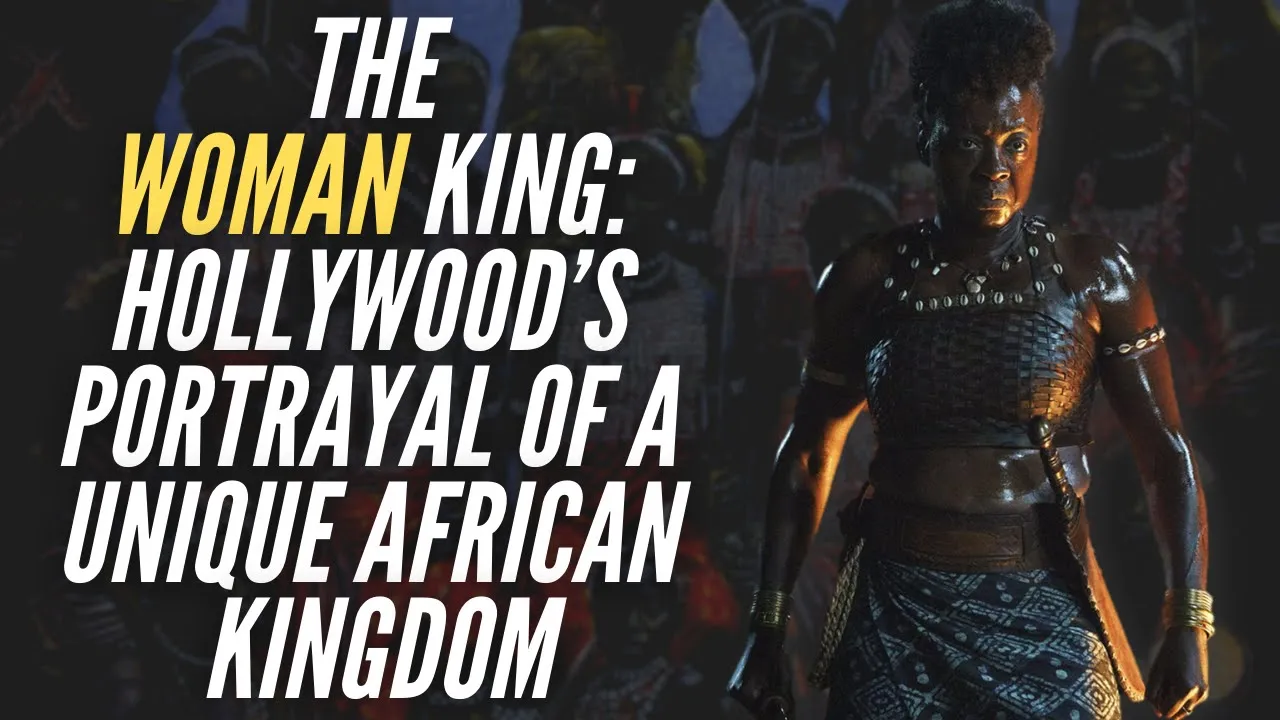

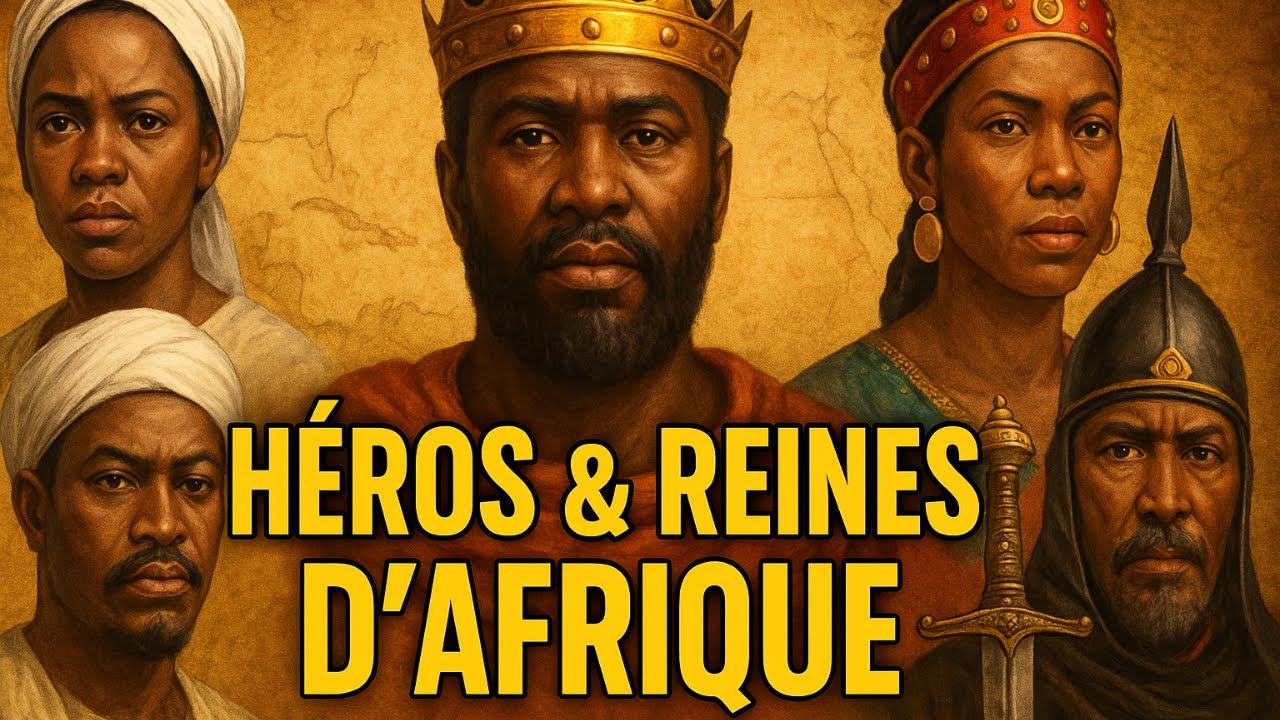


Throughout African history, women have held significant positions of power as queens, warriors, and leaders, demonstrating that African societies have long recognized women's capabilities in governance and military leadership; notable examples include Queen Hatshepsut of Egypt (1473-1458 BC), who ruled as Pharaoh and built the temple at Deir el-Bahri, Queen Amina of Zaria (1533-1567) who expanded her kingdom through military conquest, Queen Nzinga of Ndongo and Matamba (1620s-1660s) who resisted Portuguese colonization for four decades, and Yaa Asantewa of the Ashanti Confederacy (late 19th century) who led the War of the Golden Stool against British colonial rule, showing that African women have historically been capable of leading nations, commanding armies, and protecting their people's sovereignty.
13 Powerful African Queens and Their Legacies of Leadership
Added:Throughout African history, women have held positions of leadership. Whether they were queens or chiefs or leaders of movement, women have indeed written their names in the annals of African history.
Call them whatever you like. Bus laders, feminists, women rights activists, dictators.
These African queens and warriors led men to war, ruled kingdoms, and called the shots. Some even resisted European domination and colonialism.
In this video, in no particular order, we bring to your view the top 13 most powerful queens in ancient Africa.
[Music] In 1828, Rana Valona I became the sovereign ruler of the kingdom of Madagascar.
She ruled for 33 years.
After positioning herself as queen following the death of a young husband and second cousin Radama I the queen pursued a policy of isolationism and self-sufficiency.
She reduced economic and political ties with European ps repelling a French attack on the coastal town of foul point in 1832.
Renevalona forbade the practice of Christianity among the Malagasi population and within a year nearly all foreigners had left her territory.
On August 16, 1861 the queen died in her sleep. 12,000 Zebu were slaughtered and their meat distributed to the population in her honor with the official morning period lasting 9 months.
Although Reneavalona has been traditionally depicted as a cruel tyrant, modern historians view her as an astute politician who effectively protected the political and cultural sovereignty of her nation from European encroachment.
Foremost of noble women, that's the meaning of her name. Hat Shepsuit was a female pharaoh of Egypt. She reigned between 1473 and 1458 BC.
Her rule was relatively peaceful and she was able to launch a building program that would see the construction of a great temple at Luxshire. She also launched a successful seoage to the land of Pont, a place located somewhere in the northeast coast of Africa, present day Eritra and Ethiopia.
The fact that a woman became Pharaoh of Egypt was very unusual. But Hatchepsuit ruled as Pharaoh rather than wielding power as a great wife of a male king.
Initially, Hatshepsuit was to serve as a regent. She did this for 3 years until for reasons unknown, she became a pharaoh in her own right.
She took on a full throne name and statues were created depicting her as a male king right down to the beard. Soon after her death in 1457 BC, Hatsepsuit's monuments were attacked, her statues dragged down and smashed and her image and titles defaced. Although Hatpsuit was given a befitting burial in the Valley of the Kings, her memory was not honored.
Queen Amina according to the Cano Chronicles was born around the year 1533 when her mother Queen Baqua Turungu reigned in Zarya then known as a Zhao.
Zarya is now a major city in present day Kaduna state northern Nigeria. Amina's family was very rich as a result of trade in imported metals, cola, cloth, salt and horses. As a result, Amina was able to perfect her military skills with the warrior of the Zazo calvary as a young woman. Her dexterity and aristocracy eventually led her to emerge as leader of the Zazo calvary during which she acquired great wealth and numerous military honors. By the time Amina was to assume the throne of Zhao, she had matured into a fierce warrior which earned her the respect of the kingdom's military. It will be pertinent to note that during Amina's time, men did not feel threatened when women ruled or were in power and influential positions. It was a general belief among the Hower people that anyone could be in a position of authority regardless of gender. In fact, women could oust men who were not effective in their duties.
When Aminina was queen, Zazo was located at the junction of three major trade corridors of Northern Africa, connecting the Sahara with the internal markets of forest lands in the south. The fall of Shangghai and the resulting opposition for the control of trade routes among the powerful kingdoms incited continual waring among the houseser people and their neighbors during the 15th and 16th centuries.
In this continued strive for power and eminence among the houses state, Zarya for a time achieved dominance under Amina. The queen led her first military charge a few months after resuming the Zouo throne. For most of her 34 years reign, Aminina kept fighting while expanding her kingdom to its greatest in history. With an army of 20,000 men, the Haer Queen tried to enex several surrounding cities up to Nupe and conquered Cano and Katsina. The expansion of Amina's kingdom guaranteed Zarya's prosperity and she brought wealth that were unheard of to the kingdom. She boosted Hazal's wealth and power with gold slaves and agriculture.
She also introduced metal armor, including iron helmets and chain mill to her calvary. To protect the Zhao, Aminina built many fortifications around various conquered cities. Many of these walls are still existing to this day.
Candace or Candic was a name given to any queen or emperors of Ethiopia by the Europeans. And these great women were seen to be wives of the gods or the living god. Kandes of 332 BC has a particular story that still stands tall today.
Despite little knowledge of these queens, this legend made its way out.
Her actual name was said to be Amanas.
She was blind in one eye due to losing it in a battle with the Romans and was known to be a fierce, tactical, and uniting leader.
A legend in the Alexander Romans claims that when King Alexander the Great attempted to conquer her land in 332 BC, she arranged her army strategically to meet him and was present on a war elephant when he approached Ethiopia.
Having assessed the strength of her armies, Alexander decided to withdraw from Nubia, heading to Egypt instead.
This account originated from the Alexander Romans by an unknown writer.
It is commonly quoted, but there seems to be no historical reference to this event from Alexander's time. The whole story of Alexander and Candace's encounter appears to be legendary.
Ya Ashantea was an influential Ashanti queen of the Ashanti Confederacy in present day Ghana. She was a skewed farmer before ascending to the title of queen mother in the 1880s.
It is believed that she was chosen for this title due to the matrinal culture of the Ashanti people and that her elder brother Nana Aquasi Afran Akbasi who was a powerful ruler at the time appointed her to the role. As a queen mother, Ashanta held many responsibilities including being the gatekeeper of the golden stool. Additionally, since the queen mother is the main adviser for the king and thus is the second highest position within the empire, she fulfills the role of guarding the golden stool.
In 1896, the Ashanti began to rebel against the British presence in their land and the British attempt to construct the Gold Coast colony. To retaliate, the British captured and exiled Ashantene Prempe the first, king of the Ashanti and Ashante's grandson, Kofitene, who was also a powerful ruler. The British removed the king and other Ashanti leaders to the Sey Shells island in an effort to acquire the golden stone. While the remaining leaders within the community debated on how best to respond to the British threat, Ashanta held her ground and rallied troops. Her leadership and passion led to her role as commanderin-chief of the Ashanti army.
In turn, the Anglo Ashanti wars against the British became known as the Ya Ashantea war of independence or the war of the golden stool in 1900.
To inspire the leaders of the community, Ashantiva proclaimed that if the men of the kingdom would not defend the people, the women would rise to the challenge.
Her action invigorated the men and challenged traditional gender roles. She led a rebellion and became an image of strength and resistance. Unfortunately, she was captured during the rebellion and exiled to Sey Shells where she died in 1921.
Yash Shantewa is credited as the last woman to ever lead a major rebellion against European colonialists.
Abbei Ugab was a prostitute who became the only female king in colonial Nigeria in the mid 1920s.
Abbei was born at Indouziki, present day eastern Nigeria around the year 1880. When she was 13, she traveled to Egaland in search of work but couldn't get one. In the process, she resorted to become an autonomous sex worker and used it to her advantage, learning to speak diverse languages.
In addition to her evil tongue, Abby could speak egala, nupe, and pigeon English. With the money she made from prostitution, Abbeby then ventured into business, which solidified her as a successful foreigner in Egala. She traded in palm oil and horses and was one of the most influential horse traders in the Gala Eboland borders.
Around the year 1918, Abu Gabe returned home as a polygot. It gave her an undue advantage and the ability to lead the united people of Egala and Nupe to her homeland. In fact, she was the only one in her village who could communicate with a British colonialist playing a mediator or spokesperson role between the white man and her people. When Abu Gabe returned to her village, she was able to displace Ou, the man the British had put as a village headman. a headman in the British colonial system in Eastern Nigeria was to govern the village under the supervision of a divisional officer who was usually British. This system of government was unpopular among the locals and the headman was usually ceremonial. However, Ahab's rise would change everything.
Therefore, barely months after returning from exile in 1918, the British appointed Abbei as a warant chief, the only woman in colonial Nigeria to be appointed. Thus, it was permissible to the colonialists because Abbei had helped them in conquering her village.
As expected, the male chiefs resisted Ahab's appointment, especially as she was a woman. But their descent voices were subdued because of the British support for IB. As a result, to consolidate her power, she alienated them from the affairs of states. As it was anomalous for a woman to be king in Ibuland, a heavy travel to Egala, where she held a coronation, she was crowned by the ata of Egala amidst great celebrations. For a woman to be king was not strange to the Egala people, as they had once had a woman as king around the 1500s.
So the Gala people honored the new king and sang many songs enhancing Aby's kingly qualities. They did this for days. When entrenched in her reign, Abby became autocratic and with time many of the people became sick and tired of her rule. They also condemned her sacrilegious ways where she refused to consult with the chiefs, received bribes, and took other men's wives by force. However, she remained king till she died in 1948.
Her respect and all had dissipated compared to the early years of her reign. With a fear that her people might not accord her a rightful burial, she performed her own funeral rights in 1946, 2 years before her death.
Angola's Queen Enzinga is one of Africa's most celebrated women rulers who resisted European colonialization.
Enzinga Bande waged the war against the Portuguese in Angola for four decades from the 1620s to the 1660s.
Zinga's capacity as a negotiator and military strategist remains unchallenged. She was directly responsible for reducing the Portuguese colony in Lwanda, present day Angola, to a few square miles. Zinga had three main policy objectives. One, she wanted to stop the conflict between the Portuguese and her people, which destroyed the plateau of Lwanda. Two, she wanted to obtain the diplomatic recognition granted to Congo from the Portuguese.
and three. She wanted Lwanda and Europeans to develop a daily and profitable trading relationship.
In the 1630s and 1640s, she forged an alliance with Dutch slave traders and used her wealth to consolidate her position. The queen also overcame traditional Umbande resistance to women in politics, employing and banded runaway slaves and others as mercenaries against local resistance where necessary.
After continuous war against the Portuguese, she concluded a treaty with them that largely fulfilled her initial goals and her policy continued successfully until her death. Nzinga had been able to dominate Kimbundu politics for 40 years through her clever manipulations of the Portuguese and in Bengala. Her legacy if conflicting is enormous. First, she was a monarch who was able to inspire her people to resist the Europeans.
Second, she had exceptional energy, and her position as a warrior and an anti-colonialist is an excellent example of African women's dedication to self-reliance and survival values.
Zinga was able to maintain peace until her death at about 81 years. She died a Catholic and the missionary advisor she had cherished in the last 8 years of her life surrounded her deathbed.
In 960 BC, the nation that is now called Ethiopia came back upon the center of the stage of history. Ethiopia was then represented by a queen who in some books is referred to as Makibba. She is better known to the world as the queen of Sheba. Makba according to legend is the mysterious and majestic queen of Sheba and the beloved of King Solomon of Judea. However, according to the Old Testament of the Holy Bible, she is portrayed as a chased and unnamed queen of the land of Sheba who heard of the great wisdom of King Solomon of Israel and journeyed there with gifts of spices, gold, precious stone, and beautiful wood and to test him with hard questions. The queen was aed by Solomon's great wisdom and wealth and pronounced a blessing on Solomon's deity. Solomon reciprocated with gifts and everything she desired as the queen returned to her country. Mckva was apparently quite rich as she brought 4.5 tons of gold with her to give to Solomon a sign of great power and wealth. Makiva was a beautiful powerful black woman and out of love converted to Judaism. It was reported that she and Solomon both had a son Melik I who would become the first emperor of Ethiopia and established a Sulmonic dynasty.
When Yarago of Zanvara in present day northwest Nigeria reigned for 40 years from 1310 to 1350.
She expanded and relocated the capital of the kingdom from Ducey to a more strategically defendable area at Kuiamana.
Yagoj was the first daughter of Dhaka, the fifth king of Zanfara. She was not only queen, she was also head of the Buri court which was a pre-Islamic mode of worship in parts of Hower. During her reign, there were female chiefs appointed for the first time in the kingdom. The queen surrounded herself with such female chiefs who were not known before the time of her reign.
Interestingly, her reign was long and peaceful. In fact, it was a prosperous era.
Documenting the accomplishments of Quin Poku, an Ashanti ruler of the Ballay people in the first half of the 18th century, present certain problems because her life was chronicled primarily through oral history.
In recent years, however, scholars have combined African oral tradition with written European accounts to flesh out the details of the life of Puku with remarkable results. At the time of Poku's birth between 1700 and 1720, the Ashanti kingdom was still intact. She was born into royalty, the knees of the powerful Osay Tutu, the daughter of Inyaku Kosamua, who was either a sister or niece of the king. Since succession to the Ashanti throne was Matrilino, a mother's identity was more important than a father's, and the identity of Paku's father was not recorded.
She herself was important to the succession since the royal heir was a child of the king's sister or his niece.
When a new male heir succeeded to the throne, the queen mother shared power with her son. In 1718, Oay Tutu was ambushed and killed and power over the Ashanti passed Poku's brother Dakon.
During his reign which lasted for almost two decades, Poku chose a husband according to the privilege of her rank.
Much to her regret, however, since she was in line to produce the next heir to the throne, she did not become pregnant.
One day, when Don and his army were away at war from the Ashanti capital in Kumasi, enemy troops occupied the town.
All the royal princesses were killed except Buku, who arranged for the town's people to escape. Prepared to die at her post if necessary, she was instead taken hostage. And when Don returned to his empty capital, he was furious. Don appointed a warrior Tanu to lead the forces in freeing the royal princess.
And following the rescue, Tano was married to her. This marriage resulted in the birth of a baby boy ensuring an heir to the golden Ashanti throne.
Eventually Puku decided to leave Kumasi and found a new kingdom and invited Ashanti families who also wanted to leave to join her. They headed westward toward Kumo River passing through interminable jungle where according to tradition they fought panthers, giant ants and giant snakes. Sometimes they crossed savylvanas filled with belligerent elephant and serpents seemed always to lie in weight no matter what the terrain while illness also dogged their footsteps. After many months they reached the banks of the Ko River.
Faced with a raging current with no shallow forge or places for canoes to cross, Pu and her followers decided that a sacrifice must be made to the river spirits.
At first, Dita considered sacrificing a sick woman and her baby. But when they were brought to her, Puku declined. She decided that nothing less than her son would please the river spirit and threw her only child into the waters of the Ku.
It was for this event that the migrating Ashanti became known as the Bali in memory of Buku's son.
Nefertiti whose name means a beautiful woman has come was the queen of Egypt and wife of Pharaoh Akenatan from around 1353 to 1336 BC. She and her husband established the cult of Atin the sun god and promoted Egyptian artwork that was radically different from its predecessors.
A boss of Nefertiti is one of the most iconic symbols of Egypt.
Known as the ruler of the Nile and daughter of gods, Nefertiti acquired unprecedented power and is believed to have held equal status to the pharaoh himself.
Nefertiti was married to Akanetan around 1357 BC and was later promoted to be his queen. In the fourth year of Akenatan's reign, the son god Aten became the dominant national god. The king led a religious revolution closing the older temples and promoting at central role.
Nefertiti had played a prominent role in the old religion and discontinued in the new system. She worshiped alongside her husband and held the usual kingly position of priest of Atin.
By the 12th year of Akenetan's reign, Nefertiti endured unprecedented power and there is evidence that she may have even been elevated to the status of co-regent equal in status to the pharaoh himself. She's often depicted on temple walls in the same size as him signifying her importance and is shown alone worshiping the god Atton. Despite her great power, Nefertiti disappeared from all descriptions after 12 years. The reason for her disappearance is unknown and continues to remain a matter of speculation and debate.
Queen Idia was the mother of Aig, the Aba of Benin, who ruled from 1504 to 1550 in present day southern Nigeria.
She played a very significant role in the rise and reign of her son. Idia has been described as a great warrior who fought relentlessly before and during her son's reign as the Auba of Edo people. When Auba Ozula died, he left behind two powerful sons to dispute over who would become king. His son Isig controlled Benin city while another son Ahuran was based in the equally important city of Udo about 30 km away.
Idia mobilized an army around a siggee at Unoame on the river Oer which defeated Aharan and Oay became the 16th king of the Benin kingdom. Subsequently the neighboring Egala people sent warriors across the Benra river to wrestle control of Benin's northern territories. The sea conquered the Egala reestablishing the unity and military strength of the kingdom. His mother Idia received much of the credit for these victories as her political council together with her medicinal knowledge were viewed as critical element of Aig's success on the battlefield.
Hidya became the first queen mother of Benin when conferred upon her the Eyatu and the palace for her as a queen mother.
Nandi was a daughter of a chief of the Langeni tribe and the mother of the famous Shaka, king of the Zulus. In 1787, Nandi's son Shaka was born out of wedlock and she suffered great humiliation and rejection.
The women and singers also didn't waste time mocking Nandy, but she was resilient. However, she instilled good values into her son, shaping him into one of the greatest leaders in Africa.
Nandi always reminded her son that despite his circumstances, he would one day be a great king.
When Shaka became king, Nandi was to exercise a great deal of influence over the affairs of the kingdom during her son's reign. She and the other women surrounding Shaka were put in charge of the military and given the power to govern while Shaka was under campaign.
It is said that Nandi was an influence in matters of moderation in Shaka's life suggesting various political compromises to him rather than encouraging violent actions.
Through Nandi standing beside Shaka, the kingdom grew over a short period of 12 years. It is therefore understandable that King Shaka held women in high esteem because he understood their power and resilience. Nandi is not only important because she gave birth to Shaka but because of a strong will and resilience. Nandi died in 1827 and her death was deeply mourned by her son and the Zulu people.
Which of these African queens fascinate you the most? Are there other African queens whose stories you would like to tell us? Let us know in the comments below. If you enjoyed the video, don't hesitate to like and share with your friends. Would you like to know more about King Shaka and other powerful African kings? Check that out in our next video. You can also subscribe to our channel to receive the latest videos as they drop.
Up Next

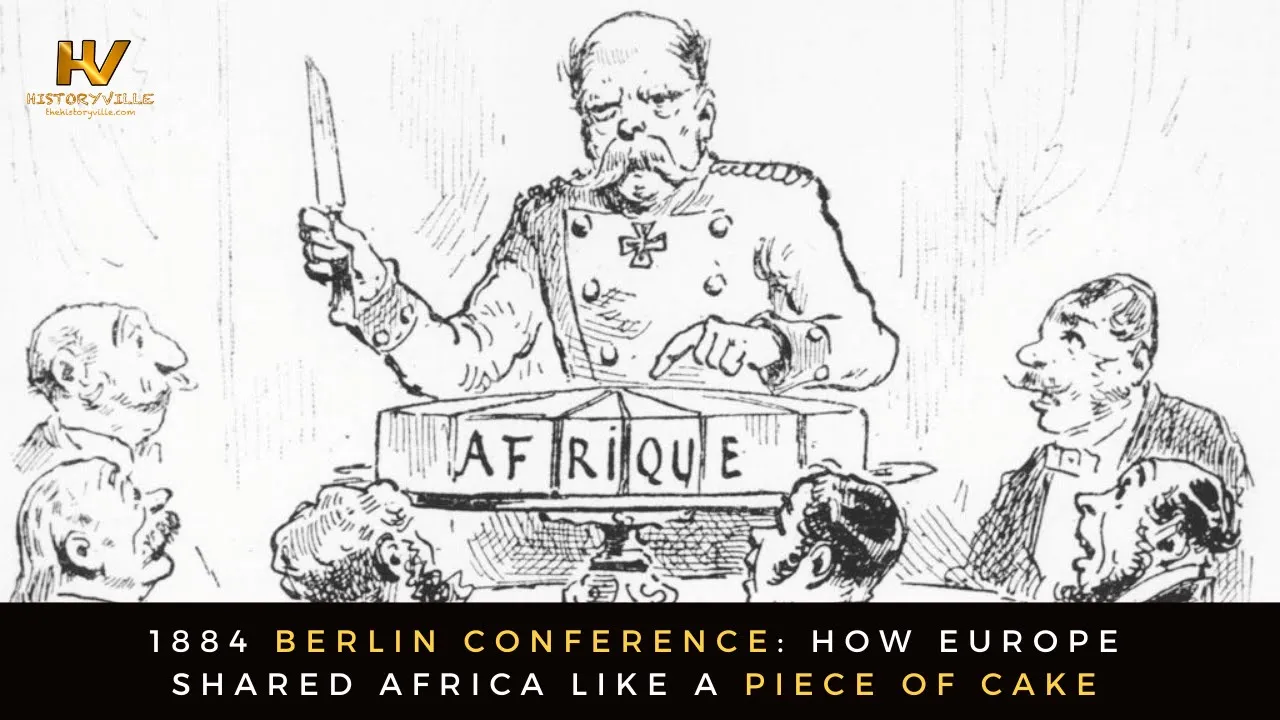
The Berlin Conference of 1884: Africa's Colonial Partition
@PanaGeniusTV
240.7K views•2025-05-03

The Great Schism of 1054: Causes and Consequences
@SacredCathedrals
113.5K views•2026-02-19
The Berlin Conference 1884-1885: The Scramble for Africa Explained
@HistoryVille
114.1K views•2022-05-30

Understanding the Cold War: Superpower Conflicts and the Road to Détente
@OverSimplified
46.1M views•2019-01-24
Related Study Plans & Knowledge Roadmaps
Structured learning paths in History