






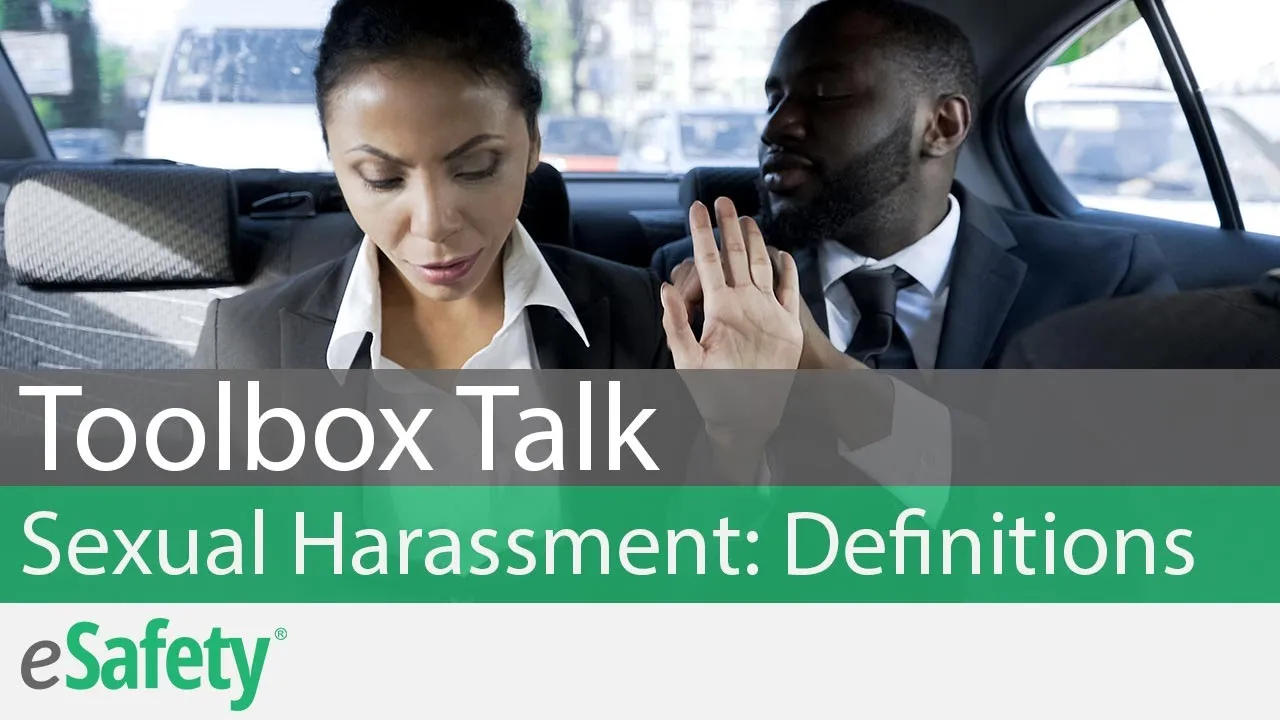



























Sexual harassment is any unwelcome conduct based on gender, gender identity, gender expression, or sexual orientation that subjects an employee to inferior terms of employment, creates a hostile work environment, or involves quid pro quo exchanges of job benefits for sexual favors; it encompasses a wide range of behaviors from inappropriate comments to physical conduct, and applies to all employees regardless of their position or relationship to the harasser, with protections extending to domestic workers and remote work environments.
Sexual Harassment Prevention Training in New York State
Added:Understanding the basic definition of workplace discrimination and the role of the Equal Employment Opportunity Commission (EEOC).
Familiarity with foundational federal employment laws, specifically Title VII of the Civil Rights Act of 1964.
The conceptual distinction between 'Quid Pro Quo' and 'Hostile Work Environment' types of harassment.
Basic knowledge of organizational structures, including the roles of Human Resources (HR), management, and employees.
Exploring specific New York City (NYC) local laws and mandates, which often impose stricter regulations than New York State laws.
Studying advanced bystander intervention strategies to actively foster a safe and supportive workplace culture.
Understanding the legal procedures for filing, investigating, and documenting internal complaints for HR personnel.
Analyzing employer liability, retaliation laws, and the legal protections available to whistleblowers.
Developing and implementing comprehensive organizational Diversity, Equity, and Inclusion (DEI) policies.
658.9K views1.5Klikes54:06Original Release: 2023-04-11
Hello and welcome to the New York State Sexual Harassment and Discrimination Prevention Annual Training.
My name is Roberta Reardon and I am the Commissioner of the New York State Department of Labor.
Throughout this training, you'll be asked to participate in a number of interactive case studies and exercises to help you better understand sexual harassment and discrimination, and what you should do if you experience or witness sexual harassment or discrimination.
Sexual harassment and discrimination are phrases that we all have heard, and may mean different things to different people, depending on their life experiences.
But there is a legal meaning that governs workplaces in New York State, that sets a standard we all need to understand and follow, and that's what we're going to talk about today.
Sexual harassment is any behavior that subjects an employee to inferior conditions of employment due to their gender, gender identity, gender expression (perceived or actual) and/or sexual orientation.
Harassment and discrimination are often intersectional, meaning other identities, including an individual's race, ability, or immigration status may impact their experience with gender discrimination in the workplace.
How we identify affects how we perceive the world and how the world perceives us.
Individuals bring personal history with them to the workplace that might impact how they interact with certain behavior.
It is especially important for all employees to be aware of how words or actions might impact someone with a different experience than their own in the interests of creating a safe and equitable workplace.
The purpose of this interactive training is to set forth a common understanding about what is and what is not acceptable in New York State workplaces.
So we can all recognize discrimination and understand their rights to a safe workplace.
This subject matter can be difficult for some, based on past experiences.
If anyone needs to take a break, feel free to pause this training or return to it later.
New York State is committed to ensuring that all individuals have an equal opportunity to enjoy a fair, safe, and productive work environment.
Laws and policies help ensure that diversity is respected and that everyone can enjoy the privileges of working in New York State.
Preventing sexual harassment and gender discrimination is critical to our continued success.
Sexual harassment and discrimination are unacceptable.
Any harassing or discriminatory behavior will be investigated.
Disciplinary action, such as counseling or reassignment, may be taken, if appropriate.
If the behavior is sufficiently serious, disciplinary action may include termination.
Repeated behavior, especially after an employee has been told to stop, is particularly serious and will be dealt with accordingly.
This interactive training will help you better understand what is considered sexual harassment and discrimination.
This training will also show you how to report sexual harassment in our workplace, as well as your options for reporting workplace sexual harassment to external, state and federal agencies that enforce anti-discrimination laws.
These reports will be taken seriously and promptly investigated, with effective action taken where appropriate.
Retaliation against anyone making a report of harassment or discrimination is not allowed and will be punished.
Sexual harassment is a form of gender based discrimination and it is unlawful under federal, state and (where applicable) local law.
Sexual harassment includes harassment or discrimination on the basis of sex, gender, sexual orientation, self-identified or perceived sex, gender expression, gender identity, and the status of being transgender.
It is not limited to sexual contact, touching or expressions of a sexually suggestive nature.
Sexual harassment includes all forms of gender discrimination, including gender role stereotyping and treating employees differently because of their gender.
Sexual harassment is unlawful when it subjects an individual to inferior terms, conditions or privileges of employment because of their gender, gender identity or gender expression.
Understanding gender diversity is essential to recognizing sexual harassment because discrimination based on sex stereotypes, gender expression and perceived identity are all forms of sexual harassment.
The gender spectrum is nuanced, but the three most common ways people identify are cisgender, transgender, and non-binary.
A cisgender person is someone whose gender aligns with the sex they were assigned at birth.
Generally, this gender will align with the binary of male or female.
A transgender person is someone whose gender is different than the sex they were assigned at birth.
A non-binary person does not identify exclusively as a man or a woman.
They might identify as both, somewhere in between, or completely outside the gender binary.
Some may identify as transgender, but not all do.
Sexual harassment includes unwelcome conduct, which is either of a sexual nature, or which is directed at an individual because of that individual's gender identity when: 1: The purpose or effect of this behavior unreasonably interferes with an individual's work performance or creates an intimidating, hostile or offensive work environment.
The impacted person does not need to be the intended target of the sexual harassment.
2: Employment depends implicitly or explicitly on accepting such unwelcome behavior. Or 3: Decisions regarding an individual's employment are based on an individual's acceptance to or rejection of such behavior.
Such decisions can include what shifts and how many hours an employee might work, project assignments, as well as salary and promotion decisions.
Under New York State law, harassment does not need to be “severe or pervasive” to be unlawful.
Any of the harassing conduct described in this training can be unlawful if it rises above “petty slights or trivial inconveniences.” Every instance of harassment is unique to the person experiencing it, so there is no single boundary between petty slights and harassing behavior.
The law states that whether conduct is petty or trivial is to be viewed from the standpoint of a reasonable individual with the same protected characteristics.
Generally, any behavior in which an employee or covered individual is treated worse because of their perceived or actual gender, sexual orientation, or gender expression is considered a policy violation.
The intent of the perpetrator does not affect whether behavior is harassment.
The impact of the behavior on an individual is what counts.
Now, we'll begin with the first case study of this training.
Before we begin, visit on.ny.gov/prevention to download or print the training's accompanying form so you can track your answers to the questions I ask during each case study.
After you’ve completed the training, be sure to sign, date, and save the form and share it with your employer.
Let's get started.
Case Study 1: Accidentally on Purpose.
June started a new job at a restaurant three months ago and she is slowly getting to know her coworkers.
While sharing a meal before the dinner rush, her manager John asks her if she has a boyfriend.
June tells John that she would prefer not to talk about her personal life at work.
He nods and changes the subject.
June's manager asked her a personal question that made her uncomfortable.
Was this sexual harassment?
No. Though John’s question may have felt awkward to June, it was not, in itself, an act of harassment.
John did not pursue the question when she said she would prefer not to talk about it.
It did not rise above a trivial inconvenience to a level of harassment or discrimination.
In the weeks that follow, whenever John is near June, he complains about how hard it is for him to date, discusses his past romantic relationships in detail, and asks June's advice on how to flirt with other women, often pointing out specific candidates.
June repeatedly reminds John she would prefer not to talk about personal lives at work, but he ignores her and continues to make unwelcome comments.
June finds herself avoiding him whenever she can.
True or false?
John's behavior has escalated above a trivial inconvenience to sexual harassment.
If you answered true, you are correct.
Each instance of sexual harassment is unique to the individual.
In June's case, she made clear to John she was uncomfortable discussing any personal matters at work.
Despite acknowledging this, John continued to cross June's boundaries, inquiring about her romantic history and discussing sexual relationships at work.
June's work life is impacted as she has adjusted the way she goes about her work to avoid interacting with John whenever she can.
This appears to have escalated to a hostile work environment.
A hostile environment as harassment.
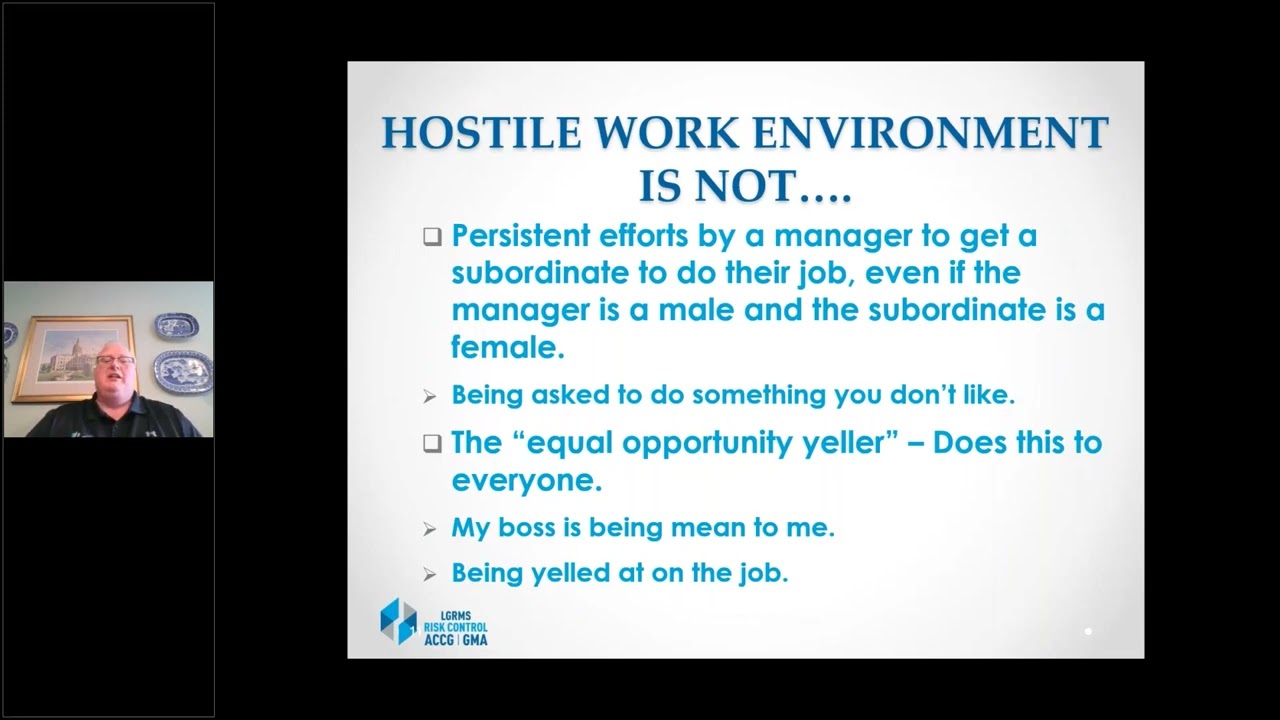
A hostile environment on the basis of gender, gender identity, or gender expression may be created by unwanted words, signs, jokes, pranks, intimidation, physical actions, or violence either of a sexual nature or not of a sexual nature, directed at an individual because of that individual's gender.
Hostile environment sexual harassment includes: sexual or discriminatory displays or publications anywhere in the workplace, such as displaying pictures, posters, calendars, graffiti, objects, promotional material, reading materials, or other materials that are sexually demeaning or pornographic.
This includes such displays on workplace computers or cell phones and sharing such displays while in the workplace, as well as anything on display in the background of an individual's work from home set up during a virtual meeting.
This also includes sexually oriented gestures, noises, remarks, jokes or comments about a person's sexuality, romantic history, or sexual experience.
Hostile actions taken against an individual because of that individual's gender, such as rape, sexual battery, molestation, or attempts to commit these assaults. Physical acts of a sexual nature (including but not limited to touching, pinching, patting, grabbing, kissing, hugging, brushing against another employee’s body or poking another employee’s body).
Interfering with, destroying or damaging a person's workstation, tools or equipment, or otherwise interfering with the individual's ability to perform the job. Sabotaging an individual's work or excluding an individual from work meetings. Bullying, yelling, name-calling, including the intentional misuse of preferred pronouns.
A hostile work environment can exist in a physical office space as well as through a remote work setup.
Any of the behaviors described above that can also happen through virtual means, such as verbal harassment during a video meeting, messages through web-based chat applications, or holding different expectations for employees based on their gender, constitute gender discrimination.
Case Study 2: One Moment in Time.
Whitney is a paralegal at a large law firm that has adopted remote work as the primary way most employees work.
As the firm transitioned to remote work, there were growing pains, and for a period of time, employees relied on their personal phones and email accounts to stay in touch while working from home.
Though employees now have access to their work emails and phone numbers, on occasion a lawyer Whitney works with closely, Xander, will text her questions on her personal cell phone.
One night, Xander texts Whitney a sexually explicit image.
True or false?
Xander sent the image from his personal phone to Whitney's personal phone, so this is not a workplace issue.
The answer here is false.
Though the incident did not happen in the workplace, harassment can occur wherever and whenever work takes place.
Employee behaviors outside of work hours that might impact the workplace are covered under this policy.
In this instance, though the photo was sent outside work hours, it might impact Whitney's relationship with Xander at work.
Xander's behavior is covered by the sexual harassment prevention policy.
The next day, after she did not respond, Xander sends Whitney a text apologizing for the night before and states that the image was meant for someone else.
A few weeks later, during a one-on-one meeting discussing a case over Zoom, Xander comments on the fact that Whitney's home workstation is set up in her bedroom and jokes that he would love a virtual tour of “where the magic happens.” Uncomfortable, Whitney finds an excuse to end the meeting quickly after that.
Later that same week, Xander sends Whitney a direct message during an all-firm Zoom meeting, telling her he can't stop thinking about her in her bedroom during the workday.
True or false, a hostile work environment cannot exist while working from home.
If you answered false, you are right.
The remote workspace is an extension of the office.
Regardless of where the employees logging in from, any virtual video or text based platform is a work environment and harassment and discrimination and that takes place over these platforms constitute a hostile work environment.
Working Twice as Hard.
Sandra is a first year resident intern at a teaching hospital in Buffalo.
She is the only Black woman in her intern class.
She and her intern peers attend rounds every day with Dr. Grey. When asking interns questions, Sandra feels as though Dr. Grey holds her to a higher standard than the other interns.
He frequently makes comments about her ignorance and belittles her answers to his questions, though her responses are in line with her fellow residents.
One day, as they are walking between patient rooms, Sandra hears Dr. Grey tell a fellow intern that Sandra must have been a diversity hire. Upset, Sandra confides in her fellow intern Justin about what she overheard.
Justin tells Sandra that he understands she's upset, but she should not read too much into it.
Justin is also Black and he has never felt that Dr. Grey treated him differently than their non-Black peers.
When Dr. Grey is hard on them It is because he wants them all to be great doctors.
Sandra follows Justin's advice and does not make a formal complaint.
As the months go by, Dr. Grey continues to bully Sandra during rounds, including rolling his eyes when she speaks and reacting dramatically when she gives wrong or incomplete answers, behavior that he doesn’t exhibit toward any of her fellow residents, and that embarrasses her in front of colleagues and patients.
Recently, his comments have started to venture away from her medical knowledge.
Dr. Grey has been commenting that Sandra needs to make more of an effort in her appearance if she wants to be respected as a professional, including wearing makeup and straightening her natural hair.
When Sandra complains to her fellow intern, Monica, who's white, Monica shrugs off Sandra's concerns because Dr. Grey has never made her feel uncomfortable with personal remarks.
True or false?
Dr. Grey’s conduct is likely racial discrimination.
True.
Though Dr. Grey may assert his bullying of Sandra is not based on her race, his comments that she must be a “diversity hire” and that she should straighten her natural hair suggest a racial motivation.
The fact that other Black colleagues have not felt mistreated based on race doesn’t matter to Sandra’s experience.
True or false?
Dr. Grey’s conduct is likely sexual harassment.
The answer is true.
Again, even if other women in her intern class feel respected, Sandra has experienced belittling behavior and remarks regarding her appearance that appear to be discriminatory based on her gender.
This behavior likely meets the legal standard in New York for harassment, as it rises above a petty slight or trivial inconvenience.
In Sandra's case, her identities as Black and a woman intersected to create a situation where she was seemingly targeted for harassment by her supervisor.
It was also the case for Sandra that these overlapping instances of harassment created a potentially hostile work situation.
Quid pro quo sexual harassment occurs when a person in authority trades, or tries to trade, job benefits for sexual favors.
This type of harassment usually occurs between an employee and someone with authority, like a supervisor, who has the ability to grant or withhold job benefits.
Quid pro quo sexual harassment includes: Offering or granting better working conditions or opportunities in exchange for a sexual relationship; Threatening adverse working conditions (like demotions, shift alterations or work location changes) or denial of opportunities if a sexual relationship is refused; Using pressure, threats or physical acts to force a sexual relationship; Retaliating for refusing to engage in a sexual relationship.
Case Study 4: Shaken, Not Stirred.
Jamila is a bartender at a popular Brooklyn restaurant.
She's been with the restaurant for a month and is hoping to be scheduled during the popular Friday and Saturday night shifts.
Her manager, Jason, creates the shift schedule.
She tells him she feels confident in her position and that she knows the restaurant patrons well enough to be scheduled for the high tipping weekend shifts.
He tells her “We'll see.
We have a lot of qualified bartenders.” A week later, Jamila and Jason are closing after a Wednesday night shift.
Jason pours them both a shot of tequila, asks Jamila to join them at the bar and tells her that he hopes he'll be able to give her some weekend shifts.
He tells her that some other bartenders have been with the restaurant longer, but she's the one he wants.
Jason places his hand on Jamila's knee and encourages her to drink the tequila.
Jamila quickly takes the shot before jumping off the barstool and finishing her closing tasks.
True or false?
Jason's behavior could be harassment of Jamila.
If you answered true, you are correct.
Jason's behavior as Jamala’s boss is inappropriate, and Jamila should feel free to report the behavior if it made her uncomfortable.
Jason's behavior at this point may or may not constitute quid pro quo harassment.
Jason has made no promise or threat to Jamila that he will handle her shift schedule differently based on how she responds to his advances.
However, his discussion of shifts while making what could be seen as a sexual advance might be considered potentially coercive.
If Jason continues to make advances, even if he never makes or carries out any threat or promise about job benefits, this could create a hostile environment for Jamila, for which the restaurant owner could be strictly liable because Jason is her supervisor.
After a week of continuing to receive less desirable shifts, Jamila asks Jason again if he would schedule her for a Friday or Saturday night.
He says that he's not sure, but there's still time for her to “make it worth his while.” He then asks her to come home with him after work that night.
Jamila, who really needs the extra cash a Saturday night shift will bring in tips, decides to go home with Jason.
Almost every week they go out at Jason's insistence and engage in sexual activity.
Jason begins scheduling Jamila for Friday and Saturday evenings.
Jamila does not want to be in a relationship with Jason and is only going out with him because she believes that he will change her schedule away from the busier shifts.
True or false?
Jamila cannot complain of harassment because she voluntarily engaged in sexual activity with Jason.
If you answered false, you are correct.
Because the sexual activity is unwelcomed by Jamila, she is a target of sexual harassment.
Equally, if she had refused Jason's advances, she would still be a target of sexual harassment.
The offer to Jamila to trade job benefits for sexual favors by someone with authority over her in the workplace is quid pro quo sexual harassment, and the employer, in this case the restaurant owner, is exposed to liability because of its manager's actions.
Can Jamila complain of harassment if she got the shifts she wanted?
Yes. Jamila can be sexually harassed even if she receives a benefit.
After several months during which she believes she has proven herself an asset during the weekend rush, Jamila breaks off the sexual activities with Jason.
He immediately changes her schedule and places her in less desirable shifts with fewer customers and lower tips.
True or false?
It is now too late for Jamila to complain.
Her relationship with Jason was consensual, so there is no proof she is receiving less favorable shifts due to the breakup.
False.
Jason’s conduct constitutes quid pro quo sexual harassment; whether or not Jamila accepts and benefits from or rejects and is harmed by it is irrelevant.
Sex stereotyping equals Gender Discrimination.
Sex stereotyping is a form of gender discrimination.
Sex stereotyping occurs when someone's conduct or personality traits are judged based on other people's ideas or perceptions about how individuals of a particular sex should act or look.
Harassing a person because that person's gender expression does not conform to gender stereotypes such as “appropriate” looks, speech, personality, or lifestyle is sexual harassment.
Harassment because someone is performing a job that is usually performed, or was performed in the past, mostly by persons of a different sex, is gender discrimination.
Finally, assigning work tasks based on traditionally gendered roles, such as placing a woman in charge of refreshments or a man in charge of moving boxes, is gender discrimination.
Sex Stereotyping Exercise.
Please select which of the scenarios below are examples of sex stereotyping and, therefore, potential grounds for a gender discrimination claim: 1. Amy is a steel worker with 25 years of experience.
Her supervisor, Gus, always assigns a male coworker to partner with Amy on any project she’s assigned. Similar projects he assigns to Amy's male coworkers to accomplish solo.
When Amy confronts Gus, he explains that he just wants her to be safe as she is the only woman in a tough job.
2. Frank is an administrative assistant at a popular production company.
He applies for an internal promotion to serve as administrative assistant to the company's executive director, which will involve greeting several high level guests when they come to meet the director.
Frank is genderfluid and he wears makeup and dresses on occasion.
Though more qualified than other candidates, Frank does not receive the promotion.
The Executive Director explains that while he supports Frank’s “lifestyle,” many of his guests are “more traditional” and would “not be comfortable” with Frank as their first point of contact.
3.
A finance firm hosts regular quarterly luncheons for their most important clients.
At every luncheon, the CEO, Peter, directs all his questions regarding the logistics of the luncheon to Susan, the Vice President Pete works with and only woman in a leadership position at the firm, despite the fact that Ronald, the organizer of the lunches, is also in the room.
4. George, is the primary caregiver for his young son as he works from home for a tech company while his wife goes into the office.
George's toddler has been known to interrupt video meetings, but George's output is impeccable.
Still, George is often left out of meetings because his boss does not want to deal with “Mr. Mom.” If you wrote down 1 through 4, you are correct.
Sexual harassment can occur between any individuals, regardless of their sex or gender.
New York law protects employees and additional covered individuals, including paid and unpaid interns, applicants for employment, a contractor, subcontractor, vendor, consultant, or anyone providing services in the workplace.
This includes independent contractors, gig workers, and temporary workers.
Also, people providing equipment repair, cleaning services, or any other services through a contract with your employer.
The perpetrator of sexual harassment can be anyone in the workplace.
The harasser can be a coworker of the recipient.
The harasser can be a supervisor or manager.
The harasser can be any third-party, including a non-employee, intern, vendor, building security, client, customer, or visitor.
Harassment can occur whenever and wherever employees are fulfilling their work responsibilities, including in the field, at any employer-sponsored event, trainings, conferences open to the public and office parties.
Harassment can also occur when employees are working remotely over video meeting platforms and web-based chat applications.
Employee interactions during non-work hours, such as at a hotel while traveling or at events after work, can have an impact in the workplace.
Locations offsite and off-hour activities can be considered extensions of the work environment.
Employees can be the target of sexual harassment or discrimination through calls, texts, email, and social media.
Harassing behavior that in any way affects the work environment is rightly the concern of management.
Harassment Scenario Interactive Exercise Which of the scenarios are a reason an employee might file a harassment or discrimination claim?
Note all that apply.
1. A patient harasses his at-home caregiver.
2. A customer asks a waitress to remove her mask so he can decide how much to tip.
3. An employee frequently comments with with discriminatory language on a coworker's social media posts.
4. An employee gets handsy with his colleague at a hotel bar during a conference.
5. A copy repair person tells jokes that are degrading towards women while fixing the copier.
6. Cleaners employed by the building an organization rents space in discuss their sexual prowess loudly.
Seven.
A hotel guest gropes a housekeeper as she walks by.
If you said all of the above, you are correct.
What can you do if you witness harassment or discrimination happening?
Below are five methods of bystander intervention to use when witnessing harassment: A bystander can interrupt the harassment by engaging with the individual being harassed and distracting them from the harassing behavior.
A bystander who feels unsafe for interrupting on their own can ask a third party to help intervene in the harassment.
A bystander can record or take notes on the harassment incident to benefit a future investigation.
A bystander can check in with a person who has been harassed after the incident, see how they are feeling and let them know the behavior was not okay.
If a bystander feels safe, they can confront the harassers and name the behavior as inappropriate.
When confronting harassment, physically assaulting an individual is never an appropriate response.
Bystander intervention Interactive Exercise.
What method of bystander intervention is being used in the examples below?
Hotel cleaner Frances is walking down an empty hallway between rooms.
A guest pushes her up against the wall and attempts to assault her just as hotel bellhop Tony comes out of the elevator.
Tony places himself between Frances and the guest and tells the guest he is behaving inappropriately.
This is an example of what kind of bystander intervention?
This is an example of a bystander confronting the behavior directly.
Kyle is asking Sheila about her dating life.
Sheila says she does not want to talk about it at work, but Kyle keeps asking about it.
Taylor asks Sheila to review a slide deck she's working on.
This is an example of what kind of bystander intervention?
In this situation, the bystander engages and distracts the person being harassed.
Bartender Leslie notices a restaurant customer brushing up against his waitress, Danielle, touching her arm or leg every time she comes to the table.
Leslie tells her supervisor, who intervenes and allows Danielle to switch table assignments.
This is an example of what kind of bystander intervention?
In this scenario, the bystander intervenes by asking a third party for help.
Any employee who has engaged in “protected activity” is protected by New York State law from being retaliated against because of that “protected activity.” “Protected activities” related to harassment and discrimination include: Making a complaint to a supervisor, manager or another person designated by your employer to receive complaints about harassment or discrimination.
Making a report of suspected harassment, even if you are not the target of harassment.
Filing a formal complaint about harassment or discrimination with a government agency.
Intervening to prevent or mitigate an incident of harassment or discrimination.
Assisting another employee who is complaining of harassment.
Providing information during a workplace investigation of harassment or testifying in connection with a complaint of harassment filed with a government agency or in court.
Retaliation is unlawful and is any action that might discourage a worker or covered individual from coming forward to make or support a sexual harassment claim or punishes those who have come forward.
These actions need not be job-related or occur in the workplace to constitute unlawful retaliation.
For example, threats of physical violence outside of work hours or disparaging harassing someone on social media would be considered retaliation.
Additional examples of retaliation might include, but are not limited to: demotion, termination, denying accommodations, reduced hours or the assignment of less desirable shifts.
Publicly releasing private information in personnel files.
Refusing to provide a requested factual reference or providing an unwarranted negative reference.
Labeling an employee as “difficult” and excluding them from projects to avoid “drama.” Undermining an individual's immigration status.
Reducing work responsibilities, passing over for a promotion, or moving an individual's desk to a less desirable office location.
A negative employment action is not retaliation merely because it occurs after the employee engages in protected activity.
Employees continued to be subject to all job requirements and disciplinary rules after having engaged in such activity.
In assessing an employee's job performance and potential discipline before and after engaging in protected activity, supervisors and managers should be sensitive to the impact of discrimination on work and how that might impact performance.
Case Study 5: Domestic Disturbance.
Maria is a domestic worker hired as a nanny by Dan and Lisa.
One day while helping their daughter Jovie clean up her toys, Maria enters the hallway just as Dan is emerging from the bathroom.
Having just showered, Dan is wearing only a towel.
Flustered and embarrassed, Dan apologizes and runs to the bedroom to get dressed.
True or false?
Dan appearing in only a towel is harassment.
The correct answer is false.
In this case, Maria and Dan's interaction is accidental.
Dan did not mean for Maria to see him in a semi-dressed state.
He immediately apologized and vacated the shared space.
Maria focuses on caring for Jovie, and after some initial awkwardness, she and Dan have a professional, if distant relationship.
Lisa serves as the primary employer overseeing Maria's schedule and paychecks.
Though not typically scheduled for the weekends, Maria agrees to work overtime to help Dan while Lisa is away on business, one weekend. Without Lisa in the home, Dan sits and stands very close to Maria, frequently brushing up against her and at one point patting her butt.
As a domestic worker, is Maria protected?
against sexual harassment?
Yes, Maria is protected.
All employers in New York State, regardless of size, including households employing a single domestic worker, are required to adopt a sexual harassment policy.
Maria is covered by the state's human rights law against sexual harassment and discrimination.
If Maria feels safe, she can report the incident to her employer.
Lisa.
If she does not trust Lisa to act, she can file a complaint with the New York State Division of Human Rights.
When Lisa returns, Maria reports Dan's inappropriate behavior to Lisa.
Maria cares for Jovie and Lisa and wants to keep her job, but she tells Lisa she does not feel safe being left alone with Dan.
Lisa tells Maria she appreciates her honesty.
That evening, Lisa writes a post in her online neighborhood mom group warning families not to hire Maria because she's bad at her job and will try to seduce their husbands.
True or false? Lisa did not fire Maria, so her online post is not retaliation.
The correct answer is false.
Harassment and retaliation do not need to happen in the workplace.
Such a post will make it very difficult for Maria to find a new job, should Lisa decide to fire her or should Maria decide working for Dan is no longer possible.
This punishes Maria for coming forward with Dan's harassment and leaves her in a position of weakness.
Supervisors and managers are held to a higher standard of behavior.
This is because they are placed in a position of authority by the employer and must not abuse that authority.
Their actions can create liability for the employer without the employer having any opportunity to correct the harassment.
They are required to report any harassment that is reported to them or which they observe.
They are responsible for any harassment or discrimination that they should have known of with reasonable care and attention to the workplace for which they are responsible.
And they are expected to model appropriate workplace behavior.
Supervisors must report any harassment that they observe or know of, even if no one is objecting to the harassment.
If a supervisor or manager receives a report of harassment, or is otherwise aware of harassment, based on a protected characteristic, it must be promptly reported to the employer, without exception, even if the supervisor or manager thinks the conduct is trivial; or even if the harassed individual asks that it not be reported.
Supervisors and managers will be subject to discipline for failing to report suspected sexual harassment or otherwise knowingly allowing sexual harassment to continue.
Supervisors and managers will also be subject to discipline for engaging in any retaliation.
While supervisors and managers have a responsibility to report harassment and discrimination, mandatory reporting is not always victim-centered.
Being identified as a possible victim of harassment and questioned about harassment and discrimination can be intimidating, uncomfortable and re-traumatizing for individuals.
Supervisors and managers must accommodate the needs of individuals who have experienced harassment to ensure the workplace is safe, supportive, and free from retaliation for them during and after any investigation.
Case Study 6: Call Me By My Name.
Erin is a trans woman who works at a marketing firm.
She has been with the company for 20 years and has come out and transitioned while with the company over the past seven years.
At this point, all her coworkers know her as Erin and her preferred pronouns of she/her/hers.
Though she has support from leadership and the majority of her coworkers, Erin's colleague Vanessa continues to refer to Erin by the name she received at birth and no longer uses (otherwise known as dead naming) while also continuing to use he/him pronouns.
When Erin asked Vanessa to stop, Vanessa stated being transgender violated her religious beliefs.
Erin reported the treatment to her supervisor, Jessica.
Jessica sympathized with Erin, but advised her to just let it go because Vanessa would be retiring soon.
True or false?
Erin can file a complaint against Vanessa and Jessica for gender discrimination.
The correct answer is true.
As a supervisor, Jessica is required to report any claim of gender discrimination. By telling Erin to ignore the behavior, Jessica is not fulfilling the responsibilities of a manager.
Vanessa also does not have the right to intentionally ignore Erin's preferred name and pronouns.
Under the Human Rights Law, personal religious belief is not a justifiable defense for discrimination.
Erin can file a claim of potential gender discrimination by both Vanessa and Jessica to her company’s HR department or the New York State Division of Human Rights.
If you experience sexual harassment, you are urged to report internally and have the option of complaining externally to a government agency.
If you are a manager or supervisor who observes or experiences sexual harassment, you are obligated to report internally.
All employees should cooperate with an internal investigation.
Behavior does not need to violate the law to violate the policy.
Even if employees are unsure of what they experienced or witnessed, is harassment or discrimination, they have the right to report it in good faith.
Your employer is responsible for providing you with a complaint form to report harassment and file complaints, but if you are more comfortable reporting verbally or in another manner, that's fine.
All claims will be investigated regardless of how they are reported.
Your employer should designate a person or office to accept and investigate all complaint forms.
You may also make reports verbally to your manager, supervisor, or any person or office designated by your employer.
Once you submit this form or otherwise report harassment, your organization must follow its sexual harassment prevention policy and investigate any claims.
If you report harassment to a manager or supervisor and receive an inappropriate response, such as being told to “just ignore it,” you may take your complaint to the next level as outlined in our policy under “Legal Protections And External Remedies.” Finally, if you are not sure you want to pursue a complaint at the time of potential harassment, document the incident to ensure it stays fresh in your mind.
Anyone who witnesses or becomes aware of potential instances of sexual harassment or discrimination should report them to a supervisor, manager, or designee.
If you are a manager or supervisor, you must report them.
It can be uncomfortable and scary, but if you feel safe, tell coworkers “that's not okay” when you witness harassment happening in front of you.
It is unlawful for an employer to retaliate against you for reporting suspected sexual harassment or discrimination or assisting in any investigation.
Anyone who engages in sexual harassment, discrimination, or retaliation will be disciplined through education, counseling, suspension, or termination, if appropriate.
As an employee or manager it is not up to you to make a conclusive decision if a certain action based on a protected characteristic is harassment.
By making a report in good faith, you ensure that an investigation will happen to determine if the action was discrimination or harassment.
Your company will investigate all reports of harassment, whether information was reported in verbal or written form.
An investigation of any complaint should be commenced promptly and completed as soon as possible.
The investigation will be kept confidential to the extent possible.
Any employee may be required to cooperate as needed in an investigation of suspected sexual harassment or discrimination.
It is illegal for employees who participate in any investigation to be retaliated against.
Your organization also has a duty to take appropriate steps to ensure that harassment will not occur in the future.
Here is how claims should be investigated. The individual or department designated will conduct prompt review of the allegations, and take any interim actions, as appropriate, including creating a safe and amicable work environment for all those involved.
Relevant documents, emails or phone records will be requested, preserved and obtained.
Interviews will be conducted with parties involved and witnesses.
Investigation will be documented as outlined in the sexual harassment policy.
The individuals who complained and the individuals accused of sexual harassment are notified that there has been a resolution and that appropriate administrative action has been taken.
Case Study 7: Banking on You.
Sawyer is a manager at a mid-sized bank.
Sawyer recently began dating Hayden, a teller at the bank.
After three months of dating, Hayden breaks up with Sawyer.
Though the two agree to act professionally at work, Sawyer takes the breakup hard.
As manager, Sawyer is sure to assign Hayden's shifts so they are always at the bank at the same time.
Sawyer creates special projects to work one on one, with Hayden ensuring the two are alone while at the bank. More than once, Sawyer uses these sessions to urge Hayden to give their relationship another chance.
Hayden is firm that their romantic relationship is over.
True or false?
This is not sexual harassment because Sawyer and Hayden were in a consensual relationship, and Sawyer's behavior is typical of anyone dealing with a hard breakup.
If you answered false, you are correct.
Having a prior relationship does not give Sawyer the right to harass Hayden at the workplace.
Continually asking for dates after someone says no can be a form of harassment, even if there was a prior relationship. The frequent requests, coupled with the isolation from other coworkers, can leave Hayden feeling unsafe at work.
Frustrated that Hayden will not reconsider their relationship, Sawyer begins complaining to coworkers about Hayden's perceived cruelty.
While complaining, Sawyer frequently divulges personal information about their romantic relationship and Hayden's private life.
True or false?
This is a personal issue between Sawyer and Hayden and coworkers should not get involved.
The answer is false.
Employees have a right to report harassing or discriminatory behavior, even if they are not the subject of the harassment.
In this instance, an employee might wish to report harassing behavior on behalf of Hayden.
At the same time, Sawyer's frequent descriptions of personal romantic information might be creating a hostile environment for all employees, and these employees might wish to make a complaint on their own behalf.
Sawyer's behavior is inappropriate.
In addition to what we've already outlined, employees may also choose to pursue outside legal remedies with government agencies, including the following: Please be aware that an individual is not required to make an internal complaint with their employer in order to pursue any of these additional outside options.
A complaint alleging violation of the Human Rights Law may be filed either with DHR or with the New York State Supreme Court.
A claim of sexual harassment or discrimination would qualify as a violation of the Human Rights Law.
Sexual harassment complaints may be filed with the DHR any time within three years of the alleged sexual harassment.
Any other discrimination complaints must be filed within a year.
You do not need to have an attorney to file.
If an individual did not file at the DHR, they can sue directly in state court under the Human Rights Law within three years of the alleged sexual harassment.
An individual may not file with DHR if they have already filed a Human Rights Law complaint in state court.
For more information, visit www.dhr.ny.gov or call 1-800-HARASS-3.
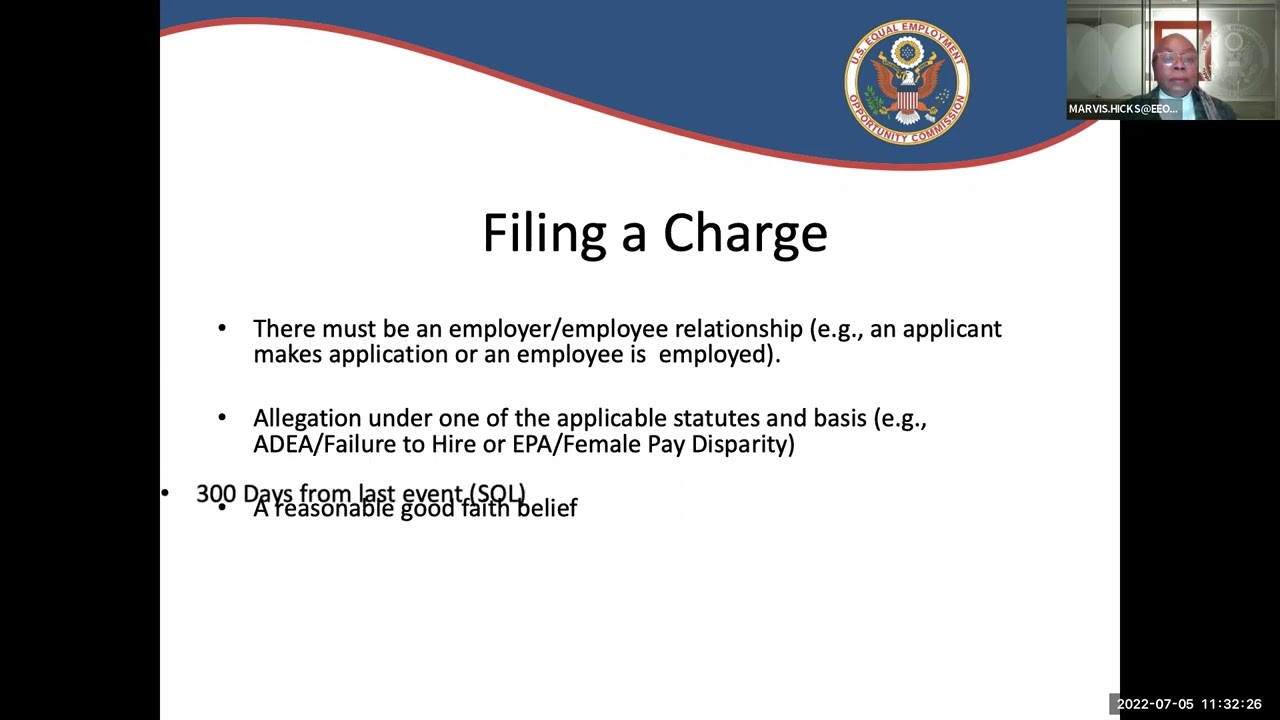
An individual can file a complaint with the EEOC any time within 300 days from the alleged sexual harassment.
You do not need to have an attorney to file.
A complaint must be filed with the EEOC before you can file in federal court.
For more information, visit www.eeoc.gov.
Note: If an individual files an administrative complaint with DHR, DHR will automatically file the complaint with the EEOC to preserve the right to proceed in federal court.
Many localities enforce laws protecting individuals from sexual harassment and discrimination.
You should contact the city, town, or county in which you live to find out if such a law exists.
Harassment may constitute a crime if it involves things like physical touching, coerced physical confinement or coerced sex acts.
In these instances, those that wish to may contact their local police department.
Case Study 8: No Go, Joe.
Mallory works at a small, family owned gift shop.
She is one of two employees in addition to the owner Joe.
The storage room at the back of the shop is tight and can sometimes require Mallory and Joe to get very close while restocking inventory.
On more than one occasion, Joe has brushed up against Mallory while moving past her.
Though she initially thought it was unintentional, Joe is now pressing himself against her in a clearly intentional way.
Mallory mentions this to her coworker, Emily, who confides that Joe has been doing the same thing to her.
Joe is both the owner of the store and Mallory’s supervisor.
There is no separate individual at the store through which Mallory can make a harassment complaint.
True or false?
Mallory's only option is to confront Joe directly about his behavior by writing a report and submitting it to Joe.
The correct answer is false.
If she feels safe, Mallory is able to make a complaint to Joe.
Alternatively, Mallory is able to file a complaint with the New York State Division of Human Rights within three years of the incident or the U.S.
Equal Employment Opportunity Commission within 300 days of the incident.
For the EEOC generally, companies must employ at least 15 people.
While the focus of this training has been on sexual harassment and gender discrimination, workplace harassment can be based on other protected characteristics and is not just about gender.
As we have seen, discrimination is intersectional and often multiple identities impact our perceptions in the workplace and the treatment of coworkers.
Any harassment or discrimination based on a protected characteristic is prohibited in the workplace and may lead to disciplinary action against the perpetrator.
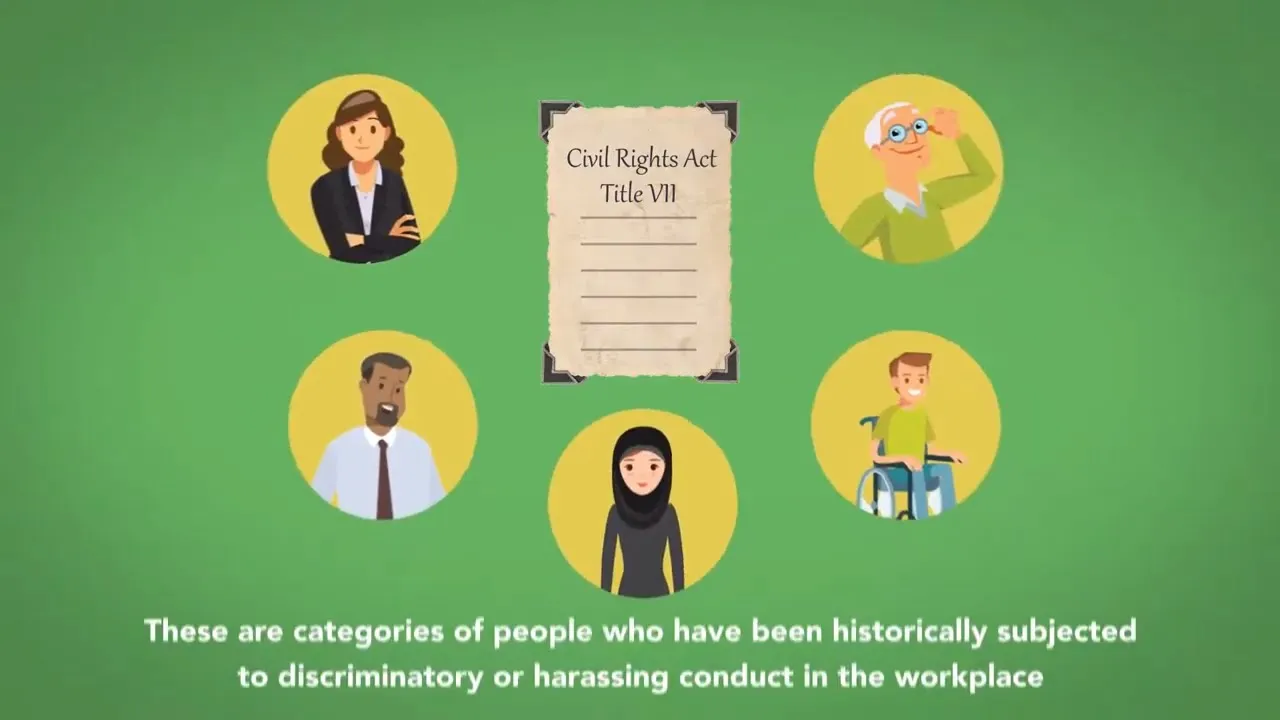
Protected characteristics include age, race, creed, color, national origin, sexual orientation, military status, sex, disability, marital status, domestic violence victim status, gender identity or expression, familial status, predisposing genetic characteristics and criminal history.
The information presented in this training applies to all types of workplace harassment based on protected characteristics.
After this training, all employees should understand what we have discussed, including: How to recognize harassment and discrimination as inappropriate workplace behavior.
The nature of sexual harassment. That harassment because of any protected characteristic is prohibited.
The reasons why workplace harassment is employment discrimination.
That all harassment should be reported. That supervisors and managers have a special responsibility to report harassment.
With this knowledge, all employees can achieve appropriate workplace behavior, avoid disciplinary action, know their rights and feel secure that they are entitled to and can work in an atmosphere of respect for all people.
For additional information, visit ny.gov/programs/combating-sexual-harassment-workplace We know this information can be difficult and triggering for some individuals.
If anyone needs support, the New York State Domestic and Sexual Violence Hotline can be reached by phone at 800-942-6906 or by text at 844-997-2121.
Thank you.
Up Next

22:09
NY Sexual Harassment Prevention Training: Case Studies (2023)
@NYSLabor
698K views•2018-10-25

12:54
Triumph of Orthodoxy Icon: Byzantine Art & History Explained
@BenCallan
2.1K views•2024-08-06

9:49
FastAPI vs Flask vs Django: Choosing the Right Python Web Framework
@TechWithTim
302.5K views•2024-05-26

1:42
Game of Thrones Opening Credits: A Cinematic Analysis
@gameofthrones
46.3M views•2011-04-18
Related Study Plans & Knowledge Roadmaps
Structured learning paths in General & Interdisciplinary Studies
general-studies
Elevator Engineering: History, Physics & Cities
01From Hoists to Safety Brakes: The Dawn of Vertical Lift
02Hydraulic vs. Traction: The Engineering Physics of Elevators
03Modern Speed, Safety, and Algorithms
+ 2 more learning modules
12h5 modules
Explore Roadmap
general-studies
Rubber: Material Science, History & Geopolitics
01Origins of Natural Rubber & Mesoamerican History
02The Chemistry of Natural Rubber & Vulcanization
03The Geopolitics of the Rubber Boom & Colonization
+ 2 more learning modules
12h5 modules
Explore Roadmap
general-studies
Containerization: Evolution, Logistics & Trade
01Ancient Trade & Bulk Cargo: Amphorae to Barrels
02The Industrial Revolution & Cardboard Packaging
03The Containerization Revolution: Malcom McLean
+ 2 more learning modules
12h5 modules
Explore Roadmap
general-studies
Textile Tech: Evolution, Labor & Global Impact
01Pre-Industrial Textiles: Handloom & Cottage Industry
02Mechanization: The Spinning Jenny to the Power Loom
03The Factory System & Global Labor Transformation
+ 2 more learning modules
10h5 modules
Explore Roadmap