














In orchestral film scoring, effective brass section orchestration involves strategically separating instruments into distinct functional groups—melody (French horns), low chords (trombones and tuba), and high triads (trumpets)—rather than having all brass play unified chords; this approach allows each instrument type to maintain cohesion within its group while serving different musical roles, with trumpets typically reserved for special effect moments to maximize dramatic impact.
Brass Orchestration Techniques in How to Train Your Dragon
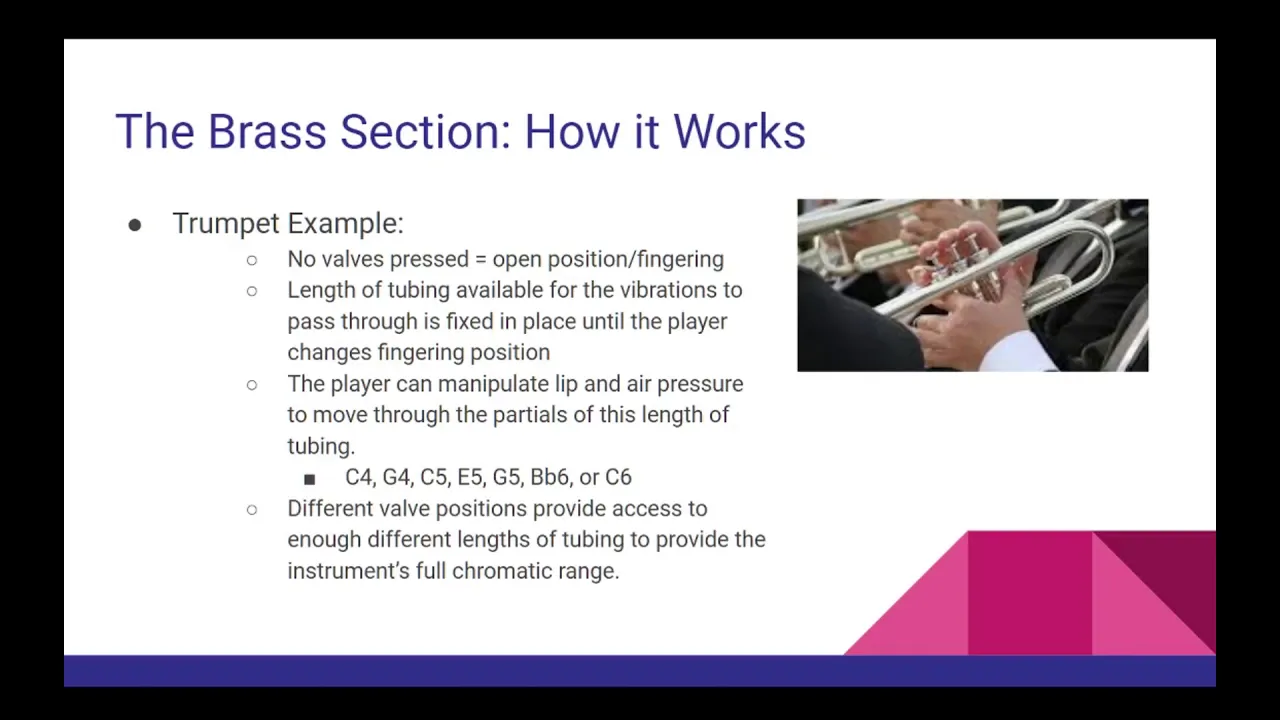
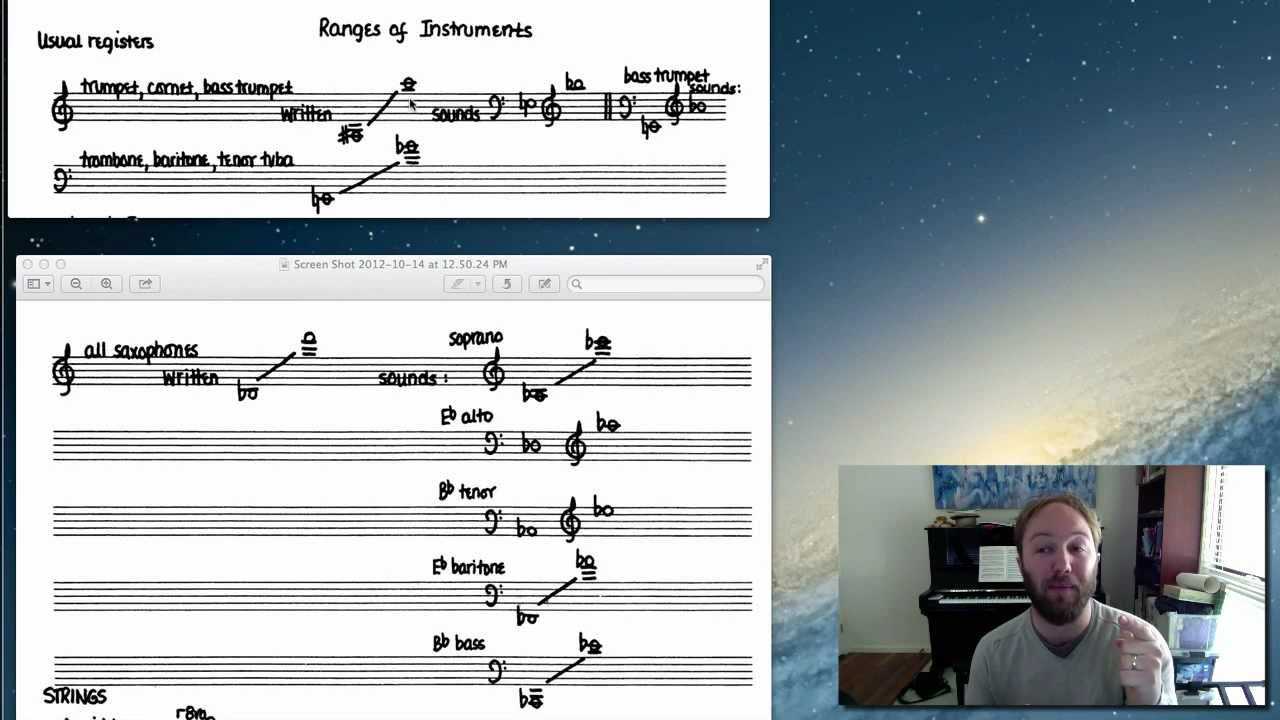
Added:Basic knowledge of the brass family instruments (horns, trumpets, trombones, and tuba), including their standard ranges, transposition, and unique timbral qualities.
Understanding of fundamental orchestration concepts such as voice leading, chord voicing (close vs. open spacing), and register balance.
Familiarity with standard musical score layout, particularly how the brass section is positioned and read within a full orchestral score.
A basic grasp of texture in music, specifically the distinction between melody, countermelody, harmony, and accompaniment roles.
Analyzing John Powell's integration of brass with other orchestral sections (woodwinds, percussion, and strings) to maintain clarity and balance in complex tuttis.
Exploring advanced MIDI orchestration and mockup techniques to realistically program large brass sections using modern virtual instruments.
Conducting a comparative analysis of brass orchestration styles between John Powell and other legendary film composers like John Williams or Hans Zimmer.
Applying principles of role separation and group unity in original compositions or arrangements for a live brass ensemble.
358.6K views15Klikes6:58Original Release: 2022-03-16
When you're writing music for dragons, you wanna go big and the orchestral score to How to Train Your Dragon has a huge brass section.
One tuba, two bass trombones, four tenor trombones, four trumpets, and twelve french horns.
For context, Beethoven's fifth used two.
And that got me wondering, what does John Powell do when he has all 23 brass instruments playing at the same time?
In this video we're going to look at "This is Berk", the opening cue from John Powell's score to How to Train Your Dragon, and we're going to focus specifically on the moments where he has the entire brass section playing.
Our aim is to figure out what he does with those different instruments to get that huge Hollywood cinematic sound.
Let's listen to the first time in the film that the entire brass section plays together.
We have all 12 french horns on the melody, the trombones, bass trombones, and tuba together on low chords, and the trumpets tight and close together on these high triads.
Let's look at the piano roll because i think it's easier there to see what's really going on.
What i find interesting is the complete separation of these three groups.
There's a pretty big gap between the trombones and the horns, and even though the trombones and trumpets are both doing chords they're not really voiced together.
And because the horns and trumpets are doing such distinctly different things, he doesn't even worry about their registers overlapping sometimes.
At this point the melody is also being supported by woodwinds and violins, so if the trumpets momentarily obscure the sound it's not really that big a deal.
It might seem obvious but i think it's really important to appreciate how the instruments always stick together.
If one instrument is doing something, all the other instruments of that type are going to be doing that thing too.
For example the trumpets are strictly on these high chords.
It's not like the third trumpet is joining in with the melody and the other three trumpets are doing harmony.
He has so many french horns, he could have easily given six of them to the melody and six of them to chords.
But he doesn't. They all play the melody.
Each instrument type stays true to its group.
Let's look at a longer example.
Once again we have all the different instruments taking on different roles.
The trombones start with the melody, and then when the horns take over the melody the trombones move to the background with chords.
The tuba has the bass line really down low while the bass trombones have this answering bass figure, and the trumpets are once again doing more active lines in these effect type gestures.
In measure 72 it seems like the french horns and trumpets are finally working together, but even there there's some differences.
Most obviously the trumpets are up an octave, but they're also playing a thickened line harmonized with chord tones while the french horns are strictly on the melody.
Also notice how in this section the bass trombones join with the other trombones and they stay together for the entire section.
When you read orchestration books there's a lot of emphasis on balanced chords, especially things like "when you're at a loud dynamic have two french horns for each trombone."
I think this emphasis on scoring a chord in the whole section can give you this impression that the brass always work together as a cohesive unit, like a beautifully stacked chord from bottom to top.
It happens sometimes in this score that the entire brass section is a unified sound, not in this six minute cue at all, but the separation of roles based on instrument happens constantly.
For me this has got to be the biggest takeaway and the next time I orchestrate something for brass I'm going to worry a bit less about making sure the trombones and horns are a perfectly balanced chord and think more about what are the different roles that those instrument groups can be taking on.
I the next example let's look at John Powell's main uses of the trumpets.
Throughout the entire cue the trumpets get used considerably less than the other brass instruments.
It seems like the trombones do most of the work but the horns are pretty close.
It's only the trumpets that get reserved for special purposes like in this section here.
By saving the trumpets for the last two bars of this passage it gives those bars extra power and punch.
Throughout the entire score at least 90% of the time the brass are only doing one of two things: playing the melody or playing chords.
Now that might sound a little obvious, like what else are instruments supposed to do?
But I can show you page after page of woodwind runs and string arpeggios and fills and textures and all these really busy things in the other sections but most of the time the brass are pretty focused on melody and chords.
And effects are the rare exception, like here the trumpets have this tongued repeating figure for an accent and back in that previous example we saw them doing this scalar run.
If you struggle writing for brass or you have a hard time knowing what you're supposed to do with those instruments, maybe keep in mind that most of the time melody and chords is fine.
Lt's listen to one more longer example from the end of the cue and this time I want to leave it to you to think about what we saw in the other examples and how it's being used here.
So pay attention to the separation of roles, how the instruments stick together within their own type, and how the trumpets are being reserved for power and effect.
In this last example in the audio I'll include the strings because they have the main melody and the brass interacts with it.
To simplify the sound a bit I'm going to leave out the woodwinds and percussion, because in this case they're more textural and not necessary.
No offense to drummers and wind players!
I chose this cue because it was long, 209 measures, there were a lot of examples to pull out of it, and it has a range of different moods and feels.
There's this heroic Viking theme, and this menacing dragon theme, and a love theme, and so on.
These observations are not supposed to be "This is all you're allowed to do with the brass," and it's even not the only thing John Powell does in other places in the score.
But it is how the brass were orchestrated in this cue.
I think sometimes it can be really helpful to learn from narrow, focused examples.
People tell me that the brass are hard to write for but that the woodwinds are even harder.
This video here is all about how John Williams uses woodwinds in the Harry Potter score to give the orchestra life and energy.
If you want to understand how Hollywood film composers get that cinematic sound you don't want to miss it.
Thanks for watching and I'll see you in the next one!
Up Next

18:34
How to Train Your Dragon: Thematic Writing Masterclass | John Powell
@CharlesCornellStudios
1.9M views•2022-05-19

10:20
Mozart's Musical Dice Game Explained: History, Rules, & Fun
@webpianoacademy
5K views•2023-03-13

47:36
Understanding Diatonic 7th Chords in Major Keys | Music Theory Tutorial
@GracieTerzian
54.7K views•2022-03-02
10:49
Understanding John Coltrane's Giant Steps: A Music Theory Analysis
@Vox
10.4M views•2018-11-12
Related Study Plans & Knowledge Roadmaps
Structured learning paths in Music Theory
music-theory
Composing Galant Music: Partimento & Schemata
01Foundations of Figured Bass and Keyboard Harmony
02The Rule of the Octave (Regola dell'Ottava)
03Galant Schemata: The Building Blocks of Form
+ 2 more learning modules
30h5 modules
Explore Roadmap
music-theory
Decoding Overtone Series: Tuning & Drone Music
01Acoustic Foundations: The Physics of the Overtone Series
02Tuning Systems: Equal Temperament vs. Just Intonation
03Microtonality and Spectralism: Beyond Standard Pitches
+ 2 more learning modules
24h5 modules
Explore Roadmap
music-theory
Impressionist Harmony: Scales, Planing & RPGs
01Foundational Music Theory: Keys, Intervals, and Seventh Chords
02Impressionist Color: Chord Planing and Parallel Harmony
03Whimsical Textures: Pentatonic Cascades and Whole-Tone Scales
+ 1 more learning modules
14h4 modules
Explore Roadmap
music-theory
Negative Harmony: Axis Reflection in Indie Pop
01Music Theory Foundations: Scales, Intervals, and Triads
02Functional Harmony and the Circle of Fifths
03Demystifying the Negative Harmony Axis Reflection
+ 2 more learning modules
16h5 modules
Explore Roadmap