













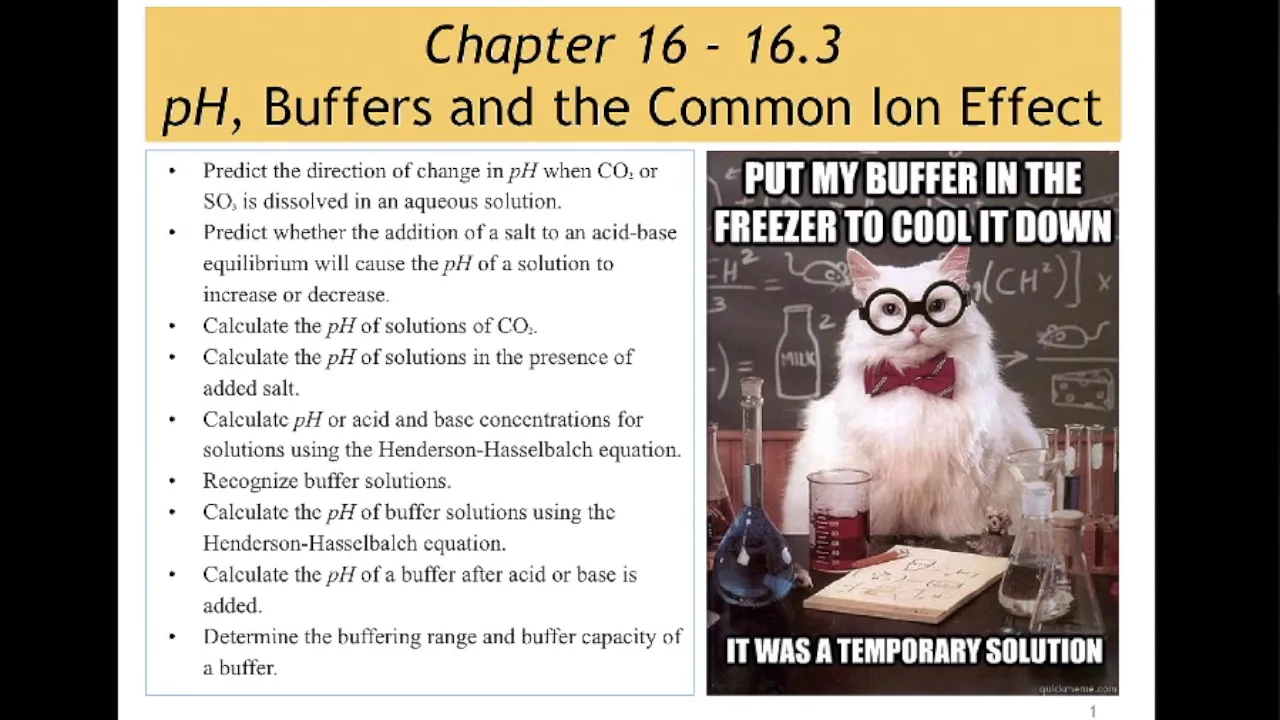









A buffer is a solution that resists changes in pH and is composed of a weak acid with its conjugate base or a weak base with its conjugate acid; buffers can be prepared by mixing a weak acid with its conjugate base salt in approximately a 1:1 ratio, or by mixing a weak acid with a strong base in approximately a 2:1 ratio, or by mixing a weak base with a strong acid in approximately a 2:1 ratio; the pH of a buffer solution can be calculated using the Henderson-Hasselbalch equation (pH = pKa + log([A⁻]/[HA])), where pKa is the negative logarithm of the acid dissociation constant, and the buffer range extends approximately pKa ± 1, meaning the solution will resist pH changes effectively only within this range.
Buffers and Buffer Capacity: pH Calculations in General Chemistry
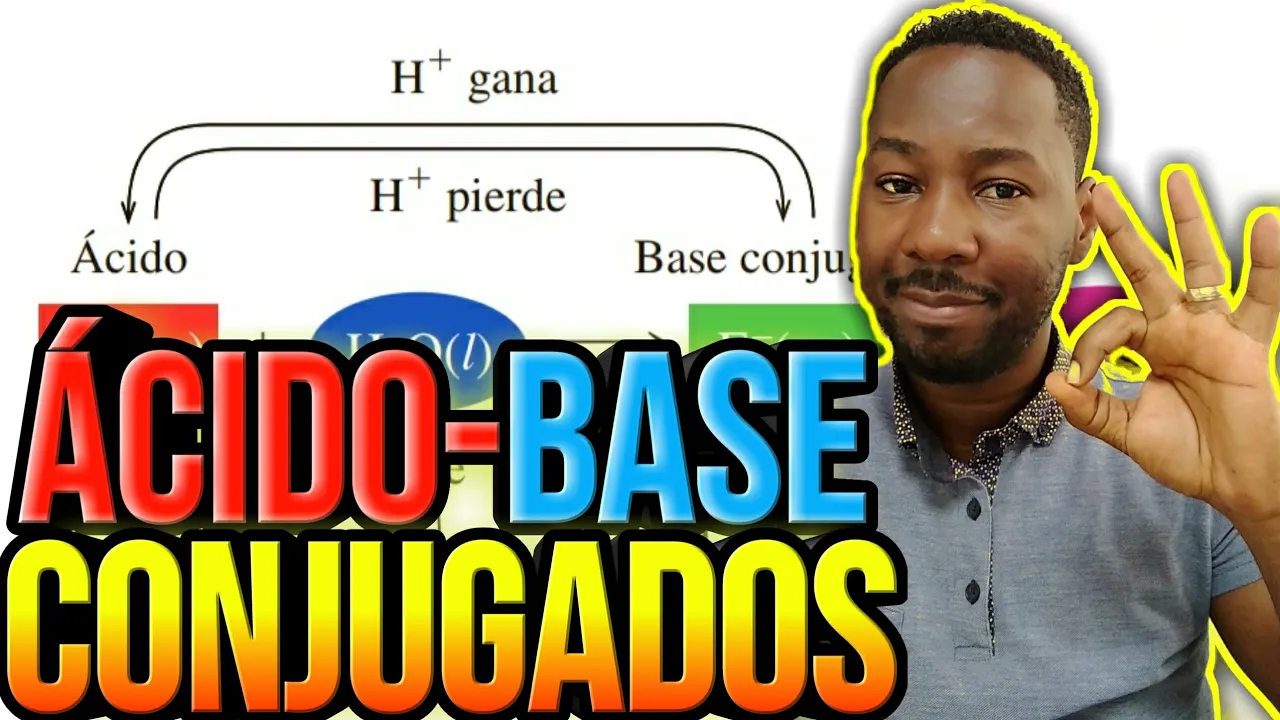
Added:The definition of Brønsted-Lowry acids and bases, specifically how to identify conjugate acid-base pairs.
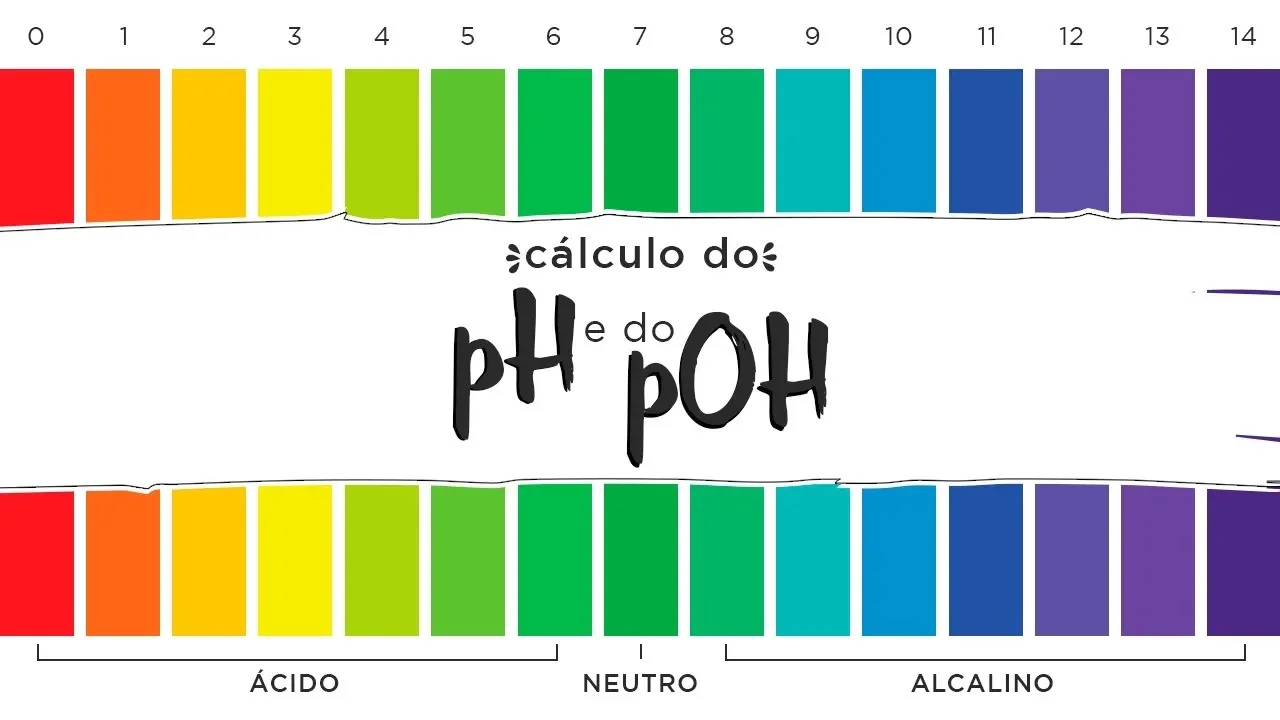
The concept of pH and pOH, including the logarithmic mathematical relationships used to calculate hydronium ion concentrations.
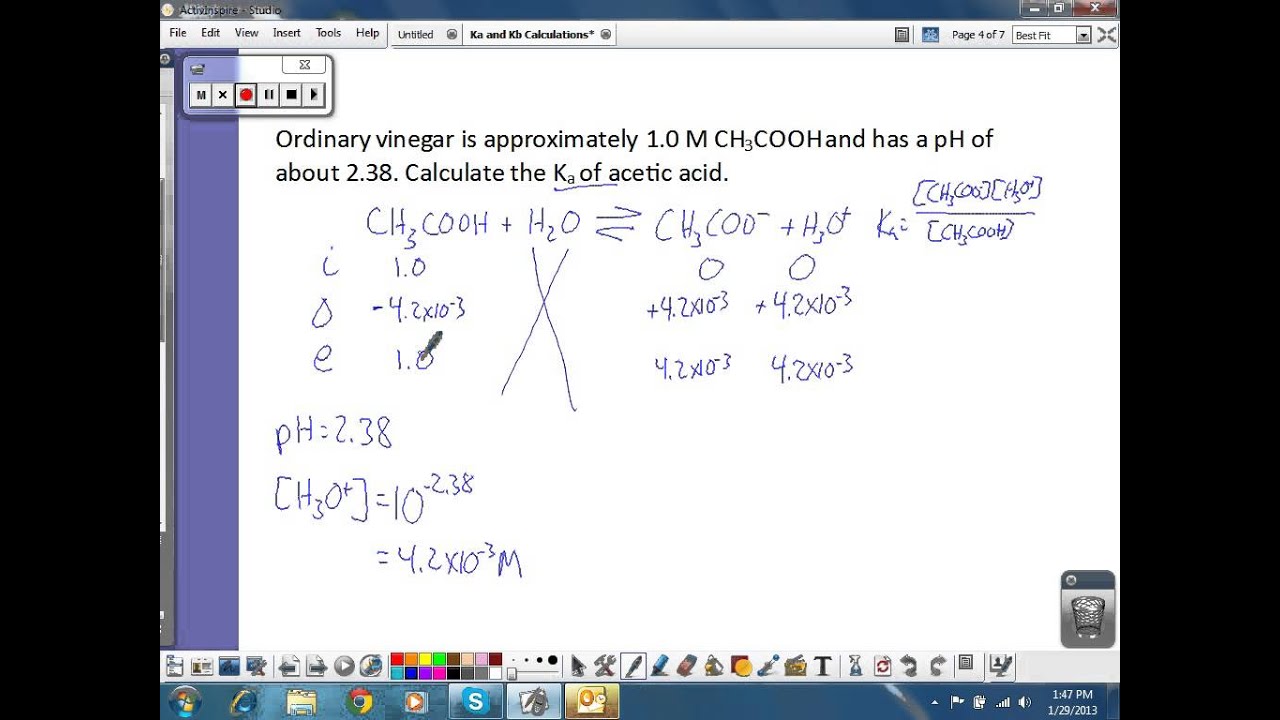
Chemical equilibrium principles, specifically writing and solving equilibrium constant expressions (Ka and Kb) for weak acids and bases.
Le Chatelier's Principle and the common ion effect, which lays the conceptual foundation for how buffers resist pH changes.
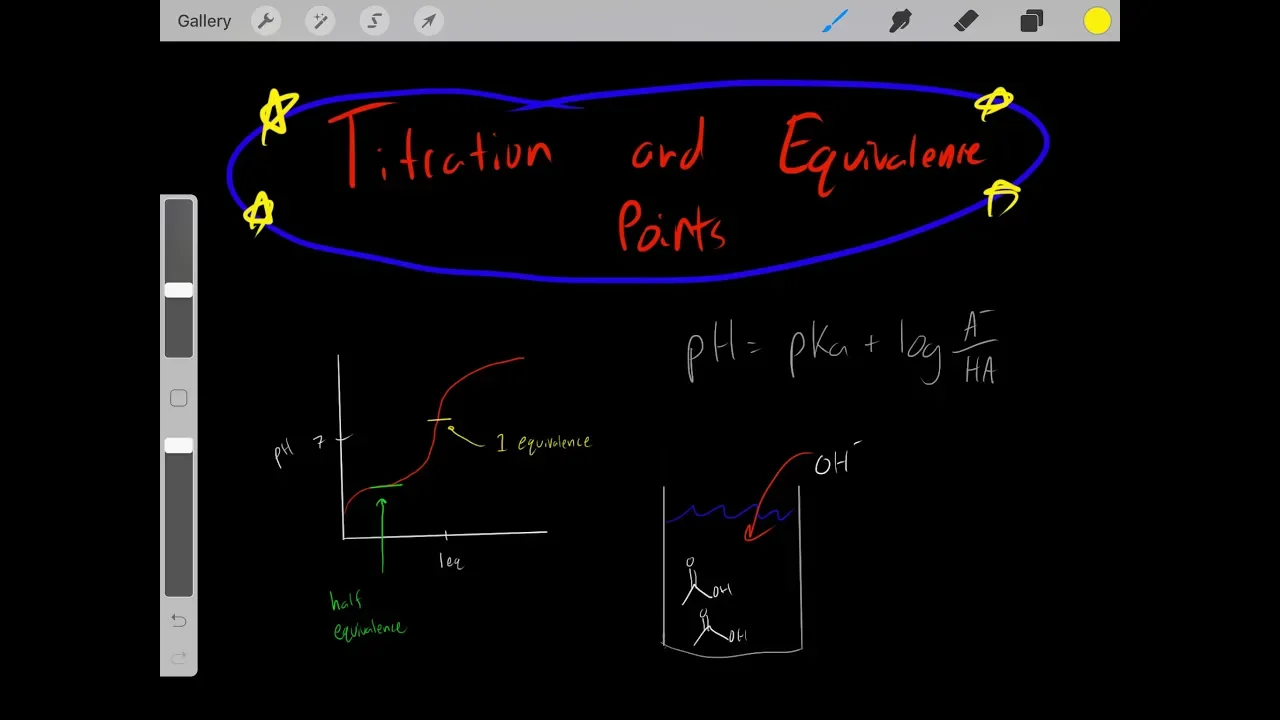
Analyzing acid-base titration curves, particularly interpreting the buffering region and the half-equivalence point.
The practical laboratory design and preparation of buffer solutions at specific target pH levels.
Real-world biochemical applications of buffering, such as the carbonic acid-bicarbonate buffer system regulating blood pH in human physiology.
Advanced equilibrium systems, including polyprotic acid behavior and how pH levels influence solubility products (Ksp).
163K views3.7Klikes44:36Original Release: 2022-02-14
buffers is going to be the topic of this lesson my name is chad and welcome to chad's prep where my goal is to take the stress out of learning science now in addition to high school and college science prep we also do dat mcat and oet prep as well i'll leave a link in the description for where you can find those courses now this lesson is part of my new general chemistry playlist i'm releasing several lessons a week through the rest of this school year uh so if you want to be notified every time i post one subscribe to the channel click the bell notification so we've got to start by just answering a simple question what is a buffer well simply put a buffer is just a solution that resists changes in ph and couple important reasons you want to know why these even exist and why this is a big deal and one is that a lot of chemical reactions are ph sensitive they only occur uh under a certain narrow range of ph or at least only maybe occur favorably under a narrow ph range and so often those are going to be carried out in some sort of buffered environment uh but more importantly to specifically you and me uh is most living organisms only live in cells and stuff like this over a very narrow ph range so your blood for example has a ph of right around 7.4 just on the basic side of neutral uh and if that ph goes below 7.1 or above 7.8 for any significant period of time it's probably because you're dead so really important that it stays really really close to 7.4 most of the time so your blood is definitely buffered against ph changes so that's what a buffer does it just maintains the ph of a solution it keeps it from changing one way or the other now how does it do this well it's based on what it's composed of and you got to know that a buffer is composed of a weak acid with its conjugate base or a weak base with its conjugate acid same diff but it has to be weak acid conjugate based not strong acid conjugates or weak based conjugate acid not strong based conjugate acid so for instance here so real common weak acid here we have is hf so in this case you'd have to mix hf with its conjugate base f minus so if you want to go the other way and mix a weak base with its conjugate acid we could take ammonia a weak base and mix it with its conjugate acid the ammonium ion now when you add ions and notice fluoride here is an ion an ammonium here's an ion those are typically going to be added as part of a salt like we studied about at the end of chapter 16.
so in this case when you when you want to incorporate one of these in a salt because that's probably how it's going to be added you know you don't just have a you know a flask or a beaker or a bottle of f minus sitting on the shelf it's typically going to be some sort of f minus salt some sort of fluoride salt like sodium fluoride or potassium fluoride and so it turns out the fluoride salts you want to use you want the cation to not impact the solution whatsoever so you want to use what we called in the last lesson in chapter 16 a negligible cation but you also want to pick one where the fluoride salts are soluble and so it turns out all the group 1 metal salts in general are pretty soluble whereas group 2 metal fluorides tend to not be so soluble so we're going to rule out the group 2s even though they tend to be negligible they're not the most soluble with fluoride for or for a lot of different compounds but the group ones always are and they're negligible and so for anions you're almost always going to have some sort of group one metal salt and sodium salts are the most common by far so instead of simply writing f minus here i'm going to write sodium fluoride and so our buffer would be made from a combination of hf with either like lithium fluoride sodium fluoride potassium fluoride iridium fluoride or cesium fluoride and again sodium fluoride by far the most common now on the other hand here with ammonia being the neutral species now the weak base the conjugate acid is a cation and so if i want to mix this with an anion that's not going to affect the solution i want to pick one of those negligible anions we learned about in the last lesson in chapter 16 which is typically the conjugate base of one of those strong acids and by far the most common is chloride hcl being a strong acid chloride is a negligible conjugate base and so most common way to get ammonium in there is ammonium chloride but technically we could put ammonium chloride bromide iodide ammonium chlorate ammonium nitrate any one of those uh would work out fairly well in this case but ammonium chloride probably the most common one you're going to see cool and again mixing ammonia and ammonium chloride in the right ratio is going to get you a buffer so again a buffer resists changes in ph and it's a combination of a weak acid with conjugate base and oftentimes we'll say weak acid with the salt of its conjugate base or weak base with the salt of its conjugate acid and it turns out you need to mix these in similar amounts so equimolar or close to equimolar amounts equal moles so it turns out you want to have as close to a one-to-one ratio of weak acid with conjugate base as you can to get what we call the maximum buffering capacity so it turns out when it's in that one-to-one ratio exactly that's when you get that maximum buffering capacity the greatest resistance to a change in ph however you can it'll still act as a buffer if you have as much as 10 times more acid than conjugate base or 10 times more conjugate base than acid and it'll change the ph a little bit as we'll see with some of the calculations later but that's kind of the buffer range if you get more than 10 fold more of either the acid or conjugate base it kind of no longer acts as a buffer it will not resist changes in ph so much and so we're talking about resisting changes in ph well what might cause the ph of a solution to change well typically what we're doing is resisting changes of ph when either a strong acid or base is added it's the most common mathematical situations we'll look at but the truth is when any acid base is added and we just want to resist those changes in ph and the idea is i like to think of it as really protecting water so because you know if you've got water sitting around so which is neutral well if you add an acid to water you're going to convert that water into h3o plus and if you add a base to the water and steal an h plus from him then you'll convert him into o h minus and this is what we want to prevent whether i add acid or base i want to prevent the water be from being converted into h3o plus or oh minus because that's going to affect directly the ph well that's why i want to have a weak acid conjugate base combination in there so if i add a base instead of water losing the h plus well hf's a better acid than water he's more likely to be acting as the acid instead and be the proton donor and if i add some sort of acid into water instead of water acting like the base and getting protonated to become hydronium well f minus is a better base than water and so f minus is more likely to get protonated and so what you end up having is you're kind of protecting water from getting protonated we say or deprotonated from acting as either a base or an acid by simply having something that's a better acid and something that's a better base in your solution and what you'll find out is that instead of directly converting water into either hydronium or hydroxide and affecting that ph in a very direct way you'll find out that just the ratio of hf and naf in your solution is what will change and that'll only result in very small changes in ph instead of much larger ones if that buffer wasn't there so it turns out that's the deal here and again i want to focus in on something here so with buffers it's much more common to talk about their pkas than their kas for the acid in the buffer so like here we've got hf has a corresponding ka it turns out it's like 6.8 times 10 to the minus 4 but much more commonly you're going to be talking about what's known as the pka and recall that just p means negative log and so if you have a pka that's just simply equal to the negative log of the ka value and so if the ka for hf is 6.8 times 10 to the negative 4 well if you take the negative log of 6.8 times 10 negative 4 you're going to get 3.17 which here in this table i've rounded up to 3.2 so that's kind of the deal so you got to know what a pka is just the negative log of the ka and it turns out with buffers it's often much more convenient to deal with these pkas than with these kas but you still might be given a ka and if you want the pka you better take that negative log but you might also be provided with pkas as well so you might see this in a biochemistry context if you're a chemistry major somewhere down the road and you're probably going to get a lesson on buffers on steroids you're going to get a little you know a little more than what you get probably in this lesson and i have one of those on chadsprep.com you can find it there as well but uh we're not going to quite go in quite that level of detail we'll start you off slow here in gen chem so but it turns out when you have exactly a one-to-one ratio of weak acid and conjugate base it turns out the ph will equal exactly the pka value we'll see the math on this in a little bit but that's just a convenient point to remember so if i said for hf and naf if it was a buffer produced to have its maximum buffering capacity at what ph would that occur well you'd find out that that would occur at exactly a ph of 3.2 when the ph equals the pka well it turns out when you have either 10 times more acid or 10 times more base that's going to change the ph by exactly one unit you might recall that ph scale is logarithmic well it turns out it's going to work out logarithmic in this case as well and it turns out if you have 10 times more hf the ph is going to end up being 2.21 unit more acidic but if you have 10 times more fluoride naf in this case then that's going to actually raise the ph up to 4.21 ph unit more basic than when it was one to one and that's kind of how it works it turns out you know when you've got this ratio of uh you can kind of look at it as powers of 10 and that's going to move the needle on ph one ph unit at a time so kind of take a look at this a little differently if we have 10 times more of the conjugate base your ph goes up by one and again with hf and naf that means going up to 4.2 instead but if you had 100 times more naf than hf that would move the ph up by 2 units as we'll see up to 5.2 now that wouldn't be a buffer solution anymore but we would still calculate the ph in the same way and we'll see why this kind of works out this way but i just kind of wanted to lay the groundwork for those powers of 10 and how that affects ph before we kind of take a mathematical look at it all right so it turns out with that 10-fold difference between your acid and base being kind of the boundaries of where it'll function as a buffer well that means that your buffer range is going to be right around your pka plus or minus one and so for hf when combined with its conjugate base f minus the buffer range is going to be from 2.2 up to 4.2 that's where anywhere in that range it'll resist changes in ph best at 3.2 but anywhere in that range but you get outside that range either too low or too high so and all of a sudden it's not going to function as a buffer anymore and if you add strong acid base the ph will probably uh change more than you want it to all right this is acetic acid right here and acetic acid has a pka of 4.8 and so if you mix acetic acid with its conjugate base like sodium acetate so we'll see in a problem here in a little bit again if you mix them at a one-to-one ratio the ph will be exactly 4.8 if you have 10 times more acetic acid ph would be down at 3.8 if you have 10 times more sodium acetate for example then the ph would be up at 5.8 and the buffer range would be equal to 4.8 plus or minus 1. now what happens if you've got one of these polyprotic acids well with polyprotic acids they're going to have more than one ka and therefore more than one pka and therefore more than one buffer range as well let's take a look at carbonic acid here a little more closely all right carbonic acid here is diprotic so this case has two acidic protons to donate and the pka for the first one being donated is 6.4 whereas the pka for the second h-plus proton being donated is going to be 10.3 you might recall that uh we said that uh for a polyprotic acid series as you donate more and more h plus in the last chapter we learned that they get more weakly acidic or less acidic as you go along and so it turns out less acidic would mean a lower ka value but it turns out when you take the negative log to get a pka a lower ka is going to end up being a higher pka and so as you can see in going from 6.4 to 10.3 that higher pka indicates a weaker acid but it turns out this means that we also have two buffer ranges so if we focus on just the first equilibrium in this first equilibrium h2co3 carbonic acid is the acid in this equilibrium so and hco3 minus bicarbonate is the conjugate base and if you mix h2co3 and hco3 minus in somewhat close to one-to-one ratio you can make a buffer right around ph 6.4 plus or minus 1 depending on the exact ratio you use however we've got a second buffer range to work with as well if you mix hco3 minus with co32 minus instead in this combination around this equilibrium hco3 minus would be the conjugate acid co32 minus would be the conjugate base and so when you mix this combination now the sudden you can make a buffer of ph 10.3 plus or minus 1. and so with the polyproduct series these can be handy because now you've got potentially buffers at a couple of different ranges that might be used if you see phosphoric acid here with three acidic protons there's actually three different pkas one at 2.1 one at 7.2 and one at 12.4 and so there's three different buffer ranges now it turns out the one at 7.2 is pretty convenient super common to use a phosphate buffer to make buffers right around physiological ph for like different living systems or for cell cultures and things of this sort so it turns out that carbonic acid actually this first equilibrium is pretty convenient as well and this is one that's happening inside your blood it turns out that carbonate's not the only one but it is what the major probably buffer component of your blood and it turns out that the h2co3 is actually an equilibrium with the carbon dioxide that you're inhaling i shouldn't say inhaling but the one you're actually exhaling but it turns out it's transported through your blood and this equilibrium is going on with co2 and combining with water to form carbonic acid and then this equilibrium is happening at the same time and that functions to actually buffer your blood and keep resisting changes in ph so that you can keep on living all right so now we kind of have an idea of what a buffer is we know how to kind of look at what it is composed of weak acid conjugate base or weak based conjugate acid same diff and we know how to predict you know when is a buffer appropriate for you know what ph range so and again that's the pka plus or minus one all right well it turns out there's actually three different ways to make a buffer and that's what we want to address next all right so these are the three different ways to actually prepare a buffer solution and the idea is that to really have a buffer it's not about necessarily only what you add but what you end up with and the key is what you need to end up with you need to end up with close to a one-to-one ratio of weak acid with conjugate base or weak based conjugate acid same diff that's the key and it's not necessarily what you stick in there but that's what you need to end up with well the easiest way to end up with that is just to stick that in there and that's what we did earlier so with weak acid conjugation if you mix them just straight up that's what you put in your solution and close to a one to one ratio well then it's going to be a buffer and we saw this when we mixed like hf with a fluoride salt like naf and again if we mix these in roughly a one to one ratio that indeed would be a buffered so that's the easiest way to prepare a buffer and the easiest one for students to see but it turns out instead of just weak acid with conjugate base you can mix a weak acid with any strong base or you can mix a weak base with any strong acid but instead of one to one now you want a two to one ratio and the idea is that when you mix a weak acid with a strong base the strong base is going to neutralize some of that weak acid converting it into the weak acids conjugate base and if when you're done you end up with a one-to-one ratio of weak acid that's left over and conjugate base that you've formed well then it's a buffer so for example if we take a look at say mixing hf with your most famous strong base of all time naoh and once again we're going to do this in roughly now a two to one ratio it doesn't be exactly two to one but somewhere in that ballpark so if you look at what's really going on here you've got hf being neutralized by the naoh so you might recall that for a strong base it dissociates completely and what that means is it reacts completely with water so where it acts as the base and water acts as the acid well we have something that's even more acidic than water here hf and so if naoh would react with water completely dissociate with water completely well then it's definitely going to react with something even more acidic completely as well and so this reaction goes effectively to completion it's going to produce some water h with oh but then sodium and fluoride is your byproduct and that's the key you're going to produce some of the salt of the conjugate base we did here as well and the key is you want this two to one ratio and instead of doing exactly two to one i'm gonna do ten to five so you can kind of see what's going on but if say we mix these in a ten to five ratio and again if this reaction is going to completion you could treat this as a limiting reagent problem now and so which one of these is going to run out first while the naoh would run out first and so we'd use up all five moles of it but since these react in a one to one ratio you're going to use up 5 moles of the hf as well but when these react they produce we don't care about the water the whole solution is full of water it's an aqueous solution but we produce in a 1 to 1 to 1 ratio sodium fluoride and so we'd gain sodium fluoride well we didn't start with any sodium fluoride but we're going to gain five moles and so all of a sudden when this neutralization reaction is done you're gonna have five moles of hf left over and you're now gonna have form five moles of the conjugate base naf and so a five to five ratio is a one-to-one ratio of weak acid conjugate base which again is fundamentally a buffer and so that's why there's not just one way to make a buffer so you can mix that weak acid and conjugate base in a close to you know one to one ratio but you could take any weak acid and mix it with any strong base but you only want to neutralize half of it not all of it that way half of it is left over and the other half has been converted into conjugate base just like we saw here so it turns out it works exactly the same way if you have a weak base with strong acid you want two parts weak just like we had up here and one part strong that you so that you only neutralize half of it and so in this case the weak base i'm going to use is now the sodium fluoride so we get the same system in all cases and then i can add any strong acid well the most famous strong acid is hcl and it didn't matter which one i chose but again the key is i want to put this in approximately a two to one ratio not a one to one ratio anymore cool that way only half of the sodium fluoride gets neutralized converted into hf in this case but half of it is still going to be left behind as naf and so i'd have hf and naf present in roughly a one-to-one ratio so you might get a question on the test that just says which of the following would produce a buffer and you got three different ways to pull this off some of the common detractors and a track is just another fancy word for a wrong answer some of the famous wrong answers so for producing uh for answers that you know would not produce a buffer would be like taking a strong acid and mixing it with conjugate base well strong acid conjugate base doesn't make a buffer it's got to be weak acid with conjugate base so and again they could you know give this in a one to one ratio and it still doesn't matter that is not a buffer it's just going to be a very very acidic solution it turns out so because this is a strong acid and the conjugate base of a strong acid is a negligible base and so this is just a really acidic solution definitely not a buffer now the other way they might approach this is they could give you this situation again hf and naoh but what they might do is they might put molarities on here so 0.1 molar 0.1 molar and all of a sudden now i've mixed a weak acid and a strong base and that should in your mind should be like well that's a possible possibility that is one possible way of making a buffer but i gotta have two parts weak to one part strong and here it's one part weak to one part strong it's a one to one ratio and in this case an equal amount of naoh would neutralize all of the hf all the hf is going to get converted into sodium fluoride there'll be no hf left only sodium fluoride will be in your solution it will not be a buffer and so this is another wrong answer for buffers you cannot make a buffer with weak acid strong base in a one to one ratio it has to be two parts weak to one part strong so just a couple of common incorrect answers i wanted you to be familiar with for making a buffer cool now that you know how to make a buffer now how do we calculate the ph of a buffer and associated calculations let's take a look all right so ph calculations with buffers this is really the fifth example of a calculation of ph in the last chapter we did calculating the ph for a strong acid or a strong base or a weak acid or a weak base that was four different ph calculations we learned how to to do well we've got the fifth one in this chapter and that is the ph of a buffer and most commonly we use what's called the henderson-hasselbach equation and this henderson-hasselbach equation is just a more convenient way to do calculations with buffers specifically so and it turns out you can only use this equation if you have both weak acid and conjugate base in the solution together you've added both of them in there and the reason you can only use this in that case is because you actually can't do this calculation if you have a 0 there or a 0 there that's not going to work so they have to both have some which means it's not just a weak acid it's not just a weak conjugate base you've got to have both in your solution now it turns out you could just use the ka expression and it turns out the henderson-hasselbalch expression is derived from the ka expression so and you could just use the ka expression if you want to and technically because you don't just have just weak acid you also have the weak conjugate base if you wanted to you could just use the kb expression but you'll find that for buffers it is just really convenient to use this henderson hasselbach so if you look at kind of where it comes from what we're going to ultimately do is take the negative log of both sides of that ka expression so we're going to do negative log you know what in fact let's just do the log of both sides we'll rearrange it so we'll do the log of the ka equals the log of the h plus times the a minus all over h a well property of logs when you've got things multiplied together you can separate them out into logs that are summed together that are added together and when you divide you could subtract so we could make this log of h plus plus log of a minus minus log of h a we could do that but we're actually our destination is this guy right here so we're actually not going to split up the a minus and h a but we will split up the rest and so we'll make this look like log of ka equals log of h plus and then put these two under their own separate log term because effectively they're just multiply that ratios multiplied by the h plus and so plus log of a minus over h a now we're getting a little bit closer and what we're going to do is we're going to subtract this term off from both sides so it shows up as negative log of h plus on this side and then we'll subtract log of ka from both sides it'll disappear from this side but end up as negative log of ka on this side and then again plus log of a minus over h a and we're effectively there negative log of h plus that's what ph is negative log of the ka that's what pka is and then you're left with plus log of a minus over h a now one caveat it turns out there's actually four different versions of this henderson-hasselbalch equation and that's really annoying so because if there's four different versions students sometimes confuse them and sometimes their difference by just the sign things of this sort so it turns out property of logs is that the log of x over y in fact let's write this out log of x over y and the log of y over x are related to each other and it just turns out that one is the negative of the other well so some people write the henderson hasselbach instead of writing plus log of a minus over h a they write minus log of h a over a minus well i'm never going to write it that way i'm never going to present it that way i just caveat for you on the other side of the camera here that maybe you're going to see it that way i only ever present one way to students and i only ever do my calculations with this one way it turns out also just like we said you know technically you could use ka or kb for buffer calculations well it turns out there's another version of this that says p o h equals p k b not p k a but p o h equals p k b plus log of h a over a minus or minus log of a minus over h a two versions of that version as well and i don't use either one of those either so four different versions of this i'm only ever going to present and use this one to avoid confusion it is also the most common one you're likely to see presented as well so i'm not just randomly choosing one um and so some of you will only see this one as well and that's actually probably the most likely scenario if you see some of the other versions my apologies so it's not my favorite to confuse students that way however i just wanted you to be aware that's why there's other versions but you can work it with any one of the four any buffer calculation will work exactly the same with any one of those four i choose to use this one the most common one every single time all right so let's do some buffer calculations here all right so the first buffer calculation we're going to do here what is the ph of a solution having 0.10 molar ch3coh that's acetic acid and 0.080 molar ch3coon so we've lost that h this right here is called acetate it's the conjugate base of acetic acid but again it's gonna have a negative charge so we gotta have a salt here and we use the sodium salt this is sodium acetate's formula so weak acid conjugate base close to one to one not exactly but that's definitely a buffer so and then the ka of the weak acid is provided 1.76 times 10 to the negative five so if you were asked to calculate the ph of the solution first thing you'd want to recognize is that this is a buffer now technically you could set up an ice table for our weak acid set up the ka expression but it turns out with a buffer because you have both the weak acid and the conjugate base the plus and minus x's are going to be insignificant every time we just ignore them well the whole point of setting up an ice table is for those plus and minus x's which if we just ignore them all well then why did we set up an ice table and so for buffers i never set up an ice table i just go straight to henderson hasselbach knowing that the plus and minus x's will always be insignificant for any buffer solution and so in this case we're going to do ph equals pka and we could just write in negative log of 1.76 times 10 to the negative 5. so or you could calculate that ahead of time here and that's what i'm going to do so pka here negative log of this it turns out equals 4.75 in my calculator and so that's what we're going to plug in right here for the pk so 4.75 plus log and in this case conjugate base over conjugate acid well the conjugate base was the 0.08 and the conjugate acid is 0.1 and now we'll see for just a minute why the math works out the way it does so it turns out if you had exactly a one-to-one ratio right here well then this ratio would equal one if like it was 0.08 over 0.08 or 0.1 over 0.1 well that if that ratio is exactly one well the log of one equals zero and you'd end up with ph equals pka plus zero which means just ph equals pka and if you recall at the beginning of this lesson we said that when your weak acid and conjugate base are present in a one-to-one ratio that's when the ph equals the pka of the con the conjugate acid and so in this case we're not at that point we have a little more of the acid than we do of the conjugate base and since we have a little bit more of the acid we should know that the solution is going to be a little bit more on the acidic side so the ph is not going to equal exactly 4.75 it's going to be a little bit lower and it turns out if this had been 10 times higher acid concentration than conjugate base well then the log of 1 over 10 is negative 1 and you'd have 4.75 minus 1 and the ph would be 3.75 what if you had 10 times more conjugate base than conjugate acid well if you had 10 times more conjugate base the log of 10 over 1 is positive 1 and you'd have pka plus 1 and we would have got a ph of 5.75 and that's why it works out that the buffer range is pka plus or minus 1.
and so knowing the pka here's 4.75 we know it's a buffer anywhere from 3.75 up to 5.75 and as long as we're within that 10 to 1 ratio we'll be in that buffer range well in this case we're going to figure it out exactly and we should expect though with a little more of the acid than conjugate base but not more than 10 times more we're within that buffer range but we're more on the acidic side so the ph should be just a little bit lower than 4.75 so in this case 4.75 plus log parentheses of 0.08 divided by 0.1 close my parentheses is 4.65 cool and that's how you find the ph of a buffer it's much easier than setting up an ice table or anything like that if you go straight to henderson hasselbach you know take the negative log of your ka to get a pka and then plus log of the conjugate base over the conjugate acid concentration it is not so bad now the harder calculation is the next one we're going to ask in conjunction with it and the students struggle with this one just a little bit more the question is what would be the ph if five milliliters of 0.10 molar hcl were added to 100 milliliters of the buffer solution above this one we just dealt with so we're gonna take a hundred milliliters of this buffer and we're going to add a strong acid and the idea is that as long as we don't add too much strong acid well because it's a buffer the ph shouldn't change a lot it should only change a little and so in this case we're not adding a ton of that hcl solution just five milliliters of point one molar to a hundred milliliters of the buffer solution with fairly you know similar concentration so turns out there's a fair amount more buffer than there is hcl so the ph shouldn't change a lot here and so we should expect you know our ph is starting at 4.65 we should expect it to go down we're adding a strong acid so because we're not adding a ton of strong acid and this is a buffer we should expect it to only go down a little not a lot now let's say we were adding sodium hydroxide instead of hcl and then we'd expect the ph to go up a little but not up a lot so how do we actually perform this calculation well this again again is a little more of a pain in the butt than the last one so because you've got a neutralization reaction that's happening so in this case you're adding hcl hcl is a strong acid and what if strong acids neutralize they neutralize bases periods strong bases weak bases all bases that's what strong acids do they neutralize any base in the solution well the base in your solution in this case is that conjugate base the ch3coo minus it is what is actually going to get neutralized by the hcl and when it gets neutralized by that hcl the hcl donates its h plus and you're going to create some of the conjugate acid that acetic acid and then you'll create some chloride which is a negative i'm sorry which is a negligible conjugate base being the conjugate base of a strong acid won't affect the ph and we'll ignore it entirely now because this reaction goes to completion so and again we know it goes to completion because he's a strong acid and dissociates completely and if he would associate in water and react with water completely then he definitely is going to react with acetate and even better base than water completely as well so this reaction with any strong acid or base is going to go to completion and when it goes to completion that's a limiting reagent calculation you know for reactions that reach equilibrium you need molarities because equilibrium constants are the molarities of the products over the molarities of the bases but for reactions that go to completion you don't need concentrations you need to know how many moles of everything you have and so in our case we have a hundred milliliters and the solution is zero point let's write this out color code it here we have 100 milliliters and it's 0.08 molar so in the sodium salt of the conjugate base and it's 0.0 no one too many zeros there 0.1 molar in the conjugate acid and so you might recall that molarity we'll erase this in a second molarity equals the moles over the volume in liters and if you rearrange that then moles equals molarity times the volume in liters and so that's we're going to use here we're going to use our volume and our molarities and multiply the molarity times the liters to get the moles because that's what we need for any kind of limiting reagent type calculation and so instead of 100 milliliters we're going to convert this divide by a thousand to 0.1 liters and so in this case to find the moles of conjugate base here we're going to multiply 0.1 liters by 0.08 molarity so molarity times liters and when you multiply 0.1 liters times 0.08 moles per liter you get 0.008 moles and obviously i made the numbers nicer so i wouldn't have to keep referring to my calculator but this would be a great time to use that calculator and then same thing for the conjugate acid again we have 0.1 mol 0.1 liters of this buffer solution and it's 0.1 molar in the conjugate acid so 0.1 liters times 0.1 moles per liter is going to be 0.01 moles and then we're adding to this solution 5 milliliters of 0.1 molar hcl well 5 milliliters that's 0.005 liters and 0.005 liters times 0.1 moles per liter is going to be 0.0005 moles and this is what we started with now these are the two reactants but notice normally we just add two reactants we don't start with any of the product but we have the product already in our solution we already have 0.01 moles of the acetic acid in the solution so i taking that into account now between the two reactants here which one's going to run out first which one's limiting gradient well the reaction one to one ratio so whichever one there is less of is the limiting reagent that's the one that's going to run out so we're going to lose 0.0005 here and since they react in a one-to-one ratio we'll lose 0.005 here it's a 1 to 1 to 1 ratio so we're going to gain 0.0005 moles of this product here as well and so if you notice here i'm going to write this a little funny once we're going to end up with 0.008 minus 0.0005 here just what you start with minus the change here so we're not going to have any hcl left gone not in our solution anymore and now we're going to have 0.01 plus 0.005 and now we know the moles of both the conjugate base that's left over and the conjugate acid we formed and they're not too different and so because we have a fair amount of both weak acid and conjugate base in the solution it's still a buffer and we can still use henderson-hasselbalch to solve the ph how is this going to change well a couple key ways here so let's go back change a couple things here and the first thing i want you i want to point out here is that molarity is moles over the volume in liters so keep in mind in this case we could have written this as moles of a minus over the volume of the solution in liters and we could have written this as moles of h a over the volume in liters of solution now the moles of a minus and moles of h a they also don't have to be equal they could be they might be they don't have to be but the volume of the solution is the volume of the solution and if you wrote it like this the volume of solution could just cancel which means the henderson-hasselbalch could also be written as a ratio of moles so you could actually write it as plus log of the moles of a minus over the moles of h a because the ratio of the moles and the ratio of the molarities it's exactly the same ratio in the end now the moles and molarities may not be equal but the ratios are equal so notice you can't just anywhere willy-nilly substitute moles for molarity that doesn't work but as a ratio of molarity over molarity in in in the same solution the moles over the moles would be the exact same ratio and that's why we're able to do this cool and this is a very convenient way to write this when you've got some sort of neutralization reaction going on with either a strong acid or a strong base and so the way this works we'll set this up one more time and we'll do ph equals pka plus log and in this case let's look at this before we add the hcl well before we added the hcl we figured out that there was 0.008 moles of a minus so the original molarity was 0.08 molar but when that 100 milliliters what we saw was 0.1 liters we figured out was 0.008 moles nothing wrong with that and in the same light we also figured out that we started with 0.01 moles and so notice whether we did this earlier with molarities and we had 0.08 over 0.1 well now doing it with moles we have 0.008 over 0.01 and it's the same ratio and if you work out this calculation and plug in for your pka again that 4.75 you'll get exactly the same answer we we got when we used molarity before of 4.65 was the ph except what's nice now is instead of doing this all out the way we did so you can ask yourself a question to a buffer you're either going to be adding strong acid or strong base in most cases on a question like this if you add strong acid like we did here what do acids do acids neutralize bases and if you neutralize your base which is on top in the numerator it's going to go down you have to subtract but when you neutralize a weak base it turns into its conjugate acid which is why this number is going to go up how much are they going to go down and up by well as long as you haven't added more of the strong acid than the base you start with it'll go by down in this case and up in this case by exactly how many moles of the strong acid you added and that's why we're just going to subtract.0005 on top and add.0005 on bottom a lot of students will get a question like this and realize that oh the base is going to get neutralized i need to subtract it but forget that when you neutralize that weak base it turns into the conjugate acid and they forget to add it down here now what if instead of having added 0.0005 moles of hcl we had added 0.0005 moles of naoh well naoh would be a strong base bases neutralize acids and so in this case this would be the number that would have been going down and you would have subtracted here but when you neutralize a weak acid it turns into its conjugate base and so you have needed to add it on top instead and so that's kind of the deal you can really simplify what the ph calculations look like set up your henderson hasselbach set it up in terms of moles instead of molarities and then just figure out did you add strong acid well then you're going to get more acid and you're going to lose some of the base or if you added strong base well then you're going to get more of the base and add on top and lose some of the acid subtract on bottom and that's going to be the difference but from here we can perform this calculation and notice let's just write it out one more time before we actually do the plugging and chugging so we got ph equals 4.75 plus log and in this case 0.008 minus 0.0005 is 0.0075 on top and then 0.01 and actually we can do that in our head plus 0.005 is going to be 0.0105 and we're good to go all right so 4.75 plus the log of parentheses 0.0075 divided by 0.0105 and parentheses it's going to get me 4.60 and this you should be able to ask yourself does this look correct and it does if you recall before we added the hcl the ph was 4.65 adding a little bit of strong acid and the ph barely went down just went down to 4.6 and so yeah this was a buffer we expected the ph not to go down a whole lot so notice what would have happened if you added you know this much hcl to 100 milliliters of water well you'd have found that the ph would have actually gone down several ph units to pure water whereas with the buffer it just went from 4.65 to 4.6 no big deal so cool and that's pretty much what you need to know about buffer calculations again one more thing again for uh when you get to biochemistry they're gonna give this to you on steroids because making buffer solutions for biochemistry applications is super important and they want to make sure you know how to make buffers in the lab and know what to mix and stuff like this so uh if you need if you're actually studying this for biochemistry you need a little more check out my biochemistry playlist not on youtube currently it might be if you're watching this a little ways down the road uh but currently you can find it on chadsprep.com i got a lot of free courses embedded there um so if you need a little more than this on how to prepare buffer solutions it's there but if you're in gen chem this should suffice for your purposes now if you found this lesson helpful and you want to support the channel pretty much that thumbs up button is the best thing you can do to help me with that youtube algorithm if you are looking for practice on buffers or anything else related to acid bases and gen chem check out my general chemistry master course for less than an hour of tutoring you get a month's access less than a couple of frappuccinos truth be told and it includes over 1200 practice questions study guides practice final exams final exam rapid reviews lots and lots of gen chem help free trials available i'll leave a link in the description happy studying
Up Next

17:31
Edible Water Bottles: A DIY Guide to Sodium Alginate Spherification
@ryan
10.5M views•2019-06-21
83:56
Biocatalysis and Catalysis in Islatravir Synthesis | Merck Webinar
@SCIwheresciencemeetsbusiness
675 views•2020-10-08
19:50
Kinetics of Nuclear Decay: Half-Life & Radiocarbon Dating
@ChadsPrep
16.5K views•2022-04-13
22:39
Making a Ferrofluid: Magnetite Synthesis & Nanoparticle Coating
@NileRed
5.1M views•2018-10-17
Related Study Plans & Knowledge Roadmaps
Structured learning paths in Chemistry
chemistry
Nuclear Chemistry: Decay, Meds & Fuel Cycle
01Introduction to Nuclear Structure and Radioactivity
02Decay Dynamics and Kinetics
03Radiation Interaction and Detection
+ 2 more learning modules
24h5 modules
Explore Roadmap
chemistry
Supramolecular Chemistry: Forces & Machines
01Foundations of Chemical Bonding and Intermolecular Forces
02Introduction to Host-Guest Chemistry
03Thermodynamics and Dynamics of Self-Assembly
+ 2 more learning modules
16h5 modules
Explore Roadmap
chemistry
Photochemistry: Excited States & Reactions
01Foundations of Light-Matter Interactions
02Molecular Orbitals and Electronic States
03Photophysical Processes and Jablonski Diagrams
+ 2 more learning modules
18h5 modules
Explore Roadmap
chemistry
Coordination Chemistry: Bonding & Properties
01Introduction to Transition Metals and Ligands
02Crystal Field Theory (CFT) and Geometry
03Magnetic Behavior and Spin States
+ 2 more learning modules
14h5 modules
Explore Roadmap