






















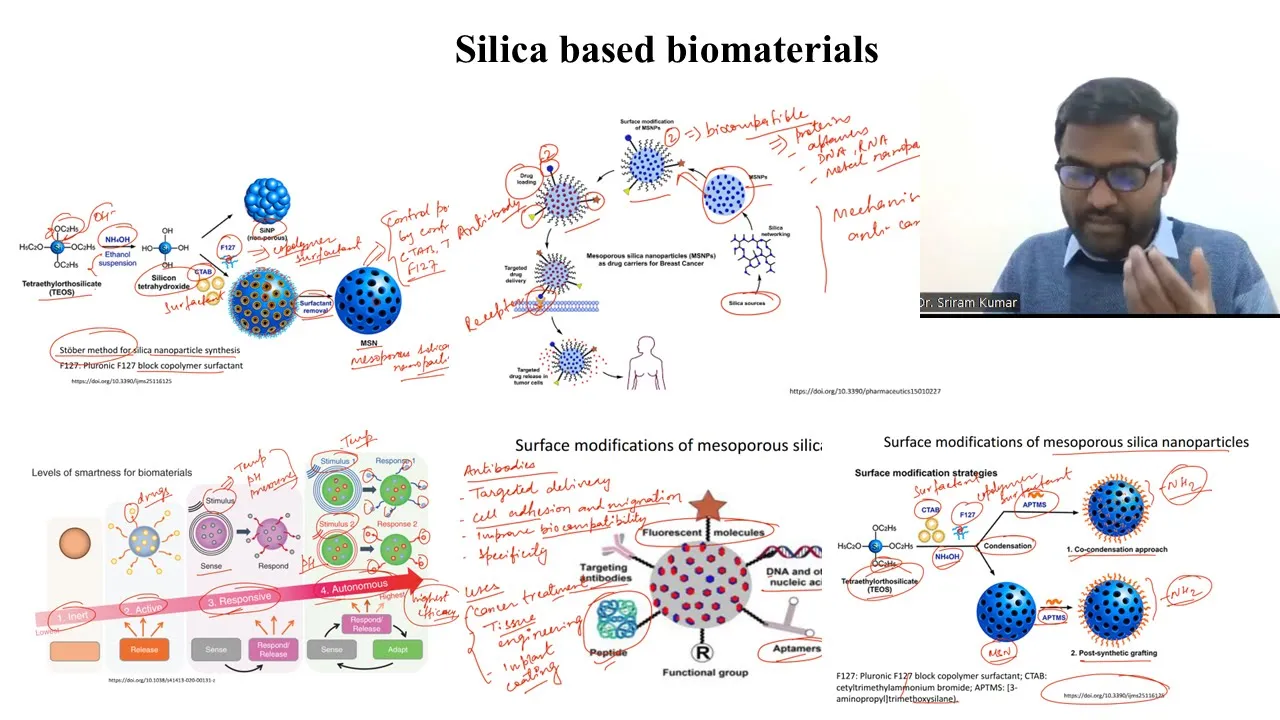
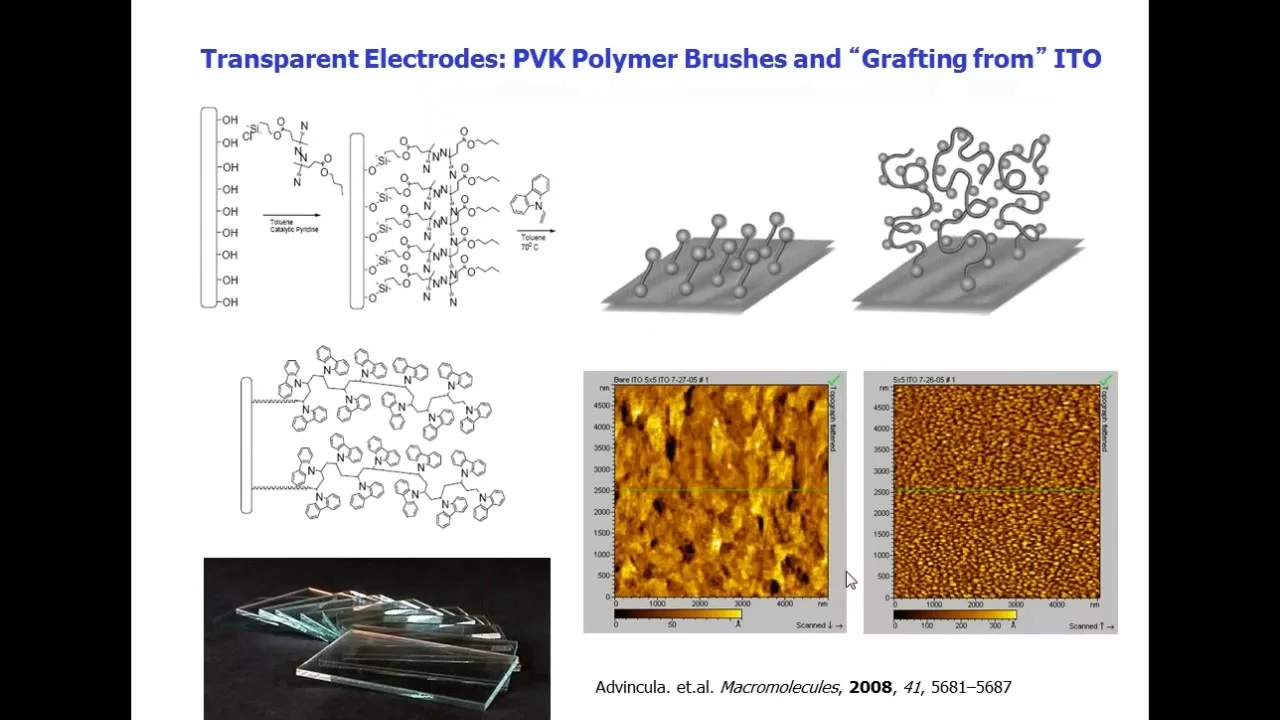


Ferrofluids are magnetic liquids created by coating magnetite nanoparticles with surfactants like oleic acid to prevent aggregation while maintaining magnetic responsiveness; the synthesis requires precise control of iron(II):iron(III) ratios (approximately 2:1), careful pH adjustment during precipitation, and thorough purification to remove oversized or improperly coated particles, as demonstrated through iterative experimentation showing that homemade ferrofluids often fail due to impurities, incorrect stoichiometry, or insufficient coating quality.
Making a Ferrofluid: Magnetite Synthesis & Nanoparticle Coating
Added:Understanding of chemical precipitation reactions, specifically the co-precipitation of iron(II) and iron(III) ions in a basic solution to form magnetite.
Basic principles of colloid chemistry, including the definition of a colloid and the difference between stable suspensions and phase separation.
Concepts of intermolecular forces and surface chemistry, particularly how surfactant molecules (like oleic acid) use hydrophobic and hydrophilic regions to prevent nanoparticle agglomeration.
Fundamental magnetism concepts, including magnetic fields, magnetic dipoles, and the distinction between ferromagnetism and paramagnetism.
The physics of superparamagnetism, exploring why nanoscale magnetic particles behave differently than bulk magnetic materials under thermal fluctuations.
Biomedical applications of magnetic nanoparticles, such as magnetic resonance imaging (MRI) contrast agents, targeted drug delivery, and hyperthermia therapy for cancer treatment.
Engineering and industrial applications of ferrofluids, including liquid-tight rotary seals in hard drives, audio speaker dampening, and active damping in mechanical suspension systems.
Advanced nanoparticle functionalization techniques, including coating nanoparticles with silica, gold, or biocompatible polymers for targeted environmental and clinical uses.
5.1M views85.9Klikes22:39Original Release: 2018-10-17
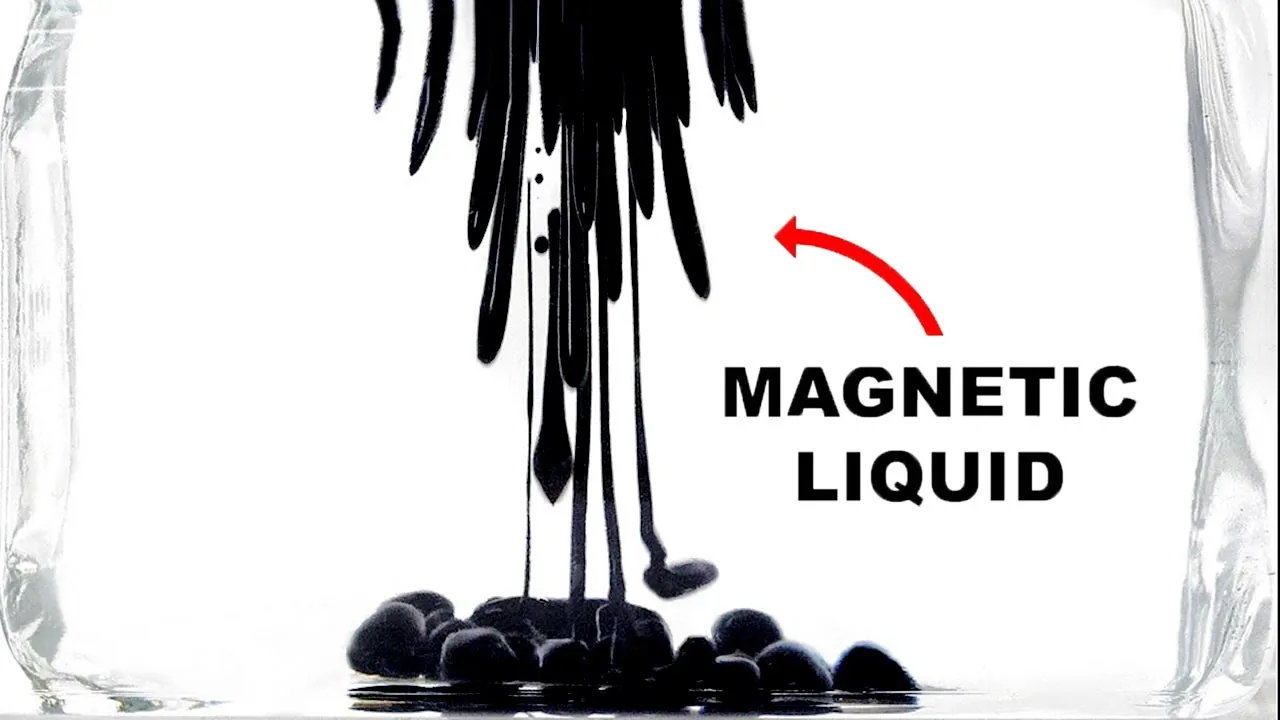
in my opinion ferrofluids are one of the most visually interesting things that I've ever seen just because they look so weird under normal conditions it just looks like an oily liquid but when it's exposed to a magnetic field it forms these spikes however when the magnetic field is taken away it instantly goes back to being a free flowing liquid when I first saw this I thought it almost looked like magic but the general idea behind it isn't actually that complicated it's all based around a magnetic iron compound which is almost always magnetite under normal conditions though if magnetite were mixed into a solvent it would very quickly separate out especially under a magnetic field so to fix this problem the magnetite particles are chemically coated with something that allows them to be stabili suspended in the solvent if this is all done properly the magnetic field won't be able to pull the particles out of solution but they'll still react to it and the result of that is this weird magnetic liquid that we call a ferrofluid ferrofluids can be used practically in many things like hard drives or speakers but I feel like most people including myself are just interested in playing around with it the biggest issue though is that it tends to be super expensive in the u.s.
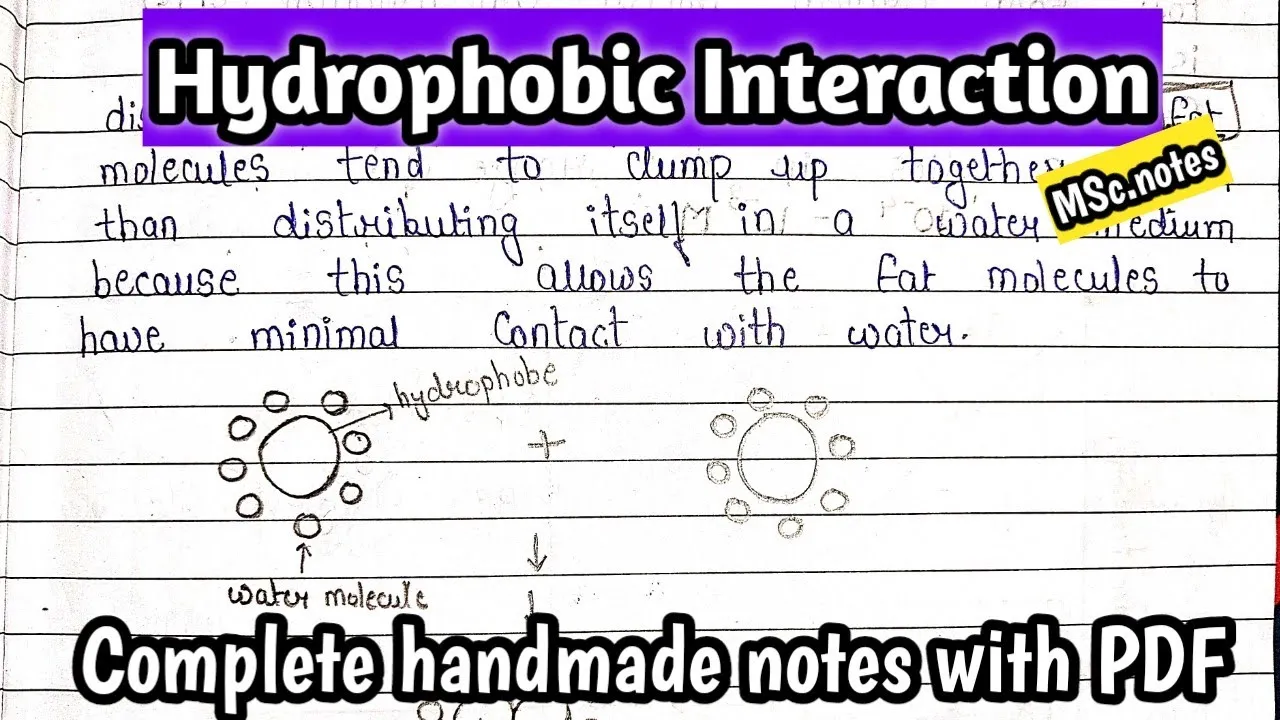
it seems to be a bit cheaper but in Canada it's usually around a dollar a milliliter for small amounts or around 40 to 50 cents if you buy more than a liter there are some videos and tutorials out there where people make it from cheap things like printer toner and motor or vegetable oil but this doesn't make a true ferrofluid it instead makes something called a magnet or II illogical fluid or just an mr fluid for short it can still be fun to play with but it's just not the same thing and it often easily separates from the carrier solvent so I decided that it would be my responsibility to come up with a cheap and relatively easy way to make a good ferrofluid I spent several hours online and I managed to find what seemed like some decent procedures however for some reason they all seem to be a bit different so I did my best to just combine all of the info into what I thought would be a good method however as you can maybe tell from the title of this video which is attempting to make ferrofluids I wasn't exactly successful it turned out to be way harder than I initially thought and I'm gonna have to put a lot of practical research into it what I'm gonna go over in this video is my first major and partially successful run it's nowhere near a perfect or polished procedure but I still thought it would be interesting to show you all the problems and where I'm at and the whole thing in any case the first step in the prep was to make the magnetite and to do this I needed a source of iron two plus ions iron three plus ions and ammonia for the iron two plus I used iron ii sulfate that it purified from plant fertilizer in a previous video and for the iron three-plus i used iron three chloride which i also made in an older video if you're at all interested in seeing how I prepared either of these iron compounds there are some links in the description and for the ammonia I just used ten percent ammonia cleaner that I found at my local hardware store after making the magnetite the particles needed to be coated with something and it's pretty typical to use oleic acid I ended up just buying it from eBay but in theory it is possible to make it from olive oil okay so the first thing that I had to do was make a solution of the iron three-plus ions and to do this I added 54 grams of iron 3 chloride also known as ferric chloride followed by a hundred mils of water then I turned on the stirring and I waited for it all to dissolve after several minutes pretty much all of it had disappeared except for a very small amount these were just some impurities from when I made the ferric chloride probably some iron oxides and to get rid of them I had to filter them off in the past I tried just doing a regular gravity filtration but it didn't seem to work very well so what I did here instead was a vacuum filtration where it first went through a coffee filter and then a proper filter paper below the filter I collected the nice and clear solution and I think it took about five or ten minutes for everything to pass through when it was done I took away the filter and I moved on to making my iron two-plus solution this time I used 27 point eight grams of iron ii sulfate also known as ferrous sulfate and again a hundred mils of water I turn on the stirring and it started to dissolve but there was a slight yellow color to the solution ferrous sulphate tends to react with oxygen in the air and this was probably some sort of oxide that had formed to deal with this I just added a few drops of sulfuric acid and you can see that the color quickly disappeared after stirring it for a few minutes everything dissolved and I moved on to the next step into a nice one liter beaker I added the ferric chloride solution that I just made and I turned on the stirring then into this I poured in the ferrous sulphate solution there was no reaction going on here and I now just had a mixed solution of iron two plus and iron 3 plus I let it stir for like thirty seconds and then I tested the pH from this I saw the pH was around one which was perfect if it weren't I would have had to add some extra sulfuric acid the next thing I did was position a separatory funnel just above the solution then I carefully filled it up with the 10 percent ammonia cleaner when I was ready to get the reaction going I turned the stirring close to maximum and I opened up the separatory funnel ammonia is a base so as it was added the pH slowly increased there was initially no reaction though because everything was still quite acidic however when the pH was raised to between 2 & 4 the iron three-plus ions started reacting with it to make brown ferric hydroxide and as more ammonia was added more ferric hydroxide was made and the mixture got browner and browner the original dark yellow brown color of the ferric chloride also slowly disappeared then when the ph got to between seven and nine the ammonia started reacting with the iron two-plus ions to make ferrous hydroxide very quickly after it formed though it reacted with the ferric hydroxide to form a mix to iron compound called magnetite because this reaction was done slowly with a weak base fast during and in dilute conditions the magnetite particles that formed were extremely small with this method it's hard to control the exact particle size but most of them should be nanoparticles when it comes to making ferrofluids it's extremely important to have the magnetite particles as small as possible and you'll see why in a bit I had to bring the pH of the mixture up to around 10 but by the time it was nearly full it wasn't there yet so I had to temporarily stop things and transfer everything to a larger container then it just continued the addition and I kept checking the pH it eventually got to the target pH of around 10 so I stopped the addition and I took away the separatory funnel then I turned off the stirring and I brought in a really strong magnet to help pull the magnetite out of suspension when most of it had settled out I used a beaker to pull out the excess water I continued doing this until they got to a volume of about 700 mils and then I transferred it back to a beaker just for fun I brought back my magnet and played around with things a bit the way that it behaved here was almost like a ferrofluid but it wasn't because none of the particles were stabilized in any way this meant that most of the magnetite was easily pulled out of solution and if I left the magnet there it eventually would have cleared up in a proper ferrofluid though the particles are treated so even if they're exposed to a strong magnetic field for a long period of time they never separate so this treatment step was exactly what I had to do next I cleaned up the beaker with some water turned on the stirring and slowly added 25 milliliters of oleic acid after it was all added I increased the stirring a bit more and I turned on the hot plate the goal now was to slowly increase the temperature until he got to around 90 C in the last step I brought the pH up to around 10 which meant that there was an excess of ammonia so now the first reaction that was going on was between the oleic acid and that leftover ammonia this formed ammonium Olie 8 which unlike oleic acid was soluble in water the polar ends of the ammonium Olie 8 were then adsorbed to the surface of the magnetite nanoparticles and as the temperature was slowly increased the ammonium olier degraded and went back to being oleic acid at around 80 or 85 C I started to notice some clumping and by the time that I got to 90 everything separated out the reason this happened was because at this point the particles were covered with enough alayich acid to make them extremely hydrophobic after it separated I heated the solution for 10 more minutes and then I took it off the hot plate I dumped off all the liquid and then I added distilled water to wash it I did my best to break it up but it was really oily and all stuck together I also had to reach in and manually pull up my stir bar and you can see how nice and dirty it was however it honestly wasn't very hard to clean and I just washed it with some kerosene and maybe a bit of acid when I felt like I had given the particles at decent enough water washing I put the magnet to the beaker and poured everything off this water washing process was then repeated two more times when that was done I then washed it three more times with ethanol to get rid of any excess oleic acid what was weird was after the first and second washing it gave me a nice separated powder but after the third one everything clumped together again I'm honestly not exactly sure why he did this in any case when it was done it looked like I lost a decent amount of magnetite in the washings so I put a magnet under it to pull it all out I let it sit for about 10 minutes and then I poured off the liquid and saw that there was a decent amount at the bottom this recovery along with the main stuff was then transferred onto two small dishes both of them were still full of ethanol so to dry them I put them in my vacuum desiccator overnight by the morning the ethanol was gone but they were both still a bit oily I think this might be because I used way too much oleic acid in the coating process so the washing steps didn't get rid of it all in any case to test it I took a small piece from the main batch and added a minimal amount of kerosene kerosene is a very nonpolar solvent and it'll hopefully be able to interact with the nonpolar oleic acid that I attached to the surface of the magnetite particles this should allow the normally insoluble magnetite to be dispersed in the solvent almost as though it was being dissolved however it technically isn't getting dissolved and it's more accurate to describe it as a stabilized colloidal suspension this coating of oleic acid also helps keep the particles separated and it prevents them from aggregating together ideally the final result will be a stable suspension of magnetite nanoparticles that can interact with a magnetic field but still stay in solution when I felt that it was ready I went ahead and tested it and it kind of worked but the quality was really bad to be fair though it did still kind of work but it didn't look like it was completely liquid and it also didn't spike at all I then whipped up a much bigger batch and it was pretty clear that this was a terrible ferrofluid however on the bright side I thought that it still kind of looked cool in a good and proper ferrofluid the spikes looked pretty soft but here they were really sharp and the reason for this was that most of my particles were unfortunately aggregating and getting pulled out of solution I'm not exactly sure why this happened but there were only two real variables to consider the magnetite particles were either too big not coated with enough alayich acid or it was a combination of the two after seeing this I kind of just assumed that my whole process was a total failure however before just scrapping what I had and moving on I went online to try to find a way to salvage it and in my research I ended up finding a YouTube video where a guided the most high-quality homemade ferrofluid that I had ever seen he didn't post a proper tutorial or a video about how he did it but he did reply in the comments I read through all the comments that he made on all seven of his ferrofluid videos and they were honestly really helpful in my opinion his most important point was that in making ferrofluids there are two major parts the first is making the coated nanoparticles like you already saw and the second is purification the general idea that I got was that it didn't matter how good my process was to make them I still had to purify out the ones that were too big or the ones that weren't coated properly he only gave some really basic details about the purification but it seemed simple enough so I decided to try it out now going back to what I recovered I initially planned to test these two samples separately however after seeing the poor results that I got I didn't really think this was worth it and I just decided to combine them I didn't just straight-up mix one into the other though and I decided to spread them out as evenly as possible across the two dishes then I took the one on the right and tried to purify it the reason I was only doing with half the amount instead of the full thing was that I wanted just to make sure I had a backup in case I messed up once I got it all transferred to a beaker I started adding some kerosene I mixed it all around and I tried to get it to dissolve I kept adding more kerosene when I felt I needed it but in general the goal was to use as little as possible after stirring for another few minutes it really didn't look like this beaker was gonna be big enough so I transferred it all to a larger one and I washed the beaker a few times with a small amount of kerosene eventually something like 95 percent of it had dissolved but I used William or kerosene than I expected there's also some insoluble junk at the bottom so I poured everything off from this beaker into a new one particles that are properly sized and coated dissolve really easily into kerosene and you don't need much of it at all so I think the major reason why I had to use so much kerosene here was just that my particles were really bad quality just for fun I tested things out with my magnet and you can see that immediately a bunch of solids separated out after seeing this I realized that I probably could have just used a lot less kerosene and dumped off most of the junk the good particles should have all just stayed in solution and it probably could have gotten away using a lot less kerosene in any case for the next step I still had to use the magnet but this time the beaker was just placed on top of it it was then left to sit here undisturbed for about 24 hours the basic idea here was that all the crappy particles would get pulled towards the magnet but all the good ones would easily stay in solution so I came back a day later and I poured off the liquid and at the bottom of the beaker I was left with all my crappy magnetite particles like before they were still fun to play with but they weren't gonna be useful for making any kind of ferrofluid all the good quality particles were still in the kerosene and to get them out I had to knock down their solubility and to do this it was quite simple and I just had to add about twice the volume of acetone unfortunately though since I used way too much kerosene in the previous step it's now carrying over and making me use a lot more acetone in future runs I'm definitely gonna keep the amount of kerosene to a minimum and instead of using around 150 mils I probably could have gotten away with something like 10 anyway with all the acetone added I put it on a magnet and I let it sit there for a couple minutes I then pour it off all the solvent and at the bottom I was left with a brown paste with the help of a bit of acetone I transferred it all to a small dish then I used the acetone that was here to mix things around and to wash the particles a bit more to separate it from the solvent I just did the same thing as other runs and I put it back on the magnet this time though things seem to be quite different the particles very quickly separated from solution and with very little effort everything cleared up there was no apparent sign of anything aggregating and it appeared to be a very nice and finely divided powder just for good measure I watched it a couple more times with acetone and then with the help of the magnet I dumped off the solvent I was left with a paste which now needed to be dried so I spread it out with a glass rod then I set up a small fan to blow air over it and to get rid of the acetone as it dried I occasionally mix things around and I think this whole process took something like 20 or 30 minutes when it got to this point it was pretty much done but just to really dry it up I put it in an oven at around 40 C for another hour and after this I was left with a really nice and crispy black powder I was pretty happy that things seemed to be working out but the yield here was still really miserable the mass of the powder here was about point six two grams where the theoretical yield for the half batch was at least around 11.6 this meant that my percent yield was probably lower than 5% which is very far from ideal in any case before continuing on with any conclusions I first had to see if this powder actually worked so I dumped it all into a beaker and then I slowly added a minimal amount of kerosene after mixing it thoroughly and carefully adding extra kerosene drop by drop eventually everything dissolved then to test it I poured it onto a watch glass which was sitting on top of my magnet and almost immediately the result was clearly better than the last time however the first thing that I noticed was that it still wasn't doing any spiking I tried moving it around and playing with it spacing from the magnet but I never got it to work at first I thought that maybe my volume was just too low so I tested it with an even smaller amount of the commercial fluid and it was still able to easily spike one other possibility was that maybe it was just too diluted so I again got some of the commercial stuff and then I added some kerosene with every drop the spikes slowly disappeared and I was eventually left with something that looked very similar to the stuff that I made based on this I think it is pretty likely that I just used too much solvent when I was done I shot some acetone onto the dish to wash it but what I noticed was that all the precipitate was black if you recall from earlier though when I did this with my stuff it ended up being brown at the time I thought it was just because of the oleic acid coating or something but this clearly isn't the case the coated magnetite as far as I can tell is just as black as the regular stuff I'm thinking now that it's very likely that the brown color was actually from a different iron compound and the major problem with that is that most other iron compounds aren't nearly as magnetic as magnetite so I think my fluid wasn't able to spike because not only was it too dilute a lot of the particles probably just weren't magnetic enough I think the reason for this comes down to what I use to make the magnetite the ratio of the iron to two iron three has to be as close to two to one as possible and the chemicals also have to be pretty pure or else other iron compounds can start being made I think the quality of my iron supplies were good enough for other applications but I just don't think it really cut it here so the next time that I try this I'm not gonna be using any of my homemade iron compounds instead I'm just gonna directly buy a premade solution of iron 3 chloride that's normally used to etch circuit boards from this I can also make my iron 2 by just dumping a whole bunch of nails into a portion of it my coding process in this video was also kind of a bit sloppy and I plan to change a few things about it in any case this is an active project that I'm working on and I hope to get decent results pretty soon and when I do I'll actually try to edit it in a reasonable amount of time and get it out to you guys as usual a big things goes out to all my supporters on patreon everyone who supports me can see my videos at least 24 hours before I post them to YouTube also everyone on patreon can directly message me and if you support me with $5 or more you'll get your name at the end like you see here [Music] [Music]
Up Next
9:52
The Maillard Reaction: Chemistry of Food Browning
@phdatliving
24.8K views•2021-01-24
83:56
Biocatalysis and Catalysis in Islatravir Synthesis | Merck Webinar
@SCIwheresciencemeetsbusiness
675 views•2020-10-08
90:11
Turning Air into Alcohol: A Chemistry Experiment
@NileRed
302.6K views•2026-08-05

17:31
Edible Water Bottles: A DIY Guide to Sodium Alginate Spherification
@ryan
10.5M views•2019-06-21
Related Study Plans & Knowledge Roadmaps
Structured learning paths in Chemistry
chemistry
Nuclear Chemistry: Decay, Meds & Fuel Cycle
01Introduction to Nuclear Structure and Radioactivity
02Decay Dynamics and Kinetics
03Radiation Interaction and Detection
+ 2 more learning modules
24h5 modules
Explore Roadmap
chemistry
Supramolecular Chemistry: Forces & Machines
01Foundations of Chemical Bonding and Intermolecular Forces
02Introduction to Host-Guest Chemistry
03Thermodynamics and Dynamics of Self-Assembly
+ 2 more learning modules
16h5 modules
Explore Roadmap
chemistry
Photochemistry: Excited States & Reactions
01Foundations of Light-Matter Interactions
02Molecular Orbitals and Electronic States
03Photophysical Processes and Jablonski Diagrams
+ 2 more learning modules
18h5 modules
Explore Roadmap
chemistry
Coordination Chemistry: Bonding & Properties
01Introduction to Transition Metals and Ligands
02Crystal Field Theory (CFT) and Geometry
03Magnetic Behavior and Spin States
+ 2 more learning modules
14h5 modules
Explore Roadmap