






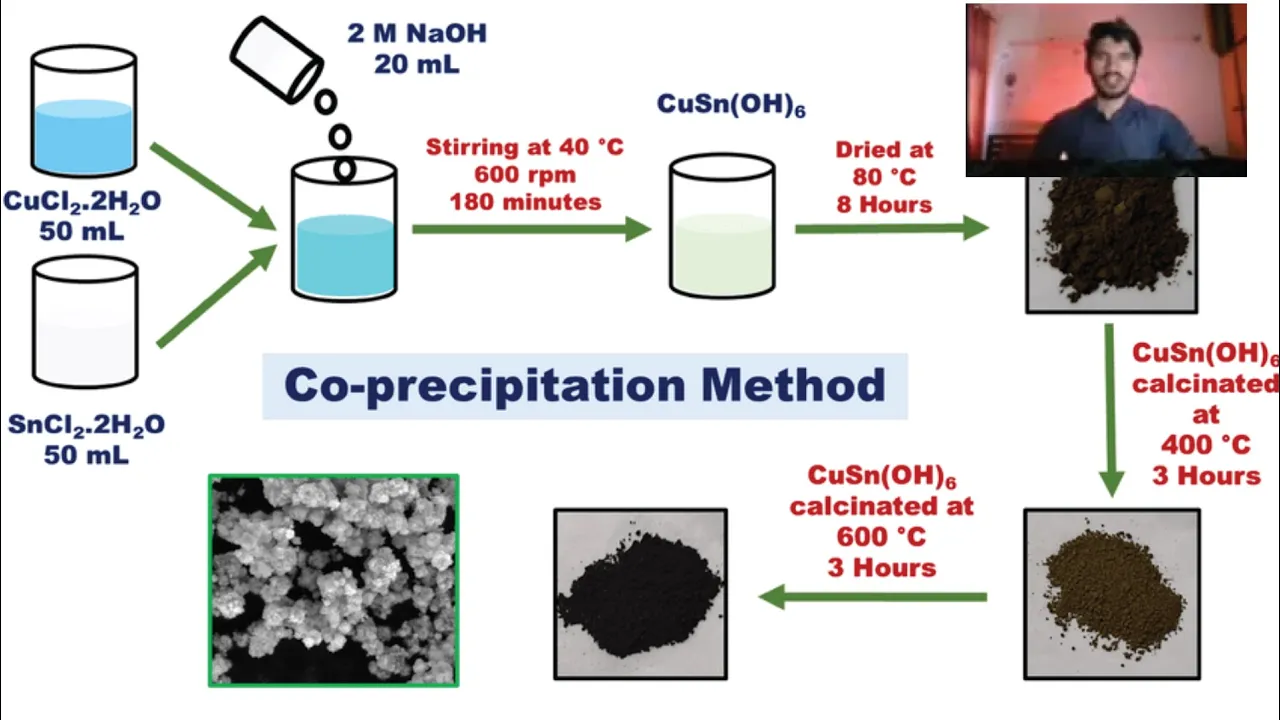




















Iron oxide nanoparticles (Fe3O4) can be synthesized through a chemical precipitation method by co-precipitating Fe²⁺ and Fe³⁺ ions from aqueous salt solutions (ferrous sulfate and ferric chloride) with ammonia base at room temperature, followed by drying at 150-200°C; this method offers advantages of low cost, easy industrialization, improved reproducibility, and low-temperature growth, yielding magnetic nanoparticles that can be characterized using UV-visible spectroscopy, SEM, XRD, and dynamic light scattering techniques.
Synthesis of Iron Oxide Nanoparticles via Precipitation Method
Added:Basic principles of coordination chemistry and the oxidation states of iron (Fe2+ and Fe3+).
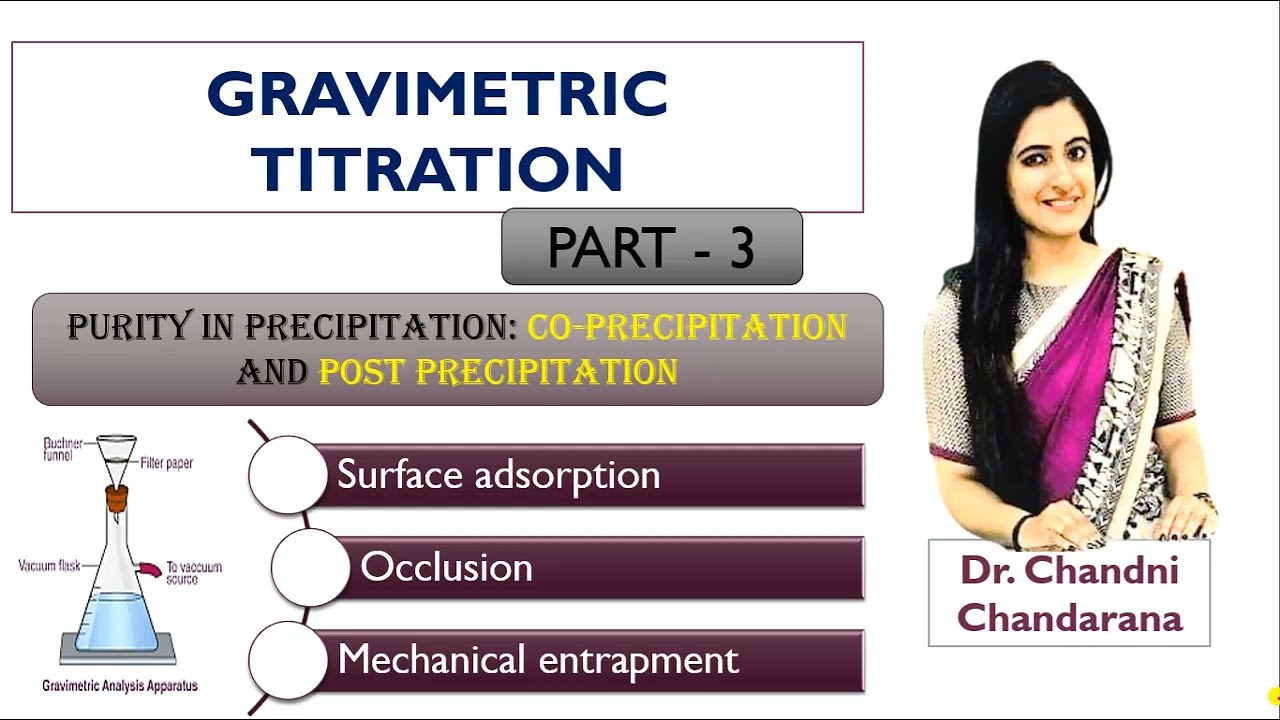
Fundamentals of chemical precipitation and co-precipitation, including nucleation and particle growth mechanisms.
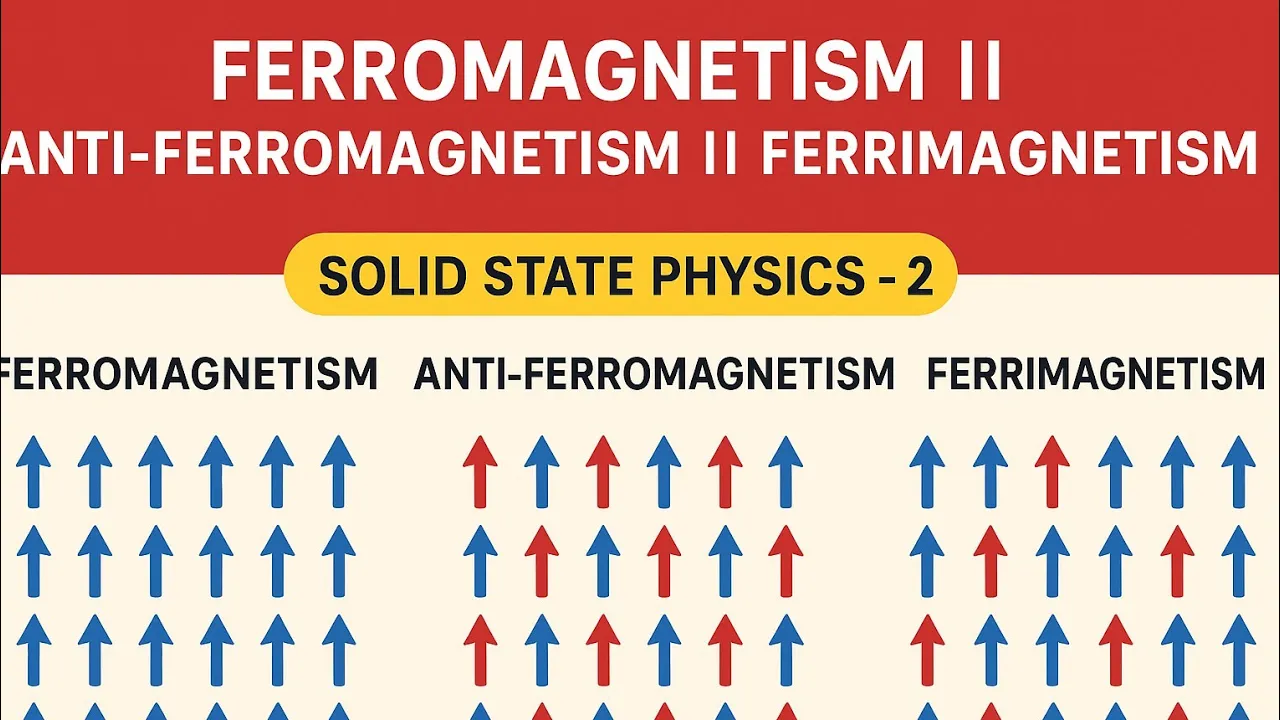
Introduction to magnetism, specifically the difference between ferromagnetism, ferrimagnetism, and superparamagnetism.
Basic understanding of pH, buffers, and how solution alkalinity drives chemical synthesis.
Advanced characterization methods for nanoparticles, including X-ray Diffraction (XRD), Transmission Electron Microscopy (TEM), and Vibrating Sample Magnetometry (VSM).
Surface modification and functionalization techniques (e.g., coating with silica or polymers like PEG) to prevent nanoparticle aggregation and ensure biocompatibility.
Biomedical applications of superparamagnetic iron oxide nanoparticles (SPIONs), such as magnetic resonance imaging (MRI) contrast enhancement and targeted drug delivery.
Environmental applications of magnetic nanoparticles, specifically their use in heavy metal extraction and wastewater purification via magnetic separation.
16.1K views303likes7:54Original Release: 2021-12-17
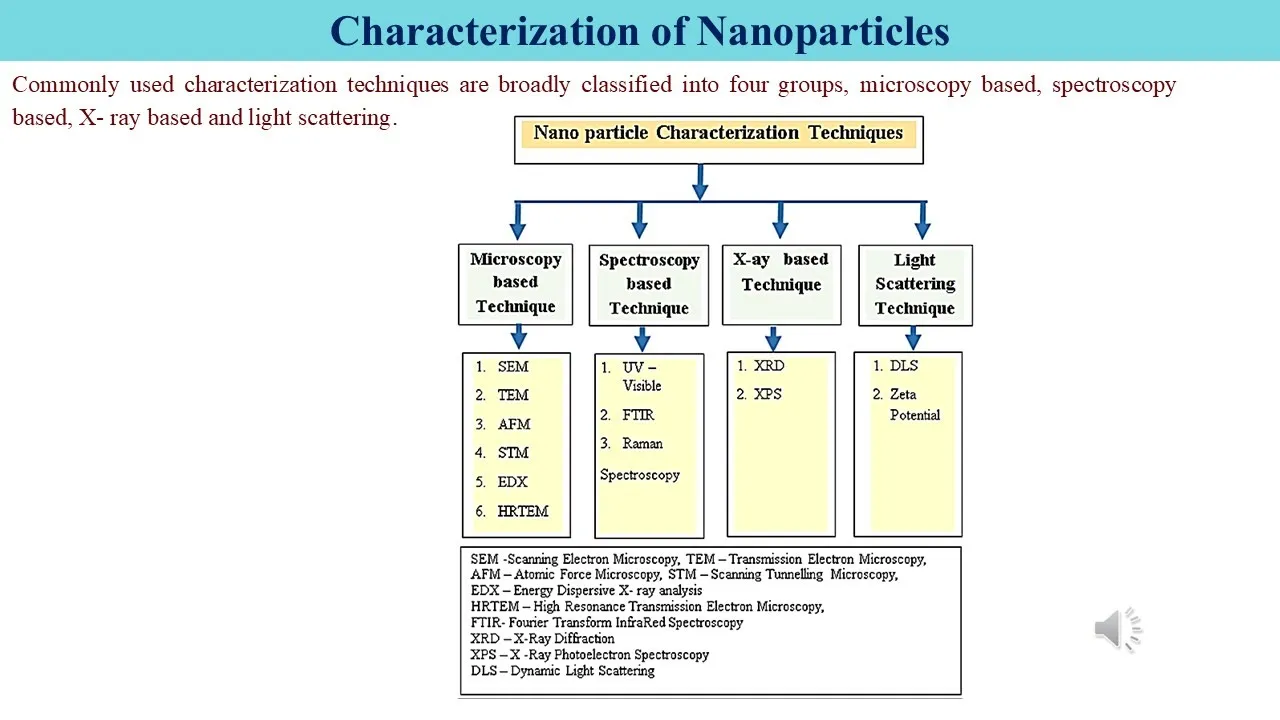
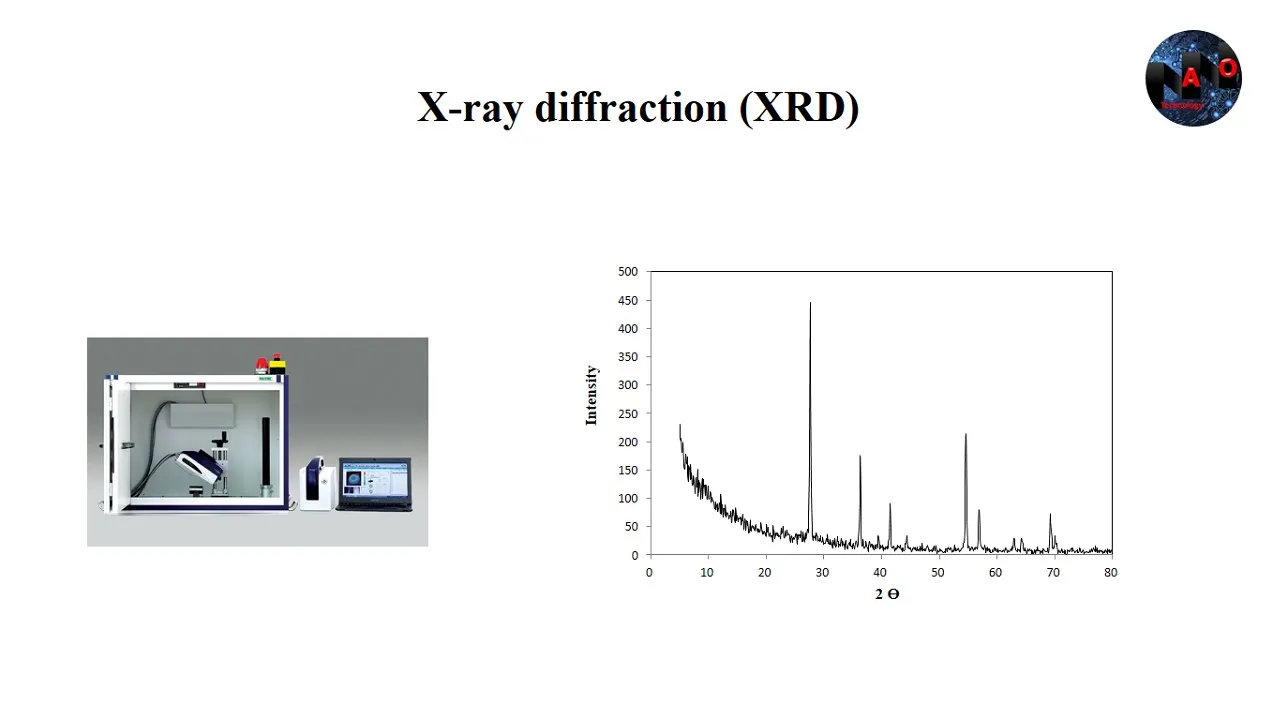
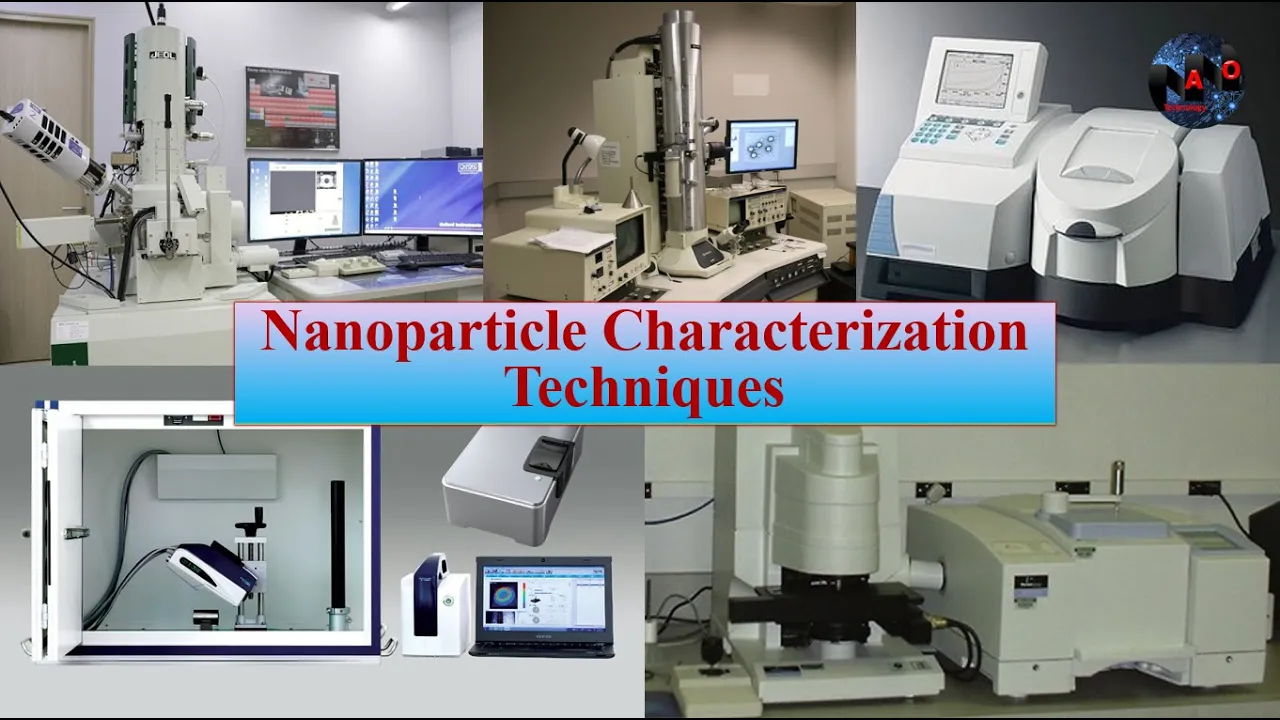
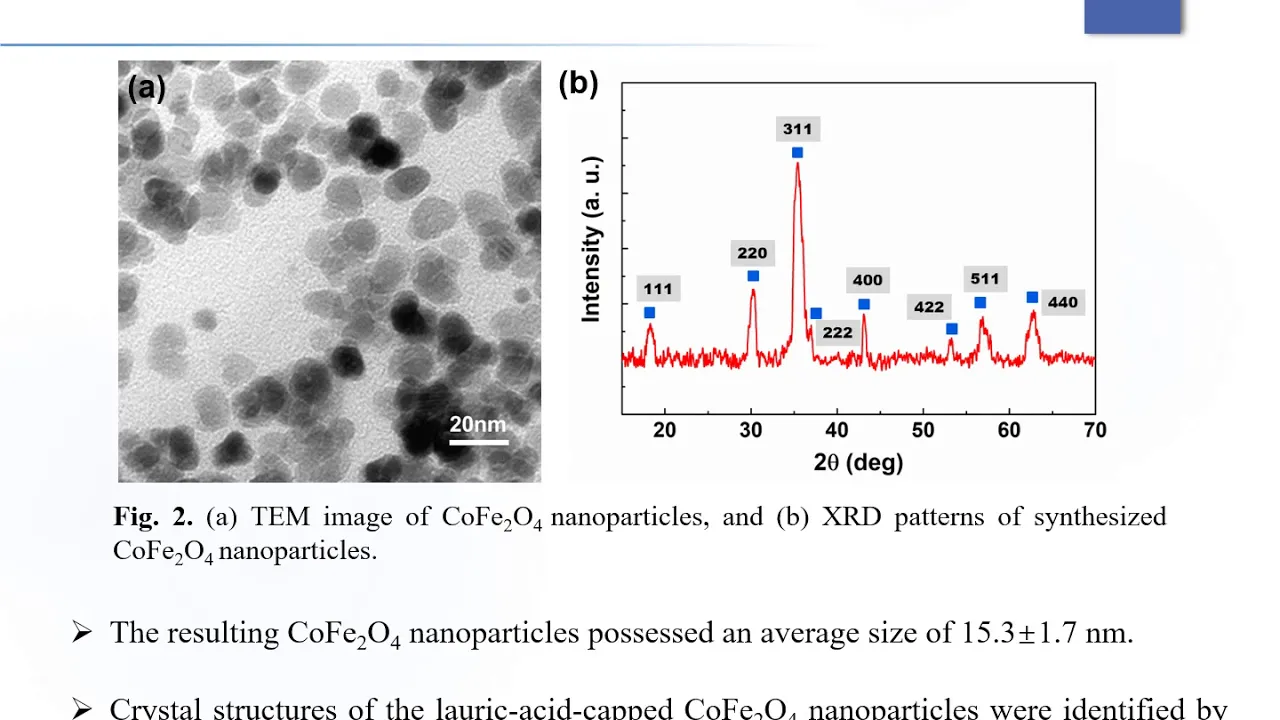
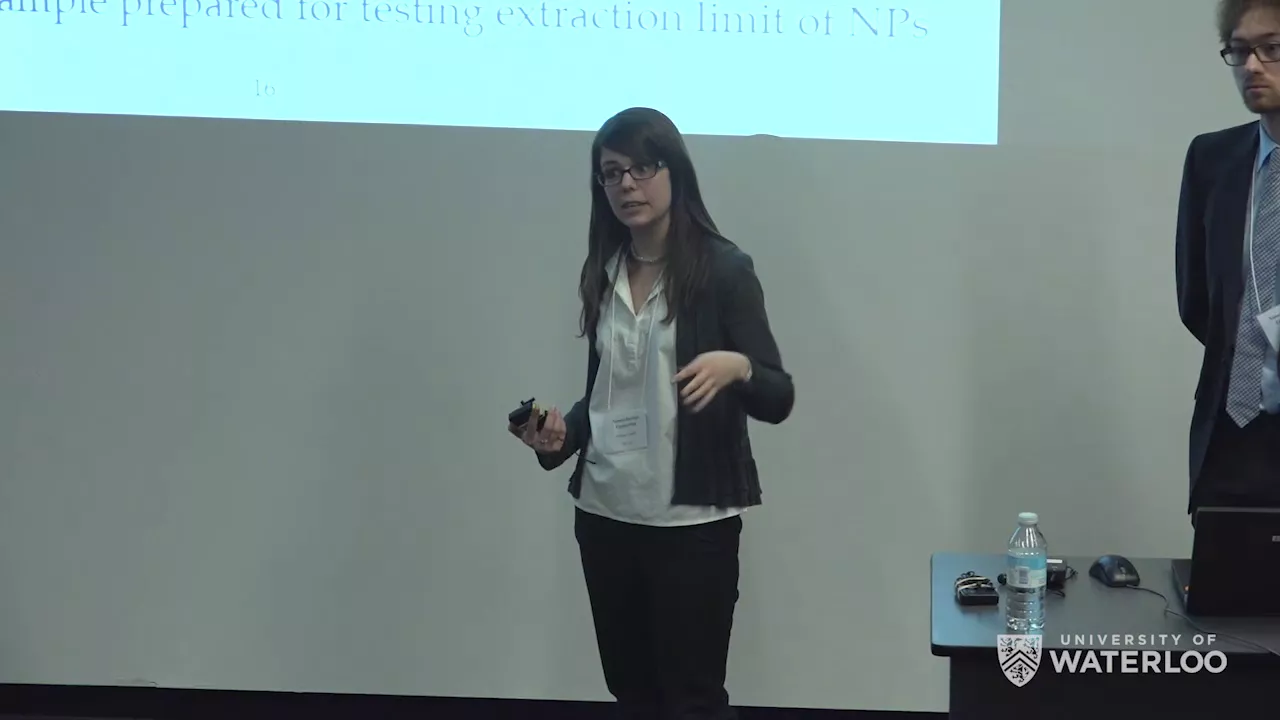
hello welcome to the demonstration session of synthesis of iron oxide nanop particles by precipitation method myself Dr Kiran Kumar P assistant professor Department of Chemistry atme College of Engineering myoro precipitation method is uh among the chemical root the chemical precipitation method is considered to be a one of the simplest technique the method is uh given more priority due to its lowcost easy industrialization with improved reproducibility this method offers low temperature growth and scale up fabrication which yields collidal solution with wide range of particle distributions the precipitation method uh is a method where commonly a metal oxide nanoparticles are synthesized by this method so let us see the principle of the precipitation method for the iron 3 nanoparticles co-precipitation method is a convenient way to synthesize iron oxide nanoparticles that is fe304 it is synthesized by fe2+ and fe3+ salt Solution by addition of Base at room temperature or at elevated temperature the chemicals required for the synthesis are feo4 of2 mol fecl3 of1 m deionized water and a base ammonia of 3 mol the procedure is f S4 of2 M and F3 of1 mol are dissolved in deionized water they are dis dissolved in deionized water further ammonia of three m is added dropwise in a magnetic stera the solution is placed in a magnetic ster ammonia is added the uh magnetic uh the the RPM is adjusted for 1,000 RPM the resultant solution will be a black precipitate the product is F34 it is transferred to hotair woven where about 150 to 200 Dees maintained for 2 hours of drying we get Fe 34 the obtained product is of magnetical property it has a magnetic property can see the fe304 that has a magnetic property in it let us have a video demonstration For the synthesis of the same iron 3 oxide nanop particles the chemicals required are feros sulfate feric chloride and ammonia solution about4 G of ferros sulfate solution and about 1.4 G of feric chloride solution is transferred into 50 ml water we add 50 mL of deionized water to the Sun 50 mL of deionized water is added further it is placed in a magnetic steerer and the RPM level is adjusted to up to 1000 RPM with constant stirring ammonia of three m is added dropwise till the pH level is reached to 10 can see the black precipitate is obtained and we keep on adding ammonia drop wise till the pH ranges about 10 can see the pH now is 10 now the resultant solution the black precipitate is now filtered using a Workman filter paper it is filtered by multiple washing with deionized water the filt rate is transferred to air oven maintained at 150 to 200° Centigrade for 2 hours you can see the prepared product of fe304 nanoparticles it has a magnetic property in it let us check with a magnet can see here it is attracted by the magnet so it's of fe304 iron having + 3 oxidation state in it further in order to know or in order to verify whether uh the prepared particles are of nanop particles we go for the characterization technique in the characterization technique initially for the existence of nanoparticles it is proved with the help of UV visible spectroscopy so we carry out UV visible spectroscopy for the product further to know more about the morphology surface and the size of nanop particles We Carry Out temp image sem image scanning electron microscope and xrd xray defraction studies and dynamic light scattering studies to anal analyze the morphology and size of the synthesized nanop particles so this is a reaction involved we have feo4 fcl3 right F3 and f44 ammonia is added with constant stirring at 1,000 RPM we get a black precipitate of F34 hence the method is the precipitation method we get a black precipitate thank you
Up Next

22:39
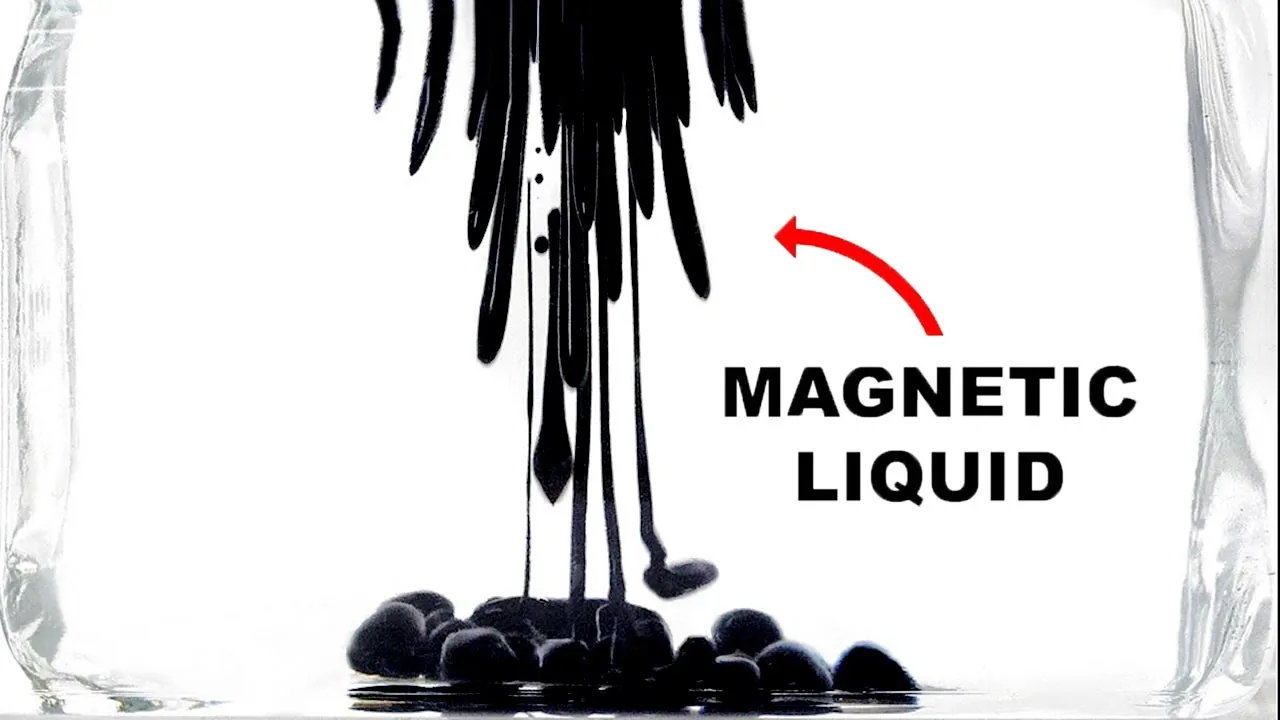
Making a Ferrofluid: Magnetite Synthesis & Nanoparticle Coating
@NileRed
5.1M views•2018-10-17

83:56
Biocatalysis and Catalysis in Islatravir Synthesis | Merck Webinar
@SCIwheresciencemeetsbusiness
675 views•2020-10-08
10:06
1H NMR: Determining Number of Peaks from Structure
@MSJChem
59.2K views•2017-04-06

17:31
Edible Water Bottles: A DIY Guide to Sodium Alginate Spherification
@ryan
10.5M views•2019-06-21
Related Study Plans & Knowledge Roadmaps
Structured learning paths in Chemistry
chemistry
Nuclear Chemistry: Decay, Meds & Fuel Cycle
01Introduction to Nuclear Structure and Radioactivity
02Decay Dynamics and Kinetics
03Radiation Interaction and Detection
+ 2 more learning modules
24h5 modules
Explore Roadmap
chemistry
Supramolecular Chemistry: Forces & Machines
01Foundations of Chemical Bonding and Intermolecular Forces
02Introduction to Host-Guest Chemistry
03Thermodynamics and Dynamics of Self-Assembly
+ 2 more learning modules
16h5 modules
Explore Roadmap
chemistry
Photochemistry: Excited States & Reactions
01Foundations of Light-Matter Interactions
02Molecular Orbitals and Electronic States
03Photophysical Processes and Jablonski Diagrams
+ 2 more learning modules
18h5 modules
Explore Roadmap
chemistry
Coordination Chemistry: Bonding & Properties
01Introduction to Transition Metals and Ligands
02Crystal Field Theory (CFT) and Geometry
03Magnetic Behavior and Spin States
+ 2 more learning modules
14h5 modules
Explore Roadmap