


















![우주 다큐 : 전체 우주의 반이 사라졌다. [EP 141] - 미노스](https://i.ytimg.com/vi/CHKKO8mOjdw/maxresdefault.jpg)




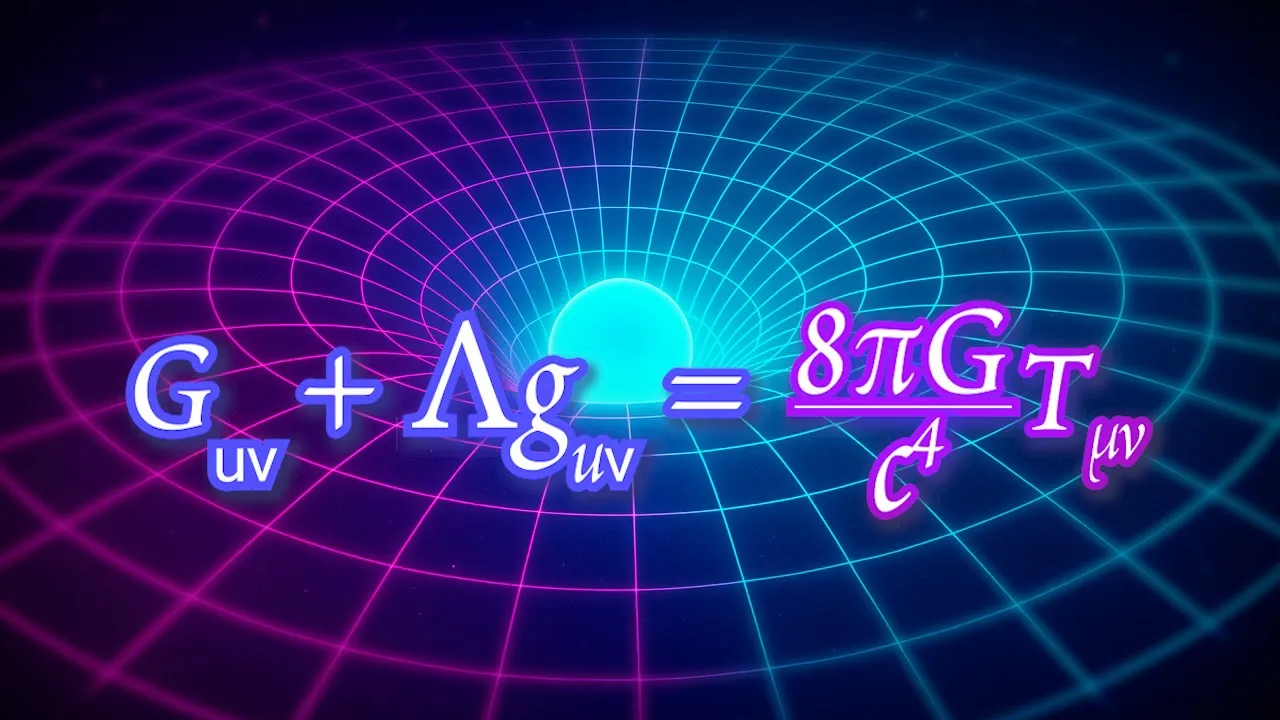
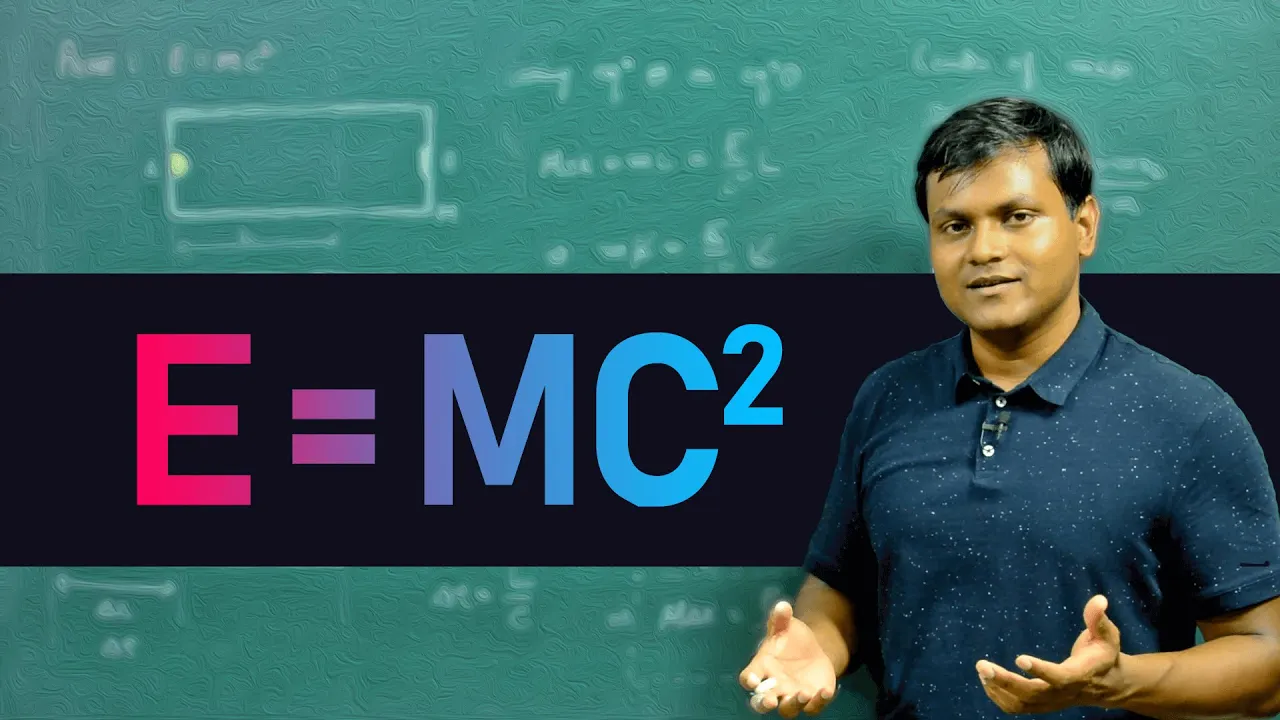
Einstein derived E = mc² by considering a radioactive atom at rest emitting two photons in opposite directions to prevent recoil, then analyzing the situation from a moving reference frame where Doppler shift causes photons to have different energies. Since observers in different frames must agree on the atom's final energy, the only explanation is that the atom lost mass equal to the photon energy divided by c², revealing that energy and mass are fundamentally equivalent.
How Einstein Derived E=mc²: Intuitive Explanation
Added:The core postulates of Special Relativity, especially the constancy of the speed of light (c) in all inertial reference frames.
Basic Newtonian mechanics, specifically the classical conservation laws of energy and linear momentum.
The concept of reference frames and how physical phenomena are observed differently from stationary versus moving frames (Galilean and Lorentz transformations).
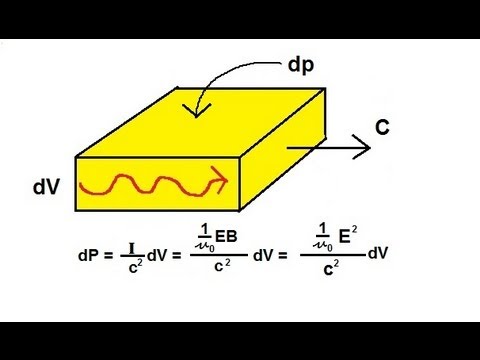
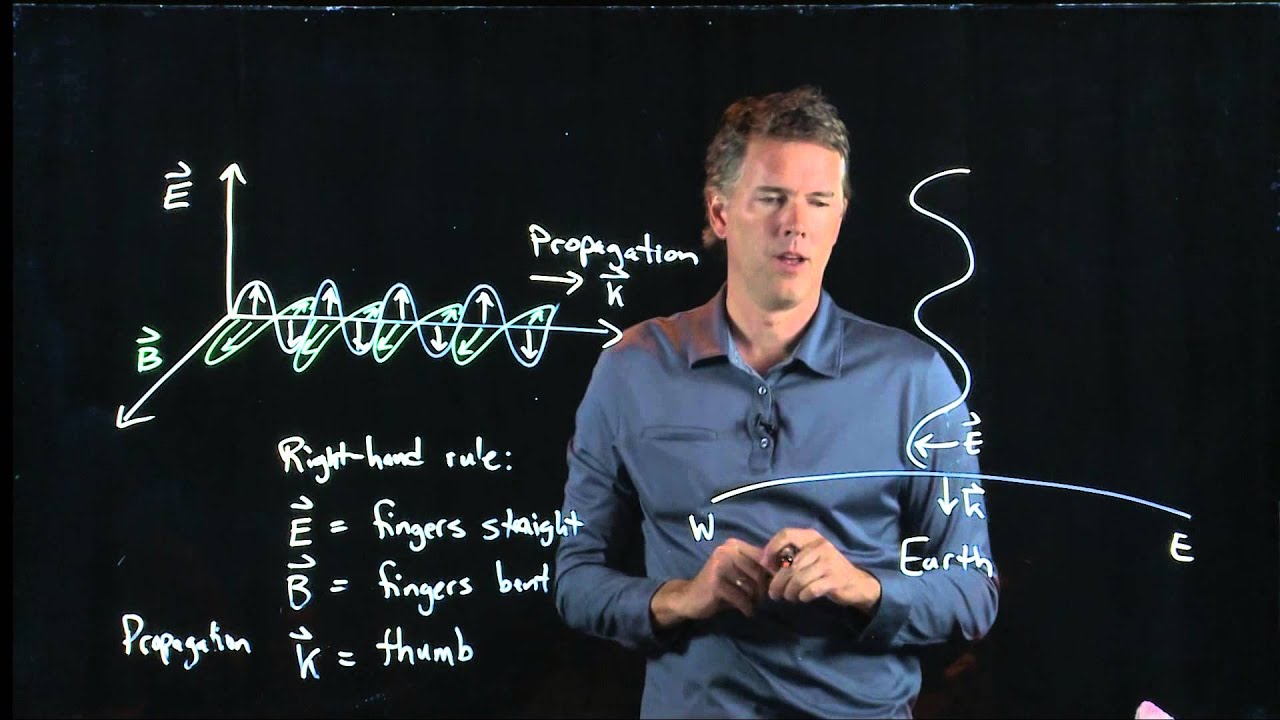
The fundamental classical wave theory of light, including the concept that electromagnetic radiation carries momentum.
The complete relativistic energy-momentum equation (E² = (pc)² + (m₀c²)²) to understand how energy relates to momentum for both massive and massless particles.
The concept of 'mass defect' and nuclear binding energy, which explains the energy released in nuclear fission, fusion, and stellar nucleosynthesis.
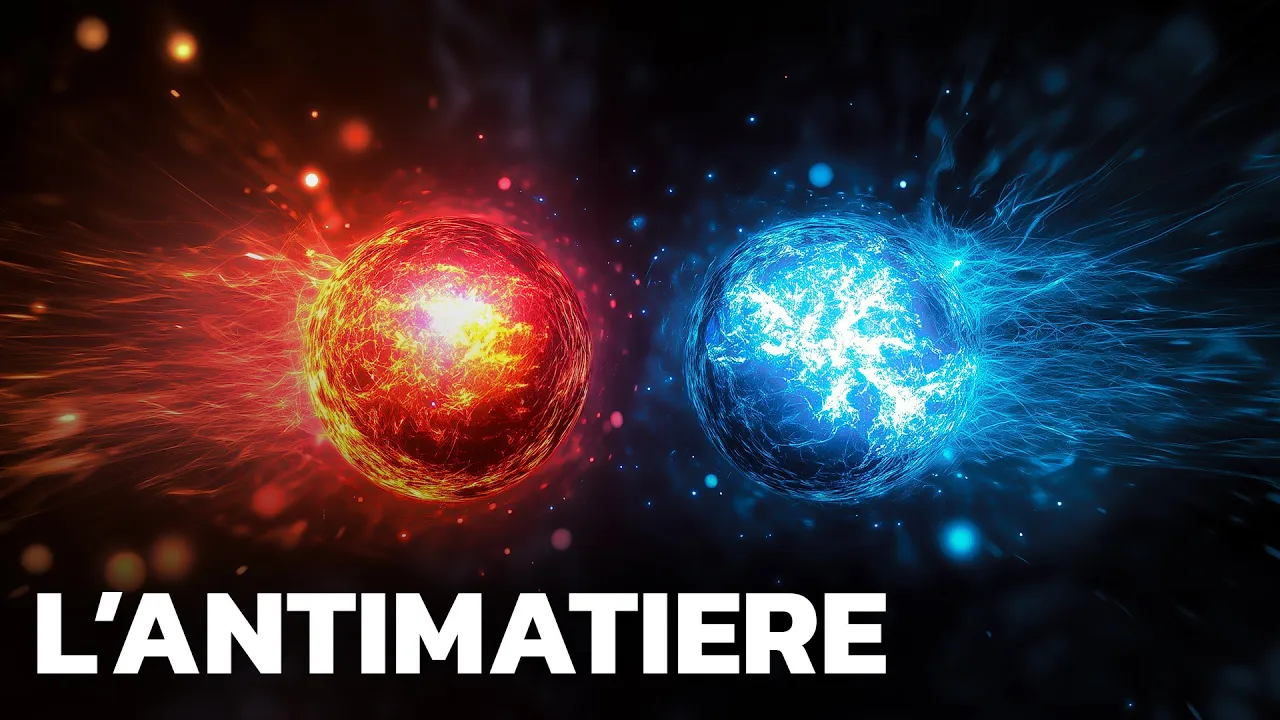
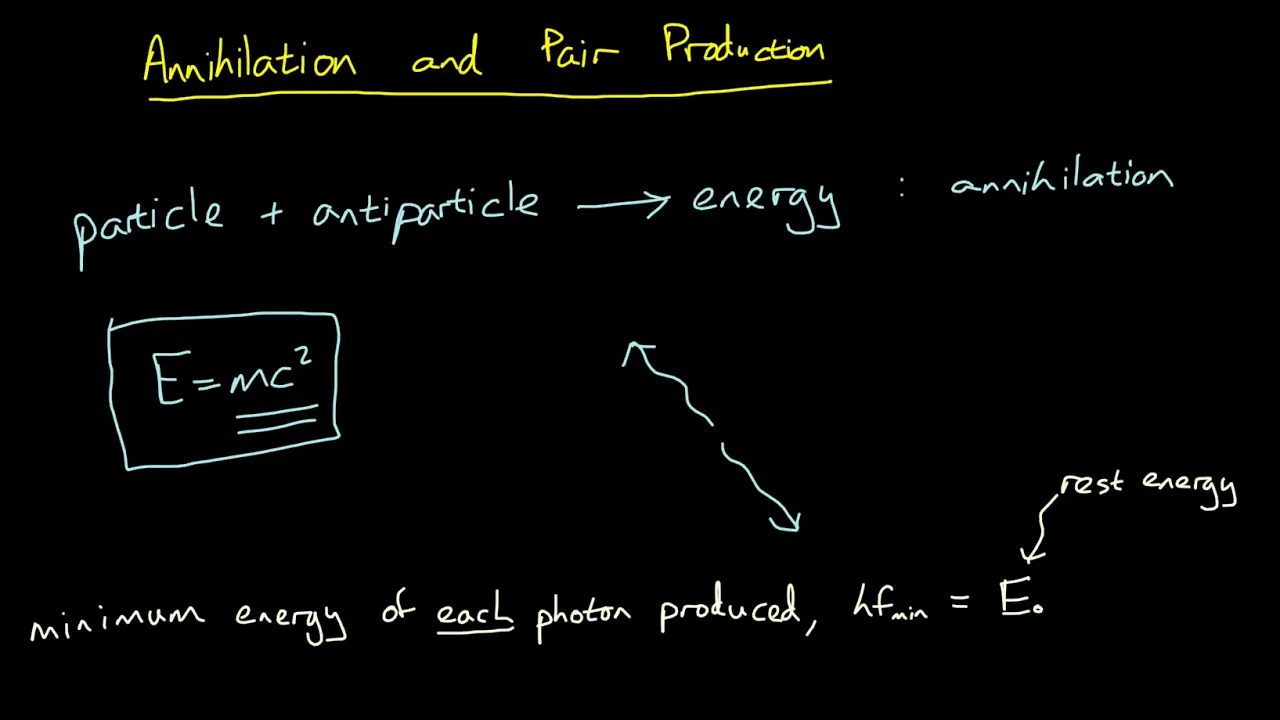
High-energy particle physics phenomena, such as matter-antimatter annihilation and pair production, where mass and energy directly convert into one another.
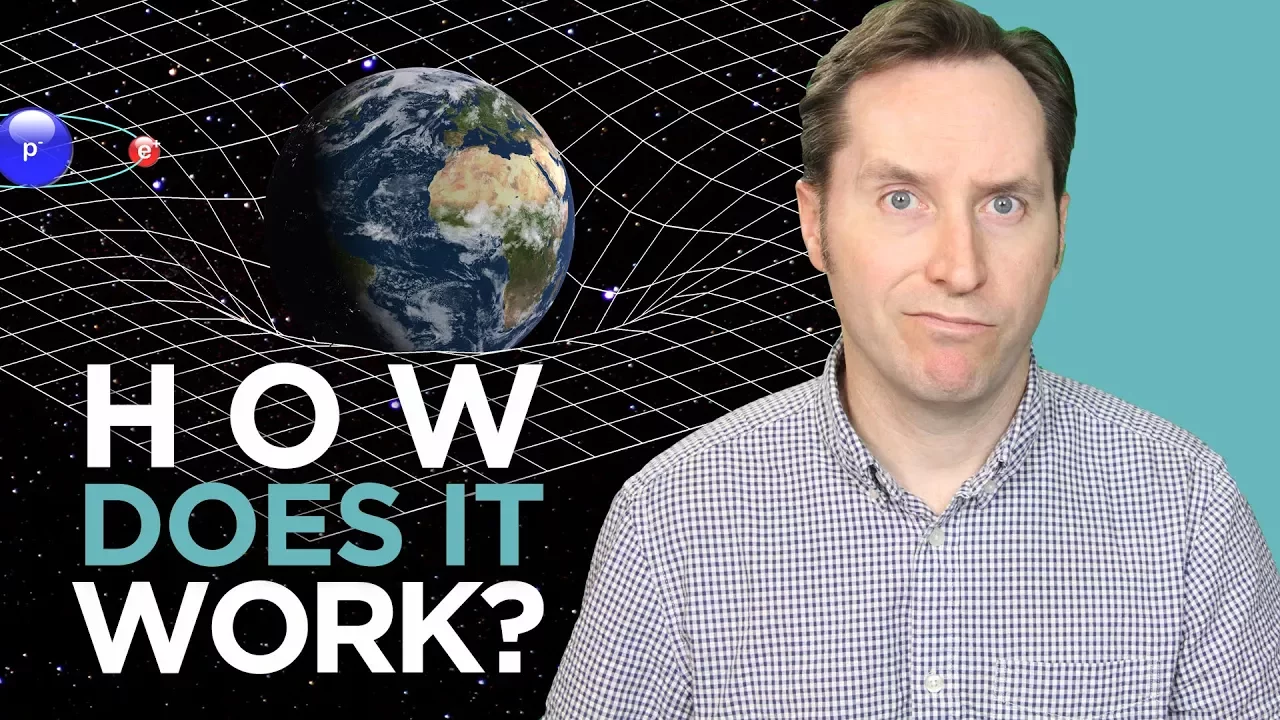
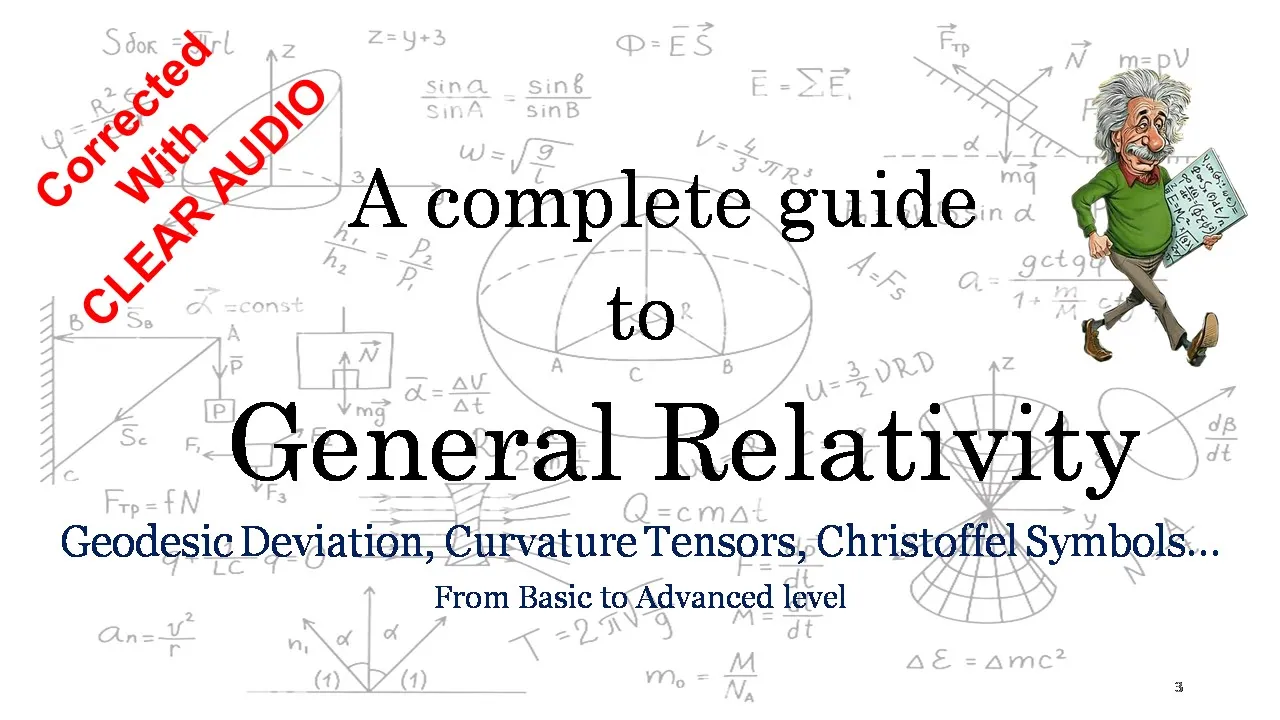
How mass-energy equivalence serves as the foundation for the Stress-Energy tensor in General Relativity, dictating how gravity warps spacetime.
527.3K views18.2Klikes27:40Original Release: 2023-12-01
this video is probably the most intuitive derivation of eal mc² it's how Einstein originally derived it in 1905 not only will we see exactly how the constant speed of light inevitably leads to the mass energy equivalence but we will visualize all the necessary math step by step from scratch so if you're ready to relive this historic moment let's begin so Einstein where do we start well Einstein says imagine we have a radioactive atom and it has some energy in it for the sake of simple numbers let's say it has 10 units of energy in it and I love simple numbers thank you Einstein now Einstein says if you wait for some time let's say it shoots two photons of light exactly in the opposite direction each carrying one unit of energy and I'm like wait why did you imagine two photons going in the opposite direction well Einstein says well if you had only one Photon then there will be some recoil due to momentum and so just to make sure that the atom does not Reco coil he's making sure there are two photons going in the exact opposite direction ensuring that the atom stays put it is still at rest okay very good so I now asks what is the new energy inside the atom well if it has lost two units of energy one unit each in each Photon then it should now have 10 minus 2 8 units of energy in it and I say this perfect now one last step Einstein says is his friend is piloting a rocket and she's moving towards the right at a constant velocity V Einstein now jumps into that rocket and now he asks from this Rocket's reference frame what now is the energy of this atom and at this time I ask Einstein Einstein is this ever going to end and says it's going to end okay this the last step is says all right so from the Rocket's perspective the rocket is not moving in fact it feels like the atom is the one that's moving towards the left with the velocity V now and therefore along with that 8 units it also has an additional kinetic energy and so we would say say now from the Rocket's perspective the atom should have the energy of 8 plus half MV squ and that now is the energy that we would assign to that particular atom but now here's the question that Einstein asks his friend has always been in the rocket moving with the velocity V she has been seeing the atom even before it shot the photons so Einstein asks what does the calculation look like from her point of view what would be the final energy of the atom as seen by her and at first I would say like Einstein she should get the same answer right because eventually both you and her are in the same in the same frame so both of you should agree they're looking at the same atom so we should agree what the final energy of the atom is and Ein says yes but let's just do the calculation from her frame and let's see what we get all right let's do that so for her from her frame she always appears to be at rest and she sees the Einstein and the photon sorry not the photon the atom to be moving towards the left with speed V and therefore from her perspective the ini initial energy of the atom was 10 + half MV squ because it's already moving and then she sees that atom shoot two photons of light and therefore the energy of the atom now decreases by two so it becomes 8 plus half MV squ and I'll tell Einstein look like I said we get the exact same energy as before she also says it's 8 plus half MV Square you also said it's 8 plus half MV Square everyone is happy let's just like what are you asking but Einstein says mahes you forgot something what's that Doppler effect Einstein reminds us that light also has wave properties and so if you to look at the atom when it's at rest this is how the waves would look like but now when that same atom is moving look at it look at it it's exactly the same atom giving out the same number of waves per second let's look at it together look at that it's giving out the same number of waves per second but because the atom is moving what do we see well we see that in the front of the atom the wavelength has squeezed and so the frequency is higher the waves are are closer and behind the atom the wavelength has stretched so the frequency is lower and therefore if from the stationary frame if the photons had these frequencies then when you're looking at that Atom from the moving frame from the rocket her Einstein's friend she wouldn't see the same frequency of the photons in fact she would see over here a higher frequency of the photons which we call Blue shifted now it doesn't mean Einstein says that the blue the photon is not really blue in color it's just called Blue shifted because and the frequency is higher it's moving towards the blue end of the spectrum that's what it means and just for representation we're showing it as blue but she will see a higher frequency Photon on this side and on the other side she would see a red shifted lower frequency Photon on the other side that's what Einstein's friend would see okay Einstein but why should I care about the frequencies because Einstein says remember energy of a photon is equal to H into its frequency Plank's equation so energy depends on the frequency this means if these two photons had the energy one in one unit then these two photons will not have the energy one and one unit this blue Photon will have energy higher than one this red shifted Photon will have energy lower than one we didn't account for that okay okay so Doppler effect is interesting all right my first Counterattack to this is H Einstein well since this Photon will have energy more than one and this Photon will have energy less than one would it just work out that the total will become two and I says no I mean we'll have to actually do the ma to figure this out which we will do but even intuitively you can see just from this diagram you can kind of see over here the wavelength is squeezed so much that the frequency is almost double in this in this particular animation so if the frequency is double this Photon already has twice the amount of energy so look that Photon already has two units of energy now this Photon red shifted Photon will have energy less than one sure some energy let's say 02 for the sake of numbers and look because this blue shifted Photon already is dominating the total energy becomes 2.2 higher than the total energy that we saw earlier from the rest frame and this would be true Einstein says if we do the math for any velocities it doesn't matter what velocity we moving at if you correctly look at the Doppler shifted energies the total energy will always be more than the energy that you find from the rest frame and of course as we'll do the math we'll actually figure this we we'll see as well okay okay so what does this mean Einstein well this means if we go back over here we made the mistake that she would see the photons of having the same energy one and one unit but which is wrong now if you take those same numbers she would instead see a blue shifted Photon and a red shifted photon with a total energy of 2.2 so for from her frame this atom lost 2.2 units of energy and therefore she would claim that the the final energy of this atom would be 10 minus 2.2 which is 7.8 units of energy and therefore from her frame she would suggest that the energy of the atom would be 7.8 plus half MV Square mov towards the left but wait a second Einstein these two energies of the atoms are supposed to be equal to each other right because they are now in the same frame together they're looking at the same atom and Ein says yes they supposed to be equal but how can that be equal this equation says that 8 should be equal to 7.8 which is impossible and I says mes remember how to approach special relativity you don't approach it with a close-mindedness and say it's impossible instead you ask yourself what needs to happen in order for it to be possible okay all right what needs to happen for this equation to be possible well let's look at it says Einstein if you simplify a little bit you get 8 minus 7.8 2 point uh sorry 0. 2 on the left hand side plus half MV s equal half MV s and I'm saying Einstein look at it this equation is saying that the half MV Square on the right hand side should be more than the half MV Square on the left hand side by 0 2 and I'm saying the velocities has to be exactly the same because they're looking at exactly the same atom right the same atom they're moving at the same speed so the velocity must be the same and Einstein agrees of course the velocity is the same this means there's only one possible conclusion if this equation has to be valid that is the mass on the right hand side should somehow be bigger than the mass on the left hand side but I'm like how can that be Einstein both of these are the masses of the same atom they're looking at the same atom why would they conclude the two different masses and Ein says mahes look carefully this Mass on the right hand side is the mass of the atom before it shot the photons and this Mass on the left hand side is the mass of the atom after it shot the photons which means this equation is saying that the atom must have lost Mass because of shooting the photons in other words look at this this is the history in the making folks this equation is staring at us and saying that that the fact that the atom lost energy means it must have lost Mass that's the only possible conclusion who and what I love about this derivation is that we didn't start with any assumption we didn't think about its mass or anything but the fact that Doppler effect gives you more energy in the photons from the moving frame means this is only one conclusion that losing energy means losing mass whoa but wait a second I promised you complete intuition so I have a question well this happens due to Doppler effect right Einstein well but Doppler effect happens in all the cases in all the waves so why do we only see this in light in special relativity what Einstein replies to this is what truly blows my mind away because there's a subtlety in the Doppler effect of all the other waves so if you consider for example the waves produced by a speaker the sound waves the big difference is that sound waves require a medium to travel and therefore now if I blast off into a rocket towards the right sure now I will see the speaker moving towards the left but along with that the medium is also moving towards the left with the same speed so there's a wind towards the left with the same speed what happens because of that Einstein well Einstein says now because of the wind the velocity of the sound towards the left gets an additional boost by the exact same amount because of that it does not allow the W to shrink on the left hand side and the velocity of the sound on the right hand side becomes slower because it's going against the wind and so it doesn't allow the wavelength to stretch and therefore if you if you could see sound waves now this is what it would look like because of the ch changing the Velocity in a different direction the wavelength stays put you would see exactly the same wavelength as you would see when you are at rest and it kind of makes sense because the speaker is still at rest relative to the medium there is a medium to distinguish whether it's the speaker that's moving or that's me the Observer that's moving if there were some hypothetical sound photons they would have exactly the same energy as look from the rest frame or as look from the Rocket's frame and therefore you would have no discrepancy but then why does it happen for light Einstein because light does not require a medium that's the key and therefore because light doesn't travel in a medium it doesn't have anything it's speed of speed of flight is the same in all reference frames and because the speed of FL does not change therefore we see the change in the wavelength causing the change in the energies of the photon this means it's the fact that this the light does not light travels in vacuum and the fact that the speed of light is the same in all the reference frame is directly responsible for this effect E equals MC square can you see now the whole energy Mass equivalence comes directly from special relativity can you see that connection now oh my god oh that's the reason why when you lose energy you have to lose bass wa when this first clicked in my mind I knew oh my God I had to make a video and shared with somebody and so I hope it clicked in your mind as well and this is the kind of intuition I like to make on this channel so do subscribe if you're new here but if you don't it's fine I will not no heart feelings because now we need to figure out exactly how much mass did it lose so how do we do that Einstein well Ein says let's rearrange this equation bring that half MV Square on the other side and if we can now write this as half time Delta M time v² equal 2 but what exactly is this2 well Einstein reminds us that 2 is actually the difference in the photon's energy from the moving frame and from the rest frame so this point 2 is basically the energy of the photon in the moving frame this 2.2 that we got over here minus the energy of the photons in the rest frame that is this two over here this means our next step is to figure out exactly how much is the energy of the photon from the moving frame which means we'll have to do the math for the Doppler effect and I thought okay let me just look at what Einstein did and in his paper he didn't do any derivation because he derived it and at this point I thought okay this is it I'm going to lose my intuition over here relativistic Doppler effect the math is going to be so complicated oh no but no we can do the Doppler effect completely intuitively as well are you ready for this let's do that we'll first look at the atom at rest and calculate its frequency and the simple way is we look for one second and see count how many waves it emits all right ready let's go okay timer starts 1 2 3 4 5 waves so in 1 second it gives out five waves therefore its frequency is five now the key question is what is the wavelength over here now you might say that hey you know the wavelength equation Lambda is equal to CID F but if you do it that way no the intuition will be lost we have to do this logically because if you do that then it'll you you can use the same logic even for the moving atom all right so here's how I like to think about it concentrate I I like to concentrate on that first wave the distance that the first wave traveled so let's look at it one more time only concentrating on the first wave when we sh when we look at it here it goes look at it that first wave is traveling for 1 second and since it's traveling at the speed of light this means the distance that the first wave must have traveled is C and therefore this means that in this distance of C there must be five waves so five waves occupy a space of C meters or C distance and therefore to calculate the wavelength now I ask myself how much does one wave occupy well one wave will occupy C / 5 and look this is how the wavelength turns out to be C / by frequency does it make sense now or we can now say the frequency should equal to C / by the wavelength now let's do the exact same thing for a moving atom all right now for the moving atom because the atom is moving in one second it also has moved some distance towards the left now if it's moving to towards the left with some speed wi then in 1 second the distance it would have traveled is wi and now here's the key thing this means that these five waves on the front are squeezed in this small distance how much distance is that can you see that is C minus V and therefore this time the five waves occupy a space of C minus V M therefore what is the wavelength what is how how much does one wave occupy it occupies C minus V divided by 5 this is the new wavelength and therefore what will be the new frequency well the new frequency just from this formula is going to be C divided by the new wavelength I'm calling this the blue shifted frequency divided by the new wavelength and we know the new wavelength the new wavelength is C minus V / 5 that's 5 is the original frequency the frequency of the source and if you just rearrange it we got the blue shifted frequency look at that isn't that beautiful and here's a way I like to do sense check if I put that velocity to be zero look FB will just become F and that makes sense we'll go back to being over here on the other hand if we made V is equal to C the denominator goes to zero and I get FB to be Infinity which makes sense because if this was is going at Sea and I know we can't go at C remember but mathematically what's happening is that the waves will not be able to travel in front of it and all the waves will stick together and therefore wavelength goes to zero frequency goes to Infinity just think about this and this this equation makes complete sense isn't it but at this point but for all of this time Einstein has been screaming from that side saying I forgot something all right so let's bring Einstein back again Einstein what did I forget Einstein reminds us that we forgot time dilation ah when atom is moving its time would have slowed down and therefore one when 1 second is up for US 1 second is still not been up for that atom therefore it would not have finished emitting five waves it would have emitted less than five waves so at first it feels like how it's complicated how do I account for that but Einstein reminds us not to worry for example if the time is dilated by a factor of two if the time has slowed down by a factor of two then instead of emitting five waves it would have finished emitting only 5x two waves Wes if the time dilation factor is three then it would have just emitted 5x3 waves in other words if I know how much the time dilation is how much the time I slowed down I just need to divide it by that number and I'm done but but Ein understand how much how do I know how much is the time dilation and I just reminds this gamma we've done this in our previous video we know that the time dilation factor is always gamma and therefore all we need to do to make a relativistic correction for this is divide that by gamma and we are done so relativistically the blue shifted frequency will be this number divided by gamma and we are done what we have right in front of us folks is the relativistic Doppler shifted frequency in special relativity we did Doppler effect intuitively logically isn't that amazing oh my goodness all right but remember it's not the frequency that we interested in it's the energy that we are interested in so if the photons let's say had the energy e not then if I just multiply by h on both sides I can say that this if this is e not this then will become the energy the blue shifted energy and so we can just replace that and look we now have the energy of the blue shifted Photon wow but at this point we might ask Einstein but Einstein is only half work done we have another red shifted Photon to calculate and Einstein says buddy you've done all the work you don't have to do any more work how because if you look carefully the only difference for the red shifted photon is that all the five waves are now in a distance of C+ V so five waves you occupy a C+ V distance and therefore you'll get a c plus v here C+ V here C plus v here this means I immediately know that the the energy of the red shifted Photon must be the same as this except there must be a c plus v in the denominator we've done it we have figured out the Doppler shifted energies relativistic Doppler shifted energies of the photons and we're now ready to plug this in now sometimes when I'm doing heavy math I might forget the big picture so Einstein reminds us what were we doing again but remember our goal is to calculate the energy of the photons from the moving frame and from that subtract the energy of the photons from the rest frame the energy of the photons from the mooving frame is basically adding these two that is the total energy from the mooving frame right and so now we just have to add them and simplify which is do a simp some some amount of algebra and so there's nothing to commentate over there and therefore I'll just play this on autop play Leave the Room put some soothing background music for you to watch [Music] okay [Music] [Music] what happened it stopped why did it stop oh yeah yeah now we have 1 divid by 1 - v² / c² remember if we had a root over here then this term would be gamma but since there is no root over here that means 1id by this number is gamma squared that means this is basically gamma squar and so you have a gamma squar and a gamma so that cancels out and so you get the total energy the blue shifted and the red shifted photon's total energy equals 2 times the energy of the individual Photon initial energy from the photon from the rest frame into gamma but what is this this is the total energy from the moving frame and that equals what is 2 * e hey e was the energy of the photons in the rest frame that means 2 * e is the total energy in the rest frame so this is the total energy in the rest frame and look the moving energy energy of the photons in the moving frame just happens to be the energy in the rest frame multiplied by gamma and look mathematically we said earlier that regardless of what speed at which you are going with it doesn't matter you will always find this energy to be bigger than this rest rest and you can now see it is bigger by the factor gamma which is so wholesome and so nice you can also see why this only happens at very high speeds because gamma is almost one at very low speeds so in neonian mechanics this wouldn't work again mathematically we get the same result beautiful isn't it now all we need to do is plug this equation in over here and just equate this is the last step Folks by the way at this point if you want to try doing this yourself it would be a great idea because his horic moment you would want to have done this tried this driving equals MC square yourself I mean this is such an amazing moment all right here's the climax of a few more algebra and will be done here goes so if we substitute the energy from the moving frame is e * rest * gamma minus this = half Delta m v^ 2 and so if we take e of rest common we'll get gamma * 1 inside the bracket and Gamma is basically remember it is 1 /un of 1 - v s c² but I can write that as 1 - v s c² to the^ minus half all right how do we go forward Einstein how do we simplify this well at this point Einstein says let's make an assumption let's assume that the speed of our rocket is not very high so this v² over c² is a very tiny number now if we assume it to be zero then we'll get everything to be zero so I can't make that approximation but I have to make some approximation so how do I do that for that the last step is to make a binomial expansion now again at this point I thought like oh my God binomial expansion I forgot my binomial expansion but Einstein reminds us well you know what you don't have to even remember binomial expansion even that can be done logically little bit of math and to do that Einstein asks what is 1 - x s well we know it's 1 - 2x + x s what is 1 - x Cub - 3x + 3x s - x CU we know that but if you look carefully y you see when you do raised to the^ two your second term is 1 - 2x if you raised to the power 3 your second term becomes 1 - 3x therefore what is 1 - x ^ min-2 just from this we could say it's going to be 1 - that same number time X plus some other number time x s plus something time x cub and so on and so forth now if if our X is much smaller than one like in the case of over here because V is much smaller than C so if x is much smaller than one then x² becomes even smaller and so the way we do the approximation is we could say let's get rid of let's not worry about all the higher powers of X and therefore we say that if x is much smaller than 1 then this number is approximately equal to 1 minus - half of X that is basically 1 + x 1+ half X and so that's the approx approximation that we can do we call this the first order approximation and so if you just plug this in now this is X so it'll be 1 plus so let's just plug this in what will we get we'll get 1 + half * v^ 2/ c² - one we're almost done folks we just now have to do a little bit of algebra the one cancels out the half cancels out look at what we get the V Square cancels out oh here we go here we go what do we get there we have it the mass that is lost must exactly equal the energy that was lost from the photon in the terms of photons divided by c squared right in front of your eyes folks we have derived e equal MC sared so in summary we first look at an atom which loses energy as two photons jump into our friend's rocket and write down its energy but our friend saw the same atom moving since moving sources produce Doppler shift she sees the atom lose slightly higher energy to photons the only way to solve the discrepancy is to admit that the atom lost some mass and by Computing the relativistic Doppler effect and plugging in we find that the mass lost is exactly the energy of the photons in the rest frame divided by c^ S I hope you had a great intuition and the video lived up to its promise so if it did let me know I'll see you [Music] soon
Up Next
2:11
Einstein's Proof of E=mc²: Special Relativity Explained
@MinutePhysics
6.2M views•2012-03-29

12:53
21cm Hyperfine Transition in Neutral Hydrogen: Radio Astronomy Basics
@AaronRobertParsons
12.4K views•2011-10-13

15:00
Huygens Principle: Deriving Reflection & Refraction | Wave Optics
@Mahesh_Shenoy
241.2K views•2014-12-02

27:14
Entropy and the Second Law of Thermodynamics Explained
@veritasium
27.5M views•2023-07-01
Related Study Plans & Knowledge Roadmaps
Structured learning paths in Physics
physics
Nuclear Physics (Decay, Fission & Reactors)
01Atomic Structure and the Binding Force
02Radioactive Decay and Half-Life
03Nuclear Fission Mechanics and Chain Reactions
+ 2 more learning modules
12h5 modules
Explore Roadmap
physics
Soft Matter (Polymers, Colloids & Rheology)
01Foundations of Soft Matter & Thermal Forces
02Polymer Physics and Macromolecules
03Colloids, Surfactants, and Self-Assembly
+ 2 more learning modules
38h5 modules
Explore Roadmap
physics
Analytical Mechanics: Lagrangian & Hamiltonian
01Mathematical Foundations: Calculus of Variations
02From Newtonian Mechanics to Constraint Dynamics
03The Principle of Least Action & Lagrangian Mechanics
+ 3 more learning modules
28h6 modules
Explore Roadmap
physics
General Relativity (Spacetime & Cosmology)
01Foundations of Relativity: Special Relativity
02The Geometry of Spacetime: Equivalence Principle & Curvature
03Einstein's Field Equations: The Mathematics of Gravity
+ 2 more learning modules
55h5 modules
Explore Roadmap