







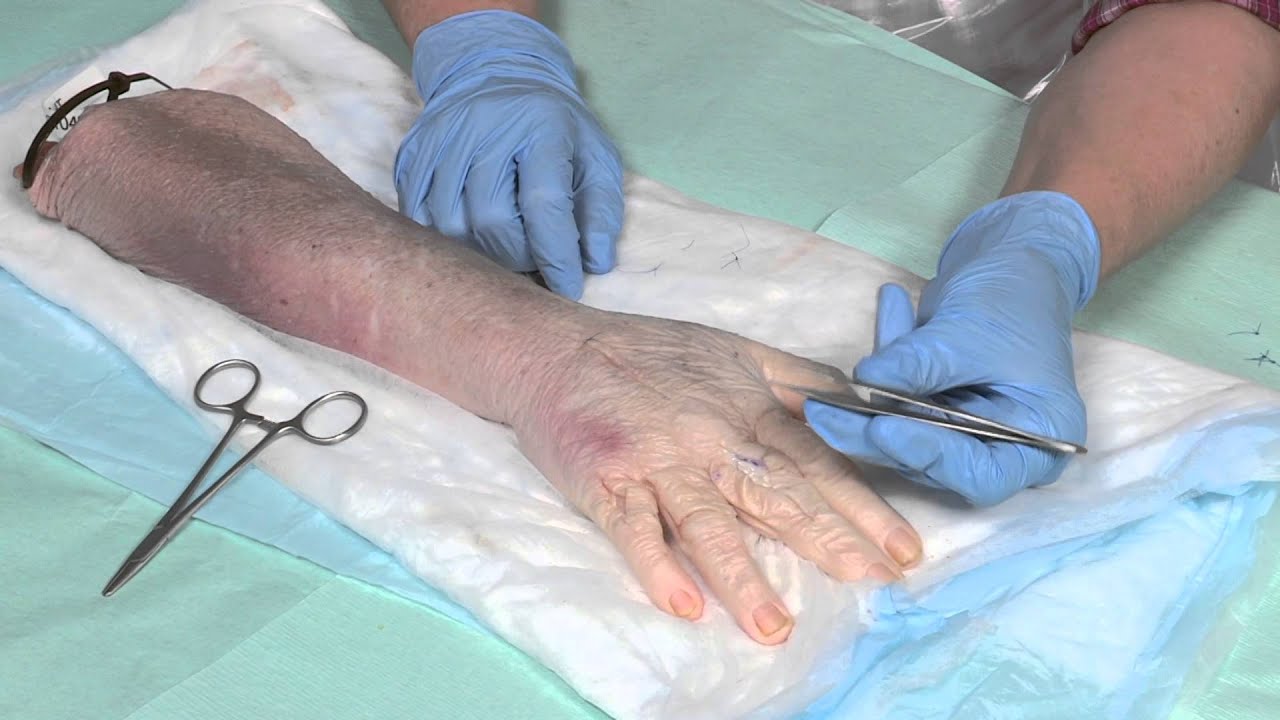

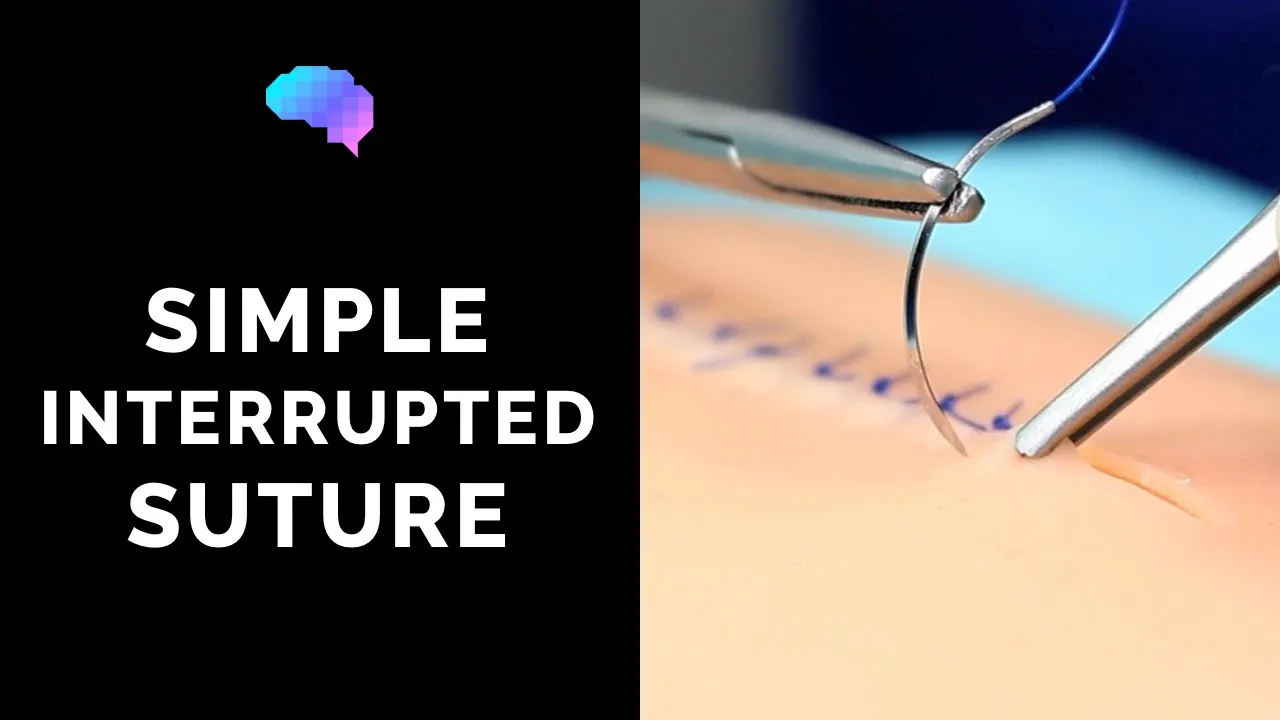

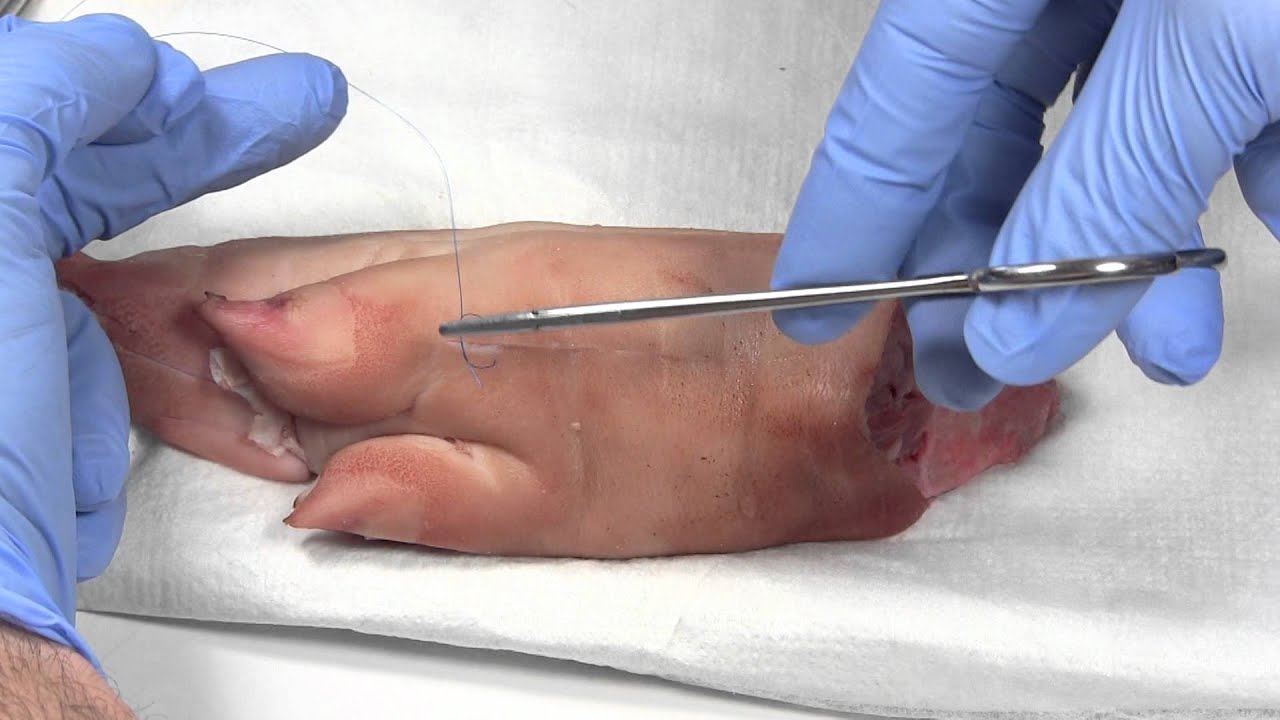


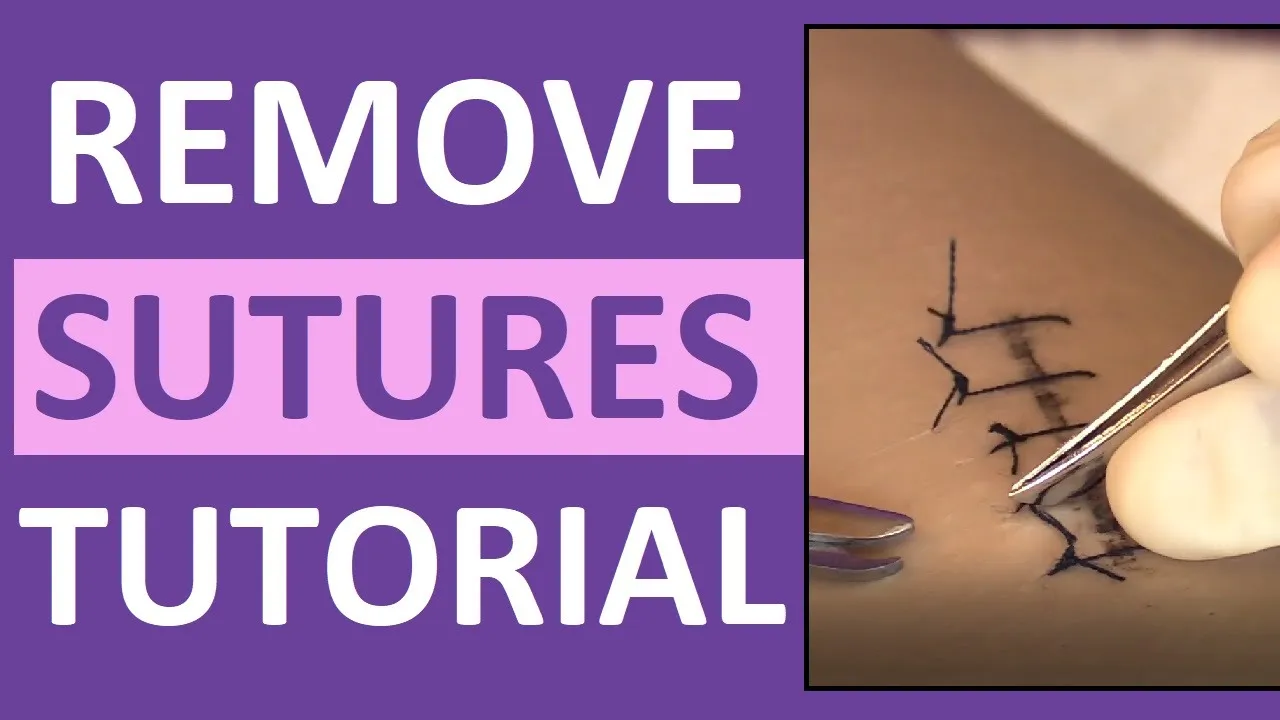


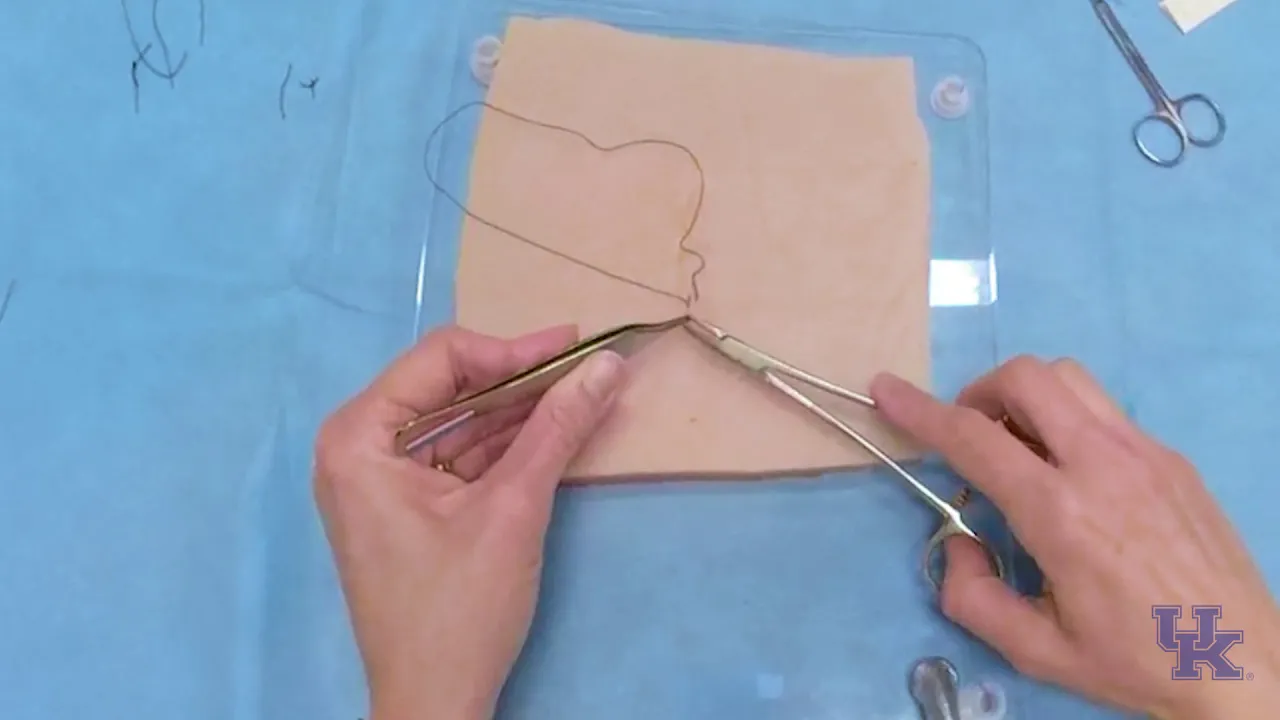

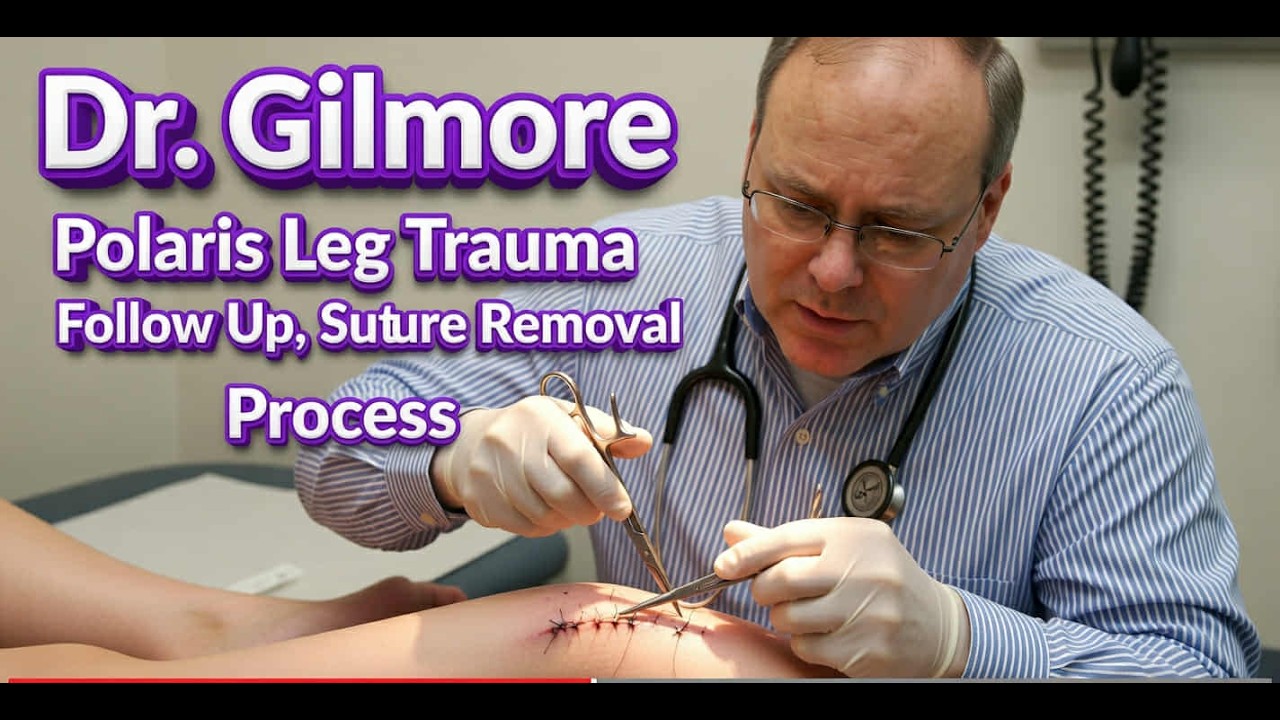




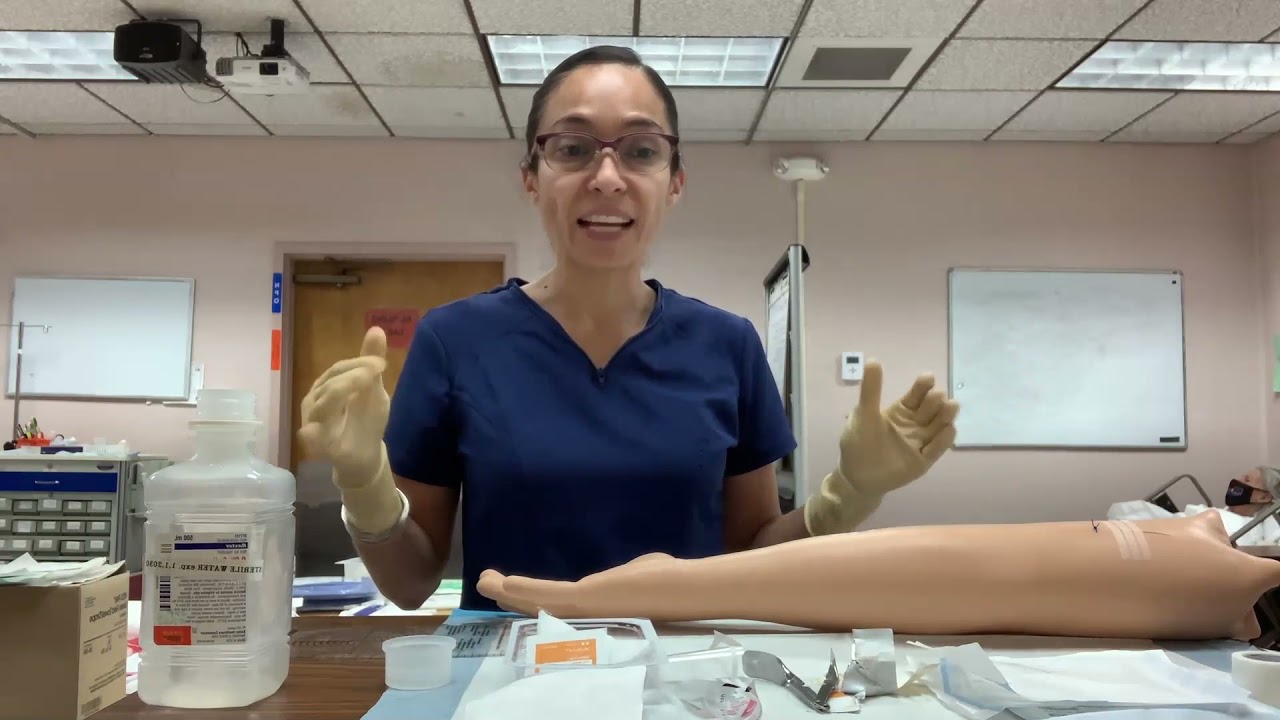




To safely remove simple interrupted sutures, grasp the suture thread with forceps, pull upward to bring the knot close to the skin surface, cut the suture close to the skin (not through the knot), and remove the suture without pulling the dirty exposed portion back through the skin or cutting the suture into multiple pieces; bracing your hand against the patient provides better control than holding instruments in mid-air.
Removing Simple Interrupted Sutures: A Step-by-Step Guide
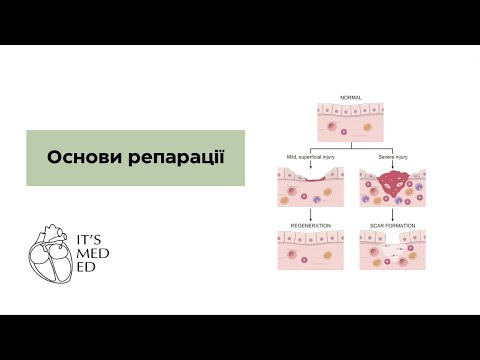
Added:Understanding the stages of wound healing and the physiological timeline for tissue tensile strength recovery to determine readiness for suture removal.
Basic principles of aseptic technique and infection control to maintain a clean field during clinical procedures.
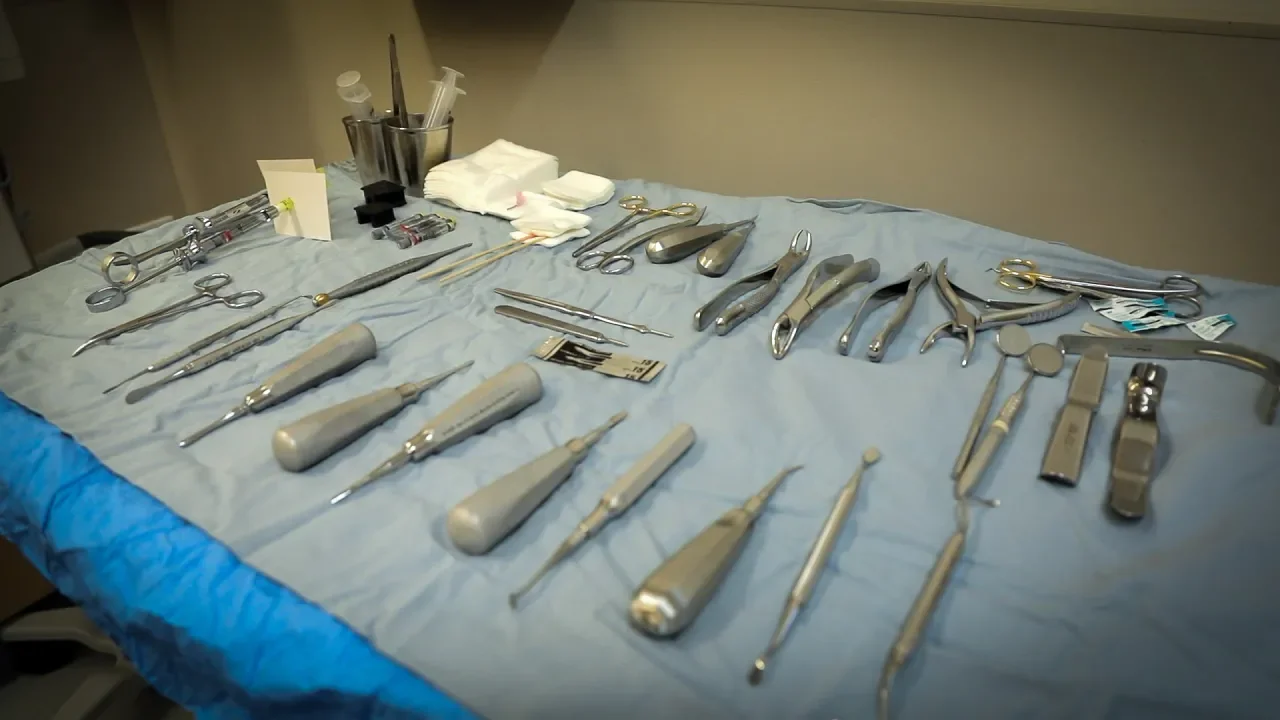
Familiarity with surgical instrumentation, specifically the safe handling of suture scissors and tissue forceps.
Ability to identify a simple interrupted suture pattern and locate the knot, loop, and ears of the suture.
Knowledge of clinical signs of wound infection, necrosis, and incomplete approximation that would contraindicate suture removal.
Techniques for removing more complex suture patterns, such as continuous (running) sutures, subcuticular sutures, and mattress sutures.
Post-removal wound care management, including the application of adhesive skin closures (Steri-Strips) and patient education on scar care.
Management of complications during suture removal, such as wound dehiscence, hemorrhage, or deeply embedded sutures.
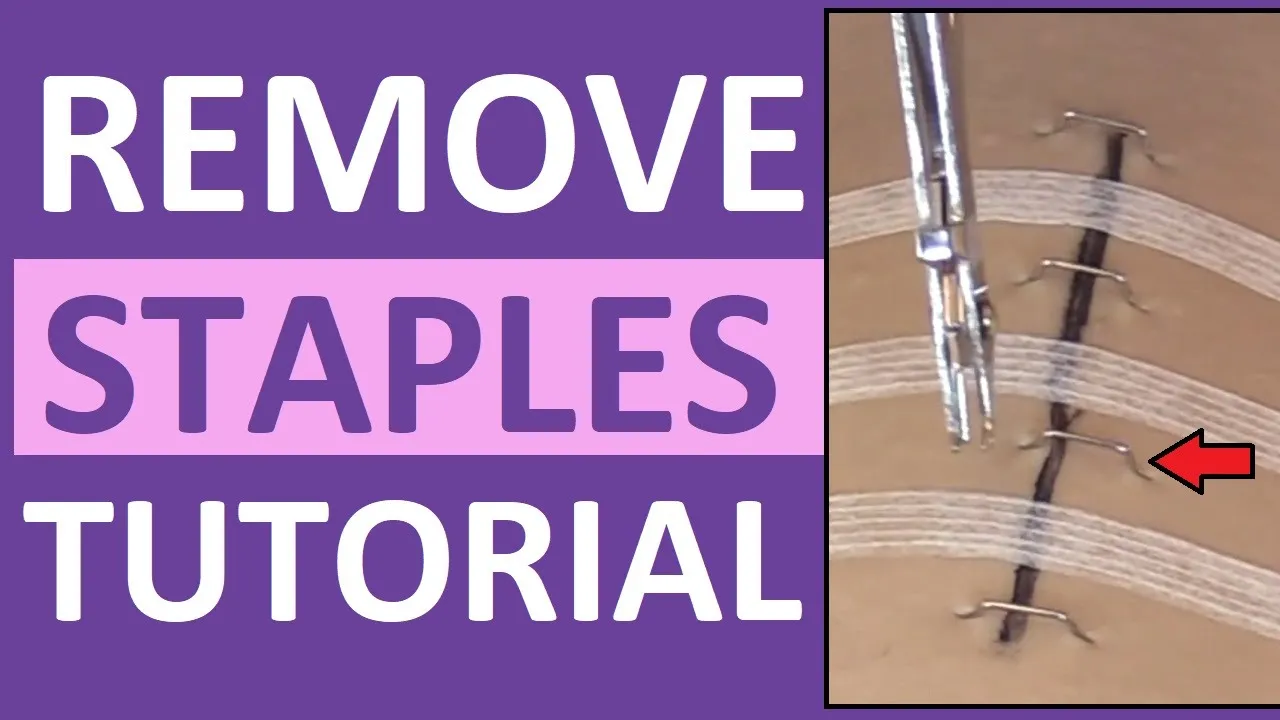
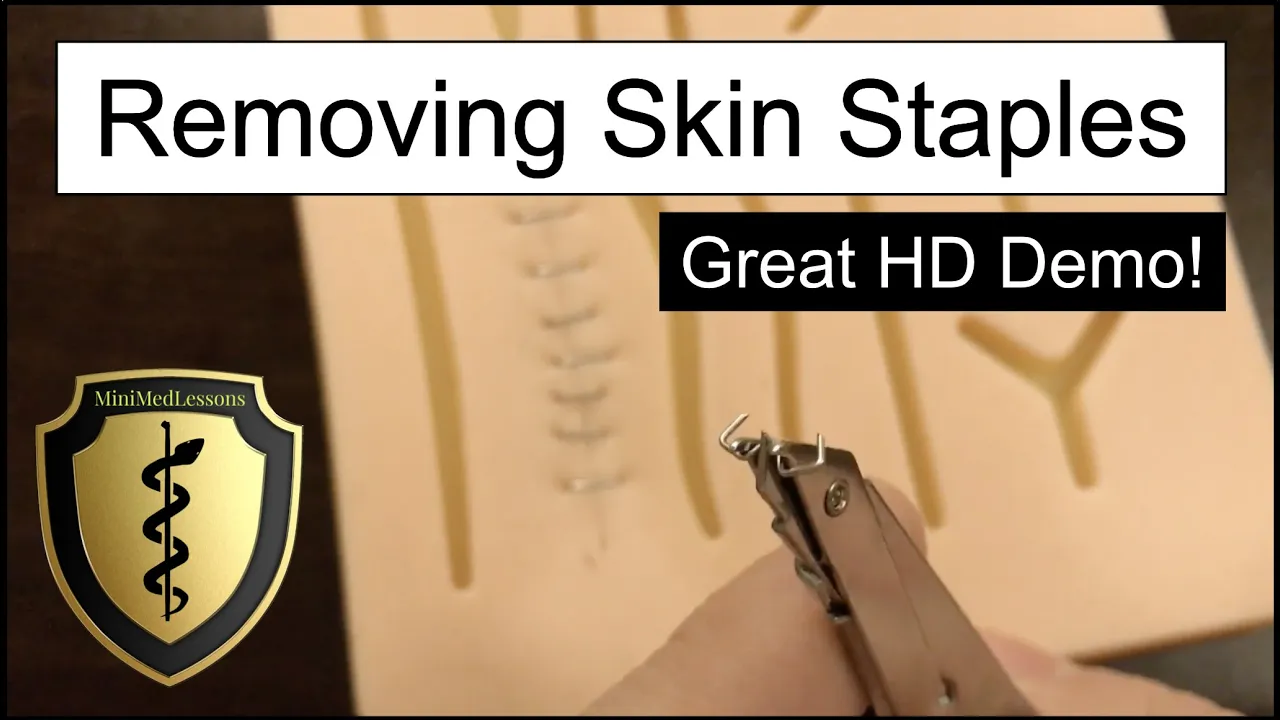
Procedures for the removal of alternative wound closure materials, such as surgical staples.
Long-term assessment of scar tissue remodeling and the pathophysiology of hypertrophic scars and keloids.
205K views751likes4:36Original Release: 2015-03-11
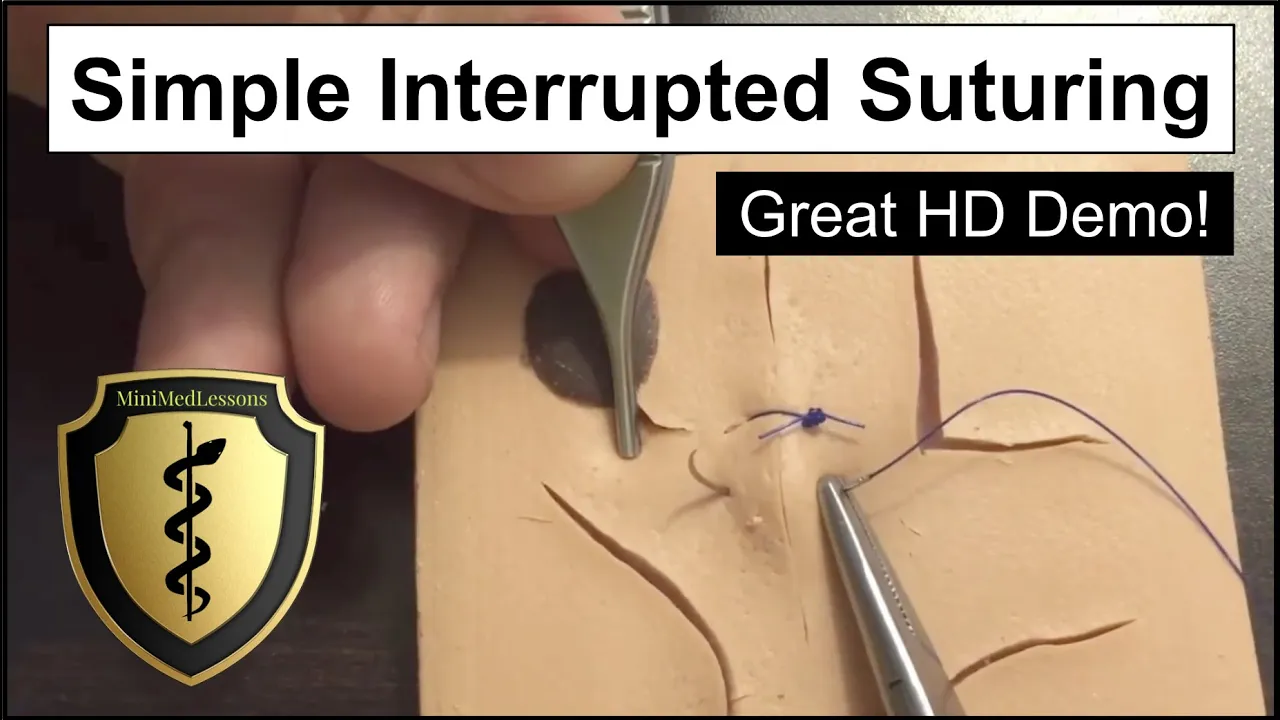
welcome to suture removal on this towel you'll see I've placed three stitches and whenever you're taking out sutures it's good to kind of have a good idea of what's actually underneath so for each one of these These are basically a loop that's gone down through the skin and back up over to the side coming out through this side and there's a knot ideally the knot is on the side of the cut if this line here the Gap is the cut you'll see that the knot is on the side so for several days or maybe a week or even longer this section of suture has been exposed to the outside world and is dirty the stuff that's underneath is largely clean the stuff that's actually in the skin so you want to remember that so that when you take out your sutures you don't inadvertently pull the dirty suture back [Music] through uh the the skin you don't want to introduce germs into it now I'm just going to give you another view shot turn this around here we go so to take stitches out or sutures out basically you want to make sure you don't pull the dirty suture back through the patient but you also don't want to have multiple pieces of suture and get a piece lost inside you also don't want to cut through the knot because that just makes things difficult and things can disappear and so on so what you want to do is with your tweezers or forceps grab one of the pieces that are loose you'll notice that with the knot when we tie the knot we left these two ends there's one in there and one in here so you grab one of those and pull tightly now you've got an option you can either cut underneath the knot here or way over here but you want to cut close to the skin surface so then that way when you pull it out you're not pulling through dirty suture I actually find the controls a bit better to cut here cuz I'm pulling up right here I'm using the base of my hand if possible on the patient or in this case the towel and I'm kind of securing things so that that way I'm not jiggling St I'm not lifting up an air cuz lifting up in air things are kind of jiggly it's harder to control but if you instead brace with your hand instead of suspending an air no brace with your hand and then you'll find things work better you can't always brace with your hand there might be certain circumstances but if you're able to at all I highly recommend it so you pull up now the patient should be stuck to the the skin should be stuck to the patient a bit so this towel is moving up a bit more and you'll notice that actually I'm going to zoom in there so you can really see well so I'm pulling up on the knot and there's that little stretch down here that's not that's below the knot I'm going to snip and then out comes the suture pull up again this particular KN is a bit tight actually thought that as I tied it there we go and we've got our third one pull up you'll notice that The Knot's sort of unraveling or something that's okay either it'll stop unraveling and it'll kind of get stuck or it'll keep on raveling if it keeps on raveling maybe reach down a bit further grab it and snip there we go now because this was a towel I was pulling having to kind of pull up and slightly push down with my scissors at the same time which you don't usually have to do with skin but sometimes with some with some loose skin you might have to actually you know you're you're using the instruments as you're pulling up here you are putting a little bit of downward pressure here uh but you'll notice that the the suture just flung right up it just popped right out other times it's not under as much tension you can just gently lift up the suture and make a little snip and then the suture stays there and in that case what you do is then you just keep holding on to it and just gently pull it out and that is how to remove sutures
Up Next

59:00
Cohort Retention Analysis in SQL & Tableau | Data Analyst Tutorial
@AngelinaFrimpong
23.1K views•2022-05-12

12:54
Triumph of Orthodoxy Icon: Byzantine Art & History Explained
@BenCallan
2.1K views•2024-08-06

9:49
FastAPI vs Flask vs Django: Choosing the Right Python Web Framework
@TechWithTim
302.5K views•2024-05-26

1:42
Game of Thrones Opening Credits: A Cinematic Analysis
@gameofthrones
46.3M views•2011-04-18
Related Study Plans & Knowledge Roadmaps
Structured learning paths in General & Interdisciplinary Studies
general-studies
Elevator Engineering: History, Physics & Cities
01From Hoists to Safety Brakes: The Dawn of Vertical Lift
02Hydraulic vs. Traction: The Engineering Physics of Elevators
03Modern Speed, Safety, and Algorithms
+ 2 more learning modules
12h5 modules
Explore Roadmap
general-studies
Rubber: Material Science, History & Geopolitics
01Origins of Natural Rubber & Mesoamerican History
02The Chemistry of Natural Rubber & Vulcanization
03The Geopolitics of the Rubber Boom & Colonization
+ 2 more learning modules
12h5 modules
Explore Roadmap
general-studies
Containerization: Evolution, Logistics & Trade
01Ancient Trade & Bulk Cargo: Amphorae to Barrels
02The Industrial Revolution & Cardboard Packaging
03The Containerization Revolution: Malcom McLean
+ 2 more learning modules
12h5 modules
Explore Roadmap
general-studies
Textile Tech: Evolution, Labor & Global Impact
01Pre-Industrial Textiles: Handloom & Cottage Industry
02Mechanization: The Spinning Jenny to the Power Loom
03The Factory System & Global Labor Transformation
+ 2 more learning modules
10h5 modules
Explore Roadmap