
























The Arabic numeral system (digits 0-9) was actually developed by Indian mathematicians and transmitted to the Islamic world, where Persian scholar al-Khwarizmi (c. 780-850 CE) studied and documented them in his influential text 'on the calculation with Hindu numerals'; this system was later introduced to Europe through Latin translations of al-Khwarizmi's works, though it faced resistance including a 1299 Florence law banning their use due to fraud concerns, before finally becoming widely adopted by merchants and scholars around 1500 CE.
The History of Arabic Numerals and the Legacy of al-Khawarizmi
Added:Understanding the fundamental difference between additive number systems (like Roman numerals) and positional/place-value notation systems.
The historical context of the Islamic Golden Age and the role of the House of Wisdom in Baghdad as a center for translating and synthesizing global scientific knowledge.
The origin of the decimal system and the concept of zero (shunya) in ancient Indian (Hindu) mathematics.
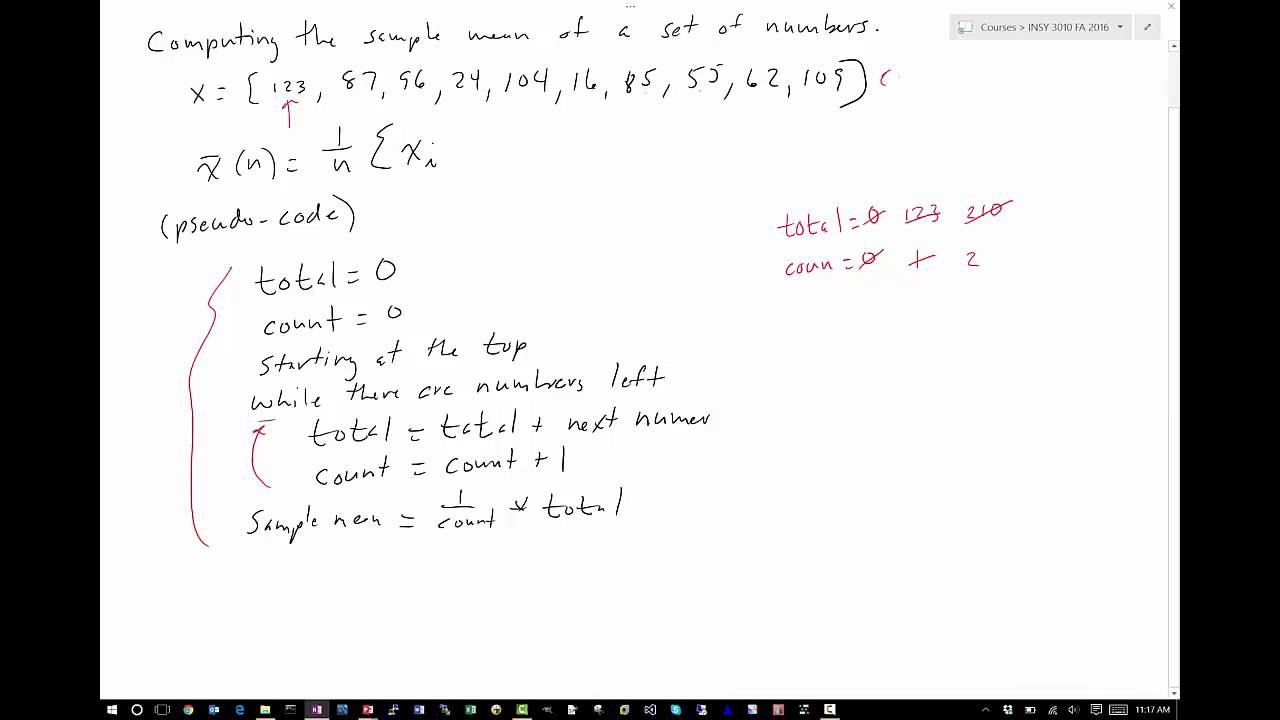
A basic definition of an 'algorithm' as a systematic, step-by-step procedure for solving mathematical problems.
The foundational principles of algebra as established in Al-Khwarizmi's seminal book, 'Al-Kitab al-mukhtasar fi hisab al-gabr wa'l-muqabala'.
The role of Leonardo Fibonacci and his 1202 book 'Liber Abaci' in introducing and popularizing Hindu-Arabic numerals to European merchants.
The historical debate and socio-economic struggle between the 'Abacists' (traditionalists using Roman numerals) and the 'Algorists' (reformers using Hindu-Arabic numerals) in medieval Europe.
How the adoption of decimal positional notation laid the mathematical groundwork for the Scientific Revolution, calculus, and eventually modern computer binary systems.
2.6M views67.5Klikes4:41Original Release: 2013-09-03
To much of the world he was known by his Latin nickname Algoritmi which became the origin of the word algorithm.
He pioneered a method for solving problems called al-Jabr.
Today known as algebra. Twelve hundred years ago he published the first atlas of the known world, wrote the first math textbook and was calculating the movement to celestial bodies when Europeans were basically staring up this guy through toilet paper tubes. His name was Abu Abdullah Muhammad ibn Musa al-Khawarizmi. But you can just call him al-Khawarizmi.
The man who made possible the math we use today.
Oh also including all the numbers that we use.
(Theme music) Those most lasting legacy was introducing so-called Arabic numerals to much to the world.
He wasn't an Arab he was most likely Persian. Born in what is now known as Uzbekistan around 780, al-Khawarizmi first appears in historical records as an instructor at one of the great ancient Islamic learning institutions Baghdad's House of Wisdom.
Sounds kinda like a theme restaurant owned by celebrity nerds, the House of Wisdom was actually a crossroads the great civilizations of the ancient world; Babylon, Greek, Hindu, Arabic, Persian.
And al-Khawarizmi like to wet his beak in the knowledge that he had to offer. He studied the ambitious math at the Greek scientist Ptolemy for example who had tried to measure the world, but al-Khawarismi discover Ptolemy's calculations were wrong so he corrected and reorganized all the data. With new coordinates in the help of some seventy geographers under his direction, he compiled a book called The Face of The Earth.
A complete explanation of the geography and cartography of the known world thought to be the first of its kind.
He was also the official astronomer of the court in Baghdad.
And as part of his duties he compiled charts of the track the moon in five planets. These tables turned out to be so useful and accurate that centuries later they would be translated into Latin and Chinese and circulated around the world. But his real passion was for mathematics and he eagerly accepted a commission from Muslim leaders to come up with a text for the general public about how to do basic calculations like for conducting traded and making measurements.
The result was a text with the inevitable name, the Compendius book on calculation by completion and balancing. In it al-Khawarizmi explains how to solve linear equations in quadratic equations with what he called al-Jabr or completion by subtracting or dividing an amount from both sides to find a missing figure.
You know solving for x. It's not that he invented algebra though he's certainly refined our understanding of it. Instead he codified knowledge from a whole bunch different traditions especially Greek and Indian to make life easier for the ninth century equivalent of English majors everywhere.
In this regard by far his most lasting achievement came from his study of ancient Indian text. In age 25, he published on the calculation with Hindu numerals where he described everything he learned about Hindu mathematics.
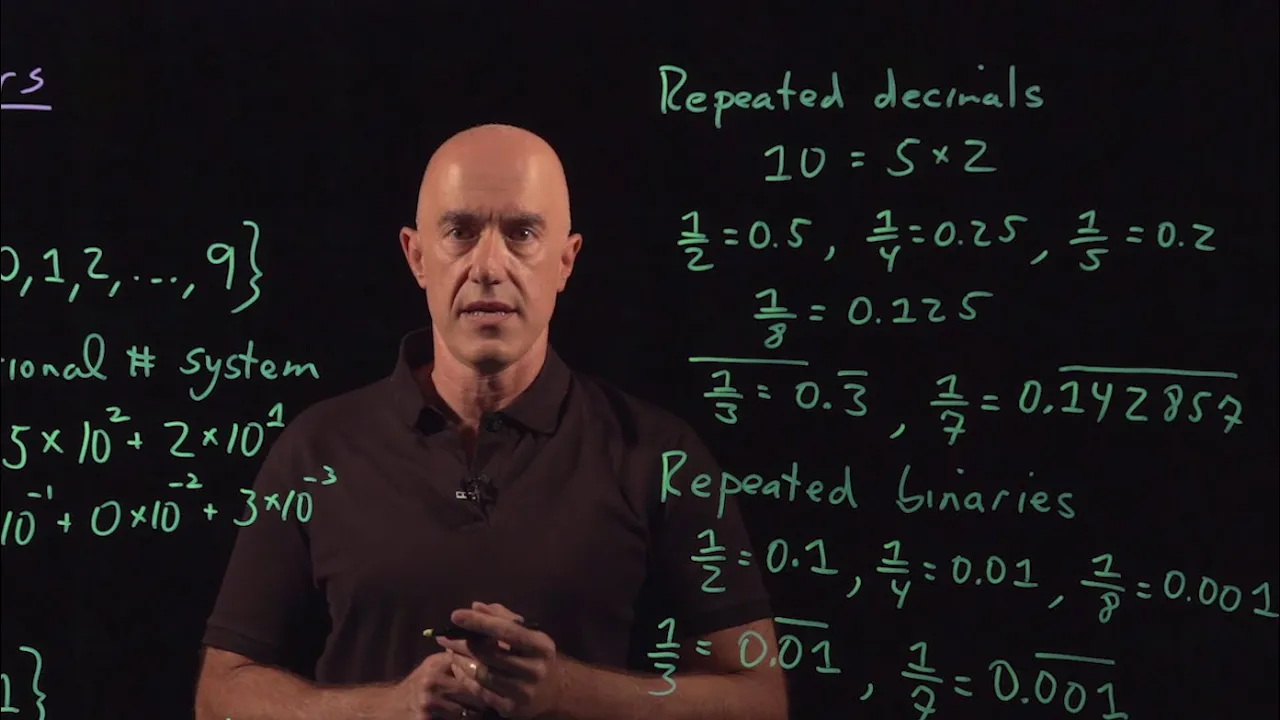
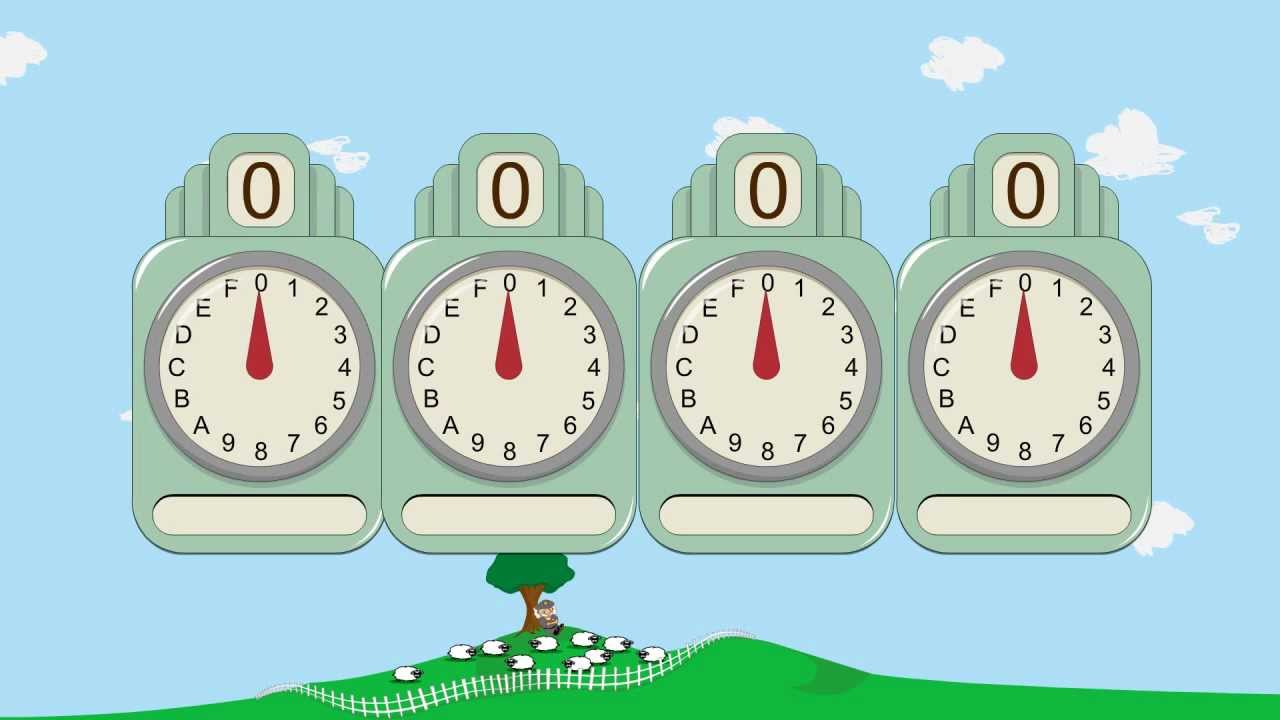
It was a weird system with digits from 0 which meant like nothing to 9.
And it used decimal places to denote increments of tens hundreds and so on. The book didn't exactly fly off the shelves of the Baghdad`s Barnes & Noble but it would turn out to be one of the most influential books in history.
Because three hundred years later a copy of it was discovered by an English monk who fascinated with Muslim scholarship, translated the research of al-Khawarizmi now called algorithme into Latin. Soon Europe scholarly elite was eating it up. The Hindu system was way easier and more intuitive than Roman numerals.
Which to use database 10 for counting and a base 12 for fractions and had no concept of zero. Men of science began advocating for the use of what became known as Arabic numerals. Chief among them Italian mathematician Fibonacci.
who wrote a whole book about them in 1202 but of course medieval Europe, it wasn't really all about the new ideas with all burning people that sticks in the inquisitioning.
In 1299 the city of Florence, Italy actually passed a law forbidding the use of the numerals, not because some anti-Muslim bias. But because Arabic numerals were just too easy to change. You could make a 6 into an 8.
Or throw a couple zeros after something and make a big profit. It was just a fix of the quill.
It wasn't until the 1500 that the numbers began to take hold among merchants as well as scholars.
But by that time al-Khawarizmi was forgotten to history. Which is why we still call the numbers that the whole world uses today Arabic numerals despite the fact that the guy we have to thank for them wasn't Arab and the numbers themselves were Hindu.
Thanks for watching this episode of SciSchow.
If you have any questions, comments or ideas for us, you can leave them on Facebook or Twitter down in the comments.
And if you wanna keep getting smarter with us, you can go to youtube.com/scischow and subscribe.
Up Next

6:59
Astrolabe: The Ancient World's Precision Navigation Device
@QalamAurKagaz
815 views•2024-05-03

33:02
The Great Schism of 1054: Causes and Consequences
@SacredCathedrals
113.5K views•2026-02-19
13:51
Weapons That Changed Human History: From Handaxes to Gunpowder
@SciShow
429.9K views•2025-03-26

17:05
Understanding the Cold War: Superpower Conflicts and the Road to Détente
@OverSimplified
46.1M views•2019-01-24
Related Study Plans & Knowledge Roadmaps
Structured learning paths in History
history
Byzantine Iconoclasm: Theology, Art & Politics
01Foundations of Byzantium and Early Christian Images
02The First Iconoclasm: Leo III and the Crisis of Images
03Empress Irene, Nicaea II, and the Second Iconoclasm
+ 2 more learning modules
9h5 modules
Explore Roadmap
history
Iranian Revolution (Causes, Events & Legacy)
01The Pahlavi Dynasty and the Roots of Discontent
02The Spark of Rebellion and the Rise of Khomeini
031979: The Fall of the Shah and the Climax of the Revolution
+ 2 more learning modules
8h5 modules
Explore Roadmap
history
Mali Empire: Mansa Musa, Trade & Timbuktu
01Foundations of the Mali Empire
02The Trans-Saharan Gold and Salt Trade
03The Reign and Pilgrimage of Mansa Musa
+ 1 more learning modules
6h4 modules
Explore Roadmap
history
1947 Partition: Politics, Borders & Legacies
01Foundations of British India and the Divide
02The Political Negotiations and the Mountbatten Plan
03Drawing the Boundary: The Radcliffe Line
+ 2 more learning modules
8h5 modules
Explore Roadmap