



















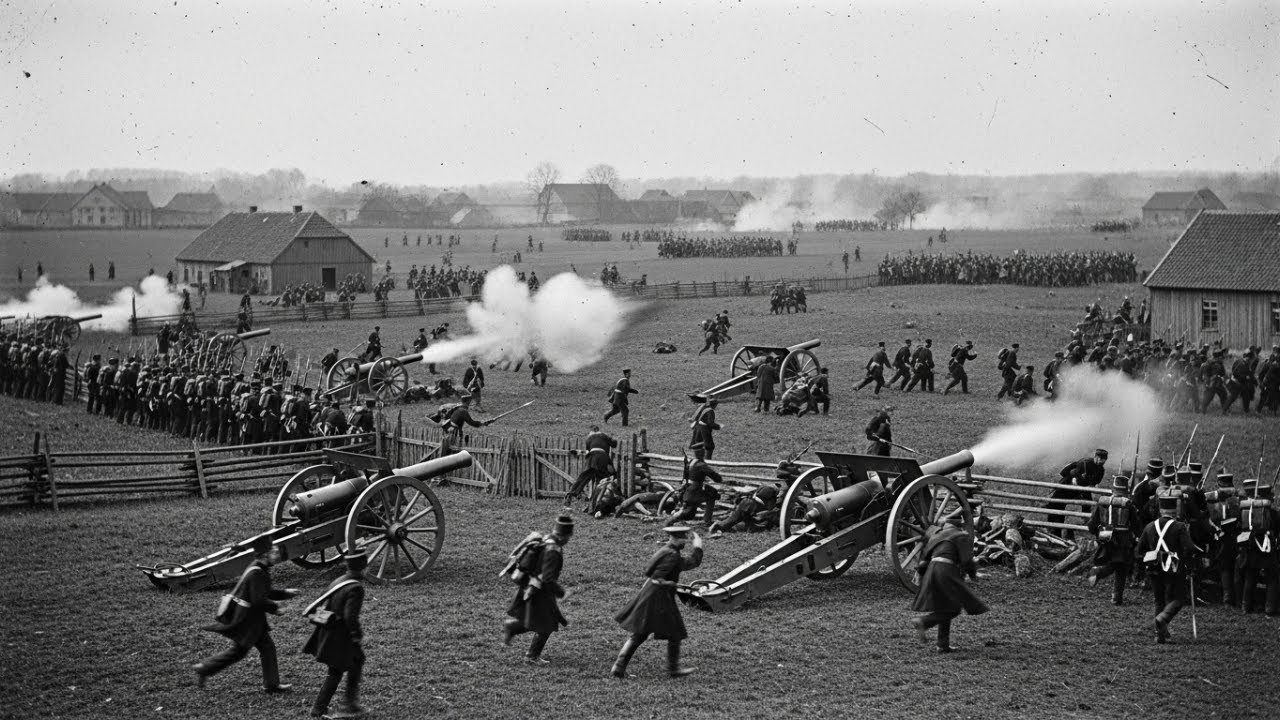




Throughout human history, weapon innovations have repeatedly transformed societal power structures and survival strategies, beginning with early stone tools around 1.7 million years ago that allowed humans to compete effectively despite lacking physical superiority, continuing through the development of spear throwers (17,000+ years ago), horse-drawn chariots (3rd millennium BCE), composite bows, catapults (4th century BCE), and finally gunpowder (900s CE), each advancement fundamentally altering how humans obtained food, defended themselves, and shaped civilizations.
Weapons That Changed Human History: From Handaxes to Gunpowder
Added:Basic chronology of human history, distinguishing between the Stone Age, Bronze Age, Iron Age, and the Middle Ages.
The concept of technological adaptation and how material constraints (stone, bronze, iron) dictated early human tool-making.
Fundamental physics of simple machines and mechanics, such as force multiplication, kinetic energy, and leverage.
An understanding of how early human societies transitioned from nomadic hunter-gatherers to settled agricultural civilizations.
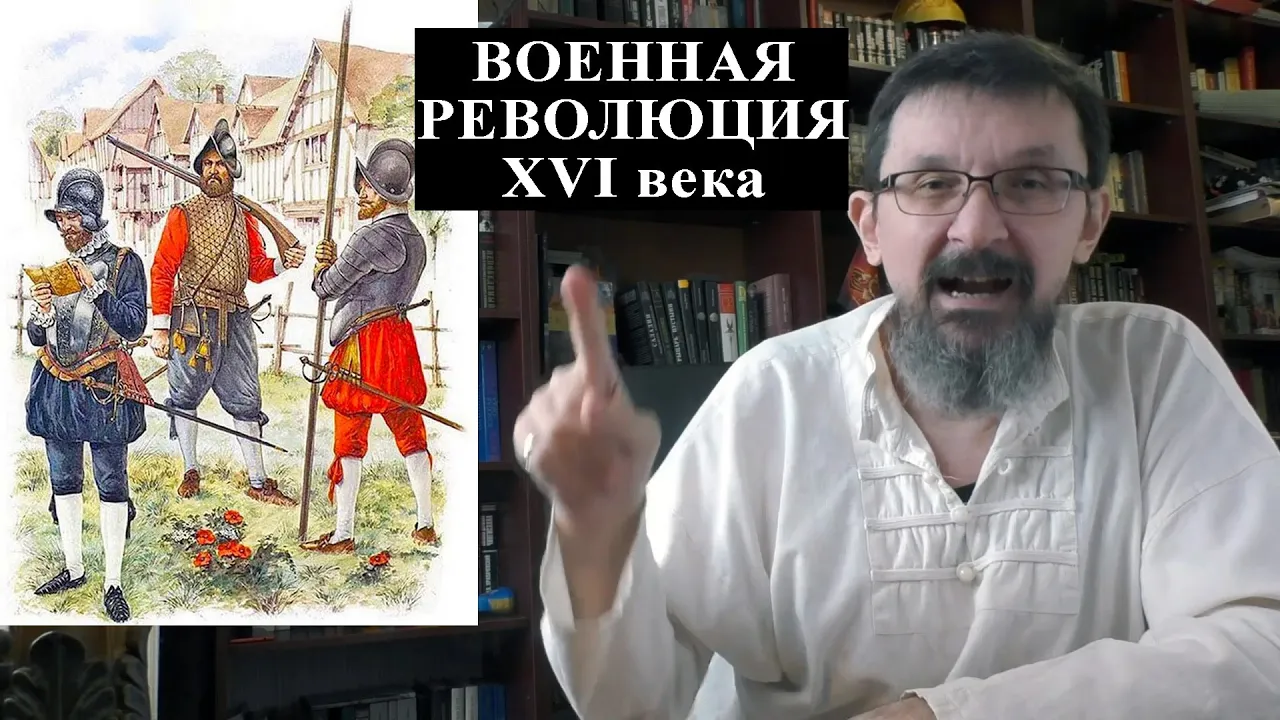
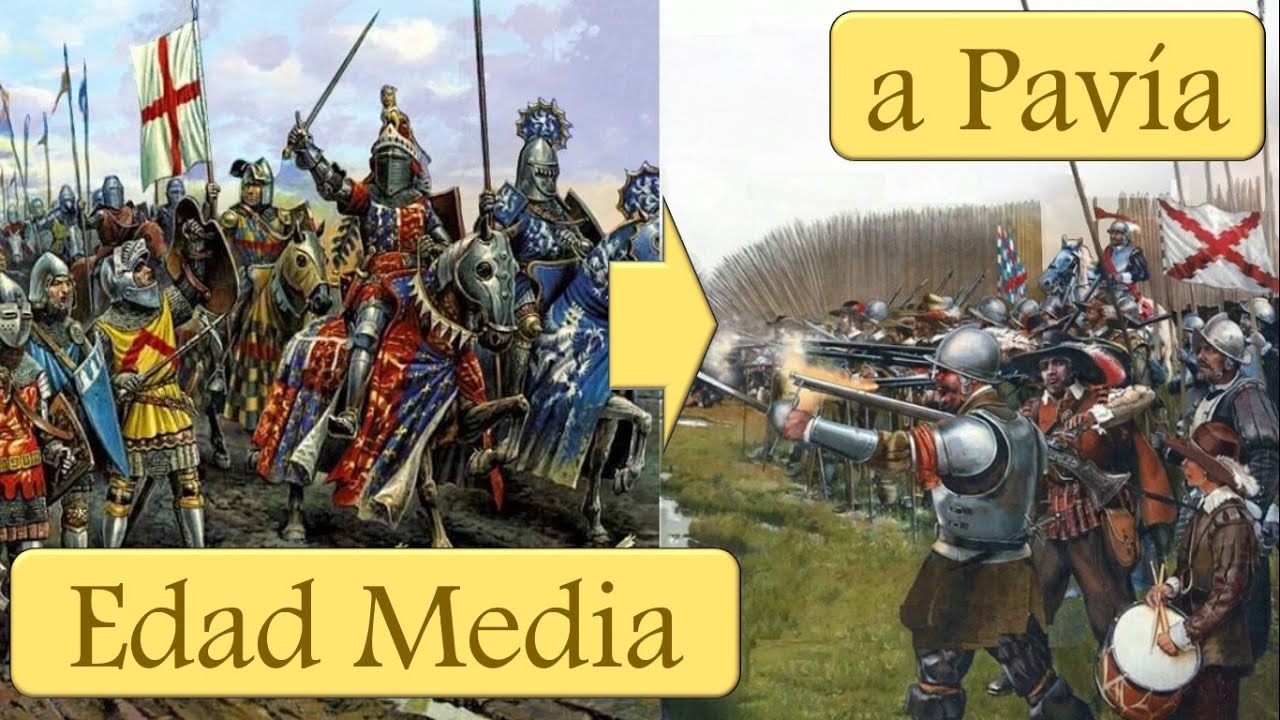
The 'Military Revolution' theory, exploring how gunpowder warfare led to the rise of modern centralized nation-states and professional standing armies.
The evolution of defensive military architecture, specifically the transition from medieval stone castles to star forts (trace italienne) designed to resist cannon fire.
The shift from early gunpowder to industrialized warfare, including chemical advancements in high explosives and mass-produced firearms.
Ethical and philosophical perspectives on arms races, technological determinism, and the laws of armed conflict (Just War Theory).
429.9K views12.9Klikes13:51Original Release: 2025-03-26
For billions of years, living things have been competing with each other on Earth, trying to dominate different parts of the planet, or at the very least eat without being eaten.
And for billions of years, the one force driving that power struggle was natural selection.
Then at some point, perhaps around 1.7 million years ago, our ancestors changed the rules of the game.
They started inventing weapons.
Suddenly, you didn’t need to be the strongest or the fastest to come out on top.
Whether you had a simple stone tool or a fancy contraption based on the principles of physics, wielding a weapon shifted the balance of power.
Ever since then, our weapons have shaped the course of history on this planet.
And in this video, we’re going to look at a few of the most game-changing weapons in history.
[ INTRO ] Now, we don’t know exactly when or where our early relatives started making weapons.
But as far as anyone can tell, the first tools that may have been used as weapons showed up around 1.7 million years ago in Eastern Africa.
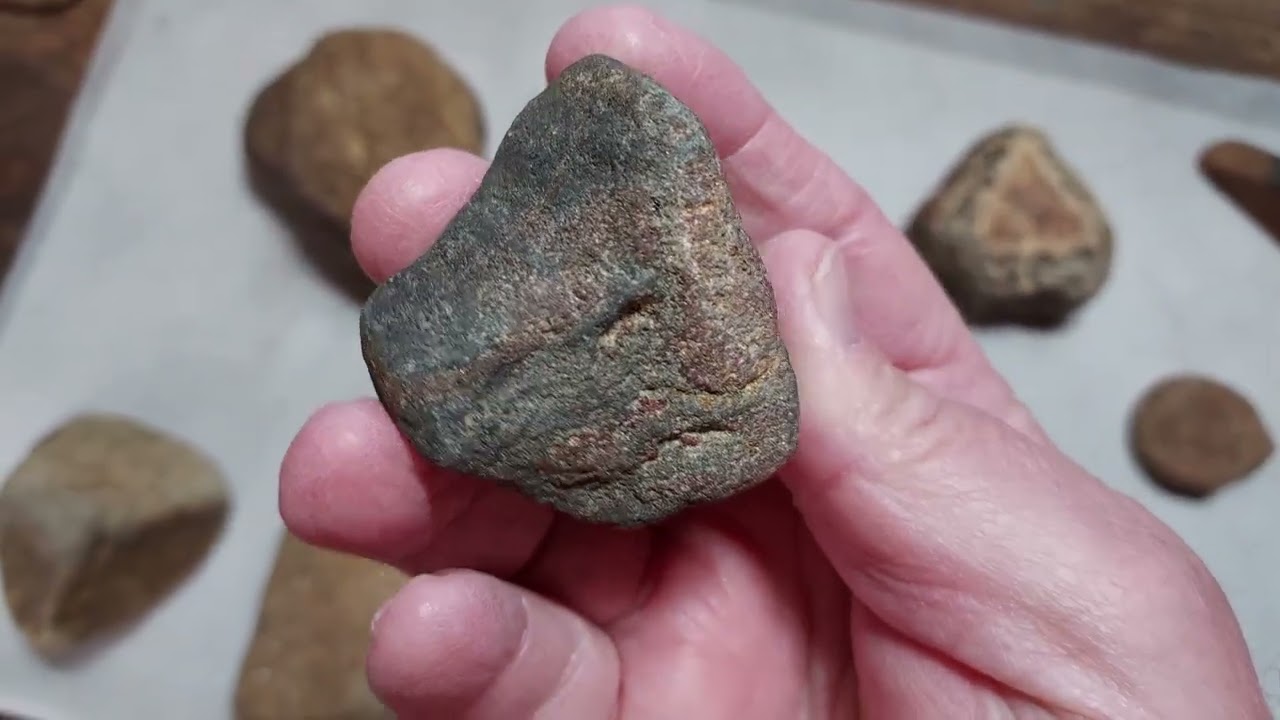
These objects didn’t look like much when archaeologists pulled them out of the dirt — just some old, flat rocks.
But if you look closely, you can see that many of them have been carefully carved into tools with sharp points or edges.
These tools are part of a very early tool-making tradition known as the Acheulean industry.
Both Homo heidelbergensis and Homo erectus would have produced them.
They’re made of stones with flakes chipped off by harder rocks to produce sharp edges, creating simple cleavers, picks, and handaxes.
Archaeologists think that some of these tools were used to butcher animals, judging by telltale marks in animal bones made by slicing and hammering.
But some researchers suggest that the handaxes in particular were also used as weapons.
This is mostly based on experiments with handaxe replicas, showing that when you throw one, it’ll often land on a point or an edge.
That could imply that they were designed to strike objects with their sharp ends when thrown… although it could just be a coincidence.
Unless someone finds one of these tools wedged in the skeleton of a prehistoric elephant, it’ll be hard to settle the debate.
But if the handaxe was used as a projectile, it could have been a game-changer.
It could have let humans take down prey from a safe distance, without putting themselves in harm’s way.
Or it may have been a way for them to protect themselves against predators.
Either way, it would have tipped the balance between human beings and the natural order.
Whether or not it happened 1.7 million years ago, this tipping of the scales was definitely under way by the end of the Pleistocene, tens of thousands of years ago.
At a cave site in southern France, archaeologists have dug up pieces of what seem to be ancient spear throwers, including a hook made out of an antler that dates back over 17,000 years.
These weapons worked like levers: They extended the length of a hunter’s arm so that they could launch the spear with more force.
It’s like how you can throw a ball harder with a lacrosse stick than with your bare hand: Adding some length to your throwing arm gives you some extra oomph.
So these prehistoric hunters could strike prey harder, and from farther away, than they could with simple handheld spears.
And that was a big deal.
It gave humans the ability to hunt large fauna from a distance.
Hunters armed with spear throwers could even take down mammoths.
Suddenly it would have been way easier for humans to find food, leaving them with plenty of energy to go toward, well, anything else.
And this must have caused a pretty big shakeup in the ecosystems where these hunters lived.
Not to mention: This wasn’t just happening in Europe.
Evidence of similar weapons shows up all over the world.
It’s a little hard to know for sure when and where spear throwers were used, because the weapons themselves have long since decomposed.
So archaeologists are stuck l ooking for items that could be spear tips and then examining the design and wear patterns for clues that back that up.
But in doing so, they’ve found some good contenders in Germany and South Africa that date back hundreds of thousands of years.
This suggests that the history of spear throwing goes back far and wide, and likely shook things up in all of the places where it was practiced.
But the thing about inventing weapons is that the invention itself is just part of the equation.
The impact of that invention has everything to do with where and how it’s used.
And by the third millennium BCE, age-old weapons were being deployed in an entirely new scene.
It all happened because of two separate developments that were unfolding more or less in parallel.
The first was the invention of a new form of transportation in the Near East and parts of Asia: two- or four-wheeled vehicles drawn by oxen, donkeys, or even humans.
And second was the domestication of horses.
At first, these two developments were separate.
But it wasn’t long before people brought them together to create a groundbreaking new war machine: the horse-drawn chariot.
Horses were fast, had high endurance, and they weren’t easy to kill in battle.
You could hook them up to a chariot, and suddenly you had a mobile platform for battle.
Fighters stood inside these chariots and shot arrows or thrust spears at their enemies.
Some used them for hit-and-run attacks, swooping in to strike and escaping before the enemy retaliated.
Chariots became so central to warfare that in the Battle of Kadesh in 1275 BCE, there may have been some 5000 of them on the scene.
But it wasn’t just about the numbers.
Your side’s chariot game was what made you a winner or a loser, and different fighters took different approaches.
At Kadesh, an Egyptian pharaoh depicted himself operating his chariot solo, with reins around his waist, armor protecting his body, and his hands free for shooting a bow and arrow.
Other Egyptian chariots carried both a driver and a shooter.
Meanwhile, the Hittites treated their chariots more like tanks.
They were heavier and better shielded, which made them less nimble but more effective at plowing through enemies and fighting them with handheld spears at close range.
Over the next few centuries, weapons and battle tactics constantly evolved, but these horse-drawn chariots remained central to ancient warfare and continued to shape the balance of power across the Near East.
This SciShow video is supported by Brilliant: an online learning platform that helps you build real knowledge through lessons you’ll actually remember.
We’ve all forgotten stuff that we learned in a classroom.
So Brilliant is designed to be different.
With puzzles, quizzes, and real world data you can play with, Brilliant has made online learning interactive.
That way, you don’t waste your time memorizing stuff that you’ll forget by the end of the day and repeating lessons.
You can’t say that about watching a lecture.
To try it out for free for the first 30 days, find Brilliant at Brilliant.org/SciShow, the QR code, or the link in the description.
That link gives you 20% off an annual premium Brilliant subscription.
The Egyptians were some of the people who came out on top during the long period of chariot warfare.
During this time, the Egyptian empire spread south into Nubia and north into the Levant and Syria.
And their ability to conquer these territories had a lot to do with the chariot… but it also had to do with the weapons they were using on those chariots: bows and arrows.
Now, bows and arrows weren’t exactly cutting-edge.
Archaeological evidence suggests that humans have been using bows and arrows since at least 64 thousand years ago.
But by this point in history, they’d gotten some major upgrades.
The Egyptians were using what were called composite bows, made with layers of wood, animal horn, and sinew.
They were strong and flexible, and they could be made small enough to maneuver easily on a chariot, t hanks to their shape.
Unstrung, these bows naturally curved forward.
So when an archer drew back the bowstring, the bow kept wanting to spring forward, even more than a regular bow.
In physics terms, that means that you could store more energy in the bow when it was drawn.
Then as soon as you let go of the string, the arrow sprang back to its natural form, and all this potential energy stored in the bow turned into kinetic energy that slung the arrow forward.
Thanks to all that stored energy, composite bows packed more punch than traditional bows of the same size.
So, used alongside the chariot, these bows gave the Egyptians a huge edge on the battlefield and let them establish a sprawling Egyptian empire.
Since then, other warriors have taken the classic bow and arrow in other directions, making it even more powerful.
The recurve bow is shaped so that the tips of the bow point forward instead of back, so that even more energy can be packed into the arched bow.
And the compound bow is a modern version of this weapon that encases a whole system of pulleys and cables that make the bow much easier to draw and shoot.
Like the bow and arrow and the spear thrower, lots of ancient weapons took advantage of physics to make extraordinary feats possible for an ordinary human.
And by the 4th century BCE, the catapult was one of them: It was a machine that could create an explosive force with zero explosives.
And it helped upend the balance of power in the Mediterranean during the time of the Ancient Greeks and Romans.
At that time, many towns were protected by walls, and once you had a wall around your town, you were in pretty good shape, because it was much easier to defend a fortified city than to breach those defenses.
But the catapult turned that on its head.
The basic idea behind this weapon was simple.
It used the principles of tension and release… a lot like a wind-up toy.
For instance, one kind of catapult, called a torsion catapult, had a long arm that was held up by twisted strings.
When you pulled the arm down, you twisted the strings even further, s o as soon as you let go, the arm would spring back up and launch a stone or anything else that was on the end of it.
Most catapults weren’t powerful enough to actually break down the fortifications around cities.
But a steady shower of heavy stones and other projectiles did keep defenders on their back foot.
And that gave attackers a chance to breach the walls without the defenders holding them back.
Historians believe catapults paved the way for Alexander the Great to topple Greek cities one after the other in the 4th century BCE.
In other parts of the Mediterranean, Roman warriors used catapults in their conquests too.
One famous account comes from 67 CE, when the Roman army besieged the Jewish city of Yodfat, in what’s now northern Israel.
According to records of the attack that followed, the catapult bombardment was so brutal that defenders couldn’t even climb up on the walls to fend off the Romans.
So catapults completely rewrote the playbook for siege warfare.
But it wasn’t until the next chapter in weapons history that fortified cities were truly undone.
This next chapter started during the 900s CE, when the Chinese made a discovery that would change the future of warfare for the next millennium.
It began with Chinese alchemists, who were experimenting with different materials in an attempt to make new medicines.
In the process, they stumbled across a mixture of nitrates, sulfur, and charcoal that turned explosive when heated.
They called it “fire medicine”… We call it gunpowder.
The Chinese experimented with gunpowder for centuries.
They used it to make flaming arrows and rockets… and weapons called “fire birds”, in which, yes, they tied a bundle of gunpowder to a bird, lit it on fire, and shooed it toward enemy property.
Over time, gunpowder spread west, reaching Europe by the 1320s.
And suddenly, everything changed.
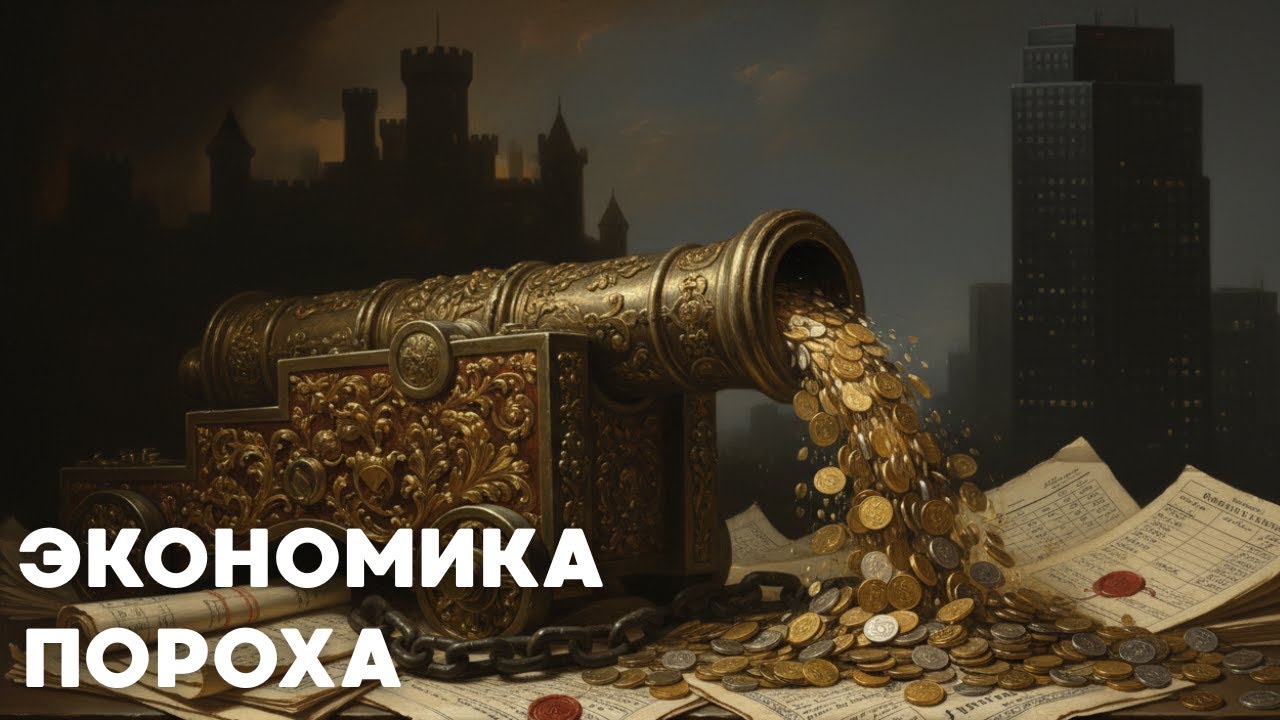
In Europe, rulers began commissioning giant cannons.
These were like giant guns that you loaded with a bunch of gunpowder, followed by a stone ball.
Then you ignited the gunpowder, and as it took, the pressure blasted the stone outward with an enormous force.
These weapons weighed hundreds of kilograms and could launch projectiles heavier than a person.
And they weren’t just a show of force.
They were built to topple the walls around towns and castles that had long stayed safe from invasion.
One of the most famous examples of cannon warfare happened in Constantinople, he capital of the Byzantine Empire.
By the 15th century, the walls of Constantinople had protected it for nearly a thousand years.
They were considered basically impossible to breach.
But in 1453, the Ottomans took aim at the city.
And they knew what they were doing.
To prepare for this attack, they hired a Hungarian engineer to make a massive cannon.
The weapon was around half as long as a tractor trailer, and it was made to shoot stone balls weighing hundreds of kilograms a distance of over a kilometer.
It took hundreds of men to move the cannon to Constantinople, where they arrived with this behemoth and a bunch of other smaller cannons.
They spent 55 days bombarding the walls.
The monster cannon ended up being more trouble than it was worth, but the smaller cannons methodically broke down the walls of the city.
Finally, after 1000 years of safety, Constantinople fell to the Ottomans.
And it was clear that thanks to gunpowder, cities could never just wait out attacks behind sturdy walls ever again.
Ever since we started using weapons, warfare has become a literal arms race.
But weapons have never been just about fighting for dominance.
Over tens of thousands, if not millions, of years, the weapons we’ve used have changed how we find food, use our energy, design our cities, and make our mark on this planet.
[ OUTRO ]
Up Next

14:22
When Homo Sapiens Met Other Human Species: 8 Encounters Explained
@NORTH02
956.9K views•2025-04-26

33:02
The Great Schism of 1054: Causes and Consequences
@SacredCathedrals
113.5K views•2026-02-19

4:41
The History of Arabic Numerals and the Legacy of al-Khawarizmi
@SciShow
2.6M views•2013-09-03

17:05
Understanding the Cold War: Superpower Conflicts and the Road to Détente
@OverSimplified
46.1M views•2019-01-24
Related Study Plans & Knowledge Roadmaps
Structured learning paths in History
history
Byzantine Iconoclasm: Theology, Art & Politics
01Foundations of Byzantium and Early Christian Images
02The First Iconoclasm: Leo III and the Crisis of Images
03Empress Irene, Nicaea II, and the Second Iconoclasm
+ 2 more learning modules
9h5 modules
Explore Roadmap
history
Iranian Revolution (Causes, Events & Legacy)
01The Pahlavi Dynasty and the Roots of Discontent
02The Spark of Rebellion and the Rise of Khomeini
031979: The Fall of the Shah and the Climax of the Revolution
+ 2 more learning modules
8h5 modules
Explore Roadmap
history
Mali Empire: Mansa Musa, Trade & Timbuktu
01Foundations of the Mali Empire
02The Trans-Saharan Gold and Salt Trade
03The Reign and Pilgrimage of Mansa Musa
+ 1 more learning modules
6h4 modules
Explore Roadmap
history
1947 Partition: Politics, Borders & Legacies
01Foundations of British India and the Divide
02The Political Negotiations and the Mountbatten Plan
03Drawing the Boundary: The Radcliffe Line
+ 2 more learning modules
8h5 modules
Explore Roadmap