



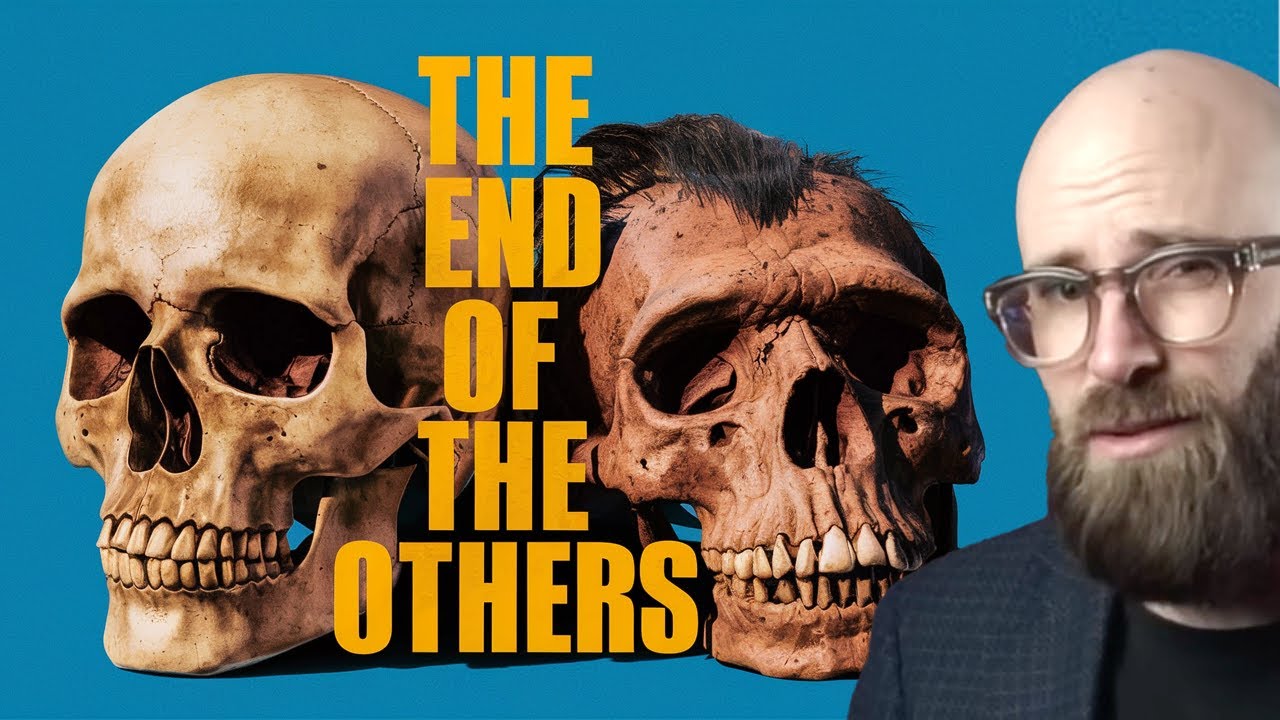




















Throughout human history, Homo sapiens did not live alone but shared the planet with multiple other human species, including Homo naledi, Denisovans, Neanderthals, Homo erectus, Homo floresiensis, and Homo luzonensis, each shaped by different environments; modern humans interbred with these relatives, leaving genetic traces in our DNA today, and while some species like Neanderthals and Denisovans contributed significantly to our genome, others like Homo floresiensis and Homo luzonensis disappeared after encountering modern humans, demonstrating that human evolution was a complex web of diversification rather than a single linear path.
When Homo Sapiens Met Other Human Species: 8 Encounters Explained
Added:The basic lineage of hominin evolution, including the concept of common ancestry and how different human species coexisted on a geological timeline.
The 'Out of Africa' model of human migration, which explains how Homo sapiens dispersed globally and encountered established hominin populations.
Fundamental concepts of genetics, specifically DNA inheritance, hybridization, and the biological definition of a species versus subspecies.
An understanding of the Pleistocene epoch, including how ice ages and changing climates created geographical barriers and migration corridors.
Paleogenomics and Archaic Introgression: How Neanderthal and Denisovan DNA sequences persist in modern human genomes and influence modern physiology, immunity, and disease susceptibility.
The competitive exclusion principle and extinction theories, analyzing whether climate change, volcanic events, or direct competition with Homo sapiens led to the demise of other hominins.
Comparative paleoanthropology, specifically examining differences in tool technology (e.g., Mousterian vs. Aurignacian), symbolic art, and burial practices between Homo sapiens and Neanderthals.
The evolutionary cognitive biology of Homo sapiens, exploring how mutations related to brain development and language capability may have given modern humans a social and survival advantage.
956.9K views32.5Klikes14:22Original Release: 2025-04-26
For most of human history, we weren't the only humans. Earth wasn't just home to homo sapiens. It was a world shared with other human species, each on their own evolutionary journey, shaped by different environments and challenges.
Some looked like us, and others didn't.
Some were close cousins, some were fierce competitors, and a few stuck around long enough to pass on their genes. Genes that millions of people still carry today, and others disappeared without a trace. This is the story of when we met them. when modern humans came face to face with other human species. It's a web of encounters, dead ends, and lost relatives. And we're only beginning to understand how many we left behind. Let's start in Africa, our homeland. We know from multiple forms of evidence that this is where our species first appeared. By 300,000 years ago, our species was widespread across much of Africa. And in South Africa, we know for a fact that we lived alongside a little homminid with a liking for caves.
Homoleti. Homonyi may not be the first species that comes to mind, but they were among the most recent ancient humans. Discovered deep within the rising star cave system, Homonyi is utterly bizarre. They were small at only around 4'9 in tall or 88 lb. And they had a tiny brain roughly the size of an orange. But their weirdness doesn't stop there. They had long curved fingers and shoulders suited for climbing. Yet, their legs were just like ours, adapted to walking upright. They seem to have diverged from our lineage very early on, possibly over 2 million years separated.
But this doesn't mean they were primitive. Some evidence suggests that they may have deliberately placed their dead deep within a cave, a possible sign of ritual behavior. This evidence is quite controversial, though the possibility is intriguing.
dated to around 250,000 years ago.
Homonyi lived during the same era as our species was beginning to dominate. That means we absolutely encountered them and likely for tens of thousands of years.
It is fascinating to think how we might have perceived these little guys. Did we fear them? Did they fear us? Did we think of them as spirits or mythical creatures? Or what if we even spent some time around the campfire with them? We don't know. Fact is, this one cave system in South Africa is the only evidence that we have that the species ever existed. What we do know is that they were there. Shadow humans walking just outside the light of our story.
Their extinction may have been quiet, but their mystery echoes louder than ever. They raise a critical question.
Does intelligence require a big brain or just a different kind of awareness? Moving to West Africa, we find that not all of our relatives have names or faces. Some are only known by what they left inside of us, their genes. Geneticists have uncovered traces of ghost hominins that showed up in West African genomes, suggesting that homo sapiens interbred with at least one other archaic species on the continent.
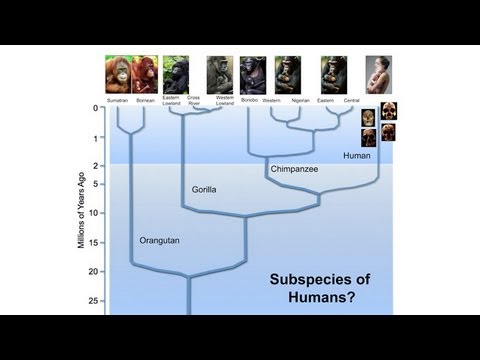
We don't have any of their fossils or know what they looked like, but their DNA is still inside populations from this region. They seem to have split off from our lineage early on, possibly over 700,000 years ago. Though we split out from Neandertols around 500,000 years ago, and most of us still carry their DNA as well. Some populations in West Africa have large amounts of this ghost ancestry, while others hardly have any at all. This wasn't a single encounter.
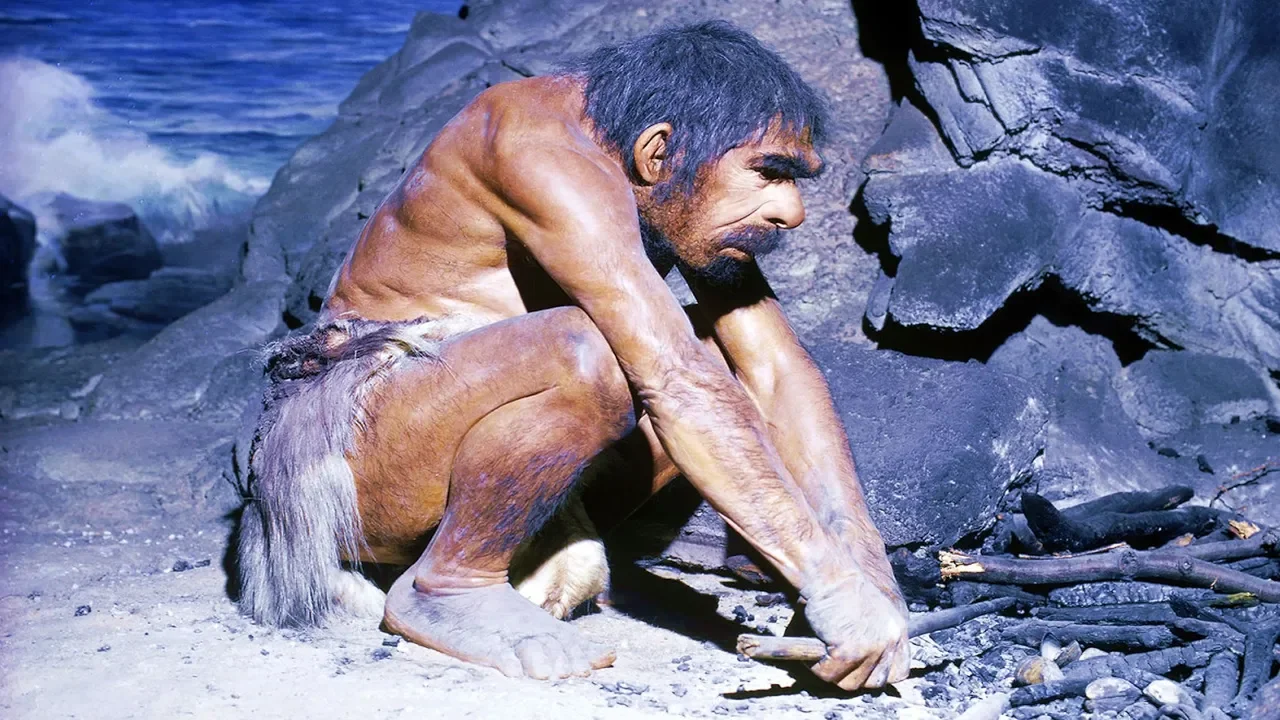
It was likely multiple instances of cohabitation, interbreeding, and long-forgotten kinship. Whoever these hominins were, they still live on in many of us alive today, and hopefully we will get some physical evidence of them soon. Moving just out of Africa, we encountered the Neandertols. Neandertols were widespread across Europe, the Middle East, and much of Asia. They weren't ape-like monsters.
They were our relatives, our evolutionary cousins. Sure, they were stockier and stronger than us. But they used tools, wore clothing, cared for their sick and injured, and some even made art. In the Middle East, our ancestors encountered them starting over 200,000 years ago. These early waves of homo sapiens out of Africa would eventually die out. But another wave starting around 70,000 years ago would encounter the Neandertols and interbreed. Archaeological layers show signs of cultural exchange, similar tools, overlapping diets, and shared hunting strategies. But it may not have been all kumbaya. At Shannondar cave, we have evidence that ananderl was hit with a projectile in his rib cage. The wound appears to have come from a lightweight projectile, possibly a spear thrower.
It has been hypothesized that this Neandertol was attacked by a homo sapien. Even if some encounters with Neandertols didn't go too well, others certainly did. We interbred with Neandertols around 50,000 years ago. And these populations would spread throughout the world with their hint of Neandertol. This resulted in every person of non-African descent carrying Neandertol DNA. And many populations of Africans also carry some amount of Neanderl DNA, usually less than 1%.
Europeans actually don't even have the most Neandertol DNA. The highest proportions are found in East Asia.
Genes that influence skin tone, immune response, and even neurological traits come from them. As our species spread across the rest of Europe and Asia, we would assimilate and replace the rest of the Neanderls. Whether it was climate, competition, or emerging with us, Neanderls faded from the world. But they didn't vanish completely as most of us still carry their legacy.
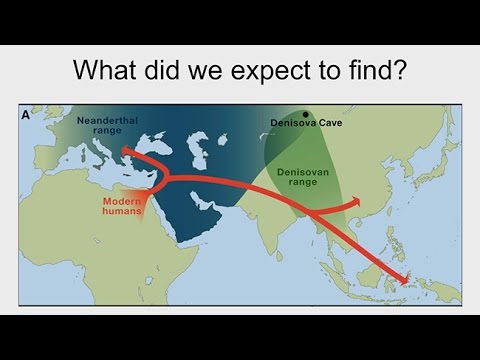
As our species continued our relentless trek in the Far East, we found another hominin, the Denisins. They are a species that we never saw until genetics caught them. In 2010, scientists sequenced DNA of a finger bone found in Siberia. It didn't match Neanderls and it didn't match us.
It was something else entirely, a new human lineage. A pinky bone from Denise of a cave was found to be a direct hybrid child of a Neanderl and Denise.
Our ancestors would eventually turn up and we joined in on the fun. We know this because populations in Southeast Asia and Oceanania have up to 5% Denisphin DNA. Some Denise genes are tied to high altitude adaptation, helping Tibetan populations survive in low oxygen environments. Others influence immune responses and fat metabolism. Denisven may have overlapped with Homo sapiens across a wide swath of Asia from the Himalayas to island Southeast Asia. The Denise themselves seem to have been pretty distinct, probably with regional varieties correlating with different environments.
We didn't just meet them. We may have learned from them. Though they had such a large impact on the ancestors of East Asians, we still don't even have a skull of one of these hominins. We have fragments of bone from Denise of a cave, a mandible from a cave in China, and announced just last week another mandible. It was dredged off the coast of Taiwan, 15 mi underwater. There is so much more to learn about these mysterious ancient humans, and I'm hoping we'll be able to put a face to the name sometime soon. Long before Neertos and Denise etched their names into our DNA, there was Homo erectus, the original wanderer, emerging nearly 2 million years ago, they were the first of our kind to leave Africa, spreading across Asia and settling into regions like Indonesia and China. For over a million years, they thrived, living alongside Gigantopithecus and the largest elephants of all time. But here's where it gets intriguing. Recent findings suggest that Homo erectus didn't vanish as early as we once thought. In Java, Indonesia, evidence points at their survival about 117,000 to 108,000 years ago. This timeline overlaps with the arrival of modern humans in Southeast Asia, who are believed to have reached the region around 70,000 years ago. The possibility arises. Did our ancestors encounter these ancient hominins? Imagine the scene. A meeting of minds separated by eons. On one side, homo erectus, masters of stone tools, and fire. On the other, homo sapiens, bearers of art, language, and abstract thought. Such a meeting must have been fascinating. While direct evidence of interbreeding between Homo erectus and modern humans remains elusive, the absence of proof is not proof of absence. Genetic studies have unveiled traces of unknown archaic DNA in modern human genomes, hinting at interactions with ancient hominins beyond Neandertols and Denise events.
Could Homo erectus be among one of these mysterious contributors? What we do know is that shortly after modern humans arrived in Southeast Asia, Homo erectus disappeared. Whether from contact, competition, or environment, we'll never know for sure. Their extinction marks the end of a long chapter in human history. But Homo erectus remains my favorite hominin of all time. They're right up there with Neandertols, but come on, who doesn't like Homo erectus?
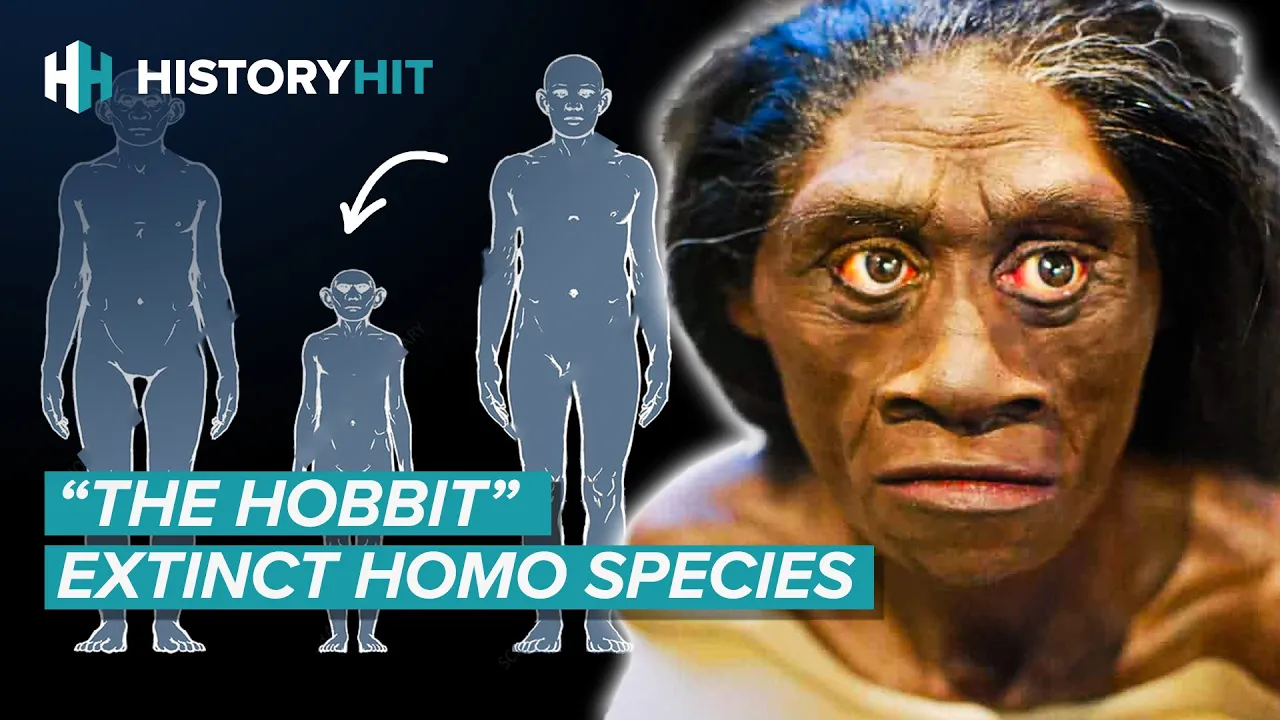
But the story of East Asian hominins doesn't stop there. It gets weirder and smaller. On the island of Flores in Southeast Asia, a tiny human species lived and thrived. Homo floresensis, nicknamed the hobbit, fully grown adults stood just over 3 ft tall.
Despite their small brains, they crafted stone tools, hunted animals, and possibly controlled fire. They were unlike anything we expected. Like all large mammals who end up on small islands, limited resources led to a smaller body size. This evolutionary process is known as insular dwarfism.
But ironically, smaller animals now with no predators can grow much larger. These peculiar evolutionary forces led to homo floresenses sharing their island with a unique cast of creatures. They hunted giant rats, some as big as rabbits, and they might have even hunted pygmy elephants known as stegodon. Evidence from a cave in Flores shows cut marks on Stegodon bones, suggesting butchering by these small humans. It is truly stranger than fiction that in real life there was an island of tiny humans hunting tiny elephants and giant rats. But it gets even weirder. They also coexisted with formidable predators like Komodo dragons and giant stors, creating a challenging environment for survival. In this isolated ecosystem, homo flororesiansis adapted remarkably, thriving for thousands of years before disappearing.
And they lived until at least 50,000 years ago, long after modern humans had reached nearby regions. There's no direct evidence we encountered them. But considering they vanished right after we appeared, it is hard to imagine we didn't play a role in their extinction.
It's almost certain that homo sapiens landed on Flores and met these small-bodied homminids. Did we fear them, ignore them, cause their extinction? We don't know, but the possibility lingers. Their story adds a fascinating chapter to our understanding of human evolution. What's eerie is how recently they vanished. Some local myths on Flores even tell of tiny forest people called Ubugu Go. Some researchers wonder, were these stories of distant memories of real encounters? When we met them, what did we think? Did we see them as humans or something else? Something mythical, something abstract? And maybe it's been carried on in stories, you know, in the modern day in Flores.
Surprisingly, homophoresensis isn't the only small hominin that lived in Southeast Asia. On Luzon, the largest island of the Philippines, researchers found teeth and bones belonging to a new species, Homol Luzonensis, we only have the partial remains of three individuals, but they were clearly different from any other hominin. They had curved toes and fingers for climbing, and they were smallbodied. Size estimates suggest that they're just between 3 to 4 ft tall.
They seem to have hunted deer and other animals, as butchered bones are found alongside their remains. They may have descended from early Homo erectus migrants evolving in isolation. Their existence suggests that island Southeast Asia was home to a hidden diversity of humans. Their remains date to only 67,000 years ago and we haven't found any younger remains. We know that modern humans were in nearby Borneo and Sului by 50,000 years ago. They almost certainly came across the species when they made it to Luzon. And like Homo floresensis, they soon vanished. Their ancestors likely spent hundreds of thousands of years evolving on Luzon, but our ancestors seem to have quickly replaced them. Perhaps some hold out survived in caves for a few thousand years. Maybe our species even tolerated them. But there are also much darker possibilities. Perhaps we hunted them down using our larger body sizes to easily overpower them. We will never know. What we do know is that there is a lot more to learn about ancient humans.
Think of it. Homonyi, Florosiansis, and Luzonensis are all only known from a single respective cave. Yet, their populations were undoubtedly in the thousands, and they survived for hundreds of thousands of years. It is truly remarkable that there are entire species of human waiting to be discovered. Like the ghost population that we only know from modern DNA and you know, still affects modern West Africans. Denise, too. They are only known from a handful of remains, but their DNA is present in billions of people. I have no doubt in the coming decades that we will discover entirely new species of humans. And that's so exciting to me. When we think of early humans, we often imagine a single population standing against the relentless forces of nature. But like any other animal, we evolved and diversified throughout the world, leading to many distinct lineages. They left behind bones, tools, DNA, myths, and sometimes nothing at all. But they were real. They were humans just like us. And every time we look in the mirror, we carry them with us. We are just the lucky species that for some reason was able to spread out and conquer the rest. It probably could have easily gone another way if things were different. But even our story isn't just Homo sapiens. It's a tapestry of all the humans who came before and all those met along the way. Thanks for watching. I hope you enjoyed the video. Make sure to like, comment, subscribe, and hit that bell icon so you never miss out on an upload.
This was a fun video to make. It's really interesting to think about, you know, our interactions with other species of humans, and it's endlessly fascinating, and I bet there was probably 20 other species we may never even know about that we've interacted with at some point. If there's any other human species you want me to cover, make sure to leave a comment down below. And also, go check out north2.com. This has been your host, North, and I'll see you in the next one. Not even there.
[Music]
Up Next

18:37
The Crystal Palace: Rise and Fall of Victorian Britain’s Icon
@megaprojects9649
641.8K views•2020-07-27

33:02
The Great Schism of 1054: Causes and Consequences
@SacredCathedrals
113.5K views•2026-02-19

91:57
The Geopolitics of the Ukraine War and the Rise of Global Autocracy
@JordanHarbingerShow
468K views•2025-04-19

17:05
Understanding the Cold War: Superpower Conflicts and the Road to Détente
@OverSimplified
46.1M views•2019-01-24
Related Study Plans & Knowledge Roadmaps
Structured learning paths in History
history
Byzantine Iconoclasm: Theology, Art & Politics
01Foundations of Byzantium and Early Christian Images
02The First Iconoclasm: Leo III and the Crisis of Images
03Empress Irene, Nicaea II, and the Second Iconoclasm
+ 2 more learning modules
9h5 modules
Explore Roadmap
history
Iranian Revolution (Causes, Events & Legacy)
01The Pahlavi Dynasty and the Roots of Discontent
02The Spark of Rebellion and the Rise of Khomeini
031979: The Fall of the Shah and the Climax of the Revolution
+ 2 more learning modules
8h5 modules
Explore Roadmap
history
Mali Empire: Mansa Musa, Trade & Timbuktu
01Foundations of the Mali Empire
02The Trans-Saharan Gold and Salt Trade
03The Reign and Pilgrimage of Mansa Musa
+ 1 more learning modules
6h4 modules
Explore Roadmap
history
1947 Partition: Politics, Borders & Legacies
01Foundations of British India and the Divide
02The Political Negotiations and the Mountbatten Plan
03Drawing the Boundary: The Radcliffe Line
+ 2 more learning modules
8h5 modules
Explore Roadmap