





















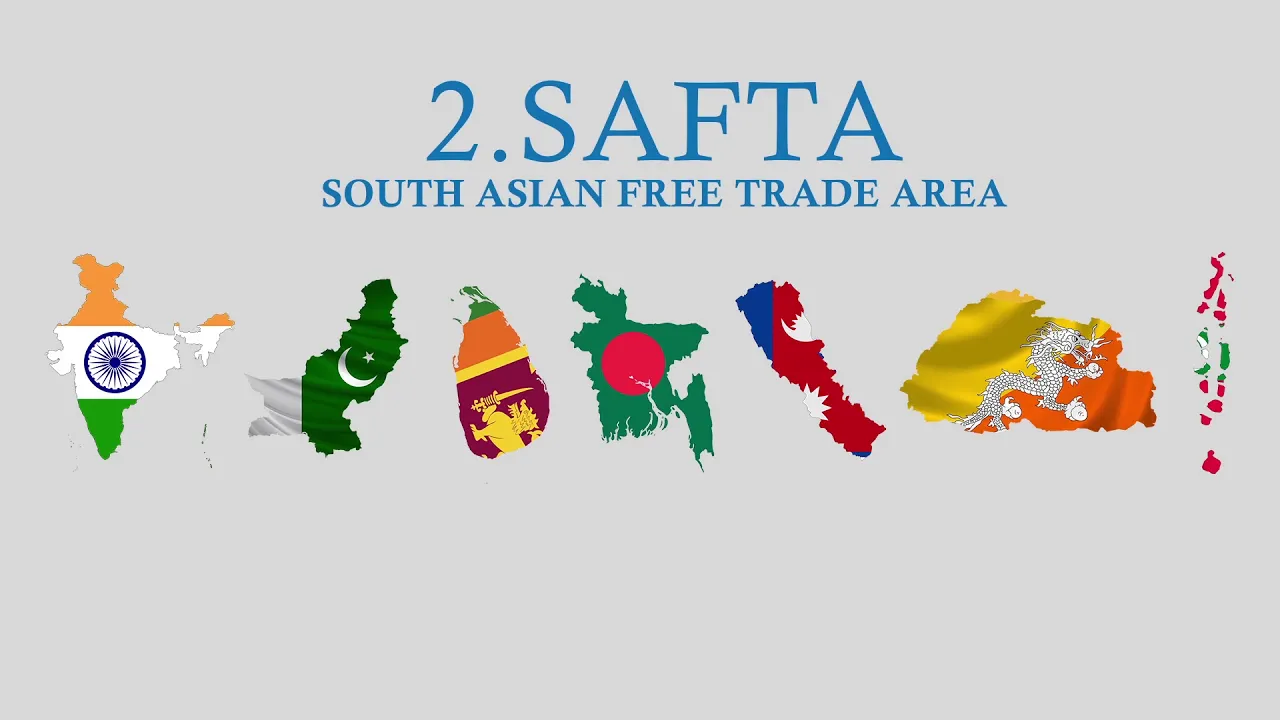


This video explains key economic concepts including: (1) Anti-profiteering under GST - when tax rate reductions are not passed on to consumers, the National Anti-Profiteering Authority penalizes businesses; (2) WTO dispute settlement mechanism - involving consultations, panel investigations, and appellate body reviews, which has become defunct due to US blocking appointments; (3) Power sector issues - distribution companies face losses when Average Cost of Supply (ACS) exceeds Average Revenue Realized (ARR), along with cross-subsidization and Aggregate Technical and Commercial (AT&C) losses; (4) MSME Sampark portal performance challenges; (5) GST Council voting mechanism where decisions require 75% majority with voting powers distributed as one-third to center and two-thirds to states/UTs.
Business Newspaper Roundup for UPSC CSE | Dec 9-22, 2019
Added:hello students welcome to bioscience welcome to a section on economic this week we're and we'll be taking up some of the very important articles that have appeared in various business-related newspapers and we'll be analyzing these particular articles for this particular video I've chosen the time period from 9th of December to 22nd December 2019 and the articles that I've chosen are from businessmen Hindu Business Standard Indian Express and live mint let's begin the discussion the first article is related to concept of anti profiteering a please understand another angle of a GST there is a goods and services tax Government of India basically will reduce the tax rates on various goods and services over a period of time let's say hypothetically before the introduction of the GST on certain good who is a value as hundred rupee let's say Government of India had a tax rate of 12% so when this particular cool is sold in the market basically the market price will be 100 rupees plus a 12% of 100 that will be 12 which will become 1 1 2 rupees and let's say hypothetically government of india brought this particular good under the ambit of a 5% GST so with this particular new taxation rate the market price should be 100 rupee plus 5 percent of 100 will be how much 5 rupee GST and the market price should come down to 1 0 5 rupees so understand this government of india says with the reduction in the GST or with introduction of a GST that acts imposition on these particular commodities if it has been reduced the sender or the manufacturer should transfer this particular benefit to the consumer in the market I look at the statement with the change in the GST rate if the manufacturer or the seller is being less attached to the government then this particular benefit of a GST rate reduction should be transferred to the consumers in the market now what manufacturers or seller's might do I think the same example imagine the same concept earlier the market price was 1 1 2 now the GST rate has been reduced from 12% to 5% the seller couldn't we decrease the price from one one two rupees to let's say one zero eight rupee and say that say with the reduction in the GST I have reduced by market prices but what government of NSA says yes you have reduced the market price but you are not transferring the full benefit of a rate reduction to the consumer in the market and whenever such unfair practices are used by that companies to increase their profits I'll repeat the statement whenever such unfair practices are used by the companies to increase their profits this particular process is called as a profiteering now Government of India to counter this particular concept of a profiteering practices of the businesses has introduced the concept of national ante profiteering authority under the ambit of GST government amended the cgc act as per this particular amended provision the government has set up an authority national anti profiteering authority and the duty of this particular thority is to find out if any of the businesses or sellers or manufacturers if they are not transferring the commensurate the benefit or the full benefit of rate reduction to the consumers then this Authority will penalize these particular businesses or sellers in the market in the recent times a large number of companies have come under the handle tougher the national anti profiting Authority and this Authority is imposed of penalties on these particular companies one such company which has been mentioned here is Nestle another very important company FMCG company which came under fire from this particular Authority was a Hindustan Unilever Limited on which more than 300 crore worth of fines were imposed by this particular thority now that is a basic cuts of the article which is given here now let me go beyond what is given in the article first point of the national anti profiting Authority though has been set up by Government of India various experts have raised a concern over the functioning of this particular Authority now what is the concern raised by the experts here they are basically saying that government of India in its document of Antti profiteering basically says that the manufacturer will have to transfer the commensurate reduction in the tax rate for the argument here Government of India basically says the manufacturer will have to transfer the commands you rate a rate reduction now the question is a who will define the term coming to rate rate reduction the benefit or the conventional benefit will be defined by whom for a manufacturer the Commission rate reduction could be something else for the authority the rate reduction could be something else for example usually the manufacturers say that you will not be able to reduce a market prices rather they will increase the weight age or a grand major or the package of these particular products or the commodities that we are selling in the market but usually these kind of practices will not be accepted by the anti profiting Authority so the problem in case of a imposing anti proffering measures is we do not have a very good framework to define what is commensurate let me give an example Australia was one of the very few countries which introduced a very good framework for countering the concept of a profiteering by the businesses what they introduced in case of Australia is basically referred as net dollar margin rule yen DM are what happens under net dollar margin the government of Australia basically says that if the taxes that you are paying to the government that is in direct attacks that you're paying to the government comes at on by one dollar then your market price should also come down by one dollar and look at the statement as per net dollar margin rule if a business he's paying one dollar indirect tax unless sell to the government then its market price it should be reduced by $1 this particular principle is called as a netted dollar margin rule government of india has not clearly defined the concept of an anti profiting in this particular provisions as such this has been raised as a concern by various experts because if it is not clearly defined the companies might think commensurate isn't this the authority might think the commensurate will beat this and when the authority will issue an order minority on these particular companies it will lead to litigation in the system and the whole idea of a reducing litigation with the GST will become counterproductive that is the reason the experts are saying that with these kind of a vague definitions with these kind of clauses it could actually lead to tax terrorism in the system so this is the basic discussion which has been provided now apart from this another very important point you must remember is with respect to national anti profiting authority it was set up in the year 2017 with the sunset clause of two years this is there in the newspaper please remember this what I mean by sunset clause of two years I'm saying it was set up in 2017 so when it was set up Government of India itself said the authority will function for the next two years that in simple terms is called as a Sunset Plaza which means after two years the authority will cease to function or cease to operate and very recently the GST Council has given an extension of a two more years for the functioning of this particular Authority which in simple terms means a rather than shutting shop in the year 2019 the authority will continue to operate it till 2021 which again has raised certain concerns in the market so basically these are the points related to the idea of a national nd profiting Authority as well as the concept of Antibes profiteering now based on this let's solve the question here consider the following statements national anti profiting Authority has been set up under IT act of 1961 wrong in his set up under C GST second the tenure of Na has been extended till 2020 again wrong it is still 2021 so both the statements are wrong right option will be option D both are false the next article is related to the dispute settlement under the ambit of W a please understand in case of a World Trade Organization whenever there is a dispute or a trade dispute amongst the member countries right now there is a particular process which has to be followed to resolve these particular disputes the basic process which will be followed up is let's imagine country is unhappy with the trade policy alpha or the guidelines of a country by it has a certain dispute against the policies of countrywide it will take this particular dispute to WTO World Trade Organization and under the ambit of a WTO usually the first step will be they will try to resolve what this particular trade dispute by holding consultations that is basically WTO under which there is a general counsel will ask both the parties to hold negotiations or consultations and resolve this particular dispute amicably now if the parties are unhappy with the consultations they want the W to itself er to resolve this particular dispute then the next step will be the General Counsel will set up a dispute settlement body that is basically the General Counsel will act as a dispute settlement body and they are going to set up a panel and this particular panel is going to investigate the claims or the complaints of these particular countries and it is going to submit a report and understand this if one of the parties is unhappy with the report they can counter or they can appeal against the order or the report is submitted by the panel and this particular appeal will be taken up at up till 8:00 the body this is the crux of the discussion now in case of the appellate body WTO has a sanctioned strength of seven judges that is a maximum seven judges can be appointed and whenever an appeal has to be taken up by the appellate body you need a strength of three judges and these particular seven judges are appointed for a tenure of four years and remember this whenever any decision has to be taken under the ambit of a WTO it has to be done through consensus the whole idea for W two is through consensus every member country must accept the decision only then WTO can accept this or implement this as a decision if one member country holds out or vetoes or something then WTO cannot decide anything now follow this very carefully the number of judges which is supposed to be seven under the ambit of callate body it has kept on declining by the changes in tenure of four years is over they are supposed to be appointed or reappointed one very important country or a member country that is USA has a veto the appointment of judges as a result of this rather than having a sanction strength of seven it has kept on declining and in the month of December finally only one judge has been left out under the ambit of appellate body and when you have only one judge on this particular number of a judge is not sufficient to take up the cases under the appellate body as a result of this this appellate body has become defunct in all and this is very important point for a simple reason appellate body was considered to be the Supreme Court or the most important body under the ambit of a W and this has functioned in the last two decades and resolved many of the disputes or has addressed many of the trade disputes irrespective whether the countries are big countries important countries leading countries or global trade partners doesn't matter it has taken up these particular cases and as a result of these particular disputes and up by making this particular applied body useless or defunct it has basically thrown open these particular trade disputes and now now question is a who is going to look after the implementation of these particular trade agreements for example if there are two countries a and B one country is very strong it has got a very high amount of a trade it has what a leverage over the other country now don't you think this particular country or the first country may misuse this particular position and try to influence the trade policies of the second country and since the second country does not have any other Avenue to take care of these particular dispute it will be forced to come under these particular pressures there have been various concerns on the same lines of which have been raised by various experts with this particular appellate body becoming different but having said so in the recent times some of the member countries are making their own arrangements to ensure these kind of disputes will be resolved for example European Union as basically stated that it will it's own arrangement meanwhile up to take or to address these particular issues of trade dispute sir again what kind of arrangement it will be made we'll have to wait and see it is just a proposal of apart from European Union there are many other countries which ever come together and they are making their own arrangements this is the crux of the article given here based on this particular discussion I given a question here consider the following statements about WTO appellate body has a sanction strength of seven judges true general council is the highest level decision-making body correct general consul of WTO meets as a dispute settlement body correct all the three are correct option D is the right option the next article is related to power tariffs the supply chain in the power sector will be first there will be generation companies then this particular electricity will be transmitted by transmission companies and finally distributed to the consumers by distribution companies which are famously referred as discounts the problem in the power sector is one follow this the distribution companies will purchase electricity from the generation Caprice and sell it to the consumers and collect the tariffs the basic terminology that they're using are one a CS and a RR what is the ACS a CS stands for average cost of supply and here R stands for average revenue realized the discount will incur a cost or an expenditure when they purchase and sell the electricity to the consumer in the market this is referred as average cost of supply and for having supplied electricity it will impose and collect the tariffs which is basically reference average revenue realized in case of India's power sector the ACS is higher than ARR I'll repeat the statement in case of an Indian power sector acs is higher than a RR it means if I am a discount and purchasing electricity and supplying it to you and the cost of that have incurred in doing all of this is here than the money or the tariff that I am going to collect from you as a result of this I can I simply say that this comes our incurring huge amount of losses yes that has been one issue and second very important issue in case of the power sector has been the issue of crosses sub syriza now what is the sign of a cross subsidy let's say hypothetically here's a disc for me X it is supplying electricity for a house or it is also supplying electricity for a commercial entity now whenever they supply the electricity to two different consumers like this the discount will charge a higher tariff on the electricity that they supply to a commercial enterprise and when they supply the electricity to a household they will charge a lesser Terra firme let's say hypothetically average the cost of supplying or ax is a four rupee per kilowatt huh and when they supply the cm unit to a household they will charge a let's say three rupee per kilowatt ah and when they supply the same unit to a commercial enterprises they will charge let's say at 428 rupee per kilowatt hour the logic is for household they are going to subsidize the electricity and for a commercial entities they are going to overcharge or impose higher tariffs for consumption of same unit of electricity so that whatever is the excess money collected here by imposing higher tariffs on the commercial entities some of this could be used to bridge the subsidy which is given for the households this basic practice is called as cross subsidization and in case of India we follow concept of a cross subsidization in power sector we also follow cross subsidization in case of a railway sector also that is the second issue in case of the power sector the third issue with the power sector is that there is a concept of a TNC enosis aggregate technical and commercial losses now what do you agree a technical and commercial uses electricity whenever it is supplied up or transmitted from point A to point B or distributed from point A to point B some of the electricity will be lost because of the quality of raw material and when you supply electricity there could be power theft also and when you supply electricity to let's say irrigation purposes the electricity supplied is a free of a cost there is no meter concept there so as a result of this the Descanso will incur huge amount of a cost which is present a DNC aggregated technical and commercial losses now before the introduction of a scheme called as who they would join dis come assurance huge number which was implemented by Government of India in order to address the issues in the discount sector or the financial stress in the disc on sector the agency losses in case of India was more than 25 percent so with the introduction of the virtual disk commercial and CEO Jenna Government of India basically said one you will have to bridge the difference between ACS and error that is basically how much is the difference that is gaseous being higher than error you will have to bridge this particular difference and bring the difference to 0 and second very important target which was set up under who joined dis commercial in Co is not used to reduce aggregated technical and commercial losses from whatever the existing number was there to 15 percent and the targeted data that was given for this particular this comes wasa April 2020 and we are in the year 2020 and this particular article has basically evaluated the implementation of which one is for my Shirin Co Chara and the article says either the results are not good results are not rosy by one the ugly technical commercial losses which was supposed to be dragged down to 15 percent are hovering at around 22 percent which is much much higher than the word was actually targeted and second the difference between a CS and AR are even today is existing different states have different terrific differences but overall it says either the difference between a CS and era today it is around 40 paisa it simply means I am spending 40 paisa more as a dis, when I purchase and supply electricity to a consumer in the market as the result of this the descanse have not been able to come out of the financial losses even today many of the diskens which are owned by the state governments are incurring losses and added to that this particular article also focuses on the idea of providing subsidies in the form of electricity unit said to the households now the example that has been taken in this particular article is in the state government of Delhi the state government of New Delhi very recently announced a delta initial sum of the number of units of electricity which is supplied to the households er will be free of course will be subsidized by the government the argument which has been put forward in this particular article is what is the logic of providing the subsidized electricity for all the households are in a place such as a Delhi where the per capita incomes are very very high but the argument would have been that or better the implementation would have been that they should have identified the households below certain income levels and should have are created at these particular households so that these particular households which actually need the benefit would have been given the benefit of a subsidized electricity so these are some of the issues which have been raised in this particular article and what are the recommendations of what is a way forward the article states that one the tariff revision has to be done by the states that is upward tariff revision has to be done so that the difference between a CS and here R will be breached second the government has to look into reducing a TMC losses aggregate Technic commercial losses and third very important recommendation is rather than giving subsidy for all the households in the form of free electricity we should implement a concept of a direct benefit transfer Verena identified households will be given a benefit or a subsidy so that the consumption of electricity will be subsidized only for these particular identified beneficiaries rather than for all the households so these are the points which have been mentioned in this particular article based on this I've taken up a portion consider the following statements about the virtual disc commercial in Co Jinnah the disc firms are to bring down the difference between ACS and a right to zero yes that is the target under this agency losses are to be brought down to ten percent and no the target was 15 percent so only the first statement is correct option yes correctly I have also given a descriptive ocean this is the issues plaguing the power sector I have already discussed some of the issues of right now one is the difference between ACS and era there is a very big issue second issue cross-subsidization third issue is the concept of aggregate technical and commercial losses fourth issue is related to fuel adequacy for example the most important fuel in case of India for generation of electricity is what coal but there is a problem with the coal availability in the domestic market itself as a result of this they are heavily dependent on the import of coal from the rest of that weight apart from this and within the fuel adequacy we are also heavily dependent on the nuclear material or nuclear plant also what about the renewable energy sources are we are very much dependent on the imports of a let's say equipment such as a solar photovoltaic modules so that is another issue apart from fuel adequacy there is also the issue of standard assets in the thermal power plants so these are some of the issues which are plaguing the power sector and we are supposed to write about 250 words on all these particular issues in the power sector the next article is related to MSME son PUC Government of India in the year 2018 loss of platform by the name ms/ms unfuck the objective of this particular platform or website was to ensure that a common platform will be available for job seekers as well as a job providers to meet and hiring would take place for example if I am a vocational trained person and I am searching for a job I could simply get myself registered in this particularly MSME some perk website and various companies or Java providers or employers will seek to provide me with an employment opportunity using this particular website itself the logic was to ensure that there is a meeting place for both the job seekers as well as the employers this particular article discusses the performance of this particular portal as such and this article mentions that since the launch of this particular portal or website in May or 2018 around five thousand three hundred eighty five were recruiting companies have registered and as of now nine hundred twenty three vacancies only are available or listed in this particular platform but the number of registered as parents or job seekers are more 4.06 haladki and since the launch of this particular portal only about 2500 AA+ candidates have been placed in various companies so the ministry has basically taken up this particular issue and is investigating what is a issue and why this particular platform or portal is not performing very well because the objective was to ensure that more and more the trade esperanza will get registered in this particular portal and they will be easily absorbed by the market but having said so since the launch it has been seen that on monthly basis only around 150 plus people are getting placed in the market as such so the MSM ministry has stated that he do look into the issues which are plaguing this particular portal but having said so the same article also mentions that the issue with the performance in this particular portal has been that the employers are basically unhappy with the skilling level of these particular trainees and since of the skilling level of these particular trainees is not satisfactory they are not opting to hire these particular employees that has been the point which has been mentioned in this particular article now based on this I have given a question here which of the following measures have been taken by the government to improve the credit availability for the MSM is a one pradhan mantri mudra Ajara yes it is true trad is trade receivables ie discounting system yes it is also true ena no this is more applicable to agriculture sector so the right option will be option B 1 & 2 the next article is related to the GST council so the very important points are one it is a constitutional body which has been set up by President of India second it represents a cooperative federalism between centre as well as the streets third it will have a representation from centre states as well as those union territories where there is a legislative assembly for the very important point the GST council is supposed to make decisions are related to GST what kind of decisions for example what kind of goods and services should be brought under the ambit of GST what kind of goods and services must be left out of the ambit of GST if they are brought under the head of GST under which a slab they are supposed to be kept if there's a dispute between a senator and state how this dispute has to be resolved so in simple terms anything to do with the GST shall be taken up by the GST council itself and the decision of the GST Council will decide what will be the structure of GST in the case of India now whenever the decision process has to be made under the ambit of a GST Council either their decision can be taken through consensus or there is a concept of a voting what do you mean by consensus if all the participants in the GST Council want to take a particular decision only or all of them are on a single side there is no question of a voting if all the members are agreeing to it this is basically concept of a consensus now whatever some of the states are unhappy they want to vote against it so on the states are happy they want to vote in favor of it in this particular forwarding will come into picture and so far understand this so far until very recently conducted GST Council all the decisions of the GST Council were taken through consensus for the first time in the recently concluded GST Council made there was a Ooty now what is the idea for voting in the GST council out of the total words which are given to GST council one-third of the woods will be given to the center or the Vantage of wood for the center will be one-third and remaining 2/3 of the woods will be distributed amongst the states as well as the union territories and remember this irrespective of a size of the state importance of the state equal voting event will be given for all the other participants but more importantly whenever the GST council has to take a decision you need a majority of at least 75% this was a taken up and raised as a concern by various other experts up for a simple reason if center controls one third of the voting weight age and all the other states have put together can contribute or can accumulate only 67% of the voting rage it essentially means Center will have the window power that has been one concern which has been raised against this particular idea for working distribution buttons and translating but more importantly what is given in this particular article is that for the foster type under the GST Council the GST console has gone for voting and this particular voting was a 10 in order to decide that the GST rates on lotteries are we are in case of lotteries and there was a dual structure of a GST for example in case of a the state-run lotteries and the GST rate that was applicable also 12 percent and in case of the state authorized or private lotteries the GST rate applicable was 28 percent and in the recently concluded GST console this particular matter was taken up and it was put forward the first voting was taken up in order to decide whether to increase the GST rate unload it is or not and when this particular wood was at and they again took up whether the increase of Jesus rate should be 18 percent not 28 percent as a result of this but a voting process now irrespective of whether the lottery is a statement or a private run lottery the GST rate uniformly applicable will be 28 percent so this is the crux of the discussion given in this particular article based on this let's solve the question consider the following statements about GST consent it is a constitutional body through the voting powers are distributed equally amongst all the participants that is entrance rate wrong quorum requirement is a 1/4 of the total number of members wrong what do you mean by quorum what is a minimum number of members must be present so as to start the discussions in the GST Council and the quorum requirement in case of the GST Council is a 50 percent so the right option will be option a
Up Next
US Healthcare Crisis: A Doctor's Insider Perspective
@PeterSantenello
270K views•2021-06-27
Impact of Yuan in Indo-Russian Trade Amid Sanctions
@WION
261.9K views•2022-07-01
Behavioral Economics Explained: Rationality, Nudges, and Risk
@crashcourse
1.1M views•2016-03-12

The Age of Easy Money: Fed & Inflation | Full Documentary
@frontline
21.2M views•2023-03-15
Related Study Plans & Knowledge Roadmaps
Structured learning paths in Economics