





![술,담배,쇼츠,커피,뉴스,활자,일,설탕,책,매운맛,관계,사랑👈당신의 중독은? | 적수다 EP.06 [중독] / 이적, 원소윤, 미깡, 우창윤](https://i.ytimg.com/vi/ByiPPRCDxvQ/maxresdefault.jpg)



















Video games exploit the brain's dopamine reward system by delivering frequent, predictable rewards that physically alter brain structures like the striatum, potentially leading to gaming disorder characterized by blunted responses to real-world rewards and requiring conscious effort to regain control through structured alternatives.
Gaming Addiction, Dopamine, and Fatal Outcomes: The Neurological Impact
Added:Introduction to Neurotransmitters: Understanding how chemical messengers, specifically dopamine, facilitate communication within the brain's reward system.
The Psychology of Addiction: Distinguishing between substance-based addictions and behavioral addictions (such as gambling or gaming).
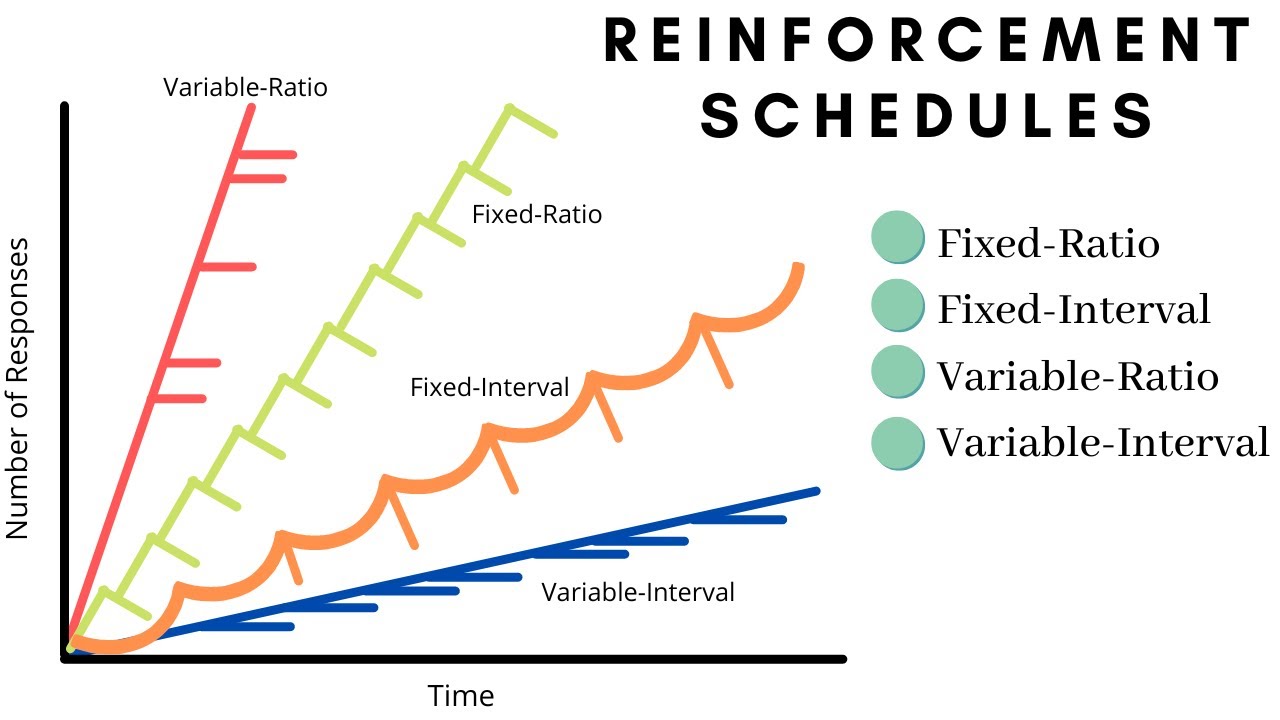
Operant Conditioning and Reinforcement Schedules: Knowing how variable reward systems (common in video games) influence human behavior and habit formation.
Basic Human Physiology: Understanding the somatic consequences of prolonged sedentary behavior, sleep deprivation, and dehydration.
Clinical Diagnosis and Treatment of Internet Gaming Disorder (IGD): Studying the DSM-5 criteria and evidence-based therapeutic approaches like Cognitive Behavioral Therapy (CBT).
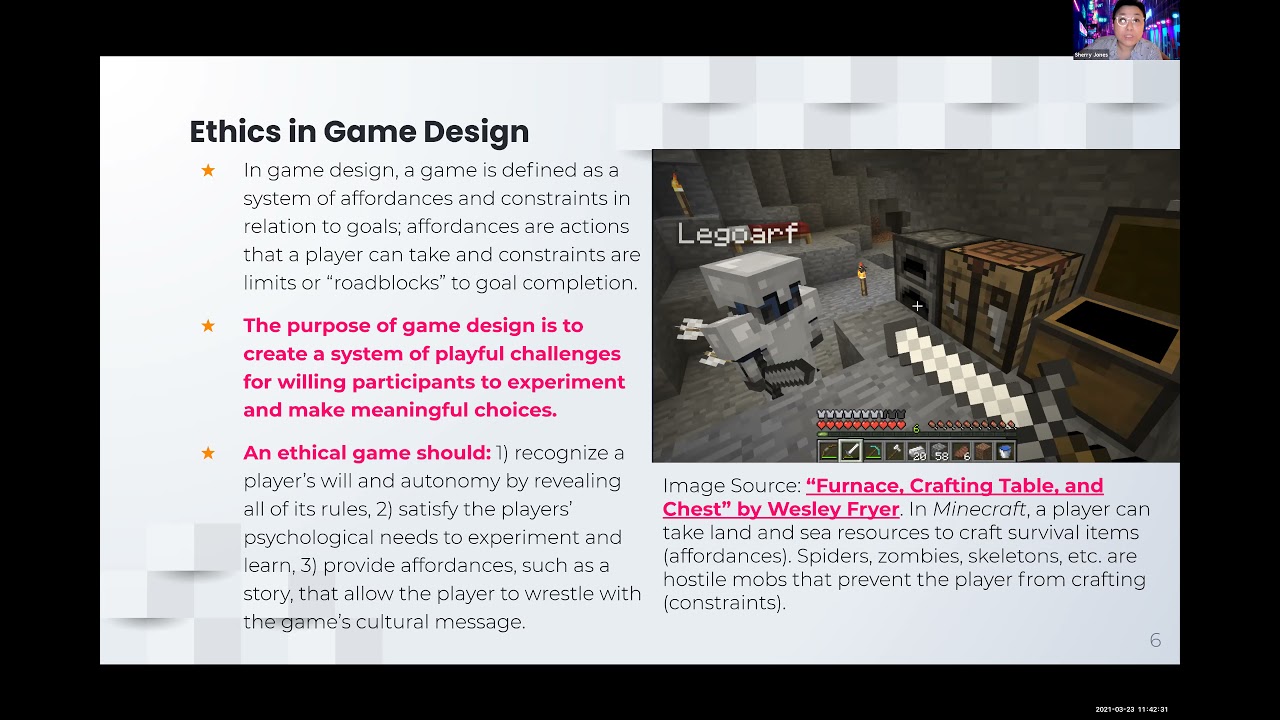
Ethical Game Design and 'Dark Patterns': Exploring how game developers use persuasive design and monetization strategies, such as loot boxes, to maximize engagement.
Public Health Policies and Global Regulations: Analyzing how different countries regulate gaming time, screen usage, and esports participation to prevent addiction.
Neuroplasticity and Addiction Recovery: Investigating how the brain heals and rewires itself after chronic overstimulation and dopamine downregulation.
14.4K views533likes19:36Original Release: 2026-02-26
On February 1st, 2012, a 23-year-old guy named Chen Rangu walked into an internet cafe in Taiwan. This wasn't unusual.
Chen was actually a regular. The staff knew him. He would come in, find a computer, and start playing, sometimes playing through the night. So, this time around, he sits down and starts playing [music] League of Legends. 1 hour goes by, then two, then 5 hours. Match after match, he keeps playing. [music] The internet cafe is full of other gamers tapping on their keyboards. Chen 2 is completely locked in. He's not thinking about time. Around hour 10, [music] he gets a little tired, so he does what he always does. He lays his head on the table in front of the monitor, takes a little nap, then wakes up to pick up the game right where he left off. But then it's hour 15, then hour 20. He's been playing [music] for nearly a full day now. And at some point around hour 22, maybe hour 23, he puts his head down on the table again. [music] The cafe stays open. People keep playing and staff walk past [music] him. And for 9 hours, 9 hours, Chen sits there slumped over his keyboard [music] and nobody realizes he's dead. It's only after 9 hours that an employee finally [music] tries to wake him up. So she tries shaking him, but nothing happens.
then shakes again and eventually his body swings back and it's only then that she discovers the tragedy. The crazy thing is [music] that when they find him and this is a real photo of the scene, his arms are stretched out in front of him still reaching for the keyboard. His story is case number 10. He was found dead from cardiac arrest at just 23 [music] years old. And unfortunately, he's not the only one. This was a systematic review of deaths linked to playing video games. [music] And the pattern is almost always the same. It's young men playing competitive games and often for long sessions. Now, the thing that interests me the most is that most of them weren't planning to play that long. They just didn't or couldn't stop.
Now, I'm not here to tell you that games are [music] going to kill you. Chen's case is extreme, but I do keep coming back to that image. [music] His arms were still reaching for the keyboard.
Even in death, the desire or addiction to the game was still there. And that makes me wonder about the rest of us. We might not be dying, but what are we sacrificing every time we play video games? It turns out the cost is astronomical.
Let me give you some numbers because the scale of gaming is really easy to underestimate. There are now 3.3 billion gamers on the planet. That's nearly half of all humans alive. In the US alone, 70% of consumers identify as gamers. And they're averaging between 8 [music] and 15 hours a week, depending on how you measure it. Teenagers, no surprise, are clocking even more. Research from 2025 shows that 13 to 17 year olds average over 15 hours of gaming per week.
[music] And weekend sessions stretch out past 3 hours at a time. Then there's kids on platforms like Roblox. They're spending 2 and 1/2 hours a day every day inside these virtual worlds. [music] And here's the thing, the gaming industry knows exactly what it's doing. This is a $522 [music] billion industry. That's bigger than movies and music [music] combined. These aren't developers just making games for fun. These are sophisticated operations with teams of behavioral psychologists, neuroscientists, and data analysts whose entire job is to figure out how to keep you playing longer, clicking more, and coming back [music] tomorrow. So, these modern games, it's hard to call them just entertainment anymore. They're engineered experiences designed to hijack your brain.
So, let's talk about what's happening in your brain [music] when you play.
There's a chemical called dopamine. It's probably not your first time hearing about it. You've likely heard of it described as the pleasure [music] molecule, but that's only half right.
Dopamine is really about wanting.
[music] It's a chemical of motivation, anticipation, and desire. It's what makes you reach for the next thing. When you do something rewarding, like eating food, when you're hungry or accomplish [music] a goal, even solving a small puzzle, your brain releases dopamine.
But it's not about the reward itself.
[music] Even just the anticipation of smelling cookies in the oven boosts dopamine. Not as a reward exactly, but as a [music] signal that says, "This is good. Why don't you do it again?"
[music] Now, here's where games get interesting. There's a classic 1998 study using [music] PET scans that shows that playing video games roughly doubles your baseline dopamine levels, and that was back in the '90s. That's comparable to eating food or having sex. [music] It's not as intense as hard drugs like cocaine or methamphetamine, which spike [music] dopamine about 10 times above baseline. But here's what makes [music] games so dangerous. It's not about how high the spike is. It's about how fast and how [music] often you can get it.
Cigarettes are a perfect analogous example. They don't get you that high.
No hallucinations [music] and no strong euphoria, but they do deliver their hit instantly, reliably over and over. [music] And that's enough to make them one of the most addictive substances on Earth. Games work the [music] same way. Every level up, every headshot, everything that pops up on the screen, [music] that's a dopamine hit.
And unlike real life where rewards are slow, ambiguous, and often delayed by months or years, [music] games give you that hit every few seconds constantly and [music] predictably. So your brain gets accustomed thinking, well, this is where good feelings come from.
But it [music] goes deeper than just dopamine spikes. Games target more than just brain chemicals. [music] They also directly influence your neurology. There's a brain structure called the striatam. [music] It sits deep in the middle of your brain and it's part of your reward processing [music] center. When you play games, especially actionrich competitive games, [music] your stryatum lights up. Well, many brain regions naturally light up, but studies show that over time with repeated play, the stryatum actually changes. A brain imaging study found [music] that frequent gamers have increased gray matter volume in the left vententral stratum. It has physically altered to accommodate the gaming habit.
Their brains are becoming better at efficiently [music] processing the frequently practiced skill of gaming.
Now similar changes have been observed in people [music] addicted to cocaine, alcohol, and methamphetamines. The direction of the changes isn't [music] always identical. Some addictions increase stridal volume, some decrease it due to [music] neurotoxic effects, but the core finding is somewhat consistent. The reward system reorganizes itself around the addictive behavior. [music] Here's what's more concerning, though. A 2024 study analyzed over 6,000 teenagers and found that those with higher gaming addiction [music] showed something distinctive in their brain scans. lower activity in the cottage nucleus, a key reward processing region [music] when anticipating a reward completely unrelated to gaming.
So what does that mean? In other words, [music] their brains had become less sensitive to regular rewards, the everyday satisfactions of life like talking or joking with friends or family, enjoying good food or engaging in physical activities. The researchers describe this as blunted [music] reward response. It just means that normal things that would make you feel good start to [music] feel flat and uninteresting. Meanwhile, games keep delivering.
Now, here's something [music] that most people don't understand about dopamine.
It doesn't just give you pleasure, it also gives you [music] pain.
Neuroscience has shown that the brain regions responsible for pleasure and pain are colllocated. [music] They work like a seessaw. If you push one side, the other side comes down.
When you have a big dopamine spike, your brain doesn't just return to normal afterward. [music] It dips below baseline into a valley of nothing. You get bored and [music] you get irritated. You have a vague sense that everything is slightly worse than it should be. And what fixes that feeling? [music] Well, more gaming. And this is how the cycle begins. Over time, [music] constant dopamine spikes actually lower your baseline. So again, the everyday pleasures that used to satisfy you, a good [music] meal, walking outside, they stop registering the way they used to.
Things feel dull, activities feel less engaging. And psychiatrist Anna LMI, who studies addiction at Stamford, describes this [music] as a brain's way of trying to maintain equilibrium. It downregulates its own reward sensitivity [music] to compensate for the constant stimulation. And this explains something strange that researchers have observed.
Some gamers keep playing even when they [music] admit they're not having fun anymore. They're not seeking pleasure at this point. They're avoiding the crash.
[music] None of this is accidental. Game designers have spent decades perfecting the science of keeping you hooked. There is a concept in game design called flow [music] state. It was first identified by a psychologist studying musicians and [music] scientists who would lose themselves in their work for hours. That feeling where time disappears [music] when you're completely absorbed. Games are specifically engineered to create this [music] state. They constantly calibrate difficulty to match your skill level. If it's too easy, you get [music] bored. If it's too hard, you get frustrated. But that sweet spot in the middle, that's where the hours vanish.
Then there's something that designers [music] call game juice. It's the crunch when you land a hit, the sparkle when you collect a coin, [music] or the voice that announces your combo. These details seem small, but they're doing something profound. They make the game world respond to you constantly, immediately, and with validation. [music] Every micro action you take gets acknowledged. And as humans, we like [music] this. We like feeling in control. We like being the main character. But let's be honest, [music] real life doesn't work like this. You don't get a sound effect when you finish your laundry. No one [music] announces level up when you go to the gym. The feedback loop of reality is slow, often invisible, and frequently punishing. And then there are deliberately manipulative tactics. The [music] industry calls them dark patterns. These are limited time events that create artificial urgency, loot [music] boxes that function like slot machines, or timers that restrict how much you can play for free. training you to check back constantly. Then there's also social features that make you feel like you're letting your team down if you don't log in. Any of these sound familiar? This isn't [music] speculation. This is a documented industry strategy. Belgium, Finland, [music] and the Netherlands have started regulating loot boxes as gambling. And the US Federal Trade Commission fined [music] Fortnite $245 million for deceptive design [music] practices.
Imagine you're in a national park [music] and there's a bear. It's foraging for berries, catching fish, and doing bare things. It's hard work, but [music] that's how bears survive. Now, imagine you start feeding that bear human food.
Hot dogs, chips, easy calories. You're not hurting the bear directly. The food isn't poisonous, [music] and the bear seems happy. But do this long enough and the bear might slowly forget how to forage, how to hunt, [music] and how to survive on its own. And one day when you're not there, well, the bear is in [music] serious trouble. It never learned the skills it needed. This is what happens when games become your primary [music] source of fulfillment.
They can fulfill almost every psychological need. [music] Achievement.
You can go from nobody to a legend in a single evening. If you need connection, multiplayer games put [music] you in a team with people who need you. Autonomy, open world games let you do whatever you want [music] with zero consequences. But here's a catch. Every need that games [music] fulfill, it's a need you're not learning to fulfill in reality. For some people, games become the [music] only place they feel competent, the only place they feel socially connected, and the only place they [music] feel like they matter. And when that happens, real life starts to fall apart because they never develop the [music] skills, the patience, the tolerance for uncertainty that real world satisfaction [music] requires.
About [music] one in 10 gamers develops what's now clinically recognized as gaming disorder. [music] The World Health Organization added it to the International Classification of Diseases [music] in 2018. The DSM5 lists it as a condition that needs a further study. But even among gamers who don't [music] meet the clinical threshold, the effects still show up. Many gamers suffer from sleep deprivation [music] from late night sessions, declining physical fitness from sedentary hours, [music] relationships that may atrophy from neglect and possible work performance suffers because of concentration trained for rapid stimulation and non-sustained [music] focus. But there's something that's easy to miss, and that's emotional dysregulation. [music] Research consistently shows that gaming addiction correlates with worsened depression, anxiety, and social phobia.
And here's the important thing. [music] Studies tracking people over time have found that when people stop being addicted, those mental health markers improve, which tells us that gaming isn't just a symptom of an underlying problem. It's actually making things worse [music] on its own. And like we saw at the beginning, gaming can lead to or exacerbate serious consequences such as death and not just [music] in adults.
In 2019, an 11-year-old boy in Pakistan named Fakal Fias [music] came home from school according to the report in a happy mood and had showed no signs of any sort of stress. He went to his room to play Fortnite [music] with his friends. One friend couldn't join. And before the match started, Fahad said something that [music] in retrospect is chilling. He said, "If I lose this game, I will get a heart attack." His parents found him unconscious a short while later. Controller [music] still in his hand. He had a heart attack. He was just 11 years old. [music] Now, I'm not saying Fortnite killed that boy. His heart may have had an underlying condition. But what strikes me is that his parents reported that he was addicted to the game. And despite their attempts to limit [music] the play, he would always find ways to keep playing for hours. He was just 11 years old, [music] and the game had already become something he couldn't stop.
[music] So, what do you do if you recognize any of this [music] in yourself? With most addictions, the standard advice is simple. Avoid the trigger. Alcoholic?
Stay out [music] of bars. gambling problem. It might be wise not to go to casinos, [music] but screens are everywhere. You need it for work, school, and basic communication. The casino is in your pocket. So, the approach has to [music] be different.
Some clinicians recommend starting with a short screen fast. 3 days of no entertainment, no games, no social media, no streaming, just 3 days of letting your brain quiet down, letting the constant demand for stimulation subside. Other people suggest a longer period, maybe a month, to really let your baseline [music] dopamine recalibrate. After the reset, structure becomes critical. If you want to play, designate specific times and places for gaming and keep screens out of bedrooms.
Your brain shouldn't associate rest [music] with gaming cues. And when you have cravings, the replacement matters.
But not [music] just any replacement. If you swap games for Tik Tok or late night YouTube, you're trading one dopamine source for another and nothing [music] changes. The trick is choosing activities that are less immediately rewarding but more nourishing over time.
Activities that keep you [music] present, that build something real, and that require patience. Here's a framework that might change how [music] you think about this. Your brain can produce different flavors of happiness.
They're chemically distinct. The first is dopamine driven. It's fast [music] and intense. It feels incredible, but it fades quickly. And as we talked about, the crash leaves you [music] reaching for more. The second is serotonin driven. It's slower. It comes from consistency, [music] working out regularly, learning a skill, getting good sleep, and building good relationships. It's harder to cultivate [music] because most gamers fall into a trap. They chase the quick hits until everything else starts [music] to feel gray. The dopamine well runs dry, but they keep returning [music] to it because they don't know where else to go. And here's the irony. The more you chase an easy life, the harder your life becomes. But the more willing you are to do hard things today, to tolerate boredom, to sit [music] with discomfort, the easier your life will get. [music] Between 1982 and 2021, researchers [music] documented 24 deaths directly linked to gaming sessions. Now, these are extreme cases, but every one of those people started with a normal gaming session.
[music] They sat down intending to play for a little bit and at some point they [music] couldn't stop. That same pool exists in all of us who game. The difference is in degree. So, the question isn't whether games are good or bad. I think the framing misses [music] a point. The question is, what is a game replacing? Every hour spent in a virtual world [music] is an hour not spent building something real. Every achievement unlocked in a game is an achievement not pursued in your actual life. And every relationship maintained through a headset is a relationship not deepened [music] face to face. The screen will always be there. The escape is always available. The question is whether you're choosing it consciously [music] or hiding in it because reality has become too hard to face. Because reality isn't going anywhere. When the game ends and the screen goes dark, you're left with what you actually built. And that in the end is the only game that matters. Thank you for watching. Like and subscribe for more insights on personal growth. And share this video with someone that might have a gaming [music] problem. See you next time.
>> [bell] [music]
Up Next

91:23
Internet Addiction: Causes, Symptoms, & Treatment Approaches | Psychiatry Lecture
@SilverHillHospitalNewCanaan
219 views•2025-05-14

12:54
Triumph of Orthodoxy Icon: Byzantine Art & History Explained
@BenCallan
2.1K views•2024-08-06

9:49
FastAPI vs Flask vs Django: Choosing the Right Python Web Framework
@TechWithTim
302.5K views•2024-05-26

1:42
Game of Thrones Opening Credits: A Cinematic Analysis
@gameofthrones
46.3M views•2011-04-18
Related Study Plans & Knowledge Roadmaps
Structured learning paths in General & Interdisciplinary Studies
general-studies
Elevator Engineering: History, Physics & Cities
01From Hoists to Safety Brakes: The Dawn of Vertical Lift
02Hydraulic vs. Traction: The Engineering Physics of Elevators
03Modern Speed, Safety, and Algorithms
+ 2 more learning modules
12h5 modules
Explore Roadmap
general-studies
Rubber: Material Science, History & Geopolitics
01Origins of Natural Rubber & Mesoamerican History
02The Chemistry of Natural Rubber & Vulcanization
03The Geopolitics of the Rubber Boom & Colonization
+ 2 more learning modules
12h5 modules
Explore Roadmap
general-studies
Containerization: Evolution, Logistics & Trade
01Ancient Trade & Bulk Cargo: Amphorae to Barrels
02The Industrial Revolution & Cardboard Packaging
03The Containerization Revolution: Malcom McLean
+ 2 more learning modules
12h5 modules
Explore Roadmap
general-studies
Textile Tech: Evolution, Labor & Global Impact
01Pre-Industrial Textiles: Handloom & Cottage Industry
02Mechanization: The Spinning Jenny to the Power Loom
03The Factory System & Global Labor Transformation
+ 2 more learning modules
10h5 modules
Explore Roadmap