


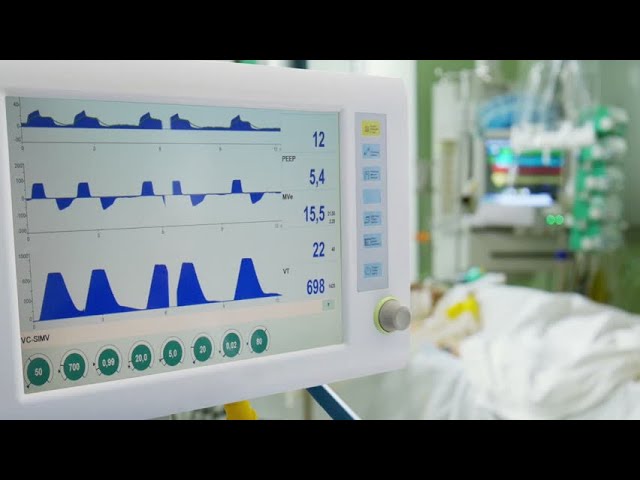














A spontaneous breathing trial (SBT) is the gold standard for assessing readiness to wean patients from mechanical ventilation, involving placing the patient in a spontaneous mode with minimal support (such as CPAP 5 cm H2O with pressure support 5 cm H2O or proportional assist ventilation at 30%) for approximately 30 minutes; successful completion requires meeting multiple criteria including a rapid shallow breathing index (RSBI) less than 105, negative inspiratory force (NIF) greater than -20 cm H2O, vital capacity greater than 10 mL/kg, stable hemodynamics, normal ABG values, adequate cough, and neurological responsiveness, with the goal of achieving an extubation failure rate around 15% rather than zero to optimize patient outcomes and reduce hospital stays.
Respiratory Therapy: Spontaneous Breathing Trials & Weaning Parameters
Added:what's up fr tees you guys know what it stands for our future arrests for therapists this is our community we're here to help you guys learn and understand the practice of being a respiratory therapist and help simplify concepts so today which is really shocking because I got a topic here today from two people who have posted questions and it's overweening and it blows my mind when I think about this I was like wait a second through the hundred videos plus that we've done on this channel this is the first time we nee has been brought up and the first time I thought that this would be a good video it's blows my mind because you think this should be one of the very first videos but it hasn't been and it's not and so here we go today now these questions come from Toni G who wants to talk about the process of weaning tell me about the modes the ABG's what steps do we take what do we look for what should we expect to see those type of things and then Karen wants to know after pressure support what do we do next and so I'm going to answer those questions today I'm going to give you a good broad overview of weaning a patient from mechanical ventilation now here's where it all starts when people talk about weaning from mechanical ventilation you have to understand this the thought process of weaning from mechanical ventilation should start the second you put a patient on mechanical ventilation a patient presents they either in acute villa torie failure they're an impending military failure they have severe hypoxemia or you're intubating them for a prophylactic reasons such as airway obstruction or stridor or a surgical procedure or a diagnostic procedure or something like that once we put them on we have to immediately ask ourselves can we get them off you don't want your patients sitting on mechanical ventilation and being on a mechanical ventilator ventilated via endotracheal tube which is an indwelling tube it's an indwelling it's we don't call it a catheter but it is essentially an indwelling device that provides the rekt a direct line of introduction for bacteria and and and biofilm to find its way into the lungs and cause a negative effect a compounding effect such as villain or acquired pneumonia now sooner you can get them off the better that should be the focus all the time before I get into the details you need to understand this if you work for a place and your your your extubation success rate is 100 percent or the opposite of that is your reintubation rate is 0% then I want to applaud you but I also want to tell you you're not doing good enough you're not being aggressive enough you should strive for an extubation failure rate of around 15% and what this tells you is that you are working at a level that is optimizing the window of excavation so if you're shooting for 15 percent that means 85 percent of everybody you excavate is going to excavate successfully and that's fantastic 15 percent are going to fail now if you have a zero percent reactivation rate than what it tells you is is did we take did we wait how many of these patients could we have gotten off sooner and that's what you're shooting for okay I know it's not ideal but this fear of excavating because they might fell one gives a lot of patience it allows the window of opportunity to shut in the name of being trait but it also it also adds to total vent days which leads to total ICU days which leads to longer hospital stays and and all of that it costs a lot of money now the focus here isn't on saving money the focus here is on getting your patients out of the hospitals as quick as possible to get back to doing what they do in life on a regular everyday basis whatever it might be that's very different for the 82 year old who is retired and sits at home and watches a little fortune every evening versus the 26 year old who was in a motorcycle accident who needs to get back to work so very different across the spectrums but the idea here is as soon as you intubate somebody you need to be thinking about how do i excavate this patient okay now here's what it looks looks like every single day when you take care of a patient that's on a mechanical ventilator you should be asking yourself does this patient qualify for a spontaneous breathing trial now this is a concept that over the last several years has become increasingly more popular and it's pretty much common practice now back when I first started as a respiratory therapist 20 years ago we didn't do spontaneous breathing trials what we did was oh the patient's getting better they look better let's see if we can get them off the vent put them in simv turn the rate down by two every two hours when you get the CPAP wait two hours assess weaning parameters get a blood gas and call the physician to see if we can extubate now by the time we call a physician at 5:00 p.m. in afternoon because that's how long it takes to go from a rate of 14 to CPAP for two hours down by two every two hours it's this okay put them back on what they were on and we'll try again tomorrow we'll excavate them tomorrow that if you still operate underneath that principle you need to work talk to your management and get that out the way because SBTs spontaneous breathing trials are definitely the best practice currently your patient is either ready for extubation or they are not there's none of this working during the vent down so the patient can assume more that's old-school thought it's either they need mechanical ventilation or they don't do an assessment extubate them if they meet it so here's what that process looks like before you go from full mechanical ventilation to performing an SBT you need to ask yourself these questions does my patient five foreign SBT there's a couple of scenarios that the patients should not be placed or initiated into a spontaneous breathing trial because there's some glaring problems that tell us this patient is not ready for excavation the first one of those is this is the reason that the patient was put on a vent in the first place has that been resolved so let's say they were put on for severe strider is there is there airway edema resolved okay we'll talk about this more in just a little bit they were put on for acute military failure has that been resolved they were put on for severe hypoxemia has that been resolved why were they put on the ventilator and has that issue been resolved if the answer that is yes then ask yourself this question now the next several questions fall into this this question of has it been resolved so if you ask yourself they went on for acute Villatoro failure which means a high co2 and a low pH when you look at your ABG you're going to see if this has been resolved or not if it's been resolved then you should have a normal co2 with a normal pH that issue is resolved now why were they in acute village or fire maybe was due to a to a severe pneumonia well now you have to take yourself not just for maybe G but you have to ask yourself also what does the chest x-ray look like what is their most recent casket maybe they had a maybe they have a more recent cat scan than they do more recent chest x-ray and you need to evaluate the cat scan or they're still you know extensive bilateral infiltrates as if there's still a large consolidation is there still a massive pleural effusion that was there when we intubated and it's still there now then obviously it has not resolved and you wouldn't move forward with this because the problem or the issue that they initially put on for it still exists so you're not going to move forward with doing an SVT for this patient because you already know the the problem is still there so they're not going to be six right so so you gotta set your ABG's when your assess your ABG's you always need to assess your p/f ratio if you have a PF ratio of let's say a hundred and ten you're not going to move forward with doing an SVT thinking about excavating this patient why not because they obviously have an oxygenation problem now this goes hand-in-hand with is your patient on settings that are compatible with a patient who might be able to successfully excavate if you have a patient on 80 percent fio2 and a peep of 15 with a PF ratio of 110 they clearly are not going to tolerate 50% my people 5 they're going to become hypoxemic they're not going to tolerate a change so this space you would not meet that so you want your p/f ratio and this varies across protocols for 4 for each facility some facilities say you want your p/f ratio greater than 200 some say greater than 180 some say greater than 240 it just depends but you want a good p/f ratio now we all know that anything greater than 300 you're super happy with anything greater than 200 you're gonna refer to as acute lung injury and that depends on the settings that you're getting that p/f ratio with again you have to take a lot of things into consideration so what's your p/f ratio what's your if I - what's your peep if they're on less than 50% and minimal peep 5 to 8 similar water pressure then and they have a good p/f ratio then you're probably going to move this patient into the state from an oxygenation standpoint to say this person is good to go for an SVT if their co2 is within normal range for that patient and their pH is not acidotic then you're probably going to say let's talk about it an SVT right so you have a good ventilation status a good oxygenation status their chest x-ray is resolving when did I talk about their hemodynamic status are they hemodynamically stable are they requiring a lot of vasopressors to remain hemodynamically stable in that case you're probably not going to think about excavating this patient now I will tell you that we've excavated patients before who have had vasopressors running it doesn't mean that you have to have no vasopressors it just means that they can't be at a high level so minimal basal pressures we have I have actually excavated patients before with minimal levels of vasopressors running to keep a normal hemodynamically stable dynamic state but you gotta be aware of that you need to know like how much are we talking how much of a drug is being required to keep this patient's cardiac status at a stable level okay so keep those things in mind if all those things check out good p/f ratio minimal file to minimal peep good ABG good improving chest x-ray hemodynamically stable and the reason is resolving or is mostly resolved then let's move into an SVT right now when we go to an SVT no matter what mo jury and you're going to switch the patient to from a mode of full mechanical ventilation to a mode of spontaneous mechanical ventilation okay so you're gonna go from assist control volume control or assist control pressure control or whatever it might be you're gonna go from that to a spontaneous mode now probably depending on where you work depends on what mode you go into a lot of places go into CPAP with a minimal pressure support so this would be a CPAP of five with a pressure of support of five so when we talk about the SBT we're going to go into CPAP minimal peep pressure support at a minimal level this is CPAP of five of the person's four to five will you extra mass II PAP of eight with a person four to five probably okay these aren't concrete numbers but they're good baseline numbers meaning you're offering minimal support to this patient and you want to see what they do this is in CPAP with pressure support the other mode that I've seen used commonly to assess patients readiness for extubation is path this is proportional assist ventilation and they do this at 30% now path is if you're not familiar with this a complicating mode I think I have another video on it I'll see if I do I'll link it up here and I think it comes up up here I'll link it across the top right here but path basically says we're going to assess this patients total work of breathing and the ventilator is going to assume 30% of that it's a full spontaneous mode of mechanical ventilation and you can control the support that the violator provides in terms of percentage of total work of breathing okay so these are two of the more popular modes that you see you see Pat 505 half of 30 percent either those are acceptable as long as you're in a spontaneous mode with minimal support that's the key then you do the SBT now you're gonna let this SBT go for approximately 30 minutes now during that 30 minutes you're going to monitor this patient it doesn't mean you have to be in there holding their hands but you should be relatively involved your eyes on this patient several times within this 30 minutes right and while we're monitoring you want to stop the SBT which means the patient met the criteria to assess for weaning or to assess for excavation but now that we're doing the spontaneous breathing trial some things have popped up that go and maybe this patient isn't ready one of those things is that they become emo dynamically unstable so you take away full mechanical military support you go to a spontaneous mode of mechanical ventilation and this patient becomes hemodynamically unstable it doesn't sound like a patient you want to extubate right so you would terminate this SBT all right a massive drop in blood pressure a significant rise in a heart rate those are two of the more common ones but that type of stuff hemodynamically hemodynamic stability we're talking about blood pressure primarily the other thing is is do you see are you witnessing sustained - Kip Nia now we know - Kip knee as being a respiratory rate greater than 20 but most SBT protocols call and refer to - Kip Nia and sustained - Kip Nia is if the respiratory rate is greater than 35 for an extended period of time some say five minutes some say eight minutes it just depends on the protocol you're working with but in other words we took the Villa Torre support away from a full Villa Torre support mode and we put them in a spontaneous mode and now with minimal settings their heart their respiratory rate is 38 breaths per minute does it sound like somebody want to excavate does it so you would terminate that SBT right they obviously still need full mechanical military support either you know either in an AC mode you know pressure control motor s I mean whatever it is whatever full support they were in before they probably still need that or maybe they just need more pressure support but needing more pressure support as an indication that when you take this tube out they're probably going to miss the support they were getting so having to increase the pressure support during an SBT is a bad sign you see a patient breathing 38 times a minute and you go oh no problem let me just take your precious part from five to ten or to twelve or to fifteen and they slow down that tells you right there that when you excavate that patient they're gonna miss that pressure support and the rates going to be right back up to 38 to 40 and they're going to struggle to to to adequately remove co2 and to sustain true spontaneous respirations okay the other thing you kind of want to watch for it during this time period is excessive agitation now when I say excessive agitation I don't mean the patient is awake and the tube is bothering them and they're just pissed off I'm talking about agitation like they can't breathe okay you see this patient who is struggling and it's hard their eyes are big they're they're they're they're diaphragmatic excursion is excessive and you see them they're just not comfortable why because they feel like they can't breathe you're going to want to stop this SBT because this patient is not ready to be weaned and extubated from mechanical ventilation now once you get to the point approximately 30 minutes and you put your patient on CPAP five in first part five or a path of 30% and everything still looks good then let's go in and do some monitoring to see exactly what we can do to get some more supportive numbers for this patient now what I'm going to put on the board here for you is the exact same thing I do for every patient IX debate okay so we've done our SVT everything looks good and now we've got in and we are going to assess if this patient based off of the weaning parameters is ready for excavation so what I do is start with CPAP five pressure support five at let's just say let's just say Oh 800 that tells me when I switch them over to CPAP of five and pressure support of five okay the very next thing I do is this right here respiratory rate over tidal volume now we know this is our our SBI so what we do is we go in and we look at this patients minute volume and their respiratory rates so let's say they have a ve of eight and a respiratory rate of twenty okay now we're gonna take out our little calculator if you need to and we're going to say minute ventilation of eight divided by the risk-free rate of twenty so this is eight divided by 20 equals 0.4 0 0 this is minute ventilation divided by respiratory rate this now is our spontaneous tidal volume so we have a spontaneous tidal volume of 400 now this is where a lot of my students go why do we have to use minute why can't we just take one of the tidal volumes off the machine it's telling us what our Excel tidal volume is why can't we just take that well you have to remember that you're in a spontaneous mode of mechanical ventilation so if the patient takes us an abnormally deep breath and that's the number you pull then you're going to skew this data let's say the patient takes an abnormally small breath during this time and you pull that down let's say they exhale type of arm says 200 so it says 200 and they're breathing 20 times a minute the other example was it says 600 and you and you pull that data right now you realize that the patient had a tidal volume of 210 5 600 and you're going to get very different numbers based off of your our SBI with just pulling from one value so I always encourage my students to use an average spontaneous tidal volume which is minute ventilation divided by respiratory rate this patient has an average tidal volume of 400 so we're going to come over here we're going to put we're gonna put 20 here we're gonna put point four zero zero here this is extremely important when doing your our SBI you have to have it in liters so it has to be a point so point four liters and you do this math and you get 20 divided by 0.4 equals an RS VI of 50 I draw a square around it because I want to highlight that because that's good in ers VI less than 105 it's considered an acceptable positive indicator for extubation now again some people are gonna say less than 80 some are gonna say less than 60 lesson I don't care I'm just telling you that data shows less than 105 and this is what you're embarrassed the exam hold you to is 105 is a positive indicator okay now look if we want to use this number we would have got a hundred if we would have used this 600 I put these backers I'm sorry guys this is 20 over 0.2 and this is 20 over 0.6 hundred if you just pulled from what the one numbers you saw you see you get 50 is your RSP I based off of average tidal volume 33 is based off the patient's absolute best tidal volume and 100 is based off the patient's worst out of line so you don't want to use just a random number get an average tidal volume by dividing your minute ventilation by your respiratory rate I always start here why do I start here why do I do RSV I first because once you start talking to the patient to get the rest of these parameters you're going to alter their spontaneous pattern so I want their resting spontaneous pattern to assess this value now once we talk about RSV I I come down here and I put nith some of you refer to this is mid up it is what it is I put vital capacity we can put occlusion occlusion pressure this is the P 100 put a video out about this it's not just a couple days ago I'll link that in the video as well but these are our actual respiratory pulmonary mechanic values okay so we know that on our mill we want this to be more negative than negative 20 so we want negative 25 negative 30 negative 40 negative 50 if you get negative 10 you're concerned negative 15 you're concerned negative 25 you go it's acceptable I'll take it strong work champ right but anything less than negative 20 or less negative than negative 20 or let's see when you stop throwing negatives in there guess it gets complicated but if you get a negative 10 then you're concerned probably not going to excavate this patient right some people still will but in general and when you take your board exams you do not extubate a patient with a negative 10 on their milk okay so you're looking for more negative than negative 20 when you talk about vital capacity you're looking at greater than 10 MLS per kilogram now vital capacity in my opinion is the number one hardest most challenging winning parameter to get an accurate reflection of because most patients you have to have a patient who is completely cognitive awake and willing to do exactly what you're saying you can get a myth on a patient who is not cognitively following directions just hold expert valve watch them suck in really really hard for a couple of breaths and it'll get more negative each time because they're going I need something to breathe right vital capacity you can coach your butt off but if the patient is cognitively not able to follow your directions you're not probably going to get a good vital capacity and that makes this very very challenging but what I tell people is this this watch the patient if they take a big deep breath in and it's 1,100 MLS that's it may not be about oppressing maybe their vital capacity is 1800 or 1900 MLS but if they can take oh it's just a tidal volume that exceeds 10 MLS per kilo then you're pretty good right now another thing I don't get too caught up on is this is think about it unless you're freaking Shaquille O'Neal or some massively tall person with this ginormous ideal body weight then most of our patients are going to fall in the ballpark of 50 to 80 80 kilograms I do body weight so you just need a vital capacity greater than 5 to 800 ml if I could have idle capacity of a thousand I'm good and I'm happy okay now the inclusion pressure is something that's not heavily tested and not heavily talked about especially at least in this region when it comes to school is an indication of the respiratory drive to breathe from the central drive breathing this is the first this is when you you're instructing the patient to suck in as hard as they can when you do an occlusion pressure you do not instruct the patient because you want to see what comes from their own central drive to breathe without noise and without instructions and you watch for this and this should not be an excessively high number this is fall somewhere in the 1 to 3.5 range just as centimeters of water pressure and this is also on the negative side okay so if you get an occlusion pressure of minus 8 that's probably an indication of a patient's increased central drive to breathe probably not a good idea to extubate that patient okay if you get a occlusion pressure of zero then it tells you there's no neural drive to breathe now if you're in pressure support or path like we are then you got to have some drive to breathe because the patient's breathing spontaneously otherwise your apnea Larmour be going off right so so so you're gonna have some value here the question is you don't want it to be too great the greater the occlusion pressure value the greater the central drive to breathe is and that's usually related to a increase in co2 okay so occlusion pressure now I forgot to mention in here but typically when we go in we gather this information the RSV I and then if your facility calls for an ABG to be performed then you will do an ABG at this time also you'll want to see what this patient has done over the past 30 minutes to sustain oxygenation and ventilation okay so you're gonna draw an ABG now I'm not necessarily a fan of it I follow the protocols if they say to draw an ABG then I'll get an ABG but typically you can look at your patient and know after 30 minutes on a spontaneous breathing trial very very very very seldom do I have a patient looks really really good and I draw an ABG and and their co2 is high in their acidotic it just doesn't work that way if the patient looks good then they're probably good okay the patient looks like crapped and ABG's probably crap but you want to get an ABG in which looking for normal values you don't want an excessively high co2 that's causing an acidosis and you don't want an excessively low po2 which may be an indication of severe hypoxemia when you extubate this patient okay so we're gonna go from there so you so you do your are SBI you get your ABG you assess your ABG everything looks good you do your winning parameters this is NIF not nip I guess it could be negative it's very pressured negative inspiratory force whatever you do your weaning parameters maybe you ask the patient to raise their head up off the pillow the patient does like this you go good job the patient doesn't raise their head off up off the pillow or they don't have the strength to maybe not a good indication right now what's crazy about these weaning parameters is that there's so much that none of them are superior the RSV I the NIV for the myth of autocratic inclusion pressure raising your head up off the pillow none of them have shown superiority to the other there are all just pieces of the puzzle so if they tell you if they're all pointing to your patient being good then your patients probably good ready to proceed to extubation okay so lots of different things you can do that you're also during this time going to be assessing neurological function are they responding to you are they performing these maneuvers when you ask them to and if so then that tells you they can follow commands they understand what's going on and they are mentally alert so when you take the tube out you know they can tell you I can't breathe right if you have a patient who is not mentally alert or has a decreased neurological function you need to be concerned about that doesn't mean you've stopped the SBT because perhaps that's their baseline and you'll still excavate that patient but if you have a 22 year old who comes in with a with a drug overdose and you turn that sedation off and you start your SVT and you have a decreased neurological function you probably need to have a big red flag like wait a second why is this person not responding right what's going on here that's going to be a red flag for you now from here we have data that supports moving forward with extubation our ABG is good RSV is good our weaning parameter is all pointing in the right direction so what do we need to do now before we extubate the other thing we need to assess is does the patient have an adequate cough are they going to be able to maintain a painting airway and are they going to be able to clear secretions the answer is yes then good you're moving forward the answer is no then you're putting a question mark beside that and going concern here right the last thing we check before we extubate maybe it's the first thing the order here doesn't really matter except you understand that a lot of this stuff is going to mess up your baseline artis VI but you always want to check a cuff pressure you want that cuff pressure to be greater than 15% okay that means you put a tidal volume into the patient of 500 and you get back a tidal volume of 250 that means 250 MLS of that volume leaked around the cuff when you let it down okay so you let the cuff down you give a machine breath 500 MLS 400 ml whatever whatever whatever is deemed appropriate for that patient and you observe return volume when that volume comes back whatever doesn't come back has leaked around the cuff so if you put in 500 only get 250 back then that means you have a 50% cuff leak okay this says cuff pressure this you say cuff leak so greater than 15% you're excavating this patient if you ever do a cuff leak and you let the cuff down and you get you put 500ml Zin and you get 500 back then that means zero percent of that title volume leaked around the cuff when you let it down that means your airway is swollen around that cuff and you do not want to extubate that patient we want to give them maybe maybe hit them with some steroids and give them 24 hours different data on that saying different things you know so just always want to be aware of this now some people don't calculate the actual mathematical number what's your cup what's your cuff li+ how do you know it's positive because I heard it okay so you have an audible cuff leak yes audible cuff leak can sound anything like a like a bunch of air rushing around it cuff like a like like rocks tumbling in a rock tumbler where you hear a lot of air coming around or it can sound like a little squeak like well that would be an audible cuff link to but that would be a minimal cuff leak versus a lot of air and you can hear it like yeah here good cuff leak right so I'm always leery of going just with the audible cuff leak I always like to put a number with it but then when I stated to all my documentation on there I would say so what I would say here is positive cuff leak 21% and audible so that when I relay this information to whoever the appropriate personnel is they know that I had an audible cuff leak as well as calculated at 21% when all of that stuff checks up it checks out guys you activate the patient what if all of it is baseline Joe what if like all of it is like close to being positive and it could go either way I excavate unless there's something glaringly super negating the idea of excavating this patient I always err on the side of excavation to give the patient a chance to get off the mechanical ventilator in that case I typically always go to err vote I have a video on air bow separate from this but it provides a lot of benefits for our patients it doesn't necessarily help them take in larger tidal volumes but it does improve alveolar dike tidal volume through the washing out of an all dead space so it has Villa Tori 8 benefits it has oxygenation benefits it has comfort benefits and it has humidity benefits heat and humidity benefits which we know promote better music mucociliary clearance so if I'm ever on the fence do we extubate do we not I'm always gonna be an avid and say let's give them a shot the worst thing that happens is they fail and you put another endotracheal tube back in them mechanically ventilate until the process starts over it resolves you go back to the SBT you do all this all over again and maybe they're better the next time or maybe they're not an end up with a tracheostomy - you never know so hey guys this is a long video tell I'm almost 40 minutes it's got through my seconds long this video I've ever made I think I have one out there greater than 40 this one's at 36 I hope everybody stuck around to the end this is actually more of a full didactic lecture - a few small details but this is pretty intensive review over getting patients off mechanical ventilation I hope you find it valuable I hope you watched it hope you leave me comments and if you have any questions out of any of this please please please please leave me a question I will answer it I will clarify my goal is to help your journey through respiratory therapy school easier that's my goal okay best wishes guys
Up Next
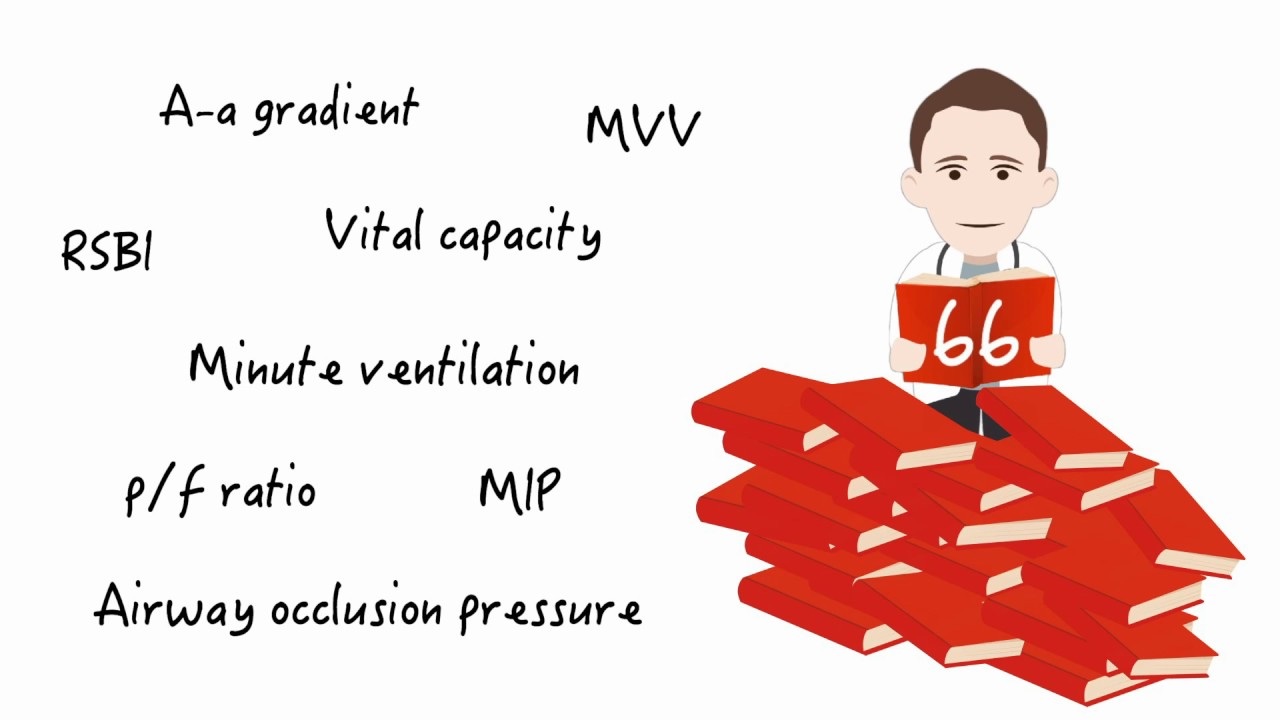
Key Weaning Parameters for Mechanical Ventilation Monitoring
@MedMastery
92K views•2017-02-23

Graphic Medicine: Comics for Collaborative Healthcare Communication
@nationalpatientadvocate
189 views•2023-12-04

Peak vs Plateau Pressure: Dynamic and Static Compliance Explained
@RespiratoryCoach
41.3K views•2020-04-11
Stages of Labor and Vaginal Birth | Childbirth Animation
@nucleusmedicalmedia
52.1M views•2017-08-18
Related Study Plans & Knowledge Roadmaps
Structured learning paths in Medicine