











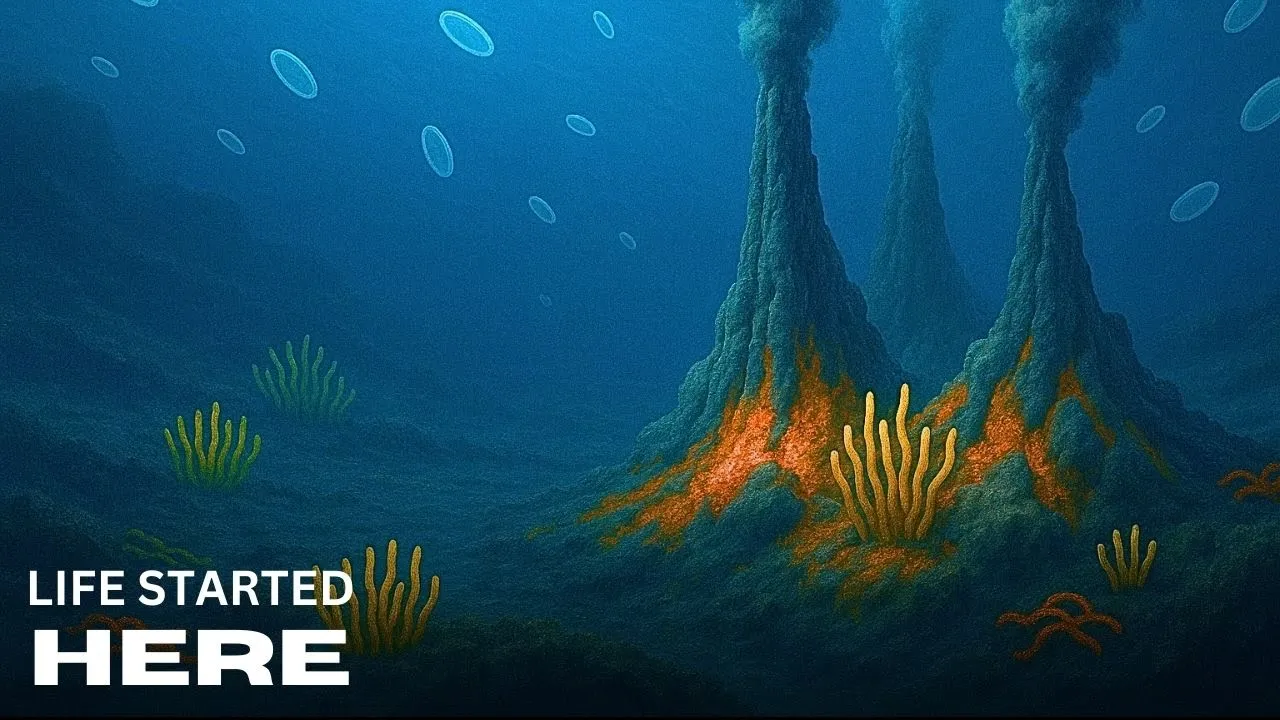





The Lost City Hydrothermal Field, discovered in 2000 in the Atlantic Ocean, represents a unique geological phenomenon where white chimneys form through serpentinization—a chemical reaction between seawater and olivine in the Earth's mantle—rather than the volcanic heating that creates typical black smoker vents; this process produces methane, removes carbon dioxide from seawater (making it alkaline with pH ~9), and may provide insights into how life originated on Earth by offering a non-biological source of hydrocarbons, potentially applicable to understanding life's emergence not just on Earth but also on other celestial bodies like Titan, Europa, or Enceladus.
How Hydrothermal Vents Could Explain the Origin of Life
Added:The concept of abiogenesis, which is the natural process by which life arises from non-living matter, such as simple organic compounds.
Fundamental chemistry principles, specifically the pH scale (acids vs. bases) and how concentration gradients (such as proton gradients) store and transfer energy.
Basic marine geology, particularly the structure of the ocean floor and the general mechanism of hydrothermal vent formation through tectonic activity.
The core requirements for life, including a liquid solvent (water), an energy source, organic building blocks, and a boundary (membrane) to contain metabolic reactions.
The geochemical process of serpentinization, exploring how the reaction between seawater and mantle rocks produces heat, hydrogen, and organic molecules.
Astrobiology and planetary science, specifically evaluating the habitability of icy moons with subsurface oceans like Jupiter's Europa and Saturn's Enceladus.
The academic debate between the 'Metabolism-First' hypothesis (which alkaline vents support) and the 'RNA World' hypothesis regarding the earliest stages of life.
Laboratory attempts to recreate prebiotic chemistry using simulated hydrothermal vent chimneys to synthesize amino acids and protocells.
201.4K views8.7Klikes6:14Original Release: 2020-04-09
{♫Intro♫} There’s a good chance you’ve heard of hydrothermal vents.
Located in the deep ocean, thousands of meters from the surface, these towering chimneys spew black, acidic, metal-rich water from deep within the Earth.
Hydrothermal vents are some of the most extreme environments on the planet—and home to some of the most interesting creatures alive.
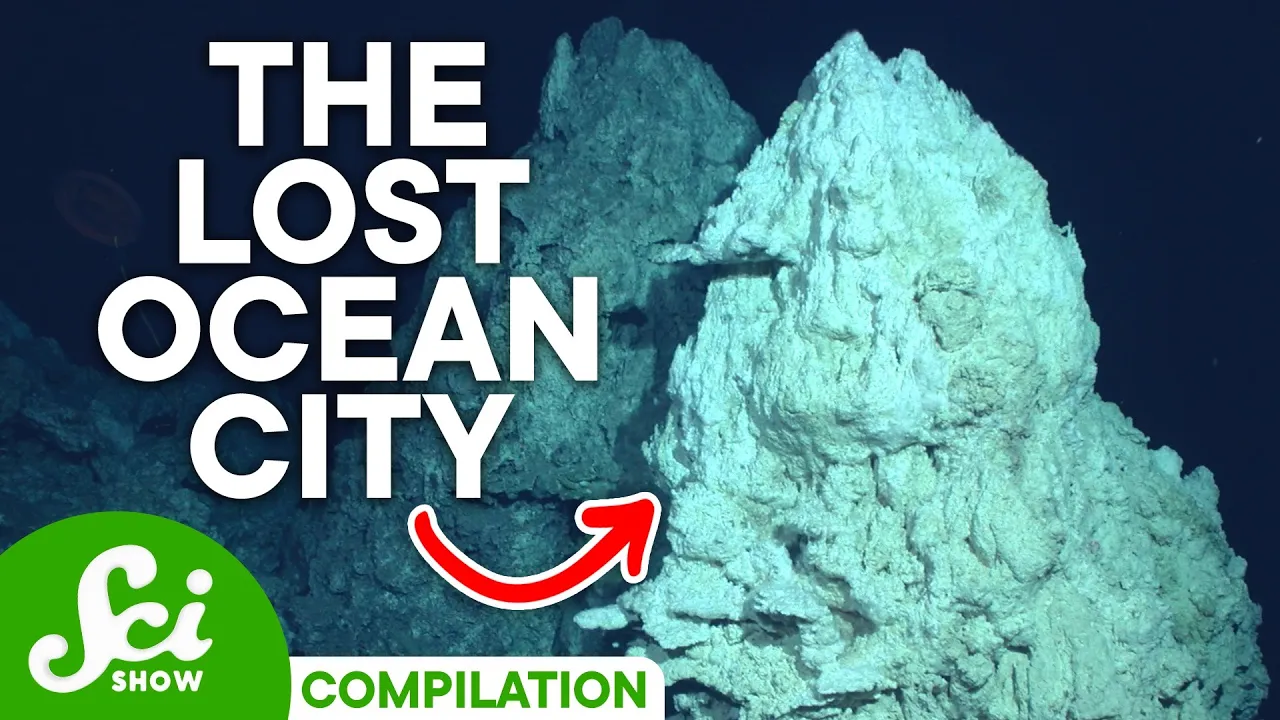
But in 2000, scientists discovered a vent unlike any other—one not quite so deep down with white chimneys that’s been around at least ten times longer than any other vent field.
And some of them think it may help us understand how all life began.
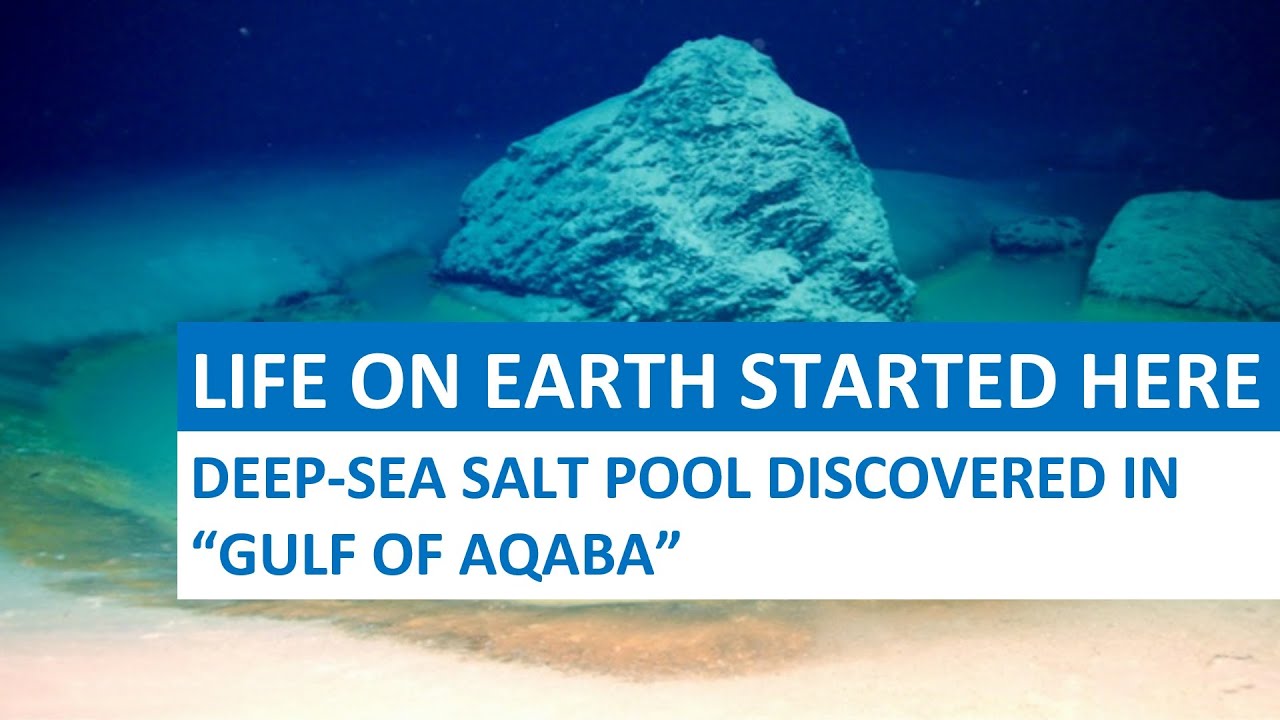
The researchers on the Alvin submersible weren’t looking for a massive hydrothermal vent field when they were exploring a mountainous region of the Atlantic seafloor about 750 to 900 meters below the waves.
They basically stumbled upon it: a sprawling field of huge, white spires and chimneys up to sixty meters tall.
Because of these dramatic structures, and the site’s location on the Atlantis Massif, the researchers named the site the Lost City Hydrothermal Field.
And it turns out Lost City is really different from other hydrothermal vents.
Most vents are what scientists call “black smokers”, and they form where there’s lots of volcanic activity.
In those cases, water in the Earth’s crust gets superheated by underground, molten rock and bursts out into the deep ocean.
We’re talking water that’s hotter than boiling—like, up to —which is only kept from becoming gas by the intense pressure of the deep sea.
This super hot water strips the rocks it comes into contact with of minerals like iron sulfide, which turns it black.
Lost City’s white smoker chimneys are basically the exact opposite of that because they form by a process known as serpentinization instead.
It occurs when seawater meets olivine, a greenish mineral containing magnesium, iron and silicate.
You might have actually seen some of this stuff before—the gem-quality version is known as peridot.
Olivine is formed naturally in the Earth’s mantle—that viscous layer of molten rock /below/ the crust.
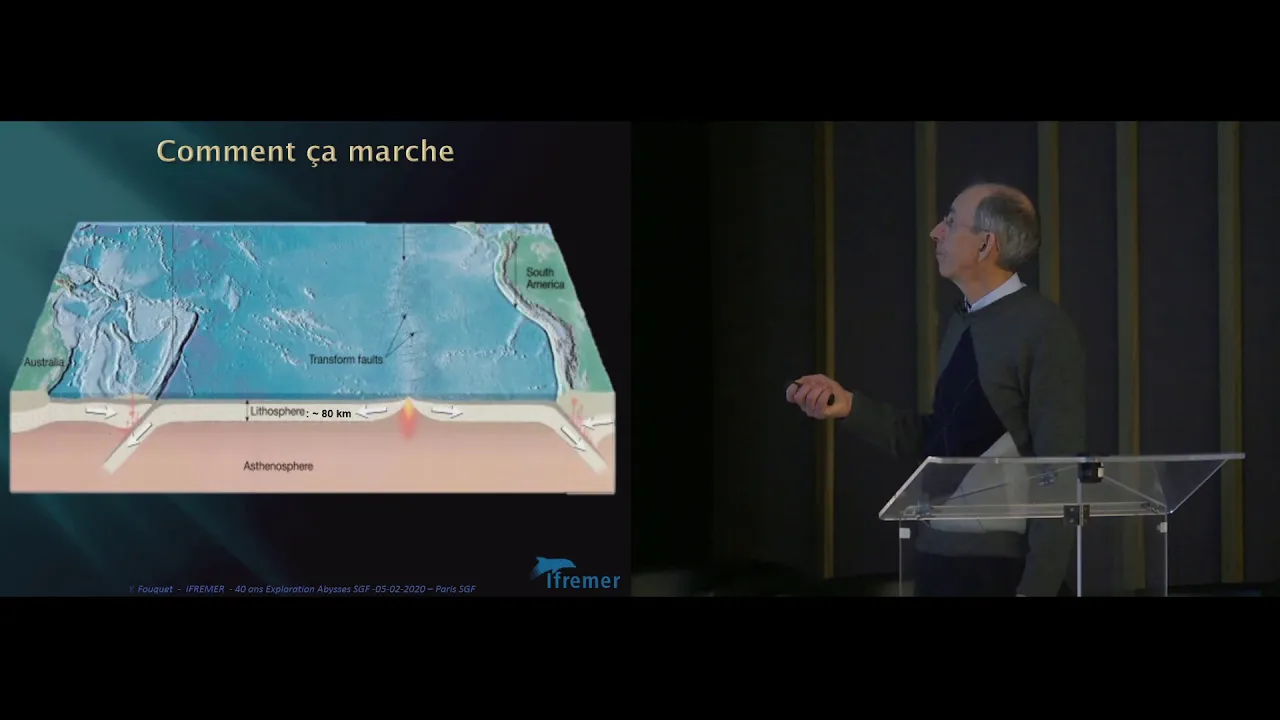
And at Lost City, the olivine-rich mantle is closer to the surface than usual—perhaps because it sits near the intersection of a mid-ocean ridge and a fault.
Whatever the reason, the mantle is close enough that the seawater can seep down through the cracks in the crust and come into contact with this olivine.
And that sets off a chemical reaction.
As water infiltrates the gaps of olivine’s crystal structure, it changes into serpentinite.
As that happens, some of the oxygen atoms combine with the iron from the olivine to form magnetite——and the hydrogen atoms come together to make hydrogen gas.
But in the presence of carbon dioxide—like the carbon dioxide that’s in seawater—something else happens.
Carbon atoms from the CO2 and those extra hydrogen atoms from serpentinization come together to form methane gas.
Which for the record, makes Lost City really special… but we’ll get to that in a bit.
The important things to know for now are that these reactions give off some heat, so the surrounding water gets a little toasty—but only about 40 to 90 degrees Celsius [104 - 194°F], so it’s cool in comparison to black smokers.
And during this process, CO2 gets removed from the seawater, which ultimately makes the water much less acidic.
You see, dissolved carbon dioxide reacts with ocean water to form carbonic acid, which can further react with water to form carbonate and bicarbonate ions.
That ultimately releases hydrogen ions and, therefore, makes the water more acidic.
If you remove CO2, though, the reactions go the other way.
Which is why the chimneys at Lost City have a pH of about nine—closer to baking soda than plain water.
That’s the exact opposite of other hydrothermal vents, which spew very acidic water.
It also happens to be why Lost City has white smoke.
You may have heard of the mineral calcium carbonate because it’s that white stuff that shells and corals are made of.
And it’s an awesome building material—if your water isn’t too acidic.
If it is, those roaming hydrogen ions will react with the carbonate ions instead of the calcium.
Hydrogen and calcium ions are both positively charged, so when they’re in seawater, both could potentially pair up with negatively-charged carbonate ions.
But what usually happens is a hydrogen covalently bonds to the carbonate, turning it into bicarbonate—which, even though it’s negatively charged, the positive calcium ions don't do much with.
If you raise the pH and remove those hydrogen ions, the carbonate stays carbonate and can combine with calcium.
And voilà, you get white-tinted water.
There’s one more way Lost City differs from most hydrothermal vents: It’s a lot older.
Black smokers are fueled by the heat from volcanic activity.
And once that source of heat is consumed or otherwise disappears thanks to tectonic shifts, they die.
Since Lost City doesn’t rely on the fickle whims of volcanic activity to flourish, it’s estimated to be 120,000 years old—roughly twelve times the age of its black smoker cousins!
And it doesn’t seem to be in danger of dying any time soon.
So, Lost City is a pretty fascinating place.
But it doesn’t just stand out amongst hydrothermal vents: It may also give us clues as to the origin of life.
Remember that methane we talked about?
Well, methane is the simplest hydrogen- and carbon-containing molecule, or hydrocarbon.
On Earth, hydrocarbons are usually made by living organisms—and all living organisms we know of need them to build essential molecules like proteins, fats, and starches.
So back before there were any living things, the first life would have needed a non-biological source of hydrocarbons.
And that source could have been serpentinization.
While white smoker hydrothermal vents are rarer than their counterparts, and Lost City is certainly the largest and most famous example, it isn’t the only one.
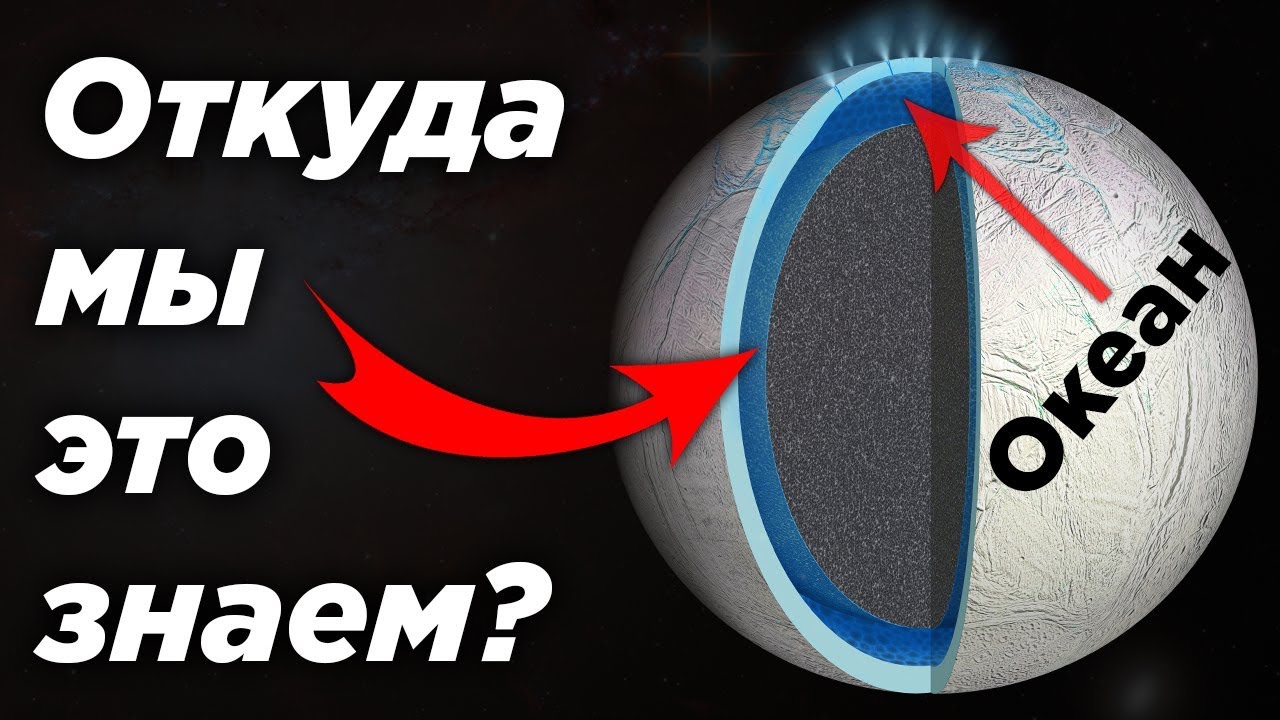
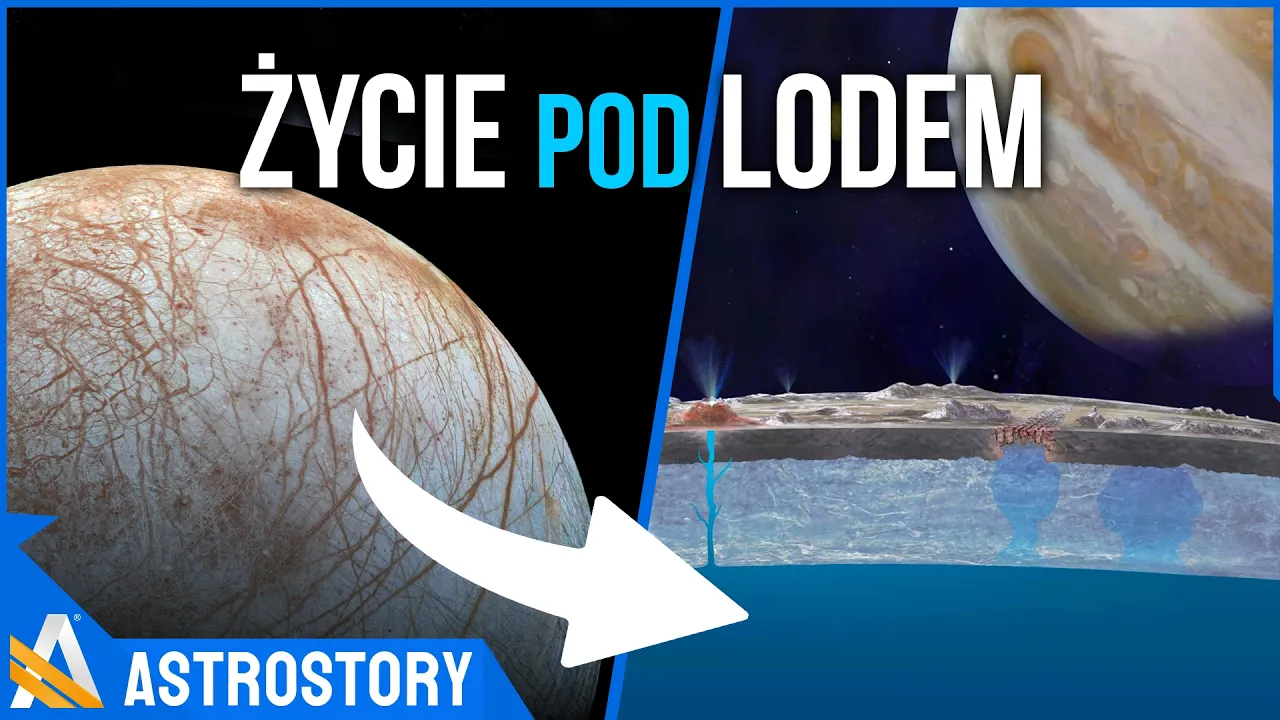
So scientists think that a site like Lost City could have been responsible for the origin of life on our planet, and maybe even elsewhere in the solar system —on far-off moons like Titan, Europa, or Enceladus.
Of course, we still don’t know how life began on this planet, and it might not have begun in the depths of the sea.
But understanding where the building blocks of life can come from is definitely a good start.
And there may be other biological secrets hidden in Lost City, too.
After all, scientists have only begun to study its unique microbial community and how they survive the warm, alkaline waters they call home.
So who knows what else we might learn from this incredible and magnificent geological oddity.
For more of the Earth’s strangest spots, you can check out our compilation episode featuring six weird places!
{♫Outro♫}
Up Next
48:22
NASA Oceans Beyond Earth: Enceladus & Europa Discovery
@NASAJPL
127.2K views•2017-04-13

12:54
Triumph of Orthodoxy Icon: Byzantine Art & History Explained
@BenCallan
2.1K views•2024-08-06

11:51
The Medical History of Aspirin: From Willow Bark to Modern Medicine
@SciShow
505K views•2019-01-10

1:42
Game of Thrones Opening Credits: A Cinematic Analysis
@gameofthrones
46.3M views•2011-04-18
Related Study Plans & Knowledge Roadmaps
Structured learning paths in General & Interdisciplinary Studies
general-studies
Elevator Engineering: History, Physics & Cities
01From Hoists to Safety Brakes: The Dawn of Vertical Lift
02Hydraulic vs. Traction: The Engineering Physics of Elevators
03Modern Speed, Safety, and Algorithms
+ 2 more learning modules
12h5 modules
Explore Roadmap
general-studies
Rubber: Material Science, History & Geopolitics
01Origins of Natural Rubber & Mesoamerican History
02The Chemistry of Natural Rubber & Vulcanization
03The Geopolitics of the Rubber Boom & Colonization
+ 2 more learning modules
12h5 modules
Explore Roadmap
general-studies
Containerization: Evolution, Logistics & Trade
01Ancient Trade & Bulk Cargo: Amphorae to Barrels
02The Industrial Revolution & Cardboard Packaging
03The Containerization Revolution: Malcom McLean
+ 2 more learning modules
12h5 modules
Explore Roadmap
general-studies
Textile Tech: Evolution, Labor & Global Impact
01Pre-Industrial Textiles: Handloom & Cottage Industry
02Mechanization: The Spinning Jenny to the Power Loom
03The Factory System & Global Labor Transformation
+ 2 more learning modules
10h5 modules
Explore Roadmap