
















Protecting groups are chemical 'disguises' that temporarily mask reactive functional groups (such as carbonyls, alcohols, amines, and carboxylic acids) to prevent unwanted side reactions during multi-step organic syntheses, allowing chemists to selectively perform desired transformations on specific parts of complex molecules; a good protecting group must be easy to attach, stable under reaction conditions, and easily removable without affecting other molecular components.
Chemoselectivity and Protecting Groups | Organic Chemistry
Added:Understanding of common organic functional groups (such as alcohols, amines, and carbonyls) and their relative reactivities.
Basic mechanisms of nucleophilic substitution (SN1/SN2) and nucleophilic addition reactions.
The chemistry of highly reactive reagents, such as Grignard reagents and metal hydride reducing agents (like LiAlH4).
Acid-base chemistry concepts, specifically how protonation and deprotonation affect functional group nucleophilicity.
Designing multi-step organic syntheses using retrosynthetic analysis and strategic protecting group placement.
Orthogonal protecting group strategies, where multiple protecting groups are selectively removed under mutually exclusive chemical conditions.
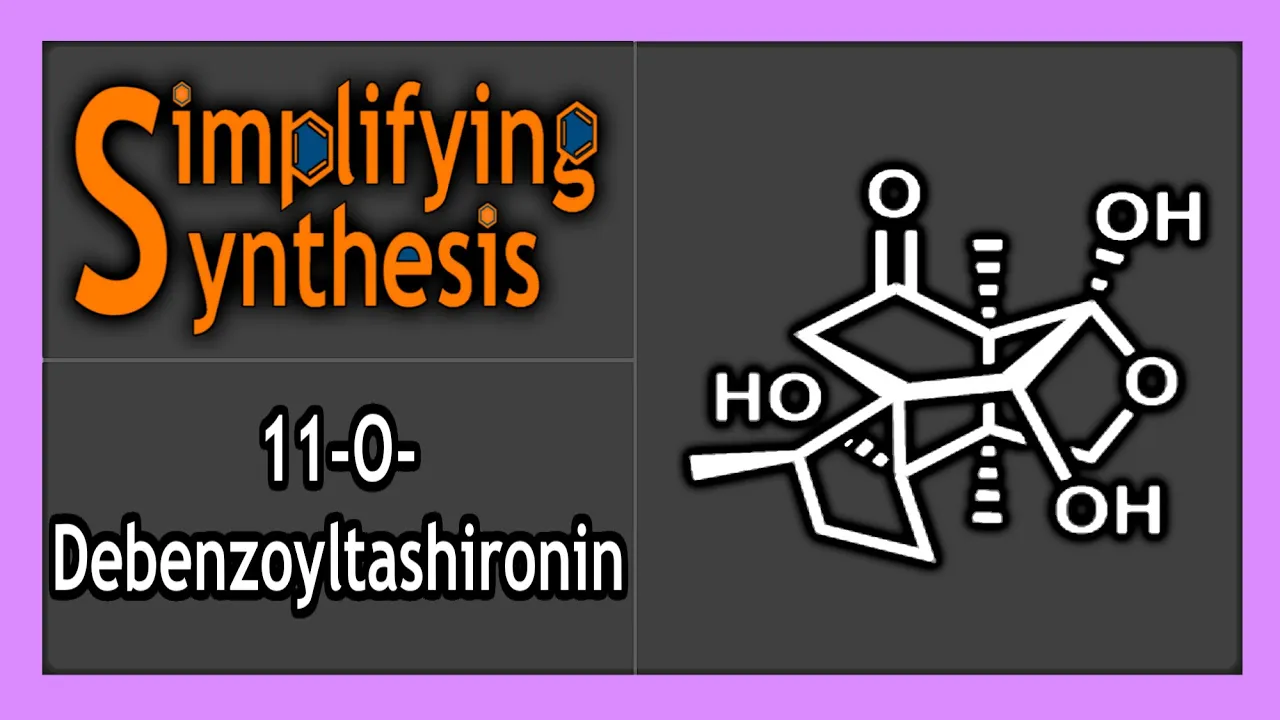
The total synthesis of complex natural products and pharmaceuticals, building on the structural complexity exemplified by penicillin.
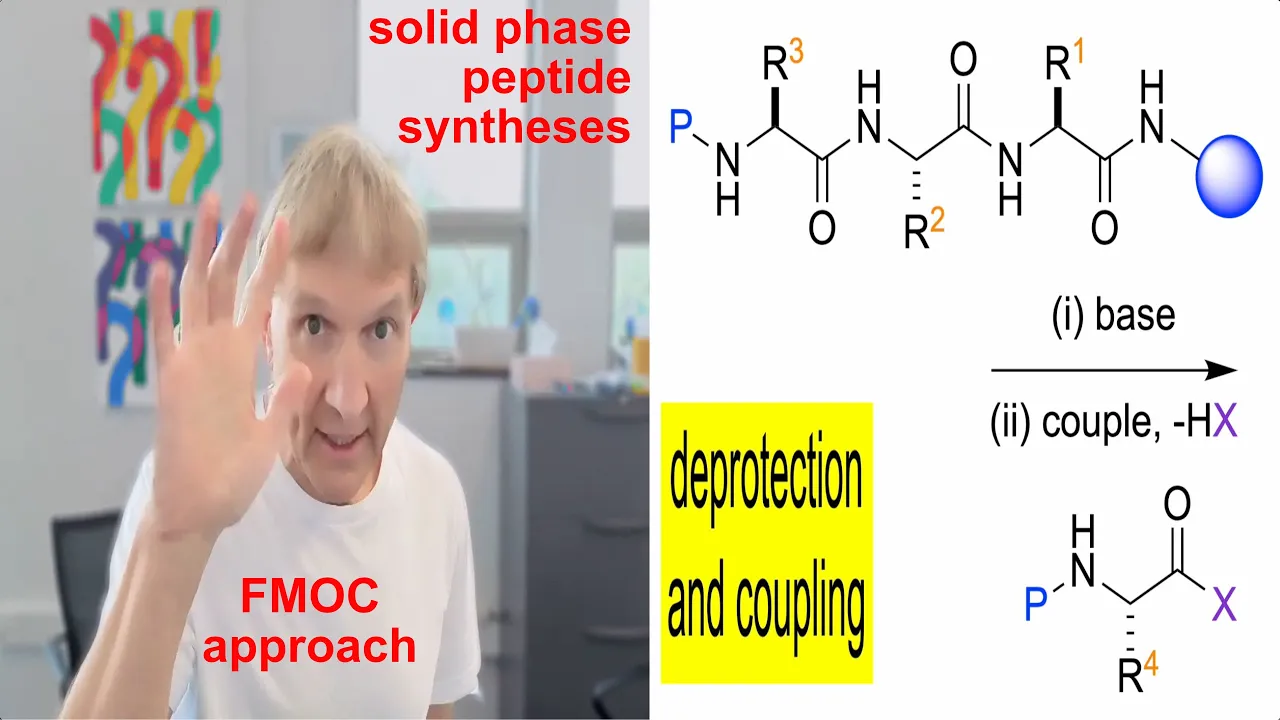
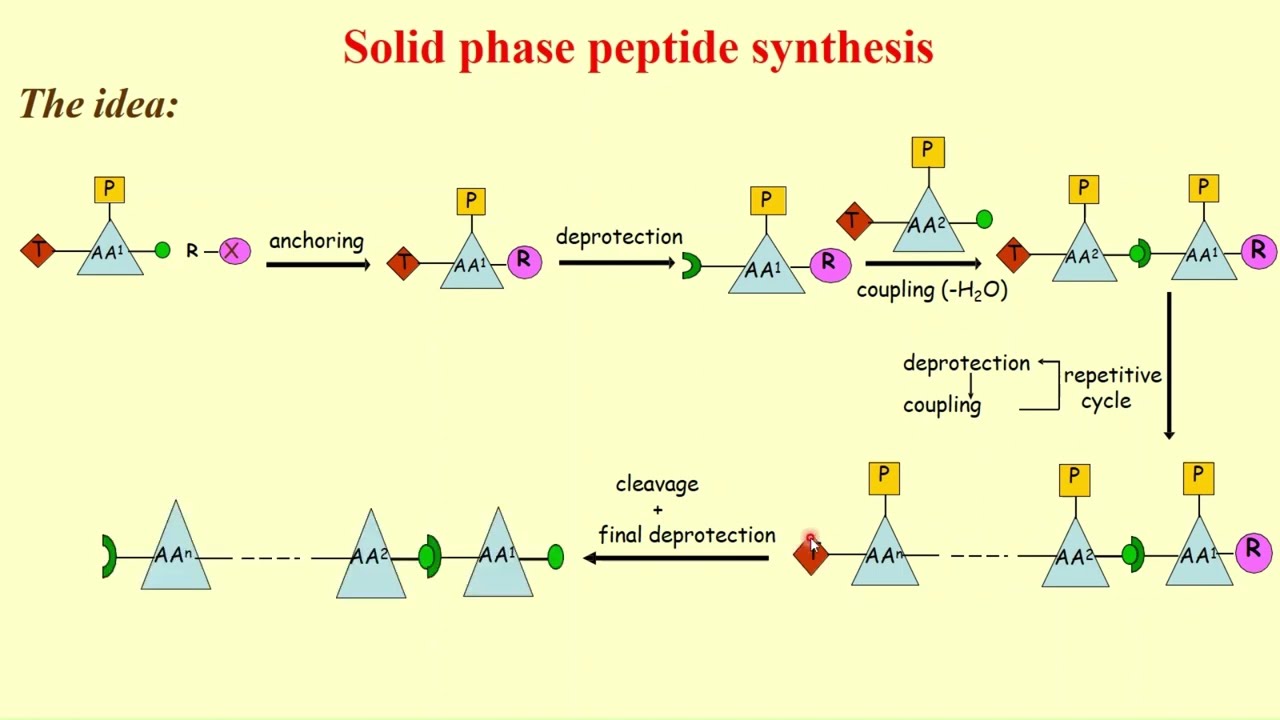
Solid-phase peptide synthesis (SPPS), focusing on Fmoc and Boc protection/deprotection cycles.
56K views1.2Klikes11:30Original Release: 2021-08-11
You can review content from Crash Course Organic Chemistry with the Crash Course App, available now for Android and iOS devices.
Hi! I’m Deboki Chakravarti and welcome to Crash Course Organic Chemistry!
We’ve gathered a pretty impressive toolbox of chemical reactions, and can use them to transform a lot of functional groups we might come across.
But as we meet more complex molecules, we run into a problem: in addition to the bits of molecules we want to react, we find that other bits start reacting too!
Imagine for a second you’re going to paint a room in your house (like maybe purple and yellow, to turn your office into a remote set for Crash Course) If you’re being careful, you’ll use painters’ tape to cover up the edges of window frames, light switches, or decorative trim.
Once you’ve finished painting, you peel off the paint-splattered tape, revealing those pristine old surfaces in your otherwise new room.
And we can do this with molecules too!
We can prevent a functional group from reacting by "taping over" it before we throw a bunch of reactants at the molecule.
Then we remove the "tape" at just the right moment, so our original functional group remains in the otherwise new molecule.
This painters’ tape for chemical reactions can go by many metaphorical names, but it's technically called a protecting group.
In this episode, we’ll learn how we can use protecting groups to control how our molecules react.
[Theme Music] In episode 32, we saw how we can reduce carbonyl compounds using metal hydrides.
This is really straightforward if we have a molecule with just one carbonyl group.
But say we’ve got a molecule with more than one carbonyl group, and we only want to reduce one of them.
Then, things get a bit more complicated, because reducing agents will reduce the more reactive functional group fastest.
So if we want to reduce only the less reactive functional group… we run into a problem.
We looked at the reactivity of carboxylic acid derivatives in the previous episode.
Let’s add in the other carbonyl compounds we’ve encountered to give us the full picture: As an example, this molecule has two carbonyl functional groups: a ketone and an amide.
If we use a reducing agent like lithium aluminum hydride, that reactivity comes into play.
The ketone gets reduced first into an alcohol, and then the amide gets reduced into an amine.
Lithium aluminium hydride is pretty much the sledgehammer option for reducing carbonyl compounds, as it can reduce them all.
It can even reduce the less-reactive carboxylic acids, albeit more slowly.
If we want a bit more nuance, though, we can select a different reducing agent, like either lithium or sodium borohydride.
Lithium borohydride can reduce aldehydes and ketones pretty quickly, or esters more slowly.
Sodium borohydride can reduce aldehydes and ketones, but it’s speediest with aldehydes.
Taking that molecule with two functional groups from before, sodium borohydride would be the perfect choice if we want to reduce the ketone, but not the amide.
But none of these reducing agents will help us reduce the amide but not the ketone.
To stop the ketone from reacting, we need to cover it in our chemical painters' tape: a protecting group.
Except because protecting groups can look really different depending on what they're covering, or which reactant they're hiding from, it's more like giving the ketone a unique chemical disguise.
With sunglasses and a fake moustache, our ketone is unrecognizable to lithium aluminum hydride and they don't react.
The ketone can slip past the reducing agent undetected, and take off the disguise once the reaction is complete!
Mission accomplished.
As we know from spy movies, there are both elegant and bad disguises – and the same applies for chemical disguises.
There's a three-part checklist for a good protecting group: 1. It needs to be easy to attach to the part of the molecule we want to protect.
We want to avoid multiple additional reactions or using inconvenient reaction conditions.
Just like we want to smoothly change into a new spy outfit, not fumble around with an ironing board before swapping shirts.
2. It shouldn’t react under the conditions we need to use later in the reaction, because that might make it more difficult to remove afterwards.
Just like we need a disguise to work in all locations.
Traditional army camouflage is great in a forest, but not so great if we have to swim in the ocean too – then our clothes are heavy and damp and a pain to change out of.
3. It needs to be easy to remove, without affecting other groups in the molecule.
If removing it requires a reaction that will change other functional groups in the molecule, we'll get a headache trying to change them back!
Just like we want our fake moustache to come off easily, and without leaving incriminating glue marks or synthetic hair all over our clothes!
For example, one way to protect aldehydes and ketones is to turn them into an acetal group.
We met the acetal group in Episode 29 when we added methanol to a ketone.
This group protects aldehydes and ketones from reactions with nucleophiles and bases, and the diol makes a cool little ring structure.
With our protecting group in place, we can go ahead and react our amide with lithium aluminium hydride to convert it to an amine: So far, so good – our protecting group was easy to put in place, so that's one check mark.
And it hasn’t reacted under the reaction conditions used to reduce our amide, so that's another check.
All we need to do is add acid to hydrolyze our chemical disguise away – so it checks the final box of being easy to remove, too!
Let’s take a closer look at this removal mechanism.
One of the oxygens in the acetal group grabs a proton, which leads to one of the oxygen-carbon bonds breaking with a push from the neighboring oxygen.
Next a water molecule swoops in, kicking off a chain of proton transfers and electron movement, which eventually forms an oxonium ion.
Then, a final water molecule plucks the hydrogen off of the oxonium to remake the ketone.
So, with help from an acetal protecting group, we can reduce a carbonyl group even if it’s less reactive than other carbonyl groups in the molecule.
We don't just use chemical disguises with carbonyls, though.
Take a look at this reaction: we want to remove the bromo functional group on the right-hand side of the starting material, and replace it with an additional alcohol and phenyl group.
Let’s start by comparing the number of carbons in our starting material and product to see where we need to form a bond.
If we can transform our starting reagent into a Grignard, we could hypothetically use it to join onto an epoxide like we learned in Episode 24.
But wait – there’s a problem.
Grignards will react with alcohols in an acid-base reaction!
So as soon as we form the Grignard, we won't get the reaction we want.
Our Grignard molecule could react with itself, deprotonating the alcohol group on the other end, or it could react with another reactant molecule.
Either way, we're nowhere near the product we wanted to make.
So we’ll need a protecting group!
And there are two classic chemical disguises that alcohols can use.
One option is silyl ethers, with a silicon atom covalently bonded to an alkoxy group.
There are a few different varieties with different alkyl groups attached, but the one we’ll use here is tert-butyldimethylsilyl ether, or TBS for short.
So let's react our alcohol with TBS chloride and triethylamine, which will snag the hydrogen that’s on the OH group.
The newly attached TBS protecting group can’t be removed by a base, and we can remove it later by reaction with fluoride.
Smaller silyl groups come off easily in acid, but the chunky silyl ethers are a little more resistant and more commonly used in practice.
A second protecting group option for alcohols is a benzyl group (Bn for short).
We have lots of aliases for our disguised molecules, which help us from having to draw out big protecting groups in our reaction mechanisms.
We can attach this protecting group by reacting the alcohol with a strong base like sodium hydride and a benzyl halide.
The benzyl group has an advantage over the silyl ethers because it's not removed by bases, and it’s also tricky to remove in acidic conditions.
However, it has to be removed by hydrogenation, which might be a problem if you have double or triple bonds in your molecule!
For the Grignard-related reaction puzzle we were looking at, either of these alcohol protecting groups will do, but let’s just use a silyl ether.
Before we form a Grignard or anything though, we need to add a protecting group using TBS chloride and triethylamine as our base again.
TBS takes the place of the hydrogen on the alcohol group.
And our chemical disguise was easy to add, so that's one of three checks on our "good protecting group" checklist.
Now we can form a Grignard by reaction with magnesium.
Our protecting group is disguising the alcohol, preventing those acid-base reactions we don't want.
So not reacting under the conditions of the reaction: check.
This means we can go ahead and form the product we want, by reacting with this epoxide!
Again, the protecting group remains unchanged during this reaction: so... double check to that second box.
Finally, it’s time to remove the protecting group with an acid or a fluoride – in this case, tetrabutylammonium fluoride, or TBAF for short.
Our alcohol protecting group is easy to remove: check!
Just in case you had doubts, there's the checklist proof that silyl ethers are good chemical disguises!
In addition to carbonyls and alcohols, amines are another common secret agent… well, functional group.
Amines pop up often in organic molecules, and their nucleophilic and basic nature means that they can easily get involved in unwanted reactions if we don’t disguise them!
And we have three main choices here.
One option is adding a carboxybenzyl group (CBz or Z for short) by reacting our amine with benzyl chloroformate.
Later, we can remove this protecting group by hydrogenation or using a strong acid.
A second option is di-tert-butyl dicarbonate, more commonly known as Boc anhydride.
In the presence of a base, we add a tert-butoxycarbonyl (or Boc) group in place of one of the hydrogens on the nitrogen in the amine.
And we can remove it easily by adding acid.
We can look to our Mold Medicine Map and the synthesis of penicillin V for our third and final amine protecting group: a phthalimide.
This protecting group prevents the amine from reacting with an aldehyde in an earlier step of the synthesis.
In this step, it's being removed from our proto-penicillin structure.
The removal includes swapping the amide-like linkages to make a sort of double amide side product.
Plus, there's a bonus disguise in our Mold Medicine Map!
We can protect carboxylic acids by bulking them up, subbing out the hydrogen on the OH group to form a tert-butyl ester instead.
And this protecting group can be removed later with acid.
Sheehan actually did this deprotection right at the end of the penicillin synthesis, before making the strained four-membered beta lactam ring.
This ring is really sensitive to breaking open by hydrolysis, which is why penicillin was really difficult to isolate in the first place.
That’s why Sheehan saved the ring closing step for last, and it just so happens to be the last thing we'll mention about protecting groups too.
In this episode, we: Defined a checklist for a good protecting group, and Identified good protecting groups for carbonyls, alcohols, amines, and carboxylic acids.
In the next episode, we’ll learn how to make a target molecule by working backwards, and head into the virtual lab again to remove reaction side products by taking advantage of solubility differences.
Until then, thanks for watching this episode of Crash Course Organic Chemistry.
If you want to help keep all Crash Course free for everybody, forever, you can join our community on Patreon.
Up Next
9:22
Protecting Groups for Alcohols: Silyl Ethers in Organic Chemistry
@ChadsPrep
41.9K views•2021-01-22
83:56
Biocatalysis and Catalysis in Islatravir Synthesis | Merck Webinar
@SCIwheresciencemeetsbusiness
675 views•2020-10-08
9:57
Nuclear Chemistry: Radioactive Decay & Half-Life Explained
@crashcourse
2.1M views•2013-11-11

17:31
Edible Water Bottles: A DIY Guide to Sodium Alginate Spherification
@ryan
10.5M views•2019-06-21
Related Study Plans & Knowledge Roadmaps
Structured learning paths in Chemistry
chemistry
Nuclear Chemistry: Decay, Meds & Fuel Cycle
01Introduction to Nuclear Structure and Radioactivity
02Decay Dynamics and Kinetics
03Radiation Interaction and Detection
+ 2 more learning modules
24h5 modules
Explore Roadmap
chemistry
Supramolecular Chemistry: Forces & Machines
01Foundations of Chemical Bonding and Intermolecular Forces
02Introduction to Host-Guest Chemistry
03Thermodynamics and Dynamics of Self-Assembly
+ 2 more learning modules
16h5 modules
Explore Roadmap
chemistry
Photochemistry: Excited States & Reactions
01Foundations of Light-Matter Interactions
02Molecular Orbitals and Electronic States
03Photophysical Processes and Jablonski Diagrams
+ 2 more learning modules
18h5 modules
Explore Roadmap
chemistry
Coordination Chemistry: Bonding & Properties
01Introduction to Transition Metals and Ligands
02Crystal Field Theory (CFT) and Geometry
03Magnetic Behavior and Spin States
+ 2 more learning modules
14h5 modules
Explore Roadmap