







![ORGANIC SYNTHESIS//PROTECTING GROUPS//M.SC FINAL CHEMISTRY[ORGANIC SPECIALIZATION]](https://i.ytimg.com/vi_webp/W5PFM6sXgYI/maxresdefault.webp)

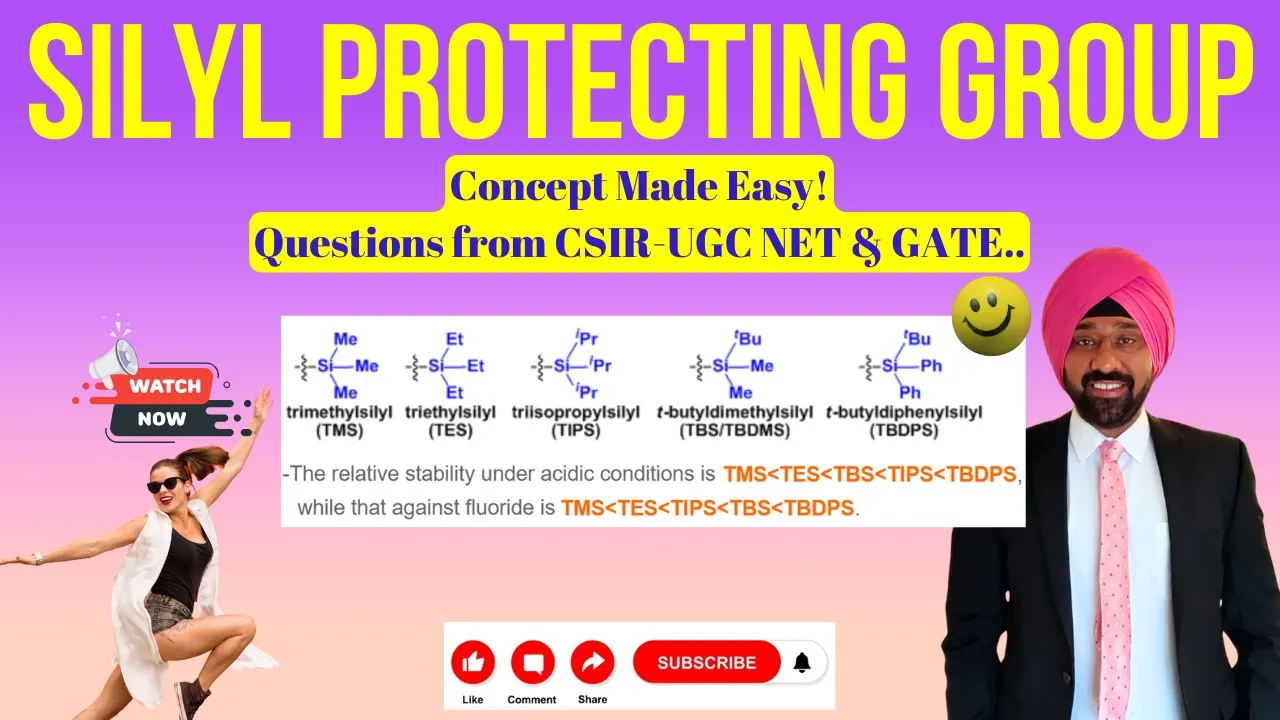





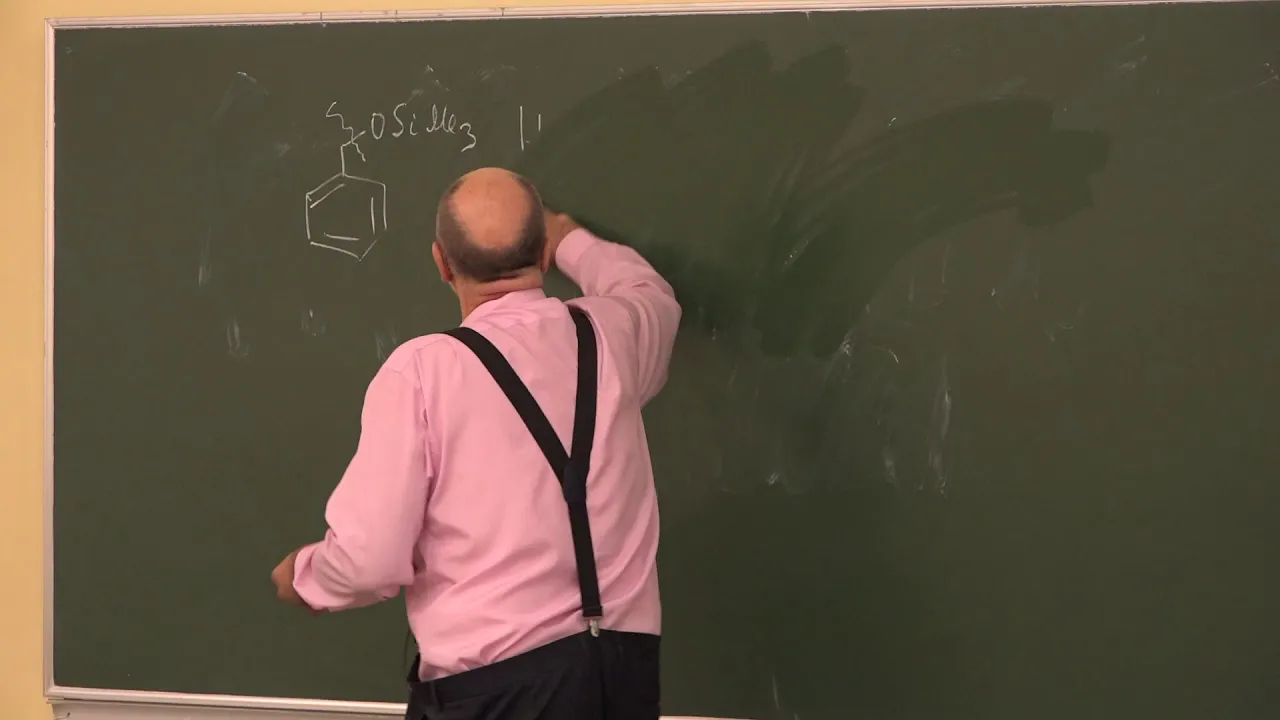



Silyl ethers (specifically trimethylsilyl ethers) serve as protecting groups for alcohols in organic synthesis by temporarily converting reactive alcohols into inert species, preventing unwanted acid-base reactions with strong bases like Grignard reagents; the protection is achieved through nucleophilic attack of the alcohol oxygen on silicon, followed by chloride departure, and can be removed using either acid hydrolysis (H3O+) or fluoride source (TBAF), with bulkier silyl groups requiring TBAF for effective deprotection.
Protecting Groups for Alcohols: Silyl Ethers in Organic Chemistry
Added:Structure and reactivity of alcohols, including their nucleophilic nature and the acidity of the O-H proton.
The fundamental concept of chemoselectivity and why protecting groups are required in multi-step organic synthesis.
Nucleophilic substitution mechanisms, specifically SN2-like displacements at a silicon center.
Basic periodic trends of group 14 elements, particularly the high thermodynamic affinity of silicon for oxygen and fluorine atoms.
Orthogonal protecting group strategies, analyzing the relative stability and cleavage rates of different silyl ethers like TMS, TBDMS, and TIPS.
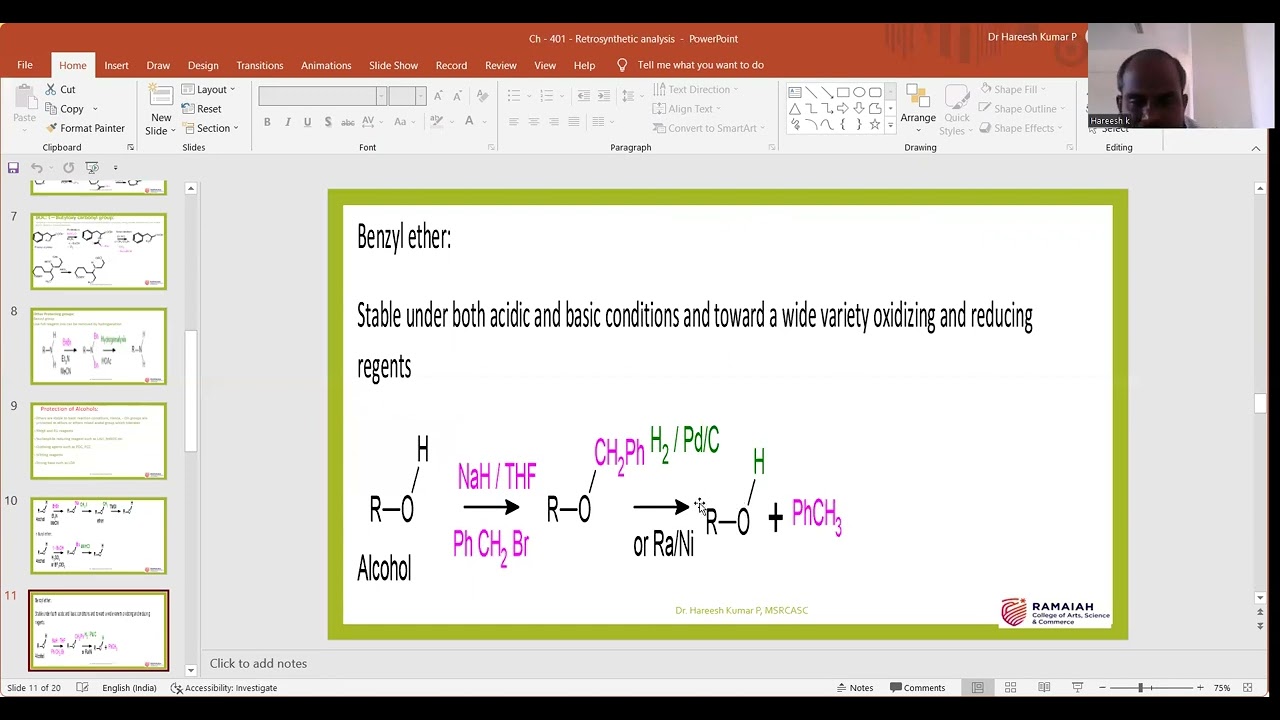
Alternative protecting groups for alcohols, such as benzyl ethers, tetrahydropyranyl (THP) ethers, and acetates.
Application of silyl protecting groups in the total synthesis of complex natural products and pharmaceuticals.
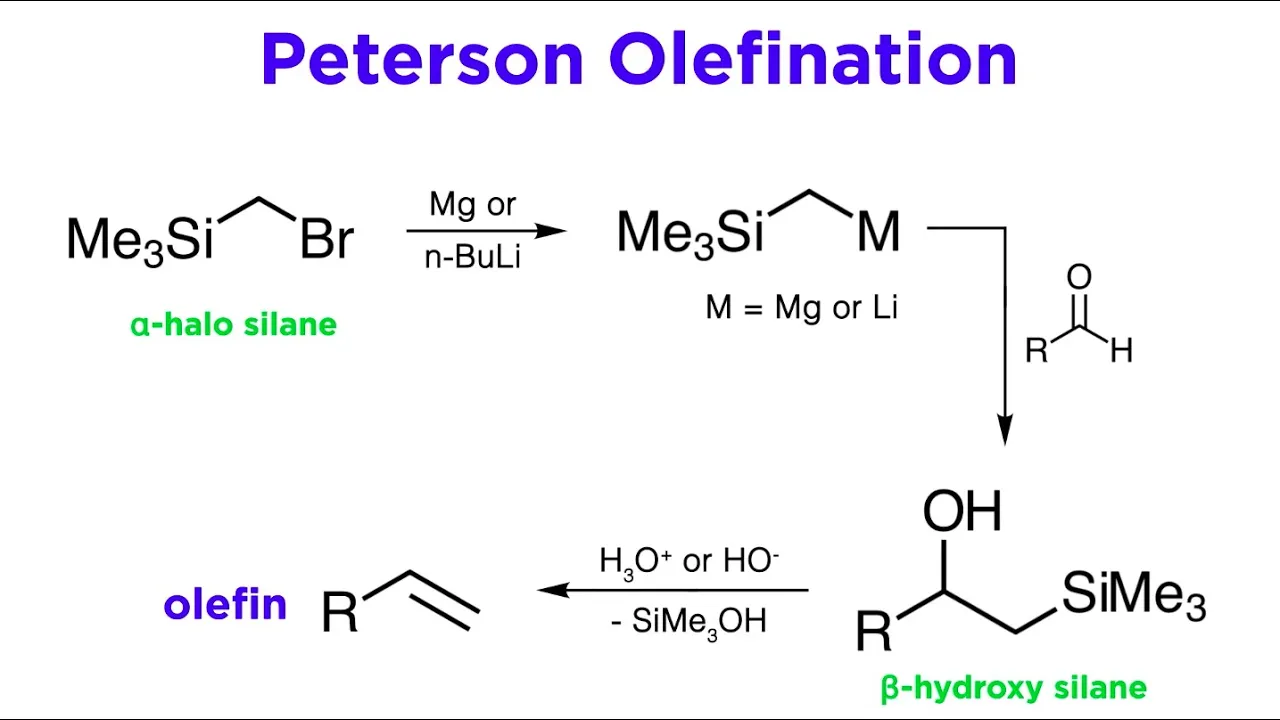
Silicon-mediated synthetic transformations beyond protection, such as the Peterson olefination or the Brook rearrangement.
41.9K views849likes9:22Original Release: 2021-01-22
protecting groups for alcohol is going to be the topic of this lesson and specifically we're going to look at what's called a cylil ethern uh the idea is that there are certain reactions that are not compatible with having an alcohol around and so what you're going to do is temporarily turn your alcohol into something inert in this case a silo ether and then when your reaction's done you'll convert it right back into an alcohol so that's kind of the idea behind a protecting group now this lesson's part of my organic chemistry playlist and i'm releasing these lessons weekly throughout the 2020-21 school year so if you want to be notified as i post a lesson subscribe to the channel click the bell notification all right so before we actually show protecting group in action let's just show a reaction in which we actually need one first so let's say we're going to do a grignard reaction here and you might recall that a grignard reagent is both a strong nucleophile which is usually the whole pointing adding it but it's also a strong base and so we said last time that you can't have grinded reagents present with alcohol as the solvent or with any alcohol around whatsoever well in this case i want my grignard reagent to react with this lovely ketone up here the problem is i do have an alcohol around and so maybe what i'm wanting to have happen here in this reaction is i want my grignard reagent to react with my ketone so in this case as a nucleophile and the goal then would be to form this and then the h3o plus would eventually protonate it cool and so that's kind of where you know we're probably trying to go with this reaction and so problem is we are never going to get there because we already have an alcohol present here and so this grignard reagent here once again is not only a strong nucleophile which is what we want it to do but it's also a strong base and so the truth is it is never going to get a chance in this case to react as a nucleophile because the acid-base reaction is typically faster and so as a result it's going to come down here and deprotonate that alcohol so and as a result you're actually just going to get ketone still going to be a ketone you're going to form this living alkoxide when the ch3 here bonds to another h that becomes ch4 which in this case is methane which is a gas it just bubbles out of the solution and so your grignard's just been consumed turning into methane and all you've done is deprotonate your alcohol effectively turning into alkoxide when you add the h3o plus it'll just turn it right back and you'll be back to where you started with and you've done nothing so in this case we need to first protect this alcohol here in order for this reaction to work so let's take a look at what this looks like here all right so the region we're going to use here is uh called trimethylcylochloride there's our abbreviation and we're going to need a base in there and oftentimes we'll use like triethylamine or maybe pyridine as we'll see so and in this case the way this works if we draw this out so this trimethylsilal ether the silo first of silicon trimethyl so what we got going on here and then chloride here and the chloride here is just a leaving group and what we're going to have happen here is we are going to attack the silicon and have the chlorine leave and i'm going to make this look very essent too and you might first be like chad you can't attack a tertiary with sn2 you can't attack a tertiary carbon with sn2 but silicon is bigger which means these three methyl groups are gonna be farther apart and a nucleophile actually can squeeze in to attack the larger silicon if this were a carbon your right could attack it so also the truth is this probably actually isn't sn2 so good evidence that shows that this might actually go through what's called a pentavalent intermediate so pentavalent meaning silicon would have five bonds for for a spell uh silicon's in the third row of the periodic table and it's allowed to go over the octet rule and so the truth is the oxygen probably bonds first and then in a separate step the chlorine will leave so well you know before the chlorine actually leaves we'd end up with the silicon having five bonds for just a minute so but we're not going to show that here so we're just going to kind of show the sn2 like step and you'll see it kind of presented both ways and the truth is it might even be more complicated than either of those there might be competing mechanisms going on and things of this sort so but usually the mechanism is not the point of focus here most you aren't even going to see a mechanism presented for this reaction so i just wanted to make sense for you so in this case this will take us now to our ketone with this oxygen now bonded to silicon still has a hydrogen so and that's where our lovely base here the triethylamine comes into play it's just there to deprotonate this hydrogen so in this case you might see this abbreviated like so or just simply written otms or something like this so same kind of thing i just want to make sure you've seen both what it looks like in actuality as well as the abbreviations commonly used so you can relate the two so but this is nice it's actually a reversible reaction we'll find out how we can remove this when we're done but what's nice is temporarily there's no hydrogen bonded to our oxygen it's not an alcohol anymore there's no acidic hydrogen down here whatsoever and so if we add a grignard now it's not going to react as a base the only option it actually has is to act as the nucleophile like we want it to and so that's what we're going to do here well i'm going to write that out just like we did here so we'll find we've attached our new methyl group here it's just coming in attacking as a nucleophile like we wanted it to so forming the alkoxide then the h3o plus is going to protonate that cool but it turns out that might not be the only thing that happens if we make this h3o plus concentrated enough so it turns out h3o plus is one of the couple of ways you'll learn to d protect this it'll actually hydrolyze this you'd end up protonating this oxygen putting an h back on there so and then you probably have water coming attacking the other side and breaking the bond off and you'll be back to having an alcohol and so the truth is if your h3o plus is concentrated enough so this would already be back to an oh so however if it's not concentrated enough well now you could make it more concentrated i guess so but the other thing you might do and it's probably the more common deep protecting agents what's called tbaf so abbreviated t bath most commonly written as tbaf you may never even see its structure uh formally drawn out or or at least not very often except maybe in an explanation so you're probably gonna see an abbreviation more than anything else so but that t-bath is more commonly used here and gets us back to our alcohol now the truth is the trimethyl silo ether is not the only kind of silo ether you might use a protecting group and the bulkier these groups get the more you actually need tbaf so h3o plus will work with trimethyl style ether some of the bulkier ones that won't and you have to use tbaf and so that's why i take the time to use it here but tbaf stands for tri but i'm sorry tert butyl let's try that let's get that right let's draw that a little prettier okay so there's tert butyl ammonium tert-butyl ammonium but the important part here is fluoride don't care about the tert-butylmonium part this is just a way of getting fluoride iron in the solution with something big organic-y and making it soluble in a lot of organic solvents but the fluoride is the key and the idea is that we're eventually going to turns out this is always going to be present with a little bit of water so and that water is going to protonate this oxygen here and then fluoride is going to come in and do backside attack so and the idea is that fluorine forms a stronger bond of silicon than oxygen does and so it can displace it and so now fluorine ends up bonded to silicon and the oxygen just ends up being bonded to a hydrogen back to an alcohol it is now de-protected so nifty little way to get around some things so the idea again is that your grignard reagent is not compatible with having an alcohol present it would simply just protonate the grignard destroying it effectively so we'll turn that alcohol temporarily into this lovely silo ether which is no longer protic not going to react with a grignard do your grinded reaction and then finally it's a reversible reaction so you can de-protect it with tbaf or h3o plus now if you found this lesson helpful would you consider giving me a like and a share a couple of the best things you can help me do to promote the channel if you're looking for the study guide that goes with this lesson if you are looking for practice problems practice final exams anything of the sort check out my premium course on chatsprep.com
Up Next
6:55
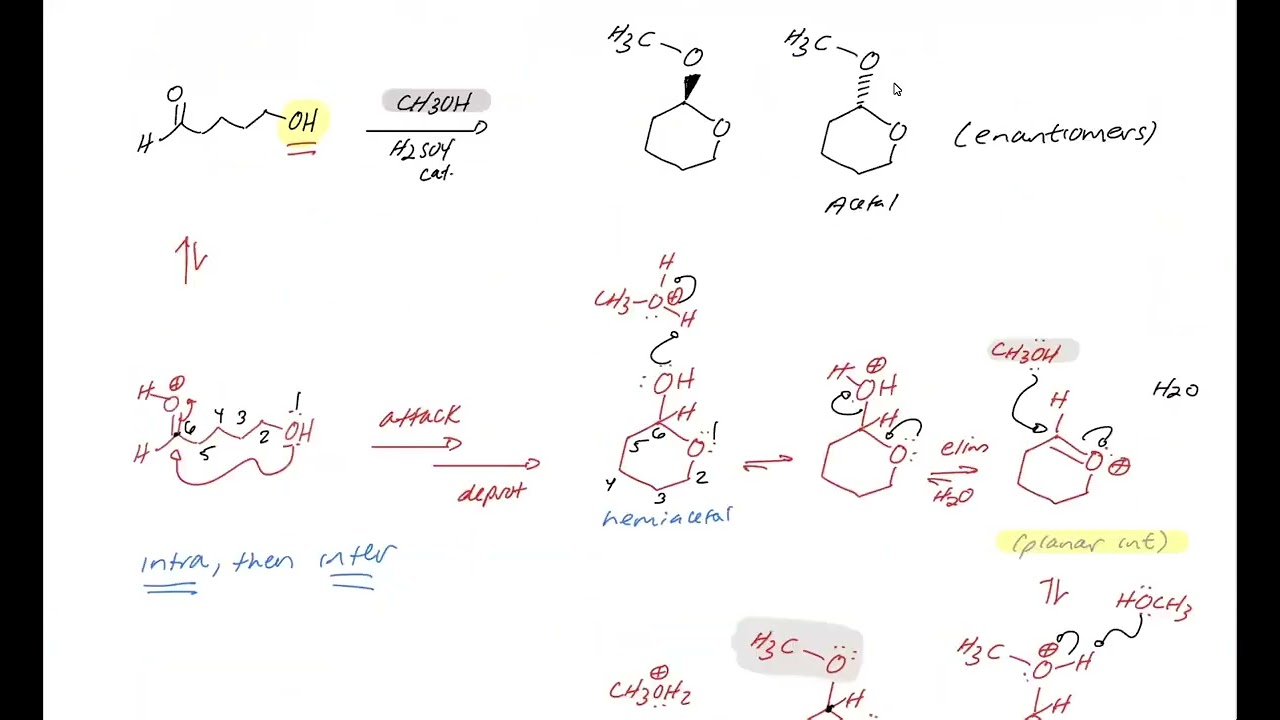
Cyclic Acetal/Ketal Formation: Protecting Groups Mechanism
@RogueChemOfficial
108 views•2024-05-28
83:56
Biocatalysis and Catalysis in Islatravir Synthesis | Merck Webinar
@SCIwheresciencemeetsbusiness
675 views•2020-10-08
19:50
Kinetics of Nuclear Decay: Half-Life & Radiocarbon Dating
@ChadsPrep
16.5K views•2022-04-13

17:31
Edible Water Bottles: A DIY Guide to Sodium Alginate Spherification
@ryan
10.5M views•2019-06-21
Related Study Plans & Knowledge Roadmaps
Structured learning paths in Chemistry
chemistry
Nuclear Chemistry: Decay, Meds & Fuel Cycle
01Introduction to Nuclear Structure and Radioactivity
02Decay Dynamics and Kinetics
03Radiation Interaction and Detection
+ 2 more learning modules
24h5 modules
Explore Roadmap
chemistry
Supramolecular Chemistry: Forces & Machines
01Foundations of Chemical Bonding and Intermolecular Forces
02Introduction to Host-Guest Chemistry
03Thermodynamics and Dynamics of Self-Assembly
+ 2 more learning modules
16h5 modules
Explore Roadmap
chemistry
Photochemistry: Excited States & Reactions
01Foundations of Light-Matter Interactions
02Molecular Orbitals and Electronic States
03Photophysical Processes and Jablonski Diagrams
+ 2 more learning modules
18h5 modules
Explore Roadmap
chemistry
Coordination Chemistry: Bonding & Properties
01Introduction to Transition Metals and Ligands
02Crystal Field Theory (CFT) and Geometry
03Magnetic Behavior and Spin States
+ 2 more learning modules
14h5 modules
Explore Roadmap