
















Radioactivity involves the spontaneous transformation of atomic nuclei through three primary decay processes—alpha decay (emission of helium nuclei), beta decay (emission of electrons), and gamma decay (emission of high-energy electromagnetic radiation)—which release energy as nuclei seek more stable configurations; the rate of decay is measured by half-life, the time required for half of a radioactive sample to transform, allowing scientists to predict remaining quantities over time and understand why radioactive elements persist despite their inherent instability.
Nuclear Chemistry: Radioactive Decay & Half-Life Explained
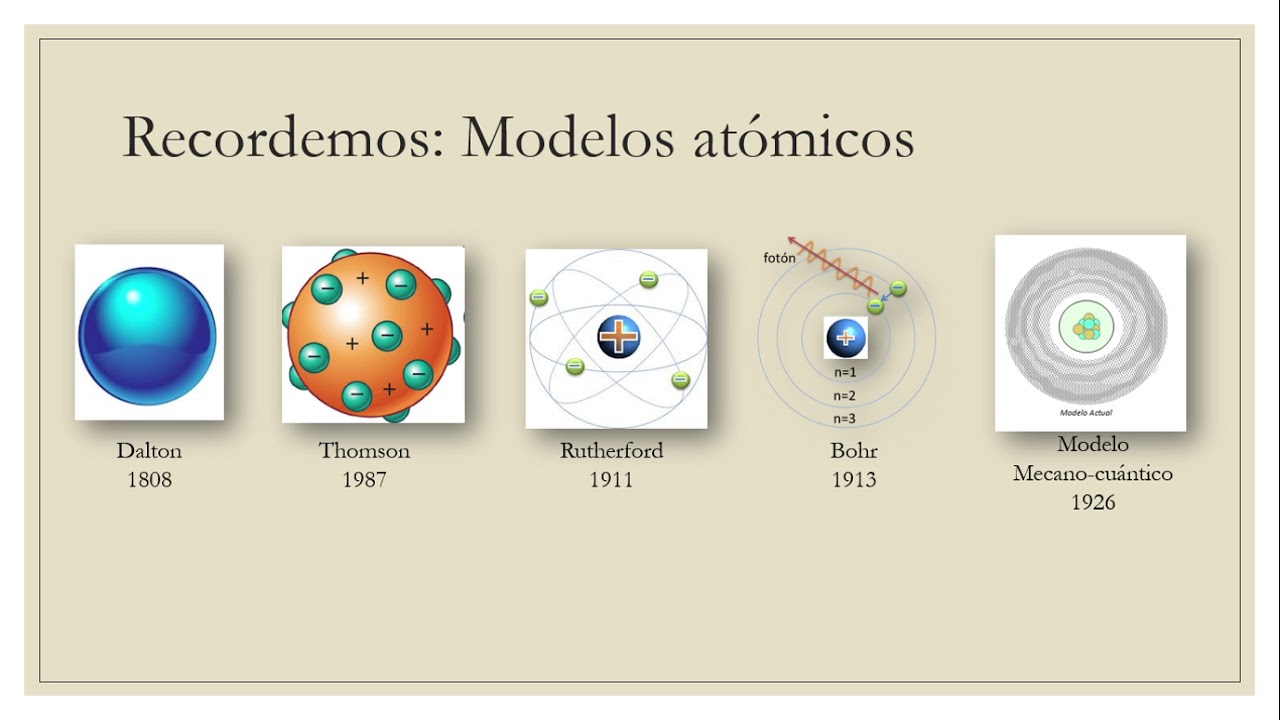
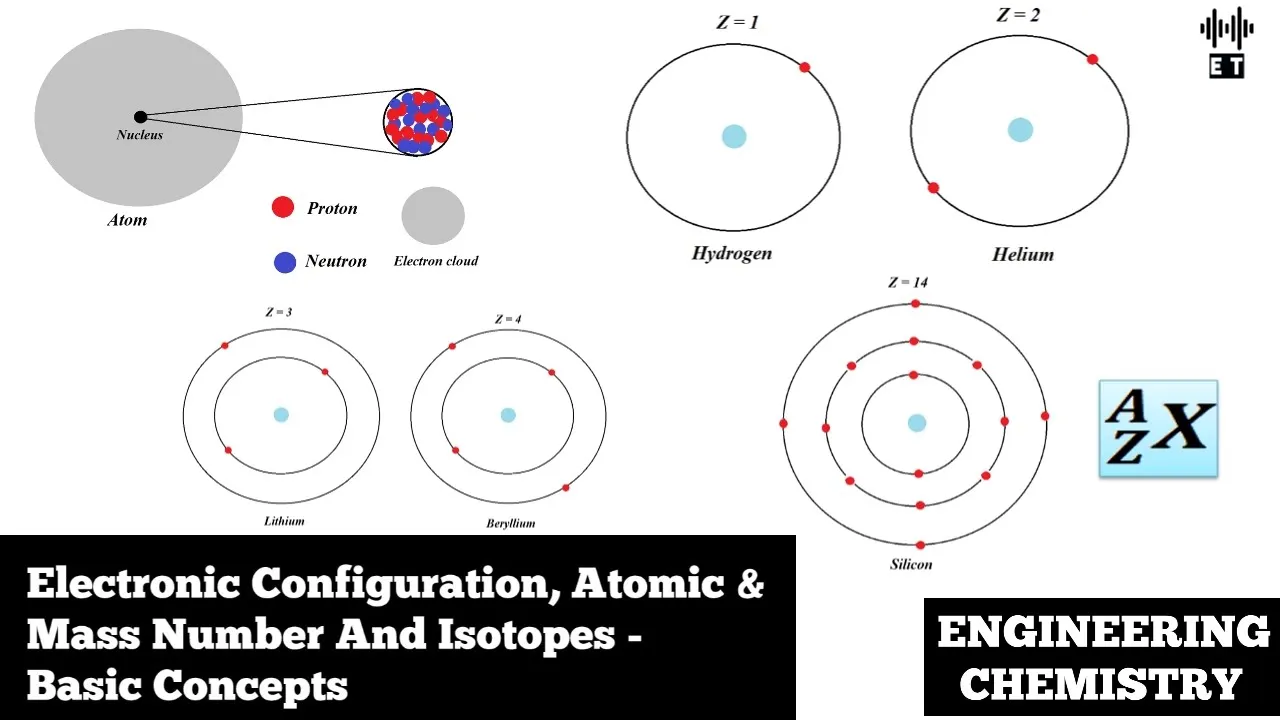
Added:Understanding of basic atomic structure, including the roles and locations of protons, neutrons, and electrons.
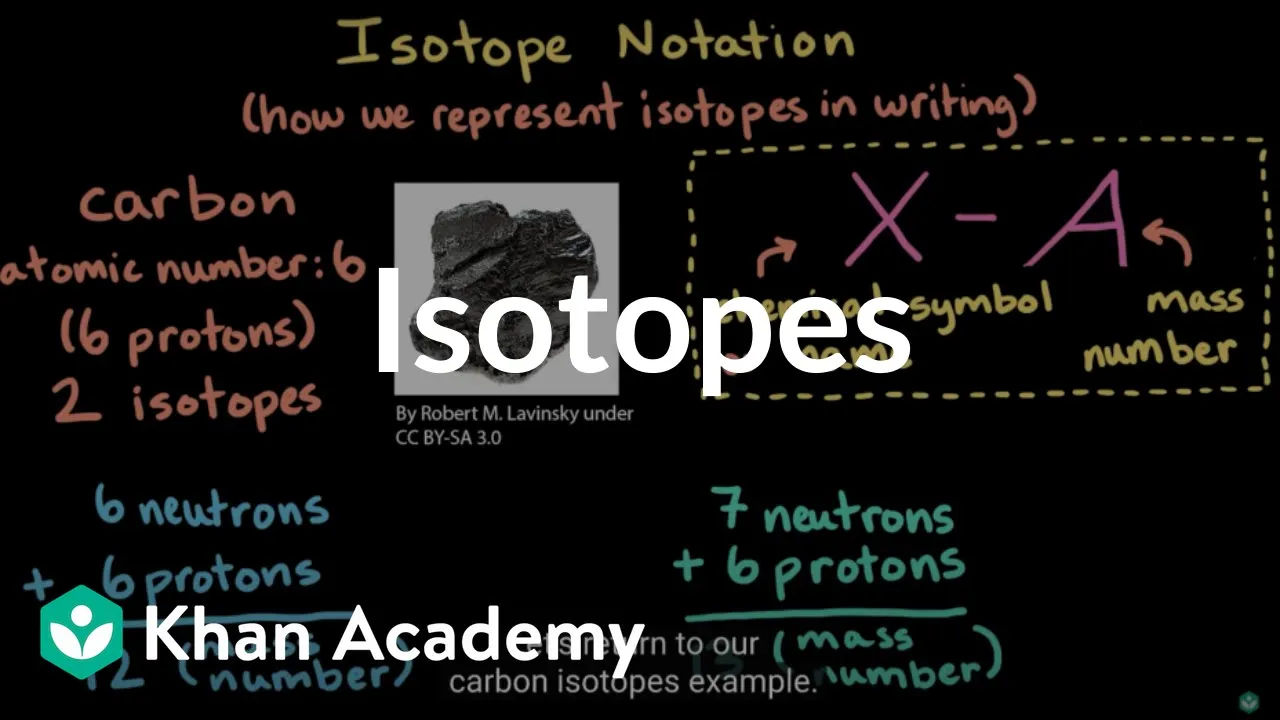
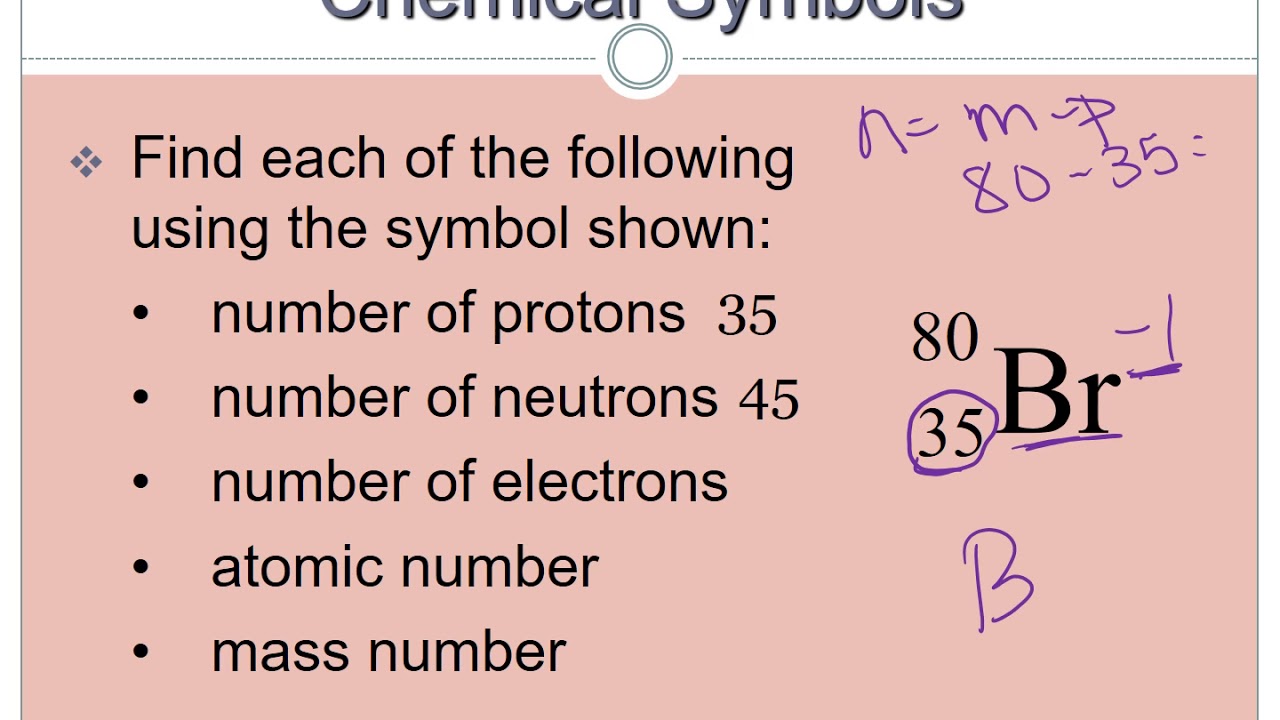
The concept of isotopes, specifically how atoms of the same element can have different mass numbers due to varying neutron counts.
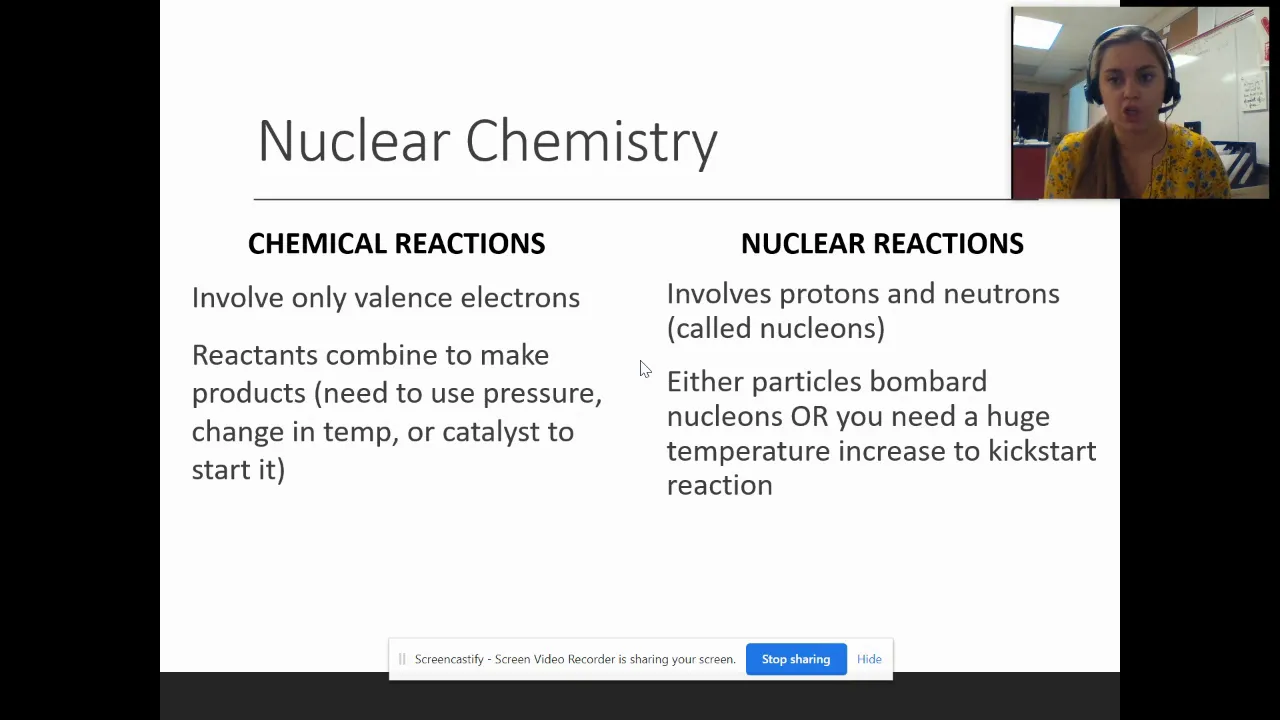
The fundamental difference between chemical reactions (which involve valence electrons) and nuclear reactions (which alter the nucleus).
Basic mathematical proficiency with exponents, ratios, and algebraic rearrangement, which are key to understanding decay rates.
The principles of nuclear fission and nuclear fusion, and how these processes differ from spontaneous radioactive decay.
Real-world applications of half-life, such as radiocarbon dating for archaeology and radiometric dating in geology.
Medical and industrial uses of radioisotopes, including diagnostic imaging (PET scans), cancer radiation therapy, and food irradiation.
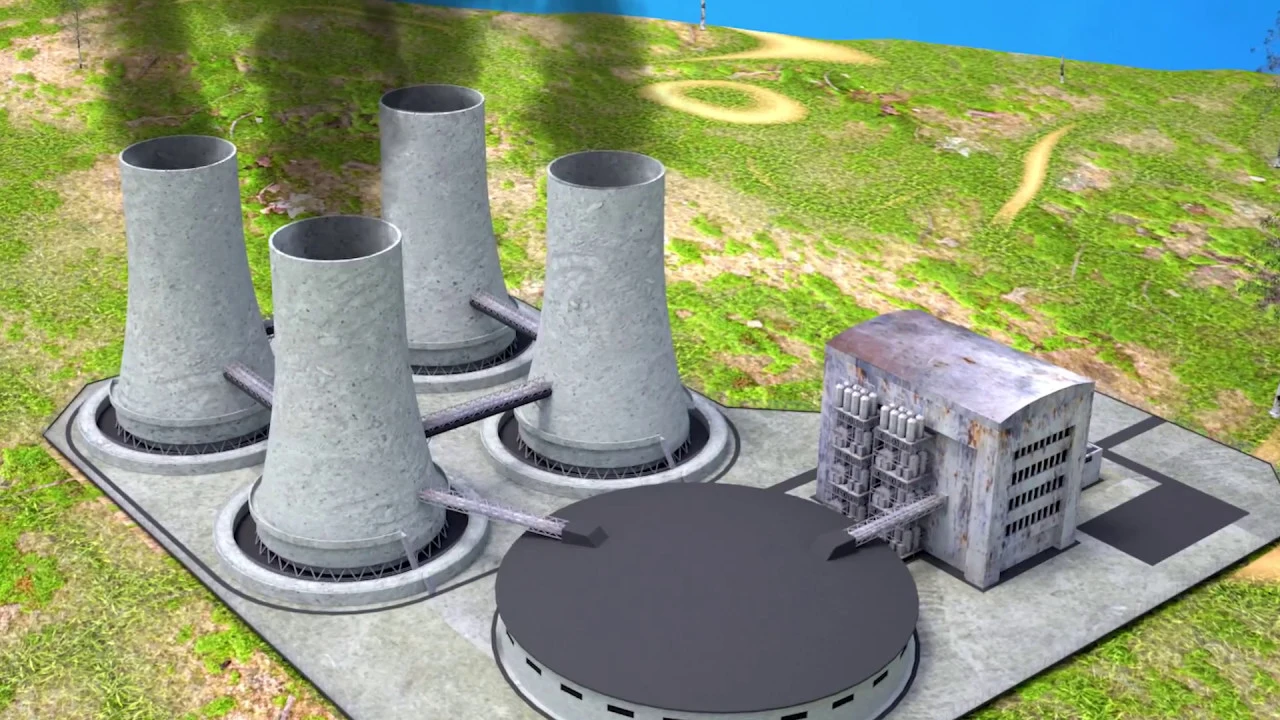
The operational mechanics of nuclear power plants, including control rods, moderators, and the challenges of radioactive waste management.
2.1M views21Klikes9:57Original Release: 2013-11-11
Apparently, it can turn you into a superhero or into a mutant zombie.
It's the plot device for probably half of the sci-fi movies made in the last 60 years and it's even the name of the song that welcomes you to the new age, to the new age, welcome to the new age.
Presumably this new age occurring after some kind of apocalypse.
As principles of chemistry go, few figure more prominently in the popular imagination than radioactivity, but at the same time few are as completely misunderstood.
Most people think of radioactivity as just some thing that mutates genes and melts faces off.
And yes, some forms of radioactivity can do those things.
But all the more reason to understand it, right?
And also we can harness it to produce lots of electricity to fuel our rock and roll lifestyles without contributing to global warming, though as Fukushima has taught us it comes with some of its own problems, which we'll explore more next episode.
Before we get into the nuts and bolts of nuclear chemistry, like nuclear fission and why it's so awesome as well as fusion and why it's so hard to do, we'll first get to know radioactivity.
What it is, what different kinds there are, and why you don't really need to fear it.
At least, you know, not all the time.
[Theme Music] So, radioactivity doesn't actually have a lot to do with chemistry in the sense that we've been talking about for most of this course.
Chemical reactions happen when an atom's outermost electrons do stuff, and the protons and neutrons and even the inner electron shells are usually completely unaffected.
But the protons and neutrons are still part of the atom, of course, still part of the chemicals, and their interactions are important.
When protons and neutrons get directly involved in reactions and their numbers do change, huge amounts of energy can be released.
Far more than by the transfer of electrons that we've learnted about in other reactions.
When these changes happen to the nucleus of an atom we rather logically call their study: Nuclear Chemistry.
Now it's probably occurred to you already that changing the nucleus of an atom can completely change it's nature.
Protons are the key to an atom's identity so any change that affects the number of protons will turn one element into a completely different one.
An alchemist's dream, right? Lead to gold.
So as you might expect, that's not something that usually happens in a typical chemical reaction.
The same can be said of that other component of the nucleus, neutrons.
Atoms of the same element that have the same number of protons, but different numbers of neutrons are isotopes.
So changes in the number of neutrons in an atom create different isotopes of the same element.
Both of these kinds of changes, changing one element to another, or changing one isotope to another are known as transmutation.
And it is, indeed, possible to transmute lead to gold.
Its just so ridiculously expensive that the tiny amounts of gold produced could never pay for the process.
But the very fact that it is possible, should clue you in that nuclear chemistry is an entirely different flavor of chemistry sauce.
Though, as with non nuclear chemistry, the changes that take place in a nuclear reaction all come down to the atom's desire to have what we all want in life, stability.
Just as atoms are most stable when their outermost electron orbitals are full of electrons, certain combinations of protons and neutrons make the nucleus more stable.
And just like when an atom gains or loses or shares electrons to stabilize it's outer shell, when the numbers of protons or neutrons aren't ideal, the nucleus releases some of them to try to reach a stable configuration.
When a nucleus decomposes in this way to form a different nucleus that's radioactive decay.
And just like with other chemical reactions we've talked about, we need to know more about a nuclear reaction than just what's reacting and what's being produced.
Probably the most important thing to learn is how much of the product is being made and how fast.
Now you've heard of half life, it's the measurement that tells us just that.
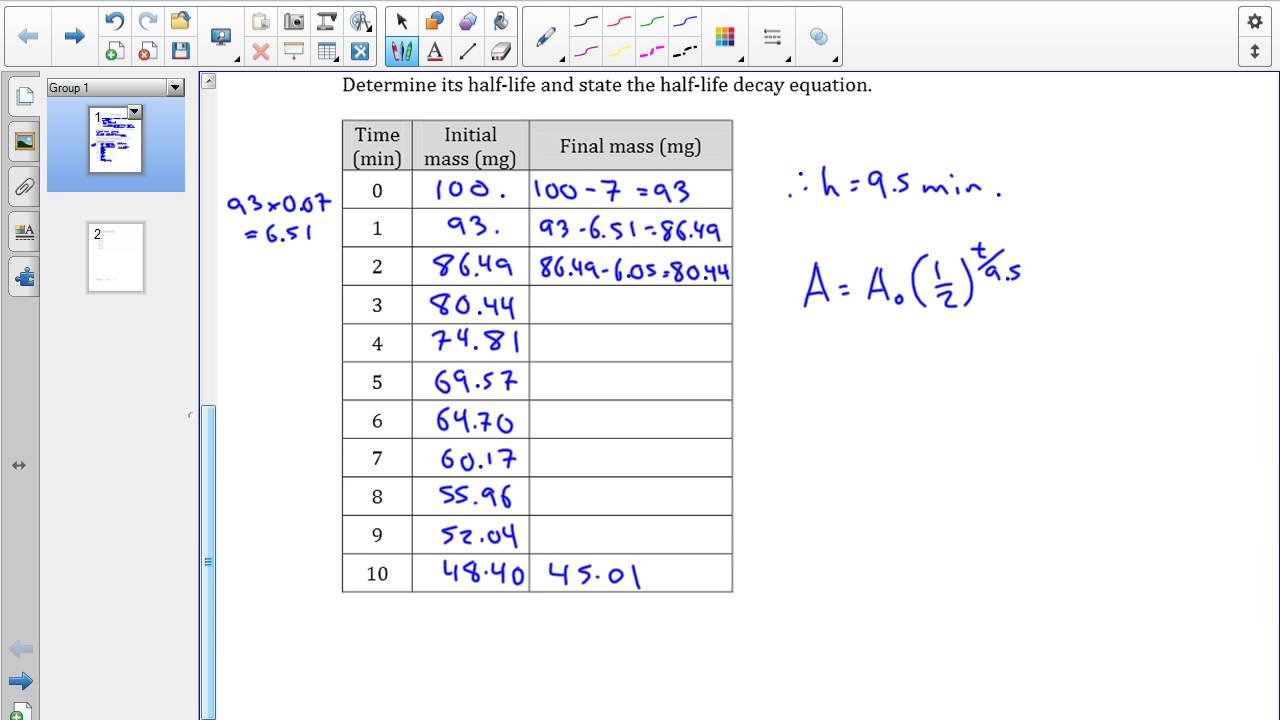
The time it takes for exactly one half of the sample to decay.
Different nuclei have different half lives.
By knowing the half life, we can calculate how much of a sample will be gone in a given amount of time.
For example, the half life of phosphorus-32 is 14.3 days.
So if you start with a 100 gram sample, after about 2 weeks you'll have 50 grams left.
After another 2 weeks, half of the remainder would decay leaving only 25 grams of undecayed phosphorus, and so on.
Now you might be asking, if radioactive elements are always decaying in to more and more stable isotopes that are eventually no longer radioactive, why are they still around at all?
Fascinating question, you seem to have brought your clever pants today.
Well it's fairly simple, given enough time all radioactive elements would decay in to non radioactive forms.
Even ultra stable bismuth, with it's half life longer than the age of the universe.
But elements with short half lives are around because they were decayed in to by elements that recently decayed in to them.
The chain of decay from the element originally produced in whatever supernova created them, to the elements that exist on Earth now last billions and billions of years.
Also, I should note that some radioactive isotopes like carbon-14 in the atmosphere are constantly being renewed by cosmic rays.
Now radioactive decay occurs when a nucleus has a higher energy level than a potentially more stable version.
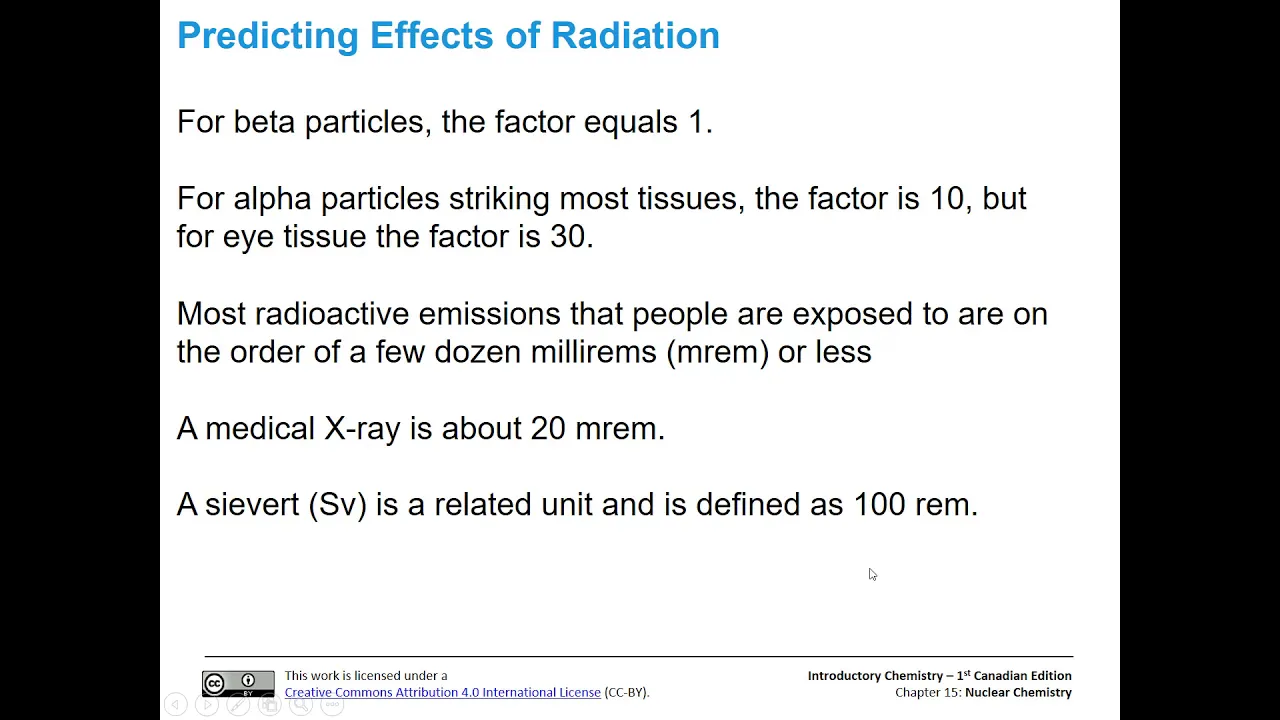
Typically this difference in energy is released as what's called ionizing radiation.
Which you know as radioactivity.
It's ionizing because it has enough energy to knock electrons out or add electrons to other atoms.
Essentially creating ions.
There are three general types of radioactive decay, each named for exactly what is released from the nucleus as it decays.
Let's take a look at what may be the most famous radioactive element, uranium.
By far the most common naturally occurring form of uranium is the isotope uranium-238.
More than 99% of the natural uranium in the world is in this form.
U-238 spontaneously decays in to thorium-234, in a process that releases something called an alpha particle.
This is called alpha decay and the particle that it emits is basically the same as a helium nucleus: two protons and two neutrons.
We even describe it that way when writing it.
So right away you can see that the math checks out when it comes to the protons and neutrons.
92 minus 2, is 90. And 238 minus 4, leaves you with 234.
But you'll note, that we don't write the charges.
The helium nucleus obviously has a plus 2 charge, and the thorium atom would have a negative charge as well.
While its not incorrect to write them, these charges are often omitted to emphasize what's going on in the nucleus.
Now alpha particles have relatively low energy, they're pretty heavy as particles go.
So while I try not to make a habit of walking around with a hunk of uranium in my pocket, alpha particles can be stopped by nothing more than a sheet of paper or cloth.
The second type of radioactive decay is beta decay, which simply emits electrons.
It has somewhat higher energy than alpha radiation, but it can still be stopped by a sheet of aluminum foil or the top layers of your skin.
So that thorium-234 that formed when uranium underwent alpha decay?
It can continue to decay on its own, and when it does it undergoes beta decay.
Releasing an electron and an atom of xenon.
Notice that again, the way we write this is a little different.
Even though the thorium emits an electron we don't use the usual symbol for electrons.
Instead we write it in nuclear notation form, with the mass number at top and the atomic number at the bottom.
Since its an electron, and not a proton, we put a negative 1 for the atomic number.
That probably seems a little weird right now, but next week when we talk about nuclear equations, you will see why it's useful.
The third type of decay, is a little different, because it only emits energy, not a particle.
Its called gamma decay, and it releases electromagnetic radiation similar to visible light, or UV radiation, but higher on the energy scale.
Because it's just energy, gamma radiation has no mass and contains no protons, neutrons, or electrons.
So it's written with two zeros.
This form of radiation is often released when electrons transition from an unstable excited state, to a more stable state that has a lower energy. That's called the ground state.
Depending on how much energy the electron loses, the extra energy can be released in the form of visible, or ultraviolet light, x-rays, or gamma waves.
Let's take the example of nickle-60.
Imagine there's an atom of nickle-60 with one or more of its electrons in an excited state.
That's what the little asterisks designates.
Atoms can get to this state when they are themselves the products of radioactive decay, or if they get bombarded with radiation from other reactions pushing their electrons in to a higher energy level.
Now when all those electrons drop down to the ground state, that atom is going to release some gamma radiation.
This kind of transition can also take place where other kinds of nuclear reactions are going on.
So gamma decay often occurs along with some other form of decay too.
So for example, if that uranium atom is at an excited state when it decays in to thorium, it can simultaneous release gamma waves as well as the alpha particle I already mentioned.
Now you might have heard of gamma radiation more than the other kinds I've mentioned because it can actually do some serious harm.
Like potentially turning you in to a giant green rage monster that doesn't obey the laws of conservation of matter.
Unlike the particles emitted by other kinds of radiation, gamma rays can penetrate your skin, your cell membranes, and ultimately the organelles within your cells.
So gamma radiation can not only cause skin burns, nausea, other symptoms we associate with radiation poisoning, it can also alter your DNA causing mutations and cancer.
OK, but to turn the frown upside down.
There's one more type of radioactivity that I'm happy to say is really simple.
It's called spontaneous fission and it occurs when an atom simply breaks in to 2 smaller atoms without any outside help.
This occurs at a ridiculously slow rate in most cases.
In fact, the only substances that does it at a rate that sufficient to serve any purposes is Californium-254.
And that purpose is to produce neutrons for use in other nuclear reactions.
But we'll talk more about that when we go in to fission, fusion, and how scientists use and control nuclear reactions.
In the meantime, thank you for watching this episode of Crash Course Chemistry.
If you listened carefully, you learned what radioactivity really is.
And about transmutation among elements and among isotopes.
And how to make calculations based on an elements half life.
You also learned about different types of radioactive decay: alpha, beta, and gamma.
And about spontaneous fission.
This episode was written by Edi González and Blake de Pastino.
It was edited by Blake de Pastino. And our chemistry consultant is Dr. Heiko Langner.
It was filmed, edited, and directed by Nicholas Jenkins.
The script supervisor was Michael Aranda, who is also our sound designer.
And our graphics team is Thought Café.
Up Next
19:50
Kinetics of Nuclear Decay: Half-Life & Radiocarbon Dating
@ChadsPrep
16.5K views•2022-04-13
83:56
Biocatalysis and Catalysis in Islatravir Synthesis | Merck Webinar
@SCIwheresciencemeetsbusiness
675 views•2020-10-08
12:34
Aldol and Claisen Reactions: Organic Chemistry Explained
@crashcourse
75K views•2022-01-26

17:31
Edible Water Bottles: A DIY Guide to Sodium Alginate Spherification
@ryan
10.5M views•2019-06-21
Related Study Plans & Knowledge Roadmaps
Structured learning paths in Chemistry
chemistry
Nuclear Chemistry: Decay, Meds & Fuel Cycle
01Introduction to Nuclear Structure and Radioactivity
02Decay Dynamics and Kinetics
03Radiation Interaction and Detection
+ 2 more learning modules
24h5 modules
Explore Roadmap
chemistry
Supramolecular Chemistry: Forces & Machines
01Foundations of Chemical Bonding and Intermolecular Forces
02Introduction to Host-Guest Chemistry
03Thermodynamics and Dynamics of Self-Assembly
+ 2 more learning modules
16h5 modules
Explore Roadmap
chemistry
Photochemistry: Excited States & Reactions
01Foundations of Light-Matter Interactions
02Molecular Orbitals and Electronic States
03Photophysical Processes and Jablonski Diagrams
+ 2 more learning modules
18h5 modules
Explore Roadmap
chemistry
Coordination Chemistry: Bonding & Properties
01Introduction to Transition Metals and Ligands
02Crystal Field Theory (CFT) and Geometry
03Magnetic Behavior and Spin States
+ 2 more learning modules
14h5 modules
Explore Roadmap