













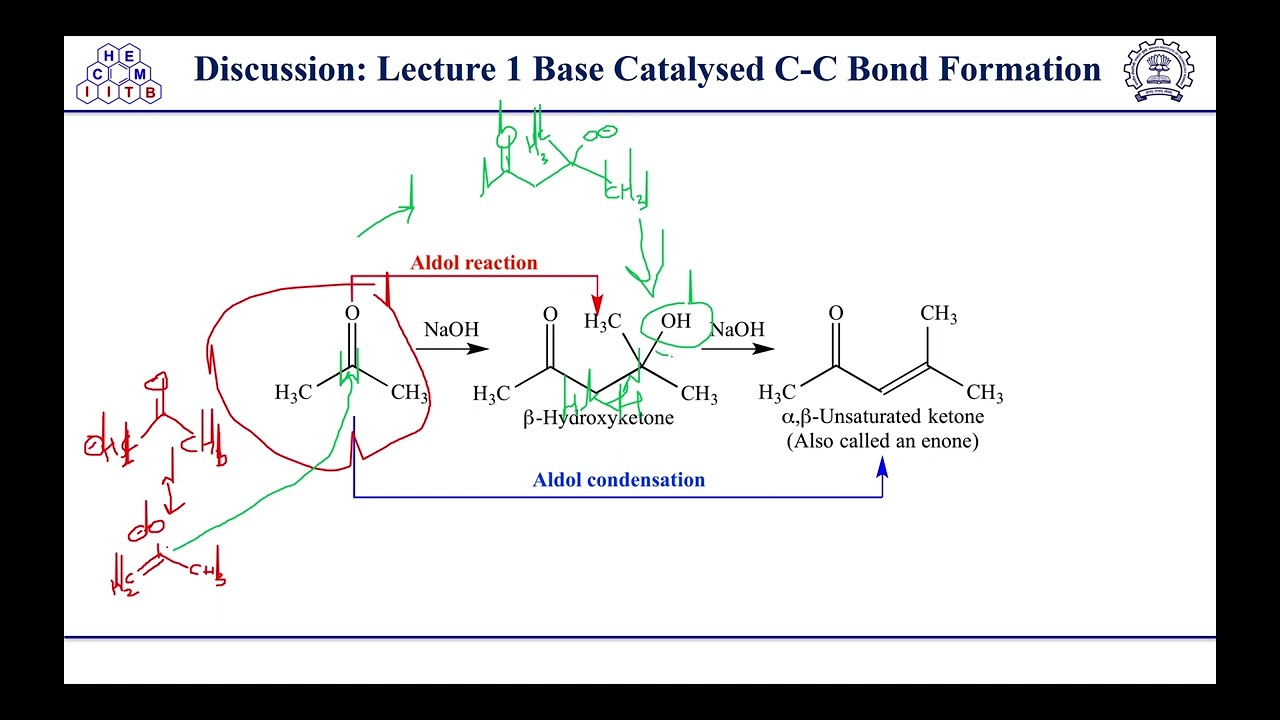






Aldol reactions combine two carbonyl compounds (aldehydes or ketones) to form carbon-carbon bonds through enol/enolate formation and nucleophilic addition, with base-catalyzed versions proceeding via E1cb elimination to produce unsaturated carbonyls; Claisen condensation achieves similar carbon-carbon bond formation between esters using stoichiometric base, yielding beta-keto esters, and both reactions are essential tools in organic synthesis for building complex molecules like penicillin.
Aldol and Claisen Reactions: Organic Chemistry Explained
Added:Structure and reactivity of the carbonyl group, specifically distinguishing between nucleophilic addition and nucleophilic acyl substitution.
Acidity of alpha-hydrogens and the generation of enols and enolate ions under basic or acidic conditions.
Fundamental acid-base chemistry, including the comparison of pKa values of carbonyl compounds and various bases.
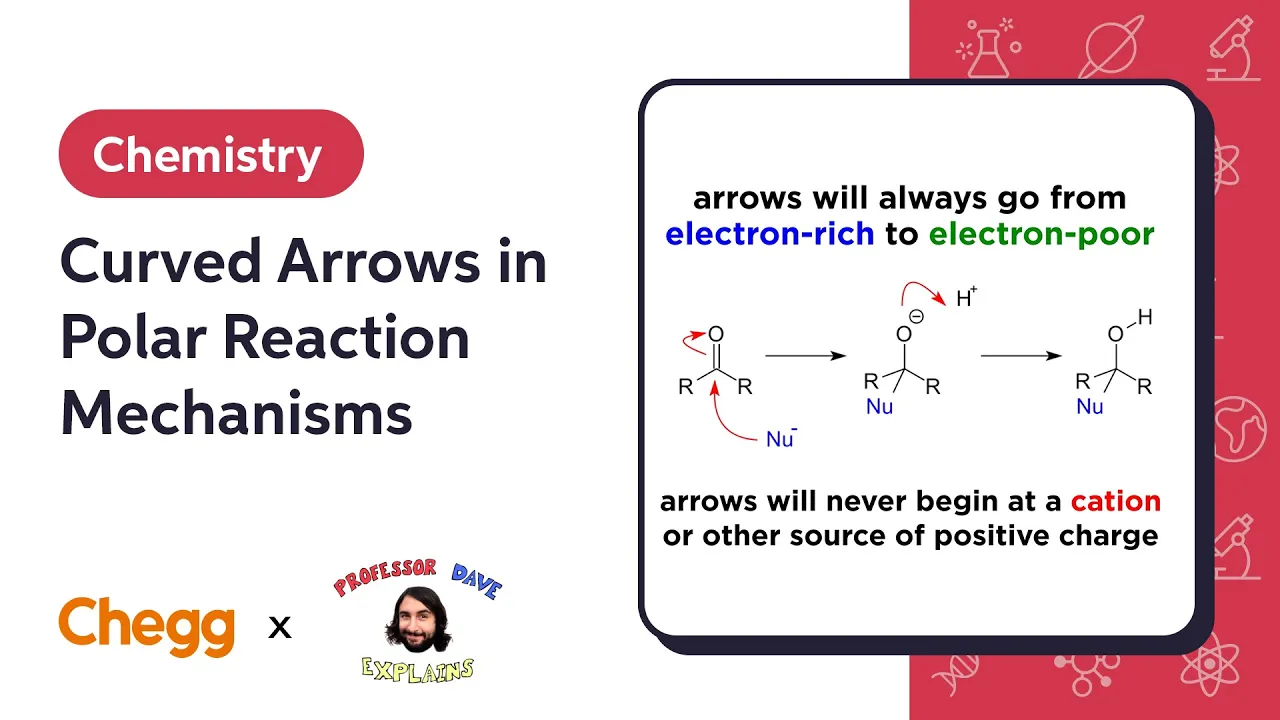
Basic curved-arrow electron pushing formalisms for nucleophilic attack and proton transfer steps.
Mixed (crossed) Aldol and Claisen reactions, and how to control selectivity using non-enolizable carbonyls or pre-formed enolates.
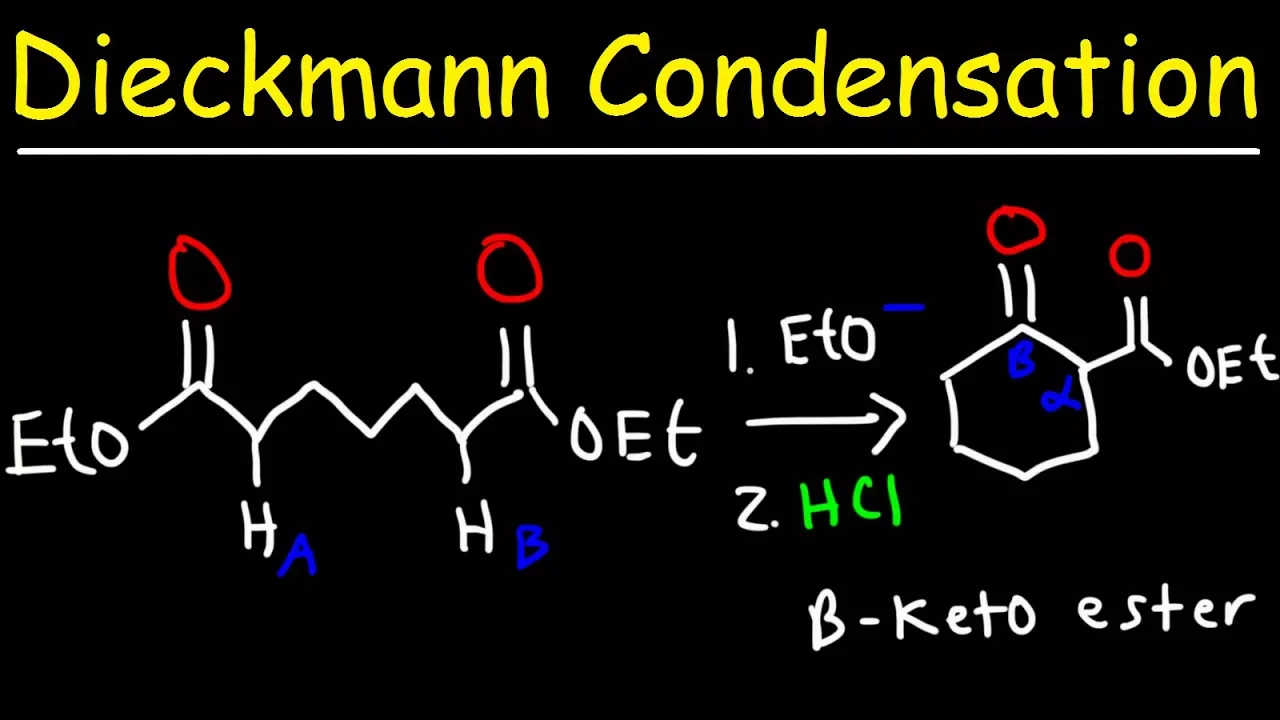
The Dieckmann condensation, which is the intramolecular variant of the Claisen condensation used to synthesize five- and six-membered cyclic beta-keto esters.
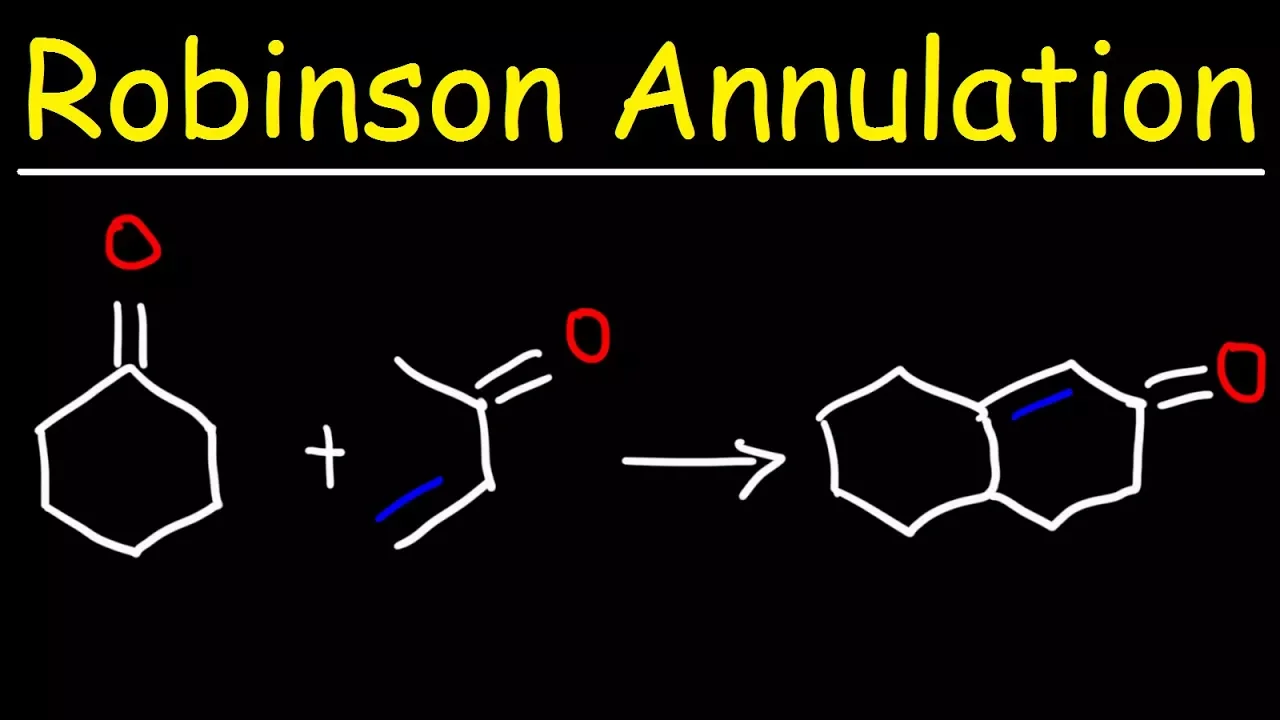
The Robinson Annulation, a key synthetic cascade reaction that combines a Michael addition with an intramolecular Aldol condensation.
Directed aldol reactions using strong, sterically hindered bases like Lithium Diisopropylamide (LDA) to control kinetic versus thermodynamic enolate formation.
Biosynthetic pathways utilizing these mechanisms, such as fatty acid synthesis and the condensation of Acetyl-CoA in the Citric Acid Cycle.
75K views1.3Klikes12:34Original Release: 2022-01-26
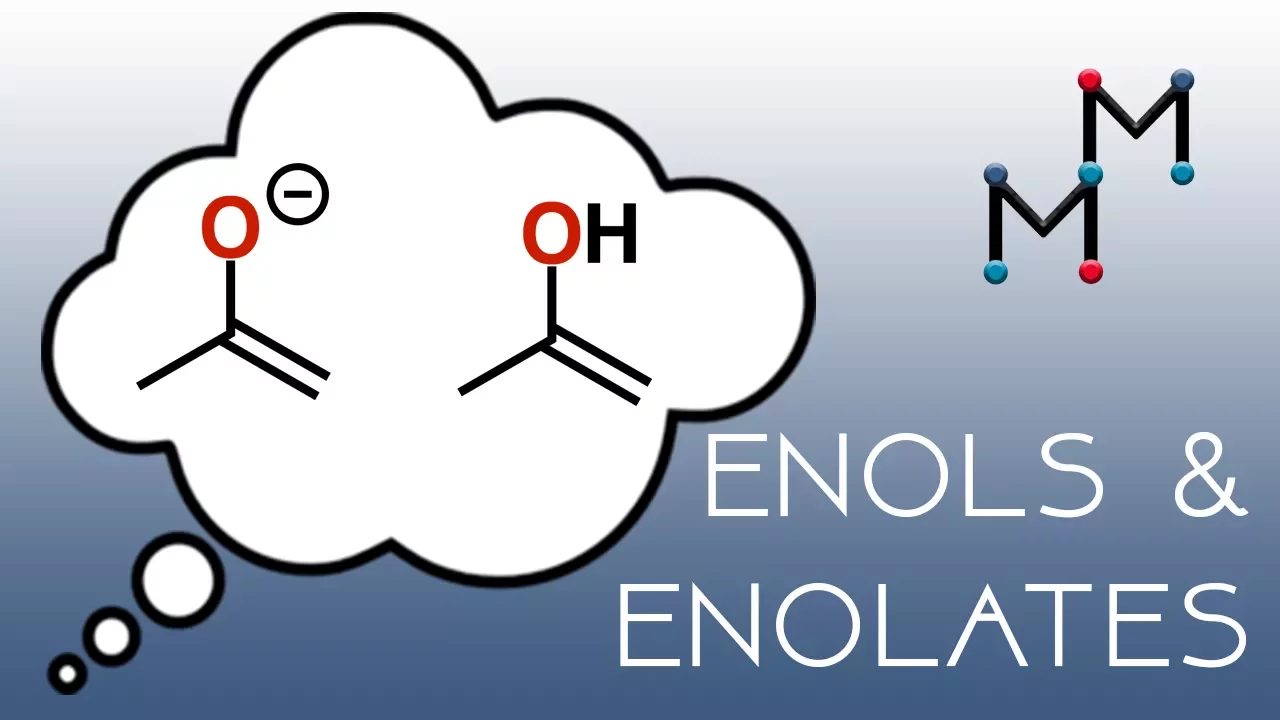
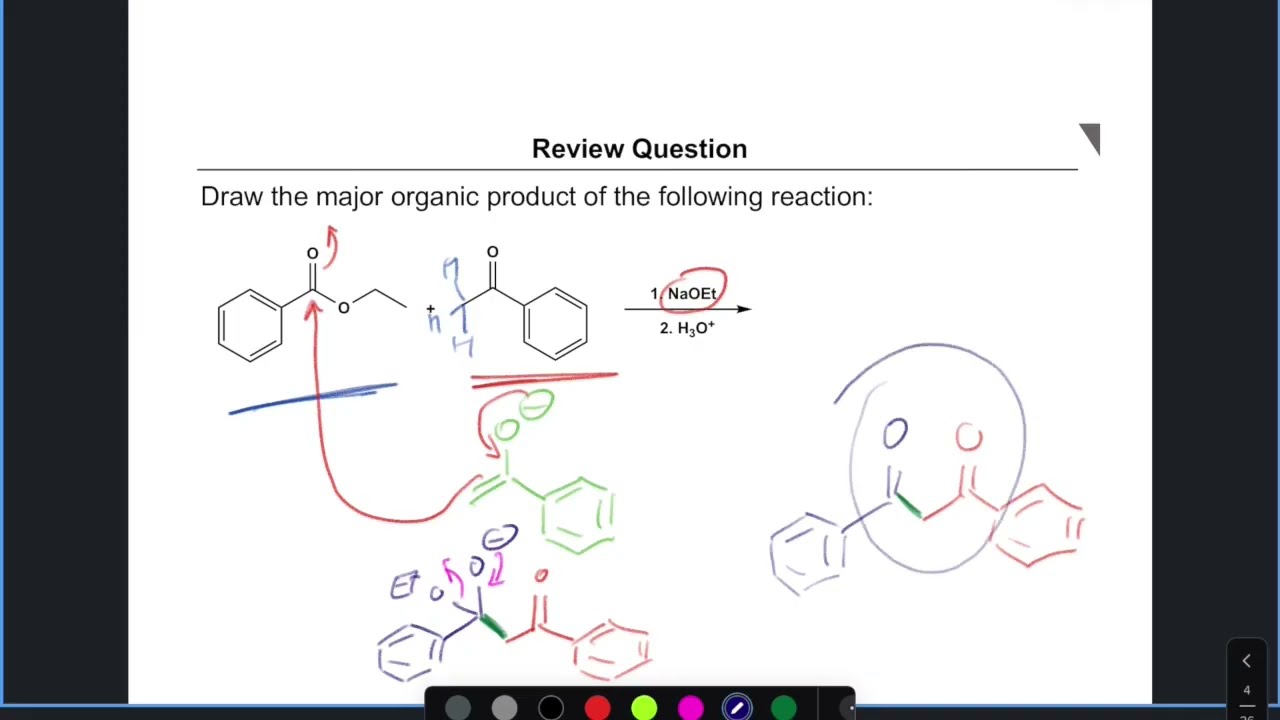
you can review content from crash course organic chemistry with the crash course app available now for android and ios devices hi i'm daboki chakravarti and welcome to crashcourse organic chemistry organic chemistry sure gives your brain a good workout and glucose is the primary energy source used by our brains so without it we'd be in big big trouble thankfully our brains can get all the glucose they need through chemistry one particularly important process is called gluconeogenesis which helps us maintain the necessary levels of blood glucose when we haven't just eaten a meal the whole process of gluconeogenesis is pretty interesting if you're a biochemistry nerd but a key step that's relevant to this course is an aldol reaction in this aldol reaction an aldehyde and a ketone with three carbons each join to make a six carbon sugar molecule so they're forming tasty carbon-carbon bonds and we'll be exploring more of these kinds of reactions in this episode [Music] an aldol is a ketone or aldehyde with a beta-hydroxy group in other words it's a molecule with a carbonyl functional group a couple of carbons away from an alcohol group aldols are the product of aldol reactions which are another way of forming carbon-carbon bonds in organic chemistry essentially we combine two simpler carbonyl compounds into a bigger molecule this reaction was discovered independently by the french chemist charles adolf wertz and the russian chemist and composer alexander borodin in the late 1800s the l part of the name comes from the fact that the reaction involved two aldehydes before we figured out ketones could be involved too and the old part comes from the alcohol because the product is a beta-hydroxycarbonyl compound as always we want to understand the mechanisms at work not just memorize reactions aldol reactions can be acid catalyzed or base catalyzed and they begin by converting an aldehyde or ketone to an enol in acid or enolate in base like we did in episode 43. next the enol or enolate attacks another aldehyde or ketone in an aldol addition step and then to finish it off water is removed in a step called as you might guess dehydration the overall process of two carbonyls coming together with loss of water is called aldol condensation in this episode we're only going to join two identical aldehydes or ketones it's possible to join two different carbonyl molecules but we're saving that for next time with that being said let's take a look at some simple examples first an aldol reaction under basic conditions as we saw in the last episode a base steals a proton from the alpha carbon of the carbonyl this gives us an enolate ion with a resonance stabilized negative charge this enolate is only formed in small amounts so next an enolate molecule attacks the carbonyl of one of the ketones in the sea of acetone molecules which are acting as electrophiles and once this addition step is done we formed a carbon-carbon bond the now-negative oxygen of the alkoxide swipes a proton from some nearby water now we've got an aldol product with a carbonyl and an alcohol but we're not quite done at this point the aldol product will often undergo dehydration and remember this is a base catalyzed reaction which means the base is reformed at the end this dehydration is a little tricky so let's look at it carefully to start the base nabs one of the alpha hydrogens in between the carbonyl and alcohol groups and we form an enolate again but now it's the enolate of the aldol product then hydroxide is eliminated leaving us with an unsaturated carbonyl compound wait a second hydroxide is a bad leaving group right or at least the bokeh of the past said so so how are we getting away with this well it's what's known as an e1cb elimination which happens in multiple steps as a quick reminder we've already met a couple of elimination mechanisms e1 and e2 the e2 mechanism occurs in one step and the e1 mechanism has two steps loss of a leaving group followed by deprotonation and the rate depends on the concentration of the substrate e1cb joins this family as a special type of e1 mechanism so the hydroxide leaving doesn't affect the reaction rate this mechanism typically happens when we can make a stabilized anion on carbon like adjacent to a carbonyl and have a poor leaving group on the carbon next to the anion like hydroxide first the base grabs one of the acidic alpha hydrogens and forms a new enolate in the stabilized anion there's a buildup of negative charge on the molecule then the lone pair of electrons moves to the neighboring atom kicking out the leaving group and forming a double bond in general e1cb mechanisms can be drawn like this ewg and x are the electron stabilizing groups and lg stands for leaving group so e1cb is the cherry on top of a base catalyzed aldol reaction we don't have anything more to say about those for now time for the acid-catalyzed version as we saw in the last episode again the carbonyl oxygen is protonated then the alpha carbon is deprotonated by the conjugate base of our acid and we get an enol now another protonated ketone enters the mix with its electropositive carbon vulnerable to nucleophilic attack the electrons push down from the oxygen kicking out the double bond of our nucleophilic enol which makes a carbon-carbon bond with our protonated ketone that's our aldol addition step then the protonated carbonyl group is deprotonated and voila we have a neutral aldol product but again we're not quite done there's also a potential elimination step here especially if the aldol product is heated in these acidic conditions there's a few possible mechanisms for the elimination for example the hydroxyl group could get protonated first then water might leave on its own in an e1 mechanism followed by a deprotonation it's also possible to eliminate in one step through the e2 mechanism a third possibility is that the reaction mechanism goes through a more complex mechanism involving an enol this beta elimination uses a little push from the carbonyl kind of like the e1cb but this time we're going through an enol instead of an enolate speaking of which it's been a little while since we've looked at our penicillin v mold medicine map which we started in episode 30. it's the perfect time to revisit that synthesis because it has an e1cb step too if we compare the starting material with the product we'd like to make we can see that we have to get rid of two functional groups a hydroxyl from our acid and a chloride we also want to join the two oxygens up to give us an ester type linkage and add some double bonds this is one of the most complicated sequences we'll look at in this series but we can puzzle through some of it using the rules we've learned so buckle up the acetic anhydride reactant has a built-in leaving group acetate and it can even react with weak nucleophiles looking at our molecule let's think about the most nucleophilic spot it's the carboxylic acid so the acetic anhydride reacts with our carboxylic acid forming a new anhydride in the first step now we've put a good leaving group on our carboxylic acid which sets us up for an intramolecular reaction the amide oxygen is pretty electron rich because of amide resonance so that attacks the acid anhydride carbon our leaving group acetate again is kicked out and we get the five-membered ring we see in our product more or less except we need to lose hcl we still have a basic molecule in here the acetate that hydrogen next to an electronegative nitrogen plus a carbonyl is pretty acidic and deprotonation even makes a bonus aromatic ring intermediate so we make an enolate then the chlorine is eliminated in an e1cb step it's just one extra double bond away from what we saw before more substituted double bonds are more stable so a kind of brain bendy isomerization occurs and all our double and single bonds are where we want them hooray now as exciting as penicillin is there's another reaction we still have to cover as you may have guessed from the title of this episode we've got the basics of aldol reactions down but there's a similar reaction called the claisen condensation it's named after the german chemist rainer ludwig klaizen he was born in 1851 began studying chemistry in 1869 was a military nurse and then returned to academia and worked in kekule's lab for a while yes calculated the benzene guy anyway in the claisen condensation an ester joins with either another ester or another carbonyl compound in the presence of a strong base once again we're making a carbon-carbon bond the ultimate product of this claisen reaction is a beta keto ester we don't want to end up with a horrible mess so we need to use a base that won't get involved in some sort of nucleophilic substitution or addition reaction with a carbonyl carbon the alkoxide salt of the alcohol that's kicked out at the end of the reaction is a good option so in this example we're using sodium ethoxide as our strong base because the alcohol that gets kicked out is ethanol first the oxygen of the ethoxide grabs one of the alpha hydrogens from the ester which gives us an enolate the next bit looks similar to other reactions we've seen the enolate acts as a nucleophile and attacks the carbonyl carbon of another ester molecule the ethoxide group is kicked out and promptly picks up an alpha hydrogen to form the alcohol now we have a resonance stabilized carbon ion that gets protonated to form the neutral product when some acid is added and that's a claisen condensation in a nutshell unlike in the aldol reaction where the base was catalytic and remade at the end claisen condensation needs a stoichiometric amount of base the deprotonation of the beta-ketoester at the end is effectively pulling the whole reaction along so we need enough bass for that to happen we also need our enolizable partner to have a minimum of two protons to start so the deprotonation can happen the reaction we just did involved two identical esters but we can also do a cross claisen condensation where we have two different starting molecules in this case we need to deliberately choose one molecule that can form an enolate and one that can to avoid a messy mixture of four different products basically we need to make sure that one of the substrates doesn't have alpha hydrogens also we set this up with an excess of the non-enolizable reactant that way there's a better chance that the enolate will react with the non-enolizable substrate which is what we want rather than react with another molecule of itself which we don't overall the mechanism of a cross claisen condensation is the same as a claisen condensation and we end up with a carbonyl group beta to our ester in this particular example we've made a diester now that we have this reaction in our tool kit we're heading back to our mold medicine map for another loop of the roller coaster so check your safety harness to do a cross cleason condensation on this penicillin precursor let's take a peek at the alcohol that's kicked out at the end so for our strong base we'll use the alkoxide salt sodium tert-butoxide and our other reactant is tert-butyl formate in the mechanism sodium tert-butoxide plucks the acidic hydrogen off the alpha carbon in between the nitrogen and the ester next the nucleophilic enolate we've just formed attacks the carbonyl carbon in the tert-butyl formate the tetrahedral intermediate collapses and the tert-butoxide is kicked out the final deprotonation makes another enolate and once we protonate that we're left with a neutral product and a shiny new carbon-carbon bond two new reactions and two new steps in our penicillin v synthesis not bad for one episode in this episode we learned an aldol product is a ketone or aldehyde with a beta-hydroxy group aldol reactions join together two aldehydes or ketones and can be acid or based catalyzed the aldol condensation involves an elimination step which in base is an e1cb reaction and the claisen condensation is used to join up esters there are even more enols and enolates coming up in the next episode as we learn crossed aldol reaction and conjugate edition until next time thanks for watching this episode of crash course organic chemistry if you want to help keep all crash course free for everybody forever you can join our community on patreon
Up Next
9:32
Diels-Alder Cycloaddition: Mechanism and Stereochemistry
@ProfessorDaveExplains
181.9K views•2015-01-05
83:56
Biocatalysis and Catalysis in Islatravir Synthesis | Merck Webinar
@SCIwheresciencemeetsbusiness
675 views•2020-10-08
9:57
Nuclear Chemistry: Radioactive Decay & Half-Life Explained
@crashcourse
2.1M views•2013-11-11
17:31
Edible Water Bottles: A DIY Guide to Sodium Alginate Spherification
@ryan
10.5M views•2019-06-21
Related Study Plans & Knowledge Roadmaps
Structured learning paths in Chemistry
chemistry
Nuclear Chemistry: Decay, Meds & Fuel Cycle
01Introduction to Nuclear Structure and Radioactivity
02Decay Dynamics and Kinetics
03Radiation Interaction and Detection
+ 2 more learning modules
24h5 modules
Explore Roadmap
chemistry
Supramolecular Chemistry: Forces & Machines
01Foundations of Chemical Bonding and Intermolecular Forces
02Introduction to Host-Guest Chemistry
03Thermodynamics and Dynamics of Self-Assembly
+ 2 more learning modules
16h5 modules
Explore Roadmap
chemistry
Photochemistry: Excited States & Reactions
01Foundations of Light-Matter Interactions
02Molecular Orbitals and Electronic States
03Photophysical Processes and Jablonski Diagrams
+ 2 more learning modules
18h5 modules
Explore Roadmap
chemistry
Coordination Chemistry: Bonding & Properties
01Introduction to Transition Metals and Ligands
02Crystal Field Theory (CFT) and Geometry
03Magnetic Behavior and Spin States
+ 2 more learning modules
14h5 modules
Explore Roadmap