




![[고성국TV 생방송 26년 5월 5일 (화) 생방송] 정부-여당 견제, 보수결집이 시작됐다](https://i.ytimg.com/vi/7VVtMQadifA/maxresdefault.jpg)
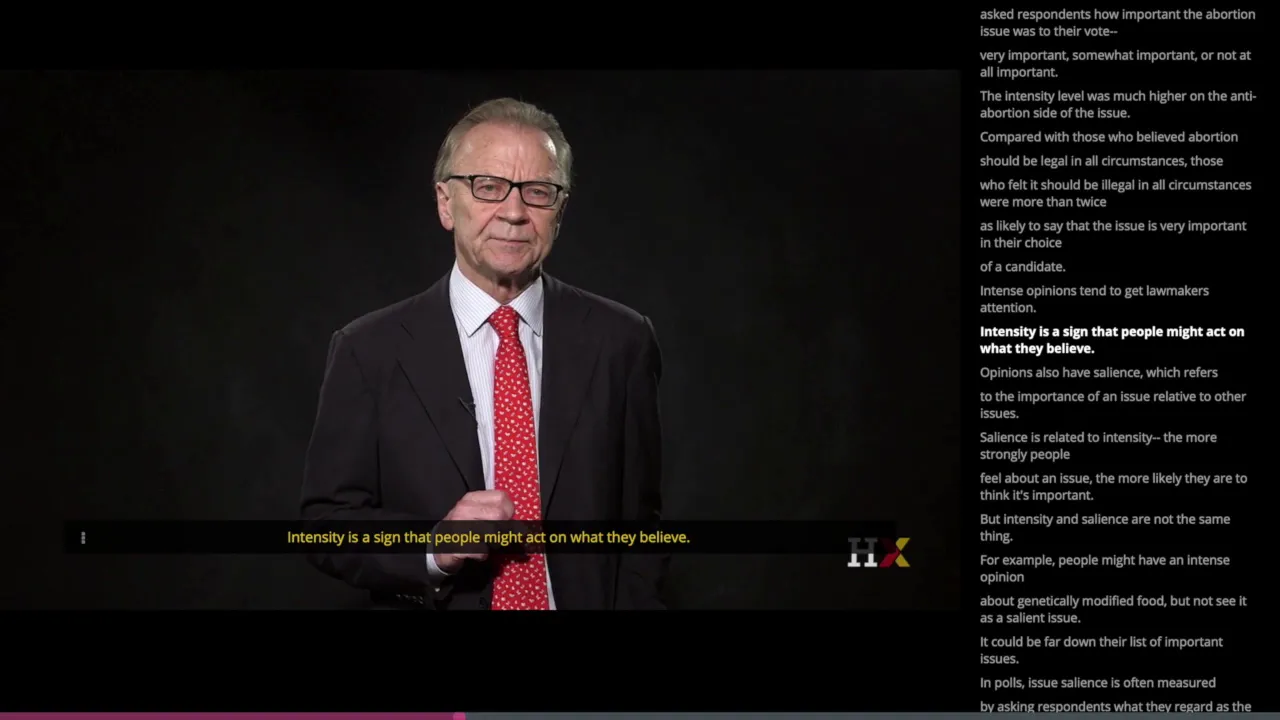








Mainstream media institutions have failed to prioritize the preservation of democracy as a core obligation, instead prioritizing balance and avoiding bias, which has contributed to public cynicism and distrust; effective media should actively defend democratic institutions and free elections rather than treating this as optional.
Media's Role in Protecting Democracy: A Political Analysis
Added:The theoretical role of the 'Fourth Estate' and expectations of a free press in a democratic society.
Basic concepts of political polarization, including partisan sorting and the rise of ideological echo chambers.
Fundamentals of polling methodology, including sample selection, margin of error, and how public opinion data is gathered.
Advanced strategies for identifying and combatting algorithmic bias and digital misinformation on social media platforms.
Comparative analysis of public service broadcasting versus commercial media systems and their respective impacts on democratic health.
Policy frameworks and legislative debates surrounding Section 230, platform regulation, and media antitrust laws.
Innovative developments in political polling, such as multi-level regression with poststratification (MRP), to correct for declining response rates.
306.4K views4.9Klikes42:42Original Release: 2024-06-14
should the media care about preserving democracy Dan Fifer of crooked media is here to discuss that polling Donald Trump and so much more this is defending democracy I'm Mark Elias let's get started Dan Fifer welcome to defending democracy it's great to be here good to see you man so um Dan people probably uh will be surprised not at how old I am but uh you and I and I won't give away your age but you and I first met uh in 2002 I think it was Y in uh South Dakota on a senate campaign uh and you were at that point point you know kind of working for senators in South Dakota people don't realize that we had two Democratic senators the time in South Dakota you also I think worked for Evan B uh I I worked for Evan B after that yep yeah and and I wonder um if you have a perspective you know we don't really talk about winning States like South Dakota and Indiana anymore and I just like as you look back what how do you make sense of of kind of how politics has changed in that 20y year period Well it's a couple things I mean the main thing is polarization right in for a long time in those States because you know we had two Democratic senators in South Dakota two Democratic senators in uh North Dakota we had Democratic senators in Montana right all you know all all across the South Arkansas is it you were there were a lot of split ticket voters people who would vote for a Dem you know there are a lot of people in 1996 when Tim Johnson who I worked for back then was elected to the Senate who voted for who voted for Bob Dole for president and Tim Johnson for Senate and that that the number of Voters who do that now has just shrunk uh to basically a handful which is why we have so few States uh that have that go you know Republican or in the presidential and have Democratic senators and vice versa it's just it's largely polarization and that's we've been on that trend for a while but it's driven also by changes in media and you know the presence of Fox News as a dominant force in rural States um but it's it it's not necessarily something Democrats did wrong and Republicans did right it's been part of a broader Trend across across politics yeah so I mean I you anticipated my my next question so it sounds like you're not you're not saying this is the fault of or the credit of a political party um do you think voter attitudes have changed do you think that the salience of issue set has changed you think the media has we're going to talk a lot on this podcast about media but like do you think it's that they have created like what what do you think I know it's a very complicated question what do you think is behind that I think it is that people politics has become people's partisan let me put it this way partisan identity has become people's predominant identity and so if you identify as a republican you're going to vote Republican up and down the ballot it's going to take something pretty extreme for you to declare yourself Republican but then vote for a Democrat there are a handful of people who do that Susan Colin or Susan Collins in Maine Joe Mansion for a long time in West Virginia who were able to pull that off but almost no one else can and and because we've become so polarized in our approval and our view of the other party has become so negative right it's not just that we feel much more strong about being Democrats and Republicans we feel much worse about the other party it becomes that much harder to cross party lines and do that it still happens a lot at the local level like you can get where maybe National partisan issues aren't as relevant and you really will vote for the person who will give you a better school or you know fill the potholes on your street but anything involved that touches National issues it's that is just that we've been on that path for a very long time you know give you date you know date back to the priest ofits era where you had the you know you had intraparty coalitions pushing for for civil rights against civil rights we've just become more and more politically and ideologically homogeneous in the parties as time has gone on and then when you add to that that people are now sorting geographically right if you were a lot of the folks when I worked in South Dakota who were felt uncomfortable um because they were liberal Democrats they moved to Minnesota right or uh you know and you will do it you see that in the South a lot too it's you've seen where um that's helped make Georgia Bluer right which is a lot of people who were living in South Carolina moved to Atlanta because they wanted to be closer to people who had the same cultural and ideological and political interests as they do and so that's exacerbated the problem where you know have a lot of parts of the country where they're just overwhelmingly blue or red and that just that has some knock on effects in terms of how people continue to be that way because it's no one really wants to be the skunk of the garden party either right if you are every if all of your neighbors and friends are one way you're likely to be that way as well yeah so the the other question I have about this and for for particularly for you know younger viewers and and certainly you have an audience that is runs the gamut from very young to very old because you have an enormous audience uh you're very influential but for for younger folks I I think if I were if I were them one question I'd have is is that when you were working for Tim Johnson or Tom dashel or Evan b or whomever was the ideologic were they liberals I'm not sure Progressive existed really as the right terminology and they were winning as that in what we think of as red States or were they like you say Susan Collins who's actually you know or Joe Mansion who try to be more you know Centrist like in other words has the where the politic Ians themselves more tailored to the states or were the states actually more accepting of politicians of different ideologies does that make does that make sense to yeah it does I think it's a little bit of both right you found way John tester is another very good example of someone who has succeeded in this way is you find ways to seem as a real advocate for your state the entire campaign we ran in 2002 to defeat uh John th when I work for Tim Johnson was about what he had brought back to the state everything was South Dakota first it was Tim Johnson for South Dakota was our motto and it and like local politics in a sense mattered more and one of the things that had so that that's one thing but they certainly were you picked your issues right where you were you know and you could be broadly economic populist worked very well in the Upper Midwest in those days uh that was how Johnson and Tom dashel and they you know wrote you know you're fighting against big agriculture on the behalf of family Farmers um you're fighting against big oil on behalf of lower gas prices you know heavy senior populations you're against big drug companies and so you could be in line with the Democratic party on a lot of economic issues and maybe be more moderate on some social issues um and certainly let attempt to be less polarizing on those issues right where you you know where you would maybe not uh lean into them as much even if when push GES a shove you would vote the right way it wouldn't be you wouldn't lead with you know certainly in South Dakota in the early 2000s you wouldn't lead with abortion um as a top part of your platform but when you had to for a judge or you had to vote to protect the right to choose you would you would you would take the right vote but people there was a little more room for both in the states and nationally for sort of some heterodox positions in order to survive and it matter you know I am was much more Progressive or liberal whatever the term is than Tim Johnson and Evan B and Tom Dash was pretty liberal he was more of an old school liberal um but also we needed those States right and it's like if we had those States we could because we had those States Jo Barack Obama had 59 Senate seats and was able to pass the Affordable Care Act and so as a political operative you you know you may think now like man why would you support something like that because that was the only way to win those States and that was the only way to get the votes to pass the progressive policies you needed yeah so then um you went and you were part of the Obama Administration probably most people know you from that rather than from the Senate World which is where I met you um and you were had a phenomenally successful career working uh with Barack Obama and so I I don't want to skip that era but I have like the big question which is so you were an incredibly successful um uh uh in in politics at the senatorial level across multiple States at the presidential level uh for what was a historic president and then you decided to get into media like like like like you know not not like go become like the leading pollster or the next you know political consultant you decided literally to invent an area of media which is now like dominant you're the dominant force in that right which is like this Empire which we're going to talk about but but what the hell were you thinking when you decided to I would I would say it wasn't a wellth thought out plan um it just sort of just worked out that way oh I mean there are a few things one is I sort of thought when I left the White House in 2015 I was 39 years old I thought but this was this was going to be no matter what else happened my P Ultimate Experience in politics right I got I went to go work for Barack Obama before he started running for president I got to be there for the whole ride he was someone who I deeply admired who be who uh I got to know incredibly well and I got to do it with these amaz amazing group of people who became my my friends and family and I was like it's never gonna be better than this so maybe I should try to do something else and I will say when I told uh the president I was leaving we had a very nice conversation he was very he was very kind and generous to me and as he was we were had conversation on Air Force One in his office and as he was walking as I was walking out he said to me you know it's like how old are you and I was like I was like 39 and he's like well it's like it's kind of it's kind of a weird age because you're kind of too young to just uh Coast off all the stuff we did but you're also kind of too old to start something new and I was like I was like sir that's not helpful but I did take that very seriously and so I did think I was going to just leave politics and go do something else and then and because in my mind I was like Hillary Clinton's going to win the things we worked on were safe and then obviously that didn't happen and the way the reason why I ended up back in media instead of back as a political consultant or a pollster or back working on a campaign was the thing I saw in the white house that was like sort of the def my defining experience was when I went to work for Barack Obama the iPhone did not exist yet right right you were still uh the internet you know YouTube was around the internet was around but it was was still pretty we did social media was a fraction of what it was and I got to sort of witness witness these changes that were just like revolutionizing how Americans get their information and towards the end and that was a hugely to Barack Obama's advantage in ' 08 in 2012 by 2016 the script had flipped and rep this was now M very much into to the advantage of Republicans and right-wing Republicans in particular like Donald Trump and so I thought if we were going to win power back we're going to defeat the the Trump Movement we had the best place to do it was in media to try to build up a progressive Echo chamber Progressive megaphone that could rival Republicans and so that's how I kind of sort of ended up in media yeah so I'm fascinated by this and I don't want to turn I don't want to turn this into a business podcast because I'm not qualified to be in a business podcast but I mean you have I I I don't know that your listeners um or people watching this appreciate just how revolutionary what you did was I mean there had been as you as I know you you remember various efforts over the time at one point there was like we're gonna do this in radio like talk radio like there had been this idea around how to build a progressive media you know uh uh infrastructure uh and none of them had succeeded and you know podcasting was not what it is now when you when you when you started it was like kind of like a you know oh that's kind of an interesting weird thing that you can do on these devices as you said the iPhone was relatively new like did you know you were building you were going to build this enormously successful thing or did you just kind of like be like well we'll just try this out and see and if this doesn't work out I'll go back to a day job well we had a bit of a test experience which was in 2016 during the during the uh Clinton Trump race uh Bill Simmons who runs the ringer Sports media personality asked John favro and I to do a political podcast for him just as a as a he wanted to do something he had just started his new podcasting company that with then now known as the ringer wanted to do it we did one uh it turned out to do quite well um and then we asked uh John love it and Tommy vtor to join us in it so we were now doing it two days a week and it became you know it was it was you know people were interested in politics in 2016 it became quite successful and to their great credit John John and Tomy had always had the view of TR wanting to start some sort of media entity and so when our the 2016 election came to an end the view was to start to take that podcast we had done and do it on our own right and see if you could build more around it and we were very very fortunate that we decided to do it uh right as right at right right at the turn of the calendar in 2017 massive interest in politics uh and then our old boss Barack Obama did us a huge favor and he did an interview his last interview in the White House was with us on the date on uh January 20th 2017 or 20 January 27 2017 you know we're like we're in the white house with him you know the pictures are coming down off the wall everything's in boxes most of the stuff have left and he did that interview with us and it was his last interview be you know to talk about Trump and to reflect on his experience and that obviously is a little bit of a lot of Rocket Fuel um to help you reach escape velocity early on and just we were very fortunate to start this thing start this podcast and for John John time we start cooking media at the larger Enterprise at the exact moment in which there was massive interest in politics and and podcast were getting we had podcast had started taking off in 2016 in particular and we and we had got to sort of test drive it and then we got to to go with it and it was we were very fortunate for when we did it yeah and if anyone doesn't regularly listen uh to Dan and and crooked media's other uh podcast because there are a number of them you're really missing out so I want to make sure you do and we'll put a link in the in the show notes below um you're also by the way incredibly talented on substack um I read your substack uh religiously and you know I and it is um it is incredibly insightful so people should subscribe to that as well I'm curious so here is the conundrum that I have puzzled I I am puzzling through why do you think it is that um people would rather read what you write on substack you know what once a week twice a week three times a week five time whatever it is like but like rather than the New York Times which publishes every hour with like a multitude of voices some of whom are very talented but you actually have more interest in people reading individual yeah who are not part of this sort of and I pick on the New York Times you know Washington Post whatever it is how do you how do you make sense of that I think because we are living in a times of historic cynicism and distrust of Institutions and so people identify with individuals right that they know they can trust and people feel well you know it's not you know whether it's myself or Ezra kleene or Perry bacon or the individual people that they have come to know through their work right and people have get to hear a lot of me like I am in their ears a couple hours a week while they do dishes they know a lot about my personal life like I remember in uh I got married in 2016 and I was walking down the street and I and I we had our honeymoon in Hawaii and I was walking on the street in San Francisco and someone comes up to me and is like how was Hawaii and I the whole time I was like how do I like do I know like where do I know this person from this like a uh someone from college someone you know and it then it took it took me a minute to realize it was just someone who listened to the podcast who knew I was in a way so you developed this this sort of parasocial relationship with individuals and it's it's why podcast exceed it's why substack works for a lot of people is is that they develop a relationship of trust right that may not exist with larger institutions um that that go brand first like the New York Times right it's about the New York Times not necessarily about the person who writes that's necessarily true with the with the opin cist but like so much of media now is personality driven individual driven and and so that that sort of I think explains why efforts like postive America or various substacks you know have had some success right so one of the reasons why I really wanted to have you on is because I periodically get myself in trouble because I believe that um one of the roles of media um is to be pro-democracy yeah have been I have you know I have said this about the bar of lawyers that I think that one of the lessons from 2020 and uh the aftermath was that um the bar has been insufficient in insisting that as a bare minimum you are not just an officer of the court you are actually also a a you are committed to democracy within the range of representing candidates and and causes uh you know I'm not saying everyone has to fall in Lock stck and what what that means but that you have to fundamentally have a commit commment to free and fair elections and to democracy and I was surprised that a lot of people in the media when I started saying that about like you know why is it that CNN had and they no longer do but you know and I'm not criticizing Brian Seltzer but there was a period of time where you had more hours of cable news dedicated to the media covering the media that you do to democracy and there are media Outlets including some of the large institutions that actually other than the First Amendment which they have an Absolut view on they otherwise view the the preservation of democratic institutions as kind of optional and and I and I am you know I wanted to have you on because you have also commented on this what I what I will call I'm not going to put words in your mouth a failure of the mainstream media not all of them there are exceptions but many in of our institutions to view preservation of democracy and promotion of democracy as part of their their core obligations yeah I mean this is a defining characteristic of the Trump ERA with media and I think there are a lot of reasons for this and some of it is just it is just ingrained Habit in culture within newsrooms right which is their primary goal is balance right and so they're in the like that's how they view they don't do not want to seem like they're putting their thumb on the scale one way or the other they don't want to seem biased against Republicans SE bias against Democrats and they get very upset when people say that there's liberal bias um because we know that most of the individuals who work there may be personally liberal even if that's not what the work product comes out of the work product and so it be they just they do not they have still after almost a decade we are this is year nine of Donald Trump in our lives which is very alarming and they have not figured out how to cover someone who is so outrageous and dangerous and extraordinar unprecedented in a way that do they're unwilling to sacrifice balance for accuracy I guess is the way I'd say and so they're just totally flumix by this position and you know the Joe Khan who's the editor of the New York Times did an interview with Ben Smith a few months ago where he just basically threw up his hands and said that Pro that it's not their job to reserve democracy right and you know that like that is their right that is their choice it's their business how they want to do it I personally if my entire profession safety and Freedom depended on adhering to democracy you know it's one of the main principles of democracy I might take a more active role in trying to protect that but that that is just you know that is who they are and they're just sort of institutionally right they're individuals who do a good job even within networks right where they're people you know like at CNN Jake Tapper does a very good job of speaking out you know and advocating for democracy and calling out in very explicit ways anti-democratic efforts or threats to democracy when others may not take the same approach you know and but as a whole in the media as a whole they've just proven incapable in and unwilling to to take a firm stand here see I think it's the the thing that I find extraordinary is not that they're incapable is that they're unwilling and I think those are two different things right the fact is there are not there are not constraints because you mentioned the KH interview the um solsberg also gave an interview I think a few months earlier or wrote I maybe wrote long piece in which she more or less you know less directly but more or less laid out a simple narrative this is there's nothing that prevents them from doing it they they they simply don't want to do it and um I think that that is a point that um is different and I for my own two cents think that part of the reason why you have been successful why you know uh you have a distrust of the media is in part because of their their their failure in this in this in this instance yeah it's I mean it is wild now if you think back to our long career in politics that forever Republicans have you know it's been great play for the Bas to attack the the media of your Republicans and that was never true for Democrats until after 2016 and you know during the Democratic Primary in 2020 people were Democrats were attacking the media all the time attacking the New York Times and that that there is actually an existential business risk for the press in that because the overwhelming majority of their readers are Democrats and right so you are there is this I mean it almost speaks to sort of an obstinance uh that is just sort of mindboggling to stick your F your thumb in your customer's eye on a regular basis to what if you're the New York Times The Washington Post or one of those Outlets you're not going to be able to replace the subscribers the liberal subscribers you lose with by gaining conservative subscribers that is not OP CNN made ran this experiment under Chris lick when he took over and said we're going to be more Centrist We're Not Gonna Be anti-trump they lost all their viewers they didn't get any new ones right so no I look I used to watch CNN as my sort of default Network and I stopped yeah you know um okay so uh speaking of Industries in existential crisis um Dan you are you have done this as a uh as a successful political operative you've you are now immersed in this every day what am I to believe about polls like I don't I'm not looking for you to tell me how where Joe Biden stands we can talk about that separately I just mean like as someone who watched the polls in 2016 they didn't turn out by the way to be entirely correct um I'm not sure they were entirely correct in 2020 although we maybe were happier yeah they were they were definitely they were actually worse in 2020 than they were 2022 we were definitely happier that the polls were not correct but like what is h what what do you make of the of polling yeah I mean polling is an industry in crisis it absolutely it is becoming nearly impossible to get in incredibly expensive and massively timec consuming to get a sufficient sample size to get enough people to answer the phone or participate in a panel or whatever format you were using this day and age I think it is still fair to understand the following things about polling one they are a snapshot in time like we have to stop seeing a poll in June is supposed to tell us anything about November it's not supposed to tell us what's happening right now two we should you can pay more attention to certain polls who have a better track record uh you know that 538 still does their pollster rankings where they track accuracy over time they they have grades on methodology and transparency and so polls that get A's like the New York time Sienna poll are worth paying more attention to than some of the schlocky polls from people we've never heard of who get C's or D's um but in general we should look at the average and the overall trajectory right you know across all the polls what does it tell you right and then and are and are the polls moving in One Direction or the other even if it's by a little bit right are we seeing across all the polls a little bit of a gain from one candidate or the other and then we have to remember there's something called margin of error and so and this is the most important thing which is we obsess about whether Biden is up two or down two in these RS and up to and down to mean the exact same thing right they mean they mean it is a very CL it's a it's a toss-up race between the two and so whether you know the amount of like poll un skewing that goes on about well you know if you do this then Biden's he's up two here but he's down what the polls tell me and is that you would you didn't need a single poll to tell you based on the last two elections which is this race is going to come get down to likely less than 100,000 votes spread out over three or four states most and those States almost include at least Pennsylvania Michigan Wisconsin and maybe one or two others and that's how the race is going to be and almost almost nothing the polls tell you is going to is going to really impact that I generally try to take the polls at somewhat directional face value like I think I do not believe there's any evidence that we have seen that there is a hidden Biden vote out there that's not showing up got it if there was a hid mean just if we're being brutally honest to ourselves as Democrats the time that there were there were hidden votes they were hidden Trump votes in 16 and 20 um and do you worry that that's true in 20 do you think that's true in 2024 it's possible it's possible given if you look at when they test when you know when they rate people on levels of political engagement and voting history Trump obviously does much better with PE right now which is almost bizarre for us as Democrats does much better with first-time voters people who only vote in presidentials um those people are theoretically the hardest ones to reach so is it possible that there a bunch of them that the pollsters are not outreaching maybe um but that's sort you know sort of just like we got kind of go with the info we have and I don't think any of it affects you know for for people listening to this the polls are only about managing our emotions right it's just like how how are we going to feel today tomorrow how are we going to feel going into election day you know it's like because the polls had Biden up by so much in 2020 we were upset by him winning if the polls had had him behind by a point we would have felt amazing when they finally called the race you know on Thursday morning whatever that was 16 was because we thought there was not a chance Hillary Clinton could lose the campaigns are the you know the poll they're doing their polling and I presume that theirs is more accurate than the media polling you know they have better information can you just pause on that because I think most people in the audience don't understand why that would be the case yeah why would campaign poll be more accurate because by the way the media sometimes discounts campaign polls they're like well of course those are run by the campaign and I agree with you the campaign polls more accurate but why because the campaign polls for one reason one they use the voter file right they have access to the names and phone numbers of registered voters in States and this they can call those people they also have been polling more often and more regularly so they can know they can track Trends over time they spend more money than the media Outlets you know these campaigns raise more money than the Washington Post is going to make this year right so they are going to you know they have the ability to uh have much bigger sample size to isolate you know one of the things that you always do in a campaign is you over sample group voters you care about you call more of them and so in the Obama campaigns we always call these the up for grabs voters right people who met a certain criteria who we thought were persuadable and you would include more of those people in your point you'd pay to do that no media Outlet could or would do that and you just have better more practice pollsters and they have an interest and what's the other thing that is important about the campaign polling is they are not TR necessarily doing the poll who's winning or losing they are trying to figure out how to win right they want to know what voters actually think what they care about how they're viewing the election how they're viewing the candidates what issues care about them and it's you know whether the poll shows them up by a point or two you know they have to make some resource decisions you know if if the polling says we're down 12 in the state with a month to go now you're going to stop spending money on TVs but in general it's about devising strategy and the other thing I'd say is the campaigns also have separate data operations they're pulling in other pieces I used to say this about is that you sort of have three legs of the stool in a campaign you have the traditional polls where your pollster is calling people and doing online panels with them like the ones we're talking about here is one piece you have a data operation which is pulling in data from all sorts of different sources doing in some cases hundreds of thousands of random Auto calls to people to uh get information on a nightly basis and then you also have tens or hundreds of thousands of volunteers going to doorto Door making phone calls every night and so you that way you sort of know in that three-legged stool if anything is off right you know I remember when Barack Obama really crapped out in that debate against Mitt Romney the polls the media polls showed you know Romney gaming rapidly and but our our data operation did not see that and we did not hear that at the doors we heard nothing at the doors or on the phones about the debate which told us that there was sort of that you were seeing the reason the polls were changing was not because Romney was gaining but just more Republicans were answering the phone because For the First Time In like nine months they were excited about Mitt Romney and so campaigns just have more ways to know whether their data is right yeah and and for people who don't who don't know Dan's being a little modest the Obama campaign actually pioneered that second leg of the stool which is now like a very big leg in fact you there are campaigns that actually rely more on that than they even do on the first right the traditional polling and and and it was really the Obama campaigns the two of them that that revolutionized that um so uh that that that is I just want people to be clear about that you mentioned these small blips so uh I've got you you are the guru that gives people Comfort every week or gives them Terror every week so the Trump convictions like I saw the New York Times Sienna went back and they interviewed and like there's a point difference yeah that feel that made me feel better I felt good for that point you know I felt like okay you know like they they went back I guess and reined the people they had interviewed in the last poll like so I'm hanging on every little knit and jot here to see if these convi this conviction in New York has helped what's your intuition what's your advice to us what what how what do you think about that conviction yeah I think that conviction is going to has the potential to have an impact right in that New York Times poll where they did go back and interview people they had previously pulled seven in Battleground stat 7% of them said that they had changed their minds about Trump now what's notable about that is most of those people went into the undecided column and across the Trump trump to undecided or and across the other there probably been about a half dozen polls that have been done since the conviction in almost all of those polls Biden hasn't really gained any points it's just Trump I know I know I'm watching I'm well that but but so but Trump is losing right on average of three and a half points in those and what that says is the conviction is enough to make people reconsider their support for Donald Trump a a swath of Voters right not as many as like you would really hope you know for the sake of our country but enough voters because 7% of battleground voters changing their mind would be a massive shift in the election um but that there's more that Democrats have to do to win them over right and the way I think about it is if someone goes from Trump to not voting Rec because decided means they could go back to Trump they could not vote at all they could vote for third party candid or they could vote for Biden if they if they don't vote or vote for third party candidate that is a net one vote gain for Biden if they vote for Biden that's a net two vote gain so what we have to do is we have to move them from undecided to the Biden Camp so that that just that means to put some like kind of back down velope math are persuadable voter Universe in the Battleground States if that New York Times correct just went up by 7% okay so if we can get half those voters to vote for Joe Biden that's a massive impact on the election it's not easy because people are not almost what was the other interesting thing about the New York Times poll was the voters most likely to switch were um low lower turnout voters lower frequency voters and more likely to be black voters and so this is this comports a little bit with my most optimistic take on the election which is that Donald Trump's lead is very fragile because it depends almost entirely on people who don't like Donald Trump disagree with him on most issues have a history of voting for Democrats including Joe Biden in 2020 and so those are hard voters to hold on to over the next five months for him and so every opportunity you have to go get them and the conviction is an opportunity to do that we have to go get them and um how do what do you think from both a media coverage standpoint from a PLL polling like how they should do the polls but also how the media should cover what do you do with the third party candidates here like you know for a while we were talking a whole lot about RFK feels like we talk less about it now it doesn't feel like there's as much talk about Cornell West and um Jill Stein whereas you know frankly gilstein cost Hillary Clinton a lot of votes orator obviously cost Al Gore like how do you how do you think about at this stage where we don't know what this is going to be at the end what what to make of those third party candidates I think in general over history the percentage of the vote the third party candidates gets goes down as you get close to election day it's sort for a lot of Voters it's a Way Station to choice right it's like I don't really like either of these people you know what am I going to do and then you actually choose and that's particularly true in this election we have a unprecedently large group of quote unquote double haters people who dislike both of them I think for the pollsters and the media the national polls are all kind of fake anyway right it's not how we pick our president it doesn't really matter it's interesting to track RFK in particular in there because he's getting a sizable percentage of the vote and you know it's upwards of double digits he's been up up at nearly 15% in a couple of votes polls recently the what's going to matter is the state polls and that's a pretty easy answer to me which is we'll know in the next couple months whether they're and you knows about anyone else whether they're on the ballot or not if they're on the ballot we include them in some cases we already know R Joel st's gonna be on the ballot because uh she has ballot access as the Green Party candidate um and our we know that RFK Jr has at least submitt his campaign has submitted uh supposedly sufficient um signatures in in most of the Battleground States so it's like once we transition to the fall I think it's let's just measure where they are on the ballot if you leave in the National polls or not I'm sort of ambivalent on it because it's it is it's somewhat interesting because if if we chose our president with popular vote I would say don't include them necessarily but we don't so it's like you know it's keeping tabs on just like whether that percentage is going up or down I think is is helpful to understand the election you obviously spent the early part of your career in red States you've worked and and followed blue States and swing States um is there anything about this map you know the thing about when you worked for President Obama is um we had surprises you know we had some real surprises about some states that came on board um I think he won North Carolina and Indiana actually among y North Carolina and Indiana and Virginia which was also shocking at the time in 08 yeah last go around in 2020 I think there were a lot of people who were surprised to see that Arizona and Georgia came on the board for Democrats um so you know we hope that the surprises are in that direction are there any states other that like you mentioned the that everyone focuses on right uh Pennsylvania Michigan and Wisconsin are there any states that you are either for good or ill like like you know don't don't not pay attention to a state I think North Carolina the Biden folks are say they're G compete North Carolina like there's some demographic changes there that are favorable to Democrats having a ex a holocaust an at the top of the Republican ticket in the state and Mark Robinson could be helpful to uh Joe Biden and so I I would look at North Carolina on the Republican side um you know there I don't really buy this but there's a Fox News poll out earlier this week which show Virginia tied there's been a lot of rumors from Republicans of Virginia is much closer than Democrats think it's going to be I find that's somewhat hard to believe but it is a state that has become you know is rapidly getting more diverse in particularly with a growing Latino and Asian population inance in over the last few years those are groups that in the polls at least have suggested that Biden has lost ground with and so it's possible probably gon talk a lot about Minnesota Trump has been touting they talk a lot that was just he talks a lot about Minnesota I'm skeptical about Minnesota just because it of the demographics of it it's incredibly college educated which is where Biden has had real success and if Trump's gains are with Hispanic voters and workingclass black voters that's not you're Minnesota's not the state where that's going to have a disproportionate effect like it might in Georgia and Arizona where he's at least right now polling better than he did in 2020 um so the final question I have for you is you know people listen to you because they want to be informed they want the good they want the bad they want the analysis um the question I I don't have nearly the audience you do but I get uh a lot of email and uh comments and occasionally people stop me and the the biggest question I get is okay so Mark we know what you're doing you're like fighting in court you're educating um Dan we know what you're doing but like I'm just a voter you know I'm a terrified voter who listens to Dan Fifer I read what he says I listen to you mark but like I feel powerless like what is the thing that I could be doing that that would help in the fight for democracy help the fight for Joe Biden like whatever it is help elect John tester like Beyond obviously I'm GNA vote right they all say like I'm gonna vote like what's the thing that what do you tell people to do so I tell I tell them two things one is go to votes america.com which is the political organization that we spun up at Kirk media where you can go and we will give you vetted organizing opportunities right from organizations that we think are are having a real impact in the places that we think matter we'll give you places to who for which candidates to give money to based on our analysis of where you'll have the most impact which which Senate candidates need it the most which RAC which house races are competitive we the down ballot races that will have disproportionate impact because they involve things like you know protecting our elections and protecting reproductive freedom and those sorts of things so this is using the expertise of the people who work at Crooked media a bunch of people who spend a lot of time presidential politics telling you how to best use your time but then also a saying that our old friend Paul TW used to have which is every who ran um Iowa for Obama in 08 is that every interaction is an organizing opportunity and what is I think think most fascinating about this election is the swing voter universe is not a bunch of Republicans in Wisconsin right it's not it you know a bunch of people who are sitting at diners where everyone's got a Maga hat on it is all people who voted for Joe Biden in 2020 like that's what we need and so they are young voters you voters under 30 they are black voters they are Hispanic voters they are progressive voters who are disenchanted over Gaza or something else and these are like this is the one time where we actually know all the swing voters they're in our phones they're on our they're we're follow them on social they follow us on social media they are we're connected to them on Facebook or Instagram or whatever it is used and so we actually like you're not trying to convince someone a trump 2020 voter to vote for Biden 2024 you're trying to convince a Biden 2020 voter to vote right that's it just to to to choose Joe Biden over the couch or RFK Jr or maybe even Trump but I like that to me feel like we know those people right like they're in our lives and for every voter that you convinced that person knows five six seven eight n other people like that and you can go talk to them right and that is that is where politics is now as it is as the media Chang the social media Chang it is relational right it is what I I really believe we're going to win this election one conversation at a time each of us has the power to have that conversation with people and the thing is if it really is going to come down to 20 30,000 votes in a few States like our ability to impact that election is probably larger than it's ever been in a presidential race so I'm I actually find that somewhat I mean it's frightening but it can also be inspiring yeah no that's really inspiring and you and all of the work you do is inspiring to me and to millions and millions of Americans and probably people outside this country as well so thank you Dan feifer for joining defending democracy today and thank you for everything you have done in the past and everything you are doing every day on the front lines in the fight thank you Mark it's great to see you great to see you thanks for listening to defending democracy to stay up to dat on the latest voting rights and election news please subscribe to democracy dockets daily and weekly newsletters we'll see you next time [Music]
Up Next
30:38
The Psychology of Political Identity in America: A Social Analysis
@WhereTianaTravels
26.7K views•2026-02-06

24:30
BRICS Pay and de-dollarization: A New Financial Order Emerges? | 55 chars
@DannyHaiphongYT
164.6K views•2024-10-22
7:33
Government Surveillance Methods: 10 Ways You May Be Watched
@BeAmazed
1.6M views•2017-04-09
10:19
Explaining the Saudi-Iranian Proxy Conflict in the Middle East
@Vox
18.2M views•2017-07-17
Related Study Plans & Knowledge Roadmaps
Structured learning paths in Political Science
political-science
Economic Statecraft: Sanctions & Chokepoints
01Foundations of Geoeconomics and Economic Statecraft
02The Mechanics of Weaponized Interdependence
03International Sanctions: Types, Implementation, and Efficacy
+ 2 more learning modules
12h5 modules
Explore Roadmap
political-science
Central Bank Independence: Politics & Policy
01Foundations of Central Banking and Monetary Policy
02The Time Inconsistency Problem & Inflation Bias
03The Delegation Model and Designing Independence
+ 2 more learning modules
12h5 modules
Explore Roadmap
political-science
Consociationalism: Power-Sharing & Stability
01Democratic Dilemmas in Divided Societies
02Introduction to Consociational Democracy
03The Four Pillars of Consociational Design
+ 2 more learning modules
12h5 modules
Explore Roadmap
political-science
Rebel Governance: Legitimacy, Economy & State
01Foundations of Rebel Governance and Statehood
02Establishing Political Legitimacy and the Rebel Social Contract
03Wartime Economies and Rebel Resource Management
+ 2 more learning modules
14h5 modules
Explore Roadmap