

![[Sistemas Lineares] Posto e Nulidade](https://i.ytimg.com/vi/yWTAHeS3MoE/sddefault.jpg)
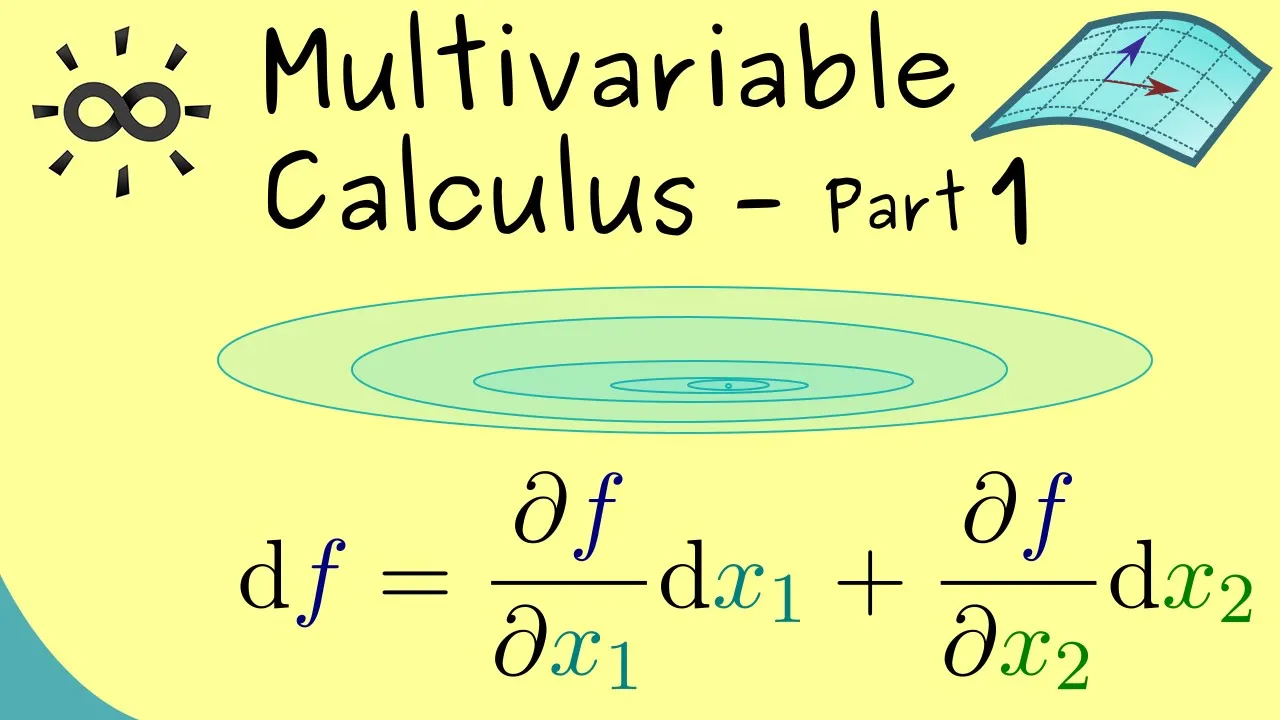


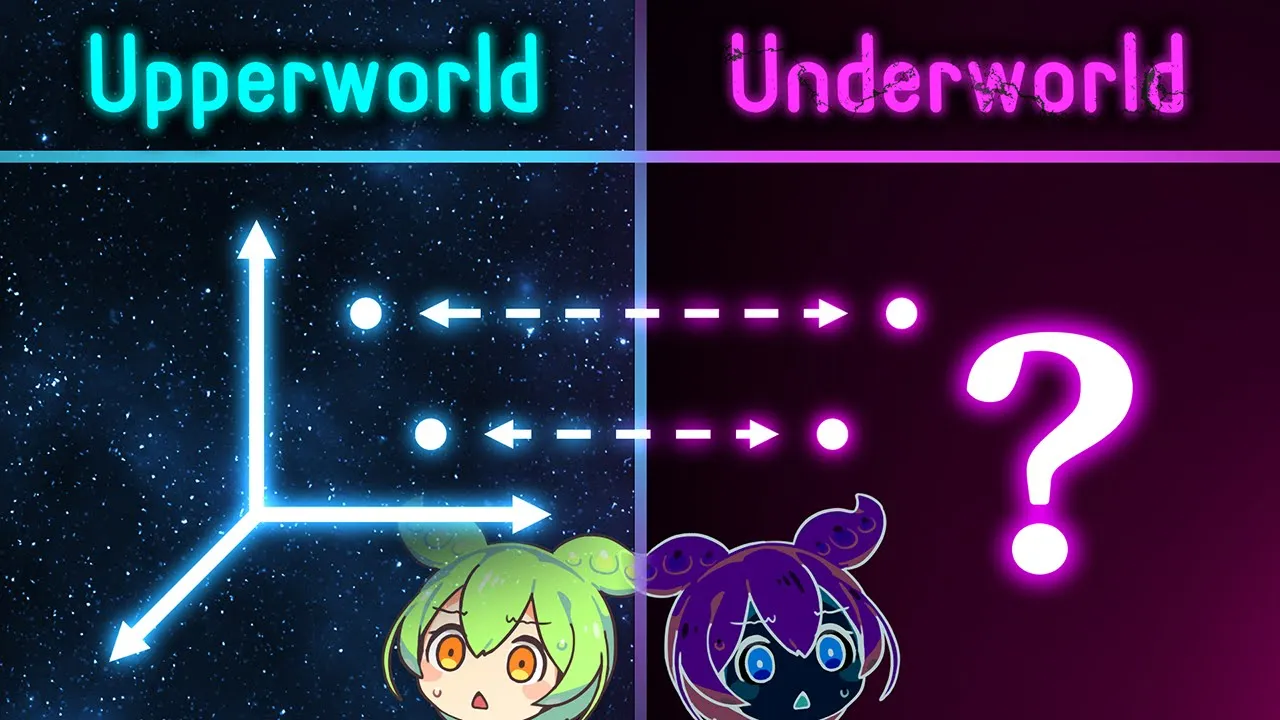
















Contravariant vectors transform according to V̄^I = V^R × (∂X̄^I/∂X^R), exemplified by tangent vectors of parametric curves, while covariant vectors transform according to Ū_I = U_R × (∂X^R/∂X̄^I), exemplified by gradient vectors of scalar fields; invariant quantities like the inner product of contravariant and covariant vectors remain unchanged under coordinate transformations.
Contravariant vs Covariant Vectors: Transformation Laws & Examples
Added:Fundamental Linear Algebra: A strong understanding of vector spaces, basis vectors, and change of basis transformations.
Multivariable Calculus: Mastery of partial derivatives, the multi-variable chain rule, and the gradient operator.
Dual Spaces: Conceptual familiarity with the algebraic dual space (V*) and linear functionals that map vectors to real numbers.
Index Notation: Initial exposure to subscript and superscript notation, as well as the Einstein summation convention.
Introduction to Tensors: Generalizing the transformation laws of covariant and contravariant vectors to higher-rank tensor fields.
The Metric Tensor: Learning how to use the metric tensor to raise and lower indices, establishing an isomorphism between vectors and dual vectors.
Differential Geometry on Manifolds: Applying these coordinate-invariant definitions to tangent bundles, cotangent bundles, and differential forms.
Applications in Physics: Utilizing tensor calculus to understand coordinate-free physical laws in General Relativity and Classical Electrodynamics.
68.3K views1.3Klikes11:36Original Release: 2019-03-24
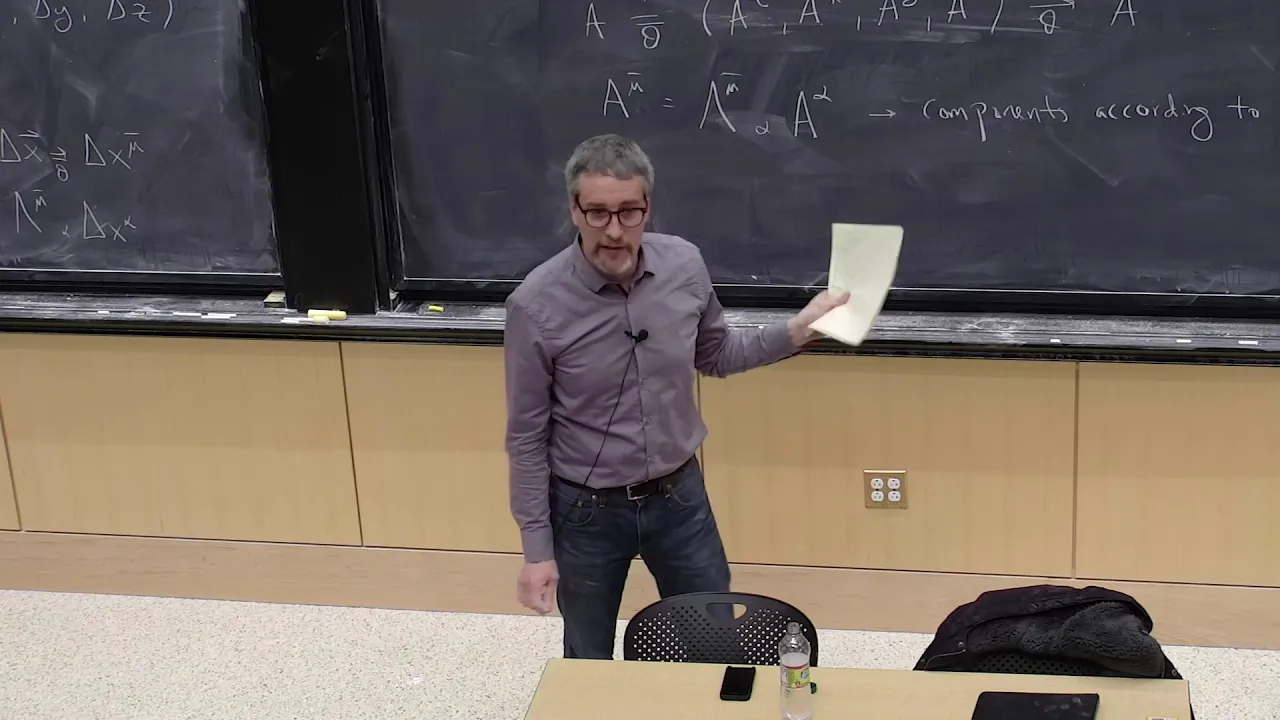
in the previous video we illustrated the meaning of contravariant and covariant vector components we said that contravariant components transform in the opposite fashion compared to basis vectors under a change of coordinates and we said that covariant components transform in the same manner contravariant components are specified using superscripts and covariant components are specified using subscripts in this video we're gonna provide more rigorous definitions of contravariant covariant and even invariant components I'll begin with a short and convenient memory aid if you're confused about whether to use a superscript or subscript for a contravariant or covariant index just look at the third letter in contravariant and covariant for contravariant the third letter is a small end which effectively points up this should remind you that contravariant components are specified with the index in the superscript the superscript is up just like how the letter n points up for covariant the third letter is V which points down this should remind you that covariant components are specified with the index and the subscript which is down just like how the letter V points down so hopefully this memory tool should be useful now in order to provide mathematical definitions for contravariant and covariant I'm going to first set things up by making a few assumptions say that I've got a vector defined on a subset of RN with two coordinate systems X I and x iyb are related to each other using the coordinate transformation T let's now define contravariant vectors the vector field V is set to be a contravariant tensor of Rank 1 so a contravariant vector if its components V super I in the X I coordinate system and V super I bar in the X I bar coordinate system are related by the following equation the following law of transformation the super I bar equals V super r times the partial derivative of X I bar with respect to X R where I is an index that varies from 1 to n note that R is the dummy index on the right hand side because it occurs twice so R is being summed over from 1 to N on the right let's briefly go over an example of a contravariant vector suppose that I had a finite pair metric curve gamma in RN which was defined using each of its coordinates X I as functions of time where the time lies between two real limits a and B and I is a free index from 1 to N if you've seen my differential geometry series then you'll recall that this is how we define parametric curves you might also recall that the tangent vector to the parametric curve which I'll denote by theta is just found by differentiating each of these excise with respect to T note that theta super I is the I of component of the vector theta where I again is a free index that varies from 1 to n now what if we change the coordinates from X I to excising this coordinate transformation T up here well in that case the parametric equations describing our curve now become equations for X I bar which are also functions of time but in terms of the original coordinate system the X I bars are functions of each of the individual coordinates which themselves are functions of time the components of the tangent vector for the curve in this transform coordinate system are now theta super I bar equals the derivative of X I bar with respect to T but using the chain rule of differentiation the derivative of X I bar with respect to T can be written as the partial derivative of X I bar with respect to x1 times the derivative of x1 with respect to T plus the partial of X I bar with respect to x2 times the derivative of X 2 with respect to T and so on I can make this right-hand side more compact using Einstein notation and replacing the X ones x2 etc with just X R note that R is a dummy index that runs from 1 to n you have to sum these n terms on the right to get our derivative in the new coordinate system DX I bar DT now the derivative of X R with respect to T if we go up is actually just the tangent vector component from before the coordinate transformation which is theta super R so we can write the new tangent vector component via super I bar as the old tangent vector component theta super R times the partial derivative of the new coordinate X I bar with respect to the old coordinates X R again remember that is the dummy index so it's being summed over if you look at this equation and compare it to the transformation law that we had when we define contravariant vectors they look pretty much the exact same with the exception of the theta instead of the V the indices in both equations are in the superscript and the partial derivative being multiplied is the partial derivative of the bard coordinate with respect to the unbarred coordinate this proves that the tangent vector of a parametric curve is a contravariant vector because its components follow the transformation law of contravariant vector components so this is an example that illustrates a contravariant vector and the transformation law that it follows before we get to covariant vectors let me quickly define a weighted contravariant vector which is a variation on the regular contravariant vector in some situations tensors are given certain weights and instead of a regular contravariant transformation law the components of the tensor follow a weighted transformation law given by V super I bar equals W times V super R times the partial derivative of X I bar with respect to X R where W is a real valued function denoting the weight of the tensor now let's talk about covariant vectors again the same assumptions with the vector field and the coordinate transformation apply is the ones we used for contravariant vectors one thing to note now is that we're using a different vector field U and this vector field U is said to be a covariant tensor of Rank 1 so a covariant vector if its components U sub I in the X I coordinate system and U sub I bar in the X I bar coordinate system are related by the following law of transformation u sub I bar equals u sub R times the partial derivative of XR with respect to X I bar again R is the dummy index on the right hand side because it occurs twice so R is being summed over from 1 to N on the right now the key difference between this transformation law and the law for contravariant vectors is that the order of the partial derivatives is switched so when we're converting from the unbarred system to the bard system we're multiplying by the derivative of the unbarred coordinate with respect to the bard coordinate instead of the derivative of the coordinate with respect to the unbarred coordinate another difference is that we're using subscripts instead of superscripts for indexing because these are now covariant components that we're dealing with the V points down let's briefly go over an example of a contravariant vector suppose I had a differential scalar field F basically if you gave F a point in RN it would output a scalar that's what I mean by scalar field this scalar field is defined on the on-board coordinate system X I in RN we can also define something called the gradient of the scalar field as the vector field del F with each component of the vector field being a partial derivative of F with respect to each of the coordinates X I in other words each component U sub I of del F is given by the partial of F with respect to X I where I is a free index from 1 to N now what if we change the coordinates from X I to excising this coordinate transformation T up here well in that case the gradient of the scalar field F would change to include partial derivatives with respect to the barred coordinates note that f bar is the same as F just written in terms of the barred coordinates so it's a composition of F and the unbarred coordinates in terms of the barred coordinates the components of the gradient vector for F in this transform coordinate system are now U sub I bar equals partial f bar with respect to X I bar but using the chain rule of differentiation the partial of f bar with respect to X I bar can be written as the partial derivative of f bar with respect to x1 times the partial of X 1 with respect to X at 1 bar plus the partial of f bar with respect to x2 times the partial of X 2 with respect to x2 bar and so on I can make this right-hand side more compact by using Einstein notation and replacing the X ones x2 etc with just X are note that R is a dummy index that runs from 1 to N now we have to sum these n terms on the right to get our component in the new coordinate system which is the partial of F bar with respect to X I bar now the partial of f bar with respect to X R if we go up is actually just the gradient vector component from before the coordinate transformation so we can write the new gradient vector component u sub I bar as the old gradient vector component u sub R times the partial derivative of the old coordinate XR with respect to the new coordinates X I bar again remember that R is being summed over because it appears twice in the right-hand side if you look at this equation and compare it to the transformation law we had when we defined covariant vectors they look pretty much the exact same the indices in both equations are in the subscript and the partial derivative being multiplied is the partial derivative of the unbarred coordinate with respect to the barred coordinate this proves that the gradient vector of a differentiable scalar field is a covariant vector because its components follow the transformation law of covariant vector components now generally most vectors that you're used to seeing in physics like displacement velocity acceleration etc most vectors are contravariant vectors you probably haven't seen many covariant vectors in physics generally the most well-known covariant vectors are gradient vectors so now that we've talked about contravariant and covariant vector components let's talk about invariant components or invariants invariance or mathematical objects that have an intrinsic value and are a fundamental significance in terms of coordinate transformations and invariant as an object that does not change under a change of coordinates you might already know from our previous discussions that tensors are invariant objects under a change of coordinates their components aren't invariant in general but the tensors themselves are invariant another notable example which actually happens to come in the form of a theorem that I won't prove here is the inner product of a contravariant vector and a covariant vector this inner product can be written as e which is defined as the sum of the product of the contravariant components V Super J and the covariant components U sub J again J is the dummy index over here so it's being summed over from 1 to N now this inner product in general is invariant under a change of coordinates as long as it's defined in all the coordinate systems this should make sense to you a scalar like EE should not vary when you change the coordinate system just like how the temperature of New York shouldn't vary when you change the coordinates the temperature has an intrinsic value and is independent of the coordinate system it exists and the same is true for the inner product of a contravariant and covariant tensor anyway that should do it for this lecture I'd like to thank the following patrons for supporting me at the five-dollar level or higher ID link my patreon account in the description for you to check out and that's it if you enjoyed the video feel free to like and subscribe this is the Faculty of kaan signing out
Up Next

11:36
Change of Basis Explained Simply | Linear Algebra
@LookingGlassUniverse
80.3K views•2018-09-13

4:43
Elliptic Curve Cryptography Explained: ECC, ECDSA, ECDH
@PracticalNetworking
28.5K views•2024-10-21
9:00
Einstein Summation Convention: Introduction to Tensor Notation
@FacultyofKhan
227.8K views•2018-07-02

6:00
The Mathematical Impossibility of Accurate World Maps
@Vox
23.3M views•2016-12-02
Related Study Plans & Knowledge Roadmaps
Structured learning paths in Mathematics
mathematics
Tensor Calculus: Vectors to Riemann Curvature
01Mathematical Foundations: Linear Algebra & Calculus
02Covectors, Dual Spaces, and Tensor Basics
03The Metric Tensor and Index Gymnastics
+ 2 more learning modules
40h5 modules
Explore Roadmap
mathematics
Gödel's Incompleteness: Logic, Proofs & Limits
01Introduction to Formal Systems & Hilbert's Dream
02Set Theory, Cardinality, and Cantor's Diagonal Argument
03Arithmetization and Gödel Numbering
+ 2 more learning modules
14h5 modules
Explore Roadmap
mathematics
Galois Theory: Fields, Groups & Solvability
01Foundations of Abstract Algebra: Groups & Fields
02Polynomials & Field Extensions
03Splitting Fields & Symmetries
+ 2 more learning modules
24h5 modules
Explore Roadmap
mathematics
Non-Euclidean Geometry: Models & Geodesics
01Euclid's Fifth Postulate and the Birth of New Geometries
02Hyperbolic Space and the Poincaré Disk Model
03Geodesics: Defining Straight Lines in Curved Spaces
+ 2 more learning modules
15h5 modules
Explore Roadmap