

![AP Government UNIT 1 REVIEW [Everything You NEED to Know!]](https://i.ytimg.com/vi_webp/lxotd_zV1hc/maxresdefault.webp)












![[SESSION II] Mains Manthan Bridge Course for UPSC Mains 2026 (GS-2) | by Manjunath Sir | PART II](https://i.ytimg.com/vi/ddL9oRBuZws/maxresdefault.jpg)


Cooperative federalism in India requires effective institutional mechanisms to facilitate coordination between the central and state governments, as the current system faces challenges including declining divisible pool of taxes, inadequate intergovernmental coordination institutions, and a tendency toward centralization that undermines genuine federal cooperation; successful federal arrangements require continuous dialogue, appropriate fiscal arrangements, and robust local governance structures to address regional disparities and promote effective policy implementation.
Cooperative Federalism: India Governance Forum 2022
Added:The constitutional division of power in India, specifically the Seventh Schedule which delineates the Union, State, and Concurrent lists.
The fundamentals of Fiscal Federalism, including the mechanism of tax sharing between the Central and State governments.
An introductory understanding of the Goods and Services Tax (GST) and the structure of the GST Council as a cooperative decision-making body.
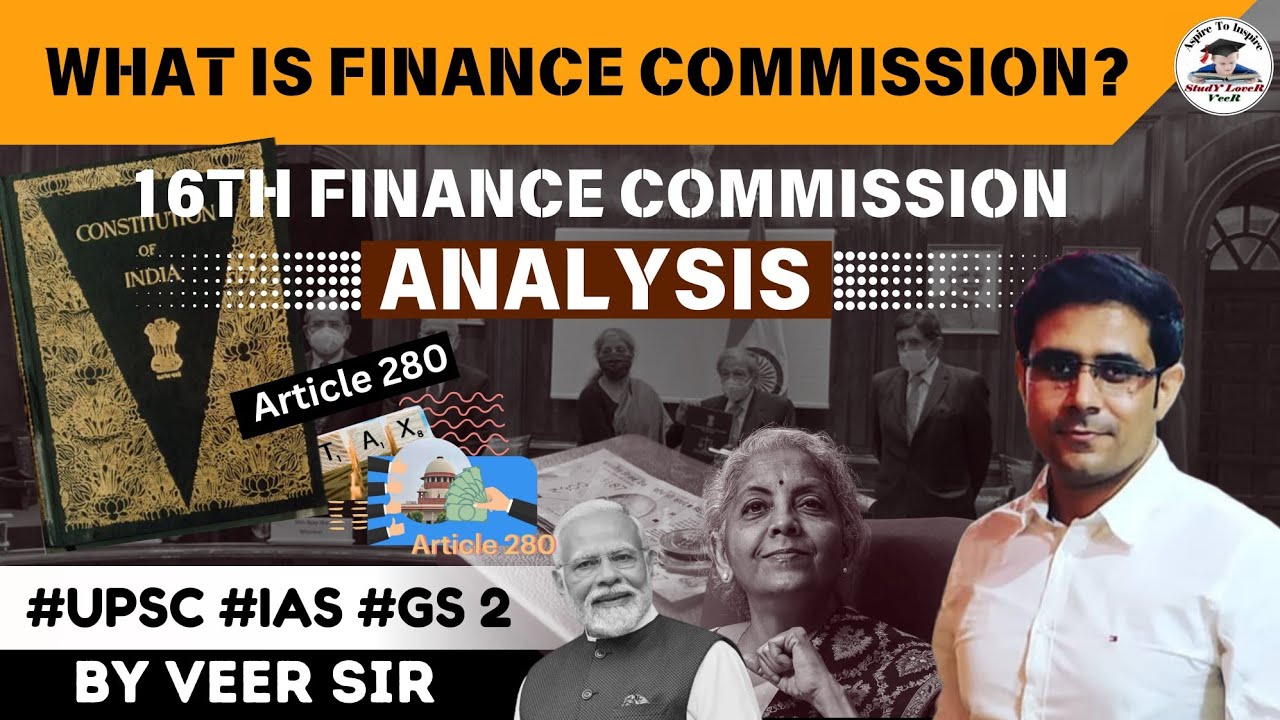
The role and functions of the Finance Commission of India under Article 280 of the Constitution in recommending the devolution of financial resources.
Analysis of modern conflicts in Center-State relations, such as the controversies surrounding GST compensation dues and the distribution of cesses and surcharges.
A deep-dive study into the reports and structural recommendations of the 15th and upcoming 16th Finance Commissions of India.
The concept of 'Competitive Federalism' and how Indian states compete for investments and rankings, analyzed alongside cooperative frameworks.
Critical evaluation of local governance financial autonomy, specifically looking at fiscal devolution to the third tier of government (Panchayats and Municipalities).
1.4K views6likes1:40:20Original Release: 2022-05-15
[Music] okay you sound okay yes good evening everyone from india welcome to the india governance forum 2022 today we launched the 83rd scots summit our panel today brings together domain experts to discuss the topic of cooperative federalism our session today is organized in honor of dr vijay kelker in collaboration with the forum of federation's otawa it is my pleasure to now introduce our panelists to you we have with us mr kim chandrasekhar former cabinet secretary he's a retired 1970 batch ias officer from the kerala corridor and served as the 29th cabinet secretary from 2007 to 2011.
he also served as the vice chairman of the kerala state planning board from 2011 to 2016. mr chandrasekhar has also held the posts of revenue secretary in the ministry of finance and joint secretary of the trade policy division we have with us dr vijayal kelker chairman of the 13th finance commission and scott challenger lifetime achievement awardee he is one of india's preeminent economists dr kielker was awarded the padma revolution in january 2011 for his services to the country he's a former finance secretary and was adviser to the minister of finance from 2002 to 2004. he's popularly known as the architect of gst dr kielker has served as the chairperson of the government committee on revisiting and re revitalizing the ppp model of infrastructure development we have with us dr ahmed patna member of parliament rajya sabha from mauritia and scottish awardee before becoming a member of parliament dr patnak had a long career in the civil services and is a former cag official he was also associated with the united nations and the world bank for global external audit assignments he was also team leader of india's external audit mission to many countries he's written various papers in national and international journals we're joined by professor george milbroth chairman of the forum of federations of potawa he's a former premier of saxony germany and is chairman of the board of the forum of federations he's recently been appointed as vice president of the independent advisory committee of the german stability council his political career includes being the minister president of the federal free state of saxony and chair of saxony's christian democratic union he has been a member of the german bunderstrat as well as the parliament of saxony dr ashok kumar lahiri member of the west bengal legislative assembly and member of the 15th finance commission dr lahiri has previously served as the 12th chief economic advisor to the government of india his other appointments include reader at the delhi school of economics chairman of bandhan bank executive director at the eastern development bank and director of the national institute of public finance and policy he's also been associated with the world bank as a consultant at the international monetary fund as a senior economist we have with us dr m govinda rao economist and member of the 14th finance commission he served as director of the national institute of public finance and policy and director of institute for social and economic change he was a member of the economic advisory council to the prime minister of india a member of the financial sector legislative reforms commission and high level expert committee on universalizing health care we have with us missing our mini air president and chief executive's center for policy research in 2008 she founded the accountability initiative at cpr which is credited with pioneering one of india's largest expenditure tracking surveys for elementary education her work sits at the intersection of research and policy practice her research interests span the fields of public finance social policy state capacity federalism governance and the study of contemporary politics in india we're joined by dr ajay shah author and independent scholar and scotch awardee he has held positions at the center for monitoring indian economy in the institute for development research department of economic affairs at the ministry of finance and national institute for public finance and policy he does academic and policy oriented research in india at the intersection of economics law and public administration his second book co-authored with dr vijay kelker is in service of the republic the art and science of economic policy it was published in 2019 we have mister rupak choptapadhyay president and ceo forum of federation zotava uh he was earlier a member of the consultative uh consultative group on the study of intergovernmental relations and dispute resolution mechanisms interstate council government of india in 2005 he was adviser to the chairman of the observer research foundation over the last two decades he has contributed as an expert in support of political and constitutional reforms in ethiopia mexico myanmar philippines nepal sri lanka tunisia and yemen recently he co-authored a comparative study on apex level intergovernmental relations world bank 2019 for submission to the 15th finance commission of india and finally we have mr sumit bose former finance secretary in scottish awardee he's a 1976 batch ies officer who's held several key positions including revenue in the state and central governments he served as the secretary for expenditure and secretary for this investment as well as the secretary of the 13th finance commission he was a part of the union budget pool group from 2010 to 2015.
it's my pleasure to now invite sri samir kocher chairman of the scotch group to say a few words so thank you brother namaskar to you all i have enjoyed the pleasure of having doctor vijay kalkar as my mentor my philosopher and my guide including a guide in my personal life and guide of my children and my family for several years now i had the privilege of editing a first chef in his honor and making a documentary film on him and many years back he was awarded scott lifetime achievement award he's almost ready for the next one uh you know i am a child of the reform as they call people try to often question you know why i do what i do i do not have privilege of too much of formal education i'm i studied only till class 12 in school and then i started working as a bell boy and i finished my graduation by correspondence so to such an erudite panel and such wise men that i have from all over the world i don't know what to say but i was thumbing through this book yesterday i saw this new book so i joined i'll be there you know by book by monash she heads the london school of economics she's come up with this book called what do we owe each other a new social contract and i found some of her ideas interesting and very fascinating she's talked about you know the role of welfare state changing from that of being robin hood you know redistribution of wealth to somebody who looks after the people through their life cycles and various phases if they're old they're in firm and you know they have health issues i don't know really how practical that is in a country like india at 1.3 billion but the idea is fascinating that the welfare of people through different stages of the life probably could be at some future state the government's responsibility as you know our society changes and our families fragment and the culture undergoes a lot of changing i hope not but only area where i see this possible if it is you know done at a decentralized level at a gram panchayat level at a municipality level where it possibly will be easier to build such support systems and hold governments accountable to such uh social contracts and those social contracts then could be specific to each city to the felt need of the people that there are however i still feel that you cannot do welfare as a social contract i do not educate my son because he's going to look after me in my old age or a mother doesn't look after the child because she expects to be looked after sometime in the future you know we do these things because they're the right thing to do so i do not know whether morality can become a social uh contract decentralization on the other hand certainly can it's enshrined in our constitution we've been working on the area for many many years and cooperative federalism is something i have seen and uh pushed for for many years from my visits to grandpa chads to states and to because cooperative federalism doesn't stop at uh center and state it is meaningless unless it goes lower than that so with that i would leave you in the able hands of mr sumit boss and good evening everyone let the celebrations begin well cooperative federalism requires the interaction among federal units to be geared towards achievement of common goals so in a way we are seeking some normative vision a normative vision amongst the levels of government and with this eminent panel that we have by the end of this evening we should have a much clearer idea of this uh vision or what it should be like since we have about an hour and now 20 minutes um i propose that we go go around the panel to begin with five minutes each and follow it up with another round of say two to three minutes depending on how much time we have if that's agreed upon then i would now request professor govindara to sort of begin the discussions thank you thank you mr bose uh as you said let uh let the celebrations begin at the outset let me thank uh the scotch foundation for inviting me inviting me to this very eminent panel of people possibly i will have more to learn than to say and i would also like to compliment dr kielker for many years of his productive contribution to policy making and economic governance of the country we wish and pray that he will have many more years to contribute and make all of us learn from what he does let me now uh straight away talk i see i would like to make some six points uh first let me start by saying that the the definition of classical definition of realism is the method of dealing dividing power so that general and regional governments are each within a sphere of within spf are called it and independent and it's something like a layer cake perspective than a a marble cake perspective in that case but then that's very difficult to get it's not easy you need to put in a lot of effort to get a sort of cooperation in several areas um i am again at the outside want to say that i mostly talk about not political issues i want as analytical issues because political issues you know one can always you know sort of be about but what i understand i learned on federalism i'm going to be talking now as i said vertical and obviously the classical definition of kenneth vera is not going to is not the one which we see you don't have you know sort of coordinated independent powers obviously there has to be overlap and there are overlaps the assignment according to comparative advantage necessarily results in overlapping systems and then obviously therefore the cooperation becomes necessary both vertical and horizontal competition is necessary for a smooth functioning of any multi-level fiscal system i'm again talking mostly about the fiscal uh cooperation rather than political issues in all though from time to time i'll talk about them in actual practice and there are limits to cooperation in fact if you have a complete cooperation then there is no fertilism because it's all it's all you need to reach out of an arrangement so attempt should be to expand the scope of cooperation and um and as i mentioned comparative advantage results in overlapping systems and then we need to deal with them when is cooperation possible again electrical if you see cooperation is possible only when the parties have something to gain from it in fact if some parties gain and some part is low the parties that gain should be able to compensate the party that lose and get them you know cough them into the system even in then you know there is when some of the parties gain more than the others there may be it is necessary to bargain you know sort of get them to together and then have the con you know sort of have the cooperation expand the scope of cooperation in order to have this cop you know sort of the interaction between the the parties to gain from cooperation you need to you need to have an institutional mechanism to reduce the transaction cost of this bargaining the third point that i want to make is in indian context you have the seventh schedule which divides the the the remits of for union state and the con in in terms of union state and concurrently the moment you have concurrently cooperation has to become is becomes necessary and even in the state list what happens is that the union government may think that certain services have to be provided you know in minimum standards of certain services must be provided across the country and so it may have to go get into union list and then obviously work on that the question is whether you know the the intended minimum level of service and the design and this thing which are basically done through the centrally sponsored schemes whether they have they have worked is there a scope for you know improving improving them and a number of other things that will come through some examples of cooperation if you want to see in our country i mean obviously you you know when you have overlapping system there are issues in energy environment education poverty elevation so on and so forth in cases where the state governments are responsible where the central governments want to ensure a minimum standard of service you you know has to intervene for for the betterment of the system is agriculture health urban efforts and so on and so forth so as i said some examples of cooperation are you know in terms of uh disaster management obviously both both the union and the state governments cooperate gst council is an important example of the example of you know cooperative cooperation for a long time you had the planning commission and centralized planning was active but then as my guru raja chile has said centralized planning is negation of federalism the point simply is that but the planning commission was trying to get the states to adopt the centralized planning there was a cooperation in that sense part of the reason for cooperation is that there was a single party rule for a long time and the political parties are different in the states than the center then there is a problem then you know obviously you know states will complain saying that i'm you know i don't get i don't get the way i want to do things rather than center is forcing me to do it but after 1991 when market based reforms came even then the the way in which they went about the states agreed to do it and submit their annual uh planning sort of annual plans but for the main reason that the central government was giving some money for them you know through the planning commission so in order to get that money obviously they had to do it i mean this that's one of the things so you have the examples um so you have the centralized planning you have now i mean obviously you have meteor now in the nithya they say that one of the one of the prime prime objectives is fostering cooperative federalism by providing structured support to states on a continuous basis this is what you said in you know sort of in the in the act that created the uh nithya but is media i you i will be able to do that planning commission was able to do together some to a certain extent because it provided money nikki isn't able to do that if it is not able to do an entire developmental blueprint blueprint that it wants to create how is it going to really be effective these are some of the questions but finally i mean before we go one more point i'll say that is cooperation really i mean this is the normative concept as sumit both said does it really happen the basic relationship between the governments is one of competition this is a competitive relationship between between the states it is the same competition for claiming you know the competition both vertical and horizontal competing for the common pool of funds regional policies everybody wants the central product to be located in his in a state or you know so regional policies competing for investments competing for there is a tax competition and you know prior and then passing out the tax burden to the non-residents i mean these are some of the examples that you see so basic relationship is one of competition but then there can be a predatory competition you know in in a system that we exist we do need to have you know in fact this um um i will explain this competitive federalism in an elective analytics and later when uh there is some more time but preventing predatory competition would require a certain measure of competitive equality and comp you know cost benefit appropriability and that's something that has to be done and finally let me see whether it is promoting competition whether it is regulating competition or promoting cooperation you need institutions as i said for reducing the transaction cost you need the institutions now unfortunately in our country the institutional mechanism for this is there is a vacuum they i mean to some extent flying commission used to do it they had the national development council which made became a speech making body once in 10 years or once in 20 years the you hand you created there was an administrative reforms commission report which said that you need to have an interstate council which was reported repeated by the sakariya commission what did he do we located interstate council within the union home ministry now how can it be an empire when it is a player obviously you have you have you have a problem and i mean if you really see the thing it is not that uh very some unwanted bureaucrat is being put there in the interstate council to manage it so obviously he doesn't get the response this thing the meetings are not killed and most of these meetings just end up in end up in the district you have a constitution which has viewed through the time you have reasonably independent judiciary you have a free press and you have all india services and of late i mean there are also questions about whether all india services supposed to be neutral across the political spectrum there are there are some this thing you have the finance commission you have the gst council and so on and so forth which have done but a real institution for intergovernmental bargaining and conflict resolution is conflict resolution and promoting coordinate you know you know sort of coordination because competitive federalism is something like a laboratory federalism as they say so you know in fact there is a lot of literature on laboratory fertilism which basically through the competition you gain so but then you require regulation to prevent predatory competition and obviously we do not really have an efficient system of reducing the transaction cost of bargaining and coordination thank you thank you professor law dr amar yes dr pat mike welcome we didn't see you earlier and uh i would now invite you because since you have to leave a little early i was told so um little early actually thank you so much leaving just 10 minutes to the chicago airport i'm speaking from chicago but thank you so much for uh inviting me and of course thank you to scotch foundation uh professor govindra who is somebody who was in the finance commission when i was accountant general i had my presentation before him and why we ready about state finances uh and of course mr cave chandrasekhar was there in the planning board when i was the principal accountant general of kerala i would just make a few points uh the first thing is i think federalism itself conceptually is rooted in cooperation i don't think the term com competitive federalism really makes any sense the way the constitutional framers said frame the constitution the central is stateless it was basically designed not for competition and competition if you follow even the new classical economic models anywhere let's say competition between countries the gdp hasn't conversed anywhere so i i think the conceptually it is wrong and then you know the voices new coinages have come which i have also used in parliament poetry federalism uh competitive it was all kinds of stuff but i think it is federalism is conceptually rooted in cooperation number one and that is the reason why india is called union of states it is it is not a monolithic uh central government which will have uh which will treat the state's subordinate agencies because competition gives the sense as if the states are supporting them to the center and the center is the monitor who is engaging people in competition uh the second point is competitive federalism doesn't again take care of regional imbalances when there is no level playing field how can you promote competition you cannot have competition of orisa with netsim or not it just just doesn't make any sense the second aspect i would talk about it uh is professor rao talked about uh centralist stateless and and and the uh concurrent and the residuals but the point is the new way of encroaching into states powers and states power to legislate has been by changing some words for example i'll give you the example dams are in the state list but dam safety uh legislation has been brought by the central government because they say that you know they got an opinion from the attorney general saying that dams may be in the state but damn safety is not now i give you another example the rti the right to information act the states legislated their own rta laws but now when we are talking about the privacy law the data protection law of which i was a member it is the center which is legislating on which i gave a decent note because i think the state should have the power to appoint their own data protection authorities and have that structure the third point i'm going to come is of course the most important thing uh is on fiscal uh federalism the amount of resources and that has been dwindling uh if you take the last budget and current budget it has decreased from in terms of you know as a percentage of the gross tax revenue divisible it is uh reducing from 30.02 to it has come to 29.61 in the 2023 budget and that is happening because the session such as increased by a phenomenal 17 compared to the last year 22 23. and i i i do not know if you follow the reply to the budget of the finance minister i had made this point in my budget speech and she replied quite extensively by saying that this cessna surcharge that we are collecting is ultimately being spent for the states but then it is like the familiars deciding that you know which state will get what i think that is not the spirit of fatalism uh the the uh the the surcharge also has had a negative effect on state subjects like health education and agriculture i'll give you uh the example let's say the education test which was introduced i think in 2003 for now if you look at the budget allocation of education before the sales was introduced which is coming coming from entirely from the uh central government's uh share of the resources after taking the test together now it is again remaining almost at the same percentage of level uh compared to the gdp which basically means the the the center collected the ces and surcharge and palmed it off through uh education and and health is even worse and and saved its own resources and at the same time the gst has switched the powers of the states to it as any other resources except the non-tax ones what is in a good position because of its non-tax base but most other states will not be the last point is you know in in in this in this scheme of uh competitive federalism uh you you know the aspirational uh districts uh the nitio has has brought in there is no extra financial resources being given there is no extra human resources being given it is just a group of monitors who come from the central government to the state government and tell that and use the collectors the same state functionaries and have a electronic dashboard to tell them that you are doing better than the other now uh i i have demanded many times that if you're talking if you're thinking of improving the aspirational districts let's say malkangiri to come down to the level of purdue district in oressa then then you at least make the resources transfer from 60 40 ratio to 90 10 ratio that you are giving that is also not happening but what is happening is that this central through the nithya is is coming over to the states uh to to to enforce the way the programs will be executed in the state now this kind of an approach overall approach in this competitive federalism has become a centralization of revenue i talked about it because session subcharge is increasing divisible is decreasing what is this share for example even horizontally uh it has reduced vertically has reduced the the the the the the one size fit all strategy which we are all uh you know uh we have all agreed that doesn't really work is actually being is being assumed in the sense uh the aspirational districts the government of india decides what well this is how you should do the scheme once the money has been transferred to the states i see no reason why the state government cannot decide which is the priority in let's say or in nagarangpur or in quran so i think i think the the concept of competitive federalism uh uh you know i think conceptually it is not really going to uh deliver uh uh or improve the backward states to a level in which they they can compete with the more advanced uh states let's say what is the first thing disaster uh every year uh as a cyclone and a flood now the disaster response that comes by wavelengths of certain grants is mostly in the nature of post-disaster relief or some amount of little more money than that but what happens to the disaster resilient infrastructure that is required to be set up the uh in the in the funny cycle and we lost about one lakh electric poles uh so we said that our cm said that we must have underground cabling of our infrastructure now that is a huge amount of money so post-disaster reconstruction is something which the states have to fend for and what are the resources for it so i don't really think that this competitive federalism and notion is is is at all a great idea i have uh aired it in the parliament too and i still feel that let us go to the drawing board and look at the backward areas the backward states and some of those schemes which were there from before we we we rubbish them by saying that it hasn't really delivered i don't think the current way also it is going to deliver way if you are competing if you are competing who is this health infrastructure with the leasing health infrastructure does it make sense absolutely not uh so with this i'll rest my uh my my submissions uh and excuse me for really rushing to the bus to take the posture there thank you so much thank you doctor and thank you for making the time now i would request dr milbrad to please give us your views uh how you see cooperative federalism as a concept and what you see of india yeah thank you very much for the invitation uh you know that we have a very peculiar form of federalism especially in some sort of institutionalized uh corporatism in germany that is due to the distribution of internal powers between the federation and the states we have not so much a competitive system like those federations who are very separate levels let's say the united states where the political areas are distributed between federation and states and the states and the federation have the possibility and to legislate to execute their own laws to fund their programs and to raise their own taxes more or less independently in our system uh we have first of all a division of powers concerning legislation um the states the the federation has a short list of federal exclusive federal legislation which is normally in all other constitution as well then we have a very comprehensive list of um of shared or concurrent legislation the peculiarity is that the states are only allowed to use the concurrent list if the federation has not uh used its powers in the end um there is a preponderance of federal legislation all items which are not in the in the two lists are exclusive competencies of the state concerning legislation however concerning administration execution of laws we have a different system um the states execute not only their own laws but also federal laws as well so as a constitution says in its own right with little federal supervision only in special cases federal laws are executed by the states on federal commission or by the federation itself by their own administration internally the states have transferred most of the administrative tasks to the municipality which are part of the of the states to give you an impression of the distribution of administration eighty percent of all public employees are employed by the states and the municipality only 10 percent by the federation the the the the rest is employees of the social security system which is self-governed therefore the federation has no boots on the ground and depends more or less on the state each level has to pay for its administration by the revenue especially taxes which are allocated to them the federal as a constitution gives a list of the taxes some are federal taxes others are state taxes and some are municipal taxes the most important tax is vit your gst income tax and corporation tax are joined taxes which are shared by quotas fixed in the constitution to balance this complex system uh federal laws which affect the states and local administrations and especially their budgets are voted not only by the elected parliament but also by the federal council consisting of delegated members of the state governments including the state mr presidents your chief ministers the member of state governments as well as those of the federal government may address the federal parliament the federal council has many similarities to councils of ministers in international organization or the european union because of this central position the federal council convenes a day every three weeks its decisions are prepared by standing committees consisting of state line ministers and their deputies the respective federal ministers and senior federal and state officials are present as well so it's a dealing between administration on the level of the federal council to facilitate this process and to hold permanent contacts with the federal ministries and federal parliament each state has a representation in berlin this state a state minister or state secretary has had and dozens of specialized officials as a sort of embassy besides the federal council there are a lot of regular conferences of state minister presidents or line ministers to coordinate interstate cooperation defend common interests and exchange opinions sometimes with sometimes without the respected uh their respective federal colleagues as only nationwide parties gained seats in the federal parliament respond exceptions the nation by parties itself are federalized along the structures of the federation due to this system of overlapping competences in legislation and administration germany needs this form this intensive form of political and administrative cooperation compared with system based on clearer separation of competence our form of cooperation is time and resource consuming but often stabilize the political system as opposition parties have indirect political influence on federal policies via states political observers might have the impression that germany is governed by a permanent grand coalition of the main parties however too much a cooperation can blur responsibility and accountability be harmful to democracy and good governance and slow down the introduction of needed reforms to streamline this system which only a few elements of competition we tried in 2006 and 2009 to reform the constitution by the bundling competences especially by shortening the concurrent list to increase the competence of state legislature and as a swap to diminish the influence of state governments on federal legislation by reducing the cases where consent of the federal council in legislation federal legislation is required and thereby increasing the power of the federal parliament and government unfortunately it was not possible to agree on a fundamental reform on the constitution only some amendments were passed as first steps some co-financing program reduced or skipped especially the co-financing by common tasks where the federation had some influence on estate expenditures [Music] and we forbid direct financial links between the federation and the municipal level but as i said we only reduced it by by by a certain amount but it was not a real reform it was planned as the first steps uh toward the aim of having more compet competition in the system uh but uh unfortunately more steps forward were not taken and on the contrary sometimes a step back that was made to sum it up cooperation is positive good and necessary but too much is harmful and i have the impression that in germany the balance the trade-off between competition on the one hand side and cooperation on the one hand side is uh too much shifted uh to cooperation i would personally uh because i was a chief minister in saxony uh wanted less interference from the central government and more autonomy because of strengthening democracy responsibility and accountability so our system of institutionalized cooperation has advantages and disadvantages i was asked to say some words about the european union this is still a supernational organization with some federal elements europe is still on the way to become a real federation with a responsible european executive reducing the importance of the member states the eu is still no union but a community of states therefore it cannot be a model for india in the country europe can learn more from india how to create a functioning union even if you still want to improve your union further thank you very much thank you thank you dr milbag thank you very much uh i will now request mr km chandrasekhar for his intervention sir thank you thank you so much first of all let me make my tribute to dr vijay kelker when i first came to delhi as giant secretary in this secretary in the ministry of petroleum and natural gas and later they still continue to interact when i came as a new secretary in 2004 i found that he had prepared two voluminous documents and directed indirect tax reform and many of his suggestions in various fields in economics and administration now coming to the subject [Music] that is under discussion today i know that there is shortage of time you mentioned five minutes for each speaker now i would like to make just one point but in order to make that one point i will have to go back a bit you see at the time of the after during before independence when this question of when the government of india for example of 1975 was actually contested by many political authorities you see before independence the colonial practice was divided during independence the concept changed to united so naturally what happened was that you'll see it if you read the constituent assembly discussions uh there was a leaning in favor of stronger unitary control and less federal control and immediately after independence as you see oh there were 562 states which were grouped into various formations these were all geographical entities they were really not cultural they didn't have cultural identity so really they that was the system that was and even the constant assembly when the constitution was being formulated at that time too there was a lot of talk about whether we need a stronger unity structure or a stronger federal structure and the way the constitution was drafted the emphasis has laid on the view on the unitary side on the central side rather than of the states this actually missed mentioned the australian oxford academy on federalism now he does not agree that india is a truly federal state he feels that india is a plaza and then if you see the earlier supreme court judgments in the western world there again they ruled that india does not have an absolute federalism this the whole system before the line of thinking for change would be uh keshavan and the case the fitness case in which they said that the fundamental structure of the constitution cannot be altered the basic structure cannot be altered and in that basic structure federalism is also included so now as it is we are stuck with the federal structure as given in the constitution the three lists which has been mentioned repeatedly here and we are working within the those totally now my own view is that if you really do cooperative feminism there has to be an evolution of the concept of terrorism it's not just a concept that you in germany in the recent past for changing the structure somewhat through constitutional amendments not entirely successful but considerably successful india also we have made efforts we have tried to introduce stronger elements of anxiety raj locals are government not everywhere fully successful not equally i mean the flow of finance has not been there the flow of resources has not been there but still that effort has been made but in order to bring about real change and to make the states and the center work together within with a spirit of cooperative federalism there needs to be constant dialogue between the two sides and otherwise you see us versus the approach is inevitable it does happen i have to remember when i was sitting in the cabinet as cabinet secretary there was a lot of discussion on uh centrally sponsored schemes how the states are taking credit for schemes so the center should get paid and that was the customers that they approached the prime minister himself used to say we need a concept of team india now that has really not worked out and whatever machinery we need to create mention was made about the interstate the planning commission was really some sort of an intermediate primarily because as you mentioned they were passing around money there was this cross-position expenditure which is always the finance ministry and the planning commission is compete and contested with it and that amount was available for development increasingly this problem of the center uh making invokes into what the state should do most state central centrally sponsored schemes this has been a big problem now the issue really is that we need to find ways in which we can cooperate if we stick to a particular structure cooperation is better increasingly difficult i worked for a few years in belgium and there i found that they had put in place a system of uh cooperative federalism we can see they had three provinces it was uh flanders colonia and the federal capital of pluses they also have communities they are linguistic groups french dutch and german and they had a large number of principles and the process of introduction of cooperative federalism was entirely through discussion they had their first state reform in 1971 the fifth in 2001 this discussion continuously takes place and as the economy changes as systems change as politics changes more and more changes are effective in the system of the evolution of functions so that kind of an evolution should be possible in india we saw in the case of the indirect axis that we started with uh i mean we started in the 1990s where we had the excise duties and the state sales taxes then it he went on to mod at the central level and stayed right in state level then in the early 2000s 2004 or so we came in we got the states the states of the center agreed on rat as a concept which is ultimately mature now into gst so the same process is important to really make effective and lasting changes with a particularly in a highly diverse country like india with a great deal of diversity cultural diversity linguistic diversity in any every form even so we need to think in terms of how they can be constantly talking to each other so that's the way i feel i do believe very strongly with decentralization very important even china if you see but that focused on decentralization and decentralization resulted in actual tangible development in china so we need to look at ways in which we really can make cooperative federalism a reality and i i totally agree with uh that this concept of competitive federalism makes no sense that's absolutely true so i'll stop at this point thank you sir thank you now i would request dr yamini here to uh give us the benefit of our views yamini over to you thank you thank you so much uh for inviting me to to this wonderful occasion and getting the chance to celebrate dr vijay kelker who's been an inspiration to so many of us younger scholars um and uh so much of your work that we have learned from has framed how we have sought to understand the indian economy uh but even more importantly um how uh the different elements of the indian state come together to shape and sometimes unravel the indian economy your writings your public uh engagements what you have said and engaged with in committees um it is also a reminder of what what what it means to be a true public policy expert in my capacity as the head of a policy research think tank i often meet young people who are interested in joining what they describe as the profession of public policy as someone who spent uh the bulk of my career in this profession i'm still trying to make sense of what it actually means but nonetheless there are many public policy schools now that have proliferated around the country um and these uh public policy graduates want to engage in public policy and i often ask them what in your view does it mean to be in public policy and the answer is often very limited to things like writing op-eds or engaging on the high table of government committees uh but rarely uh do they actively engage with what it actually genuinely means to be a participant in the process of public policy making both as a practitioner and an intellectual and is somebody who shapes the conduits of policy debate and i often point to professor kelker as an example of someone whose career they should understand and follow to really fully understand what it means to be a public policy professional so uh you not only have you been an inspiration to me i think you also hold up for me what it means to be in this very odd profession as it exists and therefore uh an important mentor and an important and and someone that we look up to in whose career we hope to emulate in different ways and forms so for me it's uh it's uh it's quite intimidating in some ways to be part of this wonderful forum to celebrate you because i get the chance to talk to somebody whose career has been something that most of us have aspired to a lot of what you have said and written on federalism has inspired many much of my own thinking on this question um and it is a fraught one i think uh all the speakers before me have pointed out to the many uh complexities of what federalism involves uh because at one level it is about power sharing power sharing is by definition a political act at another it is about cooperation which brings together political actors that are often on opposite sides of the table into a cooperative discussion or into a cooperative framework which is meant to at least on first principles enhance efficiency and provide gains on both sides and as i've observed uh the practice of federalism in india over these last couple of decades as a policy practitioner i've also found that often the incentives of autonomy and the demands of cooperation actually in terms of the practice of federalism can leave us with somewhat suboptimal outcomes and for me the really big federal challenge is how do we negotiate these two opposing pulls and pressures for instance if i think of the challenge of the gst uh in principle there could be no argument and of course dr kelker uh has been at the heart of uh of the framing of the gst for india uh that that that uh that that uh giving up on a degree of autonomy in favor of deeper cooperation will eventually give you high levels of efficiency gains such that the loss of autonomy may be a small price to pay for the gains that were that are in store for us just enter in terms of first principles but when it came down to the active bargaining of gst even at a time when that consensus was very nearly forged it does seem to me that the pressures for or the pools of autonomy resulted in creating a grand bargain so to speak that was in more ways than one in imperfect bargain the compensation cess provided the glue that lured states into coming together you do need a glue to your states into coming together so i don't have an argument against the compensation test and they were very good economic reasons why it may have been necessary but at the same time it created powers incentives for why students came together and in some senses uh that also closed off the space uh for uh a political negotiation over certain critical sources of revenue like fuel taxes which are now uh the site of much contestation between center and states to come into the fold of gst so we ended up i think with the beginnings of what could be a grand bargain but the tensions of autonomy and the political necessity for maintaining autonomy with the possibilities of cooperation of efficiency from cooperation sort of created a compromise that was perhaps somewhat sub-optimal a reminder that perhaps we need to think about federalism not just as power sharing but very much as a work in progress it is actually about a series of political compromises that often lead you to imperfect bargains and a good federal compact is one that keeps the space open for consistently renegotiating those bargains now that renegotiation i think in the indian structure is made harder because in some senses i think that there is strangely a political consensus that goes against the very fundamental principles of federalism in the sense that if you look at the politics of center-state relations across decades the tendency of centralization has always triumphed over the principles of federalism particularly in the fiscal space the grand old centrally sponsored schemes which was my first entry into practically seeing the outcomes of an imperfect fiscal federal bargain uh one important example of this but if you look for example even at state governments and the complete reluctance of stay on the part of most state governments to devolve to local governments one can see that in effect across political formations or political regimes the temptation of centralization inevitably wins the day in a way that the contestation for federalism is limited to raja chaleya's infamous everybody loves decentralization but only up to my level but even in there and when i followed closely uh the uh initial years after the 14th finance commission which made this big push to the uh enhanced evolution by moving tax uh increasing the divisible pool of the revolution of the divisible pool of taxes from 32 to 42 and in that process in the 2015 budget simultaneously cut uh sun centered some funds into centrally sponsored schemes i would have thought that state governments would welcome this move because this is what they had all been complaining about i had myself sat in many of the uh center state planning meetings for centrally sponsored schemes and observed the very strange dynamic of government of india secretaries sitting on the stage on the podium and state secretaries sitting in the audience having a discussion about what this how they should work their plans which just from even that dynamic gave you a sense of who actually had the upper hand but when it came down to it and we traced this political speech after political speech because the finance commission recommendations were accepted with the budget in late february and then many state budgets were still to be passed uh chief ministers who had fought hard with the finance commission for greater revolution arguing that in fact it's like giving from with one hand and taking away the other because centrally sponsored schemes were cut um and in a way state governments actually uh when i started looking more closely and dr rao's work on health finances pointed this out most effectively the extent to which state governments were actually very deft at using centrally sponsored schemes to substitute for their own expenditure we know from a work by several political scientists including my own the extent to which uh political attribution was effectively drawn from centrally sponsored schemes in the in the era of coalition governments and a genuinely multi-party system that we had until recently where political attribution was drawn on through centrally sponsored schemes creating an incentive structure where there was a fair amount of complaining and push back to centralization but not enough political consensus to actually put political capital moving the direction forward for deeper decent evolution and decentralization and so we got into and when we when it came to the states and local governments it became even more complex and this was really brought home to me in a conversation i was having with the 15 finance commission when we had done a study on the 14th finance commission grants to anti-grants to panchayats and back it going back and forth about the extent of to which these funds should remain untied versus tied um and a comment that was made was well you know it's not really for the central finance commission to necessarily take this on after all if the state finance commissions are not interested in devolving it is it is it's it's it's an act of generosity as opposed to an act of necessity for the central finance commission to be doing this and i found myself arguing very strongly for the central finance commission to give funds for local governments because states were not doing it uh in fact this is the opposite of what the constitutional amendment mandates in some senses at least in its spirit and um and goes against also the spirit of federalism but perhaps you need greater centralization for deeper decentralization again a tug of war of cooperation that requires constant mediation constant reshaping and making of compromises what i worry about when i look at where we are in today's uh uh moment uh i think that uh there are two very big uh challenges that india's uh federal uh structure is con are confronting or perhaps three which make the possibilities of this consistent mediation and compromise building and bargaining and re-bargaining a much harder task one i just think politically the space for this has completely closed off in that there is at one level a national political party that has less patience with the principle of federalism as a tool for accommodation and when you don't have that patience you create this space for subnational competition of a kind that has perverse incentives uh by which i mean that there is very little reason why state governments that could create a politics that is counter to the nationalized hegemonized version of politics to actually then go along with uh what the central government is asking it to do or to cooperate effectively so you do see state governments west bengal is a good example tamilnadu is another that are actively pushing back against centrally sponsored schemes or government of india schemes uh in important ways closing off the possibility of negotiation the second reason why i worry is because in fact the federal challenge is going to become much more complex than it is today after all it's not just about haggling over how much devolution or centrally sponsored schemes versus untied funds it is about a very fundamental challenge that the indian economy confronts of uh growth without convergence so as you're seeing divergence between states uh income divergence across states which is only growing um what does it mean then to forge a contract of compromise where richer states are going to have to give a lot more to poorer states and in that context the demand of cooperation is actually going to increase quite significantly and these demands for cooperation are coming at a time when we just do not have an institutional structure for negotiating these bargains and this institutional structure is not just about politics it's also about administration ultimately for all its flaws the planning commission had an administrative structure which allowed for a constant conversation between administrators at the center and the state level the iis was in conversation but in the current contestation as you see the administration with the bureaucracy also becoming increasingly centralized in its approach the possibilities of negotiating these bargains on the side outside of the obvious posturing that is the theater of politics become even harder to obtain the bureaucracy is as much i think today a player in the game of centralizing as our politics is and this gives me some cause actually a significant cause for concern for what the future holds for creating effective sites for mediation negotiation bargaining and rebargaining so i'll stop here in the hope that perhaps all the luminaries here will be able to give us some hope on what kinds of institutional systems or sites we can create even if the political and bureaucratic environment is pulling against it because i firmly believe the future of india rests in deeper federalism not deeper centralization thank you yeah as usual you've been very clear about your views now i would request dr ajay shah to make his give us the benefit of his views dr kelker were you saying something because i could see your lips move but you had muted your mic if you don't mind i'm going to keep my video off because my wi-fi has crashed and i'm riding on my phone and the bandwidth is quite limited okay i want to jump off everything yamini said i was thinking on exactly the same lights but i have a different uh diagram on a white board which says the same things which i think may help understand these things better and you know all of us need to puzzle over them so i want to start thinking that what is an optimal design imagine if you were a omniscient benevolent central planner what would be your optimal design of many many policy decisions all over the country and then how far is the gap between what real world politics is achieving compared to that optimal scheme so uh when we think about the problems of the price system we always use these metaphors we think that the free market allocation is the optimal one and then many real world things are deviations from that so i want to apply that same way of thinking here that there is some optimal ideal world and then there is the deviations from that world that arise in the practical real world governance arrangement of india now when we come to the ideal optimal world we've always had traditional arguments in favor of an extremely decentralized approach i'm 100 on board that kind of thinking the subsidiarity principle and exactly as yaminy said the divergence that has happened in india really needs to be taken more seriously that for many decades we were softly comfortable in the idea that somehow you know in the end convergence is going to happen that the real world movement of factors the equalizing differences building infrastructure will generate convergence i think it is no longer possible to hope and claim that a convergence process is a foot there is gujarat and below the vindhyas and that is on a different trajectory compared to the hindi heartland i think by now that question has been settled in many many many aspects we inhabit different worlds when we talk in different parts of the country and so the optimal policy design becomes more and more divergent when you look at different corners of the country so compared to conditions 20 years ago 40 years ago the need for deep decentralization in the optimal policies is greater than used to be the case consequently the welfare cost associated with inappropriate centralization is higher okay so this would be my first pillar of the argument proposition two that the [Music] old world had a moral and intellectual authority whether you think of nehru or you think of the world of km chandra shekhar and sumit bose it was a level of intellectual capacity and capability where partly good decisions were made and partly those decisions commanded respect so even when power was centralized it was done in ways where the decisions were not that inappropriate for many parts of the country so we may disagree we may think that a decentralized approach would have been better but in the good old days there was a combination of intellectual capacity and moral legitimacy that yielded less bad outcomes for me the penny dropped when during the pandemic i was exposed to discussions around kerala health policy and in conversations with the union ministry of health the kerala crew was openly dismissive of the union ministry of health they poopooed the idea that the union ministry of health knew much about kobe and they said look just leave us alone we know this better than you and for me it was really a turning point because in the old days it was not just force it was not just money it was moral and intellectual authority at new delhi that made a difference and i think the world has changed compared to that so that is proposition two that the moral and intellectual environment today yields less good decisions in a more centralized system as compared to what was happening 20 and 40 years ago and the third pillar of the argument is the political bargaining that always and always real world public policy is a process of negotiation and you know it's never that any one answer is correct there needs to be a give and take there needs to be a negotiation and we have all lived through negotiations we've all lived through chief ministers coming to meet the finance minister coming to meet the deputy chairman of the planning commission and arriving at side bargains that solve problems in practical ways and that process has broken down so i feel that for these three reasons a divergence b the change in the intellectual and moral uh edge of new delhi and see the decline of the political process of give and pick for these three reasons i think that today's institutional machinery is delivering real world answers to the policy process where there is a bigger gap between the reality and the optimal so if you thought of some optimal policy framework and you think of the reality around us the gap between the two has gone up and i fear that this is and will increasingly become a source of sustained poor economic performance this will shape up as a barrier as a bottleneck to the translation of public expenditures into public goods into the mechanisms through which the indian state is able to address market failure and become a valuable part of solving problems now what is the way forward how do we go from here once again in the short term i completely agree with yamini that we are stuck the process of conversation is broken down the process of give and take has broken down i think that the role of everybody in this room is one step removed that it's not a tactical battle that we are useful in but there is a strategic story that we can and should and will be useful in that i think people like us need to reimagine what is the concept of decentralization and federalism in the republic of india so to go back to 1935 there was a glorious debate in the inc intellectual community that ultimately led up to the constitution so there was a mapping from the government of india act to the constitution of india and we may disagree with the outcome but the point is there was an intellectual community that led that process and debated their steps to that and for better or for worse the thinking of that community led up to some political outcome when the political moment was right so i am an inexorable optimist about the republic of india that problems are uncovered problems are understood and there will be a point at which there will be a political conversation around addressing these things and at that time i think people like us need to have developed the ideas and the documents and the debates so i'm not here to offer answers i don't pretend to adding value to all of us in terms of our insight on the answers but i feel that the role for all of us is to keep this spot boiling to keep up the thinking process and the debating process and start envisioning that we respect and understand vivekana the kesan and bharti ruling the basic structure of the constitution it is very very difficult to change that and you know that's not such a bad thing then given that lay of the land how would we start changing the formal rules so that we are able to get to better outcomes where the process of public policy formulation south of the vindas going all the way down to cities and villages starts achieving much more self-governance when compared with the way we are today so i just want to thank sumit kocher for inviting me here today and all of you know how from 1998 onwards my intellectual journey has been argued with which i killed her at every step of the way so he's not to blame for all my mistakes but i made all my mistakes arguing with him every step of the way and i owe him thousands of good ideas and improvements to everything what i think that so i'm happy to be here with all of us today thank you again we have dr ashok lahiri with us i think he's joined uh so request to dr lahiri for your views uh in the about five minutes or you mr bose in fact it's my proud privilege to be invited in this conference in honor of dr vijay killek 80th birthday dr kelker almost like a guru to many of us i still remember how he got me involved and taught me about the hydrocarbon sector back in the late 1990s and of course then used to be passionate about pst and the grand bargain so let me just reflect on local governments in the context of fiscal federalism the local governments i believe is a neglected part of indian fiscal federalism most of the time when we talk about fiscal federalism in india we talk about the center and the states we forget that the most important role perhaps is played by the local governments the panchayats in the rural areas and the municipalities and municipal corporations and the urban areas now as all of us know the most important thing in fiscal federalism are the three f's funds but first actually functions functionalities and funds it was a slip up perhaps subconscious see as far as functions are concerned i think 243 w or 23243g and the 11th chidu it has given all the 29 functions with the local governments panchayats so there is a lot that has been assigned but where we have fallen short is functionaries and funds when it comes to functionalities the states have retained all of them and it's the same story just as the center is somewhat reluctant to pass on for the states the states are equally reluctant to pass on to the local governments since time is just five minutes let me come quickly to the apart from functionalities the other issue of funds now funds if you look at where the local government get their funds from there are three sources one is the central finance commission funds which gives to the local governments second is the state finance commission funds which goes to the local governments and third is own revenues now the central government funds have been quite okay i mean it could have been more but it's quite okay but when it comes to state government the sfcs state finance commissions it doesn't seem to have been working very well i mean there should have been six state finance commission somewhere it's four somewhere is five and then state finance commissions also awards are not implemented properly it's and the state finance commission i've seen numbers like three percent five percent seven percent only is allotted there so that is where i think the own revenues become very important own revenues are important not only because they're rupees but because that increases accountability because when i'm spending my money when you're spending my money i ask you more questions second it's without conditions higher level governments give money to the local governments to spend on particular things whereas the local governments can come on their own when it's their own funds so it is in this context the question is what can we do so we shouldn't forget that the local government's a creation of state governments they have been created by the states and then there are various sources i think govind rao and one of his colleagues listed some 66 taxes and levies that can be made but they also noted that many of these levies are actually not collect so what the 15th finance commission did and this many finance commissions have been commenting on this that there should be more mobilization of more own revenues what the 15th finance commission has done are two they are focused on two of them one is property taxes now property taxes in many of the states is not mandatory so property tax and how it should be mobilized i won't get into the details of it so one 15th finance commission has recommended something about property taxes and the second thing that they have done which many finance commissions have done is about professional tax which has remained under the ceiling of 2500 rupees i think from 1988 or mid 1980s its high time will change so i'll end here by saying firstly i must apologize for the delay i was in a isi board meeting which continued from 11 o'clock till 7 o'clock that's the reason it's most will know about isi so i'm late for that reason and thank you very much and i hope we'll focus more on the local governments in india because especially in pandemic times we have realized how important they are they're being the closest to the grassroots level and they're very important to deliver public services thank you very much thank you dr levy and if i may just add you spoke about the state finance commission some time ago the pune international center looked at uh issues of sort of disparities regional disparities and at that time we found that none of the sfcs in the dors of none of the sscs in the country has this come up really except kerala that they should look at whether one panchayat which is sort of suffers more disabilities should get more funds than the others so the sfc weakness continues uh now i would request now dr rupper to give us his views rupak over to you uh thank you very much mr boss first off uh uh i'd like to uh thank the scotch foundation for organizing this and for inviting inviting us to participate uh dr kelker happy birthday to you i've had the privilege of working with dr whilst he was chair of the forum of federations and i'm very pleased also to be here amongst friends governor rao i worked with very closely when he was director of nifb so one of the nice things about being the last speaker is i can cherry pick and bounce off the the shoulders of others who have already spoken i i want to make uh some very brief remarks about uh about comparative about cooperative federalism comparative federalism and what we are seeing now in the post-pandemic era the first thing i want to note uh bouncing off yamini is idea is that federalism ultimately is a political bargain used to settle conflicts every federation is therefore a product of its own unique historical social and economic realities in that sense no two federations are alike and there is no such thing as an ideal type federation on the other hand uh as in in that context if you want one were to think of an ideal type federation we have uh two examples of two extremes we have the american model the classic dualist model and we have the german integrated model the fact of the matter is most federations fall somewhere on that continuum the other observation i'd like to make is that in in the 20-plus years that i've worked in the area of federalism i am increasingly coming to the realization that even the even federalism is sort of a false label uh because in the course of the last 20 years you have many countries that have adopted models of multi-level government that looked like federalism even if they don't call it that a a very unique example of this is kenya in 2010 when kenya decided to go for constitutional reform and to and to devolve its governance they looked specifically at the um the idea of a classic what one might consider classical federation and then created something that was in between so instead of creating state governments they created county governments which have both state functions as well as local government functions the uh the next point i i want to make is to use sort of a medical analogy so once you have the institutional structure of federation it's very important to then get the right kind of resources so the lifeblood of the federation is finances to make sure that all levels are financed adequately for the constituents that they have even in an ideal type dualist federation there is always there there is always space for interaction between the various orders of government and this is where it's very important to have the the appropriate institutions through which to interact and in that sense intergovernmental relations is perhaps uh sort of the um the lubricating oil for for the smooth functioning of of a federation in the context of of covid we are trying to figure out what impact this is going to have on federal models globally we recently i recently edited a a book that looked at 24 federal countries and how they dealt with the first phase of the pandemic the period from the start of the pandemic until vaccinations were rolled out and two things stand out countries that did well had very robust mechanisms for apex level intergovernmental coordination between the federal government and the state governments the other thing that stands out and some people brought this up i think uh dr larry just mentioned this is the role of local governments again the ones that did well had very very uh robust local government with the ability and the resources to deliver uh public services but the the the paradox of all of this is we are now talking about um about uh cooperative federalism but the fact but but when when cooperative federalism as a concept was first mentioned it was seen very much as something that was coercive because cooperative federalism the term was invented in the 1930s during the the great uh the the uh the great depression and the new deal that allowed the federal government to the united states then to use its spending power and other powers to intervene uh in the social affairs that were the remnant of the state so this was then at that point seen as coercive but the fact of the matter is the united states moved from being a highly decentralized tourist federation from before the civil war to one that is relatively uh more centralized and more cooperative than it was at when it started in canada where i am based the canadian confederation was created in the aftermath of the us civil war and so the canadians created what was then considered a quasi-federal system something a label that's been subsequently applied to india but what has happened over the course of the last 150 years is whereas the united states has moved more towards a a cooperative model in canada we've moved in the opposite direction and this is again a function of the nature of uh finances in the united states uh uh the the states have become more reliant on federal transfers whereas in canada most states raise about 90 percent or 100 percent of their own own revenue and and federal transfers are actually until they're pandemic we're a very very small amount about seven percent or so of of uh of of the federal budget and and this allowed for a different kind of federalism to emerge and the lesson from this is again i think uh it was yamini or i can't remember who mentioned this the idea of keeping in mind that one that that federations are works in progress they evolve and change with time and so i think over time almost every major federal well most major federation that i've worked in have gone through some period of looking at it you know a comprehensive having a comprehensive view on how to how to uh overhaul their constitutions and their institutions to see if they're fit for purpose even if sometimes constitutional reforms don't uh follow through now far far be it for me to uh comment on on on on the processes in india but the thing that really struck has struck me over the years is even though there have been constitutional reform commissions in india unlike the unlike what has happened in other parts of the world there's been virtually no political engagement on these issues and and i i think given that federalism is ultimately a political bargain uh there was some talk about optimality and uh sub-optimal outcomes i think this has to be viewed in terms of the the optimality of having a federal structure has to be viewed in in terms of the opportunity costs of of what would happen uh or what disasters might be for the country if they weren't fed if they weren't federations in terms of conflict social uh uh you know social uh social disorder so on and so forth uh but i think uh i i i think as india has evolved since 1947 and 1950 and certainly since the the government of india act uh of 1935 i think the the the greatest contribution intellectually one could make or think about is actually having some having a having a political dialogue on seeing if india's current institutions are fit for purpose there may be but no one has really had that dialogue at the political level there have been judges who've uh who have look you know had uh sort of constitute um committees which are technocratic committees but but to be to me this is insufficient and certainly out of step with what many other countries have done older federations uh richer federations more resilient federations and i think this is a this is this is a good opportunity to start that uh open up the space for a political dialogue on looking at the looking at whether india's institutions continue to be fit for purpose so i'll in my comments here thank you thank you thank you i think a bit of a political dialogue did take place with this gst council and the entire effort of gst but you're right about the other other institutions we've been all eagerly awaiting dr kelker's views and sir i would request you for your views um submit let me first thank all the distinguished uh speakers that i think each one of them made extremely important rich contribution it's not easy to it's uh sort of it's very difficult to add something new what does you have said i i have somewhat different concerns when we decided to have this uh uh conversation uh between me and mr culture i was really motivated by one major major concern which i got which is uh 2026 is going to be the year of delimitation of constituencies in india and i think there's going to be a technological shift in india's federal structure it will remain it's going to change the distribution of political power amongst regions then what has been state for the last 60 years saved 75 years so i think now is the right time to start this conversation to prepare ourselves better how do we handle this tectonic change what is social strengthening will require how do we ensure that cooperative federalism remains as they're sort of [Music] alive so to speak because that i'm extremely extremely worried that if you don't know if you don't think in advance and that is the hallmark of a developed country in my abuse that you do it in preparation in anticipation of the crisis not after crisis i think i can see that this is right on the horizon so i think uh this today's community has raised many important issues and we've started made a beginning towards that and i really look forward to the two concrete proposals i would suggest for a consideration to our friends is that uh take the point made by uh dr govind about institutions and see whether we can think about institution to take care of this change which is coming up or seismic change in indian federalism and second uh i think what we immediately can do is uh how do we ensure the state government get larger flows and i think we should recommend that the in future i think searchers and css should be shareable with the states that's that's one way of ensuring that we probably can increase the resource flows to the states and that i think is a uh one concrete proposal we can make if people are willing to consider what we're making saying it but i once again want to thank each one of them and for a very very gracious and very very kind words they spoke about me but uh it really has been a great learning journey from for me a lot from each one of you each one of the participants today i've learned each one of them so i want to thank them once again for their generosity their friendship and i continue to look forward to engage with them so let me give the floor back to summit thank you sir and uh what i've learned from you the years of association is that is the optimism in public policy making you've always been optimistic about the outcomes and i and and even now as you talk about uh the future of our federal structure uh you are optimistic that solutions will be found i think that's that's the real hope and and that's the real way forward sir as you've said and and so i i'm sure uh samid and all of us will put together some concrete suggestions uh uh from today's discussions as you've suggested sameer are we concluding now what you had said to so thank you everyone thank you eminent panelists and if you could uh sort of i think suggest some complete steps to be taken and we could put those together it would be of immense help thank you very much it's a pleasure i would you know get this transcribed and i'll send you a draft summit maybe you would like to convert that into a proceeding and some recommendations so thank you very much it is a pleasure hosting you all this evening and thank you for joining us thank you happy birthday again doctor thank you thank you thank you [Music] you
Up Next

96:10
Gachagua's Full Defense During Impeachment Proceedings (2024)
@ktnnews_kenya
119K views•2024-10-08

24:30
BRICS Pay and de-dollarization: A New Financial Order Emerges? | 55 chars
@DannyHaiphongYT
164.6K views•2024-10-22

7:33
Government Surveillance Methods: 10 Ways You May Be Watched
@BeAmazed
1.6M views•2017-04-09
10:19
Explaining the Saudi-Iranian Proxy Conflict in the Middle East
@Vox
18.2M views•2017-07-17
Related Study Plans & Knowledge Roadmaps
Structured learning paths in Political Science
political-science
Economic Statecraft: Sanctions & Chokepoints
01Foundations of Geoeconomics and Economic Statecraft
02The Mechanics of Weaponized Interdependence
03International Sanctions: Types, Implementation, and Efficacy
+ 2 more learning modules
12h5 modules
Explore Roadmap
political-science
Central Bank Independence: Politics & Policy
01Foundations of Central Banking and Monetary Policy
02The Time Inconsistency Problem & Inflation Bias
03The Delegation Model and Designing Independence
+ 2 more learning modules
12h5 modules
Explore Roadmap
political-science
Consociationalism: Power-Sharing & Stability
01Democratic Dilemmas in Divided Societies
02Introduction to Consociational Democracy
03The Four Pillars of Consociational Design
+ 2 more learning modules
12h5 modules
Explore Roadmap
political-science
Rebel Governance: Legitimacy, Economy & State
01Foundations of Rebel Governance and Statehood
02Establishing Political Legitimacy and the Rebel Social Contract
03Wartime Economies and Rebel Resource Management
+ 2 more learning modules
14h5 modules
Explore Roadmap