
















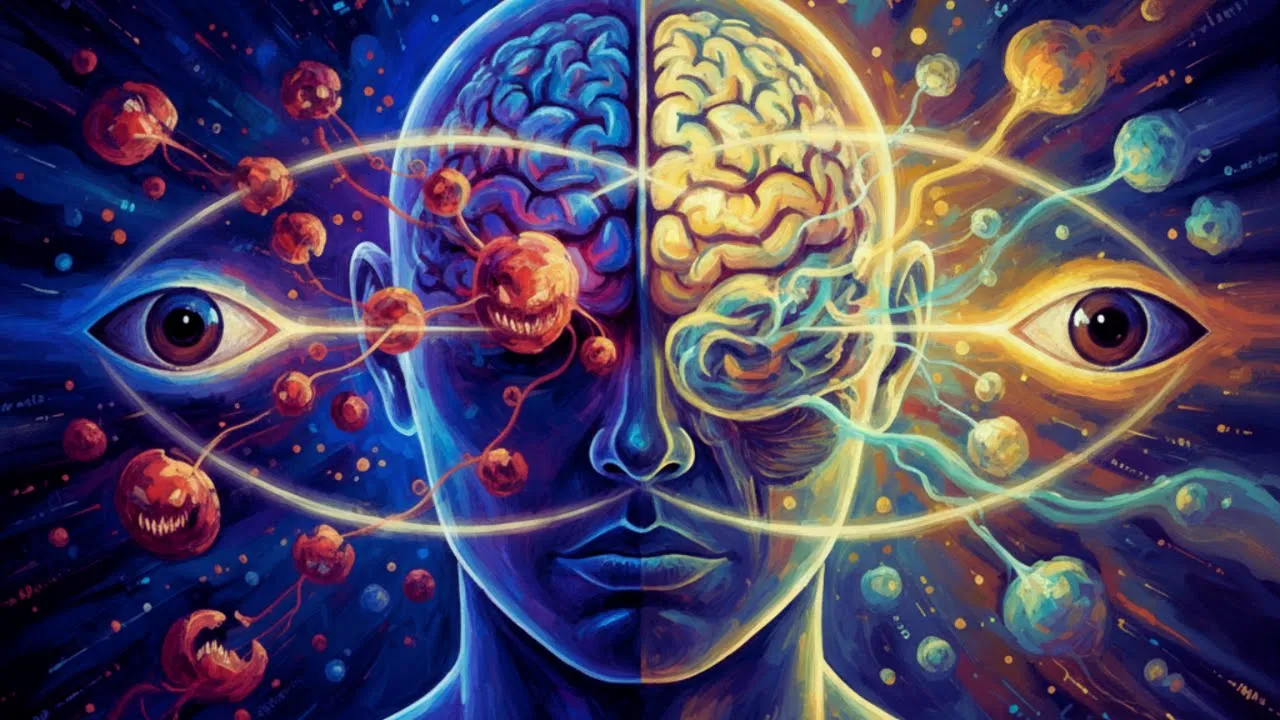





Post-Traumatic Stress Disorder (PTSD) arises from disrupted neural circuits involving the amygdala (which processes fear and initiates fight-or-flight responses), the hippocampus (which contextualizes memories), and the prefrontal cortex (which regulates emotional responses), where an overactive amygdala, underactive hippocampus, and impaired fear extinction mechanisms lead to persistent fear responses and intrusive memories following traumatic events.
Emotional Learning & PTSD: Brain Mechanisms Explained
Added:Basic neuroanatomy, specifically the roles of the amygdala, hippocampus, and prefrontal cortex in emotional processing.
The behavioral principles of classical conditioning, particularly fear conditioning and extinction.
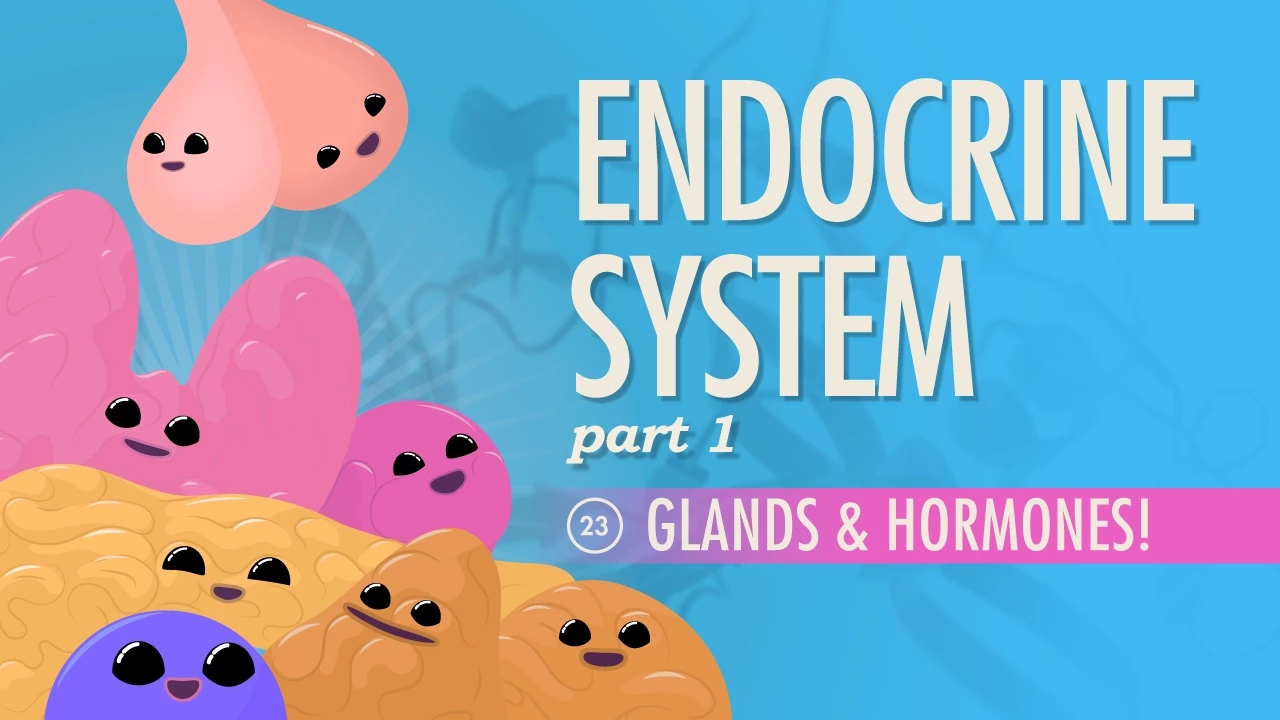
Introduction to the endocrine system, specifically the Hypothalamic-Pituitary-Adrenal (HPA) axis and stress hormones like cortisol.
Fundamental concepts of synaptic transmission and how neurotransmitters facilitate brain communication.
The neurobiological mechanisms of memory reconsolidation and its application in disrupting traumatic memories.
Advanced psychopharmacology, exploring how treatments like SSRIs, beta-blockers, and novel compounds (e.g., ketamine, MDMA) target PTSD pathways.
Neuroplasticity and the brain changes associated with successful psychotherapy techniques like Cognitive Processing Therapy (CPT) and EMDR.
The epigenetics of trauma, examining how extreme stress alters gene expression and its potential transgenerational effects.
604 views11likes1:05:59Original Release: 2020-03-28
emotional learning and post-traumatic stress disorder or PTSD this is Mark cluck from Rutgers University Newark when events occur which put us or people we observe or know into danger we form searing memories memories laden with emotional content those memories can be useful because they help us avoid dangerous situations in the future but sometimes the memories of these emotional events these threatening events can stay with us for years and years and interfere with our ability to function even in safe situations today I'm going to talk about the biological basis of emotion and fear and how this leads us to understand what happens in post-traumatic stress disorder there'll be three parts to the talk begin by talking about some of the behavioral processes involved in fear learning discuss their brain substrates and then turn to talk about the clinical perspectives on PTSD there are two types of behavioral processes that are relevant to be aware of autonomic arousal or the fight-or-flight response and conditioned fear the way we study fear learning in a laboratory the autonomic arousal or the flight if fight response is a collection of bodily responses including decreased increased blood flow to muscles increased respiration and depressed digestion and immune function that prepare the body to face threat it involves both a number of increases as noted blood pressure and heart rate go up respiration blood glucose level pain suppression perception and awareness blood flow to large muscles and legs and arms this is our body's way of preparing us to survive the next few minutes when we our life and well-being is under attack or or threatened at the same time other biological processes which are not essential for surviving the next few minutes or surviving an immediate threat are decreased because the body takes energy and resources away so digestion appetite immune system is depressed sexual arousal deceit is decreased touch sensitivity peripheral and even the body's growth all are depressed as the body focuses on survival we study this kind of emotional response learning to predict danger in the laboratory using a paradigm called conditional emotional response and it occurs when a rat is given an unpleasant and surprising stimulus such as an electric shock it will typically display a short period of alert immobility this freezing response can be seen in humans and gorillas and his innate is not something we learned a conditioned emotional response is a classically conditioned response in which a physiological arousal is produced in response to a cue or a conditioned stimulus that has been paired with any motion of oking stimulus like a shock there are two ways this is studied in the laboratory so if we consider the situation where a tone and shock are paired one thing we look at is the freezing behavior so how long an animal freezes in seconds you can see that the first time a tone is presented in in Figure a that there's very little freezing that goes on but after that tone has been paired with a shock the freezing takes place for much longer another way to measure this fear response after a tone shock pairing is to look at blood pressure we see in the write that after the first tone presentation there's a little bit of an increase that we respond to any novel stimulus but after that tone is paired with a shock the tone itself causes a rapid change in blood pressure so to summarize there are two behavioral processes that we want to be thinking about in this talk arousal also called the fight-or-flight response is the body's way of preparing to face or run away from a threat energy is diverted to the brains lungs and legs and away from other systems such as digestion and the immune system conditioned emotional learning is a form of conditioning in which a cue such as a tone is paired with an emotion of oking outcomes such as a shock this evokes a response such as freezing or increased heart rate let's talk about the brain substrates underlying this fear learning and emotion there are three brain regions that are important to be aware of the amygdala the hippocampus and stress hormones which are not brain region so much as a brain system so these are the key brain regions that we're going to talk about today the frontal cortex a little bit the hypothalamus and the thalamus less so but the amygdala in the hippocampus are two brain regions that are critical they're in the medial temporal lobe and the amygdala sits right at the very end of the hippocampus which is shown in blue the amygdala is a collection of brain nuclei that lie at the anterior tip of each hippocampus that is the front tip of the hippocampus it's critical for learning and expressing emotional responses as well as mediating the emotional formation of other memories the amygdala is a collection of more than 10 separate sub regions each of which is called a nuclei and all of which have different input and output pathways here's a broad overview of some of these key nuclei and how they interact a sensory stimulus comes in it goes through the thalamus and from the thalamus it goes directly into the amygdala this is often called the fast and rough pathway but information from sensory information in the world will also go into the cortex where this is processed and analyzed and this creates a slower but more accurate description of what's going on information then goes into the base of lateral amygdala from there to the central nucleus of the amygdala and this leads to two sort of pathways for response the ANS or the arousal and stress hormone release which we'll talk about later as well as motor areas which are responsible for the freezing or the startling let's take a look next to the video that'll tell us a little bit more about the amygdala the amygdala is a collection of nuclei found in the temporal lobe there are two amygdala one in each cerebral hemisphere the term amygdala means Almond referring to one the most prominent nuclei of the amygdala that has an almond like shape the major nuclei of the amygdala include the lateral nucleus basal nucleus accessory basal nucleus central nucleus medial nucleus and cortical nucleus each of these nuclei can also be partitioned into sub nuclei one common scheme for anatomically organizing the amygdala is to divide it into a basal lateral region made of the lateral basil and accessory basal nuclei and a cortical medial region made up of the cortical medial and central nuclei there are however other common ways of anatomically dividing the amygdala as well the amygdala has traditionally been considered part of the limbic system a group of structures linked to the processing of emotions the amygdala has historically best been known for its role in processing fearful emotions when a threatening stimulus is present in the environment it is thought that the amygdala is also involved in identifying as a threat and initiating a fight-or-flight response to it more recent evidence however indicates that the amygdala is active during the processing of positive stimuli as well thus it is now thought the amygdalas role is more complex than that of a threat detector it may be involved with assigning positive or negative value to stimuli and with a consolidation of memories that have a strong positive or negative emotional component it is also still being explored in a variety of other behaviors ranging from addiction to social interaction thus its functions are diverse and still not fully understood one of the leading researchers on the amygdala is Bruce McEwen at Rockefeller University next we're going to hear from him some of his perspectives on this field starting with the amygdala it is the the brain area that's involved in fear fear learning also to some extent in aggression it's also a brain structure that is involved in turning on the stress response turning on the the adrenaline turning on the ACTH that causes cortisol secretion it's also an area that's involved when you're when you're stressed in see something dangerous like a snake walking in the in the woods you freeze and then you later move back it's involved in all of these primary actions that are related to stress and self-defense we talked earlier about the fear conditioning that's used in laboratory studies of emotional learning and we can see from physiological studies that record from the amygdala that looked very much like the behaviors so look here this is recordings from the basal lateral amygdala in the kind of fear conditioning paradigm we described before to to odors an almond odor shown in blue and an anise odor in yellow at baseline the amygdala in this is in a rat shows the same amount of responding to both but after the almond odor in namely the blue is paired with a shock we see that presentation of the almond odor shows a response much like we saw behaviorally the amygdala Ripper neurons are firing at a much more rapid rate this suggests that some learning about danger probably takes place in the basal lateral amygdala where neural connections change as a result of experiencing a neutral CS paired with a fear of Oken us like a shock the amygdala and expression and emotional responses amygdala activity can trigger both physiological arousal that fight-or-flight response as well as behavioral responses humans give an amygdala stimulation may report subjective feelings of mild positive or negative emotion but generally do not exhibit strong behavior physiological responses such as seen in cats and rabbits lesions of the central nucleus of the amygdala disrupt the ability to learn and display new emotional responses in humans patients with bilateral damage to the amygdala often show deficits in learning emotional responses the most well-known such patient known by her initials 8sm is introduced next one of the most famous case studies and all of neuroscience is currently I think in her 40s and as far as we can tell the destruction of her amygdala has left her essentially fearless to at least external stimuli and to test whether sm is in fact fearless the researchers who worked with her took her to a couple of the most frightening places that they could think of in the local area so one was an exotic pet store and they offered her exotic snakes to to hold in the store even though she says she's afraid of snakes many people would hesitate to hold a snake right up to their face and touch its tongue and inspect its face really closely but awesome had no problem doing that they also took her to a place that is at least called the most haunted house and the United States and they decorated it for Halloween and they have people the staff dressing up as monsters and things to try to scare people and the researchers and I sound went through with just a regular group and all the other people who were in the group as soon as they were in this haunted house it is apparently very spooky were no hot only together and they look really slow to go around corners and a sound was taking a lead and saying come on guys follow me and she would be the first around the corners and when the monsters jumped out and tried to scare her apparently she would scare them sometimes because she had no fear response to them which they were not expecting and so what was really interesting about this is that SM is not emotionless she she experienced a lot of curiosity and excitement which we think are governed by other regions of the brain predominantly but she just doesn't seem to have any normal anticipatory fear response but her her lack of the fury response gets her in trouble so she apparently walks home in the evenings through sort of a vacant lot and she was mugged there at one point and I think at knifepoint and most people when something scary like that happens to you and you are at risk of aiding her you have a normal fear response when you're approaching that same place that would send you avoiding it I mean that's what the fear response is all about avoid things that might hurt you and she doesn't have that response so she continues to take that same route home every night by resolve the next brain region of interest is the hippocampus this is a brain region that we discussed in a previous lecture as being critically involved in forming new memories for facts and for events and now what we want to understand is what happens when those events that are being stored are events that are dangerous events are emotionally salient events the hippocampus is critically involved in context learning the hippocampus projects to the amygdala both directly and indirectly as we saw before allowing contextual information from the hippocampus to help the amygdala trigger emotional responses the ability of hippocampal contextual memory to influence emotional responding is part of the reason why returning to a location or context such as hsm and that vacant lot where an emotional experience occurred is often enough to evoke an emotional response so place learning where where a danger occurred where a threat occurred in someone with a normal brain system would show fear here we can see what happens when we compare someone with an amygdala lesion like sm which we just saw a minute ago with someone with a hippocampal lesion like the patient hm who was discussed in a previous lesion a previous lecture so look here first what happens in rats so we're looking at a conditioned emotional responding from a rats responding to a CS like a tone controls will show control rats will show a large amount of freezing as you'd expect to a Q that's been paired with a shock animals with an amygdala lesions show no fear no freezing to the shock but an animal with a hippocampal lesion shows normal freezing so it's so the graph on the Left shows from the animal lesion studies that an amygdala lesion but not a hippocampal lesion will interrupt fear learning we see the same pattern in humans so that a normal human will show a fear response measured by scr or stimulus conductance in the fingers sort of an anxiety response they'll show a normal response when a Q is paired with a shock a patient like SM with an amygdala lesion will not show that fear as was described in the previous video but a patient like HM with a hippocampal lesion will show normal now what we can do with you we can't do with rats is ask them about this learning experience see what they remember from the training and here's what we see something very unique about the humans that we don't can't pull out of the rats so the person with an amygdala lesion recalled the training so like SM who we saw in the previous video she would recall the whole training where I say a tone was paired with a shock she could describe it she could even tell you how many times the tone was paired with a shock but every time she sees the tone she shows no autonomic response note no fear to it on the other hand a patient like HM who has a hippocampal lesion will have absolutely no recollection of the tone before he won't be he won't even be aware that he was trained but if you present the tone his fear conditioning is his fear response is normal so another way to understand the role of the hippocampus in context conditioning is the idea that this is somehow modulating or gaining which cues are are not appropriate to fear so we know that we don't need a hippocampus for a rat to learn that a tone as shown here is paired with a shock so you can take out the hippocampus and the rat learns that fine what a rat with a hippocampal lesion has a hard time doing however is distinguishing between two contexts so imagine an experiment in which there is a black box in a green box and in both boxes a tone is played but only in the black box is the tone followed by a shock a rat with a normal rat with an intact rat will eventually learn to only show the fear response the freezing in the black box when it hears the tone but eventually it learns that the tone in the green box means it's safe this tells us that the hippocampus but an animal without a hippocampus and without a hippocampus will show fear in both places so it won't be able to learn that the green box is actually a safe context but only the black box this tells us that the hippocampus is critical for tagging the contexts such as the box in terms of which cue in that context predicts an aversive outcome the amygdala in the hippocampus and other brain regions are modulated by stress hormones that are activated during stressful situation stress hormones can strengthen memory encoding the ANS signals the adrenal glands which are located above the kidneys to release stress hormones including glucocorticoids and epinephrine into the bloodstream norepinephrine is a neurotransmitter that is chemically related to epinephrine but unlike epinephrine it can cross the blood-brain barrier and affect brain function norepinephrine can indirectly promote strong learning in the cortex and hippocampus but blocking a reducing norepinephrine can therefore reduce memory for emotional material so this is some of the pathways by which the amygdala and stress hormones modulate memory storage in the hippocampus you have the amygdala which is activating the autonomic nervous system the arousal and stress release that triggers the adrenal glands to release adrenaline and glucocorticoids the adrenaline affects the brain stem which in turn further activates the amygdala and from the both the amygdala and directly from the adrenal glands we see the hippocampus and the cortex being modulated so these stress hormones are pervasive throughout the throughout the brain and during situations where one feels threatened where one is in danger these stress hormones can change the way that brain is functioning and memory is stored stress hormones can also impair recall in addition to affecting memory encoding stress hormones can affect retrieval whereas modest doses of stress hormones at the time of learning will improve new memory formation a little bit of stress can focus your attention and and heighten your ability to encode new memories the presence of stress hormones that recall will often impair the retrieval of older memories this one way of thinking about this is that a little bit of stress of worrying about the exam may be good for while you're studying when you're trying to encode new memories but if you're stressed during taking the exam when you have to recall it that's likely to impair your performance and retrieval so to summarize the brain substrates emotion depends on many brain areas the amygdala is central to fear and avoidance learning and loss of amygdala impairs ability to learn fear associations the amygdala also enhances storage of emotional memories by the hippocampus so the facts and events that we had talked about in the previous lecture the ways in which they are stored the degree to which they are stored are affected by amygdala activity which is more active during fearful and stressful situations stress hormones can magnify memories form during stress and finally the hippocampal region can modulate fear memories by providing a context for when they are recalled so that in certain contexts spatial context or temporal context we know that certain cues are associated with threat but in other contexts they're not this brings us now to talk about really the central theme of this presentation which is post-traumatic stress disorder or PTSD I'm going to talk first about the symptoms then the neurobiological mechanisms that underlie these symptoms and finally we'll discuss how PTSD is treated let's start by looking at a video that'll tell us a little bit about understanding PTSD picking up with the World Trade Center attack that was introduced at the beginning of this lecture you genuinely feel threatened by almost everything it's a really isolating kind of condition I was clenching my teeth so hard that I was chipping my fillings out my muscles and my joints were always incredibly painful because I was tense the whole time you know waiting for for something to happen I guess and obviously that's exhausting kind of being on this high alert all the time [Music] I've been a great supporter of the arms forces all my life I've done a lot of charity work and for them it was something that I had never considered that I could potentially get myself but I almost felt like I wasn't worthy do you know I haven't been to war I haven't seen the horrific things that they've seen so there isn't you know I can't have PTSD [Music] I start getting panic attacks and having flashback I couldn't understand how they'd be able to fix me essentially [Music] understanding how it physically would you know retrain my brain essentially and allow me to do the reprocessing it was a great comfort it allowed me to kind of see how things were gonna get better [Music] people need to know that it is treatable there's a lot of information out there and it kind of talks about managing your PTSD or how to live with PTSD and I think if people are unaware that you can completely be rid of it and obviously they're not really going to go down the correct route to that treatment post-traumatic stress disorder is a psychological syndrome that can develop after exposure to a traumatic event such as combat rape or natural disaster there are four key categories of symptoms that you should be aware of the first is reappearance ingush are intrusive recollections of the trauma and there are two basic types there are daytime flashbacks that occur while someone is awake and and during their daily life and then there are flashbacks which come back as nightmares while sleeping the second is avoidance of situations that are reminders of trauma a tendency to pull back from anything that might trigger a trauma memory the third is emotional numbing a sort of a lack of of any kind of emotional responding and persistent negative thoughts so changes in mood and for arousal these sort of this hyper arousal and hyper vigilance to threat a tendency to perceive threat even when it might not even be there and note that both nightmares and arousal contribute to one of the most pervasive and disruptive aspects of PTSD which are sleep disorders there are some very clear patterns of psychological recovery after a traumatic event for most people exposed to trauma the fear reactions subside with time a phenomena termed resilience that you can see in the yellow line on the graph at the right but for individuals with PTSD the fear reactions persist for months or years possibly reflecting a failure of extinction that is an inability to extinguish the ways in which various cues have become associated with the fear response to get a clearer understanding of some of these PTSD symptoms we'll hear now from a director of one of the PTSD programs at Weill Cornell Medical College those common symptoms are the ones that are often most difficult to recognize avoidance it's human nature to avoid what's painful right so we avoid thinking about anything that's painful if we can we avoid our emotions we avoid going back to places that remind us of our trauma but so that could be and it may not be as obvious because as trauma we think of it as our our memory for trauma as being cue stiff becoming cues to fear and so it may in those generalize out from this specific event so you could have been at the World Trade Center and perhaps not even been in the building but outside witnessing it and then over time you'll become afraid of tall buildings so we had a patient who actually broke up with her her fiance because he lives on the 30th floor of an apartment building and she was terrified to go into his building of course she said that she was breaking up with him because they didn't get along and they're a whole host of other problems the good news is that after treatment she realized that what she was just scared to go into his building and they got back together and they got married but at the time she had no no recognition that that that she was avoiding his home because it reminded her working at the World Trade Center so you've heard from several therapists now I'm gonna ask you to play therapist yourself to test your knowledge and understanding of PTSD and the symptoms in each of the following movie clips a person is shown who is suffering from PTSD and that person exhibits one or more key symptoms for PTSD after I show you each clip I want you to identify the symptoms being displayed and if you can do that that'll show you that you've really begun to understand some of the symptomology of PTSD the first clip is from the 2013 movie Iron Man 3 Tony do you know what Tony's symptoms are here their reappearance experiencing in the form of nightmares the next test question comes from the 1994 movie Forrest Gump there are two characters in this scene but only one of them is suffering from PTSD what symptoms is he displaying I guess what a good friend of mine who's in the bed right next door it's time for your bath lieutenant ah / Marcin webs yeah lieutenant dan who lost both his legs in the Vietnam War in the movie what symptom is he displaying emotional numbing despite the social interaction and upbeat offering of ice cream from Forrest Gump Lieutenant Dan shows absolutely no emotional responding he's sort of he's numb and his mood is flat let's look now at a more recent movie 2003 Lord of the Rings Return of the King this is a more difficult one to identify what PTSD symptom is being illustrated in this movie how do you pick up the threats of an old life how do you go on in your heart begin to understand there is no going back there are some things that time cannot mend some alerts that go too deep [Music] that have taken hold so this is a little difficult one but what we're seeing here is an example of avoidance a sense that certain memories certain experiences certain places are so painful that they need to be avoided one of the best and most complete characterizations of PTSD really the theme of the entire movie was about a soldier returning from war with PTSD was the 2014 movie American sniper and I'm gone out so we've seen in this scene two symptoms of PTSD do you recognize them the first is emotional numbing as his children go by as his wife comes in he shows no emotional responding to them much like Lieutenant Dan when he was being offered ice cream by Forrest Gump but the other is Rhian Singh as flashbacks in contrast to the Iron Man movie where the free experiencing was happening during sleep in the form of nightmares here for the main character he's rien seing the sounds of the war while he's staring at a blank television screen so this is these were often referred to as flashbacks because they flashback during the the daily life there's another scene from American sniper that shows a different symptom do you see if you can identify that here fresh so what just happened here kids were playing with the dog and the dog started playing and licking at one of the kids but Chris perceived it as a threat and came out not only to sort of pull the dog off but you saw he came just as a threshold of beating the dog something clearly sort of inappropriate in a situation where the kids and the dogs were just playing around this is a symptom of hyper vigilance of perceiving a threat when it isn't there and responding as if one as oneself or one's loved ones are being threatened so that's hyper vigilance so these are some of the symptoms if you did got all or most of them correct then you probably have a good understanding now of what are the different symptoms that one sees in PTSD and it's important to realize that not everyone shows all of these symptoms but people who have PTSD have often have several of these symptoms some may be greater in some people than in others let's talk now about the neurobiology earlier we talked about the behavioral processes of fear and emotional learning the brain substrates the amygdala and the hippocampus especially now that we understand from the basic research about the biology of fear learning and emotion what does that tell us about the neurobiological mechanisms that are being invoked in PTSD many neurobiological mechanisms appear to be disrupted in patients with PTSD these include an overactive amygdala an underactive hippocampus in prefrontal cortex and disruptions in the level and timing of stress hormone release resilient individuals do not forget the trauma nor the negative emotions that they experience with the trauma but the queues are no longer able to evoke the conditioned fear response the idea being that you don't want to forget a fearful or traumatic situation because our memories of these past trauma are what guide us to avoid them in the future in situations that could in fact be danger PTSD occurs when these trauma memories both cause us to respond to threats when they aren't there and to be unable to remember the previous trauma experience without reappear Ian Singh it in in an autonomic arousal fashion individual with PTSD also failed to extinguish the normal fear response to stay that are associated with a chromic event the idea being that there may be some cues associated with the fear which you form an association during the trauma but later on if you see those cues and they're not associated with a traumatic situation eventually you would extinguish the fear response to those cues people with PTSD they never extinguish that or they show very little extinguishing of cues that were previously associated with fear so what does this tell us about predicting and preventing PTSD connections from the hippocampus to the prefrontal cortex are important in extinguishing learned associations individuals with a slightly smaller hippocampus might be less able to extinguish fear responses than their peers who have average hippocampal volumes remember the previous study we showed where rats without a hippocampus are unable to distinguish the context the blue the green box or the black box where they should be afraid of the cue that the tone cue amygdala hyperactivity may proceed and may actually confer risk for PTSD and individuals later exposed to a trauma so someone naturally or previously has a hyperactive amygdala that can make them more susceptible to PTSD other risk factors for PTSD are still being studied and they include certain genes increased startle response to loud noises and personality traits such as neuroticism harm avoidance and novelty avoidance the next visit video is from the National Center for PTSD and was created to describe PTSD in the brain to people who may be suffering from this primarily combat veterans today we're going to talk about the neurobiology of your post traumatic stress disorder will focus on several parts of your brain that we understand best here are the amygdala the hippocampus and the prefrontal cortex and for this I will need a brave volunteer wonderful come on up Tony the body includes an ancient stress response system Tony do you have any idea what that might be yeah the fight flight or freeze thing right precisely here take a look at this marble machine the bodies fight flight or freeze stress response system is complicated but I'll show you the most important stuff imagine that you've just confronted a life-threatening situation which shall we say gets the marble moving the response system kicks into high gear and most often when the dangerous situation ends the fight flight freeze response shuts off Jing but with PTSD your stress response system doesn't know when to quit Tony would you be comfortable sharing what PTSD is like for you well I got back from Afghanistan about a year ago but I'm still anxious or angry all the time I don't sleep well I'm it's like I'm always on guard so when Tony or any of you for that matter experienced your trauma the amygdala your brains threat detector set the stress response system into motion your body released adrenaline and other stress hormones giving you that surge of energy that helped you respond to the threat but my deployment was over a year ago yes that's where the hippocampus comes in it converts short-term to long-term memory and it helps you remember where and when danger happens so that you can avoid it in the future with PTSD something could remind you of that trauma and your hippocampus wrongly assumes that you're in that situation again that sends a signal to your amygdala that it's time to go go go and this happen over and over again eventually in more and more situations you can't deal with things like you used to and it's hard to feel good about anything so what can I do first you need to know that your brain is flexible it can adapt your brains prefrontal cortex is responsible for thinking planning decision-making and shutting down the stress response when you have PTSD and your amygdala is firing so much it's hard to put the brakes on with practice you can bring your prefrontal cortex and amygdala back into balance evidenced-based talk therapies can teach your mind in body to more effectively cope with stress talk therapy can strengthen your prefrontal cortex to help you stop the stress response system from going into overdrive certain medications can help you manage PTSD symptoms too you have options the best thing to do is to talk with your provider about the best plan for you finally check out the National Center for PTSD @ww PTSD va.gov they have so many resources for you videos brochures mobile apps Thanks I'll check it out if you feel you may be experiencing PTSD talk with your health care provider and be sure to go to the National Center at wwp PTSD va.gov today to learn more so we've seen now that there are three brain regions that are critically involved the prefrontal cortex which is involved in modulating the activity in the hippocampus and and the amygdala and deciding what how to respond or when to respond the amygdala which is the actual fear detection and fear encoding circuit and the hippocampus which involved in understanding the the context both the temporal context when fear is occurring and the spatial context where it is let's look a little bit more closely at some fascinating study that was done on hippocampal volume and PTSD risk so this was a study that was done with twins who had gone one of whom had gone to be in the Vietnam War so there was a registry of brothers one brother they're identical twins one went to war and some of whom developed PTSD and others didn't but the other twins all stayed back stateside none of whom eventually developed PTSD now what they found was fascinating was that of those who develop of the veterans who had been in war those who had PTSD had a smaller hippocampus than those who did not develop PTSD and that was consistent with many other studies both in animals and humans which suggested that a larger hippocampus was seen in those who did not have PTSD but it always had been the open question of does this a pre-existing condition is a small hippocampus put you at risk for it for PTSD or is a small hippocampus the consequence of PTSD namely the being having PTSD does all the stress responses the continuous stress is that shrinking the hippocampus and what this study showed is it argued that the hippocampus was probably a pre small hippocampus was probably a pre-existing condition because the unexposed twins of the veterans who developed PTSD had a smaller hippocampus than the unexposed twins of the veterans who did not now none of those unexposed twins had PTSD so PTSD didn't cause the small hippocampus and we assume therefore that by looking at the unexposed twin the twin who didn't go to war that we see something about what their hippocampus was like before they developed PTSD and so this suggests that a small hippocampus may be a pre-existing risk factor for PTSD but that PTSD occurs only if they are exposed to trauma so there's the combination of the pre-existing condition the small hippocampus and the exposure to trauma suggesting that those with a small hippocampus may experience trauma in such a way that they're unable to develop an appropriate context for it and we'll come back to that in a minute so just to review the data from this this critical study so pre-existing vulnerability factors help determine an individual's risk for PTSD and hippocampal volume may be a factor but we see on the right which was illustrated in the figure that we saw previously is the hippocampal volume so the veterans with PTSD and the veterans with no PTSD those with no PTSD had a larger hippocampus did that PTSD caused the small hippocampus and those with PTSD probably not because if you look at their twin brothers the twin brothers of those with PTSD had a small hippocampus as well so how do we interpret this why is this small hippocampus as a pre-existing condition making putting people at risk for having PTSD but remember this study before that we described earlier that rats don't need a hippocampus to learn that a tone predicts a shock but they do need a hippocampus to learn that a tone in a black box predicts shock but a tone in a green box does not and rats without a hippocampus wind up responding to the tone as as a fearful stimulus in both the black box where it is in fact predictive of shock as well as in the green box which is actually a safe context the rats without a hippocampus are in effect over responding to fear or expecting fear expecting a shock that never occurs we can think of this in this case as a form of overgeneralization so that the rats fail to learn the very specific spatial and temporal context in which the the cue is a trigger or a predictor of a threatening event in this case a shock and the same thing can be seen as a way of thinking about what's happening in PTSD so a soldier who hears a loud noise last year in Afghanistan that's probably a threat that could be incoming mortar fire or a attack of some sort and you show you should show fight-or-flight response you should drop to the ground you should return fire should do all the things that are appropriate if you're under attack in a military theater on the other hand that same loud noise a year later a different time a different place they are shown in Washington DC probably is not incoming mortar fire machine gun but rather a car backfiring or something else so what we see in people with PTSD is they they act an awful lot like the rat in the green box namely they are responding to expect a threat for the rat a shock for the soldier incoming fire in a context where they should otherwise have appropriately learned is safe and loud noises don't predict incoming fire or mortar attacks or so forth when you're in a safe civilian context outside the war so this shows a way in which we can relate the symptomology of PTSD as being a form of hippocampal impaired overgeneralization that we see as well in rats that are experiencing fear conditioning in different contexts so we've seen about an overview of some of the symptoms of PTSD a discussion of how the the neurobiological mechanisms of PTSD are hijacking or disrupting or created by disturbances in the frontal cortex the amygdala and the hippocampus but what do we do about it how can we treat PTSD so there are at this point a number of different ways of treating PTSD and there are four videos which I'm going to show you next the first to describe fairly standard treatments that are widely in use today while the second two are really about future directions more experimental approaches for future ways of treating PTSD it's important to note that even for the current therapies that are described they only work some of the time for some people and this tells us that we still have a lot more of research to do about how to both understand PTSD and how to best treat it if you have post-traumatic stress disorder or PTSD it's common to feel like there are places or situations that are unsafe it may seem like the best option is to avoid them staying away from people or places that feel dangerous or reminders of a traumatic event as a result you may develop I can't rules I can't leave the house at night I can't trust anyone I can't handle crowds but these rules won't help you overcome PTSD so how do you learn to say I can prolonged exposure or PE is a treatment for PTSD that helps you do safe things you've been avoiding in PE you and your therapist will practice exposure meaning you'll work to approach things you've steered clear of since the event you have to challenge your I can't rules to prove to yourself that you can remember when you were learning to swim or even drive a car it was challenging at first but got easier with practice exposure gets easier with time with your therapist you'll take steps to do the things that have been hard for you at your own pace so if you're avoiding the grocery store you might start by going what it isn't crowded maybe bringing a family member along you'll eventually practice going on your own perhaps even during peak hours with practice you'll find that you can handle it you'll also talk through the details of your traumatic event in a safe gradual way with your therapist closing your eyes can help you concentrate retelling the event may sound like the last thing you want to do but it helps with emotions like anger guilt and sadness you'll listen to a recorded version at home too after a few months you'll find that you can talk about your trauma without feeling so overwhelmed prolonged exposure doesn't erase your trauma but it can help you keep your traumatic experience from getting in the way of living your life pe doesn't require you to take any medications with your therapists help you'll follow a step by step program for about three months most people who complete PE show noticeable improvement in their symptoms and many no longer have PTSD prolonged exposure works well for both men and women and it's evidence-based which means PE has been proven to work in multiple research studies if prolonged exposure sounds like it could be right for you talk to your doctor about finding a PE provider or visit the National Center for PTSD website at WWDC a gov to learn more about PE and other PTSD treatment options no matter how long you've been living with PTSD know that you can get better [Music] so prolonged exposure therapy is a form of conditioning at least the you're exposing people to the stimuli that trigger the trauma and what you're effectively trying to do is extinguish them much like a rat might be shown after had learned that tone predict shock it might be shown the tone alone many times or something similar to the tone and eventually training it so prolonged exposure therapy is essential is a way of altering the habits the the pathways the response pathways in the brain but it doesn't really tap into our our cognitive awareness there's another therapy called cognitive processing therapy that takes a different approach to PTSD that tries to create a broader cognitive awareness of what's happening so that you can modulate your response a traumatic event can change the way you think about yourself in the world you might think you were to blame for what happened or believe you don't deserve to be happy you may start to believe the world is unsafe doing things like going to a grocery store a restaurant may seem too dangerous these kinds of thoughts are common in people with post-traumatic stress disorder or PTSD they're called stuck points they keep you stuck in your PTSD and cause you to miss out on the people places or activities you used to enjoy so how do you get unstuck cognitive processing therapy or CBT is a PTSD treatment that can help you break the negative thinking that's holding you back it's based on the idea that our thoughts affect how we feel and how we act in CPT you and your therapist will talk about how your negative thoughts about the trauma those stuck points have changed you how safe and in control you feel how much you trust yourself and others and even your sense of self-worth you'll practice a strategy to change or challenge you're stuck points PTSD can make you jump to negative conclusions but there may be other ways to think about things that are more accurate and less upsetting imagine you're driving down the highway and someone swerves in front of you you might blow up the driver what a jerk but what if he was racing to the hospital or having a panic attack and rushing to get off the road if you considered these possibilities you might not feel as angry the bottom line small changes in thinking can have a big impact on how you feel some people find that writing about their trauma helps them change upsetting thoughts and feelings you and your therapist can decide whether or not this is right for you CPT works just as well either way you can also choose to meet with your therapist one-on-one or in a group with others who have PTSD CPT is evidence-based meaning it's been shown to work in multiple research studies and it doesn't take years in fact CPT usually takes about three months of weekly visits CPT can help you get unstuck freeing you up to start enjoying the things you've been missing out on men and women veterans and civilians can all benefit from CPT if cognitive processing therapy sounds like it could be right for you talk to your doctor about finding a CPT provider or visit the National Center for PTSD website at WWDC VA gov to learn more about CPT and other PTSD treatments no matter how long you've been living with PTSD know that you can get better so these two therapies cognitive processing therapy and exposure therapy are probably the predominant ways in which PTSD are treated today both have evidence supporting them working to some degree and in a number of people now you might ask well which is better CPT or exposure therapy and the answer is we don't really know and we also don't know why CPT may work for some people but not others and and why for an individual with PTSD we don't know which approach CPT or exposure therapy is likely to be more to work for them so there's clearly a lot of work to be done on therapies for PTSD and the next two slides describe two of the future directions where PTSD clinical research is going attempting to develop better and more personalized approaches the first involves an interview with Joe LeDoux from the New York University who's one of the experts on fear learning and fear memory and on the reconsolidation of fear what happens when we recall a memory and how do we go back and reread store on old memories called reconsolidation well stored in our minds memories most of us are able to come to terms with but for some people the trauma of experiencing danger violence or panic can create a debilitating disorder what if fear memories could be rewritten all of this research was based on systemic manipulations of the brain dr. Joseph LeDoux is a professor of science at New York University and serves as principal director for the NIH funded Center for the neuroscience of fear and anxiety he's part of a team that has found a way to block fear memories through a process called reconsolidation during a recent visit to the NIH campus in Bethesda dr. LeDoux explained the key to reconsolidation is understanding how memories are formed in the first place each time you form a memory your brain begins to form that memory in a temporary way that can be interfered with if nothing else happens so that you have to convert a temporary memory into a long-term memory in order to have that memory at some time in the future in 1999 a study from the LeDoux team showed the ability to block the consolidation of fear memories by injecting protein synthesis inhibitors to stop growth of certain cells in the amygdala the brains fear hub so that led cream Nader who is in my lab at the time to say what can we do the same thing with reconsolidation which means instead of giving the protein synthesis inhibitor after learning and blocking consolidation you give it after the retrieval of a previously consolidated memory so you form the memory the animal now has a long-term memory and then at some point after that memory is fully established you give the rat the tone which retrieves the memory and then you give a protein synthesis inhibitor and then you test the animal the next day and the memory is no longer there it's like a person who goes to trial to testify about a crime and instead of testifying about what they witnessed on that day they testify about what they in the newspaper because each time you take a memory out of the newspaper reading did you restore it and the information gets stored as a new memory so the bottom line involve this research is your memory is only as good as your last memory perhaps the greatest potential for a therapeutic application is with post-traumatic stress disorder patients where a patient with intrusive memories could be through the aid of a therapist and the aid of the proper manipulation such as a drug that's safe to use with humans the patient could be encouraged to retrieve the traumatic memory give them the manipulation and presumably the memory will be weakened at a later point in December a new study was published in Nature from a larger NYU research team that showed a drug-free method of replacing fear memories in people using exposure training dr. LeDoux acknowledges ethical questions when it comes to the science of altering memories I understand why people worry about that because memories are treated as sacrosanct they are you know we are our memories in many ways we have to remember who we are to be that person from day to day but one thing we have to realize is just how much we manipulate memory as part of life you know every time we watch an ad for a product our memory is being manipulated every time a student goes to class his or her memory is being manipulated every time you have a social interaction when the person you're trying to create a good impression which is basically a memory and once we put it into that context the idea that you might use memory manipulation to help people maybe doesn't seem so malevolent so we've seen here in the last three videos they all talked about a calm there's a common theme the idea that one is bringing back the memories in the exposure therapy they're being reexpose to talking about their therapy in the cognitive processing therapy there was also the component of writing about and talking about the memories bringing them back and somehow learning to use those memories learning to reorganize them or restore them reconsolidate them as Joe do refer to it in a way that's not quite as disruptive and the the work from Joe LeDoux and and Kareem Nader who is described here suggests that in addition to the exposure therapies in addition to the cognitive behavioral therapy there may actually be pharmacological interventions that can assist in reconsolidated memories in a way fear memories in a way that they no longer disrupt our lives there's a totally different approach to PTSD that involves neurosurgery rather than therapy or drugs and that is brain stimulation brain stimulation is a growing area of treatment for neurological and psychiatric disorders it's commonplace now for Parkinson's disease it's increasingly being used for psychiatric disorders such as obsessive-compulsive disorder but here's some studies that are looking at the possibility that brain stimulation brain implant through surgery could also be effective for PTSD are you doing it's a simple conversation under the most complex of circumstances during brain surgery Serena Kelly is the first patient in Canada to receive a procedure known as deep brain stimulation for treatment-resistant post-traumatic stress disorder or PTSD Sunnybrook surgeons guided by her brain images have inserted two electrodes deep into her brain targeting the precise areas causing her PTSD by talking her through a series of questions they make sure they've hit their target these electrodes will eventually be controlled by this pacemaker-like device it will be implanted during the second part of the surgery and will send ongoing electrical stimulation to the affected parts of her brain hopefully easing her symptoms for decades Serena has lived with the dark and debilitating effects of PTSD she says she has survived multiple sexual assaults and abusive long-term relationship and most recently the loss of her daughter Harley in a motorcycle collision so that was a very traumatic and has caused a lot of a lot of very intense home symptoms living with PTSD I feel is like being in a prison almost I can't do the things that I want to do I don't have a life other treatments offered no relief but that's where deep brain stimulation comes in says doctor near lips Minh he's the principal investigator of a new Sunnybrook lead study looking at the safety of deep brain stimulation for patients like Serena over the last 20 years or so we've been learning much more about psychiatric conditions things like depression and obsessive-compulsive disorder and post-traumatic stress disorder we're starting to realize that those symptoms of those conditions are driven by circuits in the brain that we can access with these electrodes it's estimated more than three million Canadians are currently living with PTSD a crippling mental illness that can occur after abuse disasters accidents or military combat approximately one-third are treatment resistant meaning possible new options like deep brain stimulation are critically needed doctor lips Minh says it will likely take months to gauge how the treatment is working this first phase of the study will include an additional four patients who will be followed for one year with eight grandchildren and three surviving children Serena says she wants to be there for them I hope that at least the bigger symptoms go away I do hope this does work not just for me but for for others to give them hope with Sunnyview I'm Monica matys so that brings us to the end of the clinical perspectives let's summarize what we've learned PTSD can develop in some people after exposure to a traumatic event key symptoms include rien scence emotional numbing and hyper vigilance many brain systems are disrupted in PTSD including an overactive amygdala an underactive or small hippocampus and under active frontal cortex there are also disruptions to the level and timing of stress hormones which modulate the function of these brain regions prior risk factors include genetics and some personality traits and 6 the most common current treatments for PTSD include prolonged exposure therapy or PE and cognitive processing therapy or CPT experimental treatments still underway being studied include replacing or reconsolidated formica logical interventions as described by Joe LeDoux as well as new approaches to brain stimulation as we come to the end of this lecture let me review what are the learning objectives what I hope you learned and what you'll be responsible for when we come to the exam the first is to describe the physiology and behaviors associated with a fight-or-flight response to understand fear learning and how it is measured to identify the major brain regions involved in fear and emotion learning and how they interact to characterize the role of stress hormones in fear and arousal and for PTSD to understand the major symptoms the primary risk factors and both current and experimental treatments for those of you who are students at Rutgers University Newark you may also be interested in getting involved in PTSD research in my lab we study PTSD in women survivors of sexual violence if you are a woman interested in PTSD and would like to join the research team please contact me at my email that was given in the first slide so I'd like to thank you all for joining me for this lecture are you worried about the exam if so remember what FDR with paralyzes needed efforts to convert with creep
Up Next

26:54
Brain Circuits for Contextual Control of Fear | Stephen Maren, Texas A&M University
@NenckiEduTube
333 views•2017-07-20

59:49
Neuroscience and Genetics of PTSD: A Precision Medicine Approach
@UWPBSCI
221 views•2024-05-09

4:10
Vagus Nerve (CN X): Anatomy, Nuclei & Functions Explained
@Alilamedicalmedia
305.2K views•2022-10-31
13:03
How Exercise Benefits Your Brain: Science Explained
@TED
11.4M views•2018-03-21
Related Study Plans & Knowledge Roadmaps
Structured learning paths in Neuroscience
neuroscience
Appetite Regulation: Brain Circuits & Hormones
01Foundations of Endocrinology and Brain Anatomy
02Introduction to Energy Homeostasis
03Peripheral Signals: Leptin, Ghrelin, and Insulin
+ 2 more learning modules
14h5 modules
Explore Roadmap
neuroscience
Neuroeconomics: Value, Risk & Brain Mechanisms
01Foundations of Neuroscience and Brain Anatomy
02Introduction to Neuroeconomics and Subjective Value
03Dopaminergic Prediction Errors & Reinforcement Learning
+ 3 more learning modules
18h6 modules
Explore Roadmap
neuroscience
Spatial Navigation: Cells, Grids & Brain Maps
01Foundations of Brain Anatomy and Memory
02Place Cells and Head-Direction Cells
03Grid Cells: The Brain's Coordinate System
+ 2 more learning modules
12h5 modules
Explore Roadmap
neuroscience
BCIs: Neural Decoding & Prosthetic Control
01Neuroscience Foundations: How the Brain Signals Intent
02Signal Acquisition: Recording the Brain's Activity
03Neural Decoding: Translating Brain Waves into Data
+ 2 more learning modules
25h5 modules
Explore Roadmap