![FILOSOFÍA - Epistemología [CICLO FREE]](https://i.ytimg.com/vi/O0G1C39cEzo/maxresdefault.jpg)




![PoSL8[23-24]](https://i.ytimg.com/vi/nk3ueL_tmAY/maxresdefault.jpg)




![God Isn't Real! Unless... Come debate! [7/08/2026]](https://i.ytimg.com/vi/3zDwNPNV90I/maxresdefault.jpg)





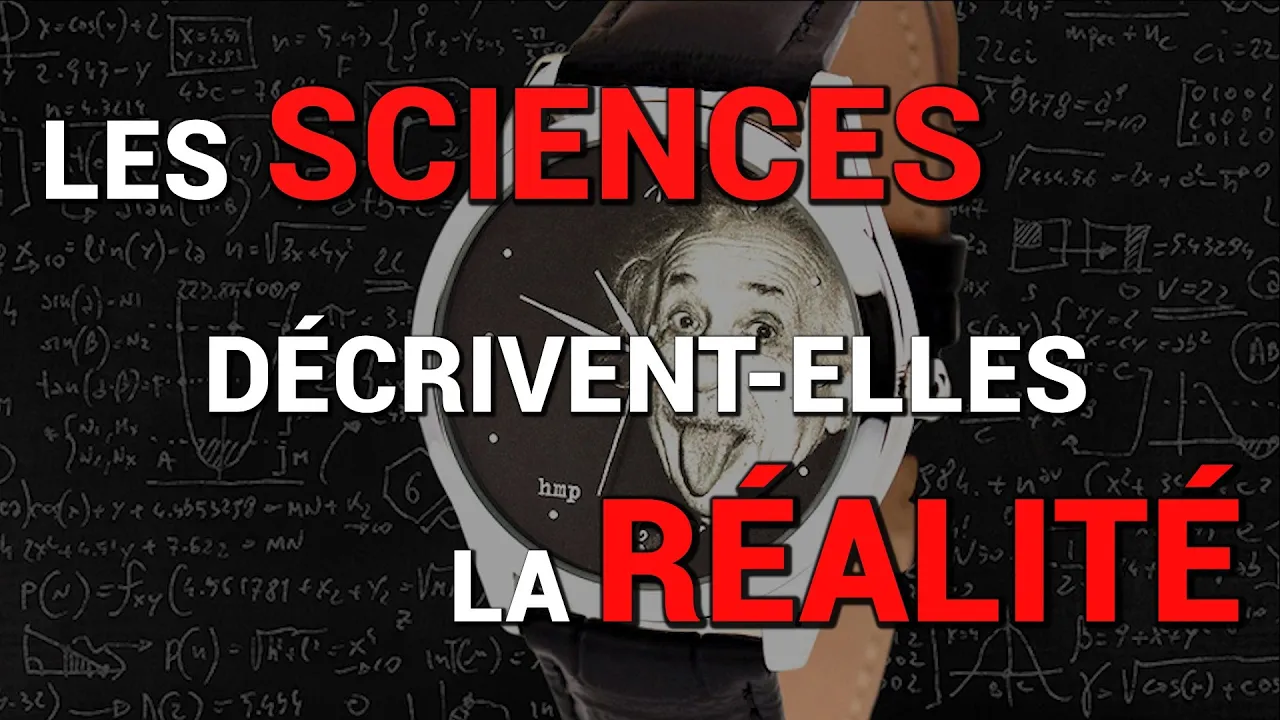




Scientific realism holds that science aims to provide literally true theories about the world, with two aspects: a semantic aspect (taking scientific language at face value, so terms like 'planet' or 'electron' refer to real external objects) and an epistemic aspect (believing accepted theories are true or approximately true). The no miracles argument, formulated by Hilary Putnam, states that scientific realism is the only philosophy that explains science's incredible success without making it a miracle; if theories weren't approximately true about the same objects, the success of theories like Newtonian mechanics or Einstein's relativity in predicting phenomena would be inexplicable.
Scientific Realism and the No Miracles Argument | Philosophy of Science
Added:Basic Scientific Epistemology: Understanding how scientific theories are constructed, tested, and justified through empirical evidence.
The Realism vs. Anti-Realism Debate: Familiarity with the general philosophical distinction between claiming something exists independently of our minds versus being a human-dependent construct.
Abductive Reasoning (Inference to the Best Explanation): The logical process of choosing the hypothesis that best explains the observed data.
Empirical Success in Science: Comprehending how scientific theories yield novel, highly accurate predictions about the observable world.
The Pessimistic Meta-Induction: Exploring Larry Laudan's counterargument that the history of science is filled with successful but ultimately false theories.
Constructive Empiricism: Investigating Bas van Fraassen's major anti-realist alternative, which argues that science aims for empirical adequacy rather than literal truth.
Structural Realism: Studying intermediate philosophical positions that argue we should commit to the structural mathematical relations of theories rather than their proposed entities.
Underdetermination of Theory by Evidence: Analyzing the Duhem-Quine thesis, which states that any given body of evidence can support multiple, mutually incompatible theories.
3.2K views32likes3:32Original Release: 2014-05-23
So, coming back to the theme of today's session, we saw in Galileo [unknown] example of someone that believed that the aim of science was not just to save the appearances, but to provide us with the true story about the world.
Now, this view is known in the philosophy of science literature as scientific realism. Scientific realism says that the aim of science is to provide us with theories which, literally construed, we believe to be true. There are two different aspects in this definition. The first is a semantic aspect.
It has to do with the language of science, the language in which our theories are formulated. And he basically says that we should take the language of science of face value, so if we have a theory, say, Copernican astronomy, that talks about planets, we should understand the term planet as referring, as speaking about objects in the external world, same for any other theoretical terms. If we have a theory about electrons, we should understand the term electron as referring, as speaking out electrons in the world. There is a, a separate aspect, which is an epistemic aspect. And that says that whenever we accept a scientific theory, we believe that the theory is true, or at least approximately true. In other words, whatever the theory says about those objects, be they're planets or electrons, correspond to facts in the external world. Now, appealing and intuitive as this may sound, as we have just seen with Ptolemy and Simplicius and Osiander, this was not the way in which for many centuries science was conceived.
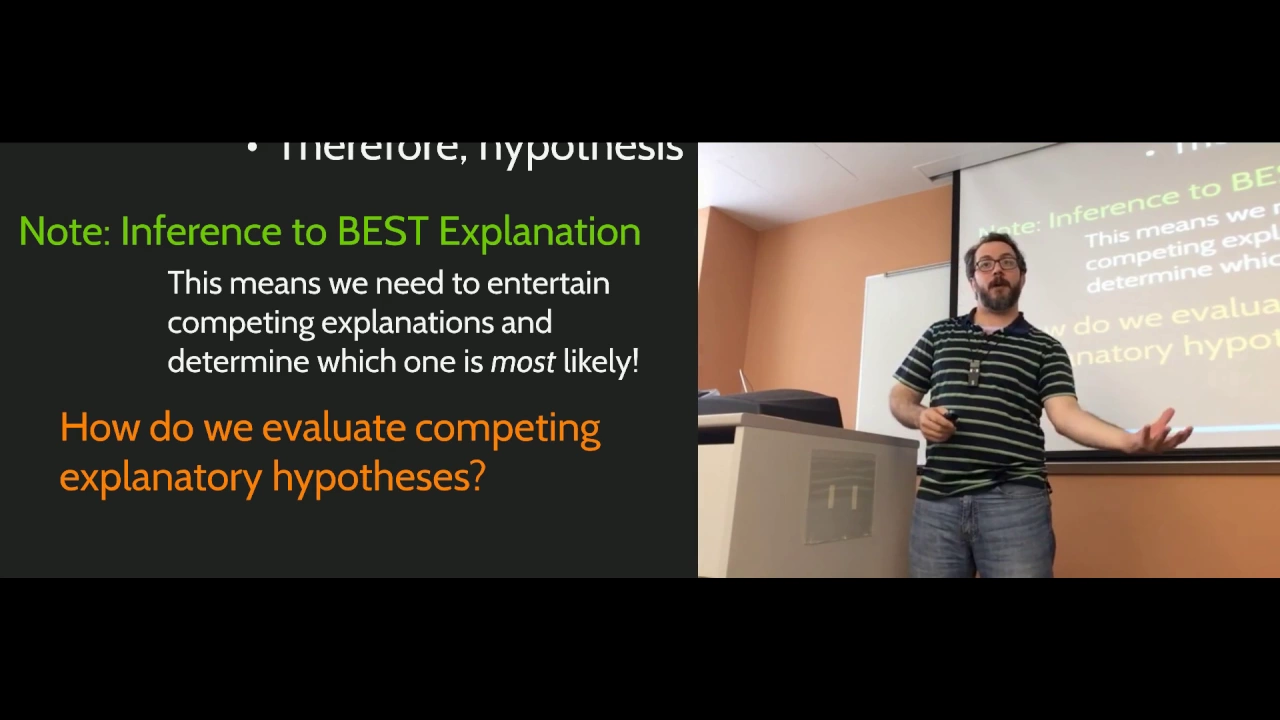
So, we need a proper philosophical argument for scientific queries, and, and the argument is known as the no miracles argument.
So, in the original formulation of Hilary Putnam, the no miracles argument says that scientific realism is the only philosophy that does not make the success of science a miracle. The terms were fair, the theories are approximately true that the same term can refer to the same objects even if the course in different scientific theories, these statements are the only explanation of the incredible success of our science. So, an actual account of how science grows and unfolds, say, how the way in which Newtonian mechanics replaced [unknown] physics, or Copernican astronomy replaced for the [unknown] astronomy, or Einstein relativity theory replaced Newtonian mechanics.
It's that a partially correct, partially incorrect account of a given object is replaced by a better account of the same object.
But the no miracle argument says, if the object don't exist, if our theories were not really true or at least approximately true of the same objects, then it would be just a miracle that we have a theory like Newtonian mechanics that talks about gravitational attraction and is so successful in predicting phenomena.
If curved space time didn't exist, then it would be just a miracle that a theory like Einstein relativity proves so successful again in predicting phenomena like the [unknown] Mercury, and so on. In other words, one must be a scientific realist in order to explain the incredible success of our science across century.
Up Next
68:57
Scientific Realism and Antirealism Explained | Philosophy of Science
@MajestyofReason
7.9K views•2021-05-18

164:01
John of Damascus on Holy Images: A Theological Defense
@BannedBooks
139 views•2026-04-25

68:32
Should We Destroy the Machines? Big Tech Surveillance Critique
@TheStoriesWeTell303
167.9K views•2025-11-30
4:57
The Myth of Sisyphus: A Greek Legend of Eternal Punishment
@TEDEd
8.6M views•2018-11-13
Related Study Plans & Knowledge Roadmaps
Structured learning paths in Philosophy
philosophy
Frankfurt School: Critical Theory & Culture
01Foundations of the Frankfurt School and Critical Theory
02Horkheimer & Adorno: The Critique of Instrumental Reason
03The Culture Industry and Mass Deception
+ 2 more learning modules
12h5 modules
Explore Roadmap
philosophy
Philosophy of Language: From Frege to Austin
01The Linguistic Turn: An Introduction to Language in Philosophy
02Gottlob Frege: Sense and Reference
03Early Wittgenstein: The Picture Theory of Meaning
+ 3 more learning modules
15h6 modules
Explore Roadmap
philosophy
Feminist Epistemology: Standpoint & Injustice
01Introduction to Epistemology and Feminist Critiques
02Sandra Harding and Standpoint Theory
03Donna Haraway and Situated Knowledges
+ 2 more learning modules
12h5 modules
Explore Roadmap
philosophy
Environmental Philosophy: Ethics & Deep Ecology
01Foundations of Environmental Ethics & Anthropocentrism
02Biocentric Individualism and Animal Liberation
03Ecocentric Holism and Deep Ecology
+ 1 more learning modules
10h4 modules
Explore Roadmap