Before the Industrial Revolution, textile manufacturing relied on domestic or cottage industries where cloth merchants purchased raw materials (wool from sheep farmers and flax fibers from flax farmers), distributed them to cottage workers who spun fibers into yarn using spinning wheels, and then distributed the yarn to weavers under the putting-out system to weave cloth on handlooms, with merchants paying workers upon completion; this traditional home-based textile work was the first industry to be replaced by machines during the Industrial Revolution.
Textile Manufacturing: Cottage Industry Before the Industrial Revolution
Added:Deep Dive
Basic understanding of agrarian societies and the economic structures of pre-industrial Europe.

"La Era de la Revolución | Capítulo 1: "El Mundo de 1780-1790
528
The agrarian problem—the relationship between landowners and agricultural workers—was central to 17th-century European society. Europe was divided into three sectors: overseas colonies, Eastern Europe with serfdom, and Western Europe. In colonies, indigenous peoples faced forced labor while Africans were enslaved in plantation systems producing sugar, tobacco, coffee, and cotton for European markets—a brutal cycle financing metropolitan growth. Eastern Europe maintained serfdom, with peasants tied to land and even animals sold separately, yet exporting cereals, flax, hemp, and timber to Western Europe. Western Europe showed early capitalist transformation, particularly in England where tenant farmers employed wage labor. The French Physiocrats considered land and rent the only source of income, reflecting agriculture's dominance. Overall, European agriculture remained traditional and inefficient, with products limited to wheat, rye, barley, and livestock, and food remaining regional with exotic products considered luxury items.
Click to watch →

Society - Meaning, Definition, characteristics and Types || Jkssb Female Supervisor Lecture 01.
130K
Before industrialization, societies were classified based on their economic organization: (1) Hunting and Gathering Society - the simplest form where survival depended on hunting and gathering; (2) Pastoral and Horticultural Society - based on animal rearing and simple cultivation; (3) Agricultural Society - based on farming and cultivation, still prominent in many regions today.
Click to watch →
![Storia Moderna (1492-1848) - Carlo Capra [Riassunto]](https://i.ytimg.com/vi_webp/gRzZ7Mimg4E/maxresdefault.webp)
Storia Moderna (1492-1848) - Carlo Capra [Riassunto]
2.9K
This section analyzes the economic foundations of early modern European society. Agricultural responses to population pressure took two forms: extensive agriculture expanding cultivated land through deforestation, and intensive agriculture improving yields through innovations like crop rotation and drainage. Land ownership systems varied significantly between Western Europe's small peasant properties and Eastern Europe's serfdom binding peasants to noble lands. Urban economies served as commercial hubs regulated by guilds, while rural proto-industrialization integrated domestic industries with agricultural incomes. The monetary system based on gold and silver experienced inflation from American silver inflows during the Price Revolution. New American crops like potatoes and maize transformed European agriculture in the 18th century, enhancing food security. Pre-industrial economies exhibited cyclic patterns of subsistence crises when harvests failed, demonstrating how demographic growth sometimes exceeded resource availability.
Click to watch →

China frente a Occidente: El Prof. Kenneth Pomeranz lo explica
17.4K
In the 17th century, approximately 80% of the world's population were agricultural workers whose primary concern was securing enough food and basic necessities. About 75% of household expenditure went toward food, with roughly half being basic calories from cereals or potatoes. The wealthiest regions in Europe (England and the Netherlands) had per capita income levels comparable to the richest regions in Asia (the Yangtze Delta in China, possibly Bengal). Fundamental trade-offs existed between different resource uses: land allocated to growing cotton or flax for textiles could not simultaneously produce food, timber, or fuel. Wealthier, densely populated regions resolved this by specializing in artisanal production and trading for agricultural products, creating interconnected regional economies constrained by ecological limits.
Click to watch →

Medieval Life, Death, and Marriage
271.4K
Medieval society was fundamentally agrarian, with most people living in clustered villages or towns of a few hundred to a thousand people. Two main classes existed: freemen who worked their own land and serfs bound to lords. Serfdom represented a watered-down version of Roman slavery, providing security in exchange for agricultural labor. Lords controlled land and harvests, collecting rents and services from serfs. This system offered stability—serfs could not be arbitrarily displaced and had guaranteed access to land. Medieval people valued security over freedom, viewing good kings and lords as providers rather than oppressors. This contrasts sharply with modern values that prioritize individual liberty over structured authority.
Click to watch →
Deep Dive
The fundamental mechanics of manual textile production, specifically the processes of spinning raw fibers into yarn and weaving yarn into cloth.

Textile World, 插曲 3, 羊毛面料的织造和后整理
304
羊毛面料的织造和后整理是纺织工艺中的重要环节,涉及羊毛纤维的梳理、纺纱、织造以及后续的水洗、染色、整理等工序,以确保面料的柔软度、保暖性和耐用性。
Click to watch →

UGC NET 2023 | UGC NET Home Science Paper 2 Complete Marathon Part-2
28K
The fundamental steps of textile manufacturing include: (1) Fiber - the basic raw material, (2) Yarn - formed by spinning fibers together, (3) Weaving - interlacing warp and weft threads at right angles, and (4) Fabric - the final cloth product. Warp (ends per inch) refers to lengthwise threads, while weft (picks per inch) refers to crosswise threads. Selvage is the finished edge running along the fabric length. Yarn twist direction (S-twist anticlockwise, Z-twist clockwise) affects yarn strength and fabric behavior. Weaving creates fabric by interlacing two sets of threads at right angles using a loom with reed and heddle components. Plain weave is the simplest pattern with checkerboard appearance, while twill weave creates diagonal lines. Fabrics made by plain weave include shirting, organdy, cambric, and poplin. Fabrics made by twill weave include denim, gabardine, and drill.
Click to watch →
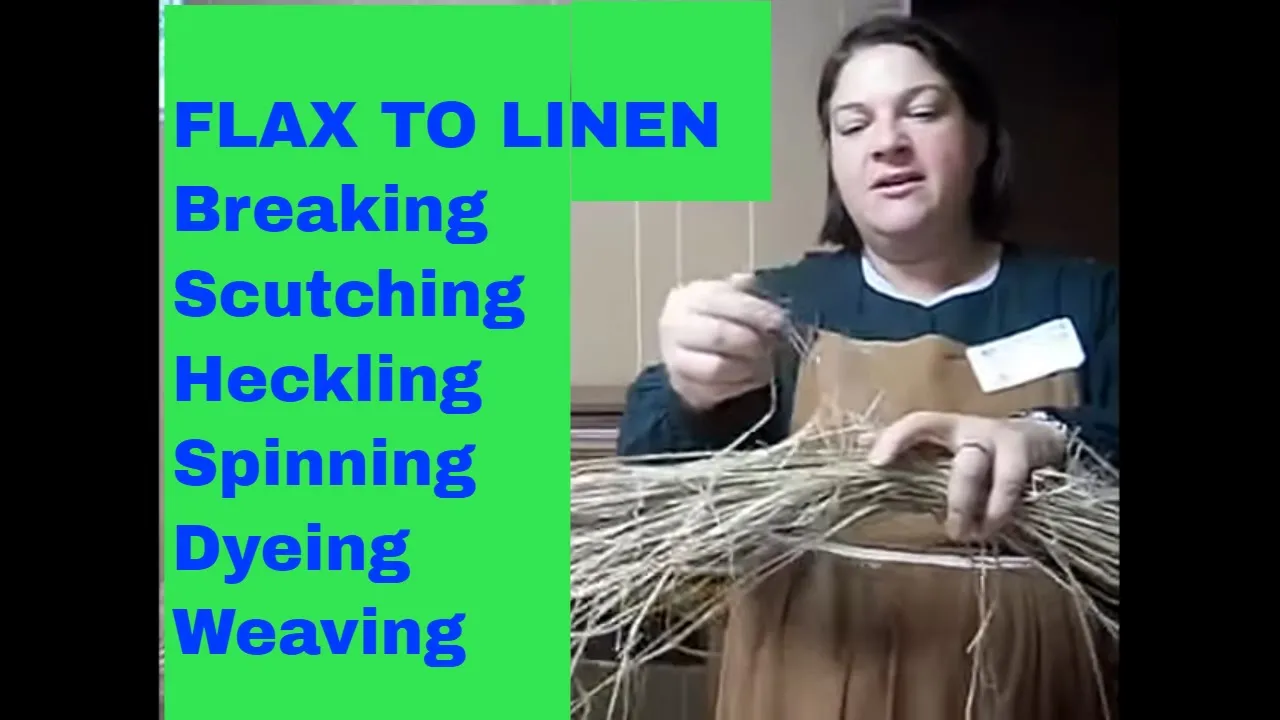
MAKING LINEN CLOTH FROM FLAX PLANT, START TO FINISH.
38.1K
Creating textiles involves two fundamental processes: spinning and weaving. Spinning converts prepared fibers into thread by twisting them together using a spinning wheel. The spinner holds fibers while the wheel creates twist, binding fibers into continuous yarn. The hand acts as a dam, controlling twist release to catch new fibers. Continuous movement prevents fiber piling that would bury the end. After spinning, weaving takes the thread and interlaces it to create cloth, similar to making table runners. A barn loom demonstrates this process with two harnesses controlling warp threads. These complementary processes transform raw fibers into finished textile products.
Click to watch →

糸を紡いで布を織る #01 糸車
5.1K
This video demonstrates the traditional process of textile production, where raw fibers are spun into thread using a spinning wheel and then woven into fabric using a loom, showcasing the fundamental techniques of manual textile manufacturing.
Click to watch →

धागा निर्माण की प्रक्रिया || Spinning || TGT PGT LT NET DSSSB HOME SCIENCE CLASSES BY DIVYA MISHRA
9.3K
Spinning (कटाई) is the fundamental process of converting fibers into yarn, the first step in textile manufacturing. The basic unit of textile is fiber (रेशा), obtained from plant, animal, or mineral sources. The spinning process consists of five main steps: carding (removing impurities), combing (aligning fibers), drawing out (stretching fibers), roving (applying light twist), and spinning (final yarn formation). Spinning is classified into mechanical (for staple fibers like cotton and wool) and chemical (for synthetic fibers like nylon and polyester). Mechanical spinning includes traditional methods (charkha and takli) and modern methods: Ring Spinning (oldest method using ring frame and mule frame), Open End Spinning (developed in 1960, skips combing), Self Twist Spinning (rollers rotate in alternating directions), Friction Spinning (fibers rubbed together), and Electrostatic Spinning (separates fibers using electrostatic forces). Chemical spinning methods include Wet Spinning (produces rayon), Dry Spinning (produces acetate rayon), Melt Spinning (produces polyester and nylon), and Bicomponent Spinning (produces blended yarns). The complete textile manufacturing process includes: fiber → yarn (spinning) → fabric (weaving/knitting) → finishing (printing, bleaching, mercerization) → garment.
Click to watch →
Deep Dive
The concept of urban guild systems and how they regulated trade, craftsmanship, and market entry before the rise of free-market capitalism.

Medieval craftsmanship and the birth of arts
246
During the Low Middle Ages, the rebirth of urban centers drove the rise of organized artisan crafts, where workshops employed Masters, apprentices, and salaried workers, and these craftspeople formed corporations (guilds) that regulated production standards, controlled market access, and wielded significant political influence, particularly in Italy where they sometimes governed cities alongside traditional political bodies.
Click to watch →

Design & Politics #1 — What Capitalism Did to Craftsmanship
153
Craftsmen produced goods through long, meticulous, hard work. Before modern technology, architecture and design products such as hand-embroidered tablecloths, chests, stained glass, and patterns were made with detail and care, requiring significant time and effort. These products were rare and time-consuming, which is why they were sold at high prices to the wealthy upper class. Even artisans who opposed capitalism served capitalist systems because their products were expensive and limited to elite consumers.
Click to watch →

NCERT | CBSE | RBSE | Class - 10 | सामाजिक विज्ञान | औद्योगीकरण का युग | भाग - 8
1.8K
Urban guilds were powerful organizations of artisans and traders that controlled production and trade in medieval and early modern European cities. These guilds provided training to new artisans, regulated competition and pricing, and prevented new people from entering the trade. They held monopolies granted by rulers for specific products and prevented new merchants from conducting business in the city. This system made it extremely difficult for new entrepreneurs to enter the market, which is why European merchants began looking to rural areas for production.
Click to watch →

Harvey Goldberg Lectures! Marxism and History: Beginnings of Capitalism
1.2K
In 16th century England, cities were regulated corporation cities where industrial production was systematically organized into guild systems. Guilds restricted production, guarded against adulteration, maintained quality standards, and controlled craft training. However, guilds were highly stratified institutions where masters controlled journeymen and apprentices, rarely allowing advancement beyond journeyman status. They were also monopolistic, keeping production levels low to maintain high prices. The state favored guilds because they provided predictability fitting the society of ranks. However, the temptation to produce more and make money led entrepreneurs to escape city regulations and establish industry in the countryside, where abundant cheap labor could be exploited outside regulatory frameworks.
Click to watch →

After 3 Years, We're FINALLY Getting Victoria 2 v2
34.8K
The guild system represents a premodern system of merchants and guild crafts where skilled craftsmen and trade organizations regulate practices within specific territories. Non-guild members were typically forbidden from practicing trades, greatly reducing social mobility. This system was contrary to principles of free exchange and was a demand of many liberal movements of the time. Several countries, including Austria, retained some form of guild system prior to the game start, particularly in fringe areas of the Austrian Empire compared to more industrialized heartlands.
Click to watch →
Deep Dive
How seasonal agricultural cycles created periods of underemployment, leaving rural families with surplus time for alternative labor.

BÀI 7 LAO ĐỘNG VÀ VIỆC LÀM - ÔN THI ĐỊA LÍ THẦN TỐC THPT QG 2025
1K
Vietnam's employment statistics and calculations: (1) Urban unemployment (4.33%) higher than rural (2.5%); urban underemployment (3.33%) higher than rural (2.96%). (2) Rural underemployment caused by seasonal agricultural patterns. (3) Calculation methods: Unemployment rate = (Unemployed / Total labor force) × 100; Underemployment rate = (Underemployed / Total labor force) × 100. (4) Example: With 3.1% unemployment rate and 50.6 million workers, unemployed workers = 1.6 million.
Click to watch →

Indian Economy | Chapter - 17 | Unemployment Format and Map | बेरोजगारी प्रारूप और मानचित्र
122.2K
Underemployment refers to workers who receive very little work, not matching their full capacity or skills. In rural agricultural areas, workers may only find employment during planting and harvesting seasons, remaining unemployed for the rest of the year. This represents a form of disguised unemployment where workers appear employed but are not fully utilized.
Click to watch →

Economics Chapter 2 Sectors of Indian Economy class 10th Term 1 | @Sociallyshubham #education
115
Workers in the agricultural sector are typically underemployed rather than unemployed. Underemployment means workers are not fully utilizing their skills or working fewer hours than they would like. This is due to seasonal nature of agriculture, limited opportunities, and the need for additional income sources.
Click to watch →

Rural Economics lesson 10 PART 2
220
According to the Agricultural Labor Inquiry Committee report, the extent of underemployment is on average 82 days of unemployment per year for 84% of agricultural laborers. This means farmers get only 82 days of work out of 365 days in a year, with the remaining period they are unemployed with no job, no income, and no food, leading to severe economic hardship.
Click to watch →

Unemployment | Meaning Of Unemployment | Types Of Unemployment | Definition Of Unemployment | CUET
42.4K
Underemployment has two main implications: first, when a person gets employment for only a few months and remains unemployed for the remaining months; second, when a person works at a job below their caliber and qualifications. Disguised unemployment occurs when more people are engaged in a given job than actually needed, with marginal productivity of labor being zero. This is common in joint family systems where multiple members participate in a common business without actively contributing. Seasonal unemployment occurs when a person is employed in a particular season and unemployed in other seasons, commonly seen in agriculture where farmers work during cropping and harvesting seasons but remain unemployed during other months.
Click to watch →
Prerequisite Knowledge
- Concept 01Basic understanding of agrarian societies and the economic structures of pre-industrial Europe.
- Concept 02The fundamental mechanics of manual textile production, specifically the processes of spinning raw fibers into yarn and weaving yarn into cloth.
- Concept 03The concept of urban guild systems and how they regulated trade, craftsmanship, and market entry before the rise of free-market capitalism.
- Concept 04How seasonal agricultural cycles created periods of underemployment, leaving rural families with surplus time for alternative labor.
Subsequent Learning
- Step 01The technological transition to the factory system, driven by key inventions of the Industrial Revolution like the Spinning Jenny, Water Frame, and Power Loom.
- Step 02The social and demographic impacts of urbanization, as workers migrated from rural cottage industries to industrial factory towns.
- Step 03The shift in labor dynamics and the rise of the working class, including resistance movements like the Luddites who opposed mechanization.
- Step 04The economic evolution from the mercantilist putting-out system to modern industrial capitalism and mass production.
Textile Origins
Textile Origins
0:01Playing Section
- 1
Textile industry pioneered industrialization, replacing home-based labor.
- 2
Domestic workers spun and wove cloth before mechanized factories emerged.
- 3
Cottage system supplied income to rural populations prior to the shift.
The Myth of the Golden Age: Exploitation and Inefficiency in the Putting-Out System
While popular narratives often romanticize the pre-industrial cottage industry as an idyllic era of worker autonomy and rural harmony, many economic historians offer a harsher critique. They argue that the putting-out system was highly exploitative, inefficient, and unstable. Rather than independent artisans, cottage workers were deeply dependent on merchant-capitalists who controlled raw materials and dictated low piece-rate wages. Without labor regulations, rural families—including young children—endured grueling hours in cramped, unhealthy domestic environments to meet subsistence needs. Furthermore, the system was plagued by logistical inefficiencies, such as the embezzlement of materials by workers, high transport costs, and highly inconsistent product quality. Rather than being a sustainable alternative to the factory, the cottage industry's inherent limitations and exploitative nature actively drove merchants to centralize production. This perspective challenges the simplistic binary of 'idyllic cottage versus oppressive factory' by demonstrating that industrial-era labor control and exploitation actually originated in the pre-industrial rural economy.
Deep Dive
The technological transition to the factory system, driven by key inventions of the Industrial Revolution like the Spinning Jenny, Water Frame, and Power Loom.

63. Secolul al XIX-lea. Revoluția industrială - cum am devenit dependenți de tehnologie
8.7K
In 1764, James Hargreaves invented the Spinning Jenny, which could spin multiple threads simultaneously (first 8, then dozens). Richard Arkwright invented the Water Frame, which automated the spinning process using water power from rivers. These inventions mechanized the spinning process that had previously been done entirely by hand.
Click to watch →
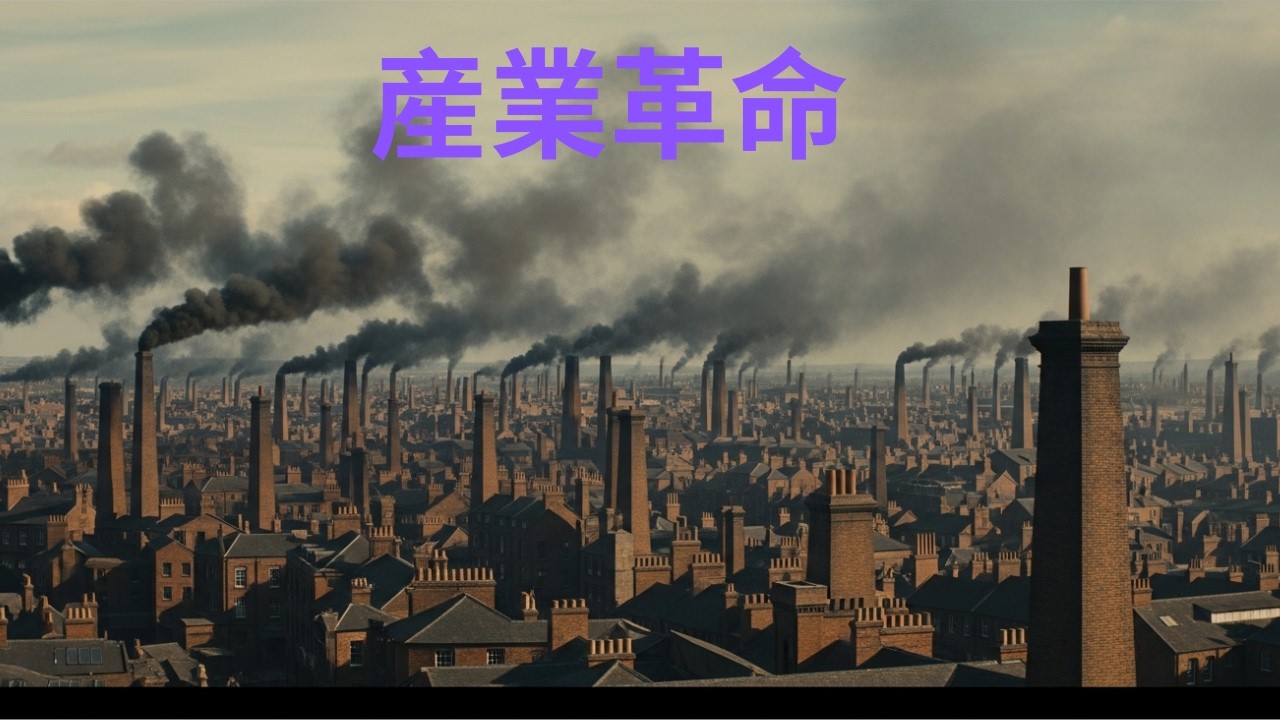
1700年代の産業革命|世界を変えた始まり
1.1K
The Industrial Revolution began with textile innovations. In 1733, John Kay invented the flying shuttle, which doubled weaving output but created a new bottleneck since one weaver needed eight spinners. James Hargreaves solved this with the Spinning Jenny (1764), allowing one worker to spin multiple threads simultaneously. Richard Arkwright developed the Water Frame, which required water power and led to the construction of the world's first factory, demonstrating that production could no longer be done at home.
Click to watch →

Class 5 Social Science | Clothing Through The Ages | Full Chapter In 15 Minutes | Exam Winner
254
Two major innovations revolutionized textile manufacturing during the Industrial Revolution. Edmund Cartwright invented the power loom around 1785, which mechanized the weaving process using electricity or other energy sources instead of manual operation. This dramatically increased fabric production speed and efficiency. James Hargreaves invented the spinning jenny around 1764, which significantly accelerated yarn production by allowing multiple spindles to operate simultaneously. Together, these inventions transformed textile manufacturing from a cottage industry into a mechanized factory-based system.
Click to watch →

Mines, Metals, and Machines – The Raw Material Revolution | How Industry Was Forged #history
373
The Industrial Revolution transformed textile production through key inventions: the spinning jenny, which could spin many threads at once, and the power loom, which wove threads into cloth. These machines made textiles cheaper, more efficient, and stronger. Initially powered by water, they later switched to steam power, and were particularly important in the cotton industry.
Click to watch →

LA REVOLUCIÓN INDUSTRIAL EN 15 MINUTOS | INFONIMADOS
1.1M
In 1764, James Hargreaves invented the Spinning Jenny, and in 1787, Edmund Cartwright created the Power Loom. These inventions dramatically increased the speed of thread and fabric production, transforming the textile industry and marking the beginning of the Industrial Revolution in England.
Click to watch →
Deep Dive
The social and demographic impacts of urbanization, as workers migrated from rural cottage industries to industrial factory towns.

2. समाजवाद एवं साम्यवाद !! Socialism & communism !! class 10th history !! Part :- 1 !! Bihar board!!
3.6K
The Industrial Revolution caused the decline of cottage industries (small-scale home-based production). When large factories and companies emerged, they produced goods at lower costs and in greater quantities than cottage industries. Workers abandoned their traditional cottage work and migrated to factories seeking employment. Factory owners exploited these workers by making them work excessively long hours while paying very low wages. This created a cycle of economic and social deterioration for the working class.
Click to watch →

Kite maker summary in English by Ruskin Bond
15.6K
The story depicts the agony of Mahmud as an artisan. It clearly states that urbanization paved the way for industrialization, which resulted in the decay of cottage industry. Small-scale laborers lost not only their occupation but also their skills. The story shows that people are spending their money on watching cinema and other entertainment, and they no longer want to spend time on idle pastimes like kite flying.
Click to watch →

Gr 8 - The Industrial Revolution Part One
5.8K
Agriculture relates to farming. Cottage industries are small businesses operating out of homes (cottages). Rural means countryside. Urban refers to towns and cities. Urbanization is the process of moving from rural areas to urban areas, representing a significant demographic shift during industrialization.
Click to watch →

#Migration, concept of Migration, प्रवास की अवधारणा, प्रकार और प्रवास के कारण, Social Demography
2.8K
The decline of cottage industries (कुटीर उद्योगों का पतन) is a significant cause of migration. When traditional industries and employment opportunities in rural areas decline, people lose their livelihoods and are forced to migrate to cities in search of employment. This includes people who previously relied on small-scale industries, agriculture, or local businesses for their income.
Click to watch →

History || class 10 || Chapter- 5 || अर्थव्यवस्था और आजीविका Answer
4.1K
This section covers colonialism (political and economic domination of weaker nations by stronger countries), its origin from industrialization's need for raw materials and markets, and the role of cottage industries. Cottage industries are small-scale home-based industries employing the majority of the population with minimal capital and technology. Examples include cotton spinning, weaving, dyeing, pickle making, and sewing. They provide employment to lower-class people and housewives, prevent rural-urban migration, and serve as tools for social and economic development.
Click to watch →
Deep Dive
The shift in labor dynamics and the rise of the working class, including resistance movements like the Luddites who opposed mechanization.
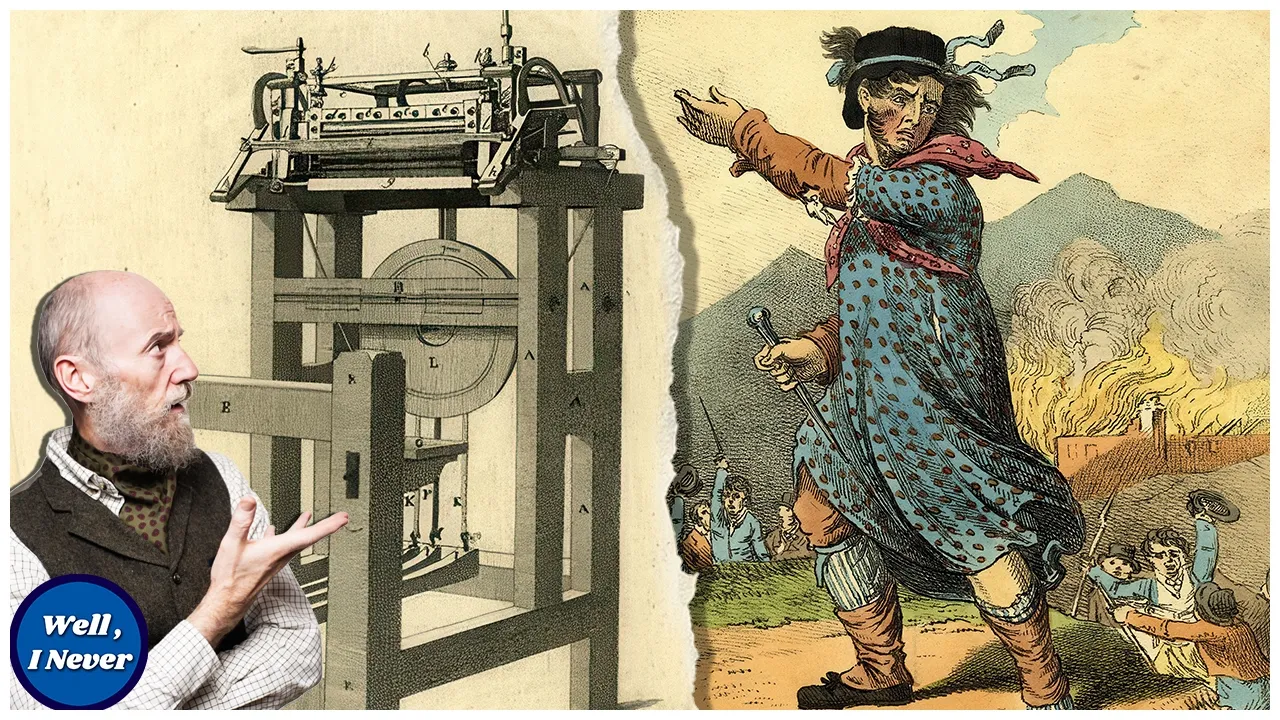
Who Were The Luddites? And Why Did They Hate Technology?
104K
The Luddite movement (1811-1816) was a worker-led uprising in England protesting industrialization's impact on jobs and wages, where skilled textile workers destroyed machinery like stocking frames and spinning jennies to resist unemployment caused by mechanization; contrary to modern misconceptions, the original Luddites sought fair wages and labor rights rather than opposing technology itself, and their movement was suppressed by government crackdowns including military intervention and harsh penalties, leaving behind the term 'Luddite' to describe resistance to technological change.
Click to watch →

Are We Entering a New Romantic Era?
453.1K
The Luddites were not superstitious people smashing machines out of hatred for progress, but rather an organized labor movement that rioted against their displacement by textile machinery. Most Luddites were well-trained craftspeople who saw machines operated by unskilled workers as a threat to their own skilled labor and livelihoods.
Click to watch →

Misère de la Théorie
3K
Thompson's work on the English working class, particularly his analysis of the Luddites, challenged the traditional view that workers resisted industrialization because they were backward and did not understand the laws of history. Thompson argued that the Luddites understood what was at stake in the establishment of the capitalist and industrial mode of production. They were not defending merely reactionary traditions, usages, and forms of production, but rather a more general form of existence that included the search for quality work and quality of life. This analysis demonstrated that workers could understand the deeper implications of industrialization and resist not just the establishment of capitalism but also the specific modalities of its implementation. Thompson's work became a reference point for historians who sought to avoid the condescension of traditional historians toward workers.
Click to watch →

Cambridge AS History 9489 The Industrial Revolution Overview
2K
The Luddite movement represented fierce resistance to industrialization in northern England's textile manufacturing areas. Luddites (those who hated technology) smashed machines and burned factories to protest job losses caused by mechanization. The government responded harshly, imposing severe penalties including the death penalty for machine-breaking. This unrest demonstrated how technological change disrupted traditional employment patterns and created social conflict.
Click to watch →

Guilford County’s Early Textile History
115
Early mechanization of cotton spinning began with devices like the spinning jenny and slubbing billy, which allowed spinning multiple spindles at once. The first mechanized mill in North Carolina was built in Lincoln County in 1813, featuring two spinning frames with about 90 spindles. The Rocky Mount mill, built in 1818, was operated by enslaved labor until the mid-1850s. The Luddite movement in England reflected worker resistance to mechanization, with hand weavers destroying looms under the mythical leader 'Jack Ludd.' Southern manufacturers initially believed slave labor would be a better alternative to facing similar labor resistance.
Click to watch →
Deep Dive
The economic evolution from the mercantilist putting-out system to modern industrial capitalism and mass production.

PET vol. 02 - 2021 - HISTORIA 2º ANO- semana 1
204
The colonial mercantilist system was based on state intervention, commercial monopoly, and slave labor. The transition to industrial capitalism at the end of the 18th century was based on liberal economic ideas: non-intervention of the state in the economy, free commerce, and salaried work. This shift represented a fundamental change in how economies were organized and how trade relationships between metropolises and colonies were conducted.
Click to watch →

História Econômica Geral - AULA 01 / UNIDADE 02 | CIÊNCIAS ECONÔMICAS - UNIP
1.9K
Capitalism evolved from a mercantile system (14th-16th centuries) where wealth came from trade and accumulation of gold, to an industrial system where wealth came from production. This transition was driven by England's maritime power, state-sponsored corsairs, the Protestant Ethic's emphasis on work, and the entrepreneurial state that supported bourgeois investment. The Industrial Revolution began around 1750, fundamentally changing how wealth was created and measured.
Click to watch →

AP European History: Units 3 & 4 Live Review
1.6K
Economic continuities from the previous unit include mercantilism (reliance on colonies), the agricultural revolution (making things faster, better, and easier), and new crops from the Americas. The putting-out system, also called the cottage industry, represents an early form of capitalism where specific people make specific parts of a finished good in different cottages. This system sets up the basics for capitalism and industrialization by creating an early assembly line-like production method.
Click to watch →

What’s Wrong with Capitalism? with John Cassidy
36.9K
Capitalism evolved through distinct phases. Pre-industrial capitalism (mercantile/colonial capitalism) involved government-guaranteed monopolies like the East India Company, which operated as a royal charter corporation trading goods abroad without manufacturing. Industrial capitalism emerged in Britain's cotton industry in the 1770s-1780s with water power and later steam power, enabling factory production and transforming production methods. This technological shift marked the birth of modern industrial capitalism.
Click to watch →

Fases del capitalismo
7.8K
Mercantilism declined in the late 18th century with the emergence of liberal economic theories, particularly Adam Smith's advocacy for free markets and free trade. Industrial capitalism emerged from commercial capitalism through the First Industrial Revolution, beginning with Thomas Newcomen's steam engine and accelerating throughout the 19th century. Key developments included advances in cotton mills, agricultural improvements, and mechanization that enabled mass production and reduced costs. The system was characterized by private ownership of production factors, recognition of individual rights, and the emergence of the salaried worker as a commodity. Work routines transformed with extended hours (16-18 days) and factories gaining control over raw materials and labor markets, significantly increasing productivity and capitalist profits.
Click to watch →
Textile Origins
Textile Origins
0:01- 1
Textile industry pioneered industrialization, replacing home-based labor.
- 2
Domestic workers spun and wove cloth before mechanized factories emerged.
- 3
Cottage system supplied income to rural populations prior to the shift.
The Myth of the Golden Age: Exploitation and Inefficiency in the Putting-Out System
While popular narratives often romanticize the pre-industrial cottage industry as an idyllic era of worker autonomy and rural harmony, many economic historians offer a harsher critique. They argue that the putting-out system was highly exploitative, inefficient, and unstable. Rather than independent artisans, cottage workers were deeply dependent on merchant-capitalists who controlled raw materials and dictated low piece-rate wages. Without labor regulations, rural families—including young children—endured grueling hours in cramped, unhealthy domestic environments to meet subsistence needs. Furthermore, the system was plagued by logistical inefficiencies, such as the embezzlement of materials by workers, high transport costs, and highly inconsistent product quality. Rather than being a sustainable alternative to the factory, the cottage industry's inherent limitations and exploitative nature actively drove merchants to centralize production. This perspective challenges the simplistic binary of 'idyllic cottage versus oppressive factory' by demonstrating that industrial-era labor control and exploitation actually originated in the pre-industrial rural economy.
Basic understanding of agrarian societies and the economic structures of pre-industrial Europe.
The fundamental mechanics of manual textile production, specifically the processes of spinning raw fibers into yarn and weaving yarn into cloth.
The concept of urban guild systems and how they regulated trade, craftsmanship, and market entry before the rise of free-market capitalism.
How seasonal agricultural cycles created periods of underemployment, leaving rural families with surplus time for alternative labor.
The technological transition to the factory system, driven by key inventions of the Industrial Revolution like the Spinning Jenny, Water Frame, and Power Loom.
The social and demographic impacts of urbanization, as workers migrated from rural cottage industries to industrial factory towns.
The shift in labor dynamics and the rise of the working class, including resistance movements like the Luddites who opposed mechanization.
The economic evolution from the mercantilist putting-out system to modern industrial capitalism and mass production.
25.2K views119likes1:28@nickkendall2803Original Release: 2015-11-02
textile manufacturing was the first major industry to undergo industrialization and for many people the change was tragic that was because before the Industrial Revolution the poor rural population had few ways of earning a living except for the unreliable income they got from farming but in Europe especially many rural people could add to their incomes by working at what were known as domestic or cottage industries by making cloth the way this worked was that cloth Merchants purchased large quantities of wool from sheep Farmers as well as linen fibers from flax Farmers the merchants then delivered the material to Cottage workers to be made into cloth first the fibers were spun into yarn using a simple foot powered machine called a spinning wheel then under what was known as the putting out system the yarn was then distributed to Weavers to be woven into certain types of cloth on a handloom it took a long time but after the roll of cloth was finished the merchants paid the cottage workers for what they had done these traditional homebased textile workers were the first people to be replaced by machines when the Industrial Revolution began
Up Next

10:12
Factory System of the Industrial Revolution: Key Factors
@americanhistory4366
971 views•2021-02-02

33:02
The Great Schism of 1054: Causes and Consequences
@SacredCathedrals
113.5K views•2026-02-19

91:57
The Geopolitics of the Ukraine War and the Rise of Global Autocracy
@JordanHarbingerShow
468K views•2025-04-19

17:05
Understanding the Cold War: Superpower Conflicts and the Road to Détente
@OverSimplified
46.1M views•2019-01-24
Related Study Plans & Knowledge Roadmaps
Structured learning paths in History
history
Byzantine Iconoclasm: Theology, Art & Politics
01Foundations of Byzantium and Early Christian Images
02The First Iconoclasm: Leo III and the Crisis of Images
03Empress Irene, Nicaea II, and the Second Iconoclasm
+ 2 more learning modules
9h5 modules
Explore Roadmap
history
Iranian Revolution (Causes, Events & Legacy)
01The Pahlavi Dynasty and the Roots of Discontent
02The Spark of Rebellion and the Rise of Khomeini
031979: The Fall of the Shah and the Climax of the Revolution
+ 2 more learning modules
8h5 modules
Explore Roadmap
history
Mali Empire: Mansa Musa, Trade & Timbuktu
01Foundations of the Mali Empire
02The Trans-Saharan Gold and Salt Trade
03The Reign and Pilgrimage of Mansa Musa
+ 1 more learning modules
6h4 modules
Explore Roadmap
history
1947 Partition: Politics, Borders & Legacies
01Foundations of British India and the Divide
02The Political Negotiations and the Mountbatten Plan
03Drawing the Boundary: The Radcliffe Line
+ 2 more learning modules
8h5 modules
Explore Roadmap