










![LAZO ABIERTO y LAZO CERRADO ✅ [Sistemas de CONTROL] #009](https://i.ytimg.com/vi_webp/CxGFoeJ7SD8/maxresdefault.webp)



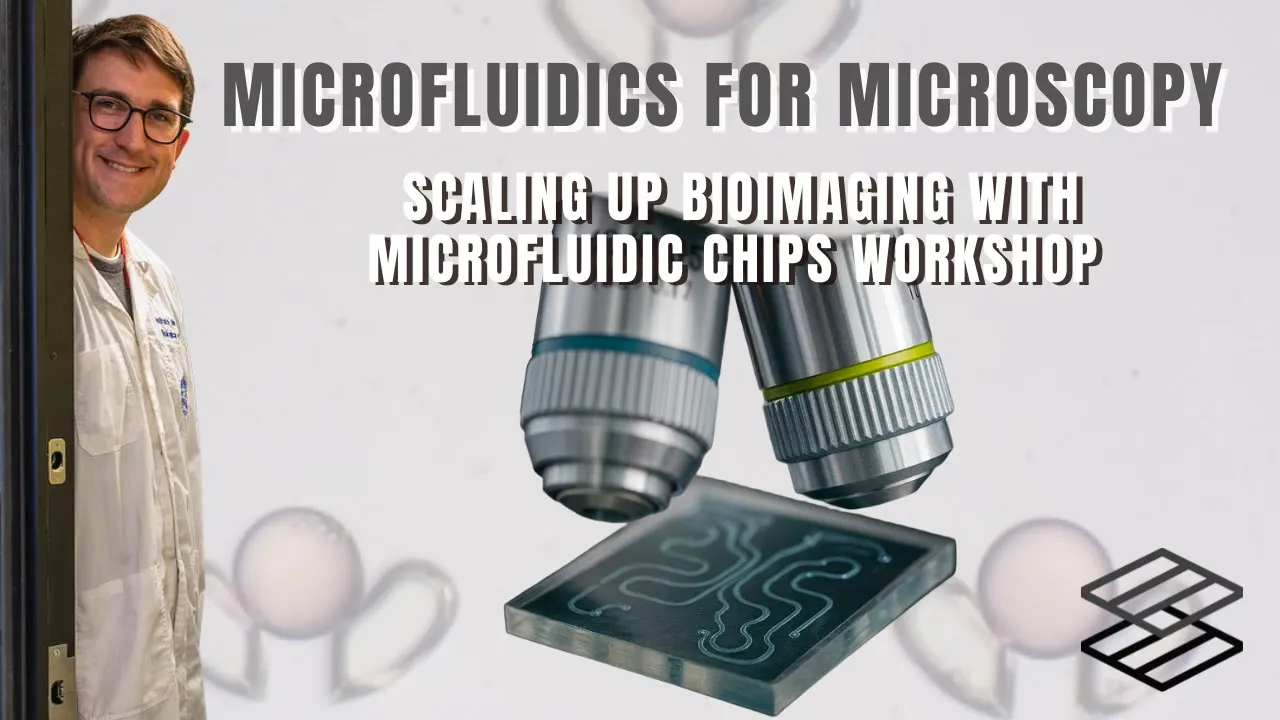





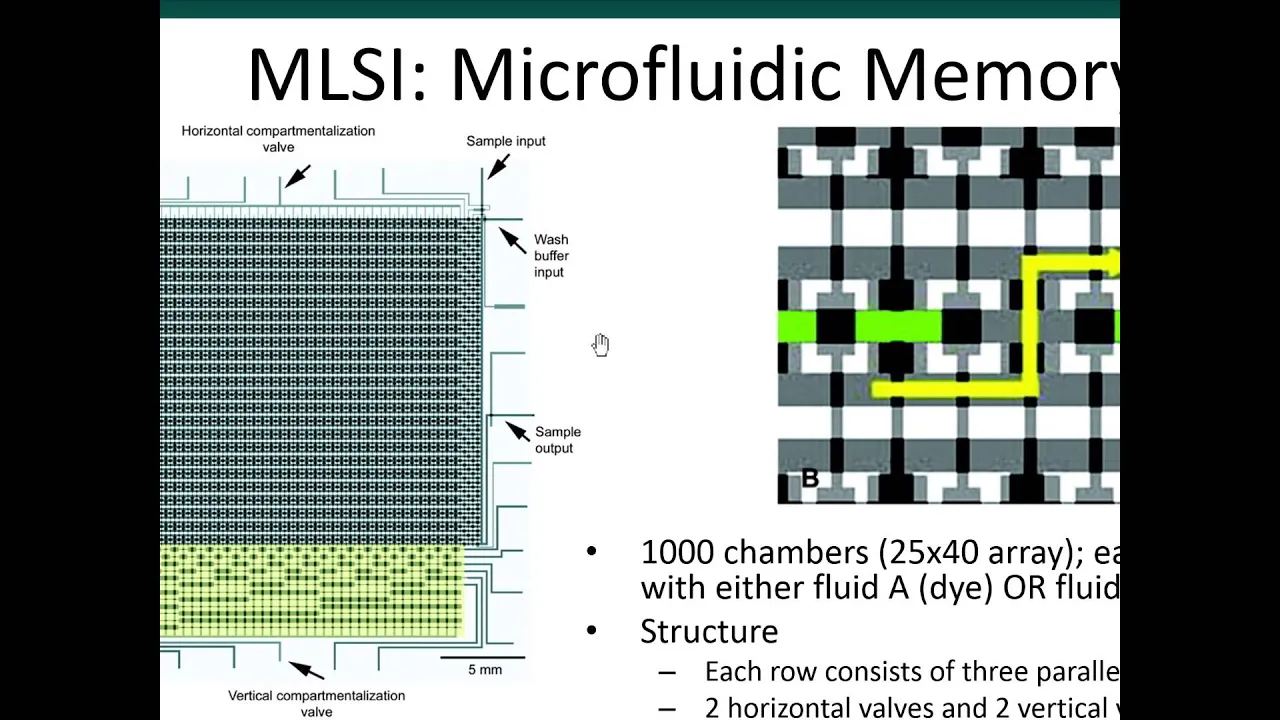



This webinar demonstrates how pressure-based flow control systems with real-time feedback algorithms transform microfluidic research by providing stable, continuous flows essential for organ-on-chip applications, droplet generation, and automated perfusion, overcoming the limitations of traditional manual pipetting and mechanical pumps that introduce pulsations and variability.
Microfluidic Automation: Pressure Control and Flow Systems
Added:Fundamentals of laminar flow and fluid dynamics at the microscale, including the physical significance of low Reynolds numbers.
Basic understanding of microfluidic chip design, fabrication materials (such as PDMS), and general fluid behavior in microchannels.
The mathematical relationship between pressure, volumetric flow rate, and hydrodynamic resistance (analogous to Ohm's Law in electrical circuits).
Elementary concepts in automation and process control, including the distinction between open-loop and closed-loop feedback systems.
Advanced droplet-based microfluidic techniques for single-cell encapsulation, emulsion PCR, and high-throughput screening assays.
Implementation of automated fluidic networks in spatial transcriptomics and highly multiplexed spatial omics applications.
Integration of multi-layer soft lithography, active micro-valves (such as pneumatic elastomeric valves), and complex programmable fluidic routing.
Translation of automated microfluidic systems into commercial point-of-care (POC) diagnostic devices and organ-on-a-chip platforms.
117 views1likes48:53Original Release: 2025-11-24
Hello everyone and welcome to our latest webinar. My name is Joseph Farah micrfluidic application specialist at Fugjen and today I'm joined by my colleague Maya Bayer our customer support engineer. We are very happy to have you with us uh for this webinar entitled advancing micrfluidics through automation.
In today's session, we will review the evolution of the liquid handling technologies from the earliest manual methods to modern automated micrfluidic platforms. Uh we will discuss their limitation at the micro scale and how pressure-based flow control and automation has transformed workflows from organ on ship and advanced biological applications.
Uh we will end up with a Q&A session. So please send us your uh your questions or any remarks that you have throughout the webinar uh and we will address them at the end with the the proper sessions that will be dedicated to. So don't hesitate to ask your question throughout the Q&A panel at the bottom of the zoom configurations.
So uh for today's webinar the the guidelines will be so first we will start with an introduction and contacts from manual pipeting to microscale flow control afterwards we will discuss uh a case three case studies the recirculation of for organip applications the second one a droplet and micrfluidics and the third one automated perfusion approach for spatial omix and at the end the Q&A uh session Um so let's start a little bit with history about this field. So historically uh as shocking at can be mouse piping was the standard approach for transferring liquids in the laboratories. Operators would draw fluids directly by suction which was not only highly unsafe but also completely unreliable. So precision was essential essentially non-existent and contamination risk were uh high. We have uh that's why we have come a long way since mouse pipeting uh moving towards tools that provide both safety and reproducibility.
Uh this evolution represents the first steps uh of the long journey towards stand t standardized and control laboratory techniques that we rely on.
Uh today one of the the evolutions that was made it was the past which was one of the first tools designed to improve safety and sterility during in the lab by using a thin glass tube and a separate uh rubble bulb. uh scientists could avoid direct contact with fluids reducing the risk of contamination and accidental exposure. This simple tool enabled afterwards early microbiology experiments such as transferring culture, inoculating media and handling small volumes of biological fluids safely. It marked also a crucial steps towards separating the operator from the sample and led the foundation of modern volutric pipetting technique.
In the 1950s uh the invention of piston-driven micro pipet transformed the lab the lab workflows. These devices used a spring loaded piston and a air cushion to aspirate precise volumes with interchangeable tips to improve stability. So adjustable volume pipette allowed the researcher to accurately transfer micro litter scale volumes a capability essential for especially for for example molecular biology clinical essays and let's say biochemistry experiments. So the standardization by introduced by these pipets enabled repeatable and reliable experiments compared to the past across labs worldwide and it was adopted by the majorities of the uh labs around the world.
Afterwards, by the 1980s, [snorts] regulatory bodies officially banned mouse pipeting due to the safety concern as you can imagine and the mechanical pipets became mandatory in all lab settings. So this transition improves both safety and reposibility and modern pipet whether fixed or adjustable provided now precision and agonomics which enable scientists to handle uh very small volume consistently compared to the past. So this shift represented a broader trend in labs automation and standardization that continue to evolve to date.
However, like despite all these uh that these advances, the traditional pipets are still not suitable for micrfluidex and the micro scale because like they cannot provide continuous stable flows at the submicro liter scale. So manual evoporation introduced still introducing variability in volume, timing, shear sear forces making them impractical for the applications such as the cell experience fluid flow or in organ the droplet generation where all these application we tend to search for precision and liquability at uh as you can see for example in the simulation of the the pipe at tip there is the there's that we can like prove there's known homogeneous field velocity distribution and a high sheer strain at the tip of the wall which can uh produce uncontrolled fluid injection uh as the flow will be chaotic and in this case you will have high flow rates harsh stress and uh uneven injections which can lead to uh sample damage and uh errors from intra operators and interoperators uh experience.
So that's why uh there was several um options to overcome these limitations.
Uh we will focus on three main technologies that are commonly used in micrfluidics. So the first one is the syringe pumps which deliver precise volumes but can generate pulsatile uh persile flow and have a slow response time as as you can see in the image like it's based on a mechanical force. It's based on the piston that we are pushing.
So you will have uh some errors uh or like uh low response time and a lot of pulsations in the flow which can also affect the experiments that we are doing in the micro scale. The second option is the paristatic pump which usually support the circulation uh of the of the fluids but also it can produce ripple and backflow uh due again to the mechanical force that is exercised on the tubing in order to push the liquid and this case too like you will have a lot of oiations in the system because of this mechanical force. And the third uh applic uh option that we adopt here with at fluent is the pressure controllers where we can apply a pneumatic pressure uh producing smooth continuous flow with fast response time as uh there are no mechanical force based on this um technology. So basically the difference of pressure between the reservoir the pressurized reservoirs and the external um pressure that will generate the pushing of the liquids from the reservoirs towards the sample or the chip and this case uh we limit the oiations because like there are no mechanical force in the system.
So briefly at Fugent we develop pressure controller systems that are specifically designed for micrfluidics. By regulating pressure instead of the displacement uh instead of displacement we achieve like high stable pulse flows as you can see in the graph uh compared to a syringe to a classical syringe pump with rapid response times. This approach is ideal for uh delicate delicate biological experiments including organship droplets and long-term perusion.
Um and what we are will discuss today and what will be a plus it's that uh the pressure-based flow controllers now you can also integrate them easily with flow sensor and it can be a way into introducing automation uh through the experiment by dedicated softwares or the classical coding protocols that we that are on the market or uh in the field ensuring like precise monitoring and easily handling compared to the classical methods.
Um so before starting I would like to present uh like the classical micrfluidic setup that we have uh that we typically use. So basically it can it consists of a pressure source connected to a flow controller or to a pressure controller which pressurize a micrfluidic reservoir connected to a flow sensor and uh it can be an optional valve if you are looking for more practicality towards the micrfluidic tube. Classically the microfodic tube is observed under the microscope to see what's happening inside and overall all the setup can be controlled via a software uh that can be dedicated for the flow for the pressure and um control the overall system of the experiment.
However, in order like to control and like to have this response time, we are and as you can imagine this the flow is essential. The stable flow is essential part uh particularly for experiment involving the living cells or biomedical applications. Our technology is based on a direct flow control or a DFC algorithm which continuously monitors flow via sensors and it can adjust pressure in real time. This maintain a constant flow rate and a uniform for example she stress or flow across the micrfluidic channels with high response time between the communication between the flow sensor and the pressure controller in order like to increase or decrease the pressure and function of the variations that you will have in the tube. And of course in order like to maintain or to satisfy the specifications that you ordered or that you are uh doing your experiment.
Based on this algorithm we developed uh this oxygen software which provides a unified interface for controlled pressure flow and the valves and valves that we use. It allow you to design sequences, ramps and timebased uh protocol while logging data for your computer disability. By automating these processes, the software ensures stable experiment conditions over a short or a long duration reduces the operator errors and support complex workflows uh in the system. So basically using the oxygen like you have also the option of creating your own protocol and adding loops weight for and so on in order like to streamline your the experiment or your micrfluidic uh specifications.
In order to dive in into this uh these approaches uh we will discuss in the next slides three case studies. The first one organ on trip. The second drop is in micrfluidics and the last one dedicated to OMIX application uh where we can see how we can introduce some automation towards the your micrfluidex experiments. So uh for uh the first case study I'm pleased uh to be joined with our customer support engineer Maya which will who will explain to us uh the first case study specifically the recirculation for organ onship applications.
Thanks a lot Joseph for the introduction and yes so I will focus more on the recirculation part today and explain especially um why the precise flow control is crucial in this type of experiments and how we can automatize it. So uh today we know that there is a strong need to run biological tests using models that better mimic um the human invivo conditions and we now have several alternative to the classic like 2D cultures like for example the 3D cultures and more recently the organized models which offer like a much higher level of control over a lot of biological parameters.
So to recreate the human invivo conditions organ and ship systems must provide tissues with a lot with a flow that is stable, continuous and physologicalally relevant. Um in the body there are a lot of circulating fluids such as the blood, the lymph or the interstial fluid and they have several roles in the body like delivering nutrients or removing the waste but they are also applying mechanical forces um to the cell and that can guide their behavior. So to mimic this uh environment in vitro, it's very important to have a very precise control of this flow. Uh this is especially important for active tissues that we often have in organic models like liver, kidney or intest or gut intestinal for example.
Uh indeed if the flow is too low uh then um you can have a gradient of nutrients or oxygen that can appear inside the channels and this can lead to hypoxia metabolic stress or even cell apotheasis.
And uh on the other side if the flow is too high then the cell can detach or become overstressed and and yeah mechanically overstressed.
So that's why uh only an appropriate flow rate supports the long-term homeostasis across long-term experiments that we need with the organ ships models.
Um the sheer stress especially is one of the key is one of the key points that the cells are listening to.
Um in inde like cardomioite many stem cells they adjust for example their morphology and their function based on the shear. When the shear stress is correct, the cells align as we can see for example in the the scheme but also they polarize. They form tight tight junctions they adopt um certain gen expression and they have like generally a good healthy metabolic activity.
But uh if the shear becomes unstable for example if there are spikes or or fusations in the flow then it can trigger to inflammation break cell division or change the cellotype and also for organ we are working like in microchips. So and because micropic channels are extremely small even small variations in the flow can completely modify the shear stress. That's why solutions like manual pipating or um pump with precision that introduces um oscillation inside the flow. it's um the cell can interpret it as an abnor abnormal mechanical stress and for sensitive stress we have to avoid that.
Uh so yeah in conclusion like long-term organization chip cultures relies on this stability and this is why the choice of the pressure controller is very important for this kind of experiment.
So different technologies exist. Uh here we are comparing two main technologies.
The paristatic pump and the pressure based flow controller. So the the different technology all have their advantages and disadvantages.
Uh for the perat pump it's very like common commonly used. So they are quite straightforward and easy to use. But they are also coming with some limitations because like the rolling mechanism of it uh produce some precision and also the tings can damage over time time and the risk of contamination is higher.
Uh you can see here on the steam that there are pulsations on the flow.
In addition uh the sheer stress generated by parasetic pump can be too high for sensitive cells. That's why for this type of application with sensitive cells um now pressure based per controller is like the like I would say the best solution because it provide more precise and stable flow regulation over time.
Um using these flow controllers you can build setups that are perfectly adapted for recirculation. So one example is the setup that you can see here with the recirculation package. And so it's a really flexible setup back with everything and that integrates perfectly with basically every organ ship experiment.
So to enable recirculation with this setup um the system uses two pressure controllers, so two pressure lines that are connected to two reservoirs.
It also included a pair of switching valves and a flow sensor.
The flow sensor, it ensures the consistent volume exchange and keep the shear stress very controlled and low for this experiment.
The idea is quite simple like first the first apply pressure to the first reservoirs and that pushes the medium through the system. So through the valve and then through the microp chip. Then it goes uh through the second valve and goes uh to the second reservoir and filling it.
Um after a defined volume has been transferred then the system can be programmed to automatically switch it and then the pressure is then applied to the second reservoir and the valve switch the position and so the liquid goes from the second reservoir to fill again the first reservoir and so you can automatize it to do it for weeks days how how long do do you want and uh what's very important is that inside the ship the flow remains unidirectional.
So to automate this type of experiments with the setup that I just show you, we can use uh the oxygen the oxygen software which is a fen control software. So here you can see an example of setup an example of protocol that was made with a setup that I just described before. So the goal here is to run a circul recirculation at a very stable flow rate of 500 microL per minute. So you only have to enter the desired flow rate in oxygen and then the pressure will automatically adjust to reach and maintain that flow rate. Then we use the function wait for volume to control exactly how much medium has passed through the system and to switch uh when we want to to make the circulation. In this case uh once um 1,00 microL have been transferred then the recirculation switches direction and you can hear see here the switching of the valves as I'm showing you and um and to to to fill the other reser so this type of automation automation is ideal for long-term studies that need stable hands-free The call can be run directly on oxygen but it can also be integrated in other software environments. For that uh prien provides a software development kit. So the APK that allows you to code the protocol in different languages such as Python, MATLAB or C++ for example.
uh with the SDK you can create very complex protocol with loops, dynamic adjustments and so on. Here you can see an example of code that was made with Python and it's exactly the same protocol that I just showed you before in oxygen but here written in Python. So the code is organized in three main parts. First uh you have the import and initialization section. This is where we load all the fent libraries connect to the fent devices and all defining all the initial parameters such as the flow rate the pressure range and so on.
uh in second we defined uh the functions for example here the definition of the function weight for volume that I just explained before and in third you have like the device control the recirculation protocol itself. So this pass controls the the sequence. It runs uh the flow runs the weight for volume that you already defined switches the valves and so on and you can repeat the cycle as many times as needed.
So using this ADK uh makes the experiments fully scriptable and perfectly reproducible and especially if you want to integrate it into another software. We also provide a lab view control option um which is especially useful for engineers and automation specialists. So here is an example on how you can use it. uh you simply you simply can uh have a look at uh your FEent folder and you have different folders with uh different types of setup with different products and and systems.
Um yeah then you can see yeah on live view uh you can also uh so create and change your setup. Uh you have different functions that you can add different uh of course the different products and uh link everything all together with your other products you have.
And in this example uh you can see a program pressure ramp so pressure steps uh with the fluid. So you can see in black it's the order asked um the the pressure order asked and uh in orange red is the actual pressure in this step.
So now that we have seen how recirculation can be automated using oxygen or even coded with the SDK and different languages uh I'd like to present you another solution that it's aimed for recirculation and make some comparison between both. So on one side we have the traditional recirculation pack that I already presented.
Basically, it's a classic microfilic setup with with all its tubing, different parts and fittings. And you can see everything that's inside. And on the other side, you have the OMI, which is a fully integrated solution designed specifically for organ chip solutions.
So in fact, it's like if the setup uh on the right is integrated inside the device. So the recirculation pack u its advantages is that it's very uh custom modular like you can choose the tubing the valves um you can choose the reservoir like everything that you want and also you can add pressure modules you can change your setup if needed and so on. Um but it requires some space, manual assembly and I think also a certain level of micro exercise um to use it.
Um and on the other side the OMI is uh so all integrated. It's very compact.
You can put it easily in the incubators or um or like on this picture under the microscope to see. So really easily to to transport. You even have the pressure source that is integrated inside and you have a lot of internal routine that are like pre-engineered.
It also comes with the tablet uh and with a specific software when you can automate all your setup. So which means much faster setup and compared to the other setupless tubings and fittings and so on.
Um here it's a short video showing DMI so that you can see uh the device it size and how to use it quickly.
So as you can see it's uh it's really compact. It's um composed of four reservoirs.
You can put it just inside the incubator, take it back and have a look inside your microscope of the results.
It's really easy to use like everything is uh straightforward. You don't need any micro expertise and basically you just have to connect your chips to uh to to OMI make your protocol and that's it.
And it's still reliable because you have the same technology inside. Talking about technologies, you can see uh here like all the components that are inside the OMI. So you have an integrated microphone for the for the pressure source, a liquid level sensor inside the the reservoir, a disposable cartridge where you can put your solutions and change it for the sterilization, and um a touchscreen interface to control the everything the chip holder for reservoirs and yeah that's basically it and of course the flow flow sensor inside the to to monitor the flow omi allows you to monitor four main functions um and uh you can see the the corresponding pass on the right uh with the yellow the yellow pass First the first mention is the perfusion. So the medium flows from one reservoir to another and providing a continuous supply of nutrients and so on to the cells.
In second you have the most commonly used which is the recirculation.
Basically it's the same as the perfusion just uh there is a refuse step between the two reservoirs so that you can do it during weeks days and so on. So you have a closed loop reusing the the medium and you can also control the the the flow.
The third is the injection. So it's used if you want to inject um drugs for example or any other reagent at um a time the delivery and finally the last function is the sampling which enables automated collection of small volume for metabolics or other on analys.
Here is a screenshot of the OMI application on the tablet. Um and um it's uh really user friendly to create the protocols. So the apps it's built in blocks and um you can choose the different function that you want. For example, here you have a recirculation, injection and then recirculation sampling like the the function that I present just before and also you have readyto use protocols that are included such as the calibration, the sterilization, the loading at the beginning of the experiments and then the cleaning. So everything is ready to start your experiments.
And here you can see an example of a recirculation protocol running in OMI.
So here is the recirculation. So the medium flows from one reservoir to the other and go of course through the the chip and when the first reservoir becomes empty or automatically detects it and then at this moment the system performs a refill between the two reservoirs and that's exactly what you can see here on the interface.
Of course during the experiments you can monitor pressure and flow rate in real time and uh if you automated everything at the end of the experiments you can of course download and save all the data.
So you will get a graph like this with the pressure along time and the flow rate along time. So the pressure in purple and the flow in orange and here there is a zoom so that you can clearly see like the refill phase it's approximately from one minute and um and you can see that the flow rate is very stable during the experiments.
So now that we've seen how to automate recirculation experiments with pressure based flow controllers, let's let's move on the second case study with Joseph where we will explore how to automatize micro droplets experiments.
>> Thank you Maya for the two approaches from the recirculation pack and the OMIA approach. So um don't hesitate if you have any questions about this first part to add them in the Q&A and we'll answer them by the end of the session.
So now we will move to the case study too and that's why like one of the advantages of micrfluidics that you can work in several uh fields across while talking the same about the precision the advantages of the micrfluidics. So for the case study two, we'll focus on the droplets in micrfluidics and particularly how to produce them compared to the classical methods uh that we uh we use. So uh in micrfluidics um droplets are generated with precise control over size, frequency and unifor uniformity uh enabling high reproducible micro reactors in contrast to the traditional batch that you can see for example in the images either the technique or the microscopic images of the obtained droplets where it produces uh heterogeneous droplets with broad size distribution.
uh one of the important parameter that we are talking uh today about is the stable flow rates which are essential for controlling uh droplet mono dispersity and ensuring reliable experiment outcomes.
So uh even though like each uh methods has it its advantages for example for let's say for the mixing you have rapid emulsification suitable for various formulations and it can be easy to scale up for B production but it comes with uh challenges such as the broad droplet size, the heat and shear which may degrade the sensitive materials that you have and it can be difficult to produce more complex or structured imulsion compared to microf of fluidics. So um that's why uh at Fluent we combined our flow control expertise with SEOA's droplet generation uh offer uh represented by the ray drop in order like to create single or double emulsion uh via a controlled way. So that's why we we have developed a micrfluidic path through the the platform where we combine the flow eases that we pre we presented earlier with the sequoas rate drop in order like to to have simple or double emulsion with a high reproducibility and mono dispersity of the droplets that we are um creating.
So how it is designed? So again like you will have the link in order to connect to the software or to your PC system and afterwards like we'll have three lines of the flow eases. Each line is uh connected to a pressure reservoir where it is uh one for the continuous phase, shell phase, core phase and each um each one can be connected to the adequate uh fitting of the ra uh either from the chamber in order to do the the continuous phase the shell or the core phase. You may ask for example why we can have two reservoirs per line. So it's more for practicality in order to help to do one the priming and the cleaning of the system and the other one where you can load this the your sample.
We can add some uh switches or valves in order to make uh the experiment more smooth in terms of passing from one protocol to another such as the cleaning and the washing the priming and so on.
uh and also we combine it with the fast camera in order like to see in real time what's happening inside of the micrfluidic tube and tune the system.
What is advantages in uh what can be an advantage in micrfluidic uh in the droplet field is that you can really tune the parameters that can affect the sizes of your droplets. So for example here in single emulsion you can see the continuous phase inside of the chamber and the droplet face the mono disperse phase that will create these mono dispersed droplets. In fact here like you can unlock some parameters which is not possible through mixing or the classical methods as for example uh the effect of the changing the flow rates compared to the size. So for example uh here we can considerate or we studied the variation of droplet phase flow rate and the continuous phase flow rate and we concluded that for example if you if the continuous phase the flow rate of the continuous phase is different you can change the size uh in a really predicted way uh the size of your droplets as you can see in the in this graph.
Uh the same goes with the double imulsion where here more precision is required in order like to tune the core, the shell and the outer face. Again like we can see by tuning the flow rates you can achieve like thin uh droplets uh including the shell or more thicker u shells compared to the to the first one.
So here again for example if you vary the shell face you can have bigger or wider uh droplets uh shell droplets and of course to as we saw if we change the the continuous phase it can affect the droplets. So in this case um that's what one of the advantages like when we pass to micrfluidics and it can be a way in order to control it in a automated way rather than switching manually uh each step in order like to reach the best uh configuration of your droplets. So basically also through oxygen uh we can we can either tune with pressure or with the flow rates uh in order like to create or like to keep the dispersity of the droplets that we are creating and even with the constant frequency uh throughout the experiments and that's why one of the advantages for example if like there is some clogging some issues uh the pressure will adapt itself in order to keep the the flow rate here for example around uh 315 for the continuous phase. The same goes for the shell or the core uh the pressure again through the the algorithm between the flow sensor and the pressure controller it will adapt itself in order to maintain this stability in terms of the flow rates and uh of each phase and thus the distribution of your uh droplets or double imulsion droplets.
Uh based on this technology uh we had several proof of concept that we can you can find it on our site. Uh basically from single motion if you are interested in creating droplets or beads uh such as algenate or PLA in various sizes that can go up to go down to 10 micrometer for example.
For the micro capsules, if you are interested into double emulsion, you can also do the polymeric uh micro capsules such as PLGA, gytosin, pime, beda or multiple emulsion. It's also possible using the terra drop and the flow eases and also it can be a possibility if you are interested in doing encapsulation of biological material uh such as for example bacteria yeast and integrate them into afterwards for example to do some fact sorting throughout this experiment. So all uh all these uh uh proof of concept are available and you can download them directly in order like to have uh if you have any questions or if you would like to integrate them in your micrfluidic experiments.
And uh finally now we will move to the uh quickly for the the last case study about automated perfusion approach for uh spatial OMIX which also a field which can gain a lot uh using the using the advantages of micrfluidex.
So uh basically the traditional uh imunostaining workflows rely on manual pipeting to add antibodies for example wash buffers and other reagent. While it is functional uh this approach introduce significant variability such as the reagent coverage can be uneven for example uh which can lead to unconsistent staining.
Secondly, the timing difference between manual step it can affect the reproducibility. The mechanical dis disturbance can damage the delicate cell layers especially uh as we saw earlier with the simulation of the pipet.
the which can damage the cell layers, the tissue construct or the micrfluidic cultures and also the manual handling is particularly challenging in long-term or multi multic multicycle staining protocols where multiple round of washing or interation is needed to do the imaging that we are that we would like. So one of the solution also a plus to the flow easy that we suggest is the area which is also based on the pressure control that we the pressure-driven system that we provide but it is dedicated uh to microscopy and these types of application. So basically like we'll have eight reservoir for the samples in addition to two other for the uh washing and afterwards by automating with the dedicated software you can add uh chronologically them the the steps that you require and the time and all the protocols that is needed uh throughout the system and you will let it run directly without any inter intervention compared to the classical pipe fitting methods.
So to demonstrate this uh we'd like just to have like an idea about uh the method that is typically used. So for example you can have uh for this uh uh application. So the area dedicated software can provide the stepbystep guidance and allow you to define the internal workflow in a single protocol.
So for example here the protocol that we'd like to do is to inject 100 microL incubate wash with uh for 10 minutes inject and afterward incubate again uh for 1 hour. So here how we can let's say stream or control the flow using the system. So using the area software uh we will do these steps we will program these steps. So the first one it will be for example volume injection for 100 microL per minute. Wait for the incubation for 30 minutes and afterwards plan again the another injection. You can work either by flow rate or by volume. So it's also it's a possibility depending on the system that you provide. And finally do a wait uh for 30 minutes. In this case uh we can simulate or like you can have an idea about how we can dedicate uh typical protocol into the area software and do the experiments afterwards.
the area system like it can be connected or uh added to a two switch if you are interested in only one micrfluidic chip and one sampling uh chip but also it can be provided with the M switch where we can increase the number of connected chips uh up to nine sample compared to the system that you will have. So the two version can be a possibility using the same uh system.
Uh one of the also advantages using the system it it that area can be integrated with microscope and imaging system using TTL or digital triggers. So this synchronization can allow real-time reagent delivery coordinated with imaging events. So the microscope and the area can communicate with each other in order like to have or exchange the informations and steps. Controlled perusion uh during uh timelapse experiments and it can automate uh execution of complex protocols that require precise timing between the staining and imaging.
as an example uh of or more elaborated protocol uh using the system um where like for example you can see here the accumulation of yeah volume injections and also the potential uh the possibility of waiting for user for its confirmation to pass from one experiment from one step to another. But also here like you can see the weight for TTL in order for example if the area will receive uh a signal from the microscope in order to pass to another step. So all these possibilities uh can be suitable using the same uh software that we have here is just an example of imaging that we had uh based on the IBEX protocol which stands for the iterative bleaching extend multiplexity and it is uh uh which is a high content multicycle staining workflows. So um uh we have several papers or proof of concept using this and application notes on the site also like you can uh uh if you are interested in in these types of application don't hesitate to reach out or like to check the papers available on our site with this.
So uh finally to conclude uh between uh here like it's a shim in order like to have a clearer idea about the comparison between the pipets and the automated protocol from uh the time the limitation of the pipeting time consuming uneven fluid delivery the errors and the solution mismatches compared to the advantages in terms of time saving steady fluid delivery sequential distribution and higher producibility of your system.
So uh with all these applications uh I hope we hope that you had a better idea about how we can include some autom automation in your system uh using the micrfluidic experiments that you have.
Um and uh we can now uh open for uh your question if you have uh any particular questions throughout the three case studies or the introduction also. So please don't hesitate to add them in the Q&A panel uh in order to discuss further.
In the meantime uh I will present briefly a few gentlements as a company.
So we are based in Paris with a subsidiary in the US in Boston and we have a wide network of distributor in Asia and Australia. So um uh with our main products the flow easy and the other products that we susted uh today uh interfere or they are present in uh prestigious papers uh throughout the journals that we have and with several collaborations with wide universities across the world. So don't hesitate to contact us if you have any upcoming projects or you would like to include or optimize your micrfluidic setup uh and be based on pressure using our system.
So with this I would like uh to thank you again for your participation today to to this webinar and uh stay tuned for the upcoming ones uh with the fen. Thank you for your time. Have a nice day.
Up Next
3:54
How to Measure TEER with EVOM Manual: A Step-by-Step Guide
@WPIInc
2.4K views•2022-07-12

12:54
Triumph of Orthodoxy Icon: Byzantine Art & History Explained
@BenCallan
2.1K views•2024-08-06

3:05
Microfluidic Shear Stress Calculator: Tutorial & Examples
@Fluigent
495 views•2023-02-27

1:42
Game of Thrones Opening Credits: A Cinematic Analysis
@gameofthrones
46.3M views•2011-04-18
Related Study Plans & Knowledge Roadmaps
Structured learning paths in General & Interdisciplinary Studies
general-studies
Elevator Engineering: History, Physics & Cities
01From Hoists to Safety Brakes: The Dawn of Vertical Lift
02Hydraulic vs. Traction: The Engineering Physics of Elevators
03Modern Speed, Safety, and Algorithms
+ 2 more learning modules
12h5 modules
Explore Roadmap
general-studies
Rubber: Material Science, History & Geopolitics
01Origins of Natural Rubber & Mesoamerican History
02The Chemistry of Natural Rubber & Vulcanization
03The Geopolitics of the Rubber Boom & Colonization
+ 2 more learning modules
12h5 modules
Explore Roadmap
general-studies
Containerization: Evolution, Logistics & Trade
01Ancient Trade & Bulk Cargo: Amphorae to Barrels
02The Industrial Revolution & Cardboard Packaging
03The Containerization Revolution: Malcom McLean
+ 2 more learning modules
12h5 modules
Explore Roadmap
general-studies
Textile Tech: Evolution, Labor & Global Impact
01Pre-Industrial Textiles: Handloom & Cottage Industry
02Mechanization: The Spinning Jenny to the Power Loom
03The Factory System & Global Labor Transformation
+ 2 more learning modules
10h5 modules
Explore Roadmap