







![[명화 읽어주는 책방] 알폰스 무하 | 아르누보의 거장 , 벨 에포크의 꽃에서 슬라브의 혼으로| #알폰스무하 #AlphonseMucha #ArtNouveau #history](https://i.ytimg.com/vi/WNeCZnsYmts/maxresdefault.jpg)



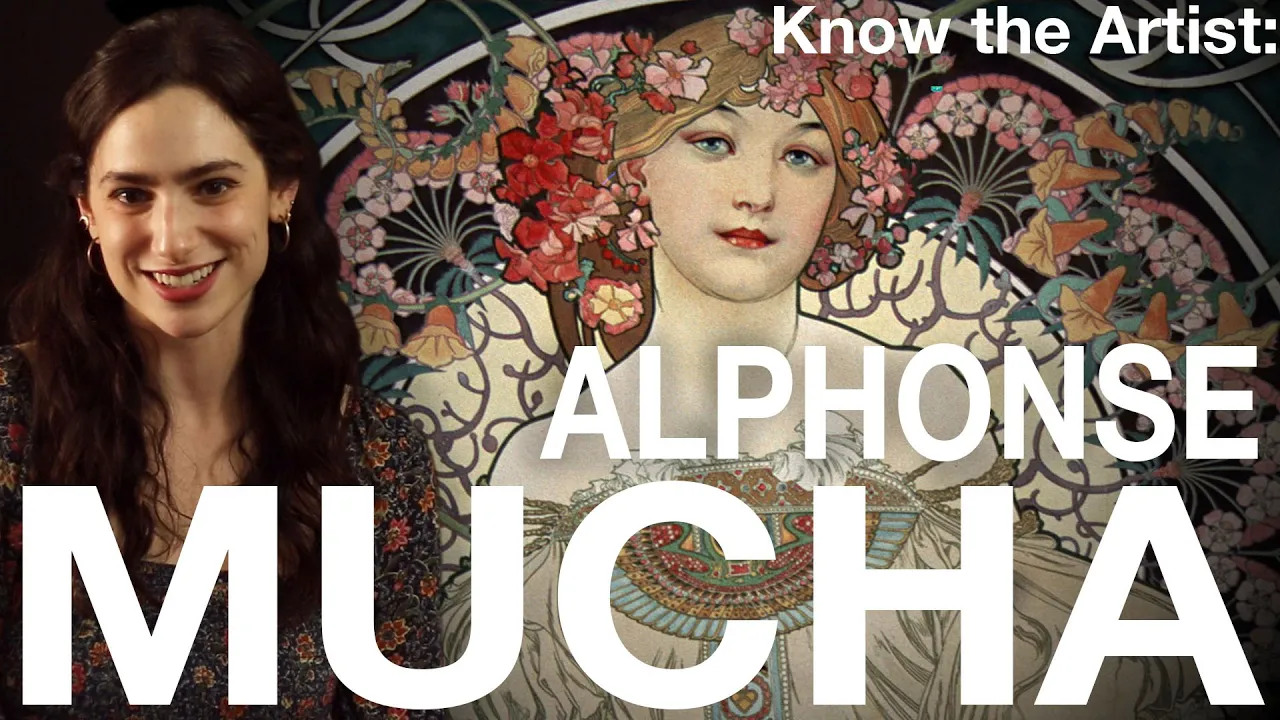


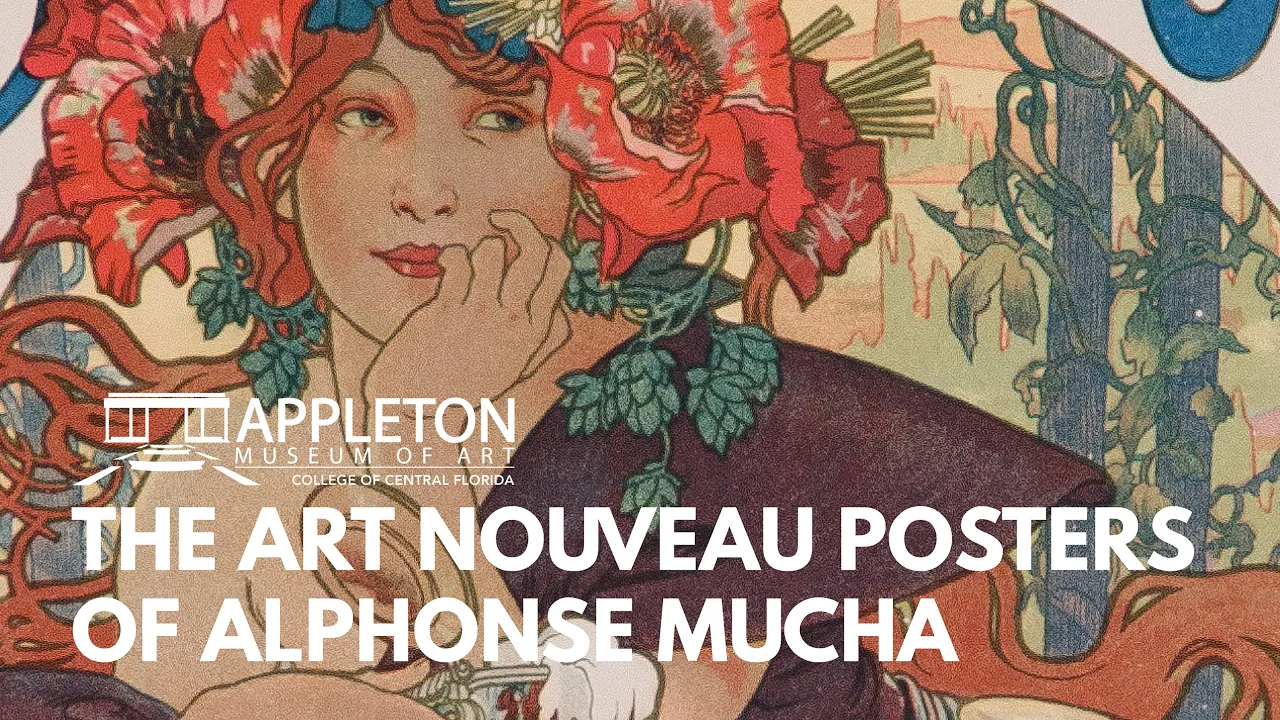

Alphonse Mucha (1860-1939) was a Czech artist who revolutionized commercial art through his distinctive Art Nouveau style, characterized by elongated female figures, intricate linear patterns, and muted translucent colors, which he developed after creating the iconic 1895 'Gisonda' poster for Sarah Bernhardt; despite his massive commercial success and influence on decorative arts, Mucha remained committed to his Slavic heritage and national identity, ultimately dedicating his later years to creating the monumental 'Slavic Epic' series of 20 paintings depicting Czech and Slavic history, which he completed and presented to Prague in 1928.
Art Nouveau Master Alphonse Mucha | Artist Biography Lecture
Added:Understanding of the Art Nouveau movement, including its emphasis on organic forms, whiplash lines, and the integration of fine and applied arts.
An overview of the Belle Époque era in Paris (late 19th to early 20th century), especially its thriving theatrical culture and the prominence of actress Sarah Bernhardt.
Basic knowledge of color lithography and the historical rise of the illustrated advertising poster as an accessible art form.
General historical context of Slavic nationalism and the political climate of Eastern Europe under the Austro-Hungarian Empire during the late 19th century.
An in-depth analysis of the 'Slav Epic', focusing on its historical, political, and allegorical narratives representing Slavic mythology and history.
Exploration of the transition from Art Nouveau to Art Deco, comparing their differing philosophies, shapes, and socio-economic influences.
An investigation into the 1960s psychedelic art movement, analyzing how posters of the counterculture era revived and adapted 'Le Style Mucha'.
Study of modern graphic design and advertising history, tracing how Mucha's commercial works laid the groundwork for contemporary branding and illustration.
56.5K views783likes55:44Original Release: 2016-03-24
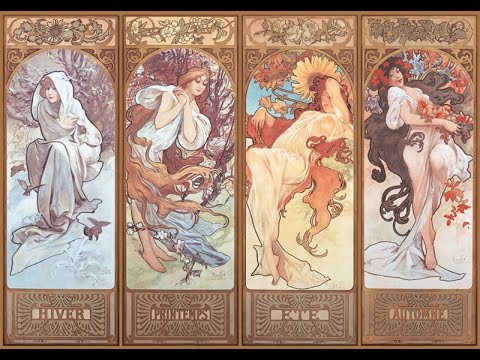
the Hudson Library and historical societies Through The Eyes Of The Artist Series presents art historian Felicia zavarella stelan speaking about Czech art Nuvo artist alons Muka whose early graphical artwork fascinated the world and can still be seen today as graphics on Modern consumer products reported at the Hudson libraries flood meeting room on October 25th [Music] 2015 good afternoon welcome to the Hudson Library um this afternoon continues our fall series of featured artists if you are new to our program we've been hosting Felicia's art program Through The Eyes of the artist for about two years now so we've had the pleasure of learning about a lot of different artists over the years um I would like to welcome back Felicia zabella statan as she presents her series of artist biographical lectures Through The Eyes of the artist today she's going to present on the artist known for his art newo style alons Muka thank you so much for skipping this beautiful sunny day to come and sit in a dark room but I do appreciate it um alance Muka is a fascinating artist if anyone is destined to become an artist he said and follows this career led by a mysterious and irresistible Force then it's me meaning alance Muka he always felt that he was predestined to do things in his life and I'll explain that to you as I go through the presentation he would say I submit myself to the commands of this watchful protective Force which propels me through life as if I were sleep walking placing before my feet at decisive moments all of my stops to success alons Maria Muka was born on July 24th 1860 in ivanich which is a small town in the southern area of Moravia or Moravia to there's two different pronunciations of that I always switched back and forth near brono and what is now the Czech Republic it was part of the Austrian Empire his surroundings here were not very Cosmopolitan for the area was in very many ways uh very traditional in comparison to the large cities like in Prague or Vienna and very very much behind the times he was the son of a local Court Usher and um which was a post that was kind of at the lowest rungs of Bourgeois respectability incidentally the Family Residence was shared in the same building as the local jail now his daily acquaintances with poverty and suffering was reinforced by the death of three of his five siblings to tuberculosis his mother who was his father's second wife a for former governess of the family was deeply religious and she led alance on a pilgrimage at the age of seven and taught him about his uh religious Heritage the the church deeply impressed him so at an early age he was very much influenced by the traditional folklore in the small community um the Eastern religious traditions and also slav nationalism and it was also a time then uh when he lived where there was this rise in the expression of ethnic culture and interests especially traditional Bohemian and Moravian folklore and this environment that he grew up in and and lived in helped him develop into the young Muka who was a boy of intense spiritual ual ity which was to mark his character for the rest of his life and he had this abiding commitment and Devotion to slav nationalism now although they had very little money the family was able to give all of their children the gift of Education hoping that they would live a decent life as civil servants and if you've been here at any of my lectures you know I love my baby pictures when I got this one of alance Muka it's amazing he looks like an old man and he's probably about I don't know four years old maybe five years old um he was recognized very early on as being a naturally gifted artist and his stepmother encouraged his talent by tying a pencil around his neck with a ribbon and encouraged him to draw on any surface in the house including the tables and Furniture oh my gosh he was born left-handed but teachers taught him to use his right hand as often happened uh when he started school and for his entire life afterwards he was ambidextrous his right hand was most often used for drawing and delicate work and he used his left hand for Emanual labor now his mother wanted him to join the priesthood and his father hoped he would for just find some form of employment but when he was 11 he entered the boy choir at St Peter's Church in Borno and uh which was the capital um of Mor Moravia early on uh alons Muka the young alfons Muka demonstrated this incredible talent for music and he spent three years as a choir boy in the cathedral choir uh uh singing very often and his teachers remarked about what an incredible voice he had considerable singing Talent at least until his voice broke when his voice broke his father found him a job as a clerk now the young Muka was a poor clerk but he devoted his spare time to drawing to designing stage sets for the local amateur theater uh the Productions where he participated in as an actor as a producer and as a stat designer now encouraged by one of his teachers he applied to the Academy of Fine Arts in Prague but he was turned down he eventually came across a newspaper advertisement for a young scene painter at the venise firm who was a large supplier of stage equipment and they were painters of theatrical scenery backdrops and curtains and so he sent them a group of his drawings in hopes that they might hire him he was accepted and he leaves for Vienna in 1879 now Vienna suited him well uh its most famous artist was Hans marer who deeply impressed the young Alan Muka marcker celebrated Vienna in his paintings setting the real people that he saw around him in reconstructed historical events on canvas and for for the emperor's Jubilee celebrations he would the maart would bring these paintings to life organizing elaborate pageants historical events set on floats a pro a processional of men and women represented in historical and symbolic characters colorful costumes that were right out of his paintings so he would bring his paintings to life now Muka absorbed and was very much influenced by marker's Innovation um he the central positioning incidentally of most of Muk Art's work was beautiful women in historical reconstructions and he wanted to be a painter of history now in December of 1881 Vienna's great Ring theater burnt down and over 500 people incidentally died in that fire and the ring the theater was one of his main employers uh because he the clients for the theater production company that worked for worked primarily for the ring theater so the most recently hired staff was all fired now Muka said that I was certain that fate had something good in store for me so he stayed in Vienna until almost all of his money was used up and then he arbitrarily chose a railroad station and a destination on the basis of the money that he had left when that'd be amazing if we could just rely on our blink our gut instinct to say you know this is the train ticket that I can afford that's where I'm going so he finds himself in mov now mov had a hotel to which he moved and there was a restaurant there that would allow you to have a tab which is was the draw of living here because he didn't have any money so he needed someone somewhere to work or and to live I'm sorry where he could put his meals and everything on a tab the town also had a book seller to whom he sell a number of drawings and he built up a steady business of doing portraits of the pretty Town's people these are some of the sketches and portraits that he did in mov and there he decorated the local theater he painted the scenery he acted he played the violin and guitar uh very often and eventually he was invited to attend the local dances and do these portraits of the town's people now one of this is a backdrop incident uh they called them theater panels then that he did for one of the local Productions in mov now one of Mah's new friends in mov was the manager of a large uh estate owned by a wealthy gentleman by the name of count Ken now Muka uh designed an address uh replication of an address for the staff to present to count Kuan on his 60th birthday to give him a gift and to also show him what an a great artist he was as a result count Kuan invited Muka to paint a series of frescos for the dining room of a castle that he had just built so he gets this great opportunity just doing an address sign he quickly found out how to paint Fresco because he had never done that before and then he moves into the castle from count Ken's invitation and lives with him now although he experienced some difficulty in the execution of these frescos he had no shortage of ideas and this is one of the p pels that was in the dining room of count kuan's luxurious Castle now Muka said I find that living in luxury is not overrated and he made full use of the Count's extensive Library he studied uh many subjects while he lived there and after he would finish the murals he thought that kouan would probably sent him back to Vienna or mov but instead he sent him to the family castle in another town now he was welcomed there by count kuan's brother count Egan who was an amateur painter and count Egan and alons Muka spent many hours discussing painting now the count advised Muka to go to the Academy of Fine Arts in Munich to get a better education he had no money there was no opportunity for him to go there he did seat uh himself for the entrance examination and he was admitted as a third-year student that's how Talent he was now Munich Munich was an exciting City for him and although the academy that he attended utterly ignored all Innovation his teachers were pretty good at the curriculum they reinforced uh Traditions they had an attachment to historical painting which he was familiar with so he felt that he got a good education there and K Coan of course was paying the bill for him and he was prepared to finance further studies since he did such a great job and offered him a choice of either Paris or Rome to go to school on his dime so Muka chooses Paris and he arrives there in 1887 he didn't speak a word of French when he arrived but he enrolls at the Academy Julian where he studied with a number of French Masters and he devoted hours to painting and then more hours to learning to speak the language now count k would send him 200 Franks a month to pay for his board and lodging and also paid for his tuition fees but he expected regular progress reports and drawings in return and he was investing in Muka in hopes that maybe some of his work would become so popular that uh count Egan would uh I'm sorry count Kuan would uh sell his artwork now in the summer count uh Muka would meet the count in Munich spend the holidays at his home he would paint more Fresco on the castle walls and then he would return to Paris uh lived in a room on the Left Bank and eventually enrolled in another Academy called The Academy korosi now he was hard at work there when count Kuan in 1889 decides to discontinue all financial assistance he gets a letter stating that with no explanation now it's still not known why count Ken made this decision many art historians believe that he felt that maybe Muka didn't write back often enough wasn't showing his respect therefore being ungrateful maybe he felt that it was time for Muka to go off on its own on his own but it was at this point that it was an Abrupt end in finances in any case the artist was penniless so he said I was saved from starvation by an order for some illustrations for a short story magazine and then later by a commission to illustrate an EP po epic poem for a Prague publisher now one of his friends at the academy uh korosi dragged him away from the hav that he lived in and introduced him to Madame Charlotte and she owned a hotel uh which was a place where they would she would let out rooms to a number of Starving Artists or poets and it was called Madame Charlotte's crey and it was on the rude to Grand Shier which was right across from the academy where he was going to school Madame Charlotte was the Widow of an army officer that was killed in 1870 when Paris was besieged by the prussians and she ran a restaurant for students and she treated these students as members of her own family now Muka was in contact with students from every nationality so he heard all the gossip that was going on around Europe about available opportunities for work he produced a number of covers for magazines he Illustrated a book of of fairy tales for uh printer and publisher he submitted a number of designs to the salon which is that great glass roofed exhibition Hall where all the artists wanted to have their work displayed in hopes that someone might buy their work and he received a number of honorable mentions at the salon one of the friends that alance Muka made at the creary who also lived there another starving artist uh probably one of the least likely people you would think that uh alance muko was friends with was Paul go someday I'm going to make that timeline I keep talking about and show how all of these artist life interweave it would probably go from here to there but it's absolutely amazing when I start reading the letters of these artists and I I read a letter by Goan talking about his relationship with Muka which is how I knew that they had this relationship started digging up letters on Muka and realized they actually lived in the same place and I'll tell you a little bit more about it so Goan arrives in 1891 now meanwhile he was organizing a sale of his own work to finance his long um the wished for a trip to the South Pacific so this was around the time that he was hoping to escape to the Exotic Islands he had no money Goan but Madame Charlotte lent him some money bought a few of his paintings to keep him going and Muka offered him use of his own studio and the two men worked together each in their own corner but they work and inspired each other and talked about painting and and ideas uh day and night now Muka bought himself a harmonium which he eventually learned how to play and he took a very amusing and very famous photo of Goan seated at the harmonium have you seen this picture before it appears in a lot of art history books now photography became kind of a hobby for Muka so all of the photographs that or many of the photographs that are in here are photographs that Muka uh did himself models cost money so whenever he employed one he would photograph her as many times as he could in varied positions and he would supplement his uh photographic archives with snapshots of friends and people that he eventually wanted to paint he continued to work on magazine covers he designed a calendar for an inks and uh paints manufacturer Laurel and he also designed lottery tickets best of all though he came in a regular contact with uh with a a gentleman who asked him to become a contributor to the lume otra magazine which regularly featured drawings of costumes and set designs and Productions it was kind of an advertising magazine and they had illustrators uh put these ideas in this brochure um and they were for theater and operatic um opportunities for costume set designs Etc but alance Muka felt the best part of illustrating for this magazine what it was that he received tickets to the various Productions around town which he would later draw for the magazine now mooka's art Nuvo period dates from the end of 1894 and the legend which is created by Muka himself although validated in a number of different letters um to to to kind of qualify that this is a really true story although it may have been elaborated a little bit over the years it's set in the offices of lumier which is a well-known printing company in the area where he lived in Paris and throughout his life Muka was a deeply religious man I forgot to show you the little um little uh car the U photograph that he made incidentally that's Anna Javan did we do a Goan here yet remember he hung around with that woman who had a monkey that's her so Muka was this deeply religious man he followed no formal Doctrine but he was convinced that there was a supernatural interv intervention that occurred in daily life he didn't believe in what he called religious determinism but he did think that every person had an exclusive destiny that was available to them fate would either allow it to be filled or it would sweep them away from it those are his words so his belief in fate convinced him that this divine intervention comes at crucial points throughout your life and it's evident in a series of events during very important periods in his life where he just gets these opportunities laid before him now here's the legend around Christmas time 1894 alons mooka's life changed forever he was alone in the print shop Lum print shop on Christmas Day and he was proofing some lithographs and just as he was completing the work the print shop manager rushed in and informed him that Sarah burnhard had just telephoned to say that she needed a poster ready for New Year's Day for a play that she was doing and it was for play jonda and attendances had been low she wanted to boost attendance for the beginning of the new year and revive it so she wanted a poster to advertise this and she calls the printer to see if anybody was any was available now it was the holiday period all of the regular poster artists were away and Muka said I saw an opportunity of a lifetime and I interjected that I could deliver the poster in two weeks wasn't sure how he was going to do that but he was going to deliver the poster so he rents a t a tail coat he borrows he said an ill-fitting hat and he arrived at the theater with pad and pencil he said I found Sarah magnificent and soon worked up a poster design now the print shop manager went off on holiday leaving Muka to execute the work on these two lithographic stones that where the poster would eventually be printed and on the manager's return which was December 30th the poster was printed and hanging to dry the print shop manager was horrified at what he saw he was certain that sarid would reject the poster and felt that his own situation now was at risk but there was no time left to change it so the poster was printed a copy was sent directly to the Renaissance theater and Muka although very unnerved by the reaction said that he sank into a depression until he was aroused by a telephone call summoning him to the theater feeling like a condemned man on his way to the scaffold he said he went to find Sarah entranced with her image on the poster and this was the poster she loved the work she welcomed Muka and tied him into a contract not only for him to design her posters theater cards programs but also all of her costumes and set designs talk about divine intervention mooka's poster of Sarah burnhard as jonda announced to the world his new style and his jaw-dropping talent now I'm going to step aside a little and tell you about the little scuttlebutt that's going on about this there is this ever increasing controversy and I don't know who starts these rumors but about this poster ever since the dawn of the 20th century there was a universal consensus based on these letters and documents and things that were written in the papers that alfons Muka launched his Sensational career which eventually became known as art Novo with this poster this event was associated with the appearance of the jonda poster promoting uh Sarah bernhard's play and at an estate sale in 1954 a small sketch bearing a likeness to alans mooka's poster was at this sale now according to people who believe this to be true they used a digital computer image enhancement to apply to the design and image analysis of the original initials on the original sketch or poster design revealed the famous letters P space go Paul goant that's how he used to sign his work it was a monogram signature for Paul Goan when he would sketch historians have concluded after much research that as early as 1890 that it was Goan rather than Muka who created the original Jon de composition art historians disagree mainly because Paul Goan wasn't that talented um and the work that he did from that point on I mean he had a very unique flat kind of a look but this is so stylized nothing was ever represented in Paul go gan's work that was as stylized as this and yet if you notice the work previous to this from when Muka was young always had that kind of a neoclassical refinement that Paul goans work so historians are perpetrating this or uating this um story and it comes out every once in a while kind of like Halloween stories I think and uh art historians say oh that's a bunch of Monk so historical events supposedly suggest that and this is true that while ggan was in Britany recovering from injuries that he sustained from yet another fist fight his former model and lover this young 16-year-old Anna La Javan the woman with the monkey stole all of his possessions took them to Paris where her next lover alfons Muka copied the sketch and presented them as the original poster design now we know that Ana jaanz went from PA goant to alons Muka and she did lud his house and steal everything well he was he was kind of beating her up daily so she felt that maybe she owed that to him he was a rough character uh and she was 16 and pretty smart at the time so at any rate let's go back to the story now you know the truth so it any rate Sarah recognized this gold mine when she saw it of the posters and muk's poster for gisonda was unveiled to the public January 1st 1895 his new colors were muted and translucent this was nothing anybody had ever seen up to this point the effect was electric the elongated slender form of Sarah in her long dress standing kind of posed uh as a a decoration um not masses of color but these intricate linear patterns and his poster was always PA placed just above ground level forcing the passer by to stop to come close and to look at all the detail now crowds would gather around each poster and collectors would bribe the poster men to keep one for them in an attempt to uh steal them uh before the glue would dry they would peel them off the walls they would cut them off the boarding so that they can get some of these posters they were very very popular now uh Sarah bernhart knew this that her she was kind of the original Rock Idol doing posters of her show and she ordered 4,000 copies of the poster knowing that she was going to make a fortune on these and she asked the printer to deliver them in small batches which she she sold to a at a considerable profit to all of her fans unfortunately the printer only delivered 3,450 post posters he undoubtedly sold the balance for himself this led to a court case in 1897 don't you love this when Sarah asked for 5,000 Franks in Damages now she refused to disclose to the court how much she was selling the posters for and therefore her loss could not be assessed and she was only awarded 500 Franks she did win the lawsuit after that she refused to print any more posters with lumier and she always wanted to maintain a limited edition she would have the lithographic stones destroyed and as a result she transferred all of her Custom Custom work to Another Printer because of this Scandal and Muka being her artist in Resident he was paid a kind of a retainer fee followed her now nothing Muka had done before the post before this poster gave any indication that he was experimenting with this detailed soft colors the stylized kind of art but now it was starting to become a signature style his work before the posters was academic at best they were composed to real life perspective very meticulous in their historical research but they weren't stylized to look like advertising art so faced with designing this original poster he showed that he absorbed absorbed and retained all the lessons that he learned from his contemporaries and the Art of other countries and other eras and he was capable of transforming his talent into these paintings into his own vocabulary of image and layout now this looks doesn't look new to us it looks like something we may have seen But at the time this was revolutionary this simple flat kind of outlined design he emphasized the Slender elongated form of Sarah burnhard he always used tall narrow poster designs uh he said her short frizzy hair always defeated me but instead I would surround her head with flowers like a Celestial crown and then transform her hair into an abstract design he devised The Perfect Image now he was not to depart from this formula in the major posters that he executed for Sarah burnhard or anyone else for that matter for several years now after this influential work in muk's career his popularity was very difficult to ignore even in the midst of many of the great artists he managed to create a brand and Captivate Paris as well as the rest of France with these beautiful intricate simplistic designs and his name could be found on every wall and town uh in town His Name Was Heard coming from everyone's lips everyone wanted Muka to produce uh posters for them in those pre- Hollywood days he was kind of considered like an art St Superstar the likes of which were rarely seen in the art World up to this point some of his more famous works were produced as decorative lithographic panels uh including Four Seasons where he won awards for this uh this combination of Graphics uh and one of um the paintings uh called four precious stones was hailed as some of his best work now as time went on he became extremely fa famous and his social life was exceedingly active but that did not slow down his productivity he produced posters for Lor such as Benedictine uh for cigarette papers for Nestle as a matter of fact when Nestle comes out with their 100th anniversary or their anniversary tins they always have mooka's design still on them to this day um the Moet and Shandon champagne bottles um biscuit um containers he did a lot of uh work he probably recognized that Moet and Shandon uh label there in the center and those are Nestle reproductions so as an important part of the Creed for this new movement which is now called the decorative movement the graphics that Muka created for the art nvo U genre the decorative movement stated that they wanted to have art created for the masses that should serve to Adorn and beautify Goods of common consumption and utility meaning they wanted their art on your shelves on your tables in everyday life so that we could all enjoy it and Muka created a series of decorative panels um allowing them to be mass-produced as works of art that could be afforded by the everyday person he's one of the first artists that created prints that you could actually afford to buy his designs have been used over and over again for a variety of products around the world um and you could see them even now in our own time I look in a catalog and I see the Muka prints on a number of different things and his style became known as art nuuvo French for new art now I want to clarify a little bit about ambiguous term first of all Muka never Associated himself with art nuuvo he would resent the fact that he was identified in any particular style genre he disliked the name movement because he argued that art was eternal and therefore could never be newvo he always insisted and followed his uh uh insisted on and followed his own sense of the important spiritual purpose of art those are his words words and he derived his main inspiration from the Czech traditions and the artwork that he grew up on so he subscribed to the doctrines of the old not necessarily the new so even though many others Associated his work with art nuuvo sometimes they called it Lyle Muka it was something that he would never have admitted to Second you have to be careful when you use the ter term art newvo not to overdetermine what it means the term is very useful in a way of describing a spirit of Reform or Rebellion uh maybe U Freedom that started to sweep through the art world at the end of the 19th century originating as all um artistic changes do in a strong reaction to the prevailing style of conventional art so it was something that was an Awakening uh especially the art that was being practiced in the school and promoted in the salons this was kind of a new Revolt the original Independent Artists were creating a revolt against Art it was this was kind of a new revolt against art and architecture but art Nuvo had this uh desire to get rid of the distinctions between high and low art So Fine Art and everyday art and for many of the artists the essential thing was to unify the lives of people through ART not just in expensive painting on a rich person's wall or an institution or a salon but the essential objects of everyday life in their home furnishings in their cups and saucers on the advertisements wall hangings everything from door handles to lamp posts to sewer grates toilet seats everything had this new kind of a style where you can tie it all together we're familiar with that now but again this was a kind of a new idea to bring art into the everyday life even purely functional objects that were machine made and mass-produced were now shaped by this new decorative power of art so we see many art Nuvo artists mha in particular demonstrating a wide range of artistic interests in Jewel and in serving wear uh Furniture Etc now in except in in addition to being a brilliant painter and illustrator he was also a master of design and the sketches that he did um for things like jewelry and furniture and other things um emphasized uniting Beauty and utility and now was at the heart of this whole new social message known as art Nuvo gave you a little history lesson there um it was inspired kind of in part by the strong reaction against the ugliness of the manufactured material which was increasingly dominating people's lives and making the idea of an Artisan Craftsman kind of obsolete so the artists had to infuse their work into this mass-produced uh element uh the emphasis on ornamentation and linear patterning patterning was not just decorative for many of the art Novo artists the essence was style the symbolic content of the pattern which kind of emerged as a visual metaphor uh and Muka always said that his graphic design Minds were charged with spiritual energy and meaning now as he felt Freer to approach this decorative uh idea he experimented with um a lot of the serpentine POS possibilities of hair during this time uh he gave his maidens in his Graphics the most elaborately involved intertwined tendrils of hair which descended and curled up um which was admired by a lot of people some people called it a macaroni style or noodle style um but not a lot of people liked it but he was able to simplify hair into this graphic design so when people tell me gosh I don't know who alance Muka is I always say the beautiful women with the hair and they know exactly who I'm talking about okay so now aanuka marries marushka um on June 10th 1906 in Prague and around this time they decided to visit the US and they were in the US from 1906 to 1910 and the reasons for going there was simple money he was now determined to establish a new reputation as a serious painter and a portraitist he had made it as a graphic designer he already did what he was doing in Europe and now he wanted to come to the US and be recognized as a fine arts painter uh incidentally their daughter um jerus laava was born in New York City they also had a son um that they brought with them he was born in Prague and he later became their son Yuri later became a very well-known journalist writer screenwriter he wrote autobiographical novels uh he also studied the work of his father so this American tour began in the spring of 1904 with kind of a hero's welcome in New York it was in the newspapers he was announced as the world's greatest decorative artist and the patch was they were advertising him as a decorative artist so anybody who was having a fashionable Suare um they wanted to have posters done by the very famous alons Muka now New York welcomed him enthusiastically they put two full pages in The New York Times and he had countless social invitations welcoming him arrival but what the Americans demanded from alons bua was not this fine art that he was hoping to bring to the US but the type of work that he was now ready to abandon so this dissolved into a disaster uh the new and Wealthy American friends knew that alfan Muka was not willing to do this work for them they also knew that he was poor uh impoverished and he was coming to the US to make money and so they kind of forced him to do the kind of work that he didn't want to do and he refused he declined opportunities to undertake any kind of decorative project so he wouldn't even accept uh commissions for this decorative project but he would accept commissions for society portraiture this was not his Forte but this was the new style that he wanted to develop um he was unaccustomed to American business practices he was not very well advised when he came here and for the first time in his life his work remained unsold his clients and the unreliability of how he was being represented was something that was a big disappointment to him so now he had to find a way to make money so his main source of income came from teaching and he went went to New York and Chicago and taught at a couple different universities now his dash for gold which he called it extended over four years in America and he considers them to be his Lost Years where the artistic takes started to move further and further away from what he wanted to bring to the US he wanted to bring uh Fine Art memories of his homeland um the reality of the times of what was going on in Europe he wanted to bring it over to the us but he needed to earn some money to fund these projects and to do this kind of work that he wanted to do um and he wanted also to demonstrate to the checks that he had left behind that he had not sold out to the Americans who were demanding the kind of work from him uh in the end uh Fortune's favor appeared in person a a man by the name of Charles crane who was an American millionaire was intensely interested in foreign affairs and Slavic culture coincidentally um and crane agreed to finance one of the projects that alfons Muka wanted to work on called the slav Eep epic and he was going to provide financial and emotional sustenance to alons Muka for a short period of time but it turned out to be 20 years Muka returns to Prague and he took up a mission which turned out to be the Capstone of his life to make a little bit of money just to get started on this project he did decorate the mayor's office at the municipal house and a couple other landmarks and this is some of the work that he did but when Czechoslovakia won its independence after World War I he designed new post postage stamps Bank notes other government documents for the new state and this didn't um didn't satisfy him he still wanted to work in the Fine Arts he felt that he was wasting his time on these frivolous projects um most of the money that he got from crane was squandered it was given away as fast as he had earned it uh the new century was approaching there was a universal exhibition in Paris and it housed a major retrospective of the work that alons Muka was working on and during this time there was some talk about designing an exhibition Hall where he could execute a number of drawings and paintings and it was U meant to be at the base of the Eiffel Tower the the project was never executed now what sets alfons Muka apart from the other artists of the art noo movement was that he was feeling increasing ly dominated by his personal life he didn't want to adhere to the rules of um art Nuvo and he makes this extreme commitment to the Slavic culture and decides that this is the kind of work that he's going to do he's not going to prescribe to any of the ideals of art Novo he was done making the commissions designing Furniture doing all the commercial aspects and he was deeply convicted uh no doubt on the basis of his early experience when he was growing up that he should develop his style out of old ethnic and national uh traditions and he was committed in his words to commit himself to art for his slav Heritage and the decision was accompanied by this sense of of disillusionment of the style that really made him famous so he returns to Paris and although this experience didn't lead him to make an immediate change in his style he did spend the rest of his life um with Czech art particularly because in his uh eyes it was being dangerously corrupted in his words by Foreign especially German influence so he hurled all of his energies into advancing the cause of Art in his own country in 1910 he began a project that he proposed with Charles crane the slav Epic and he spent many years working on what he considered to be his fin art masterpieces it's a series of 20 huge paintings depicting the history of the Czech and Slavic people and he dreamt of completing this series as a celebration of Slavic history ever since he was young and now he was finally doing it these are some of the panels that are in This Magnificent work of art he was always a patriot of the Czech Homeland he considered his success to be a Triumph for the Czech people as as much as for himself this is a idea to to just to see the size of these canvases there were 20 massive canvases about 24t by 30 ft they were created and presented to the city of Prague in 1928 and they covered the history of Slavic people from prehistory into the 19th century and they represented Mah's hopes and dreams for his homeland in 1919 the first 11 canvases were completed and exhibited in Prague and America actually was a little excited about what he was doing unfortunately history has not been kind to either Muka or the Cs and as the current unrest in the area of the turn of the century shows um the bequest that he gave to his country was received with kind of cold shoulders the geopolitical world of 10 years after World War I was very different from the one that Muka lived in when he began this project Mor Moravia was now part of the new nation chos Slovakia the art world was changing as well varying political groups brought out their personal arsenals of the cruel Prejudice um which was damning uh aspects of alons mooka's work and the public seemed to appreciate appreciate the paintings but the political agendas doesn't really give a lot of away to public opinion so they were still criticizing his old-fashioned ideas now the rising tide of fascism in the late 1930 led to um mooka's works on the S nationalism as being denounced by the press as being reactionary and when the Nazis occupied Czechoslovakia and divided the country up into Bohemia and mor and um Moravia and Slovakia in 1939 Muka was one of the first people that was arrested by the Gestapo during the course of the interrogation he started getting sick and fell ill to pneumonia and though he was eventually released he never recovered from the strain of this event or seeing his homeland invaded and overcome and criticism of his work and he eventually dies in Prague on July 14th 1939 of a lung infection just before his 79th birthday now in 1939 his country gave him a hero's funeral as a great check in a public ceremony where um most of the important creative artists among the Czech people were buried his treatment I mean his uh tribute was kind of a historical moment more of a historical moment than a tribute to his popularity or the national significance of his art it was the the uh funeral of alance Muka was an assertion of Czech identity in the early months of this brutal Nazi occupation and uh a moment the the the funeral was kind of a a moment of popular passive resistance an active Defiance against the occupying authorities who had banned all public demonstration so they used it as a political event once the hist historical situation changed the works of alfons muko was shoved aside no government officials after World War II even bothered to find a suitable place to house this massive gift to the nation it remained rolled up in storage for more than 35 years before put being put on permanent display in a castle uh near Borno where it's barely seen by the public within a few years of leaving Paris uh Muka was completely forgotten by the art world now it's been documented that a major Gallery in par bought huge quantities of these decorative panels that were rolled up and stored away and they folded them in half cut a window opening on one side and they use them as mounts or mats to display other well-known works of Arts in museum they said the panels were cheaper than plain white card now when a Revival of the interest of art Nuvo began during the post-war years none of the writers on the subject even mentioned Alon smoka in my history books I have no word of alance Muka at all in in years I went to school by the time of his death his style was considered outdated but his son Yi devoted much of his life to writing about him bringing attention to his art and interest in alfons mooka's style distinctive style experienced a strong Revival in the 1960s when there was this general interest in art Nuvo in his own country there's not much interest in Muka there's a small Muka Museum that appears in Prague run by his grandson you have to make an appointment to go in there and see the work and many of the much of the work are uh is Prince he was however one of the most important decorative artists working in Paris at the turn of the century and his distinctive and original posters and his decorative panels which are now called the style Muka became almost synonymous with French art Nuvo he was an illustrator who gave an astonishing mood to his works but most important he was dedicated to Bringing art into the lives of everyday people and he succeeded at that and that's the story of alance Muka any questions yes well you know it's interesting that he has painted or created all these images of these beautiful women with this hair and the woman that he chose to marry is almost peasant like looking she's very plain very do you know what I'm saying yeah it's just an inter well you know they didn't have that hair he just gave them that hair as a artistic uh hair yeah exactly have they done much uh as far as restoring those Pian or you know Yuri worked very hard John Muka the grandson is working hard to get money to support that but there doesn't seem to be any support with the nation that you know brought him to life to to do that but they take donations every once in a while there's a little article in the newspaper about the Prague Museum uh and what Yuri has done but he's kind of gone unnoticed yes the large panels in that he he painted in the epic slav epic did he do them all by himself yes help no he had no assistance he did all of the panels himself he would build a scaffolding put it up make his how long did it take do you know well it took him almost 20 years to do all of those panels 18 and a half there's some dispute about how long it really took him but the first 11 um images were took him 10 years to do the first 11 images are people collecting his works now like they do other artists or is he still kind of you don't see him in any museums um most a lot of his work was destroyed um no he it's unfortunate I don't think Nazis they was there there there was some thought that maybe that collection that was found had some Muka Works in it but they weren't they were copies yes did you come across any uh evidence that he had that he had any exposure to Frank L wght when he was here in ch in Chicago or New York just because they had SAR you know decorative arts and integrating the furniture and the art I I thought it was just interesting I have to look into that I have to look into Frank rights exposure to him because he went to Europe and you know the Vaso collection is what really exposed Europeans and that was in the early 1900s but it was I didn't know Muka came to the states that's interesting yeah that's very interesting yes in the Chicago World's Fair there's a bit of Art newal in some of the um oh they the the major pardon me the industrial buildings no no not the industrial building but in some of the uh individual countries that had exhibits uh like large panels and so forth is that just a follower that of bua or was bua represented in the Chicago worlds that's a good question I'm going to have to look into that I don't know you always stump me I don't know soon as he raises his hand I know I'm not going to know the answer to that no you just have so much more exposure than I do I'm I'm a little embarrassed but no I don't know but I will look into it though I will that'll be one of my than question this all reminds me of another artist um Maxwell can anybody does am I well I think beer you know many of the artist of the art Nuvo movement had that simplified design so many of the artists are going to be you know similar to me they're very I mean they're so ornate busy yeah they're beautiful but well thank you so much our next lecture is Norman Rockwell I think Monday November 9th at 11 p.m. it's going to be at Norman Rockell yeah I'm going to tell you the real story of Norman Rock [Music] thanks to the management and staff of the Hudson Library and Historical Society for their assistance in the production of this program and for providing the Through The Eyes Of The Artist Series for the citizens of Hudson for a DVD or Blu-ray copy of this or any hcv program contact Hudson cable television at 330 65325 or via email at hctv hudson. oh. us [Music]
Up Next

4:57
Hector Guimard, Paris Métro Entrances: Art Nouveau Icon
@smarthistory-art-history
67.8K views•2013-08-29

114:18
Christian Iconography: History, Theology, and Meaning | Fr. Panayiotis Papageorgiou
@Trisagionfilms
58.8K views•2020-02-21
7:48
Ukiyo-e Art: History, Woodblock Printing & Influence
@japanathand
6.3K views•2023-06-08

16:34
Earliest Depictions of Jesus in Art: 10 Ancient Images Explained
@UsefulCharts
5.9M views•2022-06-03
Related Study Plans & Knowledge Roadmaps
Structured learning paths in Art History
art-history
Gothic Cathedrals: Engineering, Light & Society
01The Birth of the Gothic: Romanesque to Suger's Vision
02The Structural Triad: Pointed Arches, Ribbed Vaults, and Flying Buttresses
03Theology of Light: Lux Nova and Sacred Geometry
+ 2 more learning modules
14h5 modules
Explore Roadmap
art-history
Pre-Raphaelites: Realism, Symbolism & Critique
01The Victorian Art Establishment and Academic Formula
02The Founding of the PRB and Radical Realism
03Medieval Revivalism and Literary Symbolism
+ 1 more learning modules
8h4 modules
Explore Roadmap
art-history
Street Art: From Subways to Art Market
01Subcultural Origins in Philadelphia and New York (1970s)
02The Subway Era and Style Wars (Late 1970s - 1980s)
03The East Village Scene and Early Gallery Crossover
+ 2 more learning modules
10h5 modules
Explore Roadmap
art-history
Classic Maya Art: Iconography, Glyphs & Ritual
01Foundations of Classic Maya Visual Culture
02Deciphering Maya Hieroglyphs & Text-Image Integration
03Sacred Geography and Cosmological Architecture
+ 2 more learning modules
14h5 modules
Explore Roadmap