




















Chords are built by stacking specific intervals from a scale: triads use the 1st, 3rd, and 5th notes (e.g., C major = C-E-G), 7th chords add the 7th note (e.g., C7 = C-E-G-Bb), and extensions add notes like the 9th, 11th, or 13th. Major chords stack a major third on a minor third, while minor chords stack a minor third on a major third. Understanding these building blocks allows musicians to construct any chord in any key by applying the same interval patterns.
How to Build Chords: Triads, 7th Chords & Extensions
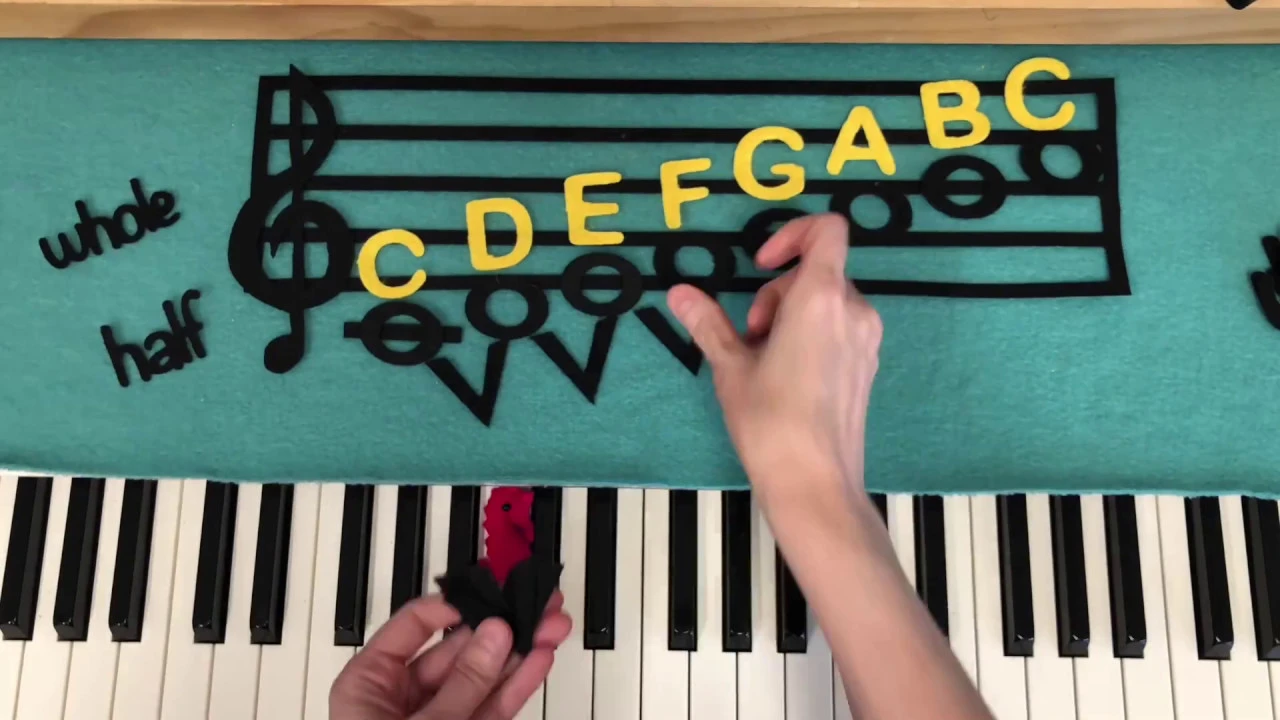
Added:Understanding the construction of the Major Scale (specifically the C major scale) using whole and half step intervals.
The concept of musical intervals (such as thirds, fifths, and sevenths) and how they define relationships between notes.
Basic guitar fretboard navigation, including tuning and how to locate basic root notes on the low E and A strings.
Exploring chord inversions (such as drop 2 and drop 3 voicings) to facilitate smoother voice leading on the fretboard.
Studying diatonic harmony and Roman numeral analysis to understand how these chords function together in progressions (e.g., ii-V-I).
Translating chord shapes into arpeggios for lead guitar soloing and improvisation over complex chord changes.
Applying these chord construction formulas to other keys beyond C major using movable barre chord shapes.
910 views33likes15:51Original Release: 2020-09-20
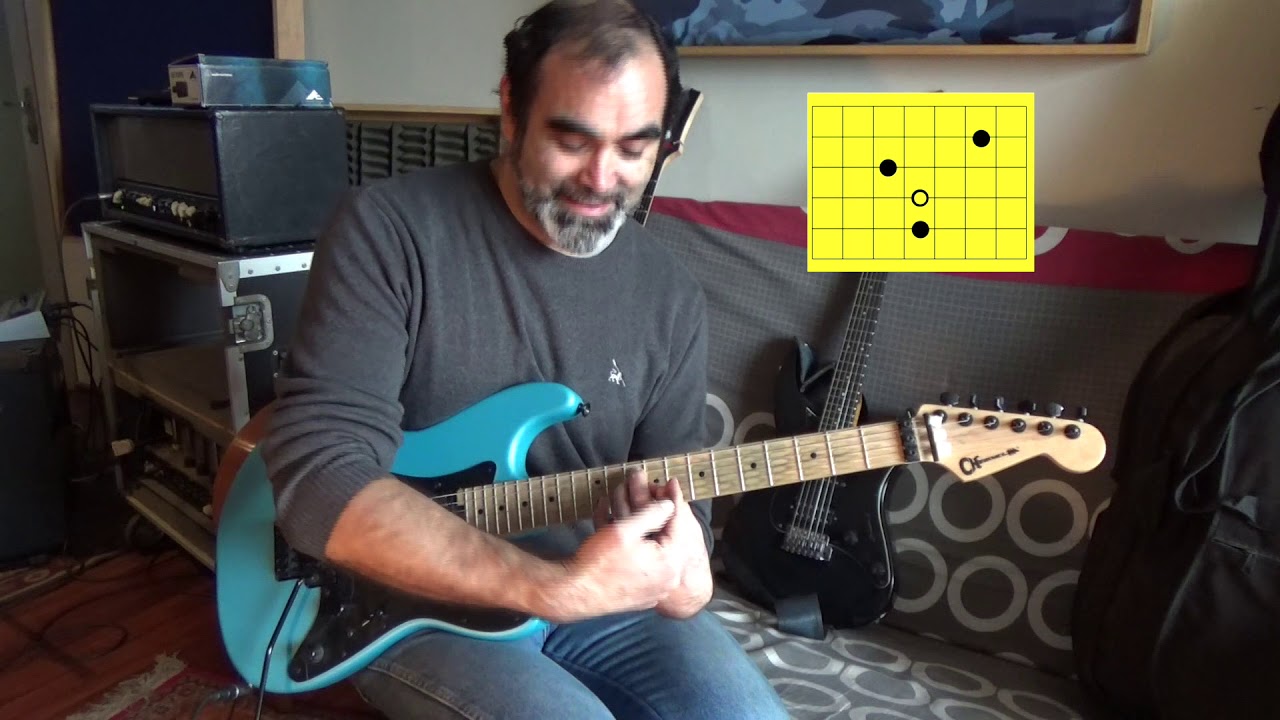
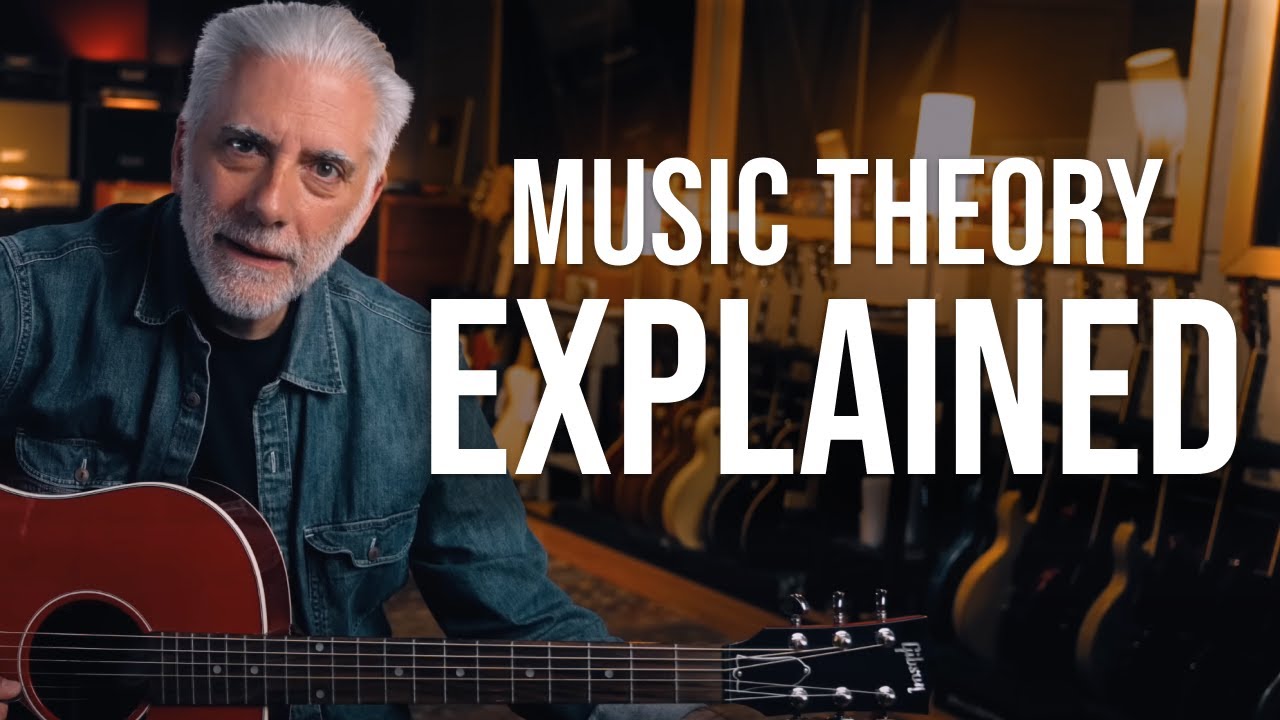
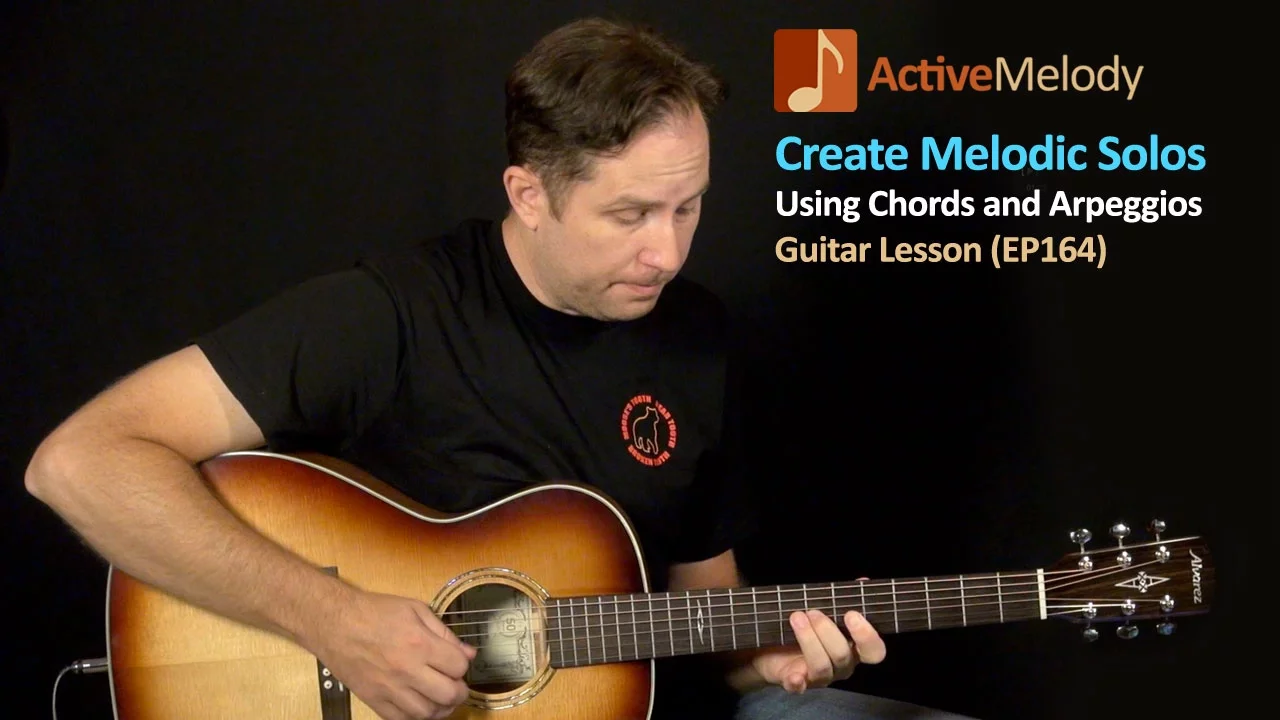
[Music] i want to talk about chords today in order to talk about chords let's define what a chord actually is a chord is a harmonic set of pitches consisting of multiple tones that are heard sounding simultaneously what that means for us is that instead of just taking one note which we would call a melody or just taking two notes a harmony [Music] we're going to take three notes or more and create chords [Music] there's a whole lot of different kind of chords that we can play majors minors augmented diminished nine chords 11 chords 13 chords what i want to talk about in this video today though is how do we build chords a lot of us know how to play these open chords [Music] or even bar chords [Music] but what makes those chords major minor or nine chords 11 chords what i want to do is i want to break down these chords and show you how they're built how to add extensions make them a little bit more uh unique to you a little more exotic for for maybe some of the different sounds that you're trying to get whether playing a c major or playing a c major seven just how to how to make your guitar sound really pretty and understand why the chords are instead of just reading them on tabs or reading them in a chord chart you understand what it is that makes up those chords and how you can duplicate them yourself with any note with anywhere on the neck so let's get to it so for the examples we're going to use c major the reason we're going to use c major is because there are no sharps or flats in the key what this means is when we play a c major scale c d e f g a b c there's no sharps there's no f sharp there's no g sharp they're all just regular notes c d e f g a b if you were to look at a piano it's all the white keys on a piano again we've got c d e f g a b c those are our seven tones that we're going to use to build off of these chords so let's stick with this key c major this means that we're going to be staying what's called diatonic diatonic means we're not gonna use any notes other than the ones in this seven one two three four five six seven back to the one in order to build a c major chord we need three tones this is what we call a triad the notes that we need if we look here on the scale we got c through b we need in order to build a c major chord we need the first three of those we need a c we need an e and a g so if we take this c major open chord that everybody kind of knows we got a c we have an e we have a g if we continue up with this chord and we finish off on the b and the e strings on that first fret we have a c note and then we have an open e so we have a c e g c e in this chord the c major we didn't break any rules we have five tones playing but only three actual notes c e and g are being played we're just duplicating the c and we're duplicating the e we use this information on every single chord that we're about to play so if we look at the c major scale the next note is d well we're going to take the 2 the 4 and the 6.
we get a d minor chord [Music] we have a d note then we have an a note we have another d note and then we have an f that's what gives us a d minor chord [Music] the next chord that we have is an e minor because we have an e which is the three [Music] and then we also have a g note and we have a b now when we play a full sixth string we have six tones playing but we actually have stacked three e's in here we got an e a v another e a g another b and another e [Music] then we have an f chord we have a g we have an a minor and we have a b half diminished if we take the c note and we go all the way from c to e we span from the third fret to the seventh fret here that is what we call a major third major third go from the e note to the g note notice how i'm only going four frets here [Music] this is called a minor third so we have a major third [Music] stacked on top of a minor third [Music] now that's if we're moving horizontally if we're moving vertically this way this shape here is a major third and then from here from the second fret of the d to the open g that's a minor third so when you have that major third stacked on top of a minor third you get a major chord if we go to the next chord the d minor the reason that it's a d minor is because we have a d note here the next note that we need is the f well would you look at that we're only moving four frets then we need an a so now we have a minor third that shape stacked on top of a major third that's how we get minor chords so we're staying in the key of c we have a c major d minor e minor f major g major a minor and then a b have diminished when we play these we have a 1 2 3 4 5 six seven one we're not going to go into chord progressions in this video i'll leave a link in the description for another video about chord progressions but for today we're just gonna stick with understanding what the chords are and how we break them down let's move on to seven chords a seven chord is probably the best way to get started at extending out your normal triads learning what a seven chord is so let's go back to our scale c d e f g a b c we have one two three four five six seven eight or one we already know that we need the one the three and the five in order to get the seven guess what we gotta grab the seven so one two three four five six seven we have a b note the easiest way to find a b note is to take this c on the first fret lift it away we get a b [Music] very nice it's a very soft sounding chord [Music] we could also find the same b note here on the fourth fret with our pinky on the g [Music] and then keep this pointer finger down on the c note and we get this very crunchy sound because they're one note away from each other a semitone away sounds really nice even though there is that dissonance here when played in the right context it sounds really beautiful the next seven chord that we've probably seen a lot of is a dominant 7 chord or it would be written as a c7 what the dominant 7 chord does for us is it actually helps us move into another chord meaning it's a chord we're not going to stay on that long but it helps us transition into a new chord it builds tension so we can have resolution okay so here if i play a c7 very harsh it's got this flat 5 interval here which is very harsh it wants to go to an f chord [Music] and i'm going to make an entire video about that as well link will be in the description below really nice but how do we get a c7 what is the difference between a c major 7 and a c7 well it's that utilization of the seven tone right here we're playing the major scale doremi [Music] what we're going to do is we're going to take the seventh tone and we're going to drop it back a fret kind of harsh [Music] and what that does is it takes that b and it turns it into a b flat [Music] let's go into some other extensions we've already established that we have the one the three and the five that will always carry us depending on what chord we're playing right a c major is always going to be a c e and g no matter what no matter what the instrument no matter anything else keep that in mind when we add an extension to it we can actually create some very exotic sounding chords so for example if i wanted to play a c add 9 well we're gonna have to find the nine we only have seven tones [Music] well that's because if we continue up past that octave we have an eight or a one then we can go to the two or the nine so two is always nine four is always eleven and six is always thirteen [Music] the ninth note of c major is a d so we need to add this d note in here [Music] really pretty if i want to add an 11 we just continue up and find the 11.
[Music] now that's a pretty big stretch so we're going to move it down here where this f note is [Music] what if i want a c major 7 add 9 well nothing's different c e and g are always there and we need the seven which is a b we know that and then i want the nine so i'm going to grab that nine right here on the third fret of the b [Music] the first thing that i would do if you want to learn chords in every single key is to find out what all the notes are in every key starting from c and then moving up what's called the circle of fifths if you don't know what the circle of fifths is i'm also going to link a video down in the description hopefully you can check that out and understand what it is but what it does is it gives us all of the keys so c c d e f g a b c tells us to move up five notes is the next key so g so if i wanted to play a g and start all of this over g a b c d e f sharp g that's the difference between c and g is that f sharp g a b c d e f sharp g [Music] so if i wanted a g major seven i need the one the three the five [Music] and then i need an f sharp which is the seven [Music] i'm gonna grab that f sharp right here on the second fret of the e string but notice how nothing changed we're still grabbing the one the three and the five and then the seven if i want a g7 well i take that seventh tone the f sharp and i flatten it back so now i have a g7 dominant set i believe that if you took a little bit of time got down the circle of fifths understood understood how to build these scales in all 12 keys because there's only 12 that you can choose from right once you have all of them laid out in front of you get a notebook get it in a spreadsheet whatever you have to do to learn if you take that little bit of time you'll thank yourself in six months when you understand all of these chords and you know how to build very exotic sounding chords and i think that it's going to end up helping you become a stronger musician in general understanding it because it doesn't matter if it's on the guitar or not it could be on the piano and you could still understand how those chords are built so that was my look into how to build chords hopefully you guys can start coming up with some chords that maybe you've never played before but it's up to you to take the information and make it into something else if you guys want to learn more about guitar theory music theory and how to see shapes and understand the neck and take it all across the board check out my book guitar efficiency it's 160 pages of guitar exercises warm-ups and then in the back there's a weekly journal so you can mark your progress throughout the year if you feel like you got really good information from this video go ahead and give it a like subscribe to the channel and leave a comment below about how it helped you and if you had some struggles and if this helped clear anything up and if there's more questions that you have definitely leave them below so i can make some more videos about it and hopefully explain some of this stuff to you guys thanks for checking this out and we'll see in the next video
Up Next
9:16
Understanding Triads in Music Theory: A Complete Guide
@BradHarrison
340.3K views•2021-09-14

10:20
Mozart's Musical Dice Game Explained: History, Rules, & Fun
@webpianoacademy
5K views•2023-03-13

47:36
Understanding Diatonic 7th Chords in Major Keys | Music Theory Tutorial
@GracieTerzian
54.7K views•2022-03-02
10:49
Understanding John Coltrane's Giant Steps: A Music Theory Analysis
@Vox
10.4M views•2018-11-12
Related Study Plans & Knowledge Roadmaps
Structured learning paths in Music Theory
music-theory
Composing Galant Music: Partimento & Schemata
01Foundations of Figured Bass and Keyboard Harmony
02The Rule of the Octave (Regola dell'Ottava)
03Galant Schemata: The Building Blocks of Form
+ 2 more learning modules
30h5 modules
Explore Roadmap
music-theory
Decoding Overtone Series: Tuning & Drone Music
01Acoustic Foundations: The Physics of the Overtone Series
02Tuning Systems: Equal Temperament vs. Just Intonation
03Microtonality and Spectralism: Beyond Standard Pitches
+ 2 more learning modules
24h5 modules
Explore Roadmap
music-theory
Impressionist Harmony: Scales, Planing & RPGs
01Foundational Music Theory: Keys, Intervals, and Seventh Chords
02Impressionist Color: Chord Planing and Parallel Harmony
03Whimsical Textures: Pentatonic Cascades and Whole-Tone Scales
+ 1 more learning modules
14h4 modules
Explore Roadmap
music-theory
Negative Harmony: Axis Reflection in Indie Pop
01Music Theory Foundations: Scales, Intervals, and Triads
02Functional Harmony and the Circle of Fifths
03Demystifying the Negative Harmony Axis Reflection
+ 2 more learning modules
16h5 modules
Explore Roadmap