



















The human mind operates through two distinct cognitive systems: System 1, which is fast, intuitive, automatic, and operates without conscious effort (such as recognizing emotions or perceiving threats), and System 2, which is slow, deliberate, effortful, and analytical (such as solving complex math problems). While System 1 enables quick judgments and skilled performance through accumulated experience, it is prone to systematic errors through mechanisms like substitution (answering easier questions instead of harder ones) and coherence-seeking (creating plausible stories from limited information). Expert intuition develops only in highly regular environments with immediate feedback, and subjective confidence does not reliably indicate the accuracy of judgments.
Thinking, Fast and Slow: Daniel Kahneman on Decision-Making Science
Added:>> John Boyd: All right. I'm John Boyd. It is my great pleasure to introduce Professor Kahneman today. And I just want to give you a brief background on his outstanding career.
He started in 1954 received his bachelors in experimental psychology and mathematics from the Hebrew University in Jerusalem. In 1961, he was awarded his Ph.D. from University of California Berkeley right across the bay in Experimental Psychology. In 1979, he and his coauthor Amos Tversky published their seminal paper on Prospect Theory which started to change the way people reframed the argument around gains, losses, and decision-making under uncertainty. Several years later in 2002, Professor Kahneman was awarded the Nobel Prize largely on the work of Prospect Theory of. And Nobel Prize isn't always impressive; his perhaps more so because there isn't a Nobel Prize in psychology. He had to win his Nobel Prize in economics. And as far as I know, there's only one other person, one other psychologist, who's won a Nobel Prize and that's Ivan Pavlov. He may be a physiologist, we could argue about that. Years later, in 2007, Psychologist tried to reclaim Professor Kahneman as one of their own when the American Psychological Association awarded him Lifetime Distinguished Contribution Award. And today he is a Senior Scholar at the Woodrow Wilson School of Public and International Affairs at Princeton University and he's here to talk about his new book Thinking Fast and Slow. Now Google's mission which we all know is to take the world's information and to make it more useful and universally accessible.
And all information, all knowledge, is important, but I think some again is more important than others. Because the information that he'll present today I think it's very personal; it's about each of us. And, if you'll listen carefully it's going to change the way you think about yourself and the world around you. So please join me in welcoming Professor Kahneman to Google.
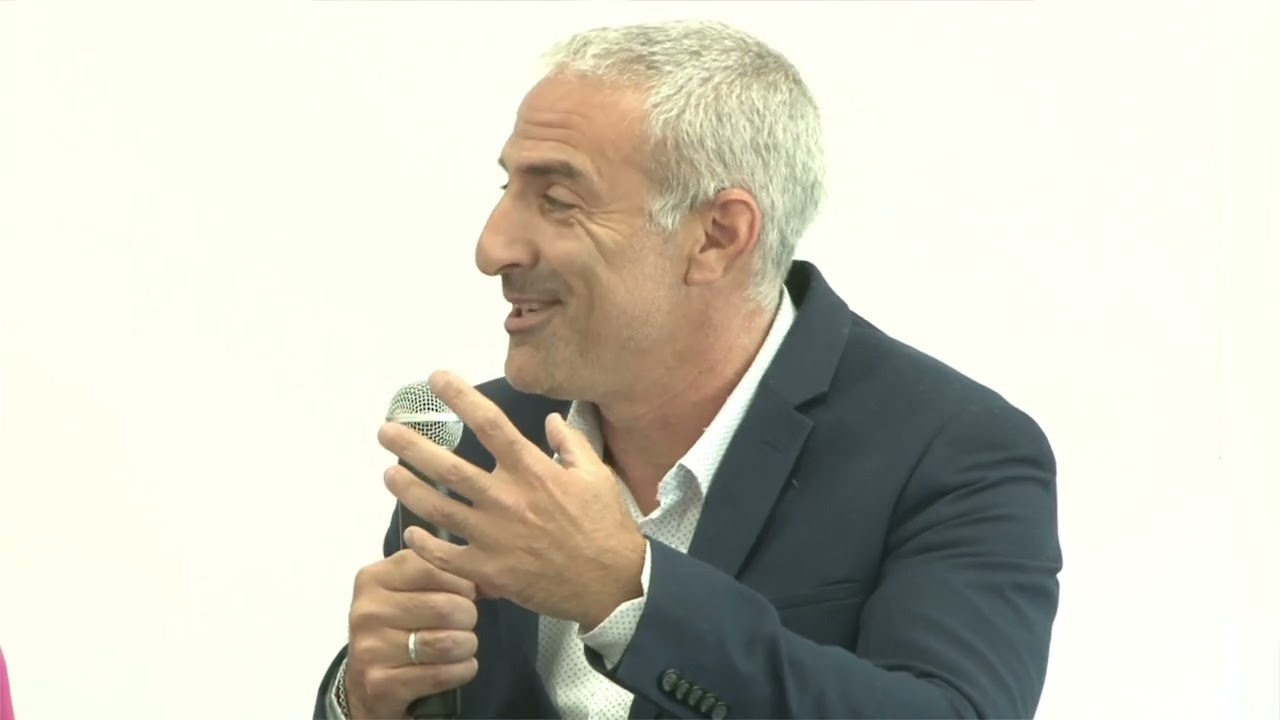
[Applause] >> Kahneman: Thank you. Well, I think intuition has been discussed a lot in recent years and I'll be talking about intuition. There are two camps in this discussion naturally there is the pro and the con. And of course, many people here will have read Malcolm Gladwell Blink which although it's not unconditional defense of intuition, it certainly gave people the impression that sometimes we magically know things without knowing why we know them.
Within the discipline of psychology and the decision making there is a group and it is headed by a very interesting figure called Gary Kline who wrote a book that I recommend.
Its Sources of Power is one of his books that I would recommend the most warmly. And they are great believers in expert intuition. The other side there are skeptics about intuition in general and including expert intuition. And I have long been counted as one of the skeptics because my early work with Amos Tversky was about intuitive errors and flaws and biases of intuitive thinking. Today you find that discussion in many places and for example in medicine among the popular writers; two writers both of whom write for the New Yorker, Jerome Groopman and Atul Gawande. They clearly differ. Atul Gawande is in favor of formal systems, very skeptical about human judgment and wanting to prove all the time and Jerome Groopman being in fact, although he doesn't quite admit he really likes good old fashioned medical intuition. Of course he likes physicians well-educated. But he doesn't like formal system and the issue in medicine is "What are the role of evidence based medicine and how do you allocate that with the function of intuition?" The background actually, part of the background for what I'll talk about today is a strange collaboration in which I engaged with about eight years with Gary Klein, whom I mentioned. He is a guru of a group of people who really, I wouldn't say they despise what I do but they certainly don't like what I do because they think that the emphasis and biases of judgment has drawn an unjustly unfavorable picture of the human mind. And by and large I am inclined to agree.
Seven or eight years ago I invited him and we worked together for a number of years trying to figure out where is the boundary? Where is intuition marvelous and where is it flawed?
And I think we can tell. And we wrote a paper at the end of six or seven years with a lot of vicissitudes that we went through since we basically don't agree. We wrote a paper the title of which was A Failure to Disagree, because on the substance I think we know and we both agree where you can trust intuition and where you cannot. Emotionally we haven't changed. He still hates the biases and doesn't think that errors of experts are very funny and I think that errors of experts are quite funny [laughter] so that's a difference right there. There are two modes of thinking that all of us are familiar with. And there is one mode, one way for thoughts that come to mind and listen to this. You know about this lady that she's I think adjust as quickly as you know her hair is dark. And it's interesting to dwell a bit about this. It is this is not something that the judgment that she is angry, the impression that she is angry. Doesn't feel like something you did. It feels like something that happens. It happens to me. We have the basic experience is a passive experience in those judgments. And that is true of perception, when we see the world we don't decide to see it. It is true of impression. And it is true in general what we call intuitive thinking. It just happens. It comes from somewhere. And we are not the author of it. Now, there is another way that thoughts come to mind and here I suppose essentially nothing came to your mind, but the answer is 408. To produce the 408, requires a completely different kind of operation. You have to retrieve the program that you learned in school. The program consists of steps. You have to go through the steps. You've got to pay attention successively to partial products and so on. And keep things in mind and keep the whole program in mind.
This is how it works. This is something that you do. It is not something that happens to you. And there are many indications that this is how it works. One is that Physiology indicates and this is how it works: pupil dilates. This is something that I studies many, many years ago that people really on a program like that if you're on a problem like that if you're going to do it in your head, your pupil will dilate. The area will increase by about 50% as soon as you engage in that. And it will stay dilated as long as you're working and it will sort of collapse back to normal size either when you quit or when you find the answer. So this is another way thoughts come to mind. And this is definitely not the intuitive way. Here we are we feel a sense of urgency. We feel something deliberate is happening and a very important aspect of it this is effortful and what psychologists mean by effort is basically, if you want the quick introduction to what effort is, this is something you cannot do while making a left turn into traffic. You cannot do it and you shouldn't try. And the reason is that there is limited capacity to exert effort. And if you are engaged that capacity or those resources at one task less is available for another task. Now, there is another function of System 2. And here I'm going to tell you a riddle. Most of you are familiar with it. A bat and a ball together costs 1.10. The bat costs more than the ball.
Of course how much does the ball cost? How many people know this riddle by the way? Oh, okay. So it's still usable. The point about this riddle is that the number came to your mind. And the number is ten cents. And everybody just, I think. Maybe here they're exception, very few exceptions. People confess that the number ten cents immediately came to mind.
Now, it's wrong. Ten cents and dollar 10 is a dollar 20. The solution is five cents. What is interesting here is that at Princeton, at MIT at Harvard and I don't know about Stanford or CalTech about 50% of students asked this question of undergraduates say ten cents.
And we learn something very interesting when somebody says ten cents. We learn that they didn't check because if they had checked, they wouldn't say ten cents. So, there is a sense of confidence that people have that these people in particular have and it brings us to another function of what I'll call System 2. System 1 is the intuitive one; they perform those automatic and activities and System 2 is the effortful one the one that the deliberate one. And the reason that I classify this as System 2 operation is that self-control and controlling your attention and deliberate exertion of effort are impaired when by other activities. So, if for example, a trivial example, if somebody is asked to retain seven digits in their head and you then give them a choice between chocolate cake, sinful chocolate cake and virtuous fruit salad they're more likely to choose the chocolate cake than they would if they didn't have seven digits in their head. It takes effort to control your impulses even such mild impulses as a preference for chocolate cake. So you should be aware of that difference between System 1 operations, the automatic ones and System 2 operations, the deliberate ones, it comes very clearly when in driving. So driving is a skill. And any skilled activity measure of skill is that things begin to happen automatically. So you can drive and conduct a conversation. You cannot make a left turn into traffic, but by and large, we can drive and talk. So driving is largely automatic.
Braking, when there is any sign of danger, braking is completely automatic. That is, you can notice while you're braking, but you first respond so that the response is immediate, it is fully automatic. Now, in some places, not here where people drive in snow or ice, they learn about skids. And then, occasionally, you'll find yourself as a driver in a skid.
And then System 2 will be mobilized because in a skid you're not supposed to do anything that comes naturally to you. You shouldn't brake and you shouldn't steer away from the skid. You should leave the brakes alone and steer into the skid, completely non-intuitive.
Now, when people have a lot of practice with skids that too becomes automatic. So one thing that we can tell about System 1 and System 2 those two types of operations, is some of the basic innate operations, functions that we have such as having emotional reactions to things, all this is System 1. We don't choose to do it. It just happens to us. But also System 1 is where skill is. That is when we get to be skilled at something it becomes automatic and it demands your resources and we get to be very good at it. Now, the issue of intuition and here I'm not sure, but I suspect that Malcolm Gladwell really did us a disservice by giving us a sense there is magic to intuition. There really is no magic at all and we should understand how it works. Intuition and Herbert Simon who was Psychologist then and economist and a political scientist Nobel Laureate, Herbert Simon gave a very good definition about what intuition is. It is simply recognition. There is really no difference between the physician recognizing a disease, you know, a particular disease from a facial expression or something and a little child learning, pointing to something and saying doggie. The little child has no idea what the clues are but he just said.
He just knows this is dog without knowing why he knows. And once you think about it this way, this really demystifies intuition to a very considerable extent. And it also leads you to sort of a solution to the problem Gary Klein and I were trying to solve. When can you trust intuition and when can't you? And then it becomes an issue of is the world regular enough so that you can learn to recognize things? Or and then did that particular individual have an opportunity to learn the regularities of the world? And so, the world of chess players is highly regular. And statistically, the world of poker players is very regular. So there is an element of chance, but there are rules and the mind is so set that if there are rules in the environment and we're exposed to them for a long time, and we get immediate feedback on what is right and wrong, or fairly immediate feedback, we would acquire those rules. So all of us have expert intuition even if we are not physicians and we're not master chess players. I recognize my wife's mood from one word on the telephone. You know, most of you can do that. There's people that you know very well. All of us recognize dangerous driver on the next lane. And you know we get cues and we don't necessarily know what is the cue but this person is driving erratically and could do something dangerous. And this is a lot of reinforced practice and we're very good at that. We can learn about those, there are differences. Among experts, among professionals, in the level of expertise that they have and they depend in the level of intuitive expertise that they can develop.
So for example, compare anesthesiologists to radiologists. Anesthesiologists get very good feedback, an immediate feedback whenever they do anything wrong. You know they have those measurements in real time. Radiologists get really miserable feedback about whether they're right or wrong. So you could expect an anesthesiologist to develop intuition much more than you would expect radiologist to develop intuition. And so, that is part of the answer about intuitive expertise. We don't need to disagree about that because we know pretty much when intuitive expertise is likely to develop. And as I said, we also that means that intuitive expertise is not going to develop in a chaotic universe or in a chaotic world.
So for example, I personally do not believe that that's stopped because people pick stocks to invest in can develop intuition because simply the market takes care of it. There isn't enough regularity in what's going to happen to prices for intuitions to develop.
We also know about political forecasters when they forecast long-term, they are really no better than a dart-throwing monkey. And they are certainly not better than the average reader of the New York Times. Intuitions and the reason it's not the pundit's fault. And that research has been done with pundits and CIA analysts and regional experts. It is really not their fault that they cannot predict the long range future 10 or 15 years. They are quite good at short-term predictions. They are really not good at all in long-term predictions.
It's not their fault. It's the fault of the world. The world is probably not predictable.
And if the world is not predictable, then you are not going to predict it. When there are marginal situations where there is some predictability but poor formulas do better than individuals. That is the domain where formulas beat individuals regularly is a domain of fairly low predictability. Because when there are weak cues, people are not very good at picking them up and are not good at using them consistently. But formulas can be generated on the basis of experience and they will do a better job than individual judgment. Okay.
Now, I've introduced you to System 1 and System 2 and I've told you something about skill and about skill in System 1. Now I'd like to point out something that we sometimes have intuitions and that applies to political forecasters and to stock pickers and to all of us. Quite frequently we have intuitions that are false. And they come up and come to mind and they are subjectively undistinguishable from expert intuitions. So I'm now talking of people who have intuitions that are not based on expertise. And they come. They're System 1 in the sense that they are effortless and automatic. And where do they come from? And that is what I'm going to try to illuminate, shed some light on in the rest of the talk. So I want to introduce you to System 1. And first of all, let me get one thing clear because I might forget. I use System 1 and System 2 those terms and very shocking terms in my discipline. You are really not supposed to do that. Because every psychologist gets told fairly early you're not supposed to explain what happens in the mind by invoking little agents inside the mind and explain what the mind does by what the little agents do. Those are homunculi and that's a bad word in psychology. I'm going to use System 1 and System 2 absolutely as homunculi. Now, what do I have to say in my defense? First of all, well, I'm warning you. Those are fictitious characters. They don't exist. I don't believe there is such a thing as System 1 and System 2. Don't look for them in the brain, because they are not two systems in the brain of which one does one and the other does the other. So why am I using this terrible language? I'm using it because I think it's helpful. It fits the way our minds work and to explain the background of that decision of why I use System 1 and System 2, I refer you to a very good book. It's very entertaining. It's by Joshua Foer and it's called Moonwalking with Einstein. It came out earlier this year. And what the book is about. Joshua Foer, he's a science writer. And he went to the Memory Championship of the United States. You might not know there is such a thing but there is. So people memorize decks of cards and very, very long lists of things and perform feats that we think are completely extraordinary. Joshua Foer decided to find out what happens. And a year later he was actually the champion -- the Memory Champion of the United States. And the book is a story of how he did it. And basically the story which was known to the Greeks in some form is that memory is very, very good at something and terrible at other things.
Memory is terrible at remembering lists. We're really not good at remembering lists. Memory is superb at remembering routes through space. That evolution, evolution has endowed us with an ability to remember routes and not lists. So now, you can trick yourself. If mentally you have a list and you want to remember the list, then you create a mental route and you distribute the items on your list along the route. And then, when you want to remember the deck of cards or whatever it is, then you go through your route and you pick out items one after the other, because that you can do. It turns out something very similar happens in another context. People are very good thinking about agents. The mind is set really beautifully to think about agent. Agents have traits. Agents have behaviors. We understand agents. We form global impressions of their personalities. We are really not very good at remembering sentences where the subject of the sentence is an abstract notion. But an agent is very, very good. So just remember whenever I say System 1 does X what I mean is x is a mental activity that can be performed without effort. You'll remember a lot more about System 1 if you think about it as doing things than if you think of those mental activities.
It helps me think and I think it helps other people understand. Okay. So let me introduce you to System 1. I begin with a study, just an extreme case of this study was done at the University in the UK and like in many department of biology actually. And like many places in the UK, they have a small room which is a tearoom, coffee room, where people can make themselves tea or coffee and get some biscuits and there is an honesty box and they pay into the honesty box. And somebody had the bright idea of sticking a poster right on top of the honesty box and of changing the poster once a week. And so, this is week one. And that's the poster. Week 2 is flowers. Week 3 is eyes. And so on. Now, what is remarkable about this is, this is something that happens to people. They have no idea it's happening to them. In fact, they have no idea about the posters. They are barely aware there are posters there. They certainly don't know the posters change systemically. They have no idea that the posters influence their behavior. System 1 can do those things. Those things we, a lot is happening in our mind that we are not fully aware of. We are not aware of at all in fact. And there is a link between eyes and being watched and being watched and not wanting to do bad things or wanting to do good things. All of this is deep in our associative memory and it gets activated. You see eyes especially those large eyes on week 1 and it does something to you that you may not be aware it does. Now let me show you something else. This, I just want to enumerate very briefly what happened to you in the first couple of seconds when I put this on the screen. And first of all, you read them. You read the words. Now, you didn't intend to read the words. You didn't have to decide. You had to read them. You had no choice in the matter. Second, ideas and images and memories came to mind probably none of them very pleasant. So that's the second thing. Another thing that happened is physical. You recoiled. This is actually being measured. And when people are exposed to threatening word, they move back. So the threat is to some extent to some slight extent taken to be real. The symbolic threat is taken to be real. You made a disgust face. You experienced disgust. And that is getting to be interesting because those things are reciprocally reinforcing. So if you make a disgust face, you are more likely to feel disgust. If you make a smiling face, you are more likely to think that things are funny.
So you know, one of my favorite experiments along those lines is, you take a pencil, you stick it in your mouth like that. And cartoons will appear funnier to you. Because, when you stick a pencil into your mouth like that, you're making a smile. And just the sheer muscular change is enough to feedback into our emotions and our feelings. This is all fairly important, because what it means is, you can think of well, let me add something.
Then I'll pull it together. I think of System 1 very largely in terms of what happens in associative memory. To think of associative memory, you can think of a gigantic network of ideas. And the ideas are linked to each other in various way, associatively, some of them are causes of other things or categories, example, instances of. There are many different links but you have a huge representation of what we have in mind. And at any one time the stimulus occurs, it activates a subset of those notes in that representation of memory and then activation spreads through the associative network; not a lot, but it spreads some. So for example, you're now and we can know that it spreads, because we become sensitized to other ideas that have been activated in this fashion. So for example, right now, if somebody whispered words in your ears, you would be much more likely to detect and recognize words like sickness and smell, instinct, and nausea, and hangover. A lot of the associations have been activated. You're not aware of any of them. You're not aware of anything. Those are not conscious activations. But they are activations nonetheless. And because those ideas are partially activated, weak stimulus is going to be sufficient to bring them over threshold. This again is a very important function of System 1 associative memory. We are prepared basically by this spreading activation prepares things for what might come next.
You will be able to recognize and respond to things more easily than before. Then something else happens. And this is there are two words here, banana vomit and you made a story. What happens, you know, there is really no need to do that, but in effect, this was sufficient to create a causal link so that somehow the bananas caused the vomit. You didn't make a conscious decision for that to happen, but we know that's the kind of thing that happens.
As soon as a stimulus is presented, we look back for causes; the associative machinery looks back and latches on possible causes. Here it's very simple to find a cause and you know this has an effect. So temporarily, you know, you don't like bananas because an association has been created. And that happens because of the causal surge. So [pause] this should give you a sense of one of the functions of System 1. And to complete that, let me show you something else. So this is a famous psychological demonstration. Many of you might not have seen it. You read that as A B C. You read this as 12, 13, 14, but the B and the 13 are physically identical. So this tells us something quite important about the way that associative machinery in System 1 work on new stimuli. Everything is made coherent.
So, in the context of letters, that ambiguous stimulus is going to be read as a letter.
In the context of numbers, it is going to be read as a number. What is quite important, two aspects here, one is the coherence and the other is that you are not aware of the ambiguity. The ambiguity is suppressed. That is, you just get one interpretation. In this case, it's a coherent interpretation. And that is the way that the system works. It generates associatively coherent representations of reaction to situation. Associative memory or System 1 is also very pository about world knowledge. So when an event occurs, our reaction to it is informed by a lot of things that we know. And I'll give you my favorite example of this. This is people are listening to sentences while events in their brain are recorded.
An upper class male British voice says, "I have a large tattoo, I have large tattoos all down my back." And approximately 3/10th of a second later the brain responds with a characteristically surprise. This is astonishing if you stop to think about it. There was that voice. You have to classify it as an upper class British voice. Now upper class British men don't have tattoos down their back, something is odd and you get a surprised reaction. You get a mobilization of System 2 because System 2 is the one that pays attention. Surprise calls attention. A male voice saying I believe I'm pregnant of course same thing. So this system holds a world knowledge and uses a world knowledge to classify situations as normal or abnormal and it does that at top speed. And it updates very quickly. Well, I'll tell you a story about updating. It updates what it considers normal. Now, this is an anecdote. You're free not to believe me. I believe it because it's a personal experience.
We were some years ago on vacation in Australia in resort all of 40 little villas and in the evening we go to have dinner first evening and we meet a psychologist from Stanford.
Ah, surprise, coincidence and we are very delighted to meet each other. Now, two weeks later, we're in the theater in London. And it goes dark. And we watch. And then, the lights come back on and next to me, same guy. Now, the important point is that I was less surprised the second time than the first. Because "Oh, John, he is the guy I meet everywhere."
[laughter] It takes very little time to create what we call "a norm." So one event, the second event links back to the first. If I had met anybody else, that is what's impressed me. If I had met anybody else, I would have been more surprised.
And that's odd if you think about statistically, it's crazy. But in fact, it was very clear that and I wouldn't say that I consciously expect to see John wherever I go. But, you know, if I'm going to meet someone, I'd be prepared to meet John.
[laughter] Now, I've mentioned something about causal thinking. And I want to give you some sense how that works. So it's a question, which is more probable that a mother has blue eyes if her daughter has blue eyes or her daughter has blue eyes if her mother has blue eyes? Now again, as in the bat and ball, there is an intuitive response and the intuitive response is that it's more probable that a daughter has blue eyes if her mother has blue eyes than the other way around. If you stop to do the math on the assumption that the incidence of blue eyes is the same two generations the probabilities are strictly equal but even before you do the math, your reasoning flows along causal lines. Your thinking flows along causal lines. This happens intuitively. One of these feels okay. It feels more coherent and the coherence that we experience can be turned into a judgment of probability. That is, the confidence that we experience is a judgment of probability. Now, I'm going to skip the other example. And I said earlier that people have intuitions that are not necessarily true. And that people are confident in judgments that are not necessarily true. And I would like to sort of present a tentative theory about how that happened. And the general idea is very straightforward. When we're asked a question that we cannot answer, typically System 1 is going to come up with the answer to a related question that is easier. And it's going to use that answer to the wrong question, the question that hasn't been asked in place of the question that was asked. We call that a mechanism of substitution: substituting an easier question for a hard one. It happens automatically. People are not aware that it happens and it is a source of many intuitions that don't come from expertise and they are much less likely to be correct than the intuitions that do come from expertise but they come with equal confidence just about. So there are several mechanisms that take part in this substitution thing and I'd like to introduce them. One of them which I call the mental shotgun is that when you are instructed to perform an operation, you typically perform other operations as well that are related to it associatively, are related to the target operation, but they are different. My favorite example is, I'll say words and you are to judge as quickly as possible whether the words rhyme or not. And the first pair of words is vote note. That's easy. The second pair of questions is vote goat. And vote goat is substantially harder than vote no. Why? Although nobody else asked you to, you spelled. And vote goat, there is a mismatch in spelling.
Although they rhyme at least as I pronounce them just as well as vote note, you have a conflict and the conflict slows you down. So typically, we compute more than we intend to compute. And we can and that allows for substitutions to take place. So let me give you an example of the substitution here. The question here would be, "Which of the three figures is larger on the screen?" And the answer is, "they're equal." All three figures on the screen are of equal size. But it's a very powerful illusion. We see the figure on the right as larger than the figure out left. And we see it because we can't help it. Although you were told to think of it as a two-dimensional object, you compute the three-dimensional solution in which the object on the right is in fact larger than the object on the left and that is what you see. There are many other examples of this general process.
Another one I like is called the dating heuristic. Students are asked in a survey they're asked a couple of questions. How happy are you and the other is how many dates did you have last month? And if you ask the questions in that order, the correlation is essentially zero.
Turns out there are many things in life that determine happiness and dating is not particularly important. You invert the order. So you ask people, "How many dates did you have last month and how happy are you with your life as a whole?" Correlation is.66.
[laughter] What has happened and this is both a heuristic and example what I call a focus and an illusion. That you have an emotional reaction to the student has an emotional reaction to the question about the number of dates. That emotional reaction is sitting there. Then you're asked the related question about happiness and without knowing that you are doing this, you substitute one for the other. And you can do it for many questions. Now, it's not that people are confused what happiness is. They know happiness is not satisfaction with the number of dates. It's just that this is the answer that comes to mind to the happiness question. There has been substitution and you are not aware of it. Now, there is a process that is essential to this and this is another strange ability of System 1. We can map intensities across different dimensions. So I'll give you my standard example for this. It's about Julie who is a graduating senior and she read fluently when she was age 4 and the question is what is her GPA? And the odd thing is that you know what her GPA is pretty much. At least you have an idea. I mean, it's clearly about 3.2. It's clearly less than 4 about 3.7 maybe which is ridiculous of course. But how do people get to 3.7 or somewhere like that? Well, here is how it goes. She read fluently at age 4. That gives us an impression of precocity. How precocious was she as a reader? And that people could express that in percentiles. What is the likelihood that you could meet a child who would read faster than that? Then when you are asked a question about what is her GPA? Without your knowing it, you are matching the percentiles and you get the GPA that is about as extreme in the distribution of GPA as reading at age 4 is in the distribution of reading age. Completely unaware. Statistically, completely absurd. You should be much more regressive. This is not the correct answer. But this is a compelling subjective answer.
This is one of the mechanisms that leads to intuitive errors this mechanism of substitution.
And I'll give you one more example. International travels, this is an experiment. The experiment was run during a period when there were many terrorist incidents in Europe. So that's a background. How much will you pay for insurance that pays 100,000 dollars in case of death for any reason? And how much would you pay for insurance that pays 100,000 dollars in case of a death in a terror incident? People pay much more for the second than for the first. [laughter] And the reason that they do is that there is an immediate response which is how afraid am I? And I am more afraid, most people are, I'm more afraid of the idea of dying in a terrorist incident than they are afraid of dying. And that is the mapping that takes place. Again, you know, it's that's the way it works. This is the associative machinery.
And when beautiful thing about it it doesn't get stumped. It produces an answer to questions that it doesn't know how to answer. But it produces them by answering easier questions and a lot of our mental life is conducted in just this way. So let me complete the circle and talk a little bit about subjective confidence. Subjective confidence, which is closely related to the probability of being correct, is actually not a judgment at all. It is a feeling. It is a feeling that people have. And I think we know where the origin of that feeling is.
And it is System 1 if you will assessing the fluency of its own processing; assessing the coherence of the story it has created to deal with the current situation. And if the story is coherent, confidence is high. Now, this is disastrous in some ways, because you can make a very coherent story out of very little information and out of information that is in fact not reliable. The quality of the story depends very little on the quality and quantity of the information so people can be very confident with very little reason. Confidence is therefore not a good diagnostic for when you can trust either yourself or somebody else. And if you are to evaluate whether you can trust somebody who has a lot of confidence, that's not the way to do it. The way to do it as I'm saying earlier is to ask what environment have they been in? And have they had an opportunity to learn its regularities? Subjective confidence is not a good indicator. So that's, you know, the story I could tell in about 45 minutes about the two systems. So let me remind you they don't exist. But I think you should feel free to think in those terms, because what you may be beginning to do is, you may be beginning to have an idea of the personality of System 1 and System 2. Now this is ridiculous, but having an idea of those personalities will actually enable you to think better about psychological events than if you were just had a long list of unrelated phenomena. So those ideas, those personalities, have a certain coherence. And, you know, they're worth something in the coin of being able to make judgments. Okay. I think we should open for questions.
So.
[Applause].
>> John: We have the mic up there and I also have hand-held mics if somebody has questions.
Somebody's got to ask the first question.
>> Male # 1: Hey. How fixed or plastic are the System 1 processes? And are there thing like mindfulness or emotional regulation that have any effect?
>>Kahneman: As I have described it, System 1 can be updated in terms of content very regularly. So you can learn in one trial what is normal and what is not normal. What is very difficult to do is to get control over how it works, over the rules of its operation.
And so, I do not know of a lot of evidence that people, that System 1 can change unless you have a quiet skill which requires reinforced practice. What you can do and what people clearly can do is you can educate your System 2. And you can educate and you can learn to recognize situations in which System 2 takes over and takes control of the reaction thereby avoid some mistakes. Can't be done too much. But if I don't sound optimistic about training System 1, it's because I'm not.
>> Male #2: Another question about training System 1. You talked about reinforcement learning and the time constants and the immediacy in building expertise, but many of the practices we have around building software development, the time constants are somewhat longer and in particular you gave a counterexample which was your Australia/UK visit and the fact that a single incident with John predisposed you to that association. And so, I wonder if there has there been any testing to see what time constants really play a role here?
>> Kahneman: No. In terms of updating and learning associations, this is something we can learn quite quickly. You can be taught to be afraid of something without anything else happening. And so, in that sense, System 1 associative memory can be updated. And you can now be developing software expertise that is a somewhat different story and it's more like learning how to be a chess master. And that takes a lot of experience. So that you and a lot of reinforcement and it had better be effective reinforcement. Now, in the software thing, the time is to some extent not a big problem. Because ultimately you are going to see it all together: the error you made and the correct solutions. So time is not major factor. In learning, you know, how to not steer a tanker, that's reinforcement is very slow. And it's a lot harder to learn to do that than it is to learn to steer a smaller ship.
>> Male #3: So this is a pretty broad question so please take this whichever direction you like. But I was just wondering how these systems come into play and how you see it in media and advertising and maybe I was thinking of how it's changed over time.
>> Kahneman: Well, it's very clear that advertising is here to address System 1. It doesn't convey information for judgments. It moves your emotions and it creates associations. That's what it is intended to do and it's pretty effective. So, a lot of politics is addressed to System 1, a lot of political messaging. The influences of System 1 activities and you know which are really important and we should be thinking about. It's pretty frightening. One of my colleagues at Princeton, my younger colleagues at Princeton, has done studies on the effects of facial characteristics on political preferences. And it's utterly amazing. You take 538 pairs of pictures of the two contestants for each Congressional race and you show those pairs of pictures to Princeton students for 1/10th of a second and you ask, "Which looks more competent?" That predicts 70% of elections. So the impact of System 1 on the decisions we make for example, how much to pay in an honesty box, that is something that we're really very rarely aware of and it's much more than we think.
>> Male #4: So in, although that you say System 1 and System 2 don't show up as specific structures, have there been functional MRI, diffusion-spectral imaging, diffusion-tensoral imaging studies that highlight whether System 1 is more primal brain initial activation and System 2 is more neocortex?
>>Kahneman: Well, you know, System 1 is extremely sophisticated. So it's not, that is in part why I don't believe there is any simple representation in the brain of those two systems because what I've called System 1 operation by their characteristics include both innate responses and highly skilled responses. And the whole the representation of world knowledge is in System 1. So it's hard to classify one as primitive. And I should add that System 2, the reasoning system as it were is not necessarily rational. I mean, System 2 knows what it knows.
It knows what we know and we don't know a lot. So it's not that System 2 is infallible and that all the mistakes come from System 1. We make very significant mistakes when we think very seriously. Yes.
>> Male #3: So you mention that experts when making long-term forecasts and they trust their intuition they're often wrong. But there are still a lot of people who listen to them.
So, is it bad for the society in general that we listen to experts who may be just as wrong as we are and should we be worried? Should we try to do something?
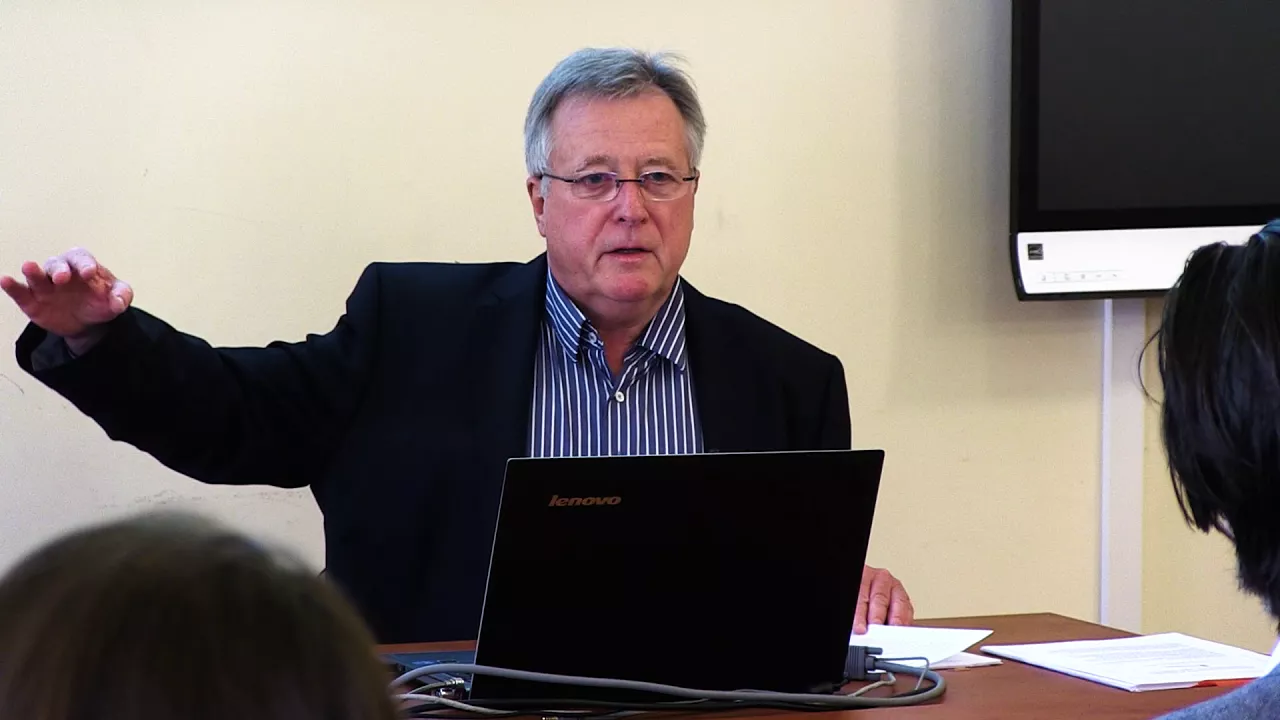
>>Kahneman: I think there is a very good reason for the demand for experts. I was referring to a particular book that you may want to read or you may want to look for the New Yorker review of that book. It's a book by Phil Tetlock on political judgment where he studied forecasts in the time range of 10, 15 years of political forecasts. And one of the interesting observations is who are the people we like to listen to as pundits? And there are people with very high confidence who think they understand the world. Now, they actually are worse than chance. I mean, they are worse than people who are more hesitant. But we want them. We need them. And so, there is a real demand for overconfidence. [laughter] >> Male #5: So as you were going through all the slides of the various illusions, by the time you came to the three figures on the screen, I guess I was expecting there was something. So even though the lot on the right looked bigger, I looked again okay and they're the same. So was that System 1 or System 2.
>> Kahneman: That is clearly System 2. And that is the way we can learn to overcome illusions both visual and cognitive. You still see it as one larger than the other, but you know that when you see a display like that, you shouldn't trust your eyes. And to a similar extent you can recognize that you're in a situation where somebody is having too much effect on you because she's very eloquent. But you know the content may not be there.
And so, you force yourself to be skeptical.
>>Male #5: Is there any research to that effect that people would avail that advertising is going to have an emotional effect on them? Is there any res- let me say that I'm aware that advertising is supposed to have an emotional effect on me activate System 1, will I be better suited to sort of ignore those things?
>>Kahneman: I mean you certainly are going to ignore it better than if you didn't know it whether you're capable of ignoring it altogether, that I'm much more skeptical about. The real thing is not to expose yourself to it. Because once you're exposed to it, it's going to affect you. And you know, those effects are the cues in our world that we are not aware of can be extremely powerful. There is a whole line of study, it's not exactly to your point, but I must tell you that story. There is a whole line of studies on what happens to people when they're exposed to the idea of money. And for example, they perform one task and there is a computer nearby and on the computer there is a screensaver and the screensaver are dollars floating in water. Dollar bills floating in water. That makes you selfish.
It makes you reluctant to ask for the help of others. It makes you put your chair further away from the chairs of other people when you have to set up an interview situation.
It has effects on all sorts of behaviors that people are completely unaware of. And the links are symbolic. And you can be aware of that. How can you resist it? We are exposed to money and it's going to have some effect. Now, if you're designing an organization or if you're designing an environment for people, you can create an environment that will remind people of money all the time or you can create an environment that will remind them of other things and that will control their behavior to some extent.
>> Male #2: Although possibly not one of the big five in the personality trait categories yet, have you developed any empirical testing that ranks people on a scale of one-to-two and shows where they fall in terms of default behaviors.
>> Kahneman: Well, there is a relevant scale on the activity of System 2. And the bat and ball question is actually a very, very good question. There are several examples of this.
My former colleague Shane Frederick developed that test. It's called the Cognitive Reflection Test and the people who fail that item that is, who say ten cents they are different in some interesting ways from the people who are better able to make it. And let me give you an example. You ask them, you know, standard Amazon questions. So you ordered a gift for yourself. How much will you pay extra to have it tomorrow rather than the second business day? And the people who fail this item are willing to pay more to get it tomorrow. So there are connections. What there isn't and I'm very surprised there isn't, I don't know there should be tests of intelligence that are tests of System 1. That are tests of the richness and subtlety of the model of the world that we have. All the intelligence tests that we have are tests for System 2. They're reasoning tests. We don't have and I wish somebody would develop it and I hope somebody will but, in fact, we don't have it.
>>Male #6: Hi. So this is sort of a 2-part question. So do you find that people who are more System 1 or System 2 prone for immediate judgments are more likely to be that way long-term like larger decisions?
>>Kahneman: I don't know enough about this.
>>Male #6: Yeah.
>>Kahneman: We do know that self-control and the general activation of System 2 is an important personality characteristic. And you know its presence in a rudimentary form at age four and has implications. The ability the test is called The Marshmallow Test. You ask a child you can have one marshmallow now or you can have two if you wait 15 minutes. That predicts what they will do 20 years later remarkably well so there are things that are quite stable.
>> Male #6: And the other part is that have you encountered people who would say they have to make a decision and they're aware that their System 1 mind is telling them decision A their System 2 mind is telling them decision B. What do people go with?
>>Kahneman: I don't know enough.
>>Male #6: No?
>>Kahneman: No, I don't know enough. [pause] No, I don't know enough. It would be so dependent on circumstance whether you impose the System 2 judgment. In many cases, really System 2 just endorses what System 1 subjects to. That's the model you have. Sometimes you can overturn it. It's hard work.
[pause] Thank you.
[Applause]
Up Next

Decision-Making Science: How Nudges Shape Our Choices | Cass Sunstein
@ThePrakharGuptaXperience
22.9K views•2026-03-17

Cognitive Skills for Differentiated Instruction | Teacher PD
@BrainWareLearning
631 views•2017-12-17

Flow Science: Unlocking Ultimate Human Performance | Steven Kotler
@talksatgoogle
702.6K views•2014-05-06

The Nocebo Effect: How Beliefs Can Cause Real Harm
@CGPGrey
10.4M views•2013-12-23
Related Study Plans & Knowledge Roadmaps
Structured learning paths in Psychology