




!["전방부대 국회투입 검토" 이래도 '경고성'?, "문 부수고.." 복창 증언..법정선 "주무시나" - [핫이슈PLAY] MBC뉴스 2025년 5월 19일](https://i.ytimg.com/vi/QMfZuV96tDk/maxresdefault.jpg)
![[백운기의 정치1번지] 결국 실토하는 부하들 ·· 이제서야 진실 밝혀지나](https://i.ytimg.com/vi/htqV_TKwpxY/maxresdefault.jpg)









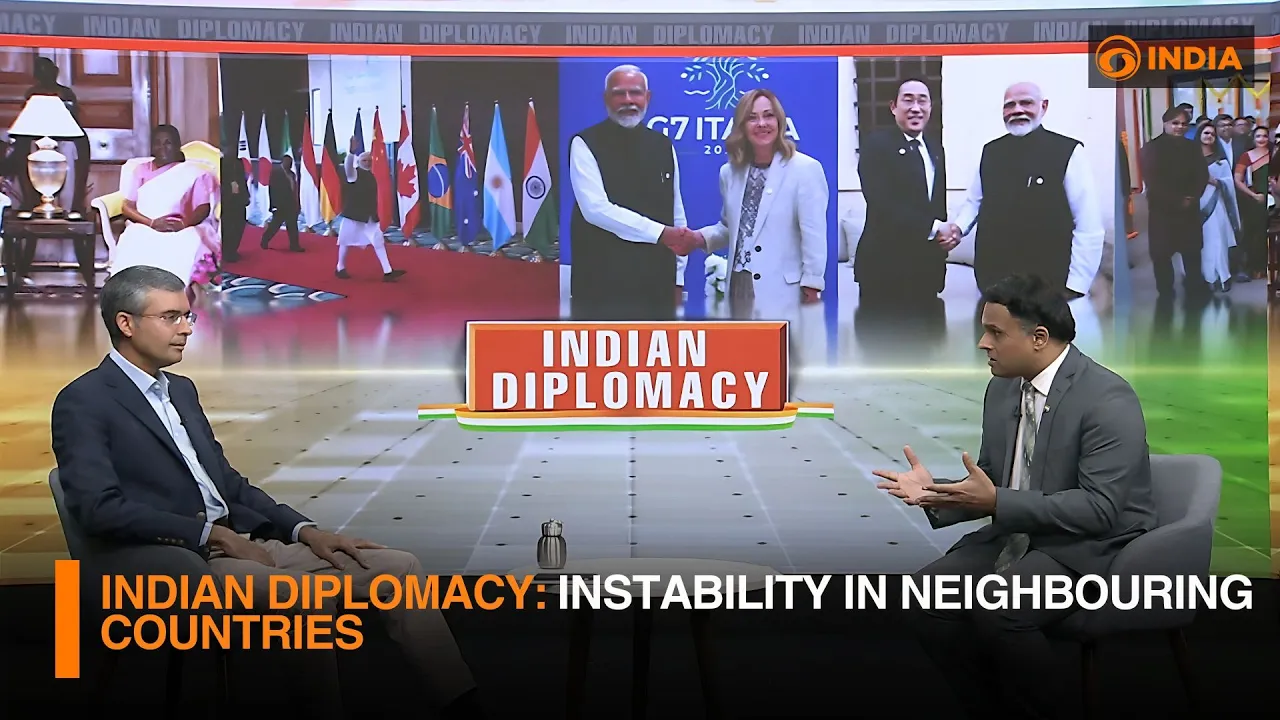

The Indian Armed Forces have maintained their apolitical character through deliberate institutional design and conscious political decisions since independence, unlike many post-colonial nations where militaries became politically involved; this stability was achieved through civilian oversight mechanisms, bureaucratic controls, and the military's own commitment to remaining above politics, though contemporary challenges include bureaucratic control replacing genuine civilian engagement, inadequate defense budgets, and slow implementation of reforms like integrated theater commands and the Chief of Defense Staff position.
Indian Armed Forces: Evolution and Contemporary Challenges
Added:Understanding of India's post-1947 geopolitical history, including the partition and subsequent major conflicts with Pakistan and China.
Fundamental concepts of civil-military relations and the constitutional framework governing the Indian Armed Forces' subordination to civilian authority.
Basic knowledge of the organizational structure of the Indian Army, Navy, and Air Force.
A general awareness of India's key historical security doctrines and the nature of its border disputes (such as the Line of Control and Line of Actual Control).
Analysis of contemporary military reforms in India, specifically the implementation of integrated theater commands and the evolution of the role of the Chief of Defence Staff (CDS).
Exploration of India's defense indigenization policies (Atmanirbhar Bharat) and their impact on defense procurement, technology transfer, and strategic autonomy.
Study of modern hybrid warfare, cyber security challenges, and space-based defense assets currently reshaping India's national security apparatus.
Comparative analysis of civil-military relations in South Asia, contrasting India's politically insulated military model with neighboring states' military institutions.
1.4K views43likes1:46:26Original Release: 2020-05-31
[Music] at a time when many of the institutions around us are being eroded there is one that still commands respect the Indian Armed Forces at the time of independence the British passed on a professional army to both India and Pakistan but while the influence of the Army was seen in Pakistani politics it has remained unseen in Indian politics and that's a damn good thing the military has played an outsized role in many post-colonial nations many of which have been plagued with coos and an erosion of democracy Pakistan is both a case in point and a cautionary tale the Indian Armed Forces have steadfastly remained far away from politics and this is not just because of good luck but a result of conscious decisions taken by our leaders through the last century and while it's a good thing that the Army has stayed above politics it's not quite a good thing that politicians increasingly invoke the Army for rhetorical purposes these days it is also not a good thing that a political class is tend to take the armed forces for granted we are lucky to have the Armed Forces that we do let's not mess it up welcome to the seen and the unseen our weekly podcasts on economics politics and behavioral science please welcome your host of eights violin welcome to the scene in the unseen in this episode we'll be talking about the Indian Armed Forces and my guest is left in general Prakash Menon who's the director of the Strategic Studies program at the touchy Shilla institution in Bengaluru general Menon has been a guest on the show before when we discussed nuclear strategy a subject on which he is written a superb book both that episode and his book will be linked from the show notes but before we begin our conversation let's take a quick commercial break [Music] are you one of those people who not only loves to read but also wants to write better if so and might have something for you for the last couple of months I've been teaching an online course called the art of clear writing for webinars spread out over four Saturdays in which I share whatever I have learnt about the craft and practice of writing over 25 years as a professional writer the course also includes many writing exercises discussions on email and whatsapp and an interactive workshop it costs rupees 10000 or 150 dollars you can check out the details at India uncut comm slash clear writing this link will be in the show notes if you want to bridge the gap between the thoughts in your head and the words on the page then the art of clear writing might be just what you need June batches begin soon so register now India uncut comp / clear writing gentlemen and welcome to the scene in the unseen thank you or map before we start talking about the army both in terms of historical context and the structural issues that it faces and so on tell me a little bit about yourself why did you join the army well I actually went to the National Defense Academy but I did not first join the army I actually was a naval cadet because I come from a much Navy family and my father is from the 1940 batch of the Dufferin and it was during my second term at the NDA that I read a book on Hill marshal Rommel by a person called Desmond young and was motivated to join the army so I took the decision by myself without consulting my father and he was upset about it and gave an application that I want to convert my service from the Navy to the Army and it was the easiest thing to do because Navy at that time was a very small service so it was difficult being becoming an able cadet but much easier moving from the Navy to the army so that is how I got into the army so I went in in as a naval cadet came out as an army cadet and one of the things I realized about other government services for example the civil services my father was an IAS officer once upon a time and one of the things I've kind of realized is that back in the day people used to enter say the Civil Services and so on with a fair bit of idealism and you know wanting to serve the country and so on and so forth and you know that idealism has been eroded over the decades and today when you talk about the civil services is a lot of cynicism so to say but in your case in the case of the Army I am assuming because the army is insulated from you know the regular corruptions of daily governance I'm guessing that would not apply like do you feel there's been a change for why people join the army over the years or what I actually if you have want to draw a comparison probably there has been a change there's no doubt because of the changes in the socio-economic contours of this country itself and therefore the background from which people join the army are probably different from what they used to be in the old days so there has been a change no doubt but I think as an institution the army wants to join it has got that capacity to keep you motivated and actually bring out the best in you because I think that is the institutional capacity because we are based on what we call and I belong to a I am an infantry officer it is more pertinent that we are kept in such a state of you can say motivation that the larger and the outside world is was at that time much more restricted to you but that is not the case now because we never had the social media we never had so much of press we ever never had that much of exposure so we've really lived in a very confined space and surely the officer of today does does not live in that same space he lives in a space way he's exposed to the daily meanderings of India's politics the pearl' politics for that matter and therefore that exposure itself would have some sort of an influence but I think the Indian Army still has that institutional capacity to make sure that the officer is still motivated and directed to the right space and is it also a sense that within the army once you're part of the army and not just if you're part of the army but for your family itself if you have a family member in the army like if you're growing up as an army kid so to say as a phrase goes that there is a sort of a separate culture of its own which is homogeneous through the country and which kind of influences how people within the army look at each other and which also insulates themselves from the larger sort of social currents around them you know obviously it has a different value system which is different from obviously the civilian space but I think we must understand that the soldiers in the your leadership come from the same society and therefore they can't purely be divorced from it and what I found at least as India's economic growth took place and as market forces sort of enveloped daily life the value system itself also had to be affected by it it could not be insulated from it the question always was for the military leadership that how does it adjust to these changes well it assimilates it without being making sure that your military effectiveness is not impacted that was a challenge of military leadership it will continue to be the challenge of any shift changes are I in fact today is much more rapid than was it before it will continue to impact question is DISA military leadership recognize how those changes have to be dealt with and that becomes I think in today's world much more challenging and but then it ever was before and you're one of the only two ex-army people who've come and might show the other of course being the historians to unit Raghavan and so you know I have selection bias here but within the army you were an intellectual in the sense that you know you've written a book on nuclear strategy and so on and you've thought very deeply is there a tradition of that within the Army within the the officer class so to say or were you always an outlier and an exception and what's a culture like there in that sense well I would say that at least in the early part of you are bringing when you are actually a more closer both combat soldiering which you do there is really no no time and no space for the type of intellectual activity which you could probably indulge in after you're finished your active combat life and which means that you are a colonel which means you finished command of a unit then of course that experience you can actually move in that space and I think there are not all but there are quite a lot of people actually who because of their and this is all up to the officer themselves they the institution actually gives you the opportunity but it's entirely up to the officers whether you want to read how much you want to read how much you want to write about how much you actually want to project and develop the idea so my particular path was driven by the fact that in 1998 India when nuclear I was that I'm a colonel and I was interested to find out is what meant for the Armed Forces and what sort of a how does the role of the Armed Forces change because we are now a nuclear power that drove a because my thoughts were actually not in consonance with the views which and my peers and the seniors with a hatrock and I decided that I must find out so that is why I therefore took study leave I did my doctorate and we converted that into a book and that's how my journey was also I think it's an individual journey and there are a lot of people like that to sort of get back to history you know we often think of the Indian army as something that we inherited from the British and we just carried on as we were which of course raises the extremely big question of why is it that essentially in both India and Pakistan inherited essentially the similar army similar officers trained in exactly the same way but Pakistan of course has been beset with military dictatorships and the military has always been a part of their politics and we've completely escaped that and one interesting fact which I hadn't thought about before which I got from Stephen Wilkinson's book on the Indian Army which should be linked from the show notes is about how the British Army was specifically set up for a very different purpose and what the post-colonial armies would have to do the purpose of the Indian and the Pakistani armies of course would be to defend the borders and so on you're defending the nation against external threats whereas the whole point of the British Army was to control the native population and to this effect they carried out what is famously known as a divide and rule policy which applied to the army in the sense that they constructed a colonial Indian army to quote Wilkinson goad the colonial Indian army was deliberately constructed both to maximize its fighting potential and to hedge against the threat of any repeat of a mutiny like that and almost indeed British control in 1857 stopped code and what they did was they recruited within the army from what they considered the Marshall races so there were many more Punjabis and posh drones and there was a heavy imbalance that way and what happened after sort of colonization ended across the world was that in many countries because it followed this kind of policy you invariably had clashes between the army which was controlled by minority interests against majority democratic forces at large ending in many cases have you seen it with Pakistan but in India it didn't happen you know Nehru famously wrote to his defense minister in 46 or 47 where he said that this is something we must specifically watch out for the Congress had been thinking about it for more than 20 years and BR ambedkar had written a book in 1941 called thoughts on Pakistan where predicted that it was because of this compositional makeup that you know Pakistan would have trouble with this army and we were actually better off letting Pakistan form because what would happen is we would get rid of a lot of these problems how did that play out can you tell me a little bit about how the army see actually if you look at the army don't forget that the army was initially part of the presidencies know we had so they were in different geographies and of course the Britishers were very conscious of the fact that the loyalty of the army was absolutely vital for retaining power within the country so then that's how they devised would what you described as divide and rule and then they it's a very artificial construct called the Marshall classes and they sort of put their faith in these classes and recruited more from there so that there was no one particular class which would be strong enough to take over so they nicely put the eggs in many baskets that's what they did so you know he even had the Gurkhas actually in the indian army itself so you could use the good cars against somebody else and all this came about from the lesson of 1857 is rooted there and that's how they're structured the army itself so at Independence when we had lost whatever had gone to Pakistan the idea of the Marshall classes and they are being still in the regimens which we where actually that was not the change which was attempted the change which jolinar was conscious about was of how does he make sure there is sufficient civilian control on the military and that was his focus because over a period of time he saw that the military had taken control so the the issue was the at the heart of the civil military relationships in India that what sort of controlled as civilian exercise on the military and that's where the Ministry of Defence which was in charge and made some changes initially the Chiefs actually we called the Chiefs of Staff and they were also commanders in chief so while they were in Delhi and carrying out their staff activity when they went to the field then they were commanders and chiefs and without consultation of the Chiefs the commanders and Chiefs normal creature was taken off there was a big debate about it the Chiefs actually protested but finally if they were overruled and they were told to accept and never made this announcement in Parliament so that narrows consciousness or the fact that they control need to be exercised has been the main factor initially by which control was exercised by the politician and that control began to be exercised through bureaucratic control and that is where even the idea of attached offices or that the services whereas office where all bureaucratic constructions to ensure this control was kept so as we go on and as we come to the present times it is this control which has probably kept India different from our neighbors in the rest of it it has one point and that is we must give credit to the politicians but I think we should also credit the institutional leadership for it although I think just the other day I think somebody has dug up a letter from Korea parting to the prime minister saying that for some time the Army should rule with the help of the president so that the politics can you know there was this I don't know whether it's genuine or not but I saw I recently read it but I think it would probably be incorrect because this caper was supposed to have Britain much after he is left the army when he's a civilian it already stood for elections and lost twice and so on so this is not something which he was thinking about when he was in service whoever was in service and whoever the military chief were very clear and that's I think the institutional value which has been passed down from independence in orders that we must remain an apolitical institution I think this is a value which it is imbibed in the military leaders and it is something which is endured of course there will always be exceptions to the rule somebody might say something at some point in time but I don't think you would find anybody who is wearing the uniform saying something contradictory to this will be very difficult it would have been said by somebody who is already out of uniform so I think there are two things here one is the consciousness of the political leaders which made made sure that the control is exercised and the other one was of the military as an institution itself which sort of embedded in itself the value of being authority so I think that's why both these things in combination has kept it the way it is in fact it's interesting that you know when he took over general courier / famously sent out a circular to the officers he commanded saying that we must stay away from politics but after you retired in 1953 and again quoting from Wilkinson's book he argued on several occasions for quote a suspension of civil liberties imposition of emergency precedence rule on the state's the disbanding of political parties suspension of Parliament until law and order had been restored and the replacement of universal suffrage with the franchise that was restricted to literates stop code but this is all like you said after retirement and no serving officer has ever kind of said things of this sort what was it sort of really interesting like along with or what you pointed out that a lot of the control was you know the Defense Ministry was on the ascendant and a lot of that control was taken away from the army but another sort of direction that narrow tried to move in was to change the Marshall composition of the army itself and it's interesting that in 1949 the Indian government basically announced that we shall now be open to all able-bodied two men from all across the country but there was a caveat here which did sort of affect the way things worked out in practice again I'll quote Wilkinson code the specific wording of the army promises and orders given in 1949 which stated that new infantry and artillery regiments would be open to members of all provinces and at all other branches of the army would be open to members of all provinces had much less effect in broadening out the army than most politicians thought it would this was because as the generals knew the infantry and armored Co had expanded in World War two by adding new battalions to existing class regiments rather than through the logistically much more complex and uncertain step of adding whole new regiments training centres recruitment areas and fighting traditions since independence for instance of Punjab regiment which recruits mainly sikhs and ogres has increased from five to twenty nine battalions with the Rajputana rifles has increased from six to 21 battalions because expansion has largely happened through the existing regiment so now while there is this tendency from within the army of sort of finding the sugar way around actually changing the ethnic composition you do find that for example one of the ways in which narrow sort of control that was through making sure that the chief of army stuff reflected far more diversity so in fact in between 49 and 79 if I remember correctly there was only one chief of army staff from the so called marshal races which is the Punjabis which will general copper and after a week in Krishna Menon appointed him but the rest were from a sort of all over the place despite the fact that at the time of independency army you know 50% of the officers were Punjab using 26% Sikhs so it's kind of interesting that the political class is trying to weave the army in a particular direction and the army itself is sort of how do you view yeah I firstly especially about the the fact that the Chiefs were chosen because of their from their region Roots I don't think that was ever the case and I don't think that was a point of consideration she's were purely chosen depending upon their seniority and their merit and the combination of both so I don't think this issue really is true but I think why I mean who says would Wilkinson see I just sort of disagree with Jensen on this point but but I think the other point which he makes which was about the composition of the fighting arms which was the infantry and the armor in fact I belong to a regiment which was the first regiment raced by that time general Kereopa which was an all-india class composition that means we did we could recruit anybody from any path and that we remained therefore the only regiment which is the fighting among these old regiments which is all-india class the rest have continued to be what they were which means that Rajputana rifles primarily from rajasthan yupi jobbies sick-sick alai Bihar Madras and so on this is the regimental system which is refused to change and the only attempt to make this change which is serious was after Bluestar when the secret means some of them had mutiny and actually there was this study which was ordered and this but there was major resistance from the Infantry Regiment themselves because the infantry leadership felt that the fact that you could have groups of men from a particular geography always had strengths as far as fighting is concerned food habits and so on although all these beliefs have been demolished by the regiment I come from that we don't we get people and previous still have maybe a guerre a premier chakra we got enough laurels of this idea but it has endured it has not been possible to actually have an army with the fighting up all of all the rest of change the artillery has changed the engineer changed everybody else as nearly cheese not fully nearly change the infant the fighting arms have only the new raisings what all was used their new battalions they have mostly especially outside the fighting arms mostly been based on all India class composition so we have this anomaly and in my personal view we shoot at some point in time migrate into an all-india class composition and I'll tell you why I am saying this because I come from an all-india class regiment you see if you were in a guca battalion the gorkel battalion will have strings which are confined to the strength of the burkas which means we'll be good at boxing the sports good at boxing but there won't be good swimmers there won't be good basketballers whereas if you come to my regiment in my unit you will find that because of the all-india class we have strength from across the spectral of what works well so yeah I mean so that strength will always be better if you have an all-india class and therefore this idea but you know the orthodox infantry leaders would disagree with me because they belong to that school of thought where they have been brought up from a Madras regiment the idea that a Madras regiment can actually have an all-india class will be anathema to the very system by which they have been grown up and not that then those battalions are as good or as bad as mine but I would think from a much larger perspective the Indian Armed Forces must finally all be our lineal class if we have to migrate in fact the study which I am talking about which was done actually suggested to do that we should do this in 30 years time of course in India if somebody is suggesting to do anything in 30 years time that means they know that it's not going to be done it has never done so we had some experimentation and finally it was put to sleep so we have not made that change but we should in my part so if I just thinking aloud I mean the whole thing thinking about the marshal classes was of course based on the very simplistic way in which the British tried to make sense of India when they first came I mean I had an episode with monopoly awhile back where we spoke about caste and you know man who made the point that it's a British who made it fashionable to look at the entire country through the lens of the Wagner system but cast actually was far more complicated than that and and this whole theory of the Marshall races also seems to me a way of the British just trying to quickly categorize everything for the purpose of making sense of it but it's all nonsense but nevertheless the fact is that a lot of this thinking percolate through and which leads to this sort of very amusing construction where there is a certain set of conventional thinkers who say that no within a battalion you must have like the Punjabis together and the corkers together because it'll be better integration and they'll be better fighting units because they'll fight better together which as you point out is not true but that belief nevertheless process and at the same time there was determination within the political classes that we must have an all-india composition because that reduces the chances of the army coming together against us because you have less chance of that kind of consensus forming if you have diversity and one of the compromises was that the Army's infantry battalions for example were structured in these fixed class units where for example you'll have the Punjab Regiment battalion have two companies of Sikhs and two of Dogras and a typical jnk rifles battalion we'll have four different groups to Graz Borkar six and Muslims thereby also satisfying those who say right no you need to keep the six together and also ensuring some kind of diversity within a regiment so they're not actually going to stand up and plot against the government as it were you know India is strong when we are mixed up the moai duties that we have is where the problem actually is it's not by demolishing these identity I'm not talking about that directly I'm not talking about that at all but the fact is when we are together then we bring our individual strengths because the strength comes from the diversity that you can have different strengths in the same place because they are mixed the example I gave you of a Gurkha battalion or let's say of let's say you have people from Bihar and you have a diverse is there to be very good at talking okay but there may not be good as something else so if you have everybody makes you'll be strong in everybody so the idea that we should have all India class is something which has been accepted officially but we are not able to do it because entrenched beliefs and interests keep that from happening although it within the army although let me tell you it is now only confined to thee which is a large part which is the fighting arm with the infantry regiments and I think some armored courage means I think armoured Corps also has shifted so it still remains an infantry sort of fortress but you would of course all in and all India class so it doesn't apply to you but within the army are there then these entrenched in group out Group stereotypes like within a secret shipment would you have a internal sense that oh we are better than those guys and so on so that's the point that they believe them then this is the school of thought that when you are part of a fighting arm your fighting spirit and your camaraderie comes is most stronger when you're with your own people that's what the belief is I'm saying that I have come from an all-india class regiment and we have demolished that belief because we have actually been in combat my of there are units been in combat and they are performed as well as any other so this belief itself has been disproved but yet it endures because people still have that belief so you know before we move on I'll quickly sum up you know three of the possible reasons that have been cited by Wilkinson for why our civil military relations did not go the same way as Pakistan did and tell me if you have something to add or elaborate upon these where 0.1 he makes is that their socio-economic strategic inheritance of Pakistan was far worse in 1947 compared to India because they not only had to look after the border with us they had to look after the border with Afghanistan and they were separated from East Pakistan for so long and because of this they needed to sort of strengthen the army and also the ethnic makeup the ethnic imbalance in their army was worsened ours was slightly better but because of the flows of partition theirs remained very Punjab and Pashtun dominated with practically no Bengali influence at all which you know had a huge role to play given that the majority of the population was actually in what was then East Pakistan the second factor according to Wilkinson is that the political institutionalization of the Congress party compared to the Muslim League that it had far deeper roots for greater support so therefore when they set out to reform the army you knew that they have the popular support and you can term a sort of mess with these guys and plus they were representative in terms of the ethnic and religious distribution within the Congress which of course was not the case with the Muslim League in Pakistan and third what you've referred to the specific coupe roofing and the balancing measures at the new Indian state undertook partly because you had these decades of thinking which had gone on on how to control the military when we get independent because this was something that they were sort of worried about did the China war change how people thought about the Indian military and how the military looked at itself because you know after the loss to China there would have been the imperative to just grow the army as fast as possible so I know actually was he of course the defense minister had to resign and it also cast a shadow on the civil military relationship in terms of whether how much of interference should they be by the politicians in the military affairs especially its leadership and even actually deciding them there was no dialogue they were told to do things which they were not capable of doing because they didn't have the equipment and so on so the main thing which came out of 1962 was they they was is an insufficient dialogue to actually be able what the army had to be told what it would be prepared for if he has not given the way with all truth so it worked both ways so the army had his own pathologies which afflicted it and the politician had it it came together in 1962 but that's probably the lowest point we from where we must think that we have only improved from their office because I insisted certainly on both side of the civil military divide the military also was not seen in a good light and so did the politicians so one can blame the other but we must admit that everybody was to blame because it can't be just one side did you blame and the other doesn't take it so it has to be a joint affair so from that low point I think is a realization that things need to change where they just changed fast enough or sufficiently is a matter of debate but that's the lowest point and I guess at this point you know there are these dual imperatives one is imperative that the Army has to expand massively but the other is the political imperative which is still there which NATO articulated that we don't want the army to get too powerful because we don't want a situation like in Pakistan because these are still the young years of the Indian Union has been like 15 years since independence and so on and one of the ways in which they kind of did this was by far more surveillance of cop generals like left in general sd1 ma wrote a book in 1988 where he kind of the book is called to serve with honors where he kind of described how his telephone used to be tapped and when he once when he wanted to talk to the commanding officer general earth amaya they actually and this was in Kashmir the two of them took a boat out in the middle of the Nagin lake as it then war was to make sure that they're not being overheard and typically you take such precautions when you're worried about being overheard by a foreign country and in this case it was sort of you know your political partners so to say so was a sort of an early distrust between the army and the politicians which gradually settled down to some kind of equilibrium I think the distress would be a natural thing to happen because just look at the political leaders at that point in time not only in our neighborhood and even in the rest especially in Africa and so on they were militaries which were actually taking over government so it was more the norm than any year so why wouldn't it sensitised our political leadership to be cautious about our own whether they tapped their phones how they have kept vigilance on them I am not aware of but if they did we must know that they would have done it for good reason not because they wanted to hear what the conversation was because what is at the back of their minds was the fact that this possibility existed if this happened and I think no political leadership ever should ever be complicit about this because that I think is the duty of the civilian because the military has its own way of gathering a particular type of momentum which must be kept under control to say that the military can be autonomously do its job and that's why this whole theory of civil military relationship is about the fact that one need to understand the other and as for the civilian is concerned they must be civilly in control the complaint in our case is always been that it's not civilian control its bureaucratic control and that's where the military has always been complaining about but that bureaucratic control is the bureaucracy will say it was being exercised on behalf of the politicians and the politicians actually given that so the point at issue is I don't think at any time should in a democracy should this siblings be compressing about let the military have an autonomous existence and they can do what they want I think they must always be watchful because it is the natural proclivity of the military to to to claim that autonomy because they think that the sphere in which they are actually is so specialized that nobody should interfere in it which is where the contradiction is that today we Revere sells a beer a nuclear power certainly the military cannot be as one model suggests that military will be told what to do by the politicians and the military will be given full freedom to do the way they want to I afraid I don't agree with that model because everything that you do and the type of was that you fight today an especially under a new growing ham has two beasts have civilian control over it and I think the person who describes this best his Clausewitz where he says that the rational part of military affairs when someone's military is in action can only be controlled by the politicians because he represents the rationality otherwise military acquires a momentum of its own which is unstoppable so the very idea that they should not be civilian control and military can be autonomous one given the job I do not agree with that the model which we will probably have and I think our game is a good example of how despite the objections of the military or even not even consulting them it clearly it was laid down that you will not cross the line of control to soldier and purely in operational terms doesn't make any sense and oh and what you're saying is a dual geopolitical reasons must always take precedence over from it so they did not even consult the military about the decision they just told them this is a bad decision and that I think is the right thing to do because if an especially where a nuclear power today it becomes more more so because you can't allow the military to do what they want when there are nuclear weapons which can come into play so I think this idea the main complaint has always been from the Armed Forces that this control the Armed Forces except is required but it cannot be exercised purely in terms of procedures and bureaucratic control especially as far as defense planning is concerned while nobody intervenes in operational terms once you are given your constraints that you can't do this but where the complaint has been mostly is that you're not sufficiently in the decision-making when you have to acquire when you're to modernize you need the type of equipment for the type of threats that's been the main complaint it's not about how wars ought to be fought and so on that is not the thing it's about preparing for the war and the wherewithal which has to be made available to it which means these are political decisions what is the budget going to be where can you buy it from all these decisions some of it and they Lodge this thing has always been that instead of political control bureaucratic control has been exercised it has been the complaint so I have three sort of follow-up thoughts on this one of course is I mean it's very interesting to me that you should say that I obviously agree with you that you should say that civilian control over military spare amount but it seems to me that the tapping of phones was kind of a crude way of doing that like you know what is D was my describes in his autobiography is that after general Tamiya who was the chief of farm staff here to fight with weaken Krishna Menon any left and then as dewormer called him to commiserate and he realized that after he had called him to come he was cut off by the powers that be which basically means that they had listened to his telephone call which is how he first found out about the tapping which he later confirmed and it strikes me that it's rather than resort to crude measures like actually you're surveilling your top army officer is actually far better to have rules of the game in place which introduced their own safeguards which brings me to the next question where I'd like you to elaborate upon what you mean by the distinction between civil control and bureaucratic control that if one accepts the principle that the civilian administration should have control over the army or over the Armed Forces then what is this distinction I mean they'll do it through bureaucrats obviously that so what is this distinction and where is it a problem actually this goes to the heart of the civil military issue that the military instrument is got its peculiarities which the military probably knows best about the instrument the civil in the civil political leadership are actually not conversant with this instrument and that is why this instrument firstly has to be shaped to meet the needs of what the politicians want which means the politicians have to first tell the military give the political guidance to the military that this is what we would want you to do if you have to do anything which is the political guidance which is given to the military has to translate that political guidance into military terms and shape the instrument that it wants when it does that and that the military is the best listing for this translation but firstly therefore the military has to understand what this political guidance is the politician has to understand what sort of political guide should be given to the military so there has to be this understanding between the two because they belong to two different worlds the political leadership is normally unlike the military they are short-term in their outlook and also they are a contigent this is they work for in terms of what does the contingencies wear but as this instrument cannot be dealt with like that this instrument has to be dealt as a long-term instrument give me your concrete illustrations of dad for a lay person like me so I can understand it better of a what is a political purpose which results in a particular military instrument which then can be screwed up by the short-termism of the political class so suppose we have let's say two adversaries one is north and one is to the west now it is for the political leaders to tell you what sort of political objectives if there is a war that you need to achieve as far as Pakistan is concerned Meucci or if there is a warrior now this political objectives cannot be crystallized unless there is a dialogue between the civil leadership and the military it cannot be done independently of the military itself because it requires an understanding of the military instrument and those military instrumentation understand what these guys are want and this is the dialogue which will only make it possible so then you need to have mechanisms by which this dialogue was taking place one of our greatest deficiencies has been this that there has been lack of political guidance to the military itself so in the lack of guidance the military is used certain things and decide that we want now in the military also there are three different services so it's well possible there all the three services we'll think in three different ways the Navy will think about what is in the maritime arena the Air Force will think about how about air power and this is about land PAH there's nobody who is going to put it together and that's that's why you need structural mechanisms for this to take place and all this came to be and realized only after the Kargil war that we need three political guidance and that is why we we had these new institutions like the National Security Council Secretariat where I have served but yet India still doesn't have the national security doctrine or a strategy which is a mother document from which the rest has to flow so in the absence of that mother document there are certain assumptions which the Defense Ministry itself is making probably with some guidance and that is why they have we have now they have made a difference planning committee with the NSA as its head and it's actually located within the Ministry of Defense but these are all ad hoc mechanisms they are not structures which will probably endure for long so one of the problem has been there is less understanding of the politicians of what this military is capable and not capable of a 1962 is a good example of when Niro said you know you throw them out I mean he gave me this thing straighten and throw the Chinese out he had no idea of what the capability then of the Armed Forces wear because you know by which time they were under acute he didn't order the road infrastructure although enough studies were done before the 1950s but said that we must develop this infrastructure against China but it was not done so this did this lack of understanding of each other is what is at the heart of a civil military problems and therefore you need a constant dialogue between the two so the illustration that comes to mind and tell me if it works as an illustration of what you are describing is in fact the Bangladesh war where for example the political objectives were clearly different on the two borders whereas at first and the Bangladesh side they were covert operations and then when war actually began the objective on the Bangladesh side was we go in and we do whatever it takes but the objective on the Pakistani side was simply we hold the border we are not marching to Lahore so would this be an accurate example of a political objective which then needs to be communicated to the army so it can then plan accordingly and it can go wrong if you just have bureaucrats in the Defense Ministry directing Christiane's yeah bureaucrats are made they don't direct operations but the example that you gave in fact let me tell you that the Indian Army was not tasked to actually capture Dhaka for that matter yeah that we know that happened afterwards I have an episode with Sinatra in detail how it happened afterwards but 71 was one of the places where there is sufficient guidance given to the armed forces so they knew much more about what they could do let's take another example and that is operation / Akram for that matter where the guidance what my mr. Weiss PI told the cheese were could Kuro what exactly it is to be done was never given to them so they all they did was to mobilize and then they put into action what they thought should be the next thing which is to capture large parts of Pakistani territory which is the norm which they have been used to not because there's some political guidance given to this additional interaction there between the geopolitics and the military yeah I mean so actually the lack of clarity of what exactly had to be achieved is what was the problem in Opera crumb and we know what happened so this lesson is with us historically and so on in every report that we need to have you had so the this has been identified it's not that so that is why this defense planning committee which was nothing 2018 depth they have constituted one of the tasks which is given to them is to come out with a national security strategy it is not the case that there was no strategy before that the national security advisory board or the National Security Council area well if I instrumental in actually getting a strategy but it never found political acceptability so if we don't have it I mean so so we are here which actually now getting into geopolitical let's say turbulence and we still lack a document a mother document which will guide the development of our emphasis so what would this a national security strategy or this mother document as it were what would it then layout would it sort of layout geopolitical considerations that would limit and guide your military actions like in the instance of para crown for example would it have laid out that yes you can mobilize but kindly do not invade because we don't know how they will respond and it could be nuclear and does it embed those no no no not at all this is about the type of military instrument you want to develop where what are the capabilities and the capacities that you want to have one of the first meta questions which required be answered and it has to come from political guidance which as we answered by the military but it has to come from political guidances we do mean it what is the balance between continental and maritime part that we must have how do we strike this balance should we put our efforts to become strong this thing in the Indian Ocean where we have the maximum potential utilize it all should we be able to capture large parts of territory in Pakistan and in Tibet these are choices that you have to make or do we defend in the north or and do we defend in the West and then do we actually have more capability for projecting power and the oceans these are choices but these choices the military cannot make by itself it has to come from a political guidance this that is what and I'm talking about you might call it a national security doctrine or a strategy in the absence of that documents is where we're having this problem where we have our the clarity I mean it will never be clear will always actually have difficulty because difference planning essentially is about trying to see balance your resources with the type of threats that you have and the military therefore will have to plan not what it wants to do what it can do with the resources it is likely to be made of it so even on that front it has not been clear as to the type of budgets you can plan out so that is another difference planning problem which is enjoyed has not been resolved as yet and therefore the difference Planning Committee has been announced we are not quite clear as to where they have reached and whether the situation has changed but the essential problem still remains which is the root of the problem which is the lack of political guidance in the absence of the political guidance we have something which we called it the defense ministers directive that's a document with the difference minister gives for three services on which they can plan but the Defense Ministry does not have the type of expertise to let's say right this director so this directive is mostly written by the military itself goes to the Defense Ministry who then probably adds or - is it and comes back to the same guys who've written it so it's it's something which you have devised and it's really certainly not what you actually want so you know this again gets me to actually a question of economics but not in the way you'd expect we'll take a quick commercial break and when we come back we'll continue with this conversation if you're listening to the scene in the unseen it means you like listening to audio and you're thirsty for knowledge that being the case I'd urge you to check out story tell the sponsors of this episode story tell is an audiobook platform that has a massive range of audiobooks from around the world the international collection is stellar but so is a local collection they have a fantastic range of Marathi and Hindi audiobooks what's more I do a weekly podcast there called the book club with Amit Varma in which I talk about one book every week giving context giving you a taste of it and so on download that app and listen to my show and as long as story tell sponsors this show with in this commercial itself I will recommend an audiobook that I liked on that platform every week my recommendation for this week this myth Roemer journey by krishna softly this examination of the unexpressed desires and sexuality of a married woman to conservative India by Strom when it was released in 1966 and it still sounds as fresh and relevant today in 2020 so do listen to it on story-tell Mithra murjani by krishna shakti down to the slow little app or visit story tell calm remember a story tale with a single L story tell calm welcome back to the scene in the unseen I'm chatting with general Prakash Menon about the Indian army and you know in all of this you were just sort of talking about how if there is a national security doctrine then sets of parameters within which all the forces then have to act like if you want to be a maritime power then you know the Navy needs to focus on particular things and be a particular size and so on and so forth my question to you is this you know that as someone who's into economics you know when I look at say public choice theory or what public choice theory teaches us is that you apply the tools of economics to look at how governments function so you know I look at politicians I look at bureaucrats and I'll say what are their incentives you're human beings responding to a particular set of incentives let me carry that forward now into the domain of the armed forces that I would assume that just as a bureaucrats main incentives are to maximize his power and his budgets similarly anybody in charge of say Armored Division or any kind of unit within the Armed Forces will want to increase their own power and their budgets how do those incentives sort of play out in practice is there politicking within the Armed Forces to grab resources and in the absence of a national security doctrine as you said does it then become extremely ad hoc that you know which division of the Armed Forces can lobby the best for higher budgets and does that then determine where the money goes rather than this kind of broader strategic thinking which is coming from so actually uh as far as the within the Army or the Navy or the Air Force there'll always be different elements vying for what you call scarce resources so that is natural in any case but if that is guided by a budget and a prioritization of resources based on what is your capability that you want developed it is nothing to do with the individual parts as much as it is to do with the capability so you have actually now a system by which you identify capabilities you have a five-year capability development plan and that capability development plan has to be firstly a military plan then it has to be converted as far as in this military in this plan how much what what is the capability the Air Force needs to have what is the Navy needs to have the army needs within the army what are the elements within the army so it goes down with it so you have to first tackle the problem at the top because unless you tackle the problem at the top this thing will always be there that the guys down below will always be asking for more and trying to see as to how they can get more so that is not part of where the problems we have to tackle the problem at which it is from weight with originates and that problem is about firstly what is the type of but and this is a political decision and it's a bread thunder is bread versus but a debate that's a political debate and how much actually of the public good are you actually going to invest for national security I mean that's just a it's a political decision so if you look at in the defense budget today is probably the lowest in terms of the GNP since 1962 and that budget actually also been severely constrained by the fact that defense pensions is also bloomed so you don't have enough money for maintaining and for capital acquisitions so we have a budgetary problem right now combined for this budgetary problem we have a problem of how do we prioritize depending upon we are not very clear in terms of military capacity you might be clear in terms of service specific capacities you know they the Air Force wants to have long-range bombers the Navy wants to have submarines and so on but the fact is that all this has to be measured finally in terms of military Sobo just how do all these parts fit into a whole which is military capacity and be how does this military capacity then serve the nation's interests which is a national security doctrine as you say I'll come back to cost in a moment but tell me this it just strikes me thinking aloud there is also then a lag between geopolitical imperatives on the one hand and the building of military capacity towards that and on the other you know in the rapidly changing geopolitical times that we live in things change extremely fast and so a national security doctrine could presumably be revised constantly but to build military capacity towards any one end must be taking a huge amount of time you know and it took how does that into play well yeah I let me just let me I'm not saying that the we have a national security doctrine study and as the golden key that's not going to be the case at all because the national security doctrine itself would probably have to be constantly updated over a period of time to sort of catch up with what is a changing geopolitical situation so this is not something you do once and it's over it's constantly flowing but it's in a sense in essence you would have answered the mega questions the meta questions that you had that will probably not change I think we must differentiate between the use of the instruments and the development of those instrumental capacities that is an operational part how it is applied and that is sort of the that is not where India lacks but the application of the system there we are actually need for improvement is about identifying the type of capacities matching them to the political objectives and then prioritizing its developed that is where the area of improvement has to concentrate and is it the k-state because you have the army the Navy the Air Force and so on or with all the erosion of their own interest to look after is it then the case that the Armed Forces operate in these particular silos and and they're not necessarily always pushing towards the same end but in a sense or almost in competition with each other yeah I mean this is you know there are three different geographies so Air Force pilot looks at the world differently in the land the army guy the soldier on the ground looks at it differently and so does the Navy that is why the consciousness about bringing jointness and that's the word which is used where you need to have integrated organizations which can function together and the so that you can synergize the ability of the others I mean you so for this first requires to be an individual specific service specific capacity because only the Air Force can operate in that geography and so is the army but that is insufficient we have to operate together and today bringing this together is what is called jointness and that is it's normally done by integrating it within the same structures and that is why this is debate about integrated theater commands which we don't have right now they've got about 17 commands he each service has got different commands geography ly different located and the good news is that the Department of military affairs has been mandated now we knew this thing to bring about the integrated command so we are well past the time of debate between the services and the Air Force has always been an outlier and this saying that we don't require these integrated commands but that time is now over because the political decision has been taken they will be integrated commands and the ceadeus has been mandated to make that happen so it is that's quite a lot of progress please kind of talk about something you alluded to earlier before the break which is about costs and budgets I'll quote from a piece written by Sushant Singh and 2018 though is still relevant now where he was talking about the different Vice Chiefs meeting a parliamentary delegation and here he quotes some code the army vice chief told the MPS that 68% of the Army's equipment is vintage and the capital budget doesn't even cater for the committed payments of 125 ongoing procurement deals leave alone provide funds to replace the vintage equipment there is no budget for making emergency procurements or for providing perimeter of security to army camps susceptible to terrorist attacks the powers to buy ammunition and spares for critical stocking levels needed for 10 days of war fighting have been delegated to the defense services but not enough funds have been allocated for it on top of that the army will be saddled with an additional bill or 5,000 crore due to increased taxes because of GST but no additional money has been made available for it besides paying salaries there is little else that the army will be able to do with the money given by the government stop code and you know what I often hear from people is that forget the nuclear element of it if we were to fight a conventional war with Pakistan today there is a chance that we would lose because of under preparedness and because a lot of our equipment is so out of date and so on how true is that I mean should we be alarmed well I think to say that we would lose to Pakistan and this day I mean just the size of our country and the size of our armed forces itself is fundamentally defeatist and very pessimistic I'm afraid and completely disagree with that I guess people who say this you were to make a rhetorical point above all no you don't you don't fight let me tell you with money or you don't fight only with the equipment you also fight and that is the strongest with what we called the fighting spirit so if the army itself feels and that's the point I make that you are you can't fight this guy because that guy is stronger it means you have lost it before the fight because it means you lost the spirit to fight let's just you fighting spirit is equal on both sides because we should also give those guys some credit let's assume both sides of optimal fighting spirit yeah but just just the sheer size of the Armed Forces the sheer size of the Air Force and the Navy and even the the armed force ok leave aside this rhetorical point that I cited but in general do we have a problem in terms of how our equipment makers so Shawn pointed out to more than 60% is vintage equipment and and and do we have a problem with the modernizing the Armed Forces yes that that you see what I am very well aware of what the Vice Chief told the parliamentary committee and so on and he actually laid it bare saying that these are all the problems in these is quite right let's not forget that as far as budgets are concerned this is probably the lowest we have reached since 1962 war so there there is an issue with the budget and the fact that the budgets have remained where it is when it's a lowest you mean as percentage of GDP is this GDP actually which means you can actually afford you could afford much more earlier on you go here very much less the point is the equipment which we have right now is being constrained not only by budgets which is a certainty and as I told you earlier the difference pension is also another issue which is which is impinged on the budget but also of a capacity to design develop and produce defense equipment of our own has has remained practically stagnant this might also make an India a tarika we have had all these make in India and so on but the fact is that we haven't moved we still remain one of the largest arms importer in the world it is also a strategic way because we have to buy from others and they can always give us stop spares not in the years in terms of crisis this is the defense industrial base of the nation has not progressed to what what it should be and that remains the Beatles so we have a weakness of not being able to produce our own arms to have a procurement system which means that even if we grown to really want to buy it from outside itself is so tedious and so long that it takes a long time to procure it from the outside from from another lessee off the shelf in combination that means now you have a budget problem which is going greater and the fact that you can't produce anything or all's it and it takes longer time to procure it from other this is a deadly combination so it is because of this combination that the Vice Chief of Army Staff had to now tell the parliamentary committee this is what is our situation and we need to do about it I am sure after he made this statement they probably this a lot of things has happened it is not that we have not ever since 1999 Kargil war which was the first major defense reform which was attempted studied and undertaken and many other reforms have are underway the pace is what we must question and that's been very slow what's structural reason for that ID is it a bureaucratic nature of our decisions or yeah well actually everybody is got to blame you know you to say that this is only bureaucracy I think is unfair on the clearance firstly the major change there will always be resistance to it the only people who can get over that resistance because there are interests within the institutions that ADR do within the military itself within the bureaucracy or the only people who can get over that is actually the political leadership and I think what they have done recently which was the creation of the CDs and the creation of the Department of military affairs is something which is commendable from that point of view that it now these are two changes which were needed badly nobody people are likely given up that this is ever going to happen now it's at least happened but of course everything will depend on the human agency which will take it forward but that will have to wait but at least the structural reform which has been done I think is in the right direction so you refer to how Cargill for you was a realization of things that were wrong within the system and that also set of various attempts to reform the armed services can you elaborate a bit on that like what went wrong that led to a realization of weaknesses within what were those weaknesses then and you know what has been attempted since you know a case of brahmanyam who actually headed the Carlow review committee actually makes the comment that so far we've been generally moving along in a manner that if we have been lucky that we have not been badly hurt that it's time that we woke up the and these are not this exact word but this is what he wrote in his in his report and from that report came what was called the group of ministers report in which they looked at internal security look at intelligence looked at border management and defence defence was looked at by Arun Singh the former Minister of Defence you know he is and who had a particular interest in difference matters and his report the group of ministers report defense is the one which is suggested and the the changes which we see today including the ceadeus of course he had not suggested the department which is an additional changes Kumbha but most of the changes which we are seeing today is derived from that report of orang singh which deals with defense and he identified that without these structural changes without actually changes in the budgeting process all these have been identified it's all when the the report is actually available in the public domain in certain deletions which have been done for security and we are still actually in the process with the c.d.s at least the main defense this thing has finally been implemented but it has taken as 20 years to do it that's a long term after that in fact in 2012 when the government of the day decided that this car do this GOM report is we we have to go past it because you know there was no movement on it that's why they had this narration dramati report a company which is they it again gave its report it is followed by another this thing of the NDA government called the check Oetker committee in 2015 so one and 2012 2015 they have all made various recommendations but the problem has always been that you can easily implement recommendations with suits they institutional interests to implement others you require political will which must be imposed because otherwise people will either put it to the side keep it away delay it and serious actually is a very good example of that the political will has been excised because even till recently the previous Air Force chief was very vehemently saying that we don't need the CD s and we don't need theater commands so nobody was listen no political will is what so I think defense reform and now I'm just just not talking only about hi defense organization even the one which has not been done which is the thing about the research and development organization or the defense production organization without political will they can't you can't make any change because you see they are a labor force about near it slightly and the two lakhs they've got ordnance factories which are they so anything which you do against this thing they would probably threaten a strike and in the public so that is another area which the previous governments have not touched I'm not being able to touch and this government also has not been able to hopefully it should now concentrate this energy on the Ministry on the Department difference production and the DRDO because the other aspect and not that it's not being done is the fact that we have kept and for a long period in our history we kept the private sector out of defense industry now of course that attitude has certainly changed and today's paper itself actually you know there's this concept of strategic partnership and there you have Ln T and one public sector which is the massive on we are recording this on Jan 22 by the way okay there is some context for the listener because you said today is newspaper yeah I think so they the basic on Dockyard and the LNT had now been approved these two can now decide team up with the OEM the Original Equipment Manufacturer and I think five of them have also been approved from Russia France Germany Spain and I think one more country France so you know this is a new model we know that submarine will finally come into the water after has been produced when we probably slightly less than 10 years from now but these are changes which have slowly taken place so it is not that we are now at a standstill we are moving but as the pace of change is what we have to question but more than anything else this is also combined with the fact that there is certainly a dearth of budget for building military capacity but the type of capacity that you want there is no doubt so what will happen is you don't have money you you actually will have to delay it it will cost you much more because of the delay so this is a political decision so we'll have to wait and see it is for this year defense budget whether they will be a change in this or not and my guess is it's unlikely to be because the economy itself is such a so and this is a political decision the fact that the public good of national security will have to actually stay in particular place they probably will not allow it to deteriorate but I don't think they will be they can increase this therefore when you have a budget constraint and when you have controls in your capacity the Armed Forces is supposed to make that up by actually devising your operational strategies which you can afford you cannot keep crying for better equipment better this thing the only compensation is then you decide to fight in a particular way and that is what you call operation genius which will overcome this lack that is why military leadership has a major role to play they can't simply blame and say that we don't have this we don't have that therefore we can't fight no the idea that technology is the determinant of victory has been disabused in modern war and I think the fact that the America is the most powerful nation in the world is being defeated by the Taliban who actually just have an ak-47 or the IE D the lowest level of technology just goes to prove the point so you have to change the operational concept depending upon the equipment that you can afford you can't say that you can't fight because you don't have certain things this also then brings me to my next question that the decision makers both within the Armed Forces and within government and the bureaucracy who are deciding on the future direction that the Armed Forces takes are likely to be slightly older people in their 40s or 50s or 60s and so on and so forth but technology moves fast military thinking moves very fast like what I am reminded office you for example mentioned the way the Taliban fights where equipment is not so relevant and I remember reading this book by Fred Kaplan called the insurgents where he talks about how within the US Army it took them decades after Vietnam to understand the potency of that kind of a symmetrical guerrilla warfare and how to deal with that and they learnt it so late in fact that you know they made similar mistakes even when they invaded Iraq to begin with and one of the people he describes as carrying the new thinking forward was of course David Petraeus who then took over as the general and kind of changed course to make things work better but but my question therefore is that the nature of modern warfare is changing completely and the cyber warfare there is more mechanization there's more AI being used how much of a issue is it that the decision-makers who determine the future trajectory of the army may not be entirely up to speed with the changes that are happening in both technology and strategic thinking obviously there will be a lag between the people who are there on the top and the guys who actually understand what is the nature of the changes in technology I mean that is for sure the question really is I don't have to as a military leader understand their technology or how it works as much as what is the potential of it in application there is not something I understand how it works as much as what is just to be used for that realization is what military should and I think most militaries are now actually moved to that point where there are military leaders have got this Technol side technical base from which will make this this understanding easier but this lag will always be there at the cutting edge where it's moving too fast for people who are a little older to actually be able to keep them up so this lag you cannot help but that's institutionally it has to be made up you know the fact that somebody down below will have to take it to show it to somebody else convince him of it and that's always will be problematic because that guy may not be able to understand what this chap is talking about so the point I want to make is I am NOT for a moment saying that technology is not important it is important it's very important and therefore what I'm saying is you can't always have cutting-edge technology that cannot be in everybody's position but you have to fight with the technology that you have and how you fight that is where your let's say do your tactical brilliance comes about how do you innovate and that is where the human agency makes the difference because all technology will depend upon how it is going to be used and that's where the human mind is much more important than the technology itself my question wasn't only about technology though but about a strategic thinking as well for example I'll you know ask a question in the context of the Indian army but in context of what Kaplan's book is about and what counterinsurgency thinking has been over the decades since david gilliland wrote his classic piece on it and the key thinking there is a dad if you want to win in a battlefield like Vietnam or like say Iraq after you've invaded them the way Kaplan breaks it up as he calls it 20% military 80% political the key lesson that he points out is that you can't just go in and wipe out the first bunch of insurgents and hold a particular piece of land if you are going to treat the local population like and turn them all against you so what you really need to do is you also need to simultaneously having you know captured whichever nurse city you're part of land that you want to capture you simultaneously have to win over the local population provide them any governance that has gone missing because of your invasion and so on and so forth which is a mistake that the Americans made when the first invaded Iraq but that they later tried to rectify the Americans have come to us for probably we would have stolen this lesson because this is one of the oldest Indian Army has carried but general men are not in Kashmir the reason I would hold that we have lost Kashmir and just yesterday we were offline discussing David David tosses book the generation of Rage in Kashmir that what the Indian Army has actually done in Kashmir is entirely the opposite not true at all not through at all in fact what the Indian Army has done and the doctrine has said the center of gravity is the people but this we have treated them so badly no not food all right I completely disagree with that that we have treated them badly I don't think that is the case at all you know it's a uniform depending upon the level of insurgency and the type of operations that you care and our people will be affected but I think that consciousness that this is all about winning the loyalty of the people is ingrained into Indian Army's doctrine for I don't know ever since we actually started by using the Army in the northeast so that has not changed and let us not forget that when you do this over a time period which we are talking about they will be individual aberrations in some cases they might be for very very short periods of time institutional aberrations but let me tell you as far as this issue is concerned I think the Indian Army cannot be cast in the same light that you are seeing to cast it in it will be completely unfair that the basic teaching and I've deserved enough in Kashmir to make the point I think we have been very sensitive to to how to deal with the people and we were always conscious that it is about the Kashmir is the other central gravity it is they are royalty that we had when I think Indian Army should be proud of what it is done and let us not take those I'm not saying it's been perfect those imperfections to say that is the norm and I think there will be very unfair to your experience there and we can agree to the Sidney and I wrote a column on this which are linked from the show notes but again just thinking from an economic point of view we all know that people respond to incentives and power corrupts which is why you know one of the reasons that our army hasn't meddled much in politics is because there are so many safeguards in place and it doesn't have as much power as say the army in Pakistan does but equally there are special conditions for example in Kashmir or in the northeast where the army for large periods of time does have an enormous amount of power as much so if not much more than the Civil Administration over there isn't it then inevitable that those incentives will come into play and whatever your doctrine might actually state whatever the established wisdom within the army might be that treat the people well win the hearts of the people that what is happening on the ground is slightly different and of course I'll defer to your experience in Kashmir and you're absolutely right that is very easy to cherry-pick a few things that have gone wrong and point to those as evidence of something larger but it does seem to me that one of the ways in which India has failed isn't winning the minds and hearts of Kashmir is I don't think that the army has been army might be the object today off there let's say anger because it's a symbol of the state it is not because what the army has done to the people so there is a difference here and I think this difference is very important I think for an army which has actually spent nearly two decades continuously in a situation of violence I think the performance has been commended it is not perfect and I am NOT claiming perfection at all but if you really look at it from the point of view of what was achieved after all baby are now and maybe where let's say during this twenty years we've been at different points in time you've gone through ups and downs you know but it has nothing to do with what the Army has done in fact whenever the army the only main aim is to keep violence under controllable levels so it political process can resolve it what may be a fail disc in Kashmir is not about the Army's performance of politics it's a political proof process that the even when violence levels were down the political process was not pretty to effect so I think I would not agree that the Army is a cause of the problem there they have treat not the case army is an instrument of the state and therefore people viewed as a symbol of the state so today if they are angry against the state then obviously that anger will be direct to the army not because what the Army is doing because it is part of this state so I think you know I completely disagree with what the notion that you have that the Army has done in fact the human rights violations of the army for such a large force you really look at in percentage terms anywhere in the world probably we would still come upon that's a fact just in numerical oops fair enough let's kind of move on to a topic where we would both be on the same page and both equally concerned which is about the politicization of the army now one of the refreshing things from what I can see is it so far the army in India like you pointed out has stayed away from politics is not being politicized is there a chance of that changing over a period of time is there something that gives you cause for concern well I think the chance of that changing can never be ruled out because anything is possible from that point of view institutionally the army is well very sensitive to the fact that it must maintain its a political stance culture I think we must not take individuals as symbolic of institutional change because institutional change takes a much longer period of time we might have a leader here and there who might make a political statement and then you can't say that the Army is getting politicized although we must always view it as dangerous signals and then it is for the institution's to to make the correction if it does not then it encourages it so the danger will be more as time goes on not less because the Indian himself is getting to be more politically conscious he's exposed social media and the rest of it the information domain itself the soldier the officer Kader cannot be any different so the challenge of the institution is in that sort of menu how do you keep the body politic of the institution away from politics itself and there is nothing better than the leadership being so conscious and not getting into or keeping away from political controversies especially making statements which are loaded politically they might not mean it but the fact is that it's got a political load which can therefore the media can run with and so on I think there is need for this consciousness and it is not now it is always there but today it is much more sensitive because you you're actually it's like you're on the stage all the time and people are looking at you so it's a sports arena where the game is being played and there's a whole lot of people looking at you so this consciousness definitely had to be part of the middle to me issue so what has been the level of autonomy that the Army has to for example when it comes to things like the appointment of generals and now the appointment of the serious and is that a sphere where the political process has played a part in terms of you know how our general selected and kick'n political interference make a difference sir oh well the system is that beyond the particular rank let's say your left hand in generals and let's say you want to appoint a cnc or depandi chief then you send a panel and from the panel the politician I should deselect so this is therefore and I think the system is absolutely correct they should be able to select who they want the panel is where seniority and then panelists by seniority and and eligibility and obviously it's not you know sorority one issue which you can't totally discard in a hierarchical organization like the military I mean does just to go on a tangent like in the is what often happens is your initial rank when you're 21 and your initial rank in the Civil Services Examination will basically determine the order for the rest of the career when you become cabinet secretary and so on except in very rare circumstances is it like that in the army or do you constantly have evaluations as you move through though it's the same actually the order of your passing or from where you are how in what rank have you passed out it will determine your seniority and it'll remain that till the time you are unless you miss a promotion board and you drop and join the next fine so that's that system in the same see I think the politicians should be able to choose the highest ranks of the military because that's a political choice and I think the system is fair has it always been that way he's always been that way but the practice generally has been that you go by seniority on the thing that this guy is already reset place all of them are good but it's Apple but there's nothing wrong about not keeping to that seniority and I think this government has a lot of violated the norm change the no not violated change the norm in the sense that there are BC now more cases where they do not always select the senior most senior like General Robert for example yeah he was actually one of the examples and I even the present-day chief in the recent instance is also the case so but I think that's a political choice and I think politicians have the right to choose who the military leader should be so this is not but the politicization which you are actually referring to is better the leadership is be able to ensure that the institution they command is not used for political purposes which is meant for party interest I think that is where the the differentiation is you know all that the UM force is a political instrument is the instrument of the state can be used externally it can use internal the question of politicization which is now germane is whether it is being used to benefit the party and not the state that is I think where the differentiation comes and that's when the the leadership will have to take a call or have a dialogue with the leaders who are actually if they have to carry out something but that's also things which are done normally behind doors we don't know what the type of conversations which are taking place and you know it might be taken if we don't know whether is taking place or not but it might be so so I think we need to differentiate what we have to watch out for is this difference that it is not being used for the benefit of a party as long as it is used for benefit of of a state of the nation so let's let's take a completely hypothetical example in mind you is completely hypothetical let us say that there is a party in power which puts party above the nation and at a particular point in time may be responding to a terrorist act they want to do something macho for the sake of political optics and they give the Army ordered at okay let's just carry out what we will call a surgical strike but basically you will bomb a bunch of trees and nobody will be hurt but this is what we need you to do for the sake of optics what is military ethics in this situation like as an officer are you there for bias a general are you therefore bound to follow the orders of your must say the defence minister in this case or at some point is there some point where you feel you would be duty-bound to put your foot down and if you put your foot down would it be only be behind closed doors of the which you go ahead anyway reluctantly how does it all play out I mean and again I'm thinking aloud first time I've thought of such a situation so it has to be a dilemma for a person within the army which thankfully perhaps in our 70 something years we haven't faced it but but we could face in the future who knows I know this is hypothetical the exact problem of what is a legal part of this there are two issues one is a legal issue which you're talking about - an ethical issue really the government is well within its rights to give the order give the order and they could actually justify it for whatever I mean you know they don't have to change for party they are that is that is a concealed intent yeah you can always justify panache purpose so the legal part is not what we are we are talking about here we are talking about the ethical part and the ethical part can only actually come to some of the through a discussion between the leaders themselves and that is why this dialogue has to be constant that if I feel something I might you can still overrule me but the fact is that I I should be able to express and say oh you can actually you can take a decision yourself but you think is the most important value that you have but if the order is legal the issue is they not your can't possibly disobeyed but you know in the real world you can actually obey orders and still disobey it you can do so many things and so it's all up to you but the fact is that ethical disagreements will have to be dialogue which is very complicated like for example going back to Nazi Germany for example which has no relation to present times let me clarify but going back to Nazi Germany if if Hitler gives the order to one of his generals right okay this is what you have to do you know run off it's for me there's no dialogue there it just becomes an ethical so that's what it is so you you as an individual you can say that I am sorry a biosign I am leaving you find somebody else to do it that that's what mill truly does have normally done have done in the first if they don't ethically agree with the tip finds it find somebody else fair enough I also want to sort of turn the economic lens on politics again as I tend to do and again I'm just thinking aloud and because I'm completely ignorant of the subject I am unaware of other ways of doing this that have been discussed but when you are talking for example about the two possible systems of promotion that one is as in the is perhaps you just go purely by seniority and you have a norm that the senior-most guy gets a job and the other might be that you put a bunch of names by seniority in front of a panel and the politician decides now I'm thinking of the incentives in each case if you go purely by seniority and if your whole career is determined by how you scored in that one exam when you were 20 or 21 then the incentive for every officer is therefore not to try very hard to excel because it doesn't matter your rank determines where you go now I think you got it you got it slightly mixed up you see the seniority on which you you pass out of the Academy in the eyes of the military is the seniority in your batch every time that you have to be promoted you have to go through a promotion board as you as well and he calls it so but when you get promoted you will still in your batch you will still remain tane that seniority which you had when you entered the service right but you need to have go through abroad so so the first guy who's number one in my batch may not even have become let's say a brigadier the right because he hasn't passed the colonel to Brigadier so you get four more immediately above him right but I'm ok so I got this wrong but though this is how incentives would have worked if it was seniority alone but it's not so that's sorted but the other incentives I'm worried about is that if the politician makes a final call on who's going to be the general then the incentives are towards politicization because then whoever the contenders are in that panel which are put before him their incentives are to be political towards the political party in charge because that increases the chance of becoming general isn't that the case I mean that's the way the incentives work so I'm just totally right I mean this is a human system so what you're saying is actually is this will be the natural tendency tendency so this is now up to the maturity of the political leaders to deal with this issue you know do they actually want people who they think are of their kind or do they want good political leaders to lead armies into battle and win so this is a political choice and that is where that the the maturity of political leadership matters so I think in the after 70 years of Independence if you think that this this choice is still not to be left to the politicians I think it may not be fair no I think it has to be left to the politicians but are the other sort of systems which ameliorate the the way the incentive structure works here no it has to be a mix of two between merit which is the thing and seniority because what merit can only be judged at that level it's the matter of what the the politician sees is the right guy wants to come on and in a democracy I think that is their right they must be given the choice and unless you give the choice how is India going to actually mature as a democracy if you're going to keep seniority as the principle of this thing in which means you don't exercise your judgment how is this democracy going to mature because they might go wrong some way but unless you go wrong how do you get to being right it is mostly right yeah and getting mature politicians is up to the voters which is you and me so yeah we blame anyone else for that so I you know I've taken so much of your time that I think that if you know when you were a serving general if someone actually took so much of wasted so much of your time you would probably have court-martial them but I'll ask you two final questions to end it with one is the question on which we pretty much devoted an episode the last time we met but I think for the benefit of listeners who may not have heard that yet it's worth asking it again which is how does being nuclear effect India's army because we've basically got deterrence in the sense that you know it almost equalizes India and Pakistan in a sense because either can obliterate the other how does it sort of affect the role that the army clays the the role that the army plays is affected because nuclear weapons actually impact on the type of political order tips which you can achieve which essentially means that this idea that you can go and capture large parts of territory let's say in Pakistan is the one which we must disabuse ourselves off because that would require the quantum of force which can bring nuclear weapons to play so what nuclear weapons has done is driven the Armed Forces to fighting to a level in which only the utility of force is only where you can achieve political objectives of a limited nature not that you can subjugate the enemy by defeating him we don't have much the ever again basically that's what it would mean because before nuclear weapons you could actually have a guy surrender that's what we did and then he will listen to your terms nuclear weapons especially between nuclear powers has changed that that paradigm so the utility of force is not about imposing your will as much as to affect its will and that is where the differences so this is actually what it has changed is the utility of force in political terms and because that has changed it will impact how you actually fashion and apply and use your Armed Forces that's what has changed fascinating in our episode and this was very interesting and I also had an episode on the nuclear dynamics between India and Pakistan with seen a throg oven so that will also be linked from the show notes my final question which will almost seem like a cliche to my listeners because I asked it to all my guests in terms of whatever is the subject we're discussing is that when you sort of look at the State of the Union Army and how fast or how slow reforms have happened and what the current thinking on it is both from within and from outside from the political class looking say forward into the next twenty years where they'll be new geopolitical challenges and do you know the whole military landscape will continue shifting and changing what gives you hope and what gives you the spare I think the hope is that there is greater realization therefore the need for reform the despair is our inability to ins despite knowing what we have to do we cannot get it done and unless we improve that it is not it India does not know the type of reforms it wants we simply are not able to implement and as I said we can blame the military we can make the bureaucracy but I think in especially in the major reforms a concern we must hold political leadership to account for that because the other ones which can make it happen like with CDs and the Department of military affairs which you feel is a big move for YES on that hopefully no gentlemen and thank you so much for coming on the show thank you so much I met always a pleasure if you enjoy listening to this episode you can follow general menon on twitter at Prakash men and fifty-one that's at Prakash Menon 51 you can follow me on Twitter at Amitha Verma ami TV a RMA you can browse past episodes of the scene in the unseen at seen unseen at AI n and think regatta calm thank you for listening and don't fight with anyone [Music] did you enjoy this episode of the scene in the unseen if so would you like to support the production of the show you can go over to seen unseen dot ien slash support and contribute any amount alike to keep this podcast alive and kicking thank you
Up Next

4:38
How the Interstate Highway System Devastated US Cities
@Vox
3.8M views•2016-05-11

24:30
BRICS Pay and de-dollarization: A New Financial Order Emerges? | 55 chars
@DannyHaiphongYT
164.6K views•2024-10-22
7:33
Government Surveillance Methods: 10 Ways You May Be Watched
@BeAmazed
1.6M views•2017-04-09
10:19
Explaining the Saudi-Iranian Proxy Conflict in the Middle East
@Vox
18.2M views•2017-07-17
Related Study Plans & Knowledge Roadmaps
Structured learning paths in Political Science
political-science
Economic Statecraft: Sanctions & Chokepoints
01Foundations of Geoeconomics and Economic Statecraft
02The Mechanics of Weaponized Interdependence
03International Sanctions: Types, Implementation, and Efficacy
+ 2 more learning modules
12h5 modules
Explore Roadmap
political-science
Central Bank Independence: Politics & Policy
01Foundations of Central Banking and Monetary Policy
02The Time Inconsistency Problem & Inflation Bias
03The Delegation Model and Designing Independence
+ 2 more learning modules
12h5 modules
Explore Roadmap
political-science
Consociationalism: Power-Sharing & Stability
01Democratic Dilemmas in Divided Societies
02Introduction to Consociational Democracy
03The Four Pillars of Consociational Design
+ 2 more learning modules
12h5 modules
Explore Roadmap
political-science
Rebel Governance: Legitimacy, Economy & State
01Foundations of Rebel Governance and Statehood
02Establishing Political Legitimacy and the Rebel Social Contract
03Wartime Economies and Rebel Resource Management
+ 2 more learning modules
14h5 modules
Explore Roadmap