








![[LIVE] Bisa Tanya Kebijakan PANRB: Standar Operasional Prosedur Administrasi Pemerintah (SOP AP)](https://i.ytimg.com/vi/QhSLIsw_sMY/maxresdefault.jpg)

![[LAB SPT 2026] MODUL 1 - PRODUCT DESIGN](https://i.ytimg.com/vi_webp/18JTYGMgCVI/maxresdefault.webp)
![(1) [INTRODUÇÃO] - COMO MAPEAR PROCESSOS COM O BIZAGI MODELER | BPM | EP UFVJM](https://i.ytimg.com/vi_webp/gEwGvCKqFfM/maxresdefault.webp)

A Standard Operating Procedure (SOP) consists of six essential components: (1) Title - a brief one-line description of the procedure; (2) What - a detailed elaboration of the title explaining the procedure's purpose and scope; (3) Who - identification of the specific individuals or roles responsible for executing the procedure; (4) When - specification of when the procedure occurs, whether on a regular schedule or triggered by specific events; (5) Process - a step-by-step numbered checklist with visual aids like images, diagrams, and videos (excluding audio) that outlines each action required; (6) Results - clear expectations of the outcome or deliverables once the procedure is completed.
How to Write a Standard Operating Procedure (SOP) in 6 Steps
Added:Understanding of organizational workflows and business process management (BPM).
Basic principles of technical writing, focusing on clarity, instruction-giving, and active voice.
The concept of quality assurance and the importance of operational standardization.
Familiarity with organizational roles and responsibility structures (e.g., RACI matrix concepts).
Techniques for SOP implementation, staff training, and compliance monitoring.
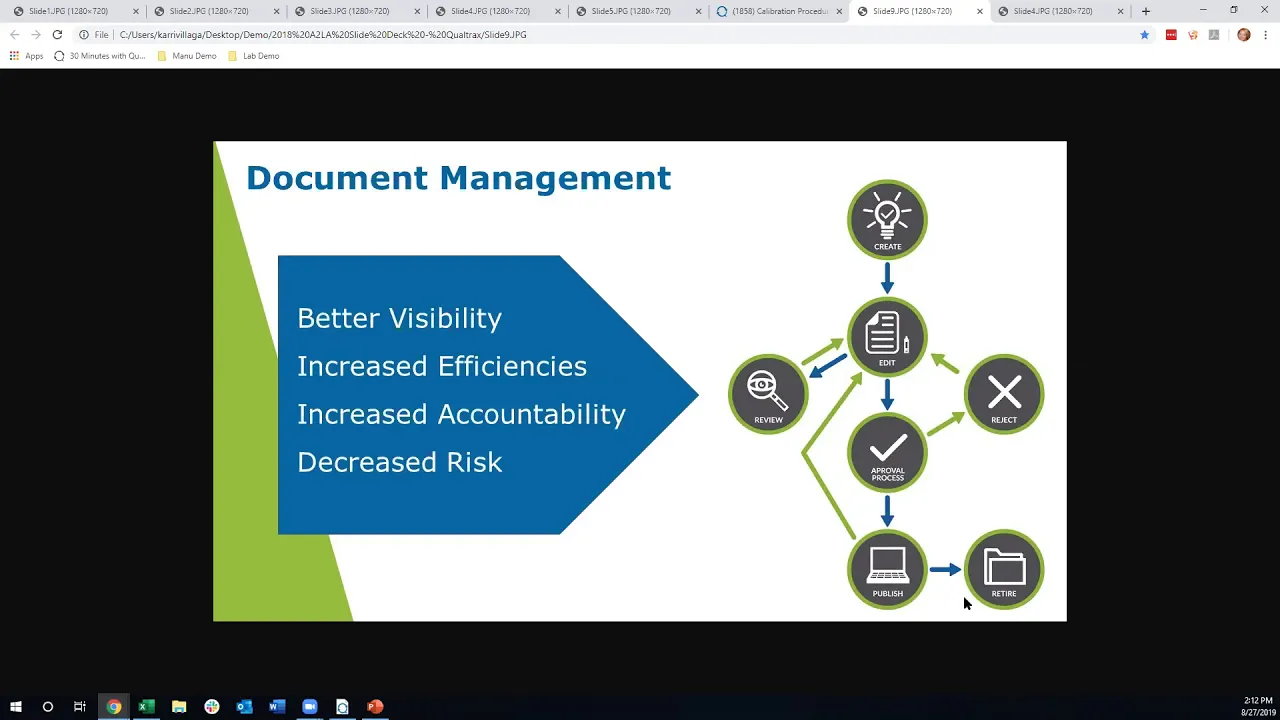
Document control and lifecycle management, including versioning, review, and archiving processes.
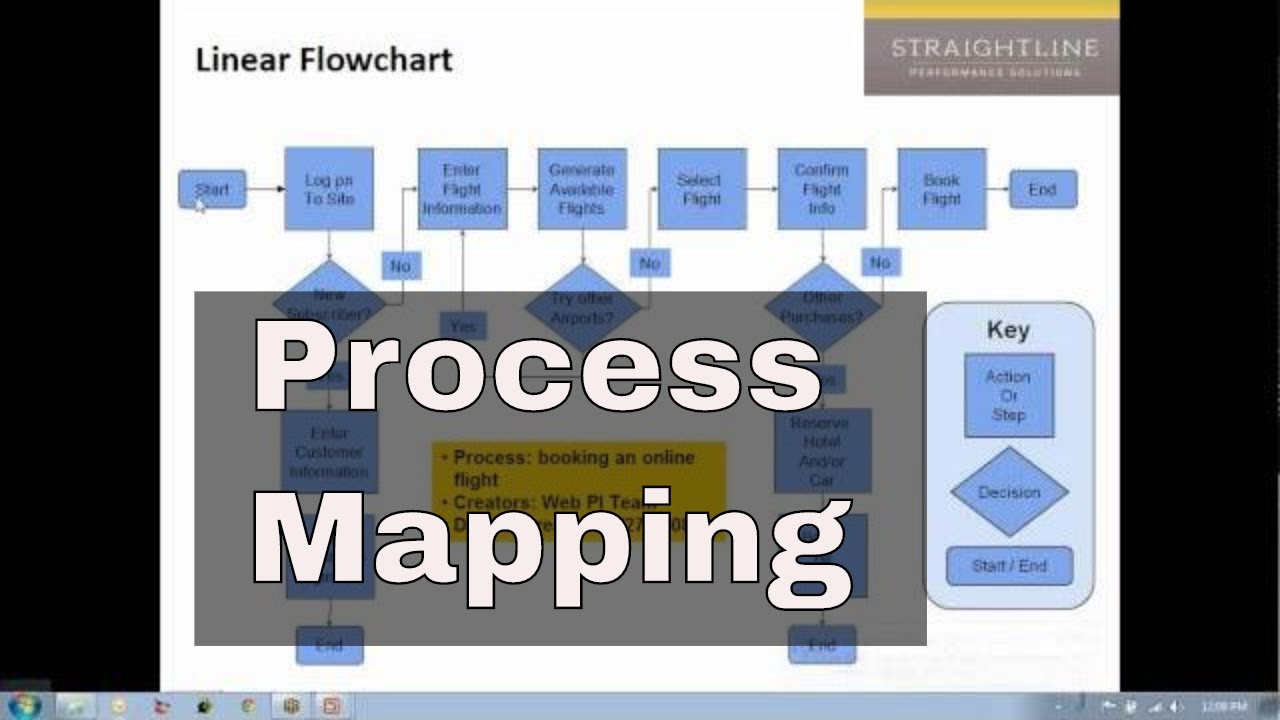
Process mapping and flowcharting techniques using visual tools to complement written SOPs.
Integration of SOPs with global quality standards, such as ISO 9001, or methodologies like Lean and Six Sigma.
409 views9likes3:14Original Release: 2021-05-15
hi there this is aaron lin with a systems training video for you and in this video i want to talk about how you can write an sop or a standard operating procedure in six simple steps and i'm hoping that this video will demystify the whole idea about systems and sops for those business owners out there who want to get started with systems but aren't really sure how so as usual if you have a question please leave it in the comments below or if you'd like to find out more about my one-to-one consulting services there's also a link in the description below so let's get started so there are really six parts to writing a sop or a standard operating procedure for your business and the first thing that an sop needs is the title and this is really just a simple one-line few words description of the sop maybe something like discovery called sap or client management sap you then go into the what of the sop and this is just an elaboration on the title and it's maybe a couple of sentences one paragraph long so you might say you know this discovery call sop describes how we talk to a potential client for the first time after they book a consultation with us the second part of writing sop is the who and in this particular step we want to identify who is actually going to use the sop now that could be a specific person in your company or on your team or it could be a class of users like consultants or administrators who are in your company the next part the third part of an sop is the when and this could be a repeating thing so it could be the sap will happen on a daily or a weekly or a monthly on a regular basis or it could happen after something triggers it so after a specific event happens for example you may get a client inquiry and this sop then triggers after that client inquiry comes in the fifth part of an sop is the actual process itself and this is a step-by-step number checklist that describes everything that happens in the sop and the way to do this is you can literally make it a step one step two step three checklist you should include bullet points you should include images you should include diagrams you can include short loom videos or any videos really you shouldn't include audio because that's hard to listen to when you have to go through the sop and you should of course link to other sops and other external resources that are going to help your team members get the particular process done now the sixth and last part of the standard operating procedure are the results and this is the sort of idea that you know you should have an idea of what you want it to look like before it's done so this can just be a simple bullet pointed description of hey when this procedure is done here are the results for the business you know this has been checked off or this is completed inside our crm or something like that so that's really all there is to writing an sop it's not that complicated it's just six simple steps and of course if you have any questions please leave them in the comments below and if you'd like to find out more about my consulting services it will be a link in the description below
Up Next
9:22
Eight Strategies for Achieving Brand Consistency in Business
@PhilipVanDusen
9.3K views•2020-02-24

12:54
Triumph of Orthodoxy Icon: Byzantine Art & History Explained
@BenCallan
2.1K views•2024-08-06

9:49
FastAPI vs Flask vs Django: Choosing the Right Python Web Framework
@TechWithTim
302.5K views•2024-05-26

1:42
Game of Thrones Opening Credits: A Cinematic Analysis
@gameofthrones
46.3M views•2011-04-18
Related Study Plans & Knowledge Roadmaps
Structured learning paths in General & Interdisciplinary Studies
general-studies
Elevator Engineering: History, Physics & Cities
01From Hoists to Safety Brakes: The Dawn of Vertical Lift
02Hydraulic vs. Traction: The Engineering Physics of Elevators
03Modern Speed, Safety, and Algorithms
+ 2 more learning modules
12h5 modules
Explore Roadmap
general-studies
Rubber: Material Science, History & Geopolitics
01Origins of Natural Rubber & Mesoamerican History
02The Chemistry of Natural Rubber & Vulcanization
03The Geopolitics of the Rubber Boom & Colonization
+ 2 more learning modules
12h5 modules
Explore Roadmap
general-studies
Containerization: Evolution, Logistics & Trade
01Ancient Trade & Bulk Cargo: Amphorae to Barrels
02The Industrial Revolution & Cardboard Packaging
03The Containerization Revolution: Malcom McLean
+ 2 more learning modules
12h5 modules
Explore Roadmap
general-studies
Textile Tech: Evolution, Labor & Global Impact
01Pre-Industrial Textiles: Handloom & Cottage Industry
02Mechanization: The Spinning Jenny to the Power Loom
03The Factory System & Global Labor Transformation
+ 2 more learning modules
10h5 modules
Explore Roadmap