


![[영어 원서 강의 맛보기] Edward Tulane 1강 Grammar Basic](https://i.ytimg.com/vi/dBJMCFXTcw0/maxresdefault.jpg)


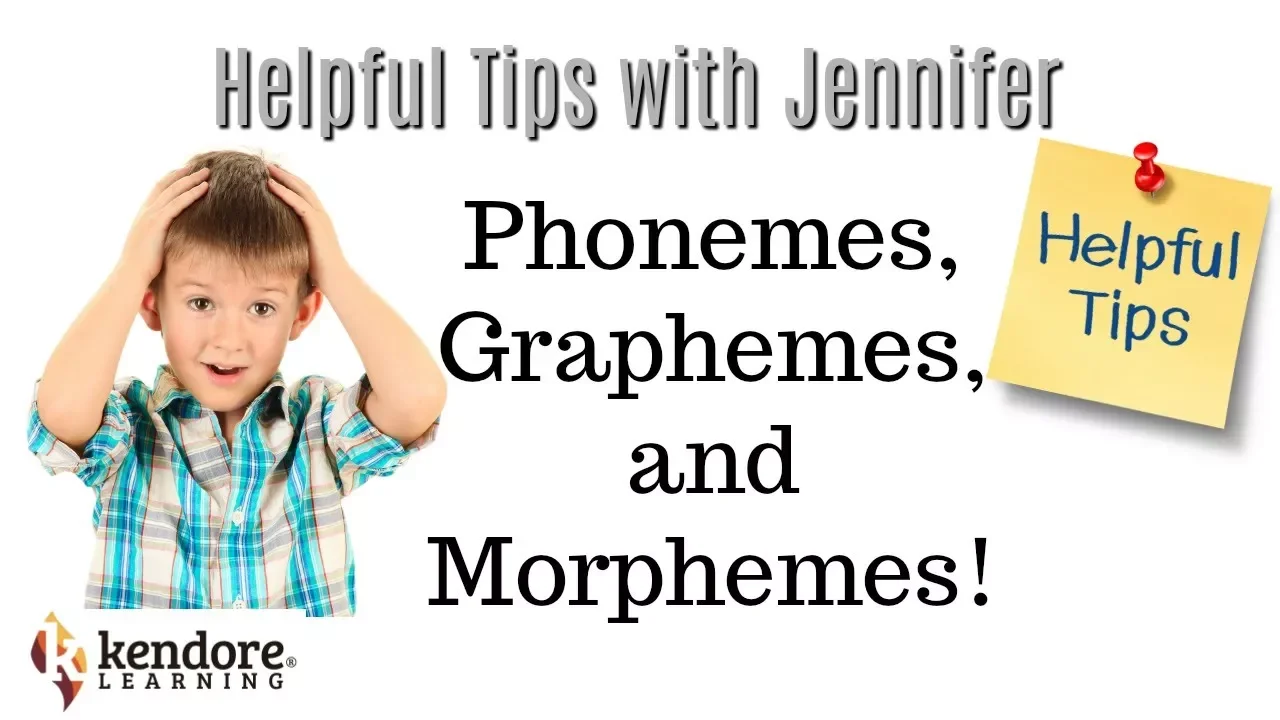

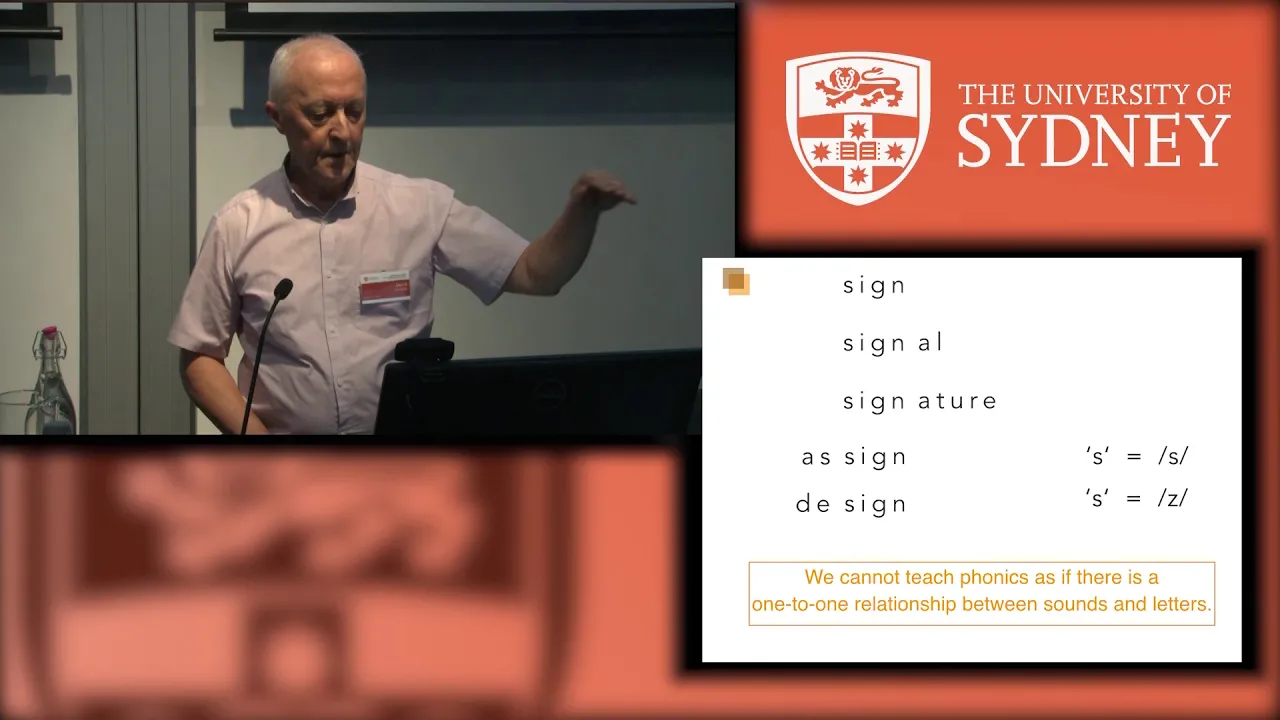













Morphology is the study of the internal structure of words, focusing on morphemes—the smallest indivisible units of meaning—which are categorized into free morphemes (independent words like 'boy') and bound morphemes (which require attachment to other elements, such as inflectional morphemes indicating grammatical attributes like the '-s' in 'washes' or derivational morphemes changing word classes like '-er' in 'teacher'). Morphological parsing breaks words into their morphemic components, revealing how words are constructed from these fundamental meaningful units.
Morphology in Linguistics: Word Structure & Morphological Parsing
Added:Basic understanding of linguistics as the scientific study of language and its core subfields (such as phonology, syntax, and semantics).
Familiarity with standard parts of speech (nouns, verbs, adjectives, etc.) and their basic grammatical functions.
An understanding of the difference between orthography (written spelling) and phonetics (spoken sounds), as morphemes are defined by sound and meaning rather than letters.
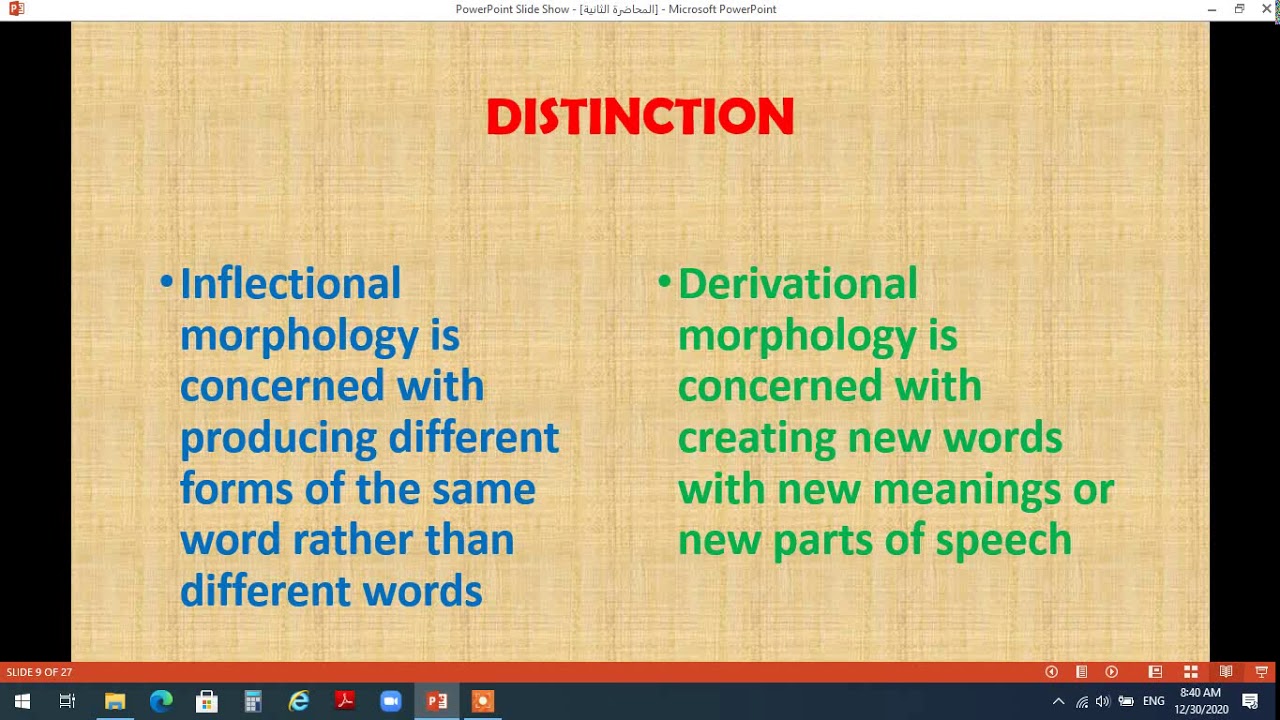
The distinction between derivational morphology (creating new dictionary words) and inflectional morphology (modifying words for grammatical agreement).
The study of morphophonology and allomorphy, examining how the physical pronunciation of a morpheme changes based on its phonetic environment (e.g., the plural '-s' sounding like /s/, /z/, or /ɪz/).
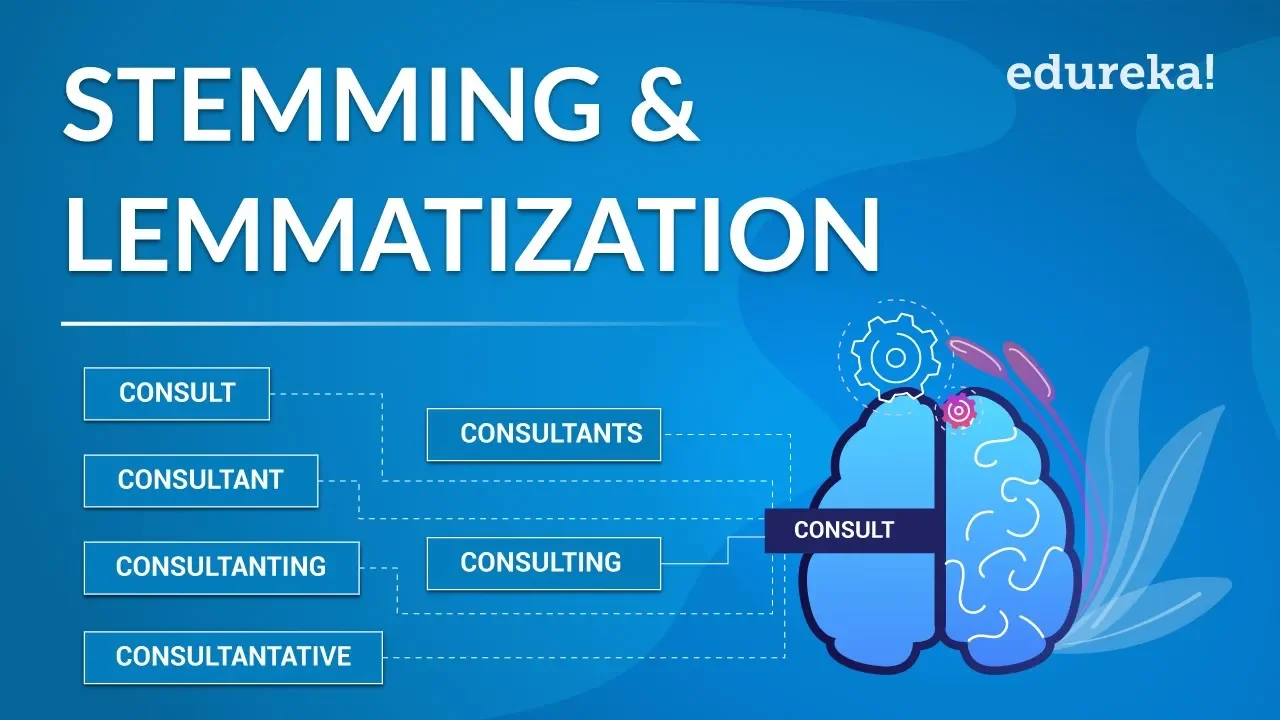
Application of morphological parsing in Computational Linguistics and Natural Language Processing (NLP), including algorithms for stemming and lemmatization.
Analyzing morphological typology to compare how different world languages build words, such as agglutinative, fusional, isolating, and polysynthetic systems.
190 views3likes8:54Original Release: 2024-11-13
to truly understand how words are formed in a language you need to first of all study their internal structures to uncover the elements that are combined in the process of their formation among other things like the culture of the people Etc this then brings us to the concept of morphology in linguistics what is morphology morphology is defined as the study of the internal structure of words in a language it is the branch of linguistics that is concerned with evaluating how words are formed in a language by studying the elements that are combined to form them morphology is in more simpler terms the study of morphemes now words are not the smallest unit of a language you might want to add that sounds are the smallest unit of a language and you would not be totally wrong about that however sounds are in a different class of their own which is the field of phology and fetics in fetics phonm which represent sounds are the smallest unit of meaning while tone groups are the largest units of meaning back to morphology now morphemes are important in morphology because of the crucial role they play in the formation of words hence they are their smallest unit of meaning in language directly lower than words the largest unit of meaning in language is a sentence what are morphemes morphemes are defined as the smallest indivisible units of meaning in a language what this means is that not only are morphs the smallest meaningful units in a language but also they cannot be further broken down without losing meaning to understand this better you need to know how the grammatical rank scale works there is a rule that states that one or more of the units below make up the units above on the rank scale so a sentence which is the highest on the rank scale is made up of one or more Clauses a clause is made up of one or more phrases a phrase is made up of one or more words and a word is made up of one or more morphings you can see that the hierarchy ends at the level of morphine which shows that it cannot be further broken down like the other units above or pred ceeding it the reason we cannot further divide a morim is because when we do it results in a loss of meaning take for instance the morphine boy do you think it can be further broken down without rendering it completely meaningless let us try it out B plus y none of these elements make any sense in the English language so they are meaningless proving that morphes cannot be further broken down since they are indivisible you might be wondering isn't boy a word yes of course it is a word and we will be getting to that shortly there are two types of morphs namely free morphs and bound morphs free morphs free morphs are simply morphs that can stand on their own and express meaning independently that means these morphs do not need to be combined with any other element to be meaningful as they can express meaning on their own this is why it is said that all free morphs are the equivalent of words but not all words are free morphemes so the you have it free morphemes are the same as words and the example I used earlier boy proves that remember that one or more of the units below make up the units Above So a word can be made up of one morim which has to be a free morphe or more than one morphemes which often include a free morim and a bound morim now now the reason why it is said that not all words are equal to free morphs like all free morphs are equal to words is simply because some words can be composed of more than one morim for instance cats is a word made up of a free morphine cat and a bound morphine s before we go into bound morphemes here are some examples of free morphins I kid show cut late Etc bound morphemes bound morphemes are morphemes that unlike free morphemes are not capable of expressing meaning in isolation this means that bound morphemes need to be attached to an independent element in order to be meaningful or Express meaning take for instance in the word boys there are two morphs boy and Des the second morphine s is a bound morphine and this is indicated by The Hyphen that appears right before for it which shows where it has to be added to express meaning and that is at the end of an independent element like a free morphine because bound morphemes cannot express meaning in isolation they are known to perform grammatical functions hence they are divided into two inflectional bound morphemes and derivational bound morphemes inflectional bound morphemes inflectional bound morphemes are bound morphemes that indicate grammatic ality for instance there s in the word washes is an inflectional bound morphe because it adds the grammatical attribute of third person singular to the verb as in he washes not wash his clothes on Saturdays so inflectional bound morphs account for the grammaticality of words derivational bound morphemes derivational bound morphemes are bound morphemes that change the class of the words they are added to take for instance adding the derivational bound morphing uh to the verb teach will lead to the formation of a noun teacher so derivational bound morphs simply perform the function of changing the class of words they are added to morphological paing this is the Practical aspect of morphology morphological paing has to do with the breaking down of words into their individual morphemes that they are made up of that is the process of reducing words to their morphemic components take for instance the word national can be passed as National Nation plus Al remember to place the morphs in curly brackets when passing them and add hyphens to bound Mor FES either in front or right behind them depending on where they occur for instance in paing international we would have international inter plus Nation plus Al in is a full word hence inter is a Bound morim in doing morphological paing you need to be mindful of another categorization of morphemes they are the following isolating morphemes aguena morphemes and synthetic morphemes isolating morphemes exist independently and are made up of a single unit so paing them is relatively easy for instance girl girl aguena morphemes are morphemes that can easily be identified from words just by looking at them for instance ability able plus it synthetic morphemes are morphemes that unlike agglutinating morphemes cannot be easily identified in words and require an understanding of the word under analysis take for instance best good Plus so morphology has to do with the study of the elements that make up words known as morphemes morphemes are the lowest on the grammatical ranks kand are referred to as the smallest indivisible units of meaning in a language there are two types of morphemes free morphs which are morphemes that can express meaning on their own and bound morphemes which are morphemes that cannot express meaning in isolation morphological paing is the process of reducing words to the morphological elements they are comprised of understanding morphology will inform you on how words are formed in a language to be able to form your own words following [Music]
Up Next
83:20
Sheng: Kenya's Urban Vernacular | SOAS Linguistics Talk
@soasuni
623 views•2016-07-25
36:52
Constraint Interaction in Optimality Theory: Epenthesis & Deletion
@Vidyamitra
180 views•2018-08-20

8:59
Forensic Linguistics: How Language Solves Crimes | PBS
@pbsstoried
1M views•2024-01-25

21:32
Accent Expert Explains U.S. Regional Dialects | Part 1
@WIRED
9.3M views•2021-01-21
Related Study Plans & Knowledge Roadmaps
Structured learning paths in Linguistics
linguistics
Optimality Theory: Tableaux & Constraints
01Phonological Basics: Sounds, Syllables & Rules
02Foundations of Optimality Theory: GEN, CON, and EVAL
03The Constraint Inventory: Markedness vs. Faithfulness
+ 2 more learning modules
15h5 modules
Explore Roadmap
linguistics
Morphosyntactic Alignment: S, A & P Systems
01Foundations of Syntax: Transitivity and Arguments
02The Linguistic Variables: Mapping S, A, and P
03Nominative-Accusative Alignment
+ 3 more learning modules
12h6 modules
Explore Roadmap
linguistics
Analyzing Sign Language: Phonology & Syntax
01Foundations of Sign Language Linguistics
02Phonology: The Five Parameters of a Sign
03Morphology: Word Formation and Classifiers
+ 2 more learning modules
14h5 modules
Explore Roadmap
linguistics
Pragmatics: Speech Acts, Grice & Politeness
01Introduction to Pragmatics: Meaning in Context
02Grice’s Cooperative Principle & Implicature
03Speech Act Theory
+ 2 more learning modules
14h5 modules
Explore Roadmap