




























An Asset Purchase Agreement (APA) is the roadmap for business acquisitions, containing six critical clauses that buyers must understand: (1) Purchase Price & Payment Terms, which specifies the total price, deposits, financing sources, escrow holdbacks, and cash due at closing; (2) Assets Clause, which explicitly lists what assets are being purchased and what are excluded; (3) Seller's Representations & Warranties, which are legally binding promises about the business's financials, taxes, asset ownership, compliance, IP, and lawsuits; (4) Buyer's Conditions Precedent, which identifies events that must occur before closing such as financing approval and permit acquisition; (5) Termination Clause, which allows parties to exit the deal under specific circumstances like failed due diligence or inability to obtain financing; and (6) Post-Closing Covenants, which include non-compete agreements and indemnification provisions that protect the buyer after the transaction closes.
Key Clauses in an Asset Purchase Agreement Explained
Added:Welcome to the next episode of Small Business Legal Tips. I'm attorney Mark Bros of Brol LLC. I'm a practicing Massachusetts business lawyer with over 15 years of experience helping entrepreneurs confidently buy, sell, and grow their small businesses. Today we're going to talk about one of the most important documents that a buyer will sign in connection with buying the assets of a business, which is the asset purchase agreement or the APA. This contract is heavily negotiated by both sides, and is the road map for the entire deal. It outlines what you're buying, what you're not buying, and the protections both sides have after the deal closes. In this video, I'll break down six must know clauses in an asset purchase agreement that every buyer should know in order to avoid expensive surprises and walk into your business purchase with confidence. And please, if you'd like to get more helpful legal tips, please hit the like and subscribe button and ring the bell. It really helps the channel and lets me know that you'd like to receive more helpful tips like this. So, let's get to it.
The first clause every buyer must understand in the APA is the purchase price clause, which specifies exactly what the purchase price for the business is and how it will be paid. An APA doesn't just say the price is $500,000, but it specifies exactly how the $500,000 will be paid by the buyer to the seller. And there are usually a couple of different possible components that need to be identified. The first component is any deposit that the buyer has paid. Buyers often pay a deposit at two different stages of buying a business. The first deposit is due when the buyer signs a letter of intent called the LOI and the second is when both parties sign the APA. Both deposits are usually held in escrow by the broker or by one of the attorneys for the parties. But no matter who is holding it, the APA should identify the total deposits paid by the buyer to indicate the buyer has already paid a portion of the purchase price. So, for example, if the buyer has paid $10,000 in connection with signing the LOI and will pay another $25,000 in connection with signing the APA, the purchase price clause in the EPA should specify that the buyer has paid $35,000 in deposit, which will be credited towards the purchase price of buying the business.
The second possible component of the purchase price that needs to be identified is the amount of the purchase price that's being financed by the buyer. And there are really two possible sources of financing for a buyer.
third-party financing or seller financing. By third-party financing, I'm talking about something like a bank. And by seller financing, I'm talking about where the seller has agreed to finance part of the purchase price by accepting a promisary note from the buyer for part of the purchase price. In either situation, the amount being financing and the source of financing should be specifically identified in the purchase price clause of the APA. The third possible component that may be identified is any part of the purchase price that's being held back in escrow.
Usually, this is done to protect the buyer when there is some uncertainty about whether certain events might occur in connection with the business after it's been purchased by the buyer. For example, if there's some uncertainty about whether a certain key customer will stay with the business after it's sold, you might put a portion of the purchase price in escrow for a couple of months that's paid to either the buyer or the seller depending on what the key customer does. However, if any amount is being held in escrow, this should be specified in the purchase price section of the APA to indicate that a portion of the purchase price will be paid into escrow to be dispersed later. The fourth component to be identified in the purchase price clause is the cash due at closing. And although I'm calling it cash due at closing, it's probably not actually cash. It's probably a certified bank check or a wire. But either way, this is the amount that the buyer will actually have to pay to the seller on the closing date in connection with buying the business. Keep in mind though that whatever amount is actually identified here as the cash due at closing in the APA is probably not the actual amount that will be due at the closing. There are typically a lot of adjustments that will need to be made on the closing date for things such as deposits that have been paid by the buyer, utility accounts, unredeemed gift cards, and lots of other things. These adjustments will need to be made before the closing date, and the adjustments will increase or decrease the total amount of cash that's paid by the buyer to the seller at the closing. The second essential clause in an APA to understand is the assets clause, which identifies the exact assets in the business that the buyer is buying. This sounds obvious, but you'd be amazed at how many buyers skip over this section and leave it up to chance. Your APA must list exactly what you are buying, such as equipment, customer lists, inventory, motor vehicles, intellectual property, websites, and domains, goodwill, and so on and so forth. Your assets clause in the APA should state two things. First is to state generally that the buyer is buying and seller is selling all of the seller's rights, title, and interests in any and all assets that were used by the seller in connection with the operation of the business. This makes it clear that the seller is buying all the essential assets associated with the operation of the business even if the APA does not specifically identify them.
Second, the asset clause in the APA should also specifically identify the exact assets that are being bought in the transaction. So the asset clause in the APA should also say something like quote the business assets being purchased include but are not limited to end quote and then proceed to identify the specific assets that are being bought such as equipment, tangible assets, trademarks, intellectual property and so on and so forth. Often in order to prevent these clauses from getting too long, the asset clause will also reference an exhibit or a schedule that's attached to the APA that lists all the assets. This usually makes the APA much easier to read and includes an exhibit that actually identifies all of the assets that are being bought. As part of the assets clause or the assets section of the APA, the APA should also have an excluded asset subsection that specifically identifies the seller's assets that are not being purchased in the transaction. These often include things like the seller's bank account, accounts receivables, or personal items.
Both of these topics must be covered in the asset section of the APA so that you're clear about what assets of the business are actually being bought and what assets of the business are not being bought. Unlike a stock purchase where you're buying all of the assets and liabilities of a business, when you're buying the assets of a business, you're only buying the assets that are specifically identified in the APA and are not excluded. If assets are not identified in the APA, the buyer is not buying them. So, make sure that your APA specifically identifies the assets that are most important for you to operate the business after you own it. You don't want to discover after you buy the business that critical equipment or IP wasn't actually included as part of the sale. The third important clause to understand in an APA is the seller's representations and warranties clause.
In the seller's representations and warranties clause, the seller will make legally binding promises and representations to the buyer about the conditions of the business and the information that has been provided to the buyer in due diligence. And there are lots of representations and warranties that should be made by the seller in an asset purchase agreement.
Some of the most common ones include things like first the seller's entity such as an LLC or corporation is properly organized under whatever status was formed and has approved the transaction in the sale of the assets to the buyer. Second, another common representation by the seller to the buyer is that all of the financial information that has been provided to the buyer is truthful, accurate, and complete and fairly represents the financial condition of the business.
Third, another common representation from the seller to the buyer is that all the taxes that are due in connection with the operation of the business have been paid and that the business is not currently being audited by any government authority. Fourth, another common representation from the seller to the buyer is that all the business assets associated with the business are owned by the seller free and clear of any leans and have been properly maintained and are in good working order. Fifth, another common representation from the seller to the buyer is that the seller owns or has a license to use all intellectual property that's currently being used in connection with the business. Sixth, another common representation from the seller to the buyer is that there are no current lawsuits or pending government investigations against the business.
Seventh, another common representation from the seller to the buyer is that the seller is in compliance with all applicable laws and has all permits and licenses that are needed to operate the business and so on and so forth. As I mentioned before, the seller will make all sorts of representations and warranty to the buyer in connection with the APA. If you're not sure about what representations and warranties should be included, you should speak with an attorney. The representations and warranty section is one of the most critical sections in an APA because it gives the buyers assurances about the condition of the business so that the buyer can be confident that it will not have major problems after the closing and if it does then it has grounds for a lawsuit. Now, one important thing to note about the seller's representations and warranties clause is that it's absolutely essential to make sure that these representations and warranties will survive for a period of time after the closing. The exact length of time will be heavily negotiated between the two parties, but your APA should have a specific section that states the representations and warranties will survive for at least 6 months after the closing, and it's often for multiple years. If your APA doesn't provide for the survival of these reps and warranties, they may not be enforceable after the closing date, in which case you have no grounds to sue if something turns out wrong. The fourth important clause to understand on an asset purchase agreement is the buyer's conditions precedent clause. A condition precedent is a legal term that refers to an event that must occur before the buyer will have to actually close on buying the business. And if the event identified doesn't occur, the buyer doesn't have to buy the business and won't be breaching the agreement by not buying the business. Some of the most common events identified in a buyer's conditions president clause are things like first if the buyer is seeking financing from a lender. The conditions president clause should state that the buyer has received suitable financing from the third party. Second, if the buyer needs to obtain various permits and license in order to operate the business, the conditions precedent clause should state that the buyer has obtained whatever permits and licenses are needed to operate the business.
Third, if the buyer needs to obtain a lease from the seller's landlord or get some other important agreement assigned, the conditions precedent clause should state that these agreements have been assigned to the buyer from the appropriate party. And there are lots of other conditions precedent that could be identified in the buyer's condition precedent clause depending on the deal.
Speak with an attorney if you're not sure about what should be included in your buyer's conditions president clause. The important thing about this clause is that it makes sure that every important event occurs that needs to occur for the buyer to operate the business after the closing. And if one important event doesn't occur or becomes impossible to fulfill, such as the buyer getting denied for a loan or not being a able to obtain a lease from the landlord, the buyer will be able to back out of the deal without breaching the APA. So, make sure that your APA has the appropriate events identified in your buyer's conditions president clause. The next important clause to understand in an APA is a termination clause. Now, you might be thinking that you don't care about having a termination clause because you're definitely going to buy the business no matter what. However, circumstances often change and you never know what might turn up in due diligence or something else might happen where you can't buy the business or don't want to buy the business. So, you want to make sure that your APA has a termination clause that protects you and allows either party to terminate the agreement in certain situations. Some of the most common situations addressed in an APA termination clause are the following.
First, termination by mutual agreement.
If both parties agree to terminate the agreement, the agreement should be allowed to terminate. This should go without saying and there should be no dispute uh from either party about allowing this to occur. Second, termination by the buyer if the buyer is dissatisfied with the result of due diligence. This ground for termination is also usually pretty uncontroversial.
However, sellers usually insist that due diligence be completed by a certain date, which is known as the due diligence deadline so that buyers don't have an open-ended right to terminate the agreement at any time and at any time. And what this means is that you must complete your due diligence by the due diligence deadline. And if you're dissatisfied with the business before the due diligence deadline, you can terminate the agreement. However, if you're dissatisfied with the business after the due diligence deadline, you don't have a right to terminate the agreement uh without breaching the APA.
Third, termination by the buyer if the buyer is unable to obtain financing, permits and licenses, or the assignment of any contract such as a lease that's needed to operate the the business. This ground for termination is also usually pretty uncontroversial. However, sellers will often insist on a deadline where you need to notify them if you're unable to complete the specific task. And so, sometimes these can be subject to heavy negotiation. So, for example, if you need to obtain financing from a thirdparty lender, such as a bank, the seller will often insist on a date by which you need to notify them if you're unable to obtain that financing. And if you notify them before that date that you're unable to obtain the financing, you'll be allowed to terminate the agreement without breaching the agreement. But if you don't notify them by that date that you're unable to obtain financing, it's presumed that you're able to obtain financing and you're committed to buying the business.
Fourth, termination by the buyer or the seller if the other party has breached any representation or warranty in the APA and the breach hasn't been cured.
This ground for termination is also usually pretty uncontroversial. Although the length of time to cure any breach can sometimes be subject to negotiation and disagreement. Now, although none of these grounds for termination are controversial, the difficult part often comes in determining when the buyer's deposit will be returned to the buyer or kept by the seller. And in most circumstances, the deposit is returned to the buyer unless the buyer has breached the agreement or is trying to terminate the agreement after the due diligence deadline or some other deadline has passed. So, make sure that your APA fully addresses when your deposit is returned if the APA terminates. The next important clause or section to understand in your APA are post-closing covenants. Post-closing covenants refer to promises in the APA that the seller is making to the buyer that won't be fulfilled until after the closing and you've already bought the business. Here are some of the most common post-closing covenants contained in an APA. First, non-competition and non-sustation clause or agreement. When you buy a business, one of the last things you want to happen is for the seller to start up a competing business right down the road from you. You also don't want the seller to try and solicit business from the clients that you just acquired or to try and steal your employees. To prevent this, the APA will often require the seller to sign a non-compete agreement or a non-sitation agreement or contain non-compete clauses or non-solicitation clauses in the APA.
A non-compete clause or non-compete agreement prevents the seller from operating a competing business for a certain number of years within a certain geographic area. A non-solicitation clause or agreement prevents the seller from trying to take customers or employees with them. I discussed non-compete agreements and non-sitation agreements in detail in an earlier video and I won't go over them again here.
I'll put a link to the video below.
However, both of these clauses or agreements are enforceable in Massachusetts so long as they are reasonably necessary to protect a legitimate business interest. Here, the legitimate business interest is protecting the goodwill and value of the business that the buyer has just bought.
So, a Massachusetts court will likely enforce any kind of non-compete or non-solicitation agreement or clause so long as the clause or agreement is not unreasonable. Check out my earlier video for more information or speak with a knowledgeable attorney for assistance.
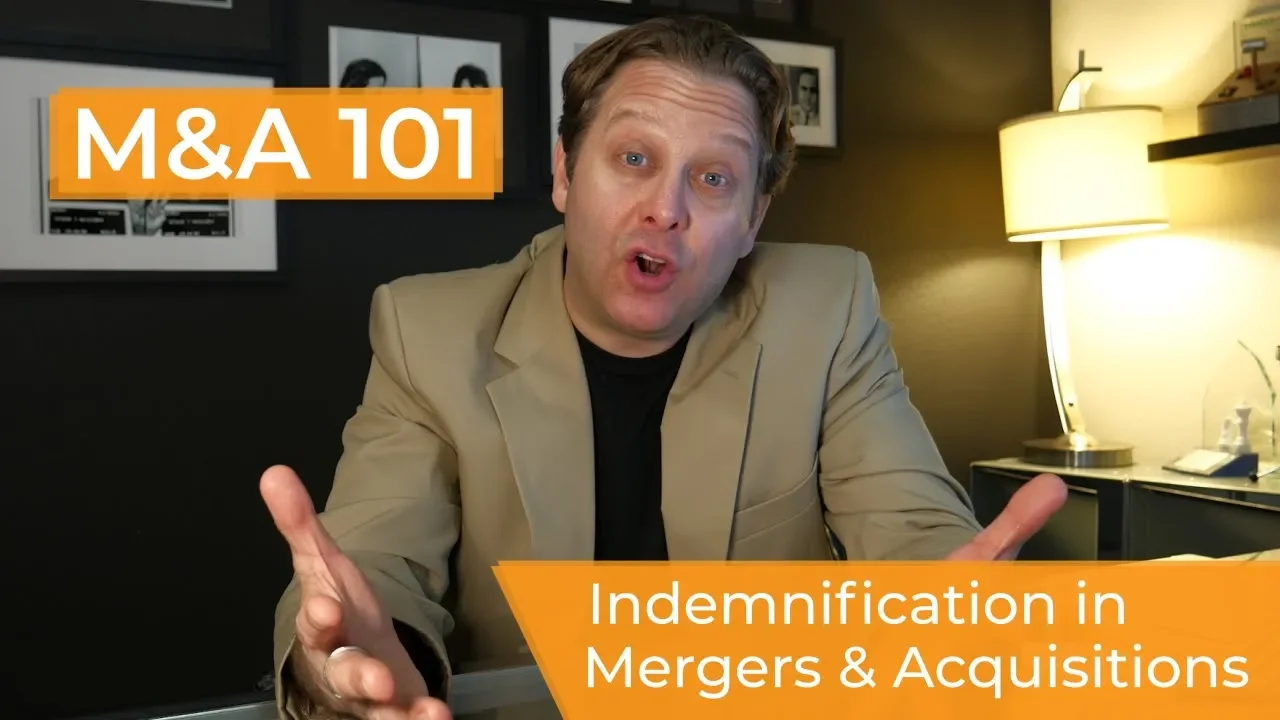
Another type of post-closing covenant is contained in the APA's indemnification clause. In the indemnification clause, the seller is promising to pay the buyer for any lawsuits or losses that the buyer faces as a result of the time when the seller owns and operated the business. This includes things such as a lawsuit based on something the seller did before the closing, unpaid taxes that the buyer has to pay, contract disputes from when the buyer owned the business, and various other types of things. A strong identification provision will protect buyers from inheriting old problems from when the seller operated the business. Keep in mind though that the seller will also expect indemnification from the buyer for any loss or lawsuit that the seller faces for events that happen from when buyer owns the business. The identification provisions in the APA will likely be reciprocal. So you need to keep that in mind when insisting on any identification provision in your APA. There are lots of other post-closing covenants that might be contained in an APA that are far too numerous to discuss here. The most important thing to remember about any post-closing covenant, however, is that you need to make sure that they survive the closing. Like the reps and warranties, you need a specific statement in your APA that all post-closing covenants will survive the closing in according to the terms of the post-closing covenant. In conclusion, buying a business is one of the biggest investments you'll ever make.
Understanding the clauses we just discussed in the APA ensures that you're not walking into hidden risks, unclear obligations, or future disputes. If you're a first-time buyer, don't worry.
You don't need to become a legal expert overnight, but you should understand the fundamentals of these clauses so you can ask the right questions and protect your investment. I also highly recommend that you speak with an attorney to help guide you through the process of buying a business. The information I provided is not legal advice and you really need a lawyer to help protect you through this process. There's a lot of money at risk and there's a lot of potential pitfalls, traps, and potential liabilities that you can occur. If you found this information helpful, please be sure to like, subscribe, and drop any comments about topics you want covered next.
Thanks so much for watching, and I'll see you in the next episode of Small Business Legal Tips.
Up Next

Justice Gorsuch on Over Ruled: The Human Toll of Too Much Law
@ConstitutionCtr
2.9K views•2024-09-18

US Secondary Sanctions Impact on EU Businesses and Blocking Legislation
@Bureauvandijk
1.6K views•2019-03-20

Forensic Phonetics: Speaker Identification in Legal Cases
@nptel-nociitm9240
539 views•2025-03-19

Police Interrogation Tactics: False Confessions & Legal Reform
@LastWeekTonight
7M views•2022-04-18
Related Study Plans & Knowledge Roadmaps
Structured learning paths in Law