
















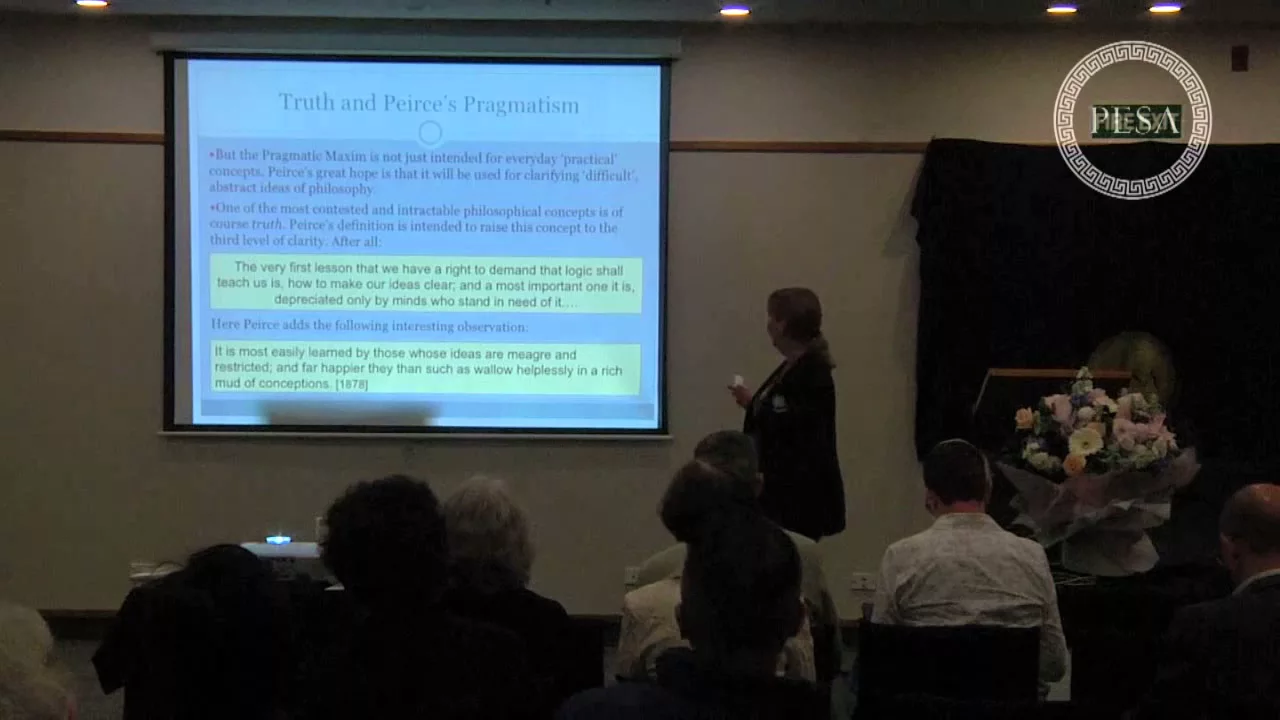
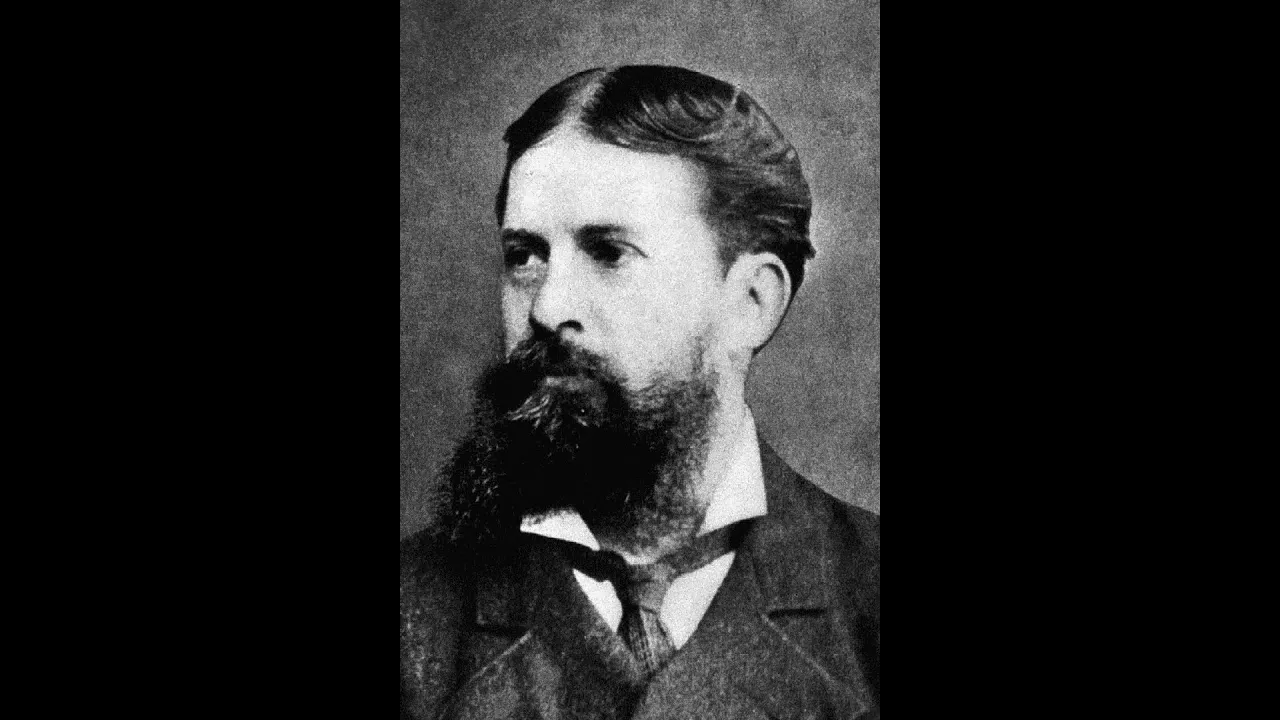

American Pragmatism, founded by Charles Sanders Peirce and developed by William James and John Dewey, asserts that the primacy of practical experience over abstract theory, the emphasis on organic interrelatedness of all phenomena, and methodological naturalism (applying scientific method universally) form the core characteristics of this philosophical movement, which defines truth not as correspondence to abstract reality but as the practical workability and cash value of beliefs in lived experience.
American Pragmatism | History of Philosophy 64
Added:Cartesian Foundationalism: René Descartes' philosophy of systematic doubt and his pursuit of absolute, indubitable certainty.
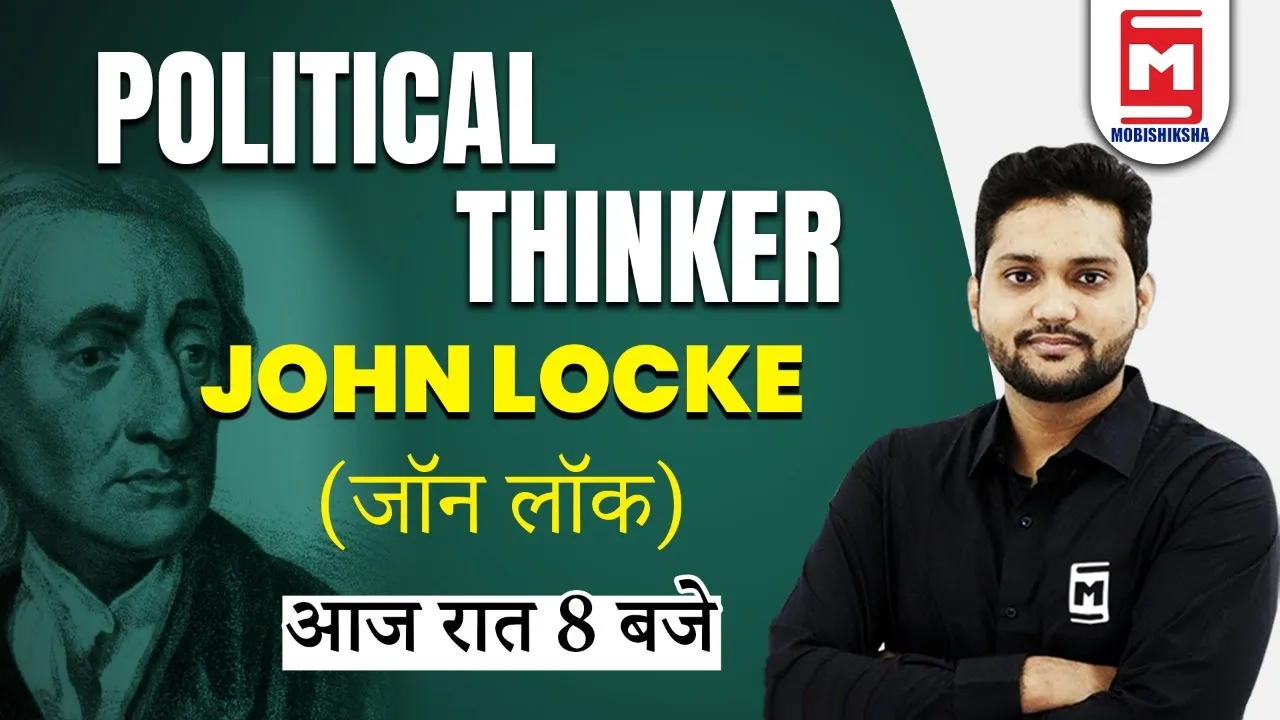
Lockean Empiricism: John Locke's representative realism, particularly his view of the mind as a passive receiver of sensory impressions (tabula rasa).
Classical Theories of Truth: The fundamental differences between the Correspondence Theory of Truth (truth as alignment with reality) and the Coherence Theory of Truth.
Basic Epistemology: The philosophical study of knowledge, belief justification, and the traditional definition of knowledge as justified true belief.
John Dewey and Instrumentalism: How Dewey adapted pragmatism into a philosophy of action, emphasizing education, social reform, and political democracy.
Neo-Pragmatism: The 20th-century revival of pragmatic thought, focusing on Richard Rorty's linguistic turn and his critique of representationalist epistemology.
Legal Pragmatism: The influence of pragmatic thought on American jurisprudence, particularly through figures like Supreme Court Justice Oliver Wendell Holmes Jr.
Peircian Fallibilism: A deeper exploration of Charles Sanders Peirce's theory of inquiry, semiotics (the study of signs), and the concept that empirical knowledge can never be absolutely certain.
37.9K views423likes1:06:08Original Release: 2015-06-16
end of the hour on Friday when we finished some commenting on Whitehead science in the modern world said that we'd try and take some time at the outset today for any discussion that you'd like so realizing that heated up leftovers on Monday aren't always exactly things were ready for this in order to summarize the change that's represented from what's gone before at least from classical metaphysics instead of substance some enduring identity of a substance being the ultimate reality it's process and the ingredients are events which come and go so there's no enduring identity through extensive periods of time though there are enduring strains in long extended events after all the history of the cosmos is an extended event the change is of course from the 18th century mechanist model to the organic model if you are thinking of this business with model 1 model - model 3 so it is the development of new science in the 19th century developmental biology something other than mechanistic explanations of life and relativity physics and logistic physics breaking down the solidity of matter so forth so that more organic if you like relational model it's worth noting perhaps that Whitehead remains a quantitative pluralist that is to say in terms of how many events are there obviously many many many many events how many processes are there oh endless processes he's a qualitative florist numerically but in terms of the nature of those events and processes they're all fundamentally the same qualitative monism so the same description of an event applies to God and to a particular sense perception we have so qualitative monism it seems to me that that's the source of some of these problems that he gives insufficient weight to qualitative distinctions between God and creation and again if you like between the human person a natural phenomena the person is in a sense a natural phenomena there's something distinctive about persons so it's that qualitative monism which seems to over generalize and to bring everything into the same process the mechanist model of course had External Relations as in the causal interaction of de cartes mind-body dualism the organic model the relations are internal are of the very nature of the terms of the relationship internal relations because of the external relations the 18th century was able to seek and claim complete objectivity of knowledge the mind is a passive recipient of data and while can't upset that applecart by the time you get to whitehead subject object continuum that is the same in every knowing the situation I'm tripping over this code here in every knowing situation there is already what is contributed by antecedent events before the new data come in and in addition to that there's the decision that's made in terms of the eternal possibilities that are offered in the new event so the subjective as well as the object of contributing in this case and of course of major concern to Whitehead is the fact value separation in the mechanistic view which gives way in Whitehead to the unity effect and value and the overall teleological nature of iski and you know obviously there's a lot here that's that's very important I find this extremely helpful his criticism of the fact value separation and thence his criticism of the mechanistic model my complaint is about his universalization of the organic model the way he describes it it seems to me that just as for most in this tradition they'll say that the organic model no take it back the mechanistic model may apply to some things that do indeed operate quite mechanically and the organic model alright may be an overarching sort of thing with regards to mechanistic phenomena there seems to be the need for something else a more personal istic model and I think that's the sort of thing that you find in some of the personalistic existentialism people like Kierkegaard Martin Buber so forth trying to emphasize the category of person as distinct from anything else all he could do for person is to say that you and I as persons have continuity in terms of some strain carried by memory which maintain certain qualities in this stream of experience through the years which is you personal identity carried by the stream of experience and that's a slim sort of identity in fact articles have been written saying that whiteheads ethic really doesn't provide a basis for holding anybody accountable simply because of the successive events without one continuous agent who can today be held accountable for yesteryear or perhaps even yesterday so there are problems that rise in that sort of an ethic well that's my summation of what we've been talking about all last week do you want to pursue this at all or is it after the weekend cold palms and creativity is still abstract yeah I wonder if you're using the term abstract in a different sense than here I wonder if what you're saying is this is a novel concept which I still don't have a firm hand on abstract in the sense that I have difficulty pinning it down as something immediately experienced whereas I think he would use the term abstract to mean it's a mental construct quite unrelated to experience yes whereas the process as he describes it he believes is really descriptive of experience yeah you haven't really assimilated the description maybe that's what he is saying to get it it takes a while for the descriptive words to get beyond the words into something which really captures they feelings so you might try seeing if his description of an event applies to other things than a moment of sense perception take for instance an event like when you want to say going to college for the first time do you remember that event I presume you do how what strange it felt you came with that odd combination of adolescent dorkiness self confidence and complete uncertainty and apprehension well open-ended event yes see in other words you come with a history someone doing experience that's given then they hits you objective data such as what well the orientation thing having to find your way around a strange cameras teachers who seemed to expect you to do things independently whatever else it is you know and these are all fitting the hopper there's all sorts of possibilities that could emerge from that one of the possibilities being that you select out from the whole range of things son ideal some goal you're going to pursue you're not gonna be siphoned off into all the it's training us things you're gonna get an education okay subjective a NEMA the decision and so the course is set that's the event and then you could describe the subsequent events about growing out of it here as a freshman you're in philosophy 101 the objective Dayton's that course what are you gonna do in yourself and for Whitehead the importance is not what you do with it utilities style but what you do with it in the sense of assimilating and ending yourself what does it make of you what does it do to you various possibilities and great deal depends on that decision conscious or otherwise which selects among those possibilities so you see if you describe an event in that simple style of the object it's very broadly applicable so I guess I'd say if you find that description abstract you say reflect on it and doesn't it fit yes they in a good description it's one that fits yeah yeah I'm not sure that that I'd buy that form of the thing it seems to me that this is the basic thing and then once he defines the process in terms of events following the threefold description threefold ingredients then you begin to see that this is an organic model these are internal relationships there is this subject object continuum this so these are all ingredient in his description of the process yeah you're right there these are not separate items that is simply unpacking the one concept which is another way of saying that his is a beautifully coherent schemed David can you hear David back in the corner Bob bit louder please do yeah if they have been consistent yeah you're thinking of Alexander Pope says a young man for instance you know where he says the proper study of mankind is man yeah that they do but they still while writing about an exalting the human reason they still take the subjectivist steps nothing so in that sense they're not consistent they're not consistent they taking an Objectivist stance they regard primary qualities as objective they think they're being quite objective about the secondary qualities which are effects of primary qualities on their own sensory apparatus the inconsistency is if they ascribed those secondary qualities to things out there as if the rose is indeed red as if the Rose indeed smells yes I could see that some of them might say I'll listen there are just verbal conventions and shortcuts when you say the Sun rises you don't mean the sun's moving do you think when you say the Rose is red you don't mean the Rose is red you know the Sun rises the Sun appears to rise from our standpoint the rose looks rate from our standpoint so they could defend themselves that way in which case I suppose what Whitehead says in that regard is not so much a criticism as a rhetorical expose of the problem of developing an aesthetic of objective aesthetic values on a mechanistic basis and indeed as you look at the aesthetic theories of that period Hume for instance sees the aesthetic more in terms of subjective feelings passions taste that sort of thing what pleases our taste so it's not that there is aesthetic value intrinsic in the roads the aesthetic value is in its user satisfaction as with moral value in user satisfaction the utilitarian direction that makes sense okay do you want about this juncture in the course to have a free-for-all discussion some late afternoon or evening would that be helpful Hegel posting alien stuff through Whitehead or shall we wait to soar through we're doing what's your choice come again after doing ok after doing it is which means next week sometime I'll try and identify a time next week will be better than this week for me anyway this week looks like a busy one all right now let's turn our attention shall we then to American pragmatism and let me let me initially before I say anything else say there are similarities between pragmatism and process philosophy in fact years ago and for the philosophy conference we did the conference on process metaphysics in which Whitehead was discussed dewey was discussed because du is also is a process metaphysic of a different sort and you'll find a lot of the terminology that we're getting acquainted with in Whitehead comes out in doing no not his technical description of events and that sort of thing but the terms concrete and abstract Dewi - has some notion of an event that's at the heart of his thing he calls it a situation a problem situation the emphasis certainly is on process the model is organic the relationships are internal and not external there's a rejection of sheer objectivity in knowing for some sort of subject-object continuum and there's an attempt again to find a fact value unity rather than fact value separation so I put these things about Whitehead on the board in order to spark some discussion on Whitehead but they serve double purpose okay they serve double purpose I'll take off this business of qualitative and quantitative I'm not quite sure I want that but otherwise I think it can serve doing as well as white now with that in mind some general characteristics of American pragmatism first of all some general characteristics and the first is as you might gain from the term pragmatic it asserts the primacy of the practical over the theoretical the primacy of the practical over the theoretical or if you like the primacy of concrete experience over abstraction so Janelle that should please you to the primacy of the concrete over abstraction for Dewey and James and so forth as for Whitehead the British empiricists are guilty of abstraction so that the appeal to the concrete is an appeal to the concrete in shall we say the Hegelian sense where Hegel's dialectic moves from the abstract to the concrete the concrete being concrete experience experience as it is lived rather than experience as it is theorized in people like block Berkeley with their theory of simple ideas and so forth so the primacy of the practical of the concrete their concern is the run with the relationship also of thinking to doing or as the language is in some traditions like Marxism the relationship of theory to practice their concern is to see experience holistically as not just cognitive but effective experience and incidentally you can get that in Whitehead as well not just conceptual prehension but physical pretension the cognitive and the effective so that you you find pragmatists objecting to intellectualism James uses that phrase for wanting logical theory for theories sake or spectator empiricism which is do is label for Locke Spectator empiricism you know the epithets that some people cast spectator sports like let's say football where you have a handful of people getting as they say too much exercise and several tens of thousands getting too little spectator sports do his point is that experience is reduced to a spectator sport by John Locke rather than an active involvement is a misconception of experience experience is active not passive or the quest for certainty in the Descartes tradition John Locke tradition as far as we can do he has a book by that title the quest for certainty in which he disparages the quest for certainty for pragmatic purposes who need certainty the quest for certainty is a misguided quest all you need is practical certainty practical confidence sufficient to act on now underlying all of this appeal to the practical to concrete experience is an underlying thesis that experience is reality experience is reality and in case you are still thinking of experience as consisting of Locke simple ideas which are merely representations of reality the two comments one perhaps the pragmatist would say a human experience is which is what a sociologist of knowledge would likely say human experience is our reality meaning the thing as it is for me oh and you begin to see a phenomenalism in the pragmatism yes a phenomenalism in pragmatism I had a graduate professor who said one day to the surprise of many people in the class the to his mind pragmatism and positivism amounted that the same thing there's no difference between them they're both equally bad there was his introduction to a course on another alternative in the days when pragmatism and positivism were the big things but human experience is our reality yeah that's my other comment is that's the hug alien tradition because what Hegel was trying to do you see was to look through the lens of self-consciousness of human experience and finding the dialectic unfolding and human experience of anything projecting that under the whole of reality so very much in the Galleon tradition in dewey you'll find that especially in as much as do his early years he was part of the American Neal Hegelian tradition his first publications were articles in a journal called the monist interesting title the monist which in those days was the Journal of the hog aliens hey well the absolute madness well the monist went out of circulation for a long time when it came back in it was simply a journal interested in metaphysical topics but in Hayden do his day it was the hog alien Journal so really what you have in Dewey is another hog alien converting Hegel to a naturalistic basis now Whitehead was converting Hegel's disciple Bradley to a naturalistic basis doing is converting the old man to a naturalistic basis or perhaps he was converting the American disciple Josiah Royce but it's the Siq a lien of tradition again okay so that's the first characteristic the primacy of the practical over the theoretical the primacy of concrete experience the second characteristic is the emphasis on organic relationships organic relationships and gain that should ring a whitehead Ian Bell the organic relationship your the interconnectedness so that in to varying degrees the pragmatists are all critical of the atomistic view of experience represented by John Locke's simple ideas ideas which come without any intrinsic relationships to anything else they are the relationships of purely external in the sense that the laws of Association impose relationships well that sort of thing news to boot James speaks of the stream of consciousness yeah a stream of consciousness and interrelated thing organic relationships within the whole stream of consciousness and Dewey speaks of present experience as looking forward to was referring to future experience and you see that in his notion of an idea because an idea of for doing is an idea about what we do and when you get your ideas from past experience that is to say in the future they're all interrelated so that organic interrelatedness thing is is fundamental and it's for that reason that they refuse any dualisms of mind and body there's an interrelatedness of the physical and the mental they refused any dualism of fact and valiant separation of fact and value values emerge in the context of experience than in relationship to future experience so the interconnectedness of things and then the third characteristic philosophical naturalism philosophical naturalism naturalism is used to the term naturalism is used in two senses one a methodological methodological naturalism and the second metaphysical methodological naturalism is course referring to the methodology of the Natural Sciences so the methodological naturalist universalize is the use of scientific method scientific method is applied to every kind of inquiry and you will find that's one of the dominant themes into his book the reconstruction of philosophy the reconstruction he wants is a reconstruction by means of the universal application of scientific method if you like experimental thinking he has a book called si is an experimental logic the universalization and i think that it's fair to say that's the case with William James as well we'll see that in regards to James his famous pragmatic view of truth is really the view that you want experimental confirmation of a hypothesis that's the way to test for the truth of a belief and Charles Center Spurs will see says the scientific method is the way to fix a belief amidst the ebb and flow of ideas that are unstable scientific method so methodological naturalism pretty clearly meThe metaphysical naturalism methodological naturalism in all of them metaphysical naturalism I think very explicitly oops very explicitly in doing not in James James is a theist of sorts or it's a finite God that James seems to have God limited in power but he's a theist of sorts but Dewey is very explicitly a metaphysical naturalist all that there is is natural processes natural processes that are amenable to evolutionary explanation and so you'll find that in reconstruction in philosophy he not only wants to universalize the application of scientific method he wants to universalize evolutionary explanations and treat the history of philosophy as itself an evolutionary process theory of natural selection which eliminates any fixed forms fixity of species and such so these three characteristics the primacy of the practical the organic interrelatedness of everything and methodological naturalism metaphysical into his case clear enough terminology familiar enough so I assume it at least registers sufficiently to be mulled over okay let me say some things then briefly about child senders pearls.if pragmatism means to you if the term means to you relativism a relativistic theory of truth then pers is not a pragmatist in fact to disassociate himself from the other two I've listed opposed preferred to call himself a pragmatist a pragmatist the point being that pers did believe in the objectivity of trucks the objectivity of right and wrong he was in fact a practicing scientists worked with the United States coastal survey and was simply sold on scientific method as the way of knowing but it's poses work and he called it pers rather than Peirce / zis work it is which laid the foundation for James our doing and so the history of American pragmatism is always told beginning with but one of the interesting things from our standpoint is that his two most influential articles appeared in popular science monthly which isn't exactly the police who go for philosophical edification these days but in 1877 he published an article called the fixation of belief and in 1878 another one called how to make our ideas clear now plainly the first of these is dealing with the question of ensuring troops the second is dealing with the question of meaning how do we get at the meaning of something how to make our ideas clear and really in both regards the answer is the same look at the practical consequences look at the practical consequences if you want to know whether a conception that you have an idea that you have a theory you have if you want to know what it means ask what it means in practice what would it mean if it were put into operation and in the fixation of belief the same essentially with regards to ascertaining the truth of a matter if you want a belief to be fixed with confidence there are various ways that you might go about it he rejects three of the ways and advocates the fourth the first is the method of tenacity which says in effect I'm not gonna change my mind whatever you silly don't face me with effect I've got my made-up method of tenacity and he's point obviously that is that that is no way of ascertaining the truth it may be a way of fixing a belief in your mind but not a way of ensuring truth the second is the method the method of authority the problem there is that there are conflicting authorities so how do you judge between conflicting authorities and what they say the third is the method of tradition whose tradition whose convention of course that's very much like the method of authority so what he advocates is scientific method scientific method not some a priori tradition that affirms something prior to any observation but rather the method of confirmation of a hypothesis where there is appeal to public evidence within the community of observers the scientific community a process that is self corrective I should have said that the method of tradition isn't appealed what various traditions find intuitive this point being that intuitions vary from true tradition to tradition this so this is what he's advocating now why not the old concerns for rational proof why not the foundationalist approach of finding first principles and then deducing from that and that really gets to the nub of the matter because what pers is doing basically is critiquing the Carthusian tradition and here I have a print off that we'll get that before you okay everybody up one okay let me have any spells afterward you notice that this is taken from his collected papers which is what everybody goes to in trying to get at pers most of it was essays most of his writings were essays notice that he says the beginning that Descartes the father of modern philosophy distinct distinguishes it from scholasticism as follows it teaches that philosophy must begin with universal doubt whereas scholasticism never questioned fundamentals the ultimate test of certainty is found in the individual consciousness stove he did room along intuitive test for truth is always private scholasticism had rested on the testimony of the sages in the catholic church third the multiform argument of the middle ages many reasons and arguments for a certain position remember Aquinas how many arguments he'll give for something the mother form argumentation of the Middle Ages is replaced by a single thread of inference depending off and on inconspicuous premises think of de cartes meditations and how one thing follows another all the way through to the end before scholasticism heard its mysteries of faith but undertook to explain all creative things while there are many facts which cartesianism not only does not explain but renders absolutely inexplicable except to say God makes it so now in some or all of these respects most modern philosophers have been Cartesians and I think you can see how that is essentially true true what the can't at least and his response follows on point one we cannot begin with Universal with complete doubt why not well we always miss something then we haven't thought to doubt because we weren't aware of our own assumptions not always aware of your own beliefs yeah beliefs you may not be aware of your own beliefs that is to say you say oh yeah I guess I do believe that when somebody points it out to you because you're taking it for granted so we cannot begin with complete doubt in practical terms it's not possible the second the same formalism appears in the Cartesian criterion which amounts to this whatever I'm clearly convinced of it's true well obviously the quest becomes moot because if everybody was convinced the question and there's a great deal of difference between being convinced had a friend who used to say when somebody said to him well that's perfectly self-evident my friend would say well it may be to you it isn't to me you know and by implication even if it were to me and everybody else so what his point is that clarity and distinctness of criteria of meaningfulness rather than truth to say it's clear and distinct means oh I see what you mean rather than necessarily it's true though sometimes truth rides piggyback on meeting number three philosophy ought to imitate the successful sciences in its methods and to trust the multitude and variety of those arguments rather than the conclusiveness of anyone that's like saying Descartes put too much stock in mathematical method which of course in continental science in his day was the method of continental science dominantly optics and mechanics but in later experimental science mathematics is not the method it's just one experimental method is far more significant then in number for every unidentified Lee inexplicable and enolizable ultimate in short something resulting for a mediation itself not susceptible of mediation now that anything is thus inexplicable can only be know by reasoning from science well the only justification of an inference from signs is that conclusion explains the fact and to explain to suppose the fact inexplicable is not to explain it and hence the supposition is never allowed and a repeats some things written in opposition to cartesianism saying we have no power of introspection we have no power of intuition we have no power of thinking without signs so we have no conception of what absolutely incorrigible that to see if we can't think without signs and you don't have any signs for what's not thinkable then you can't think of the unthinkable I suspect that last sentence has reference to British philosopher around the same period Herbert Spencer who divided all he wanted to write about into the knowable and the unknowable and it became quite a quip among his contemporaries to say how much Spenser seemed to know about the unknowable if you cannot talk about it so forth but I take it that in addition to seeing this with regards lots something I know not what any of those unknowables that we cannot speak of and later on Vidkun stein will tell us that that which we cannot speak we should keep silent which is like telling some people to shut up well that's pious then notice that this has the marks of what should we say another methodological revolution you see Descartes represents some methodological revolution in philosophy from Scholastic method bacon methodological revolution to inductive method can't methodological revolution to transcendental method trying to get at the subjective preconditions of the possibility of and now another methodological revolution to experimental methods scientific method universalized well as I say purse was a realist he believed there are universal laws of nature there are objective what he called reals not our AEL but our e-a-l he wasn't just fishing even though he was in the coastal survey objective realities that can be known now it's this methodological naturalism then methodological naturalism the methodology of the Natural Sciences universalized it's this methodological naturalism which is picked up by the pragmatists problem james are doing outstanding that the outstanding ones James calls pragmatism a method of settling philosophical disputes a which sounds sort of like the fixation of beliefs how to fix a belief how to settle disputes a method of settling philosophical disputes by anticipating the consequences of a belief and seeing if those consequences actually occur the same pattern is with experimental verification of hypothesis however it's important to see that in James it's not just a matter of simply fixing beliefs that way you have to watch the concept of experience this is what changes and here you see the difference not so much from Descartes who was purses antagonist but rather lock with his analysis of experience into simple ideas passively received conjoined or separated in terms of psychological processes of Association merely that atomizing of experience know instead of atomistic experience what James is after is a more holistic interrelated if you like an organic experience experience in that sense which is much more experienced in the sense that we actually experience it do you remember trying to get the idea of what an atomistic sense datum is is the anatomist accent's datum is not a patch of color it's a patch color is a separate atomistic sense datum did you impose on the patch the whole notion of an atomistic sense datum an experience in that sense is a high level of abstraction you think concrete experience does not separate primary and second qualities does not atomized into simple ideas concrete experience is a continuum a stream a process and and so it's this a concrete experience that he's after but with James concrete experience is always psychological experience it's not a question of what are you thinking but how are you feeling it not what you think but how are you feeling it and notice how different those are in common ways of talking yes a by and large in class I I say to you well what do you think what's on your mind as if the experience you are having is one of thinking ideas thinking theories but James is talking of experience not in that sense which is the objective izing sense he's talking of experience rather in how do you feel about this how do you feel about it do you feel some inner tensions in you in your experience do you feel inner tensions or do you feel satisfied now get that inner tensions satisfied thesis antithesis synthesis satisfaction one of whitehead stones do you feel feel inner tensions do you feel satisfied you see the psychological experience the fact of the matter is as you likely have read as if you've been reading on Stumpf for this week that James is initial education was medicine emphasis physiology he got into psychology by studying for a while and the forced experimental cycle abs in Germany in the 19th century late 19th century physiological psychology experimentally kept the scientific method background now that was before psychology was thought of as a separate science I think it was until nineteen was at 1910 1911 the Journal of philosophy was called the journal of philosophy psychology scientific method etcetera a mouthful the journal of philosophy psychology scientific method etc so when James came back to this country and got a job teaching psychology at Harvard he was in the department of philosophy he never took a course in philosophy in his life and gradually moved from writing about physiological psychology to writing about introspective psychology to writing about philosophical psychology to writing about philosophy yes Oh in those days much more possible to do that than now it wasn't until after World War Two that philosophy really started becoming highly technical highly specialized the particularly back then it was sort of the the intellectual inquiry that any educated person could read that's why pearls could publish in popular science monthly and make an influence you try doing that now so with with that you find James for instance writing a book on varieties of religious experience psychology and religion now admittedly philosophers are still are are still interested in religious experience and the argument from religious experience some of you may remember Randall's lecture on that last year they're interested in religious pluralism not just theologians as this week but philosophers are interested if religious pluralism as well and Yandel gave a lecture on that last year yes and so he's interested in concrete experience on the basis of his or under the influence of his psychological condition psychological preparation so the question then in terms of fixing belief in terms of understanding the meaning of a philosophical theory is what does it mean psychologically so he defines materialism now here's his definition of materialism pragmatic definition materialism means the denial that moral order is eternal and the cutting off of ultimate hopes in contrast to materialism what he calls spiritualism roughly equated in his vocabulary with theism means the affirming of an eternal moral order and letting loose of hope so the reference point in defining materialism as against theism antithetical worldviews the reference point is the psychology of hope the psychological experience of hope well here's how do you test for the truth and his answer is simply if it provides you with the experience of hope that sort of satisfaction then we say the theory has cash value it works and truth he defined simply as workability truth is workability so from the psychological kiss cash value of a belief he backs up to a redefinition of truth and he can do this because of this pragmatic view that experience is our reality so the reality we experience is the reality of Hope or no hope and it's that which is referred to when we speak of truth well time is gone but I'll sum this up and give a couple more examples of how he applies it next time and then we'll move into John Dewey
Up Next

10:14
American Pragmatism: Peirce, James & Dewey | Philosophy
@flame0430
43.2K views•2008-03-19

164:01
John of Damascus on Holy Images: A Theological Defense
@BannedBooks
139 views•2026-04-25

59:59
John Dewey's Pragmatism: Philosophy & Education Explained
@wheatoncollege
64.1K views•2015-06-16
4:57
The Myth of Sisyphus: A Greek Legend of Eternal Punishment
@TEDEd
8.6M views•2018-11-13
Related Study Plans & Knowledge Roadmaps
Structured learning paths in Philosophy
philosophy
Frankfurt School: Critical Theory & Culture
01Foundations of the Frankfurt School and Critical Theory
02Horkheimer & Adorno: The Critique of Instrumental Reason
03The Culture Industry and Mass Deception
+ 2 more learning modules
12h5 modules
Explore Roadmap
philosophy
Philosophy of Language: From Frege to Austin
01The Linguistic Turn: An Introduction to Language in Philosophy
02Gottlob Frege: Sense and Reference
03Early Wittgenstein: The Picture Theory of Meaning
+ 3 more learning modules
15h6 modules
Explore Roadmap
philosophy
Feminist Epistemology: Standpoint & Injustice
01Introduction to Epistemology and Feminist Critiques
02Sandra Harding and Standpoint Theory
03Donna Haraway and Situated Knowledges
+ 2 more learning modules
12h5 modules
Explore Roadmap
philosophy
Environmental Philosophy: Ethics & Deep Ecology
01Foundations of Environmental Ethics & Anthropocentrism
02Biocentric Individualism and Animal Liberation
03Ecocentric Holism and Deep Ecology
+ 1 more learning modules
10h4 modules
Explore Roadmap