NAICS codes are government-assigned classification codes that determine which contracts you can find and bid on, and the critical insight is that the code you think your business should use may differ significantly from what the contracting officer actually assigns to a contract, meaning you must research actual contract postings to identify the correct NAICS codes rather than assuming based on your business description.
How to Identify NAICS Codes for Federal Government Contracts
Added:Deep Dive
Fundamentals of U.S. Federal Government procurement processes and the B2G (Business-to-Government) marketplace.

E- Procurement Mudahkan Sistem Penjualan, Persediaan dan Layanan secara Elektronik #MagnetTalks03
144
B2G (Business-to-Government) procurement is more complex than B2B due to additional regulatory requirements. Government procurement involves formal processes such as: (1) Negotiation with suppliers, (2) Price comparison, (3) Formal documentation including Surat Perintah Kerja (Work Order Letters) and BAST (Acceptance of Goods and Services), and (4) Compliance with government procurement regulations. This segment serves government agencies purchasing goods and services for public operations.
Click to watch →
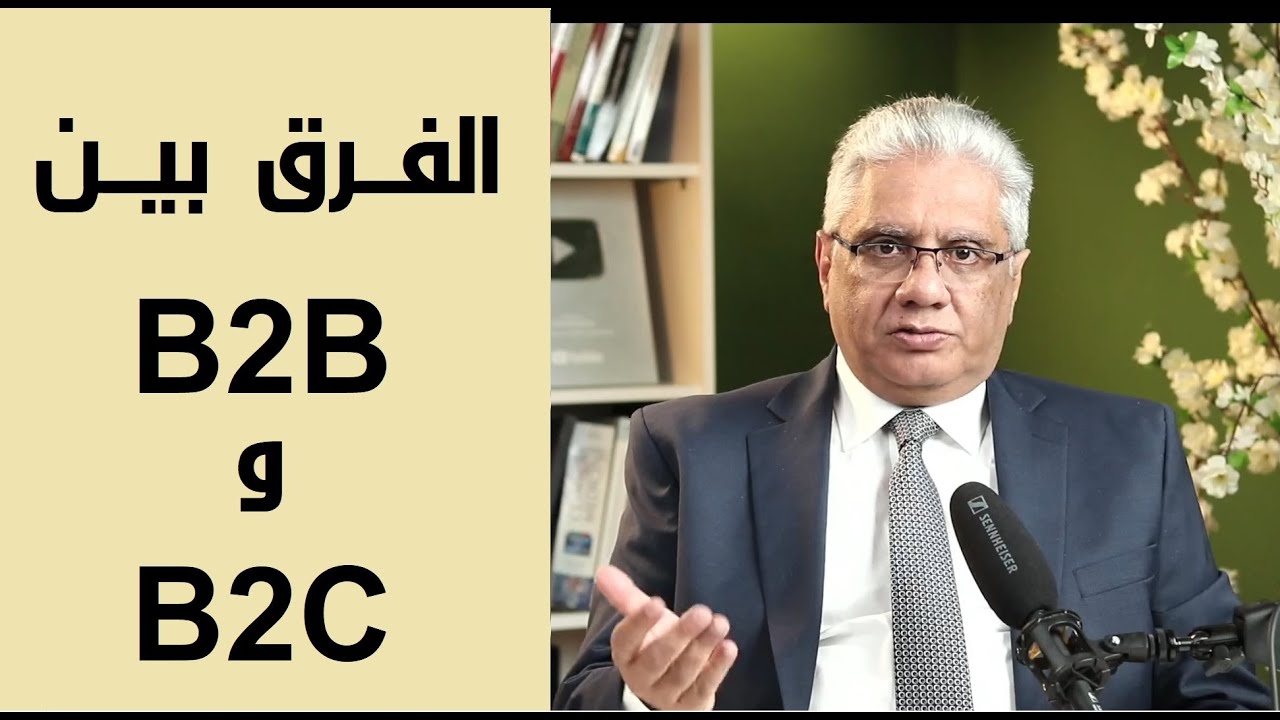
الفرق بين العملاء الأفراد والشركات والحكومة | عيادة الشركات | د. إيهاب مسلم
18.6K
Government procurement (B2G) follows a formal process including: identifying purchase needs, preparing tender documents, publishing tenders, receiving bids, evaluating proposals, conducting evaluation sessions, opening sealed bids, forming evaluation committees, conducting inspections, and finalizing payments through financial departments. This process can take months or even years.
Click to watch →

What is B2B, B2C, C2C, D2C | B2B Vyapar Kya Hai | B2B Marketing | Mega Vyapar
187.2K
B2G stands for Business to Government, which refers to transactions where businesses provide goods or services to government entities. This model is commonly used when governments lack the capacity to manufacture or produce items themselves. For example, when building infrastructure like metros or railways, governments contract private manufacturers to produce components like steel or glass. Government tenders and procurement processes facilitate B2G transactions.
Click to watch →

1 урок. Что такое госзакупки? Интенсив Госзакупки.
33K
Government procurement (B2G) differs significantly from traditional business (B2B/B2C) in that it involves working with the state as a client, which is one of the most financially capable buyers spending tens of trillions annually; unlike standard business where some flexibility exists with contracts and documentation, government procurement requires strict adherence to deadlines, regulations, and legislative requirements, with violations potentially resulting in delayed payment, non-payment, or contract termination.
Click to watch →

6# Kaip parduoti dokumentų valdymo sistemą? | ParDavimai | Žilvinas Kazlauskas
724
B2B (Business-to-Business) and B2G (Business-to-Government) sales are fundamentally similar in their core process, but B2G sales are subject to public procurement laws and regulations. These regulations only activate when purchases exceed certain monetary thresholds, below which organizations can purchase without formal bidding processes.
Click to watch →
Deep Dive
An introductory understanding of SAM.gov (System for Award Management) and its role as the primary database for federal contractors.
![How To Cash In On Government Contracts [No Qualifications Or Experience Required]](https://i.ytimg.com/vi/TQLc-bw6ywY/maxresdefault.jpg)
How To Cash In On Government Contracts [No Qualifications Or Experience Required]
41.2K
SAM.gov is the primary database for all federal government contracting opportunities. While other databases exist, they all pull information from SAM.gov. The speaker emphasizes that learning to navigate SAM.gov effectively is essential because it contains the complete and authoritative list of all available contract opportunities.
Click to watch →

Top-10 Government Contracting Websites For New Government Contractors (2021) | GovKidMethod
34.5K
SAM.gov is the essential website for government contractors, serving dual purposes: searching government contracting opportunities and registering businesses for federal contracts. When used properly, SAM.gov automatically feeds contractors opportunities matching their business capabilities at agencies purchasing similar goods or services. The platform functions as a business development partner, identifying relevant opportunities based on contractor profiles. Advanced training programs exist to help contractors maximize SAM.gov utilization for opportunity identification and business growth.
Click to watch →

How to use the sam.gov #govcon databank
564
SAM.gov (System for Award Management) is the central government database where all entities must register to be eligible for Prime contracts and grants. The system contains over 775,000 registered entities representing trillions in annual spending. Understanding SAM's structure—Departments, Agencies, and Offices—is essential for government contracting research. NCE codes provide critical intelligence about what buyers are purchasing, enabling contractors to demonstrate expertise during discussions. Each entity has a unique identifier that can be used with external tools like USA Spending to research competitors' award history. This foundational knowledge enables strategic market research and competitive positioning in government contracting.
Click to watch →
Setting Up and Maintaining Your SAM.gov Profile
1.8K
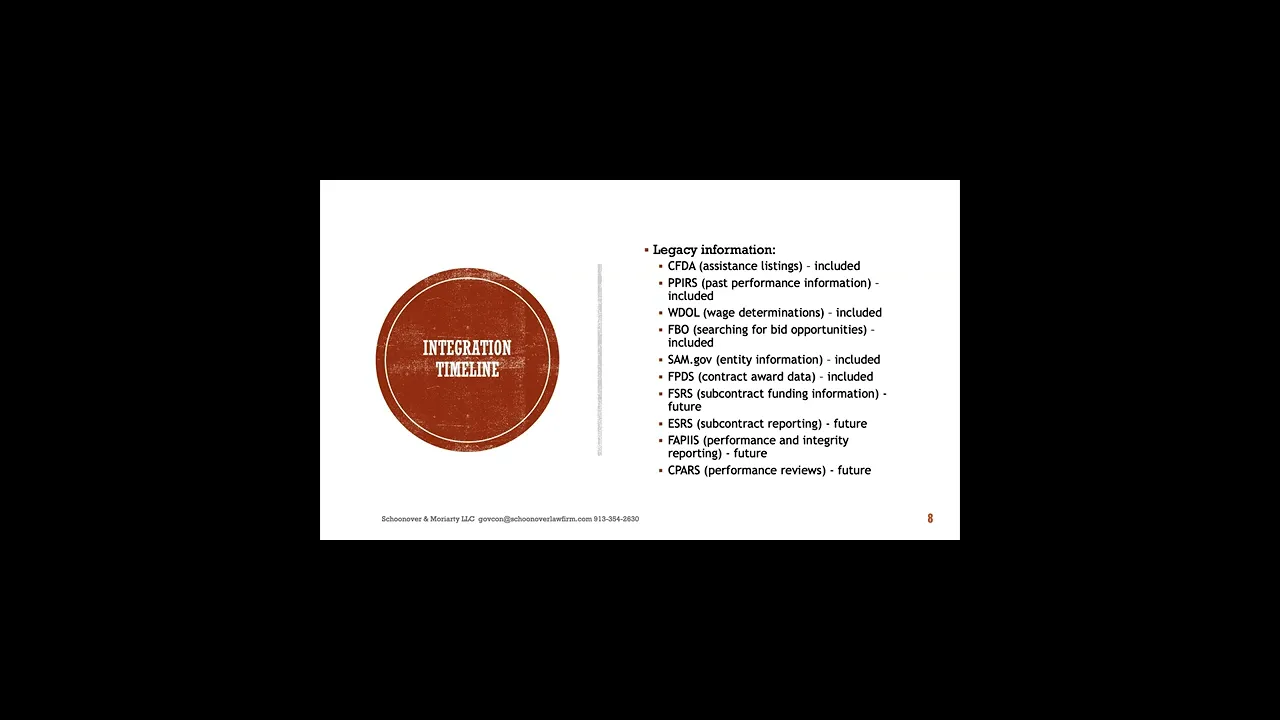
SAM.gov (System for Award Management) is the government-wide point of entry for most federal contract opportunities, serving as the primary system where the federal government tracks contractor information and processes payments. It has evolved from predecessors like FedBizOpps (FBO) and is integrating information from multiple federal systems including wage determinations, bid opportunities, and past performance data. SAM.gov registration is required as a baseline for federal contract eligibility, and contractors must be registered at the time they submit their bid, not just at award. Joint ventures under SBA regulations must also be registered. Many contractors face verification issues due to data mismatches between government systems, and GSA is currently overwhelmed with verification requests. The Department of Defense issued a class deviation on September 8, 2022, allowing contractors who started the registration process prior to submitting a bid and are stuck in the system to delay registration until 30 days after award or first invoice. To register, contractors must create login credentials through login.gov, then enter core company data including legal name, business address, tax ID number, and Unique Entity Identifier (UEI). Contractors should include NAICS codes (six-digit industry classification codes) and socioeconomic status information including revenues, employee numbers, and certifications for 8(a), HUBZone, and WOSB status. SAM.gov registration requires completing comprehensive representations and certifications about the company, its owners, and affiliates, including disclosure of exclusions, suspensions, judgments, outstanding tax liabilities, foreign ownership, and attestations about not doing business with restricted countries. Contractors must also certify they are not inverted domestic corporations.
Click to watch →

Learn to use the System for Award Management (SAM.gov) to your federal contracting advantage
1.7K
This video teaches how to effectively use SAM.gov to monitor and respond to Requests for Information (RFIs) and Sources Sought notices in the federal contracting process. The key steps include setting up a saved search with domain 'Contract Opportunities,' notice type 'Sources Sought,' and response date filtered to the next 90 days; enabling email notifications to receive daily updates; and implementing a daily 15-minute review system to triage new RFIs. The presenter emphasizes that responding to RFIs is crucial for sending marketing messages directly to federal buyers and establishing domain expertise, and that companies should only respond to opportunities within their core competencies ('slam dunk' opportunities).
Click to watch →
Deep Dive
Basic business classification concepts and the general need for standardized industry categorization in commerce.

Evolution and Fundamentals of Business | Classification of Business Activities |Lecture - 5 Part A
21.9K
Business activities are classified into two major categories: Industry and Commerce. Industry involves the production and processing of goods, while Commerce involves the distribution and exchange of goods and services. Industry is further classified into three categories: Primary Industry (extraction and production of natural resources like mining, fishing, and breeding), Secondary Industry (manufacturing and construction that converts raw materials into finished goods), and Tertiary Industry (support services like transportation, banking, insurance, warehousing, advertising, and communication). Manufacturing Industry is further divided into Refining Industry (separating elements from raw materials), Synthetic Industry (combining ingredients to create new products), Processing Industry (following procedures to transform raw materials), and Assembly Industry (joining components to create complete products).
Click to watch →

IGNOU BCOMG 1st year BCOC 132 Business organisation and management Unit 1 Introduction to Business
81.2K
Business activities are classified into Industry (production of goods) and Commerce (exchange of goods). Industry involves transforming resources into goods through extraction, processing, manufacturing, and construction. Industries are classified by nature (extractive, genetic, manufacturing, construction), investment level (heavy, light), size (small, medium, large), and area of operations (regional, national, international). Commerce facilitates the movement of goods from producers to consumers.
Click to watch →

Classification of Business | Class 11 Business Studies | B.Com | Commerce Explained
136
Business is classified into Industry and Commerce. Industry has three sectors: Primary (extracting raw materials), Secondary (manufacturing goods), and Tertiary (providing support services). Primary Industry includes Extractive (farming, mining, oil exploration, fishing) and Genetic (poultry, fishery, animal husbandry). Secondary Industry includes Manufacturing (producing goods in factories) and Construction (building structures at specific locations). Manufacturing further divides into Analytical (separating materials), Synthetic (combining elements), Processing (multi-stage production), and Assembly (combining components). Commerce includes Internal Trade (wholesale and retail within country) and External Trade (import and export across borders).
Click to watch →

Business Studies | Class 11 Commerce | व्यवसाय व्यापार और वाणिज्य | RBSE (Hindi Medium) | Rakesh Sir
169.6K
Industry is classified into three categories: Primary Industry (extraction of natural resources and development of animals and plants), Secondary Industry (processing of raw materials into finished goods), and Tertiary Industry (providing services to support other industries). Primary industry is divided into Extraction Industry (obtaining natural resources from the earth like mining and fishing) and Cultivation Industry (developing animals and plants like farming and animal husbandry). Secondary industry is divided into Extractive Industry, Analytical Industry (breaking down one product into multiple products), Process Industry (transforming raw materials through processes), and Assembly Industry (combining various components to create finished products). Tertiary industry includes banking, insurance, transportation, and communication. Commerce involves moving goods from producers to consumers, classified as internal trade (within country) or external trade (international). Commerce performs functions like time utility, place utility, risk bearing, and advertising.
Click to watch →
Business Meaning | Definition | Scope and Classification of Business | Business Organisation Series
140.6K
Business is classified into two main categories: (1) Industry, which involves the production and manufacturing of goods, and (2) Commerce, which involves the buying and selling of goods. Industry includes activities like extraction, production, and manufacturing, while commerce relates to trading and distribution of goods.
Click to watch →
Deep Dive
The basic lifecycle of a federal contract solicitation and how government agencies advertise business opportunities.

How Government Contracting ACTUALLY Works
168
The federal procurement process follows five essential steps: (1) Government identifies needs from departments like DoD, VA, HHS, or HUD; (2) Agencies publish forecasts of planned purchases before opportunities go live; (3) They release solicitations or RFQs on SAM.gov; (4) Vendors submit proposals or quotes; (5) Contracts are awarded to qualified winners. Each step represents an opportunity for businesses who understand the system. Most businesses skip straight to bidding without understanding this cycle, missing critical preparation windows.
Click to watch →

How to Do Business With the Federal Government
401
The government acquisition cycle follows a structured process: requirements gathering from operational needs, collaboration between contracting officers and requirement owners to develop specifications, solicitation posting on SAM.gov for contracts $25,000+ (under $10,000 uses purchase cards), contractor bidding, evaluation based on complexity (simple quotes use lowest price while complex services require detailed technical proposals), award determination, contract administration including startup meetings and performance monitoring, and finally contract closeout with compliance audits. Government contract opportunities can be found through SAM.gov, FedConnect, FPDS (historical contract data), USA Spending.gov, and PIES. Forecast of Opportunities is posted annually around September 30th showing projected solicitations for the next fiscal year. SAM.gov posts four notice types: RFIs for market research, RFQs for simple purchases, RFPs for complex goods/services, Special Notices for sole source justifications or industry days, and Award Notices. When responding to solicitations, businesses should separate sections into forms, salient characteristics/performance work statements, and provisions, creating a checklist of required responses.
Click to watch →

Introduction to Federal Contracting Sales Lifecycle: Business Development; Capture; Proposal Writing
3K
Government contracting follows a structured three-phase process: Business Development (focused agency research and relationship-building to identify opportunities), Capture (shaping specific opportunities to increase winning chances), and Proposal Writing (answering the government's question 'Why should we pick you?'). Understanding this lifecycle helps small businesses systematically pursue federal contracts by first developing agency knowledge, then strategically influencing opportunities, and finally presenting compelling responses to Requests for Proposals.
Click to watch →
GovCon 101: Federal Acquisition Regulation
539
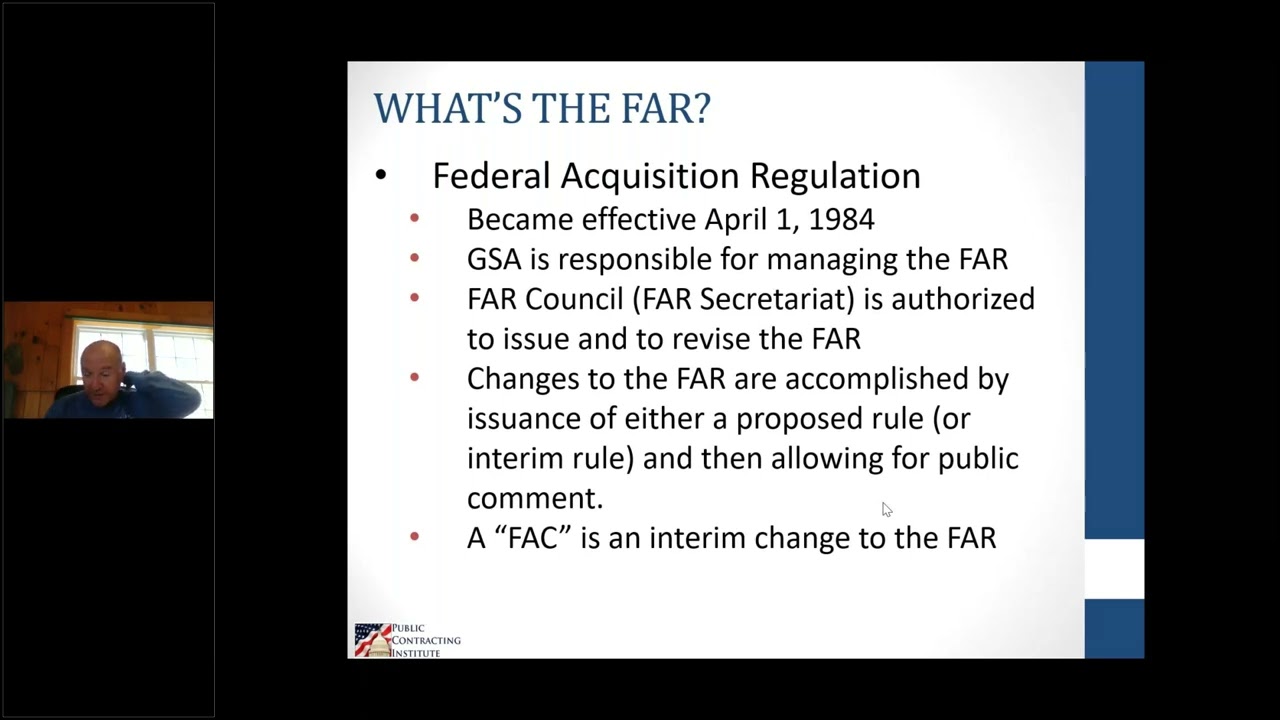
The government contracting lifecycle spans from initial needs determination through contract closeout, with the FAR providing guidance for every stage. Government solicitations and contracts follow an alphabetical section structure (A-M) with Section I containing all incorporated clauses. Section I of solicitations contains all clauses, and the resulting contract contains identical clauses. Clause 52.202-1 incorporates all definitions from Part 2 into solicitations and contracts. Each clause includes an effective date indicating its version, which is critical because the version in effect at award date determines applicability throughout the contract's life. The matrix in Part 52.3 indicates whether clauses are mandatory or optional for different contract types—for commercial items, only four mandatory clauses apply. Specialized parts address unique requirements: Part 22 covers labor statutes including the Service Contract Act and Davis-Bacon Act; Parts 36-51 cover post-award administration including construction contracts (Part 36), service contracting (Part 37), IT acquisitions (Part 39), contract audit services (Part 42), modifications (Part 43), subcontracting policies (Part 49), terminations (Part 50), and government sources (Part 51). The government can change clauses post-award, but contractors may seek equitable adjustment for increased costs. Every clause allocates risk between government and contractor, making risk allocation understanding essential for business judgment in government contracting.
Click to watch →

The 4-Stages of a Government Contracting Bid, WOSB Example (Must-Know to use Sam.gov)
52.9K
Government contracting opportunities progress through four distinct stages: (1) Sources Sought - market research where vendors provide capability statements to help shape the requirement, (2) Pre-Solicitation - an FYI notice providing information about upcoming bids with no response required, (3) Solicitation - the formal bid opportunity (RFP or RFQ) where vendors can respond to win contracts, and (4) Award - the notice of contract winners. Understanding these stages is essential because each requires different responses, and only Stage 3 allows actual contract responses. Vendors should respond to Sources Sought only if they intend to bid, and should request proposal debriefs after losing bids to improve future proposals.
Click to watch →
Prerequisite Knowledge
- Concept 01Fundamentals of U.S. Federal Government procurement processes and the B2G (Business-to-Government) marketplace.
- Concept 02An introductory understanding of SAM.gov (System for Award Management) and its role as the primary database for federal contractors.
- Concept 03Basic business classification concepts and the general need for standardized industry categorization in commerce.
- Concept 04The basic lifecycle of a federal contract solicitation and how government agencies advertise business opportunities.
Subsequent Learning
- Step 01How to use NAICS codes to determine eligibility for SBA (Small Business Administration) size standards and small business set-aside programs.
- Step 02Understanding the relationship between NAICS codes and Product and Service Codes (PSCs) or Federal Supply Codes (FSCs) for more granular targeting.
- Step 03Successfully registering a business entity in SAM.gov and linking the appropriate primary and secondary NAICS codes to the entity's profile.
- Step 04Conducting government market research on tools like USASpending.gov using NAICS codes to analyze historical spending and competitor footprints.
- Step 05Developing a tailored federal bidding strategy and drafting a Capability Statement that effectively highlights your chosen NAICS codes.
Code Misalignment
Research & Apply
Code Misalignment
0:00Playing Section
- 1
Contracting officer's listed code may differ from your assumption.
- 2
Searching by wrong code misses valuable bidding opportunities.
- 3
Examples show mismatched codes across varied contract types.
The Limitations of NAICS-Centric Targeting in Federal Contracting
While standard advice emphasizes identifying the correct NAICS codes for federal contracting, procurement experts argue that relying too heavily on NAICS codes can limit a bidding strategy. First, NAICS codes are broad, industry-level classifications that often fail to capture the specific scope of modern, interdisciplinary, or emerging technology contracts, leading to frequent agency misclassifications and costly size-standard protests. Second, a counter-strategy advocates prioritizing Product and Service Codes (PSCs) instead. While NAICS codes describe the general industry of the seller, PSCs define the exact product or service the government is buying. Relying on PSCs provides a much more granular and accurate way to track federal spend, target relevant opportunities, and bypass the administrative rigidity and inaccuracies inherent in the NAICS system.
Deep Dive
How to use NAICS codes to determine eligibility for SBA (Small Business Administration) size standards and small business set-aside programs.
SAM.gov Registration: Step-by-Step Guide for Federal Contracts
76.1K
NAICS codes identify your business industry and determine your competition for government contracts. Visit census.gov/naics to search for applicable codes. Most businesses should list multiple codes since their work may be bid under various classifications. The government uses small business size standards to determine set-aside contract eligibility. Each NAICS code has its own standard, stated in either maximum employees or average annual receipts. Manufacturing typically uses employee counts, while services use receipts. Your business may qualify as small under one code but not another.
Click to watch →
July 20 Wednesday Webinar - SBA Certification Programs
138
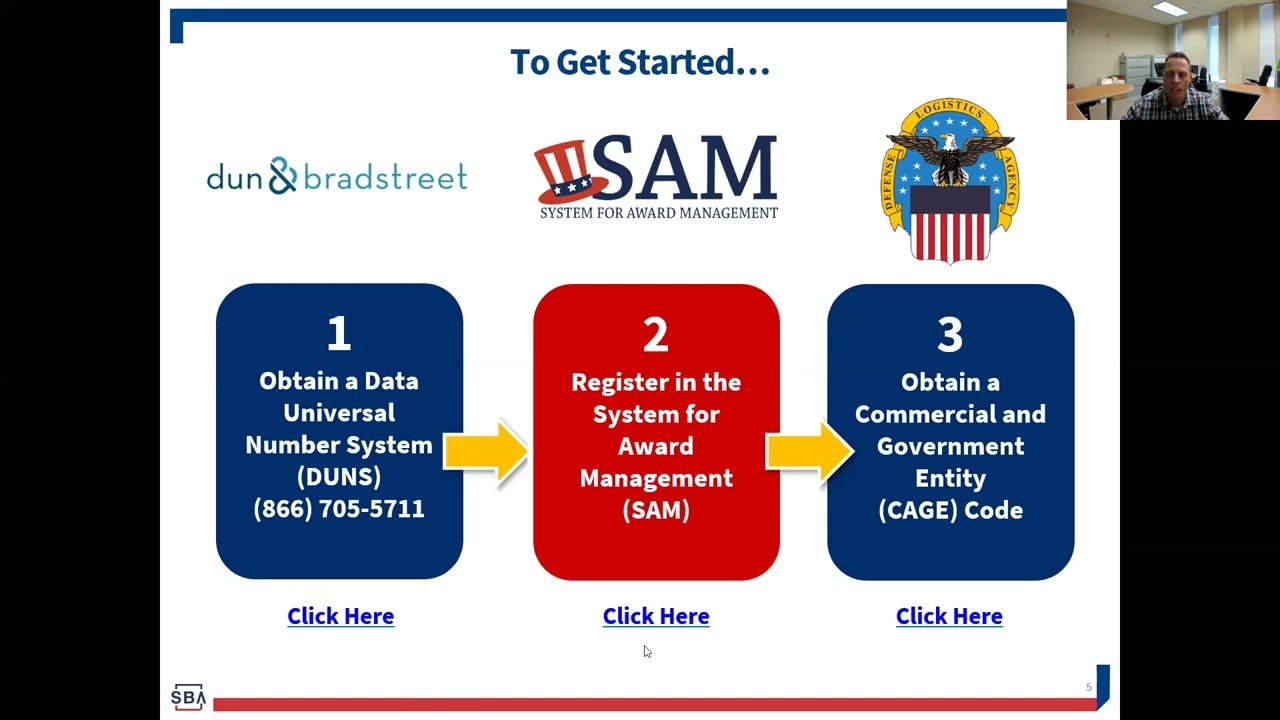
NAICS (North American Industry Classification System) codes determine whether a business qualifies as small for federal contracting purposes. The size standard varies by industry: manufacturing businesses are limited to 500 employees, while service businesses are limited by annual gross receipts (e.g., $37 million for construction). Businesses must identify their correct NAICS code to determine their size standard and eligibility for small business set-asides.
Click to watch →
Master NAICS & Size Standards: Boost Your Contract Wins
11K
NAICS (North American Industry Classification System) codes identify what a business sells and its industry classification. Small business size standards are based on NAICS codes, meaning each industry has its own definition of what constitutes a small business. Size standards are stated either as maximum number of employees (typically for manufacturing) or maximum average annual receipts (typically for services). A business may qualify as a small business under one NAICS code but not another. To find appropriate codes, visit census.gov/NAICS and use keyword search. SAM requires a primary NAICS code but allows secondary codes, and businesses should list multiple codes to maximize contract eligibility.
Click to watch →

California State Trade Expansion Program (STEP) Application Video - 12/1/22
283
Eligibility for STEP requires meeting SBA's definition of small business using NAICS codes. Applicants must provide their six-digit NAICS code, annual revenue, and number of employees. The NAICS code determines the specific size standard limits for that industry, which may be based on annual revenue, value, or number of employees.
Click to watch →

Hurricane Recovery Projects and Doing Business with FEMA
593
The SBA size standard tool helps businesses determine if they qualify as small businesses based on NAICS codes. Size standards are usually stated in number of employees or average annual receipts and represent the largest size a business (including subsidiaries and affiliates) may be to remain classified as small business for SBA and federal contracting programs. Businesses can look up their NAICS codes to determine qualification based on employee count and average annual receipts over a five-year period.
Click to watch →
Deep Dive
Understanding the relationship between NAICS codes and Product and Service Codes (PSCs) or Federal Supply Codes (FSCs) for more granular targeting.

Competitive Intelligence Tools Demo Part II GovWinIQ
1.2K
Product/Service Codes (PSC) are more granular and powerful than NAICS codes for government contracting research. PSC codes describe what actual work is being performed on a transaction, while NAICS codes classify the type of company performing the work. PSC codes starting with letters indicate services, while numeric codes indicate products. For environmental remediation, the primary PSC code is F108, though many related codes exist for specific applications like oil spill remediation or air quality improvement.
Click to watch →

Federal Contracting: Researching Historical Spend & Finding Opportunities (Session Recording)
207
This section covers NAICS codes (North American Industry Classification System) as six-digit industry classifications and PSCs (Product Service Codes) as four-digit codes that provide more specific classification within NAICS codes. It explains how to research NAICS codes at usns.gov and how PSC codes yield better data for market research. The section demonstrates how a single NAICS code can have multiple applicable PSC codes.
Click to watch →
How to Use FPDS to Follow the Money! Discover Government Contracting Priorities
1.5K
PSC (Procurement Service Code) and NAICS (North American Industry Classification System) codes classify government contracts. Contractors should understand the relationship between search keywords and these codes because similar terms may use different codes. Early in learning FPDS, contractors will see multiple NAICS codes used for similar terms, which is normal and reflects how government buyers categorize their needs.
Click to watch →

How to do Market Research
104
Combining NAICS codes with PSC codes provides the most precise search results. For example, using NAICS code 332-439 (metal containers) combined with PSC code 8140 (boxes and containers) narrows results to metal containers and boxes. FPDS records all contract actions including new contracts, purchase orders, and modifications. The 'Action Obligation' field shows the dollar amount of each transaction. Clicking on any blue item takes you to a subset of actions for that specific entity. The system displays the top 10 vendors by action count for each agency.
Click to watch →
Select GCR - Best Practices
334
PSC codes are four-digit codes that provide the government with more granularity on how money is being spent. Businesses find their PSC codes in the 330-page Product and Service Code Manual maintained by the SBA. Incorrect NAICS codes, PSC codes, or keywords will cause businesses to be completely overlooked during contract award decisions.
Click to watch →
Deep Dive
Successfully registering a business entity in SAM.gov and linking the appropriate primary and secondary NAICS codes to the entity's profile.

Which NAICS Codes to Choose for Government Contracting
373
When setting up a SAM.gov entity profile, businesses must select a primary NAICS code, which cannot be changed once established. This primary code determines the business's primary classification for SBA purposes and is what the SBA considers when determining small business status. Secondary NAICS codes can be added and deleted at the business's discretion as they bid on different opportunities. The primary code is critical because if a business outgrows its size standard for that code, it becomes ineligible for all small business set-aside contracts and can only participate in unrestricted, full, and open contracts.
Click to watch →

Best Small Businesses to Start & Make Millions in 2026 👉 Using Sam.gov
60.9K
To register on SAM.gov: go to register entity, get a unique entity ID, click get started, and use the entity registration checklist. The system is free and doesn't require paying someone to register. After logging in via login.gov (the government's universal sign-in system), pick services you can deliver reliably like janitorial, courier, landscaping, or pressure washing. Get basic insurance (usually $1 million per occurrence, $2 million aggregate, under $1,000/year for low-risk industries). Learn NAICS/PSC codes to search efficiently: 561720 for janitorial, 492110 for couriers, 5617330 for landscaping. Filter by location and size to avoid contracts you cannot handle.
Click to watch →
SAM.gov Registration: Step-by-Step Guide for Federal Contracts
76.1K
To register for government contracts through SAM.gov, businesses must first create a login.gov user account, then register their entity by providing legal business name, physical address, start year, and state of incorporation, followed by uploading documentation for entity validation; after validation approval, businesses must complete additional sections including entering NAICS codes (which determine small business classification and competition), providing annual receipts and employee data, submitting bank information, and optionally creating an SBA profile to appear in the Dynamic Small Business Search.
Click to watch →

How to Register in the System for Award Management (SAM.gov)
222
The business type section categorizes entities by structure, profit type, and incorporation details including country/state. Socioeconomic classifications include minority-owned business (with subcategories: Asian Pacific, Subcontinent Asian, Black American-owned), veteran-owned business, and others. Users self-certify applicable categories, though this alone doesn't qualify for set-aside contracts—formal certification is still required. Entity relationships require identifying immediate owner, highest-level owner, and predecessors. Foreign subsidiaries need parent company CAGE codes first. Banking information must be retained for future changes as old details are required for security verification. Legal proceedings from past five years must be disclosed. NAICS codes now auto-complete during selection, with primary code designation via dropdown. Product Service Codes (optional but recommended) provide more specific service/product descriptions than broad industry codes.
Click to watch →

How to Get Government Contracts | How Our Small Business Got Approved
217.4K
After obtaining a DUNS number, NAICS code, and EIN, businesses can register with SAM (Systems for Award Management) at sam.gov. The registration process involves creating a user account first, then proceeding with entity registration. During registration, applicants will answer a series of questions about their business information. Since the challenging information-gathering steps have already been completed, the actual registration process should be straightforward.
Click to watch →
Deep Dive
Conducting government market research on tools like USASpending.gov using NAICS codes to analyze historical spending and competitor footprints.

Market Research and Capability Statements in Government Contracting
146
USASpending.gov is the best free market research tool for government contracting. Filter searches by: recent data (last 5-6 years), NAICS code (e.g., 238210 for electrical contractors), location (state), and award amount (e.g., $3 million and below for first-time contractors). After downloading data, create pivot tables to analyze total obligated amount, awarding sub-agencies, and awarding offices. Sort from largest to smallest to prioritize outreach targets. Research agencies further to understand their specific needs and capabilities.
Click to watch →

2024 Guide to USASpending for Government Contracting Market Research
2.1K
USASpending.gov is a powerful tool that aggregates government contracting data from multiple sources (including FPDS and SAM.gov) into a user-friendly interface, enabling government contractors to identify spending patterns, find award opportunities, analyze competitors' success, and export data for strategic business development by using filters for fiscal year, agency, award type, and NAICS codes to discover where the government is spending money related to their products or services.
Click to watch →
Find Your Target Customers
33.7K
USASpending.gov is a free government tool to find agencies that purchase your products or services. Search by keyword or NAICS code, then narrow by state or county. Use the 'sub-agencies' tab to see spending broken down to the sub-agency level rather than just major departments, as this reveals the actual biggest purchasers in your area. For example, a janitorial company in Montana can identify that the National Institutes of Health, Air Force, and Forest Service are the biggest spenders.
Click to watch →

The Defense Contracting Opportunity
1.4K
To research government spending opportunities, visit usaspending.gov and use the award search feature. Filter by the past three years (fiscal year 2019-2021) to see recent spending patterns. Use NAICS codes to search by industry category. Note that contracts may be classified under different codes than expected, so multiple searches may be necessary. For example, searching for title insurance shows minimal spending, while residential construction shows $52 billion spent by DOD over three years.
Click to watch →

Teachers Selling To The US Military!
191
USASpending.gov is a free government website for tracking federal spending. Users can access advanced search, select fiscal years (ending September 30th), and search by NAICS code. The website shows spending trends over multiple years with a typical 90-day reporting lag. Users can filter by agency, state, and category. For instruction services, spending showed $293M in 2019, $273M in 2020, and $241M in 2021. Geographic analysis reveals spending by state, though spending location doesn't necessarily indicate where work is performed.
Click to watch →
Deep Dive
Developing a tailored federal bidding strategy and drafting a Capability Statement that effectively highlights your chosen NAICS codes.

How to Write a Winning Capability Statement
23.1K
A capability statement is a one-page document that government buyers expect when evaluating contractors; it should include your business name and logo, a company summary, tailored services/products, competitive differentiators (experience, certifications, clearances), federal certifications (8(a), WOSB, HUBZone, SDVOSB), relevant NAICS codes (3-7 recommended), past performance with specific job details, DUNS and CAGE codes, and professional contact information; the document should be formatted with bullet points and white space for readability and distributed as a PDF.
Click to watch →
How to Find the Right NAICS Codes for Your Government Contracting DSBS Small Business Profile
1K
To find the right NAICS codes for your government contracting profile, research competitors' codes on Beta SAM.gov and the Census Bureau, then include all relevant codes in your profile to ensure visibility when government buyers search for your services, while selecting only the top 5-10 most important codes for your capability statement.
Click to watch →
Disabled Veterans Crushing Government Contracts in Cybersecurity & Project Management
100
This segment covers the essential steps for federal contracting after SDVOSB certification. The speaker explains that businesses must register on SAM.gov to become recognized as federal vendors, which is essential for bidding on contracts. He provides specific NAICS codes for cybersecurity and project management: 541512 (IT Consulting), 541519 (Other IT Services), 541611 (Management Consulting), 541618 (Other Consulting), 541330 (Engineering Services), and 518210 (Cloud and Data Processing). The SAM.gov activation takes 7-10 days. The speaker describes capability statements as critical documents showcasing business capabilities including cybersecurity services (RMF, cloud security, incident response), project management skills, NAICS codes, and certifications.
Click to watch →
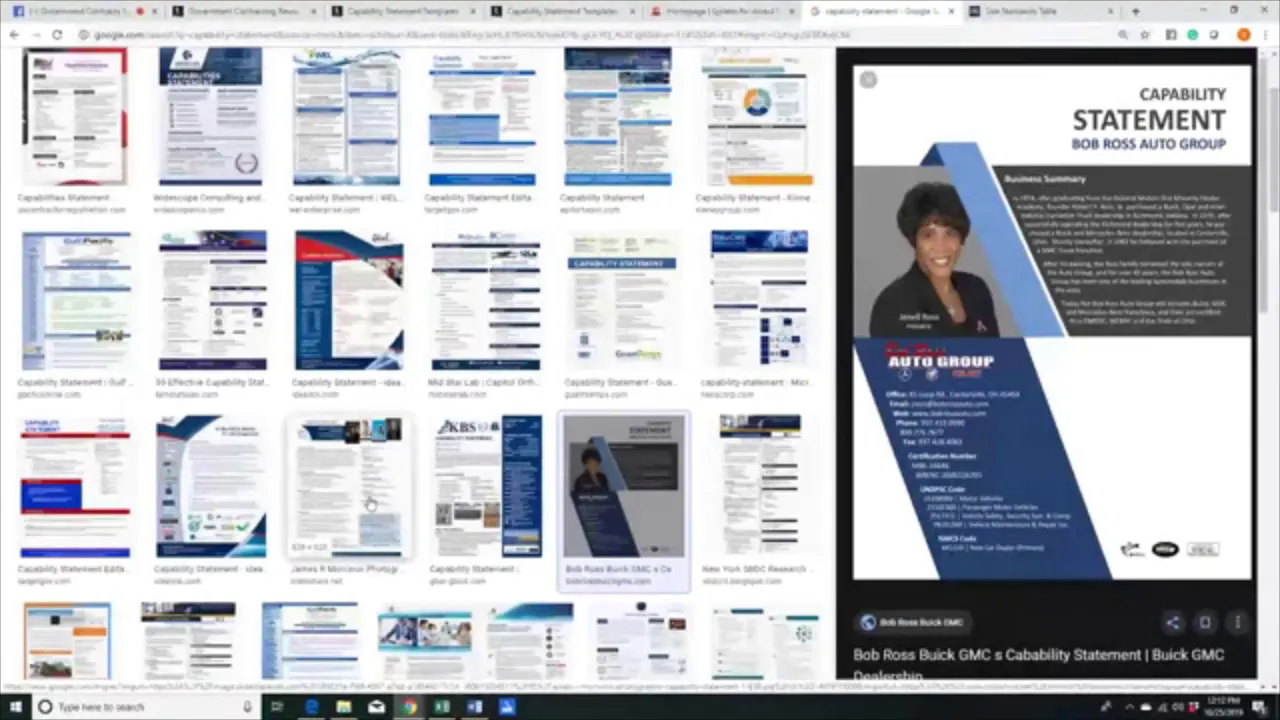
Live Capability Statement Review #2 (w/ SAM, DSBS, Website) for Government Contractors
1.7K
Effective capability statements require thoughtful design and clear information presentation. Color choices should align with branding, but yellow is expensive for government printing. NAICS codes must include descriptions explaining what each code represents, as simply listing codes without explanations fails to convey business services. The primary NAICS code should be clearly identified, and companies should limit NAICS codes to 3-7. Companies without company past performance should include a section about personal experience of key individuals to demonstrate capability. The layout should be professional with consistent spacing between major headings. Companies should consider adopting a template for a more polished appearance when responding to government opportunities.
Click to watch →
How Government Contracting ACTUALLY Works
168
Three foundational requirements exist: register on SAM.gov for federal contracts (free and straightforward), register with your state government contracting site, and register with your city/county government contracting site. NAICS codes categorize every product and service—select appropriate codes for your business. A capability statement serves as your one-page federal resume, telling contracting officers who you are and why they should award you contracts. Most capability statements are poorly written, which is good news for new entrants.
Click to watch →
Code Misalignment
Research & Apply
Code Misalignment
0:00- 1
Contracting officer's listed code may differ from your assumption.
- 2
Searching by wrong code misses valuable bidding opportunities.
- 3
Examples show mismatched codes across varied contract types.
The Limitations of NAICS-Centric Targeting in Federal Contracting
While standard advice emphasizes identifying the correct NAICS codes for federal contracting, procurement experts argue that relying too heavily on NAICS codes can limit a bidding strategy. First, NAICS codes are broad, industry-level classifications that often fail to capture the specific scope of modern, interdisciplinary, or emerging technology contracts, leading to frequent agency misclassifications and costly size-standard protests. Second, a counter-strategy advocates prioritizing Product and Service Codes (PSCs) instead. While NAICS codes describe the general industry of the seller, PSCs define the exact product or service the government is buying. Relying on PSCs provides a much more granular and accurate way to track federal spend, target relevant opportunities, and bypass the administrative rigidity and inaccuracies inherent in the NAICS system.
Fundamentals of U.S. Federal Government procurement processes and the B2G (Business-to-Government) marketplace.
An introductory understanding of SAM.gov (System for Award Management) and its role as the primary database for federal contractors.
Basic business classification concepts and the general need for standardized industry categorization in commerce.
The basic lifecycle of a federal contract solicitation and how government agencies advertise business opportunities.
How to use NAICS codes to determine eligibility for SBA (Small Business Administration) size standards and small business set-aside programs.
Understanding the relationship between NAICS codes and Product and Service Codes (PSCs) or Federal Supply Codes (FSCs) for more granular targeting.
Successfully registering a business entity in SAM.gov and linking the appropriate primary and secondary NAICS codes to the entity's profile.
Conducting government market research on tools like USASpending.gov using NAICS codes to analyze historical spending and competitor footprints.
Developing a tailored federal bidding strategy and drafting a Capability Statement that effectively highlights your chosen NAICS codes.
50.2K views1.7Klikes4:02@FedAccessOriginal Release: 2023-05-30
here's the shocking truth about Nate's codes that took me years to figure out when I started my business I thought I understood Nate's codes but not understanding this cost me Millions it doesn't matter what you think your Nate's code is what matters is what the Contracting officer lists for the Nate's code and they could be completely different I've seen engineering contracts without forbid under Nate's code 541611 it's the code for management consulting services I've seen janitorial contracts under Nate's code 561210 which is the Nate's code for facilities Support Services I've even seen technical editing contracts under the Nate's code for Environmental Services if you were just searching for editing contracts under the Nate's code for editing Services you'd never finds that contract and you can't bid on it if you can't find it so getting your needs code right is essential let me show you how to do it I go to the website sam.gov and in the top bar I click on search and then where it says select domain I click on contract opportunities and let's say we're looking for administrative support contracts that's a real big area in Government Contracting so under keyword search I'm going to search for administrative and now on the right we see all the contracts it found let's scroll through the list to find something that looks interesting and this one looks interesting personal security and clearance support services so I click on that one and here we see the notice for that RFP now scroll down to the section that says classification and here it tells us the Nate's code the code is 541-690 which is the code for other scientific and Technical consulting services this is a solicitation for security support services but they're using the needs code for other scientific and Technical Consulting Services every contract is categorized by Nate's code when you find a contract you want to bid on write down its Nate's code and use that Nate's code to search for other contracts to bid on and another tip add that Nate's code to your Sam registration you can add Nate's codes to your Sam registration at any time but be sure to do that so that buyers find you when they're doing market research of course there's the fast method of finding Nate's codes going to the website census.gov nates and entering your keyword at method will get you started with your first nature code but I wish someone had told me about this research method when I was starting out I would have saved time and my company would have grown faster if I had known the right Nate's code to focus on there are two other free websites to use for your research my favorite is fpds because it provides in-depth data on awarded Federal contracts you will find detailed information on individual contracts including contract values and contractor details if PDS has great info It's tricky to use so watch my video to learn step by step but a mine fpds for information to grow your business I also have a video on how to search USA spending find your target contracts hey Friends start with research and you'll know you're on the right path so check out the those videos and I'll see you next time
Up Next

78:37
English Official Language: Impacts for Federal Contractors
@KizzyParks
13.5K views•2025-03-03

12:54
Triumph of Orthodoxy Icon: Byzantine Art & History Explained
@BenCallan
2.1K views•2024-08-06

8:56
How to Find Past Contract Prices for Government Bids
@FedAccess
26.6K views•2024-09-03

1:42
Game of Thrones Opening Credits: A Cinematic Analysis
@gameofthrones
46.3M views•2011-04-18
Related Study Plans & Knowledge Roadmaps
Structured learning paths in General & Interdisciplinary Studies
general-studies
Elevator Engineering: History, Physics & Cities
01From Hoists to Safety Brakes: The Dawn of Vertical Lift
02Hydraulic vs. Traction: The Engineering Physics of Elevators
03Modern Speed, Safety, and Algorithms
+ 2 more learning modules
12h5 modules
Explore Roadmap
general-studies
Rubber: Material Science, History & Geopolitics
01Origins of Natural Rubber & Mesoamerican History
02The Chemistry of Natural Rubber & Vulcanization
03The Geopolitics of the Rubber Boom & Colonization
+ 2 more learning modules
12h5 modules
Explore Roadmap
general-studies
Containerization: Evolution, Logistics & Trade
01Ancient Trade & Bulk Cargo: Amphorae to Barrels
02The Industrial Revolution & Cardboard Packaging
03The Containerization Revolution: Malcom McLean
+ 2 more learning modules
12h5 modules
Explore Roadmap
general-studies
Textile Tech: Evolution, Labor & Global Impact
01Pre-Industrial Textiles: Handloom & Cottage Industry
02Mechanization: The Spinning Jenny to the Power Loom
03The Factory System & Global Labor Transformation
+ 2 more learning modules
10h5 modules
Explore Roadmap