

![IB Economics Revision Session: Microeconomics [HL/SL]](https://i.ytimg.com/vi/j6Rxiss1qiE/maxresdefault.jpg)




![Session 2: Prof. (Dr.) Thomas Ulen, "Introduction to Law and Economics" [Day 1: 12th September 2022]](https://i.ytimg.com/vi/iwP8XdPJGb8/maxresdefault.jpg)























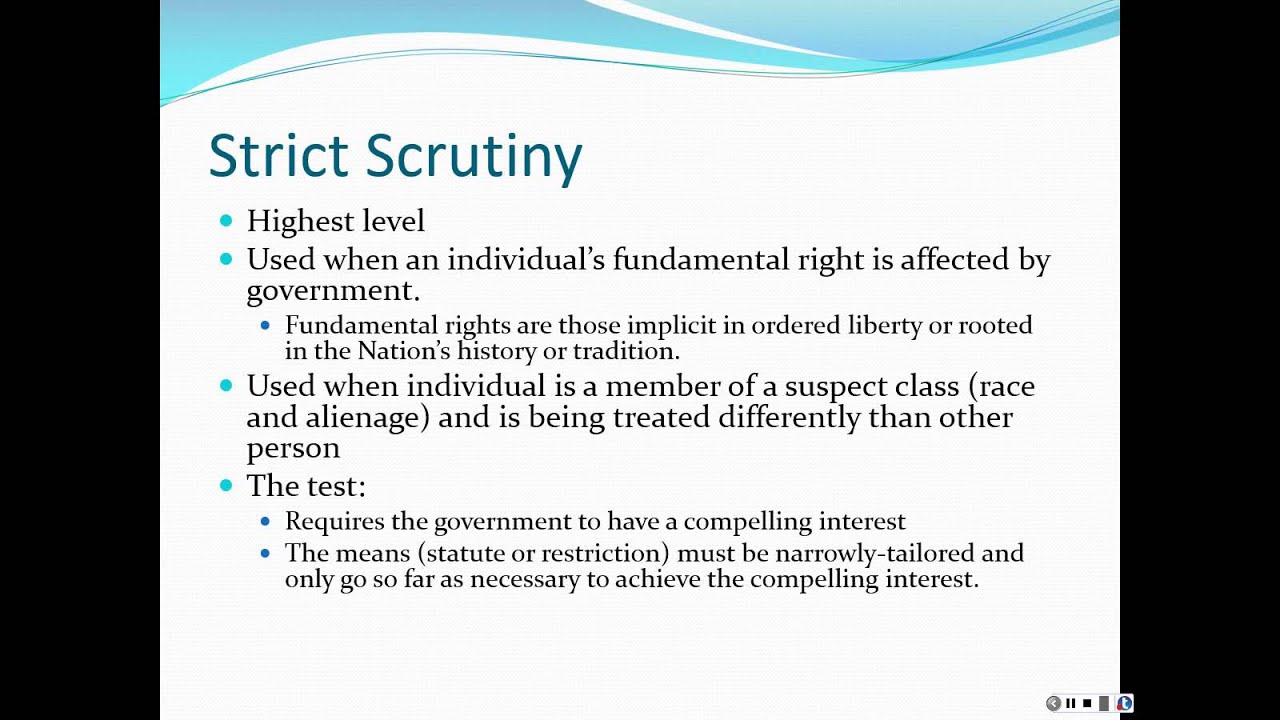
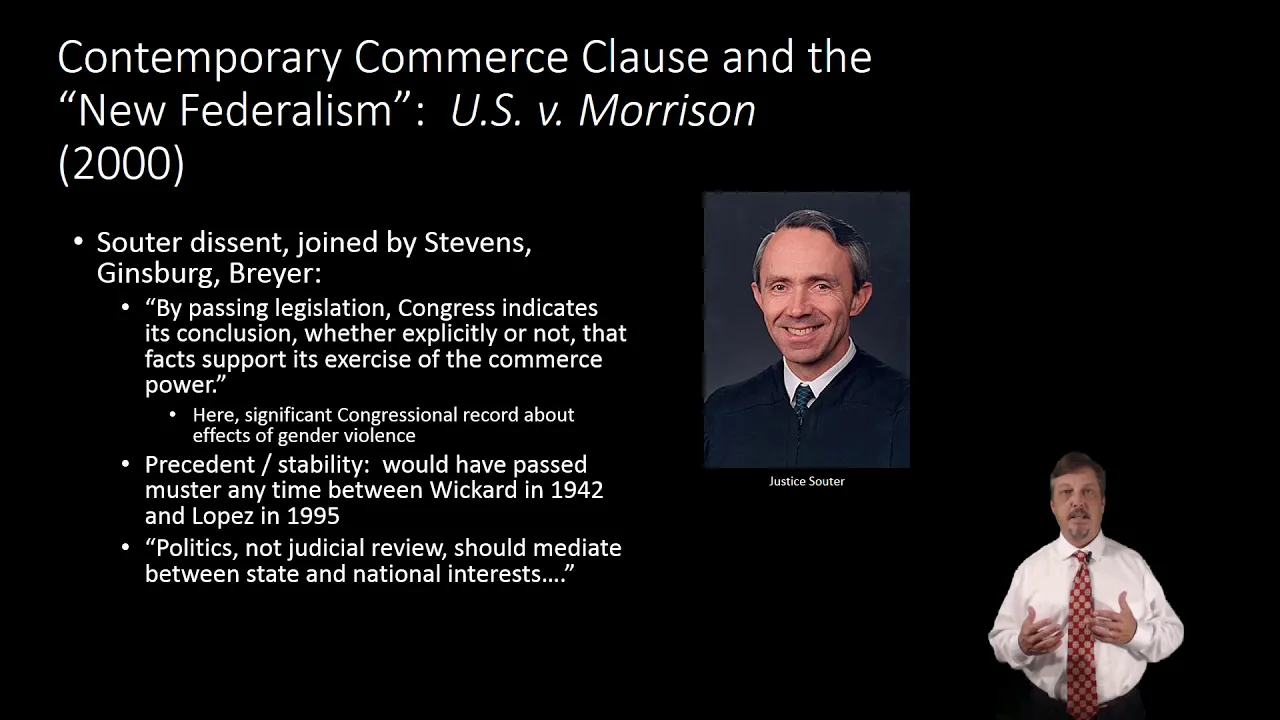


Federalism should be guided by the Subsidiarity Principle, which holds that issues should be handled by the lowest level of government that is legally competent to address them; this creates a presumption that matters should be left to states unless one of four economic arguments for federal power applies: (1) economies of scale from doing things nationally, (2) preventing 'race to the bottom' scenarios where states compete by lowering standards, (3) addressing negative externalities that cross state boundaries, or (4) protecting civil rights of minorities, which the national government is better positioned to protect due to increased faction representation in larger democracies.
Federalism Economics & Policy: Who Decides? Law Lecture
Added:Basic structure of American federalism and the constitutional division of power between federal and state governments.
Fundamental microeconomic concepts of externalities, public goods, and market failures.
The Tenth Amendment and the legal distinction between state 'police power' and federal 'enumerated powers'.
An introductory understanding of Law and Economics, particularly the role of transaction costs in institutional design.
The Tiebout Model of public expenditures and the economic theory of 'voting with your feet' (Fiscal Federalism).
The dynamics of jurisdictional competition, including the economic debates over 'race-to-the-bottom' versus regulatory competition.
Comparative Federalism, focusing on how the principle of subsidiarity is legally applied in other systems such as the European Union.
Case studies in Environmental Federalism, analyzing the economic efficiency of state-level versus federal regulation of cross-border pollution.
An examination of modern Supreme Court Commerce Clause jurisprudence and its impact on national economic policy.
33.7K views16likes39:00Original Release: 2020-04-03
Thanks for joining this episode of the No. 86 lecture series, which continues the conversation in the 85 Federalist Papers about how Federalism works.
Today’s episode features Professor Steven G. Calabresi, the Clayton J. & Henry R. Barber Professor of Law at Northwestern Pritzker School of Law.
He is Chairman of the Federalist Society's Board of Directors.
As always, the Federalist Society takes no position on particular legal or public policy issues; all expressions of opinion are those of the speaker.
- Clearly the Founders thought that federalism was desirable, but are there any reasons for federalism other than to restrain federal power?
We’re here today with Professor Steven Calabresi to discuss policy arguments for federalism.
When is it more efficient and more practical for a local entity to address issues than a national government?
Conversely, what areas need to be handled at the federal level?
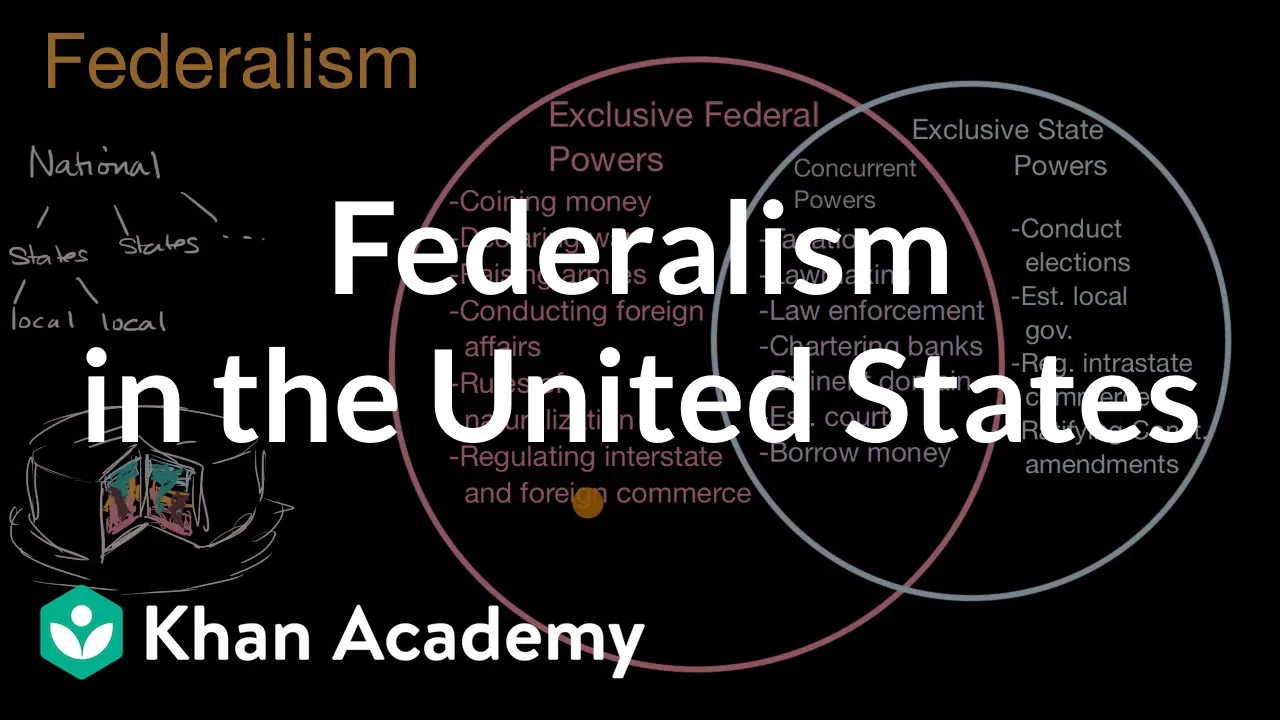
It turns out that there is a very sophisticated political science and law review literature on the policy benefits of federalism, which is sometimes referred to the economics of federalism, and which implements a principles, which is called the Subsidiarity Principle.
The Subsidiarity Principle holds that all actions should be regulated by the lowest level of government that is legally competent.
That is competent and able to regulated those actions.
The idea of subsidiarity is very deeply rooted.
Actually, the Catholic Church endorsed the idea of subsidiarity in the 1920s in response to Mussolini's fascist nationalism, in Italy, which the Catholic Church disapproved of.
The principle of subsidiarity is actually codified in the treaty which is currently the governing constitutional document of the European Union.
There are European constitutions, like the Constitution of Italy, that specifically endorse the principle of subsidiarity.
Again, the principle of subsidiarity says, handle things at the lowest level of government that is competent to handle them.
When it comes garbage collection, the lowest level of government that's competent to handle that is a city, or a town, or a village.
That's the way garbage collection is handled.
When it comes to providing for criminal law penalties against various crimes, such as assault and batteries, or rapes, or murders, or things of that kind, the lowest level of government that's competent to handle them is not a city or a town, but a state.
As a result, most of our criminal law involving the basic crimes is state criminal law and is enacted at the state level.
There is increasingly huge amount of federal criminal law, but a lot of it is simply duplicative of state criminal law.
It's enactment is really the result of grand standing by members of Congress that who want to appear to be tough on crime, and who make illegal, federally, things that are already illegal, but in the states.
The states are probably the lowest level government that's effective in the criminal law area.
There are other problems, which can only be dealt with by the federal government.
For example, regulating air pollution is something that only the federal government can do, because if factories in Ohio generate a lot of pollution, which causes acid rain in Vermont and New Hampshire, the Ohio legislature will have no incentive to regulate Ohio factories to prevent air pollution that falls on people in Vermont and New Hampshire, who don't vote in Ohio state elections.
The environmental laws, the Clean Air Act, and the Clean Water Act, have to be done at the federal government, because only the federal government is competent to regulate clean air and clean water.
There are other things, which are so important, that they have to be handled at an international level.
Therefore, for our defense, the United States has allied itself with the countries that are in the North Atlantic Treaty Organization, called NATO, to guard against depredation by Russia or attack by Russia.
The United States could deter attack by Russia on its own, but having allies in NATO makes it easier to accomplish that goal.
NATO has proved to be a very valuable alliance, since World War II.
It's an example of a problem which requires international cooperation.
Another problem which required international cooperation was that the scientists discovered that there were certain chemicals being released by various aerosol devices that were depleting the ozone layer.
Eventually all the countries in the world banned those aerosol devices, and as a result the ozone layer is reappearing around the world.
That's an example of something that had to be handled by all the countries in the world, because obviously one couldn't restore the ozone layer if one country, say China, with 1.3 billion people, refused to go along with a regulation against the aerosol cans that were at issue.
So that's basically an example of the principle of subsidiarity in action.
You’ve explained what subsidiarity is, but can you give more examples about how it would work in practice?
Why might it be the best choice for handling certain issues?
To make the idea of subsidiarity more concrete, I should talk about four economic arguments, or four arguments of political economies it might be called, as to why there should be a presumption of leaving matters at the state level rather than having the federal government handle them in the United States.
And then after I've discussed the four arguments for leaving things at the state level in the United States, I'll discuss four economic arguments as to why sometimes the national government in the United States needs to address an issue.
So turning first to the four arguments for generally leaving things to the states, the first argument is that we have 50 states, we're the fourth largest country in the world.
There are enormous regional differences in culture, religion, political affiliations, division between urban, rural, and suburban populations, et cetera.
There are enormous differences among the 50 states with respect to all of these things.
And if one leaves issues at the state level, different states can tailor their laws to suit the differing conditions, and preferences, and values of voters in different states.
So just to give a very basic and obvious example, in the 1970s President Jimmy Carter, who did many very foolish things, imposed a national speed limit of 55 miles per hour, which he thought would save energy.
Well, the speed limit is a classic example of something where varying local conditions are relevant.
In the state of Montana, which has a minimal population, and an enormous amount of territory, driving at 55 miles per hour is way too slow.
Once President Reagan abolished the federal speed limit in the 1980s, Montana did not adopt a speed limit, it adopted a rule that people could drive as fast as they could, so long as it wasn't dangerous.
And as a result, some people driving in Montana on highways with very few people around may go 80 or 90 miles per hour, and the police will not pull them over and stop them.
Obviously if you drive 120 miles per hour in Montana and a policeman sees you, you'll get stopped for doing that.
But basically Montana, because it's so thinly populated, and has such vast stretches of highway, is a state which doesn't essentially need a speed limit.
In contrast, New Jersey is the most densely populated state in the nation.
It's a very small state, it has an interstate I-95 running through it.
And it would be extremely unsafe to drive 80 or 90 miles per hour in New Jersey.
As a result, New Jersey has set a speed limit on I-95 of 65 miles per hour, which is also the speed limit in my home state of Rhode Island, which is the second most densely populated state in the country.
And that's faster than the 55 miles per hour that Jimmy Carter allowed, but it's certainly a lot slower than Montana.
So that's an example where differing tastes, conditions, and preferences cause it to make sense to have the states adopt different rules.
And quite literally, more people are happy if Montana has its speed limit, and New Jersey has a different speed limit, than would be happy if there was one speed limit nationally overall.
This is merely one example of differences among the states, there are also differences with respect to religion, and social and cultural matters, some states are much more religious, have many more voters that are religious.
Other states do not.
Federalism allows for different laws in different states, which makes more people happy than if there were one uniform federal law.
There's a second policy argument for leaving matters at the state level, and that is that if you leave matters at the state level, the states can compete with each other to offer an optimal bundle of laws and state constitutional rights to attract people to move into their state, and to cause businesses to move into their state and invest in their state.
So federalism allows for competition among the 50 states.
And competition among the 50 states is a good thing for the same reason that competition in the free market is a good thing.
When there's competition, people are forced to improve the quality of the goods that they're offering so they don't lose out to their competitor.
That applies to state governments as well as applying to private entities in the private sector.
Along with competition, there's a third argument for leaving things at the state level, and that is that it allows the states to be laboratories of experimentation, as Justice Louis Brandeis put it, in a Supreme Court opinion in the 1920s.
The states do in fact experiment with new public policies, and sometimes those experiments succeed, and they spread nation-wide.
And sometimes the experiments fail, and they remain in the state that adopted them, or eventually even get repealed.
So for example, in recent years the states have experimented with legalizing same sex marriage, with decriminalizing marijuana, and two states have experimented with assisted suicide.
Essentially the experiment on same sex marriage went nation-wide because of the US Supreme Court's ruling in Obergefell against Hodges.
The fact the court endorsed it, and it's now a national rule, I guess means it was a successful experiment.
In contrast, assisted suicide has not caught on in other states.
And that has not been a successful experiment.
At one point some of the states had prohibition of alcohol prior to the federal government enacting prohibition.
Today, none of the 50 states prohibits the buying and selling of alcohol.
Although states do regulate it in various ways.
So prohibition of alcohol is an experiment that started at the state level, went national, failed nationally, and has now been repudiated in all the states.
The fourth argument, or economic argument for leaving things at the state level is that it's just easier for voters to monitor what's going on in their state capitol than it is to monitor what's going on in Washington DC.
The United States is a vast country, and people on the West Coast are 3,000 miles away from Washington DC.
So it's hard for them to monitor what the national government is doing, even with the internet, and broadcasting, and other electronic news media.
So lower agency costs for monitoring government are things that suggest that matters should be handled at the state level.
I think there ought to be in federal constitutional law, a presumption of leaving matters at the state level, unless one of the four economic arguments that I'm about to mention for handling things at the federal level turns out to be implicated.
Okay.
So again, there are four economic arguments for leaving things at the state level, just to sum up.
First, tastes, conditions, and preferences vary from state to state.
So people will be more happy if things are handled at the state level than if they're handled at the federal level.
Second, leaving things at the state level encourages competition among the states, and competition among the states is a good thing.
Thirdly, competition among the states causes the states to experiment with new ideas.
Some of those experiments succeed and go nation-wide, so that's a good thing.
And then fourth and finally, the agency costs of voter monitoring what government officials are doing are lower in the states, which are smaller, than they are in the federal union.
Because living in Rhode Island it's easy to monitor what the Rhode Island government is doing in Providence, given the small size of my home state, than it is to monitor all the things the federal Government is doing in Washington DC, which is 600 miles away from me.
And for many Americans who live, for example, on the West Coast, Washington DC is 3,000 miles away.
So those are the four economic arguments for leaving things at the state level.
Those are good reasons for some things to be handled locally.
Conversely, what are some policies that really need to be dealt with at the national, or even international, level?
And as I said, I think there should be a presumption that the states are competent to handle things, unless four economic arguments for national power, which I'm about to describe are satisfied.
The first argument for handling things at the national level is that as to some things, there are economies of scale from doing them only once, rather than doing them 50 times.
For example, take the space program.
In theory, we could have different states have their own state programs, and maybe some of the bigger states like California, or Texas, or Florida, or New York would actually be able to afford a space program.
But it's a practical matter, they're huge economies of scale from having NASA, the federal agency that manages the space program do it on behalf of the entire United States.
In fact, not only are there huge economies of scale that cause this to be handled at the national level, but there's some things in space where the economies of scale are so substantial that there has been an international cooperation.
There is for example today an international space station, which the United States, and many European countries, and Japan have all participated in creating in part because their economies of scale from doing this internationally.
So that's one economic argument as to why sometimes things ought to be handled at the national level.
A second economic argument as to why things sometimes need to be handled at the national level is that if one leaves things at the state level, the states may compete with each other and engage in what's called a race to the bottom.
And a race to the bottom occurs when one state out of 50 has drastically less protections for rights of some kind than the other 49 states have.
At the beginning of the 20th century, and until the United States against Darby in 1940, many southern states allowed child labor.
Particularly on family farms.
In the north, child labor was outlawed early on for children under the age of 16 out of concern that those children really should be in public school learning things, and that they were too young to be working as farm hands.
What happened when the northern states made child labor illegal is that a lot of factories picked up and moved to the south, where child labor was legal.
And the north as a result suffered economically.
The north was able to persuade Congress to pass a federal law in the Woodrow Wilson Administration, outlawing child labor.
But the Supreme Court incorrectly, in a case called Hammer against Dagenhart held that Congress didn't have the national power to outlaw child labor.
Eventually United States against Darby in 1940 overruled Hammer against Dagenhart and said Congress does have the power to outlaw child labor.
So a second argument for national power is stopping races to the bottom.
I'll mention just one other race to the bottom that I've seen in my lifetime, which is that in the 1960s, when I was a young child, it was only possible to get divorced in 49 out of the 50 states if one could show cause for divorce.
And cause for divorce included marital infidelity, or cruelty, or some other kind of misbehavior.
Divorce on demand was not legal in 49 of the 50 states.
There was, however, an exception.
And the exception was the state of Nevada, which allowed quick and easy no fault divorce.
So what happened is people who really wanted divorces and could afford plane tickets flew to Nevada, and got divorced.
And eventually the other 49 states gave up on trying to discourage divorce, and adopted no fault divorce laws themselves.
Now maybe no fault divorce laws are a good thing, and not something we should be concerned about.
But that certainly is an instance where one state, Nevada, completely undid something that the other 49 states were trying to regulate and discourage.
So as I say, there is a need for federal power secondly when there are races to the bottom, or collective action problems among the states.
Are there any examples where the activities of one state actually have a direct effect on other states?
A third economic argument for national power is that some state laws generate negative effects in other states.
And here I'll return to the example of air pollution, which I mentioned earlier, where factories in Ohio generated air pollution that led to acid rain in Vermont and New Hampshire.
The Ohio legislature didn't care what voters in Vermont and New Hampshire thought about acid rain, and so Ohio had no incentive to regulate the pollutants that were causing acid rain.
In other words, Ohio was generating what economists call a negative externality on the people of Vermont and New Hampshire.
In instances where the states generate negative externalities, or negative spill over effects, it's necessary as a policy matter to have the national government step in.
So that's why I think it is appropriate for Congress to have passed the Clean Air and Clean Water Act of 1970 and 1971.
I don't necessarily, I don't know enough about environmental law to know whether those statues were perfectly drafted or not, or what amendments they might need.
But I am satisfied that maintaining clean air and clean water was something that required being addressed to some extent at the national level.
The national government took its control over the power to regulate clean water and its power to protect endangered species to an absurd extent, it should be noted.
And at one point the federal government claimed the power to regulate as wet lands, puddles on large farms.
This was of course absurd.
Puddles on large farms don't cause negative external effects, however dumping pollution into the Mississippi River, which then passes by many other states does cause external effects.
So federal environmental regulation is a good thing as a policy matter, where there are spill over effects, but not when there are no spill over effects.
You’ve just described a situation where the national government needed to step in to protect the rights of the citizens of one state from the indirect harms generated by another state.
What about issues that are even more important, like civil rights violations?
The fourth and final argument for national power is that the national government, for reasons spelled out by James Madison in the 10th Federalist Paper is more likely to be protective of the civil rights of minorities than the state governments are.
The reason for this, as Madison argued famously in Federalist 10 is that as you extend the size of a democracy, and the number of people in a democracy, you increase the number of factions represented in the legislature.
And with that increase in the number of factions in the legislature, it's less and less likely that one permanent majority coalition will completely dominate the legislature and oppress a minority.
So minority groups are actually empowered by having things handled at the federal level rather than the state level.
We've seen this repeatedly in American history with respect to the civil rights of African Americans.
Under slavery, and prior to 1865, under the Jim Crow race discrimination laws of the south, which were in place until Brown V. Board of Education and the Civil Rights Act of 1964, and the Voting Rights Act of 1969.
There were a number of states which discriminated egregiously and unconstitutionally against African Americans.
It was always the federal government which stepped in to protect the civil rights of African Americans.
And in fact, the US Department of Justice was created during President Grant's first term as president in 1870, and the specific mission of the Justice Department, and the reason it was created was to protect the civil rights and the voting rights of African Americans who'd been freed in the south.
So protecting civil rights is an important national concern.
Can you summarize your arguments in terms of federalism and how it ought to work?
In conclusion what I would say is I believe, again, in the principle of subsidiarity, I think things should be handled at the lowest level of government that's competent to handle them.
Sometimes that's the town or municipal level, sometimes it's the state level, and sometimes it's the national level, and then there's some problems that have to be addressed internationally.
I think in American Federalism cases there ought to be a presumption that things should be handled at the state level, unless the national government can show that there is either a one, economy of scale from doing things nationally.
Two, that doing things nationally stops a race to the bottom among the states.
Three, that the federal government is intervening to stop a negative state externality.
Or four, that legislation is required for civil rights reasons.
Those of you who have been listening to this carefully, which may not be all of you, will probably realize that national power over civil rights is sometimes intentioned with a state's desire to adopt different laws to suit the different religious and cultural preferences of voters in that state.
And it's absolutely true that those arguments; one for state power, and the other for national power do sometimes come in conflict.
One needs to pay particular attention to the issue to try to figure out whether it's an issue to which variation among the states can be tolerated and is appropriate, or whether it's an issue like race discrimination, which requires a national solution.
How useful is this framework that you’ve described for Constitutional Law?
The answer to that is that the modern Supreme Court case that revived enumerated powers federalism under former Chief Justice William Rehnquist, was a case called United States against Lopez.
And in United States against Lopez there was a federal law that made it a crime to bring a gun within 1,000 feet of a public school.
Lopez was an individual who was in a public school, he was arrested having a gun on his person, and he was charged with a federal crime.
Lopez argued that Congress did not have the power under the Commerce Clause to punish him for possessing a gun in a public school.
The case went up to the Supreme Court, and the Supreme Court ruled five to four in one of Chief Justice Rehnquist's most important majority opinions that Congress had exceeded its power under the Commerce Clause in the Lopez case.
Part of the reason Rehnquist ruled the way he did, was because when justices asked the United States' Lawyer, Drew Days, who was then the Solicitor General whether there was anything at all that Congress could not do under its enumerated powers, Bill Clinton's Solicitor General Drew Days answered, "I can't think of anything off hand that the national government cannot do under my theory of national power."
And the justices said that just has to be wrong.
And Lopez seemed like a case where it was wrong.
One thing about Lopez is if you look at the Lopez case, none of the arguments for national power apply.
There's no economy of scale for regulating guns in schools at the national level, in fact at the time 44 of the 50 states had also outlawed possession of guns in schools.
There was no race to the bottom of states trying to legalize the possession of guns in schools, so that argument for federal power wasn't present.
Lopez having a gun in a Texas public school did not cause any negative externality or spill over effect on another state.
And there was no civil rights argument at issue.
So that's why I think Lopez was right to win the way he did.
Now, Chief Justice Rehnquist, constrained by the politics of the Supreme Court, articulated the limits on Congress' power under the Commerce in Necessary and Proper Clauses by saying that Congress has the power to regulate wholly interstate activities quote, if they substantially affect interstate commerce.
And Rehnquist argued that possession of guns in public schools did not substantially affects interstate commerce.
The Supreme Court later held in a case called Gonzales against Raich that a woman growing three marijuana plants in her kitchen could be prosecuted by the federal government for possession of marijuana, because under Wickard v. Filburn the case about the farmer who was not allowed to grow weed on his own farm, the federal government was said to have the power to forbid Angel Raich from growing marijuana in her own kitchen.
Raich was a cancer patient and the state of California at the time, had legalized medicinal use of marijuana.
But Angel Raich had violated federal law.
The Supreme Court ruled astonishingly that Angel Raich's three marijuana plants in her kitchen did substantially affect interstate commerce, and therefore were nationally regulable.
Well the test the Supreme Court is using to figure out what is national and what is state is whether a wholly interstate activity substantially affects interstate commerce.
And with all do respect to the Supreme Court, that test is so vague as to be useless.
No one knows what substantially affects means.
There's no clear way of knowing what it means.
In my view, what the court ought to do, is it ought to draw on the economics of federalism that I've spelled out, and it ought to have a presumption that things should be handled at the state level unless one of the four arguments for federal power can be established as being relevant under the Necessary and Proper Clause.
And those four arguments for national power are again; economies of scale, stopping races to the bottom, stopping negative externalities, protecting civil rights.
In those instances national power under the Necessary and Proper Clause should be upheld, even when there is a wholly interstate activity.
Other wholly interstate activities, however, that don't satisfy those four arguments for national power should be deemed not to substantially affect interstate commerce.
So the economics of federalism which I've set out, and the subsidiarity principle, which I've also described is one that I think the courts ought to use to inform the meaning of their now current vacuous legal test for national power, which is that there's national power whenever a wholly interstate activity substantially affects interstate commerce.
Thank you for listening to this episode of the No. 86 Lecture series: Continuing the Conversation in the 85 Federalist Papers about the proper structure of government.
The spirit of debate of our Founding Fathers animates all of the No. 86 content, encouraging discussion and critical reflection relative to how each subject is widely understood and taught in law schools and among law students.
Subscribe to the No. 86 Lecture series on your favorite podcast platform to have each episode delivered the moment it’s released.
You can also go to fedsoc.org/no86 for lectures and videos on Federalism, Separation of Powers, the Judiciary and more.
Thanks for listening.
See you in class!
Up Next

81:39
Jeffrey Sachs on Global Order & Nuclear Risk | Full Talk
@cambridgeunionsoc1815
1.1M views•2024-10-30

24:30
BRICS Pay and de-dollarization: A New Financial Order Emerges? | 55 chars
@DannyHaiphongYT
164.6K views•2024-10-22
2:49
Understanding OIRA Review Process: A Guide to Regulatory Oversight
@TheFederalistSociety
68.5K views•2019-04-09
10:19
Explaining the Saudi-Iranian Proxy Conflict in the Middle East
@Vox
18.2M views•2017-07-17
Related Study Plans & Knowledge Roadmaps
Structured learning paths in Political Science
political-science
Economic Statecraft: Sanctions & Chokepoints
01Foundations of Geoeconomics and Economic Statecraft
02The Mechanics of Weaponized Interdependence
03International Sanctions: Types, Implementation, and Efficacy
+ 2 more learning modules
12h5 modules
Explore Roadmap
political-science
Central Bank Independence: Politics & Policy
01Foundations of Central Banking and Monetary Policy
02The Time Inconsistency Problem & Inflation Bias
03The Delegation Model and Designing Independence
+ 2 more learning modules
12h5 modules
Explore Roadmap
political-science
Consociationalism: Power-Sharing & Stability
01Democratic Dilemmas in Divided Societies
02Introduction to Consociational Democracy
03The Four Pillars of Consociational Design
+ 2 more learning modules
12h5 modules
Explore Roadmap
political-science
Rebel Governance: Legitimacy, Economy & State
01Foundations of Rebel Governance and Statehood
02Establishing Political Legitimacy and the Rebel Social Contract
03Wartime Economies and Rebel Resource Management
+ 2 more learning modules
14h5 modules
Explore Roadmap