The Office of Information and Regulatory Affairs (OIRA) conducts a three-part review of executive branch regulations: inter-agency coordination to prevent duplicative or conflicting rules, technical review of regulatory impact analysis by experts in statistics, economics, law, and policy, and alignment with presidential priorities; this review applies to cabinet departments and independent executive agencies but not to independent regulatory agencies like the SEC, which conduct less robust regulatory analyses due to lack of external accountability.
Understanding OIRA Review Process: A Guide to Regulatory Oversight
Added:Deep Dive
The structure and function of the U.S. Executive Branch, specifically the role of the Office of Management and Budget (OMB).
American Tariffs At Work (ft. Michael Stumo)
220
The Office of Management and Budget (OMB) is the largest agency within the Executive Office of the President, serving as a meta-agency that manages all other agencies. It ensures agencies follow the president's vision, handle regulations across agencies, and manage budgets. The OMB includes the economic policy office and the Made in America office. The economic policy office serves multiple functions including economic analysis of regulations, tax proposals, and budget proposals. Under the current administration, it has shifted from climate economics to focus more on trade and economics, supporting the president's vision on trade.
Click to watch →

Office of Management and Budget Oversight
194
The Office of Management and Budget (OMB) is one of the most important agencies in the executive branch, coordinating legislative opinions and reviewing budget requests to the president. The Budget and Accounting Act of 1921 created OMB's predecessor, the Bureau of the Budget, which enabled the president to make a true integrated executive budget. During the Nixon Administration, 'management' was added to OMB's title with the hope that budgeting power would force agencies to focus on management issues, though this did not achieve its intended results. OMB's predominant mission is to assist the president in overseeing the federal budget and supervising its administration. OMB wears many hats, including development of budget policy, legislative policy, regulatory policy, information policy, procurement policy, and management issues. OMB is organized with five Resource Management Offices, a Budget Review Division, and a Legislative Reference Division, plus three statutory offices: the Office of Federal Financial Management, the Office of Federal Procurement Policy, and the Office of Information and Regulatory Affairs (OIRA).
Click to watch →

Shutdown Explainer: What Is The Office Of Management And Budget? | TRENDING
762
The Office of Management and Budget (OMB) is the executive branch agency that controls federal spending and determines which government functions are essential versus non-essential during a government shutdown; during a lapse in appropriations, OMB gains increased authority to prioritize functions and make decisions about worker furloughs, making it the central authority running the government during shutdowns.
Click to watch →
Tulsi Gabbard EXPOSES Democrat Party's Hidden Agenda
7.6K
The Office of Management and Budget (OMB) has three main functions: budget control to reorient federal spending to presidential priorities, management oversight of contracts, grants, and personnel programs, and regulatory oversight through the Office of Information and Regulatory Affairs (OIRA). Before President Trump, independent agencies like the FCC, FTC, SEC, and Consumer Product Safety Commission did not have their regulations reviewed by OMB. President Trump issued an executive order requiring all independent agency regulations to be reviewed by OMB, expanding OMB's regulatory oversight powers.
Click to watch →
Trump’s MASTER PLAN to Ensure Democrats NEVER Win Another Election
279.4K
The Office of Management and Budget (OMB) is a powerful agency within the Executive Office of the President responsible for preparing and overseeing the federal budget. The OMB controls the flow of money through the government and has significant influence over how funds are allocated and spent. During shutdowns, the executive branch can freeze funding for infrastructure projects and other programs, creating political pressure on opponents. The speaker notes that $18 billion in New York City infrastructure funding was frozen, including $8 billion in climate funding. This demonstrates how shutdowns can be used strategically to pressure political opponents by threatening their priority projects.
Click to watch →
Deep Dive
The fundamentals of the Administrative Procedure Act (APA) and the informal rulemaking process (notice-and-comment).

Formal vs. Informal Agency Rulemaking | Administrative Law
72.9K
Under the Administrative Procedure Act, administrative agencies use two primary rulemaking processes: formal rulemaking, which involves holding hearings where parties present their cases like before a judge and is typically required by Congress for specific regulations, and informal notice-and-comment rulemaking, which requires agencies to publish a regulatory proposal in the Federal Register, solicit public comments (typically for 30-60 days, sometimes up to 120 days), evaluate feedback, and issue a final regulation that becomes effective 30 days after publication; both processes allow for judicial review where courts may remand regulations entirely or partially for reconsideration.
Click to watch →

Administrative Rulemaking: Module 3 of 5
4.5K
Administrative rulemaking is the process by which federal agencies adopt binding rules of general applicability to implement statutory mandates, governed primarily by the Administrative Procedure Act (APA), which establishes two main procedures: informal rulemaking involving a notice-and-comment period for public participation, and formal rulemaking requiring hearings on the record when mandated by statute; the APA also provides exceptions to the notice-and-comment requirement for rules concerning agency organization, procedural matters, good cause emergencies, military affairs, and public benefits, while permitting ex parte contacts during informal rulemaking that are prohibited in formal proceedings.
Click to watch →

Agency Rulemaking Under the Administrative Procedure Act
837
The Administrative Procedure Act (APA) establishes a procedural framework for federal agency rulemaking, dividing it into formal and informal processes; informal rulemaking (governed by APA Section 553) requires agencies to publish proposed rules, solicit public comments from regulated industries, advocacy groups, and citizens, and respond to significant comments before finalizing regulations, with courts potentially invalidating rules that skip procedural steps despite their substantive merits.
Click to watch →

Administrative Procedure Act - Introduction and Summary
549
The Administrative Procedure Act (APA) emerged from a highly political movement for administrative reform during the New Deal era, pitting conservative forces (American Bar Association attacking New Deal agencies for arbitrary power) against President Roosevelt's insistence on administrative flexibility. The APA divides agency actions into rulemaking and adjudication, with formal and informal subdivisions. Formal rulemaking imposes adjudicatory frameworks requiring evidence-based findings, while informal rulemaking uses notice-and-comment procedures. The APA makes most final agency action judicially reviewable, with the arbitrary and capricious standard as the default requirement. Factors affecting review strength include agency credibility, political context, and whether agencies are changing policy. Prior to June 2024, three deference doctrines applied: Chevron deference to agency interpretations of ambiguous statutes, Skidmore deference to persuasive interpretations, and Auer deference to agency interpretations of their own regulations.
Click to watch →
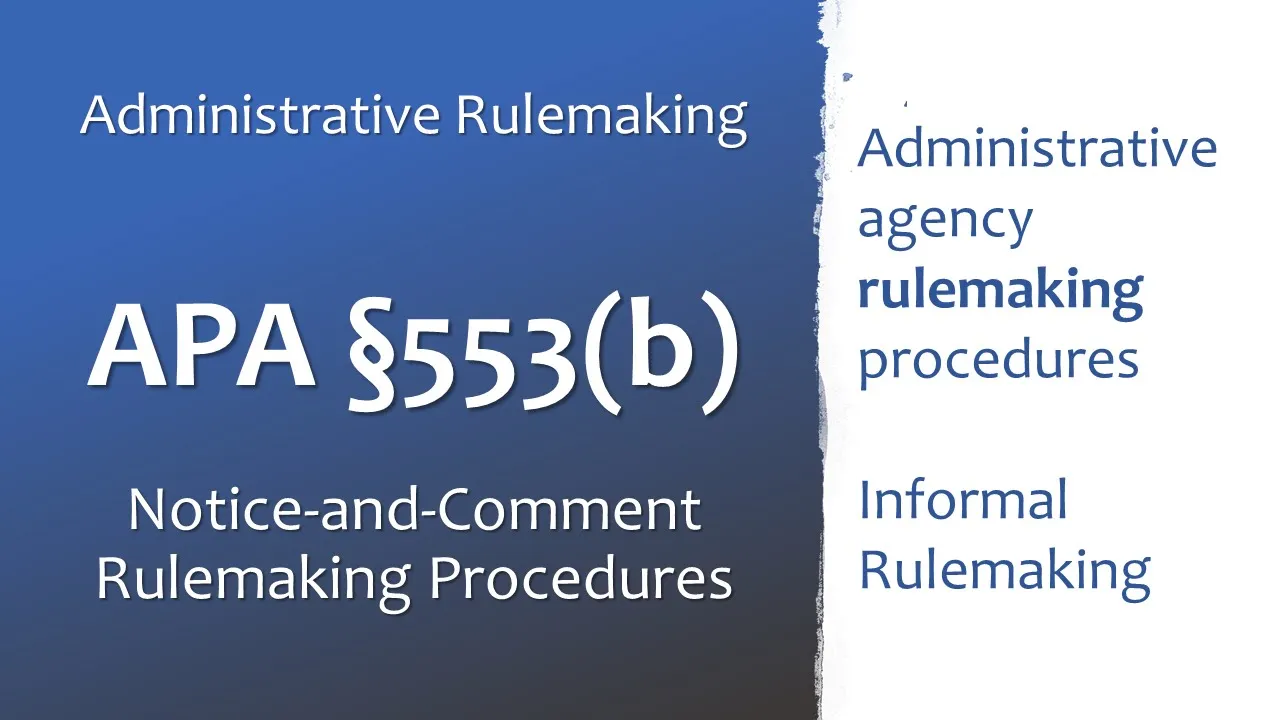
APA §553(b) Notice-and-Comment Rulemaking
4.6K
Under the Administrative Procedure Act §553(b), federal agencies must generally publish notice of proposed rules in the Federal Register and provide opportunities for public comment, but this requirement does not apply to interpretive rules, general statements of policy, or rules of agency organization, procedure, or practice, nor when an agency finds good cause that notice and public procedure would be impracticable, unnecessary, or contrary to the public interest; agencies sometimes strategically characterize new policies as interpretive rules to avoid the notice-and-comment process, which also affects judicial deference standards and review availability.
Click to watch →
Deep Dive
Basic concepts of Cost-Benefit Analysis (CBA) and how it is used to evaluate the economic impact of public policy.
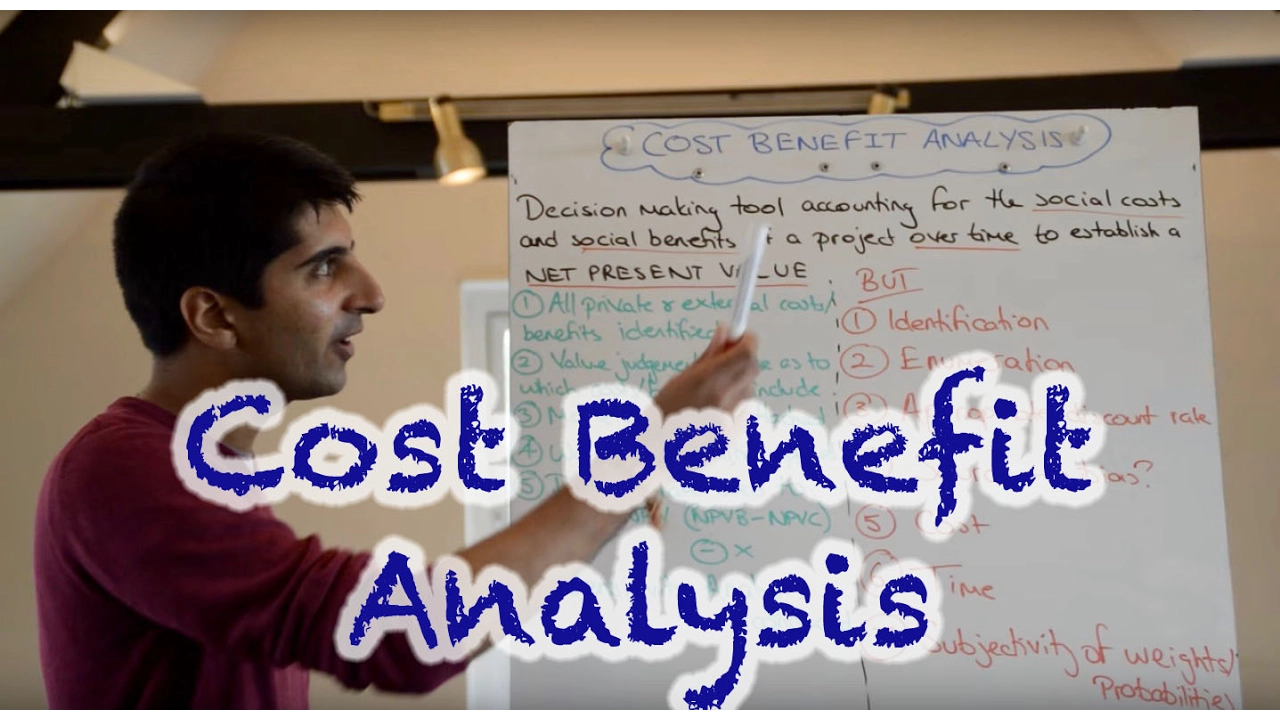
Cost Benefit Analysis (CBA)
115K
Cost-Benefit Analysis (CBA) is a decision-making tool that evaluates projects by accounting for both social costs (private and external) and social benefits (private and external) over time to establish a Net Present Value, helping determine whether allocating public resources to a project is economically efficient—positive NPV indicates more benefits than costs and justifies the investment, while negative NPV suggests allocative inefficiency; the process involves identifying all relevant costs and benefits, making value judgments about what to include, attaching monetary values, weighting by severity and probability, applying a discount rate to future values, and conducting sensitivity analysis to test robustness, though challenges exist in accurately measuring externalities, choosing appropriate discount rates, and avoiding bias in the analysis.
Click to watch →

Merumuskan Kebijakan: Memahami Konsep Dasar Analisis Kebijakan Publik ~ MAPU5301
133
Cost-benefit analysis (CBA) is a fundamental tool used in public policy analysis to evaluate policy alternatives. Since no single policy can satisfy all parties equally, CBA helps decision-makers identify which option provides the lowest cost while delivering the most benefits. This systematic comparison ensures resources are allocated efficiently and policies maximize net positive outcomes for society.
Click to watch →

What Is Cost Benefit Analysis or CBA? How it is Applied in Various Real-Life Situations.
473
Cost-Benefit Analysis (CBA) is a systematic decision-making tool that evaluates whether to proceed with a project or decision by comparing its total costs against its total benefits, following five key steps: identifying the decision, listing all relevant costs and benefits, monetizing them into a common unit (typically money), adjusting for time value of money through present value calculations, and finally comparing total costs versus total benefits to determine viability.
Click to watch →
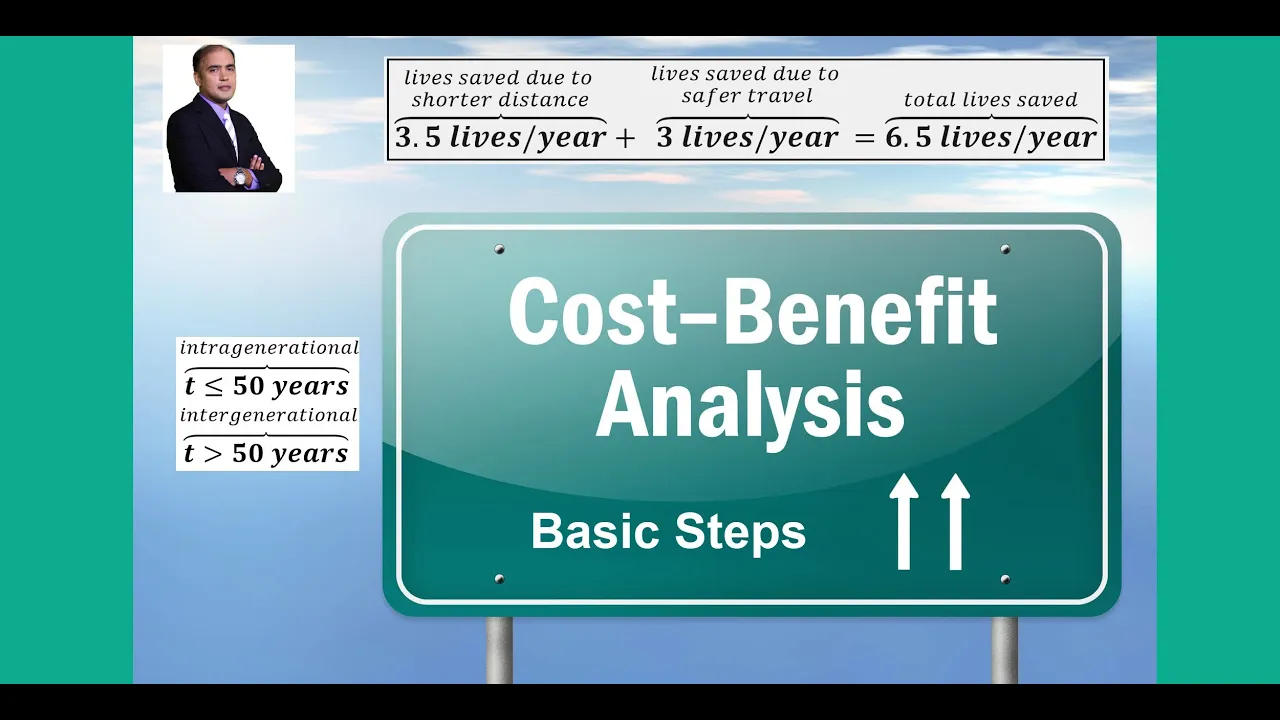
Basic Steps of Cost Benefit Analysis (CBA)
1.5K
Cost-Benefit Analysis (CBA) is a systematic decision-making tool that evaluates projects by comparing their total expected costs against total expected benefits across nine structured steps: (1) Identify all alternative projects by examining multiple dimensions and their possible values; (2) Define whose benefits and costs matter (standing) at appropriate jurisdictional levels; (3) Catalog all impacts and select measurement indicators; (4) Quantify impacts using available data and empirical evidence; (5) Monetize non-monetary impacts using willingness-to-pay principles; (6) Discount future benefits and costs to present value using an appropriate discount rate; (7) Calculate Net Present Value (NPV) for each alternative; (8) Conduct sensitivity analysis to test robustness against uncertainty; (9) Make recommendations based on NPV comparisons. The analysis concludes that while CBA provides efficient resource allocation guidance, final decisions involve political and bureaucratic considerations beyond pure economic analysis.
Click to watch →

Análisis Costo Beneficio
147
Cost-benefit analysis is a systematic methodology used to evaluate the economic viability of public and private projects by comparing their total costs against total benefits, incorporating both private financial analysis and societal welfare contributions to help policymakers identify the most efficient resource allocation and make informed decisions about infrastructure, social programs, and public investments.
Click to watch →
Deep Dive
The concept of the 'administrative state' and how federal agencies derive authority from Congress to draft regulations.

FreightWaves Today | July 2
183
The administrative state is a concept where Congress passes laws that create federal agencies with the power to create laws, draft laws, investigate, enforce, and adjudicate. This was a novel approach 100 years ago, and for over 100 years, people have been fighting it. The Chevron case gave agencies power in ways the founders could never have conceived. The current Supreme Court is deeply skeptical of certain parts of the New Deal and the New American Century.
Click to watch →

Reining In The Administrative State | Intellections
760.4K
The administrative state refers to the collection of federal agencies, regulators, and rule-makers that have grown into a powerful, unelected, and largely unaccountable part of government; this expansion occurred because Congress has ceded legislative power to agencies, courts have given excessive deference to regulatory interpretations, and presidents have accepted broad agency discretion, resulting in regulations created with minimal oversight, transparency, or cost-minimization incentives, which requires Congress to reassert its constitutional authority and judges to be more skeptical of agency interpretations to realign regulatory interests with public welfare.
Click to watch →
Supreme Court UNANIMOUS: Medical Abortion SURVIVES Challenge-- What's Next?! | #ResistanceLive
9K
The Chevron Doctrine is a long-standing legal principle that grants administrative agencies the authority to create regulations implementing congressional statutes. Congress provides agencies with statutory authority and funding, then allows them to develop expert-based rules and regulations using specialized knowledge, panels, review methodologies, and supervisory structures. This doctrine enables the federal government to function effectively by delegating technical decision-making to experts rather than requiring every policy question to be resolved through congressional legislation.
Click to watch →
Can the Government Ban You from Telling the Truth?
706
The administrative state consists of federal agencies (alphabet soup) created by Congress to regulate industries. Beginning with the Interstate Commerce Commission in 1887, it expanded during the Progressive Era, New Deal, and Great Society programs. Two fundamental problems exist: Congress fails to specify agency power limits, and agencies engage in power grabs beyond granted authority. These agencies deprive people of jury trials, counsel, and First Amendment rights while imposing punishments after trials. The system represents a separation of powers crisis where bureaucrats exercise legislative and judicial functions without proper constitutional safeguards.
Click to watch →
Episode 244: How Financial Regulators Have Become a (Progressive) Law Unto Themselves” w/T. Zywicki
148
The administrative state occurs when Congress delegates so much power to administrative agencies that instead of laws coming from Congress, regulations disguised as laws come from agencies like the SEC, Fed, or Commerce Department. This differs from administrative law, which theoretically follows regularized procedures. The modern administrative state has no resemblance to law in any meaningful sense. Regulatory dark matter includes guidance documents, supervision, and 'dear colleague letters' that have binding effects without proper legal procedures. This includes 'regulation by raised eyebrow'—the threat of government action that forces compliance without formal legal requirements. Banks don't challenge regulations because they fear retribution from regulators, even though such retribution would be illegal.
Click to watch →
Prerequisite Knowledge
- Concept 01The structure and function of the U.S. Executive Branch, specifically the role of the Office of Management and Budget (OMB).
- Concept 02The fundamentals of the Administrative Procedure Act (APA) and the informal rulemaking process (notice-and-comment).
- Concept 03Basic concepts of Cost-Benefit Analysis (CBA) and how it is used to evaluate the economic impact of public policy.
- Concept 04The concept of the 'administrative state' and how federal agencies derive authority from Congress to draft regulations.
Subsequent Learning
- Step 01In-depth analysis of Executive Order 12866 and subsequent executive directives that govern modern regulatory planning and review.
- Step 02The role of public participation, lobbying, and 'OIRA meetings' where interest groups attempt to influence pending regulations.
- Step 03Case studies of high-stakes regulatory battles (e.g., environmental or labor standards) where OIRA review played a pivotal role.
- Step 04Comparative regulatory oversight frameworks, examining how international governments and the OECD manage regulatory quality control.
OIRA scope
Inter-agency input
Analysis check
Policy alignment
Independent gap
OIRA scope
0:06Playing Section
- 1
OIRA review covers all executive branch agencies.
- 2
Includes cabinet departments and independent agencies like EPA.
The Democratic Deficit and Regulatory Delay: Criticisms of OIRA Centralization
Critics argue that the OIRA review process acts as a "black box" that undermines democratic governance and delays crucial public protections. Opponents, including environmental, labor, and consumer advocacy groups, contend that OIRA's heavy reliance on cost-benefit analysis inherently undervalues non-monetizable benefits, such as human life, public health, and environmental preservation, while overestimating compliance costs for industries. Furthermore, critics point out that OIRA centralization allows unelected budget officials and corporate lobbyists to weaken or stall rules drafted by agency experts, effectively politicizing what should be scientific and technical decisions. This perspective views OIRA not as a tool for "better regulations," but as an undemocratic bottleneck that prioritizes industry interests over public welfare.
Deep Dive
In-depth analysis of Executive Order 12866 and subsequent executive directives that govern modern regulatory planning and review.

LIVE: Review of ATF's Pistol Brace Final Rule
51.6K
The final rule underwent Executive Order 12866 regulatory planning and review, which directs agencies to assess the costs and benefits of regulatory actions. The Department provided a summary of costs and benefits analysis, including the anticipated cost of $226.9 million annualized and discounted at 7%, taking into account the various options described above and affected parties who can choose from to come into compliance with statutory requirements.
Click to watch →

Webinar: The Future of Better Regulation: A Transatlantic Perspective
502
The U.S. federal system features three branches with checks and balances plus federalism granting states significant authority. Presidents wield substantial unilateral power through executive orders, enabling rapid regulatory shifts. President Biden issued 37 executive orders in his first two months, reversing Trump-era regulations including regulatory budgeting requirements. His memorandum on modernizing regulatory review reaffirmed bipartisan principles from Clinton's Executive Order 12866 and Obama's Executive Order 13563, which have endured for over 25 years despite different presidential approaches. These principles mandate ex-ante impact analysis, quantification of benefits and costs, and ensuring actions do more good than harm. The Office of Information and Regulatory Affairs provides executive oversight, though some Democrats oppose executive regulatory oversight and ex-ante analysis. Circular A-4 provides authoritative guidelines grounded in theory and empirical evidence, requiring peer review and broad public comment for revisions.
Click to watch →
![Welcome & Plenary Session: Regulatory Review Reset? [EBR Conference]](https://i.ytimg.com/vi/HBGfKpDFtP4/maxresdefault.jpg)
Welcome & Plenary Session: Regulatory Review Reset? [EBR Conference]
136
Executive Order 12866, signed by President Clinton on September 30, 1993, replaced Reagan's Executive Order 12291. While Clinton initially assumed he would disband OIRA, he instead revised the executive order. Key changes included making the review more selective (only significant rules, not all regulations), increasing transparency regarding who meets with whom, and making cost-benefit analysis more flexible to include non-monetized and non-quantifiable benefits. Every subsequent administration has modified this document in different ways.
Click to watch →

Project 2025 Private Training Video: Federal Regulatory Process
4.6K
The Office of Information and Regulatory Affairs (OIRA) at OMB plays a crucial role in the regulatory process, with its administrator often called the 'regulatory czar.' OIRA enforces the Paperwork Reduction Act and Executive Order 12866 as augmented by OMB Circular A-4. It reviews drafts of proposed and final regulations, coordinates retrospective reviews under Executive Order 13610, and oversees implementation of government-wide policies in information policy, privacy, and statistical policy areas. Executive Order 12866, originally adopted by President Clinton and most recently amended by President Biden's Executive Order 14094, sets thresholds for significant regulatory action. The Biden order increased the threshold to $200 million, required recognition of distributive impacts and equity, and mandated treating different people's costs differently based on declining marginal utility of income theory. The Paperwork Reduction Act (PRA) of 1980 requires agencies to obtain OMB control numbers, produce burden hour estimates, and get OMB clearance before releasing proposed rules requiring public information provision. The Regulatory Flexibility Act (RFA) of 1980 requires Initial and Final Regulatory Flexibility Analyses assessing effects on small entities (small businesses, governmental jurisdictions, and not-for-profit organizations).
Click to watch →
Unfunded Mandates, Regulatory Burdens and the Role of Office of Information and Regulatory Affairs
640
UMRA from 1995 has a clear relationship to President Reagan's Executive Order 12291 from the early 1980s, which required agencies to analyze the effects of rules in advance and try to reduce burdens and costs. More recently, President Obama issued Executive Order 13563, which reaffirms the requirements of Executive Order 12866 and contains provisions bearing directly on UMRA goals. Executive Order 13563 specifically directs regulations to be based on the open exchange of information and perspectives among state, local, and tribal officials and the public as a whole. The executive order requires that before issuing a notice of proposed rulemaking, agencies must seek the views of those likely to be affected. It also requires agencies to select the least burdensome approaches to minimize cumulative costs, simplify and harmonize overlapping regulations, and identify flexible approaches that maintain freedom of choice for the American public.
Click to watch →
Deep Dive
The role of public participation, lobbying, and 'OIRA meetings' where interest groups attempt to influence pending regulations.

The Administrative Procedure Act at 75
2.7K
Despite APA requirements for public comment, agencies systematically fail to ensure meaningful participation from all affected groups. Empirical evidence shows agencies negotiate rule proposals with industry before publication, and courts have negotiated with litigious groups. Industry groups historically engage 170 times more in informal communications with agencies than public interest groups. OIRA meetings receive five times more industry representatives than public interest representatives. These systemic failures undermine democratic accountability, as the regulatory process becomes dominated by well-resourced interests while frontline communities and vulnerable populations are systematically excluded from meaningful participation in decisions affecting their lives.
Click to watch →

5/4/23 - 12866 OIRA Listening Session Intro
176
12866 meetings are public participation sessions conducted by OIRA when reviewing federal regulations, where any member of the public can request a meeting to provide their views on a rule under review; these meetings are approximately 30-minute listening sessions where participants can express their perspectives on regulations, though they are not substitutes for the formal notice and comment process and are designed to capture public input on regulatory impacts including costs, benefits, and effects on communities.
Click to watch →
Professor Melissa Luttrell | Faculty & Alumni Showcase Series
345
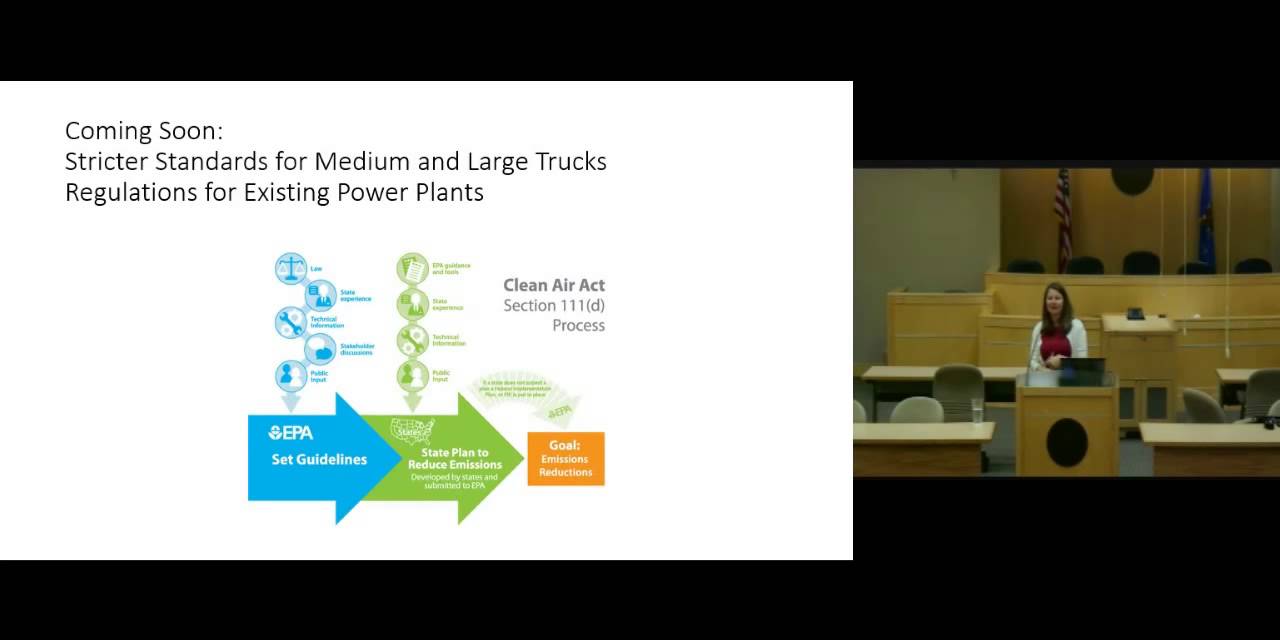
The OIRA review process can be highly political. Under Reagan, OIRA administrators explicitly stated their job was to kill regulations. Lobbying can occur directly to the White House, as happened with the ozone rule update. The process is opaque because meetings with industry are supposed to be docketed and public, but records show gaps. Lobbying through the White House may leave no public record. The speaker argues the process is broken due to understaffing and a mistaken mission. Regulated industry has close relationships with regulators and can meet with desk officers, though public records don't capture all interactions. The speaker suggests that while some people in OIRA genuinely believe they are promoting good policy, the system is fundamentally flawed.
Click to watch →

Independent Agencies and the OIRA Review Process
191
Under Executive Order 12866, any interested member of the public can request a meeting with OIRA about rules under review by visiting whitehouse.gov and submitting a request. These meetings are common, with many rulemakings hosting 10 or more meetings with the public. These meetings serve important roles by educating OIRA about issues implicated in particular rules, pointing OIRA to helpful comments, and potentially significantly changing rules under review. However, since EO 14215, OIRA has hosted only four meetings about independent agency rulemakings, suggesting regulated parties have not yet adapted to engaging effectively with OIRA on these matters.
Click to watch →

House Judiciary Committee Holds Hearing On The Administrative Procedure Act
2.7K
The regulatory system systematically disadvantages public interest groups and frontline communities through structural barriers. EPA records show industry groups engaged in 170 times more informal communications with regulators than public interest organizations before rules were published. OIRA met with five times more industry representatives than public interest advocates between 2001-2011. Courts have negotiated rule proposals with litigious groups, burying public comments under industry submissions. Government entities like FERC and FEMA have established offices of public participation, demonstrating what is possible. Solutions include creating parallel offices across agencies, providing technical assistance to marginalized communities, and ensuring accessible information throughout the regulatory continuum.
Click to watch →
Deep Dive
Case studies of high-stakes regulatory battles (e.g., environmental or labor standards) where OIRA review played a pivotal role.

Reading Project 2025 Outloud (Pages 33-53) 7/13/24
367
OMB's Office of Information and Regulatory Affairs (OIRA) plays an enormous and vital role in reigning in the regulatory state and ensuring that regulations achieve important benefits while imposing minimal burdens on Americans. The president should maintain Executive Order 12866, which is the foundation of OIRA's review of regulatory actions. The administration should also maintain the recent extension of those standards to regulatory actions of the US Department of Treasury. OIRA review should also be required of the historically independent agencies, as the Office of Legal Counsel has found it legally permissible. If the current administration proceeds with its declared intent to modify aspects of EO 12866 or OMB Circular A-4, the related document that provides a foundation for cost-benefit analysis, the next president should immediately begin to undo those changes and develop a rigorous data-driven approach that will result in the least burdensome rules possible. The next president should also review Executive Order 13891.
Click to watch →

Shalanda Young, a possible replacement for Neera Tanden, testifies in front of Senate
6.9K
Senator Merkley raised concerns about OIRA (Office of Information and Regulatory Affairs) being a place where regulations go to suffer and die with no transparency. He cited examples including the mercury air toxics rule, rear view cameras in cars, coal ash regulations, and the vaping rule that allowed illegal products on the market affecting millions of American youth. Young committed to using the presidential memo on improving and modernizing regulatory review to address this perception.
Click to watch →

Reviving Rationality Saving Cost-Benefit Analysis for the Sake of the Environment and Our Health
3.1K
The Office of Information and Regulatory Affairs (OIRA), located in the Office of Management and Budget, was given responsibility for reviewing all major regulatory proposals across the government. When agencies like EPA want to propose new rulemaking, they must send the proposal to OIRA, which reviews it using a cost-benefit standard. Agencies are also required to prepare their own cost-benefit analysis. This created an initial antipathy between progressive protection-oriented groups and OIRA.
Click to watch →

What is the Office on Information and Regulatory Affairs?
20.7K
The Office of Information and Regulatory Affairs (OIRA), established during the Bush administration, is a White House agency that reviews federal regulations to assess their economic justification, having altered approximately 84% of EPA rule submissions; the review process involves extensive stakeholder meetings, with industry representatives and lobbyists participating in approximately 1,764 meetings compared to only 116 for public interest groups, raising concerns about regulatory bias toward business interests over public welfare.
Click to watch →
Project 2025 Private Training Video: Federal Regulatory Process
4.6K
The Office of Information and Regulatory Affairs (OIRA) at OMB plays a crucial role in the regulatory process, with its administrator often called the 'regulatory czar.' OIRA enforces the Paperwork Reduction Act and Executive Order 12866 as augmented by OMB Circular A-4. It reviews drafts of proposed and final regulations, coordinates retrospective reviews under Executive Order 13610, and oversees implementation of government-wide policies in information policy, privacy, and statistical policy areas. Executive Order 12866, originally adopted by President Clinton and most recently amended by President Biden's Executive Order 14094, sets thresholds for significant regulatory action. The Biden order increased the threshold to $200 million, required recognition of distributive impacts and equity, and mandated treating different people's costs differently based on declining marginal utility of income theory. The Paperwork Reduction Act (PRA) of 1980 requires agencies to obtain OMB control numbers, produce burden hour estimates, and get OMB clearance before releasing proposed rules requiring public information provision. The Regulatory Flexibility Act (RFA) of 1980 requires Initial and Final Regulatory Flexibility Analyses assessing effects on small entities (small businesses, governmental jurisdictions, and not-for-profit organizations).
Click to watch →
Deep Dive
Comparative regulatory oversight frameworks, examining how international governments and the OECD manage regulatory quality control.

Webinar: Reforma en materia de eficiencia gubernamental
335
The OECD's Regulatory Policy Outlook 2025 provides standardized metrics for measuring regulatory quality across 38 member countries: (1) The methodology was approved by all member countries, (2) It measures three key tools: public consultation, regulatory impact analysis, and ex-post evaluation, (3) Mexico has historically performed well in these areas, (4) The report provides data from 2023 and can be accessed publicly. This standardized approach allows for meaningful comparison of regulatory quality across countries and helps identify areas for improvement. The OECD uses a bathtub metaphor: the regulatory stock represents accumulated regulations, the tap represents new regulations, and the drain represents evaluation. Effective reform requires both reducing the tap and improving the drain. The proposed reform focuses primarily on the tap but neglects the drain, which may lead to continued accumulation of low-quality regulations.
Click to watch →

ДЕрегуляція. ОЛЕКСІЙ КУЧЕР. Державна регуляторна служба України
1.3K
Regulatory policy serves as a fundamental economic pillar, yet faces accountability challenges. Ukraine's OECD partnership includes bilateral agreements, an office in Kyiv, and active participation in committee sessions, including discussions during the 2022 invasion. Ukraine's regulatory framework includes regulatory impact analysis, though the legal framework is outdated. Approximately 1,600 local regulators operate without accountability for violations. The Verkhovna Rada has excluded itself from regulatory oversight, creating burdens. The State Regulatory Service acts as a business filter, blocking overly complex regulations, though some bodies bypass the Service through transitional provisions. The Service has veto authority, with approximately 20% of acts rejected this year.
Click to watch →

Qualidade Regulatória - III Seminário IDP-PPED sobre Cooperação Regulatória Brasil-OCDE
106
This seminar is part of Brazil's regulatory cooperation policy with the OECD in consumer product safety, hosted by the Brazilian Institute of Education and the Post-Graduation Program in Public Policies at the Institute of Economics, Federal University of Rio de Janeiro. The OECD defines international regulatory cooperation as agreements, formal or informal, voluntary or legally binding, established between countries to promote cooperation in regulatory design, monitoring, enforcement, or exposure management. Brazil's policy is expressed through Decree 10,109 published in 2019, which incorporates the cooperation agreement into the Brazilian legal system. INMETRO (National Institute of Metrology, Quality and Technology) serves as Brazil's national accreditation body and comprehensive regulator covering both product safety and legal metrology. Unlike the US where these functions are split between NIST and CPSC, INMETRO consolidates these responsibilities. The institute operates 52 laboratories and participates in OECD Working Party on Consumer Product Safety, APEC Working Group, and regulatory policy committees. Bilateral cooperation includes long-standing relationships with CPSC, European Union, Germany, Korea, and NIST. Brazil has trade agreements with the EU, Korea, Canada, and Singapore, with the US agreement including an annex on good regulatory practices. A new regulatory framework launched in February 2024 incorporates international cooperation lessons, featuring essential requirements, presumption of conformity on standards, and regulatory impact assessments, with implementation by 2027.
Click to watch →
1.27T Debt Bomb! Mass Job Losses as Carney Liberal Spending BREAKS Canada
89.8K
The government argued that regulatory sandboxes were tools used by OECD countries and G7 nations, and that Canada was catching up with international standards. Critics countered that these sandboxes would allow companies to be exempt from conflict of interest laws, enabling them to receive government contracts despite having conflicts of interest with government officials. The Toronto Star, a non-conservative publication, had also raised concerns about these provisions.
Click to watch →
Conferencia "Calidad Regulatoria y Análisis Regulatorio"
1.8K
Regulatory quality policy is a proven approach from OECD countries that improves the state's capacity to issue quality regulations through continuous, dynamic processes. The framework requires three essential elements: (1) Institutional commitment at the highest level formalized through legal provisions; (2) Institutional structures like regulatory quality committees; (3) Tools including regulatory impact analysis, administrative simplification, public consultation, and regulatory evaluation. The regulatory life cycle—planning, designing, reviewing, executing, enforcing, and evaluating—requires quality standards at each stage with active stakeholder participation. The goal is to produce regulations that are efficient, coherent, simple, and effective in achieving public policy objectives.
Click to watch →
OIRA scope
Inter-agency input
Analysis check
Policy alignment
Independent gap
OIRA scope
0:06- 1
OIRA review covers all executive branch agencies.
- 2
Includes cabinet departments and independent agencies like EPA.
The Democratic Deficit and Regulatory Delay: Criticisms of OIRA Centralization
Critics argue that the OIRA review process acts as a "black box" that undermines democratic governance and delays crucial public protections. Opponents, including environmental, labor, and consumer advocacy groups, contend that OIRA's heavy reliance on cost-benefit analysis inherently undervalues non-monetizable benefits, such as human life, public health, and environmental preservation, while overestimating compliance costs for industries. Furthermore, critics point out that OIRA centralization allows unelected budget officials and corporate lobbyists to weaken or stall rules drafted by agency experts, effectively politicizing what should be scientific and technical decisions. This perspective views OIRA not as a tool for "better regulations," but as an undemocratic bottleneck that prioritizes industry interests over public welfare.
The structure and function of the U.S. Executive Branch, specifically the role of the Office of Management and Budget (OMB).
The fundamentals of the Administrative Procedure Act (APA) and the informal rulemaking process (notice-and-comment).
Basic concepts of Cost-Benefit Analysis (CBA) and how it is used to evaluate the economic impact of public policy.
The concept of the 'administrative state' and how federal agencies derive authority from Congress to draft regulations.
In-depth analysis of Executive Order 12866 and subsequent executive directives that govern modern regulatory planning and review.
The role of public participation, lobbying, and 'OIRA meetings' where interest groups attempt to influence pending regulations.
Case studies of high-stakes regulatory battles (e.g., environmental or labor standards) where OIRA review played a pivotal role.
Comparative regulatory oversight frameworks, examining how international governments and the OECD manage regulatory quality control.
68.5K views27likes2:49@TheFederalistSocietyOriginal Release: 2019-04-09
OIRA review is applied to all the executive branch agencies and that includes both the department, the cabinet agencies, like the Department of Health and Human and Services, but also agencies like the Environmental Protection Agency, which is not part of the cabinet department but is a cabinet level executive branch agency.
And let me just pause a minute to explain what that review looks like.
Partly, it's an inter-agency review.
It's an opportunity for other agencies in the government that may have information or an interest or be affected by one agency's regulation.
It gives them an opportunity to weigh in and that helps make sure that there aren't duplicative or redundant or conflicting regulations.
That doesn't mean we still don't find there are duplications in regulations because there are, but it helps try to reduce that.
So that's one part of the review.
Another part of the review is to make sure that the agency's supporting analysis.
OIRA is a very small staff, but they have expertise in statistics and economics and law and policy analysis and they will review that regulatory impact analysis that agencies have developed.
And then a third part of that review is that OIRA is part of the executive office of the president so it is a career staff that is within this executive office of the president that has a lot of policy officials, political officials.
So the third aspect of that review is ensuring that the regulations meet the president's priority, are consistent with the president's priorities as well as being consistent with the law.
OIRA review does not apply, at least as of yet, to independent regulatory agencies, so the Securities and Exchange Commission for example.
It issues its regulations without going through that inter-agency review process and OIRA review and oversight over the analysis supporting it and scholars have demonstrated that the regulatory impact analysis that the independent agencies conduct when developing their regulations is not as robust as the executive branch agencies, which is what you'd expect because there isn't an entity that is holding them accountable for developing that regulatory analysis.
Up Next

83:19
Presidential Power and the Rule of Law: Legal Showdowns and Constitutional Strains (2025 FRONTLINE Documentary) – An Inside Look at Executive Action, Justice Dept. Politics, and Judicial Checks During Trump's Second Term (Full Documentary Analysis) – PBS FRONTLINE
@frontline
1.4M views•2025-07-16

24:30
BRICS Pay and de-dollarization: A New Financial Order Emerges? | 55 chars
@DannyHaiphongYT
164.6K views•2024-10-22
39:00
Federalism Economics & Policy: Who Decides? Law Lecture
@TheFederalistSociety
33.7K views•2020-04-03
10:19
Explaining the Saudi-Iranian Proxy Conflict in the Middle East
@Vox
18.2M views•2017-07-17
Related Study Plans & Knowledge Roadmaps
Structured learning paths in Political Science
political-science
Economic Statecraft: Sanctions & Chokepoints
01Foundations of Geoeconomics and Economic Statecraft
02The Mechanics of Weaponized Interdependence
03International Sanctions: Types, Implementation, and Efficacy
+ 2 more learning modules
12h5 modules
Explore Roadmap
political-science
Central Bank Independence: Politics & Policy
01Foundations of Central Banking and Monetary Policy
02The Time Inconsistency Problem & Inflation Bias
03The Delegation Model and Designing Independence
+ 2 more learning modules
12h5 modules
Explore Roadmap
political-science
Consociationalism: Power-Sharing & Stability
01Democratic Dilemmas in Divided Societies
02Introduction to Consociational Democracy
03The Four Pillars of Consociational Design
+ 2 more learning modules
12h5 modules
Explore Roadmap
political-science
Rebel Governance: Legitimacy, Economy & State
01Foundations of Rebel Governance and Statehood
02Establishing Political Legitimacy and the Rebel Social Contract
03Wartime Economies and Rebel Resource Management
+ 2 more learning modules
14h5 modules
Explore Roadmap