





















![[LIVE] #AWANITonight | 5 Sept 2024](https://i.ytimg.com/vi/U3JFip2YrnY/maxresdefault.jpg)




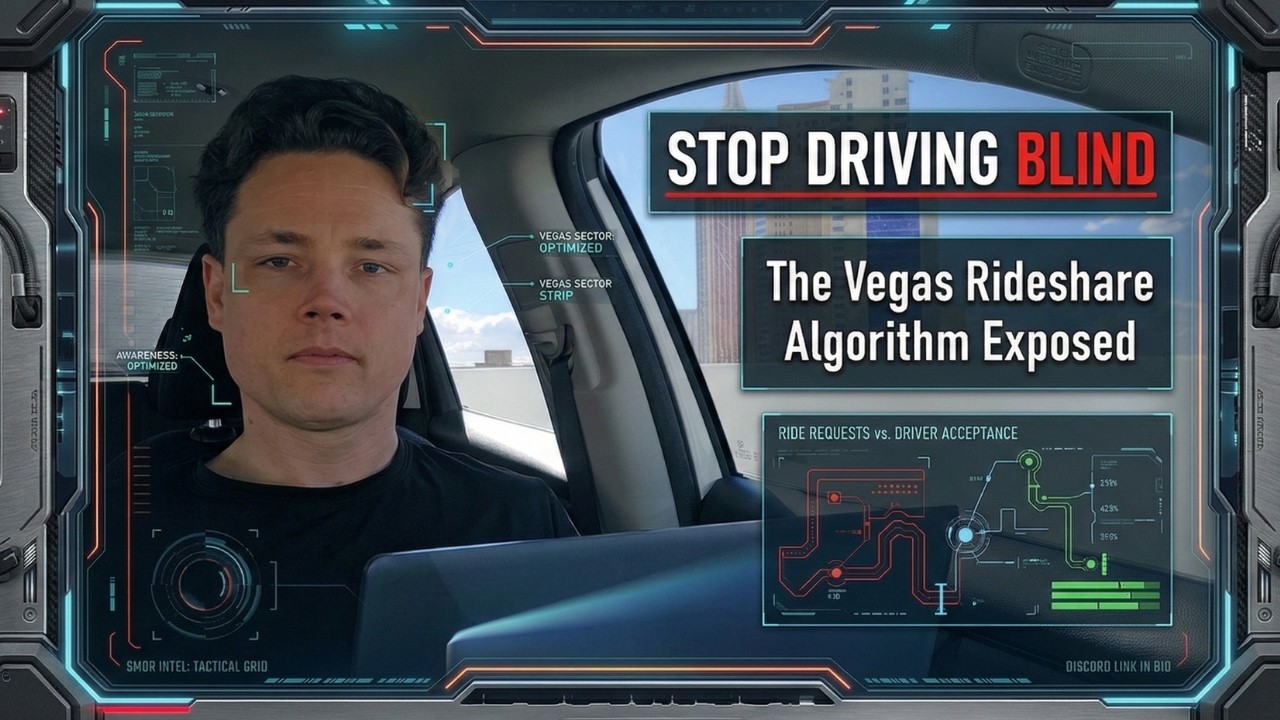
Uber's algorithm uses hidden surge pricing and prioritizes short pickup times to maximize driver profitability, with trips over 8 minutes typically yielding lower hourly earnings; drivers can analyze their ride data using AI tools to identify hidden surges and optimize their driving strategies for better earnings.
Uber Algorithm Analysis: Declining 184 Rides for Data Insights
Added:Basic understanding of the gig economy model and how ride-hailing platforms (like Uber and Lyft) operate.
Fundamentals of dynamic pricing (surge pricing) and how supply and demand affect real-time valuations.
Introductory data analysis concepts, including data collection, sample selection, and identifying variables (e.g., trip distance, time, and payout).
Familiarity with driver-side metrics in ride-hailing apps, such as acceptance rates, cancellation rates, and estimated time to pickup (ETAs).
Algorithmic auditing and reverse-engineering proprietary platform algorithms using empirical data.
Advanced game theory and strategic decision-making models applied to maximize earnings in decentralized labor markets.
Spatial-temporal data analysis and predictive modeling to forecast peak demand zones and pricing surges.
The ethical and regulatory debates surrounding algorithmic management, information asymmetry, and gig worker transparency.
378.6K views10.2Klikes24:01Original Release: 2025-09-16
There were some rides that were $18 and there were some rides that were $54 an hour.
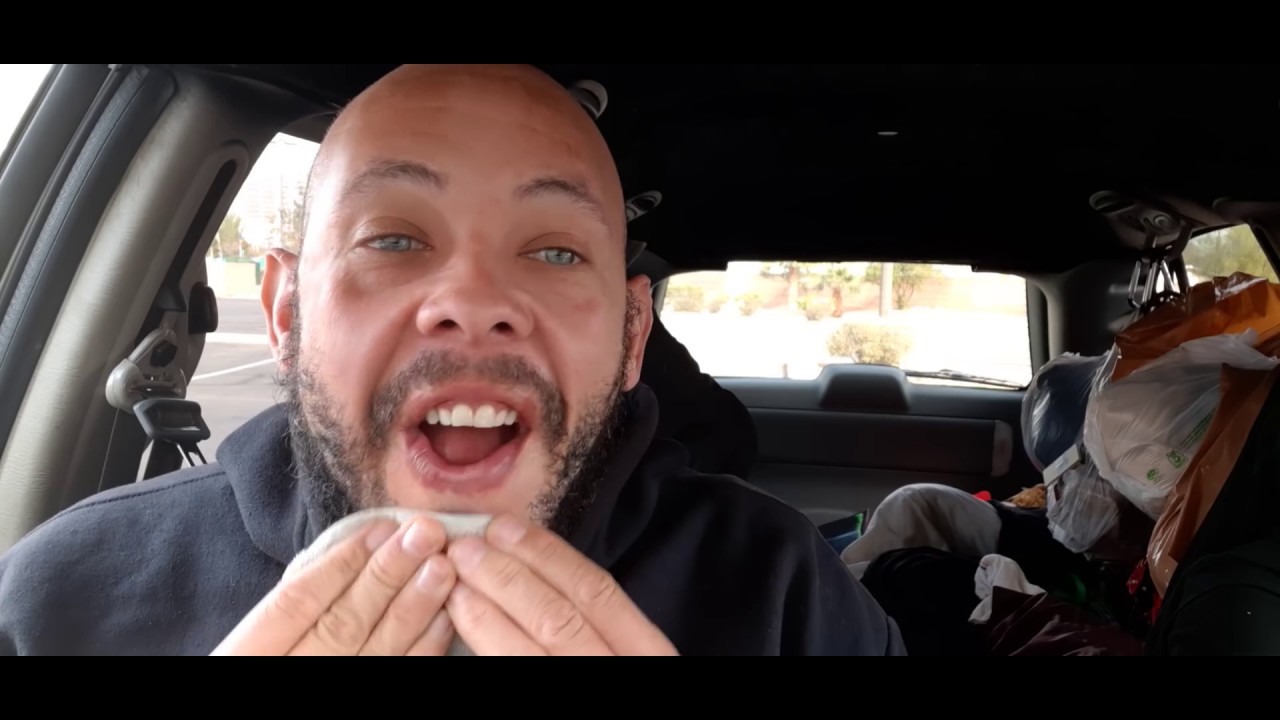
Yesterday, for one hour, I declined 184 consecutive Uber trips in a row. My acceptance rate plummeted and I didn't make a single dollar for one hour. And what I learned about the Uber algorithm might change the way you and I actually drive for Uber. Hi, my name is Levi Spires. I'm an Uber driver here in Syracuse, New York in a Tesla Model Y.
This is the Daily Drive. The Daily Drive is brought to you by Mile IQ. So Uber is basically just a broker, a middleman.
They're not a transportation company.
It's an algorithm crafted by AI designed to trick passengers and drivers so Uber can arbitrage basically our ignorance, charge passengers as much as they possibly can and give drivers as little as possible. And that's how Uber makes money. In this podcast today, we'll talk about that. I'll also give you my ride of the day yesterday and then I'll answer your questions. So, first my ride yesterday, like I said, I I I declined 184 rides in a row. And what had happened was normally Mondays I don't drive as much as I used to, but I got a great reservation from my house um around 6:00 in the morning to the Syracuse airport. It was just a great relaxing, comfortable, beautiful ride in the country. Uh the sunrise was beautiful. It's been amazing weather the last few days and it's going to continue to be amazing weather. So, pink skies, misty fog on the ground, and honestly, I just wanted to show you what it looked like. It was beautiful. And yes, it was a profitable ride. They did tip me.
Thank you so much. Now, let's jump into the heart of this podcast today. Like I said, I took 184 or I declined 184 rides in a row. And what had happened was as soon as I dropped those people off at the airport, um I wanted to catch an Uber ride home. I was hoping to get routed that way. And Uber was just offering me whatever rides. Nothing excited me. I was like, "Ah, decline, decline." And I had Lyft on too, by the way. And and Lyft for 20 minutes didn't even give me a ride. So I ended up turning it off. But um so I kept declining rides and then I thought, "Hey, why don't I just decline all rides for the next hour? Drive up and down 81 and 690. Those are the two highways that kind of intersect through the city of Syracuse." And I did. I drove all the way down to the end of 690. Then I got back on the highway and went back through it again. And I went back through it again. Just back through the city three times basically over the period of an hour. And I wanted to see what rides Uber would give me. And then on top of it, I put all of those rides into a spreadsheet and I analyzed it.
And I actually use Chat GPT, Grock, and Gemini. So three different AI algorithm tools to help me analyze everything.
Let's go through it all. I recommend every single Uber, Lift driver, Door Dasher, any gig worker do this. Um, it's hard to decline a bunch of what were some good rides. I did get some good offers, but the idea is just to analyze, see what the picture is, see what what's happening in your city as rides are coming in, as offers are coming in, whatever they might be. And it's really hard to sit there and decline them. But once you decline probably, let's say even 20, but I did 184, but getting 20.
You could just look at those 20 and without even analyzing them the way that I did in a spreadsheet with chat GPT.
You can just analyze them by looking at them, but you can slow down because now you're not getting rides in the middle or you're not getting offers in the middle of a ride while you're rushed or whatever it might be. So, I thought, you know, my first recommendation is for you to do this because Syracuse isn't your city. When I drove, even if you drive in Syracuse, it was 7 in the morning, but I still think there's compelling data that should influence all of us. So, here are all the rides. Uh, again, I'm not going to go through all of these, but there were basically there was a range of what the rides were. Um, if you can go through these, there was rides that were offering me as little as $18 an hour, and that includes the pickup time and the drop off time. Um, I didn't look at profitability only because each one of us has different costs for our vehicles.
I just wanted to show you what the revenue per minute would be.
And there were some rides that were $18 and there were some rides that were $54 an hour. The question is why was there a 3x swing when there wasn't even a surge on the map? So Uber was going to pay me $50ome dollars an hour for a ride and pay me only $18. Why was there this swing? Let me tell you what chat GBT told me. That the typical trip out of all 184 rides were $10 fairs. They were about 22 minutes. Um about 9 to 10 miles total. So $30 an hour. And I think that's the baseline. I think in the city of Syracuse and and in your city it's going to be different, but in the city of Syracuse, a basic Uber X ride is going to pay me somewhere between 27 to $30 an hour and the I'm going to go about 30 miles an hour. So, if the trip was a 10-minute trip, the mile is going to be five miles. And that's just pretty average for us. So, anything above that is going to be a ride I want to take.
And anything below that would be a ride I want to decline. My dream trip, the best trip that was offered was an Uber X trip. Not even Uber Comfort, not even Uber Priority, just Uber X. Again, without a surge, it was going to pay me $1253 for 14 minutes, 5.3 miles at $54 an hour. The nightmare trip, the worst trip according to Chat GBT, was trip number 64. Um, it was going to pay me $4.88 88 for 16 minutes, 6.5 miles, and $18 an hour. So, I I asked Chat GPT and Grock and Gemini like, "Hey, well, how how does Uber calculate its fairs?" And this is what it says. I'm not sure that I agree with this, but let's see what it says. Says that basically the base rate is going to be $3. Pickup time is going to be 13 cents a minute and 26 cents a mile discounted. So, the pickup is discounted. That's important. The drop off is 20 cents a minute and 46 cents a mile valued higher. I'm not sure. I don't know. There there is a premium of about 1.80 for priority pickups. And you see that right when you when the priority ride comes in, you'll see that premium pickup price typically right there in the app. And then they estimated $130 for comfort. And that here's here's an amazing thing. Trip Radar, where my friend Sergio and we all kind of agree. We thought that where trips go to die, Trip Radar paid.7 cents more an hour than um basic exclusive rides. So, I know a lot of us decline all trip radars thinking that's where bad trips go to die. Trip Radar out of the 184 rides and about half our trip radar paid more. That's an important thing to learn there. So, basically, um, ChachiPT said this. Uber pays less for pickup than for the actual ride. There you go. That's that's going to be so critical. So, here's two things that we've learned so far about by doing this. Number one is that Trip Radar isn't necessarily bad and it may be even better offers. Now, you may not get them. It's it's exclusive. you know, you're going to get, but you shouldn't necessarily just auto decline or ignore trip radar. And the second thing is that the pickup time and distance is going to cost you money.
That's really important. Now, what did I find that was really interesting? I found a couple things. Number one is that Uber is um using things against us.
Twice I was offered a trip from a passenger going from one place to another where there was the passenger wasn't verified and then the second time the trip was offered the passenger was verified. I do not believe in the verification. Now it doesn't matter how much you're going to get paid whether the passenger is verified or not verified but Uber offered that as a solution for driver safety. And I think what's happening is because the verified is a stamp on the offer and you and I might get that trip while we're in motion, we're driving, we might accept that trip thinking that it might have said something else. It's like it's tricking us. It's like, hey, I didn't take it when it was um not verified. So, let me offer it to the to the driver verified. Will the driver take that trip? I don't think passengers are getting verified. And if they are, Uber is not telling us. It's and and I guess it could happen once. Maybe it was a fluke, but it happened twice on the same morning. And I've had other drivers tell me the same thing, that they're getting trips that are offered where the passenger is not verified, then the passenger is verified. I think this is mischievous. Shame on Uber. Um, another thing that I found was that there is a hidden surge. So, there was no surge anywhere on the map yet for whatever reason. Like again, we're talking about those trips. that trip. There was three trips in a spot that just paid me more.
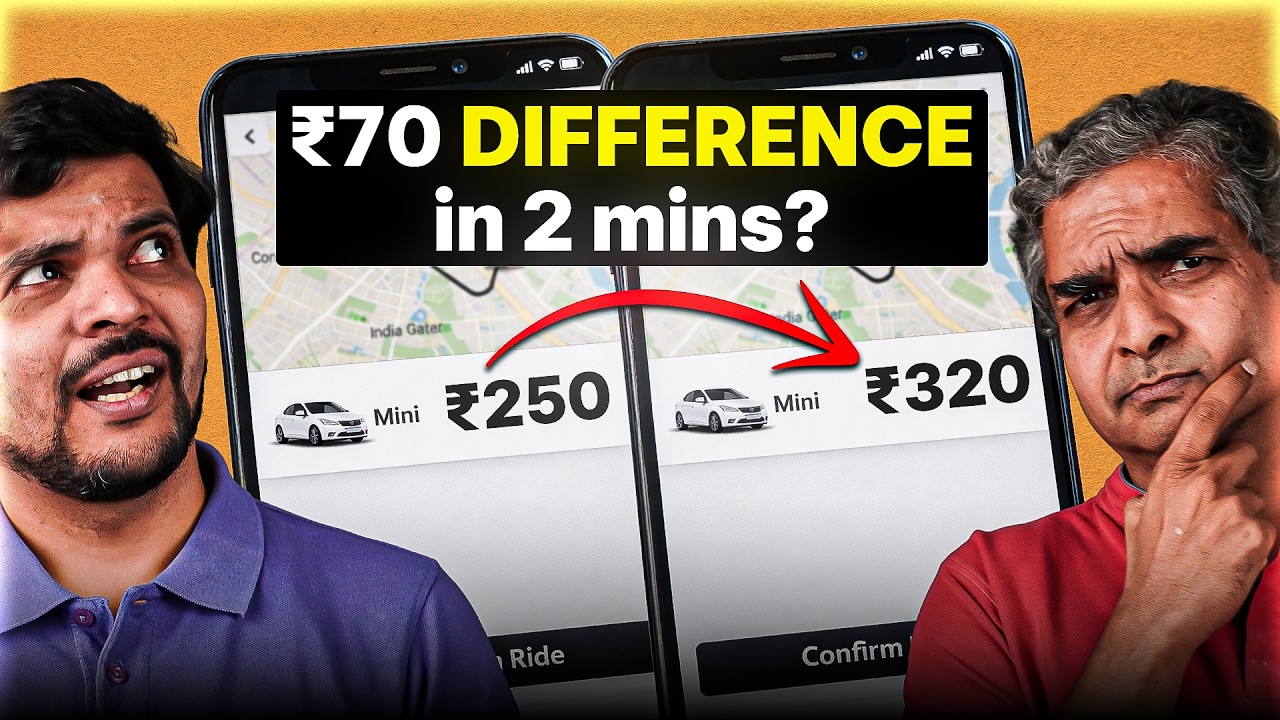
And it was about a 3minut time period between 7:38 and 7:41. Trips that were in this neighborhood. It was basically Mattydale, North Syracuse area. Um, if you're in the Syracuse area, I I put them on the map here. But these trips were just paying more. And I think the reason why is that there was a surge going on there that they were charging the passengers more, but they weren't telling drivers to go there. It's a is a surge on the map. I don't know why Uber does this, but it is. I think what it is is there's a passenger surge and there's a driver surge. I And I'm using this as an antidote, but basically or I think this is what's happening. Uber. Let's say they p charge um let's do some simple calculations here. Let's say they charge the passenger 15, but there's $5 in expenses. I live in New York State, so a lot of taxes and all this kind of stuff, commercial insurance. So, there's $10 remaining that Uber can get profitable for driver and Uber. Uber for the most part wants to split that 5050.
That's why sometimes we're seeing as little as 30% of the fair, right? Okay, so $15 price to the passenger, $5 in expenses, costs, commercial insurance, whatever. Then $10 remaining as profitability, and they're going to split that 50/50. That's that's kind of how that hidden surge works. Because there are times when you and I as drivers, if we're lucky, we'll get a 5, 10, 20. I've seen $30 surges and I get that $30 surge and the passenger goes a mile and maybe the passenger pays again $15. Because I was sitting on a $30 surge, I'm going to make $35 or whatever on that trip. Uber is going to lose money. So Uber is using these pricing things when they offer trips to us as a way to balance their profitability. So sometimes they're going to lose money, sometimes they're going to make money. And same thing is the true as drivers. Sometimes we're going to lose money. Sometimes we're well, we're not going to lose money, but we're not going to make as much money by taking an $18 trip. And sometimes we're going to make a lot of money by taking a a trip with a big surge. And so it kind of balances that way. It's it's a game, right? So, I think that hidden surge is basically where there's probably high demand, but there's high supply and Uber knows that the passengers, it's early in the morning, needs to get need to get to work or whatever, and they're just going to they're going to take advantage of it. They're going to take advantage of the passenger at that moment in time.
So, again, uh proof of that is trip number 96 and 64. um there's just no way that that is uh the case that they should be that variable in price given to the driver other than some sort of hidden surge. Um so here are some patterns that all the apps saw that Uber X priority consistently pays better. So it's totally worth grabbing an Uber X priority if you can. Uh comfort if your car qualifies for that. Uh definitely decent fairs but just avoid long pickups. Reserve. Have you ever gotten a reserve ride as an exclusive? like that passenger ordered a reserved ride but nobody took it so now they're offering it to you. Um I think we all know this but sometimes it can be really really bad. Um I had an one Uber reserve ride and Uber was like don't take this trip or chat GPT was like don't take this trip so don't take those. Um trip radar again slightly higher hourly. Um but again that's pretty amazing um that trip radar paid a little bit more. The most significant factor that um from all this data is that pickup time and distance, long pickups, often resulted in canceled trips. I don't know what that means. I think that was just a typo in there. But um pickup time and distance was by far the biggest factor in determining how profitable and how much money you can make on a potential trip. That's it. The pickup time. If you want to take the most profitable trips, have the shortest pickup times. So, here's what I'm going to look for going forward. Here's what I'm going to do, and then I'm going to give you recommendations for you. Then I'll get into your questions. Um, here's for me. I'm going to park. I'm going to drive to cities, neighborhoods, whether it be Bingington, Ithaca. I've been driving in Oni, Auburn, whatever. I'm going to go to cities and towns and spots where I know where a surge is going to be historically and I'm going to try to maximize that time there. So, I'm going to park at those locations.
I'm not going to chase a surge on the map because the surges are changing every 3 minutes and I can't get to them in time. So, I won't change them because we know there's a real hidden surge.
Also, um I'm going to use reservations to get me to those cities that I'm going to favor. I'm going to focus on short trips where the ride length is longer than the pickup. Does that make any sense? So, if the trip is a five minute trip to drop the passenger off, I don't want to have to drive more than 5 minutes to get to them. And in fact, I'm never going to take a trip ever again that's longer than 8 minute pickup because that's where mathematically speaking, I would always start to make the the least amount of money. Jump on. always take priorities and comforts because they always pay more unless it's longer than an 8minute pickup. And so when I have seven seconds to analyze a trip, this is what the probably the most important thing here for me. Surge, comfort, priority, take them. If you're sitting on a surge, you got it. Take it. Those those three are always profitable.
Pickup time always less than 8 minutes for me. Short trips are always going to be more profitable than longer trips, but longer trips can position you into places you want to be. So, if I want to get to Ithaca, I'll take a less profitable trip to get to Ithaca because I know Ithaca on a Friday night is a good place for me to be. So, there's that. Um, for me, I always believe this.
Uh, again, I've done other videos that are analyzing this. Passengers that are rated less than 4.9 tip a lot less than passengers that are five star. So passenger rating still matters to me.
Tips are where I generate 20% of my revenue for the week. Um I will 100% always try to take passengers that are 4.9 and above. And if it's a fivestar passenger almost always take it. Um destinations are still the best places to be. airports, hotels, um are great hot spots. They really truly are. People that are traveling are tipping and that's just a really good thing. And um yeah, there you go. That's my 7-second rule. So, if I can see a trip that comes in, I'm going to be if it's a priority reservation, whatever. Or not reservation, priority, comfort, um surge, I'm going to try to take those.
Looking at passenger rating, trying to make sure it's not more than 8 minute pickup. Are they going to a place that I want to be? I'm gonna take it. If not, then I'm not gonna take it because there'll be another trip coming in.
There always another trips coming in.
I'm not going to sit parked for 30 minutes without a trip unless I'm using Lift. Lift. Give me more rides. I would love to do Lyft. Um, okay. So, my recommendations to you, the driver, analyze and know your data. You don't have to do this comprehensive thing that I just did. Um, that's kind of my background. I was in economics and accounting. I love this. I love spreadsheets. I spent four hours yesterday doing this. Um, I wouldn't recommend doing a spreadsheet like this, but even sitting parked for 20 minutes, declining whatever trips you can get, and then taking a look at all the trips and just kind of scrolling through them, taking screenshots of them, and scrolling through them, it's going to give you so much insight. You're going to you you are smart enough to see the patterns. Just analyze it. Know your data. Um, find the hidden surge. That's a really hard one. But if you're accepting every trip, it's going to be hard for you to find that hidden surge.
But if you accept a trip, take that passenger, turn the app off, stop accepting trips, wait till you get to the next location, you can start to see what trips are being offered to you and which ones are having the hidden surge.
And you can see that by the revenue to the drop off. That's what you're going to be looking for. And the final thing, probably the most compelling piece of data out of all 184 is that the longer the pickup, the less money you're going to make. That's it. Long pickups, anything over 8 minutes is where the the the fair per hour dropped down into that $20, $18 an hour range. Everything that was a short pickup tended to be the most revenue. Now, that's an it's a law of averages. There are always exceptions.
There are 4.6 6 rated passengers that gave me great tips. We can't we're we're like we're rolling the dice. It's a sad state of affairs, but it is the truth.
Uber and Lift are like gambling to some extent. So, I'm talking about law of averages. The law of large numbers is the correct statistical way to say it.
But for the most part, the shorter the pickup, the shorter the ride, you're going to make more money. The higher rate of the passenger if it's in an airport, whatever. These are all really good things. Um, let's jump into your questions. A thumb with Francisco, I think I said your username correctly, basically said, I'm overthinking it, that Uber is easy. I made a video saying that Uber is the hardest job I've ever had to do. And it is. And it is. Um, and yes, I am overthinking it a little bit.
I have a YouTube channel. I'm trying to create content to help other drivers.
So, I have to overthink it to some extent. But the reason why I think Uber is harder than being an accountant or whatever is that I've got everybody working against me. There is no team Levi. It's basically Uber, Lyft, Door Dash. These apps are working against me.
They're trying to find ways to again leverage my ignorance of whatever is going on. They're they're on they're overseeing power of what they see everything and they're trying to leverage that against me to make as little as money as possible. the passenger is also trying to technically sometimes work against me. They're going to make me wait or they're going to promise me a tip and they're not going to tip me. So, all these things are working against me. Traffic, weather, it's and it's physically demanding to make a lot of money to make, let's say, $2,000 in a week. Almost every driver in every city, no matter what you're driving, is going to have to drive 45, 60, 70 hours. It's hard, physically demanding to sit in a car, sit in traffic at night. Your sleep patterns get disrupted. It's hard work. It's really, really hard. And then you have to be on when the passenger gets in your car. You have to be on ready to try to help them so that way provide the best customer service and to get a tip. I mean, that's what that's where your real money comes in. So, yeah. Yeah, I mean there are ditch diggers. That's physically more demanding. And you know, being a soldier in Iraq or whatever is really freaking hard. Yeah, I get all that. I'm just saying it's not as easy as people make it out to be. And yes, if you don't care about making money and you just want to go out in the middle of the day and just kind of lolly gag around, yeah, whatever. Uber can be pretty easy. But to make good money, it can be pretty hard. That's that's what I was getting at. But yeah, I appreciate it. Thank you for your comment. I I know what you mean and I'm I understand what you're saying. Luke made a comment like, "Oh, you just got your Model Y a year ago." Yes, I got my Model Y in January of 2024. Um, before that, I had a Toyota Avalon for 2 years and then I had a Toyota Prius for 2 years. I think the best car that was most comfortable was definitely the Avalon. I love old man comfy cars that kind of bounce over everything. It's really good. The Prius was probably the best at being the most profitable. It was really, really good.
But the Tesla is the most fun. So, but yeah, I've had it almost what 18, 19 months now. Yeah, that's how long I've had that Tesla done. Yes. Yes. Hi, I'm here in Syracuse and we I'd love to have coffee with you. In fact, if you are an Uber driver here in the city of Syracuse, Ithaca, Bingham 10, sometimes I might actually wave at you on the road. Um, a couple weeks ago, uh, I saw an Uber driver with a Mercedes, um, SUV, like the big one, the GL. Looked really, really good. And I was so jealous. That looked like so comfortable to have a um, an Uber XL, whatever. Now, we don't have Uber Black. We don't have Uber Premium or anything here or Premiere here in Syracuse. You comfort and XL are that's it. I think there's XXL, but if I were to go into the Uber app, I can't order a luxury vehicle. I can order Uber Comfort and I hope that that guy with the Mercedes shows up. But, um, yeah, again, to all my local drivers, I I'll see you out on the road. I'll see you at the airport waiting lot. I try to not make a big scene, but if if I see you, I would love to sit down and chat and have coffee with you anytime. Um, hey, uh, thank you again to the sponsor, Mile IQ.
My fellow drivers, for 2025, I want you to know that you should drive your way.
That you're going to get a lot of advice. Even in this video, I gave you advice. It may or may not be right. You are unique. Your car is unique. Your city, the neighborhoods that you drive in are unique. The times in which you drive are unique. The passengers are unique. The way the algorithms treat you are unique. There is no one way to do this. And all I can tell you is that you should drive your way. Drive the way that makes you happy. That's that's really the best advice I can give you.
Um, hey, my name is Levi. This is the daily drive of Tippy app. I tip you in the app. I'm getting kind of rushed here at the end. I want you to know I want you to be safe, healthy, and happy. I want you to make as much money as you possibly can. And I want you to know that I am cheering for you. Be well.
Bye.
Up Next

7:52
Uber's Gig Economy: Psychological Manipulation of Drivers
@BillWhittleChannel
24.3K views•2017-04-08

12:54
Triumph of Orthodoxy Icon: Byzantine Art & History Explained
@BenCallan
2.1K views•2024-08-06

9:49
FastAPI vs Flask vs Django: Choosing the Right Python Web Framework
@TechWithTim
302.5K views•2024-05-26

1:42
Game of Thrones Opening Credits: A Cinematic Analysis
@gameofthrones
46.3M views•2011-04-18
Related Study Plans & Knowledge Roadmaps
Structured learning paths in General & Interdisciplinary Studies
general-studies
Elevator Engineering: History, Physics & Cities
01From Hoists to Safety Brakes: The Dawn of Vertical Lift
02Hydraulic vs. Traction: The Engineering Physics of Elevators
03Modern Speed, Safety, and Algorithms
+ 2 more learning modules
12h5 modules
Explore Roadmap
general-studies
Rubber: Material Science, History & Geopolitics
01Origins of Natural Rubber & Mesoamerican History
02The Chemistry of Natural Rubber & Vulcanization
03The Geopolitics of the Rubber Boom & Colonization
+ 2 more learning modules
12h5 modules
Explore Roadmap
general-studies
Containerization: Evolution, Logistics & Trade
01Ancient Trade & Bulk Cargo: Amphorae to Barrels
02The Industrial Revolution & Cardboard Packaging
03The Containerization Revolution: Malcom McLean
+ 2 more learning modules
12h5 modules
Explore Roadmap
general-studies
Textile Tech: Evolution, Labor & Global Impact
01Pre-Industrial Textiles: Handloom & Cottage Industry
02Mechanization: The Spinning Jenny to the Power Loom
03The Factory System & Global Labor Transformation
+ 2 more learning modules
10h5 modules
Explore Roadmap