







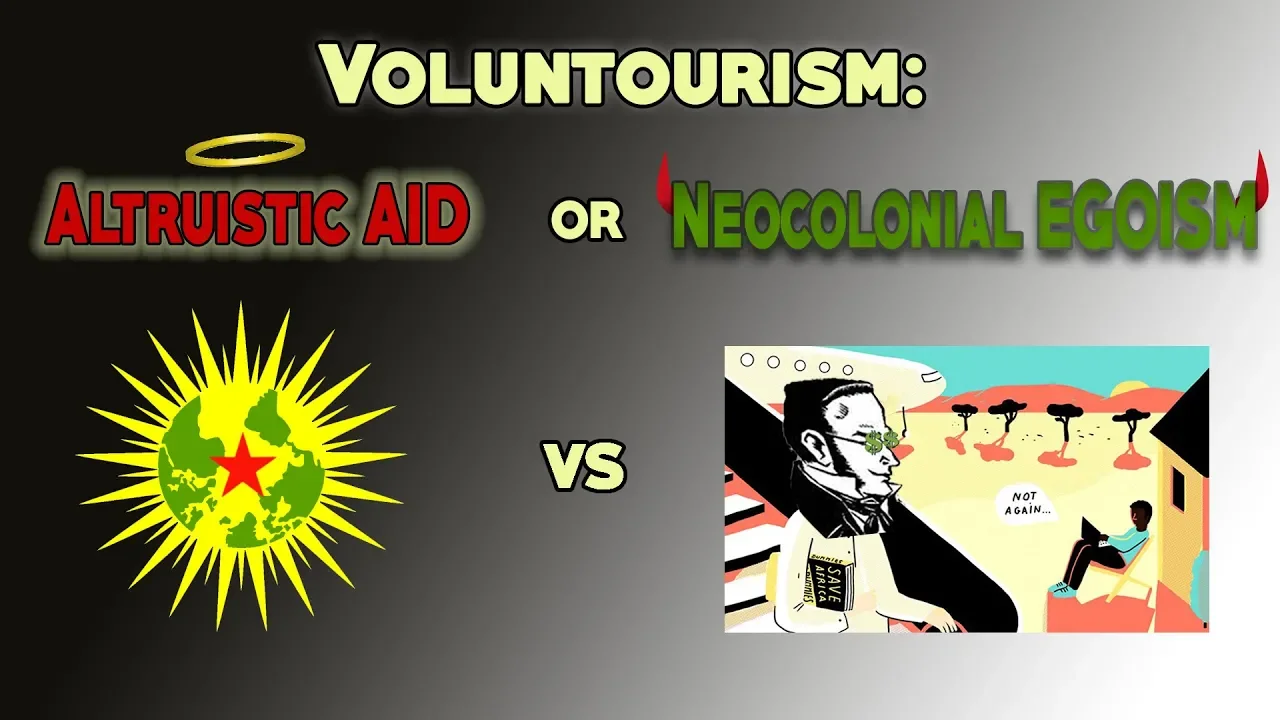







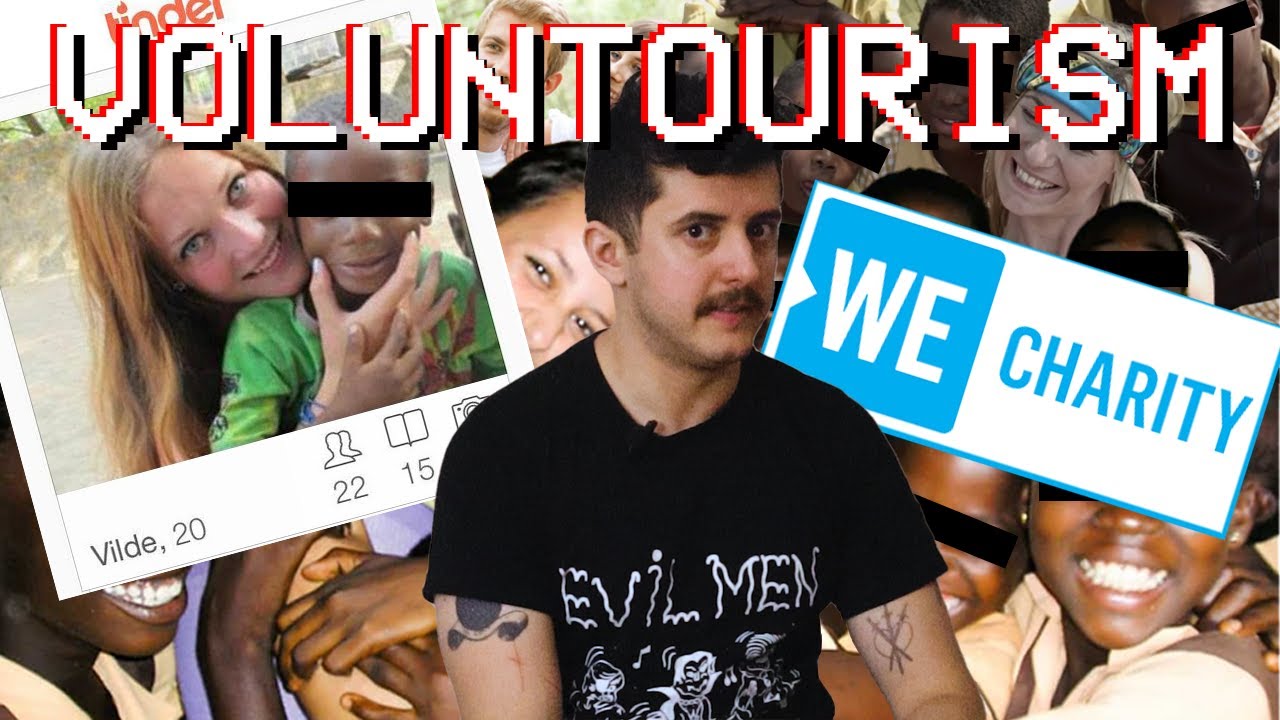
Voluntourism, the intersection of volunteering and tourism where travelers pay to help local communities through activities like teaching or construction, has become a multi-billion pound industry with approximately 1.6 million participants annually, yet it faces significant criticism for potentially causing more harm than good; critics argue that unskilled short-term volunteers often disrupt local economies, take jobs from local workers, create emotional dependency among children who form attachments to transient volunteers, and may actually do more harm than good by undermining local initiatives and sending messages of Western superiority, suggesting that thoughtful alternatives like local volunteering, donating to reputable NGOs, or engaging politically may be more effective ways to contribute positively.
Voluntourism: Harmful Impact or Helpful? A Critical Documentary Analysis
Added:Over the past few years, a new form of tourism has become increasingly popular and evolved into a true international trend.
It seems being a regular tourist, travelling and discovering the world is not enough anymore.
More and more young people now decide to help local communities during their trip, by doing construction work, teaching English or working in orphanages, to name only a few options… This trend is known as voluntourism.
What’s your name? How old are you? Megan Agnew, and I’m 18. Where are you from?
England.
My name is Nikki, I’m from Holland, I’m 23 today.
My name is Jonathan Walton and I’m from Belgium and I’m 22 years old.
My name is Megan Milne, I’m from South Africa, I’m 20 years old.
My name is Max Schaeffer, I am a university student at the University of Wisconsin Madison in the US, I’m 20 years old and volunteering in Vang Vieng.
Volunteers don’t need to have a particular set of skills or to be there for a long period of time But most of the time they are expected to pay in order to participate in the projects.
Do you have a minimum stay for the volunteers?
Yes actually, our minimum is two weeks. But of course, we never close our door.
Some people, visitor or volunteer they also can come for a few days, they can share what they are.
It is estimated that every year 1.6 million people participate in volunteer tourism projects around the world, spending between 800 million to 1.3 billion pounds.
So why did I want to volunteer in the first place? For the same general reasons as everyone, it looks good on the CV; it’s interesting you know… Volunteering is not just helping people. I think it’s also how you connect with the local people, the environment, the people here are very welcoming and it’s something it's something unique that they can see here and that’s why they come here, the whole experience not only helping the students but also the local people, the local things that they can get here that they cannot in their country.
I always wanted to go to this part of Asia, I was unsure about Thailand I’d love to see it but I slightly wanted to see somewhere completely, completely unfamiliar, not many of my friends had been to Cambodia, kind of felt like I wanted to do something a little bit different, to get out, to break away a bit, to get out of normality, speak to new people speak to new people Why do you think they come here the volunteers?
I think they come here because they want to help.
That’s the first impression I get from them, they will want to help.
I’m travelling. Why not see a different part of the world where people are less fortunate?
I always realized that I was fortunate, my parents always brought me up realizing that I was fortunate, that nothing was that easy in life. Every time I say to my mum: “Oh 5 days of work sucks” she’s like “welcome to the real world because this is how it goes”.
So I was brought up this way and I felt like I could do so much more, and I don’t have to give my life to it, and I don’t have to change everything and I don’t have to change the world because I don’t believe, it’s obviously not that easy but I felt like I could definitely give back a little, with my own time and money, compared to not doing anything at all It just feels nice to kind of share something with someone else because being from the first world you have to realise that it’s a minority of the world population and it’s a dice roll that put you there and so it’s kind of your job, you’ve been endowed with more money, you’ve had a better education so why not share it with someone else?
Try and help other people reach that standard?” You think that’s why people volunteer in general?
I have no idea.
I would say that first, it must come from their… compassion, commitment.
They want to contribute something that they have to third world countries, especially to the people and younger generations of this country. And the second one, maybe I’m wrong, they may want to build up their skills or their experience, and then they learn somehow, during their work with us, they learn more about the real life, the culture and that’s a part of knowledge for them to build up for their better, future employment. So this is something that I understand.
Amy and Sarah both work for an educational NGO called Pepy in Cambodia.
They actively discourage unskilled, short term volunteering.
So many of the volunteers who are coming to Cambodia, as one example but all over the world, they are coming with a genuine desire and a genuine belief that they are going to make a difference and more often than not it’s just a difference on themselves or it’s made them feel happy rather than actually making a difference.
And there is some good in that of course, there’s a lot of happy people, but it’s just the long term impact of a conveyor belt of a different teacher every week when it could be one amazing Cambodian teacher that could have received the support from all those international people that have skills to offer to make that one teacher incredible.
In a globalised world where information is so easily accessible, young people are becoming more and more aware of the disparities that exist in the world.
And voluntourism is seen as a good way for them to help those who are less fortunate.
But without any skills and over short periods of time, how much do you truly help?
My experience? It was really nerve wrecking when I first got here. I never had any teaching experience We have to do all this farming and then I asked 'so what's the objective of this farm?'
First of all it’s not very clear, they said we’re going to plant some mangoes because we do this mango jam to support financially our activities of building schools so we’re going to use those mangoes but also, they want to show local farmers how to grow fruit with less waste; but then we asked: ‘why can’t we do it directly at the farms? Why do we have to build a new farm?’ I don’t know, the farming project is a bit weird… I’m going to try to… But as I said they’re very flexible so if I say I don’t want to work at this farm anymore, they’ll say ok”.
At the beginning they sent us on a project to build a well, which was really rewarding at the end but we were far more of a burden on this building than a help, completely.
And that’s when I got really angry because I felt really patronized: “Oh let them dig a well, let them feel like they’re contributing to the world’.
I think the important question is: if you were an unskilled teacher at home in the UK, or France would you be allowed to wade into a school and take over a class for two weeks?
The answer is probably no, it wouldn’t be acceptable to do that. And so why is there this consciousness within the travel industry that it is acceptable to do that in a developing country?
And why do you think?
I paid £2000 For ten weeks.
For accomodation, food and transport But not my flights.
I paid for four weeks 7.5 million Rupiahs, so that’s around 500 euros for four weeks including accommodation and food.
7.5 million rupiahs for a month, you told me the first day I was here, the average salary?
Is 1 million.
Is it justified for you now?
Yes.
We gave a donation to each project that we worked for of a £100.
The motives behind it aren’t humanitarian or charitable, in any way Why don’t you think?
Because I just don’t… I think it’s more of a trip and then let’s throw in some volunteering.
It’s frustrating when you see the amount of money that you hand over… there are 13 of us in one house and yeah we get food and water for £2000 whatever it was you just… you question it quite a lot.
In 2010, one of the major volunteer sending agencies reported to have had an annual turnover of 24 million dollars. Making over 3 million dollars in profits.
It seems selling poverty, and exploiting the good intentions of volunteers is a profitable business On top of taking advantage of the good will of volunteers, voluntourism trips can also be at risk of doing more harm than good: disturbing local economies, taking jobs away from local people, disturbing the growth and development of children who get emotionally attached to the volunteers… Do you think volunteers can also have a negative impact?
I can see that being an issue. I don’t know what you can do to solve it other than not volunteer, but I think they also do good work.
A lot of young volunteers come and do construction work which you can just pay local people to do or they do English teaching but a lot of the time rather than training local teachers, which would be hard in two weeks anyway it’s direct classroom interaction which, when you have different volunteers coming in on two weeks cycles is kind of disruptive for the students. I’m not sure how much they actually learn?
I know there’s also problems with bad organisations where volunteers can come and feed into a bad organisation. I know there are some in Thailand that exploit children that you have to watch out for and orphanages that would take things away from children when volunteers come in the hope that people would give back. It’s something you have to watch out for.
We were very aware of other things that were taking place within Cambodia.
Exposing children to adults who you don’t know anything about and putting them in dangerous situations and thankfully we never had that situation within our organisation but we absolutely didn’t want to be at risk of that kind of thing I wanted to really be in contact with children, that’s why I decided to come here.
You create such a bond with the children and I’m sure every volunteer does, but your bond feels so special and unique with them. It must be terrible for them, also because they do, they get attached to the volunteers and to their teachers and then the volunteer just leaves and they get a new person Cho is a Cambodian tour guide for Pepy Tours and he has met a lot of short-term volunteers during his work If they are coming and doing with the wrong organisation, they will end up teaching English, they have a week or two weeks, they might end up just doing the same as the other people have done 20, 30 times already, the same kind of activities and the “head, knees and toes” and all of that. It’s not a bad thing but if you are the kids who study or stay or live in that orphanage or that organisation then what’s the point?
It’s a really rewarding task because the kids are so nice and at the end they’re always really respectful, they say hello and thank you very much and they really like you but you should be there for longer… the task should be more consistent, so you get to know more the kids… For I think three weeks there’s been a different volunteer every week so we’ve done the same thing all over again and it’s difficult to come and assess the English level of the kids.
All the white people who stay here are volunteers. So the village knows, when they see white people they know they belong here and the kids all know you, so when I go out to the supermarket, and the kids come out of school you hear your name like 20 times, and that’s amazing because they learn to appreciate you, you see how much they value you. So they love us I think as volunteers also depending on how you are with them, and that’s nice, it makes you feel appreciated.
Volunteering is such an odd oxymora between selfishness and selflessness. It’s hard to understand in yourself. You want to give but at the same time you drive so much personally from that giving I think it’s quite a tricky issue.
Why do you think you do it?
It’s such a tricky question, because I sometimes question myself as well, not in that I don’t enjoy it but sometimes you kind of look at yourself and you think: “am I just doing this to make myself better?" whatever upbringing you may have had Recently, critics have been stronger and stronger towards this type of volunteering with people raising awareness about the dangers of poorly arranged voluntourism trips.
Ruth Taylor is one of them Sending planeloads of 18 year olds who are unskilled and unqualified into a host community, you are potentially putting a burden on that community, not giving them support for local initiatives And you’ve got to ask yourself what the assumption is. And the assumption is, unfortunately that we’re Western, we’re well educated, we’re usually white.
Why the hell would we be better at doing development than those communities?
And why definitely, would we be better as an 18 year old who’s never done this before, who’s potentially, never ever volunteered in their lives?
Do you think you’re making an impact by coming here?
I’d like to think so.
I can’t say for certain that it’s more or less than what anyone else could have done but I’d like to think I do.
Voluntourism trips are often described as being another form of colonialism or a very patronising form of help.
It is also blamed for spreading clichés and preconceived ideas about poverty.
The discrimination level here is insane, especially in places like these where there’s not a lot of white people. You’re white: you have money. They don’t know how much but they think you have all the money in the world. They have no idea of how much money we have, they know it’s more than what they have, they think it’s never ending as well.
I think there’s a danger with this kind of trend of unskilled, young usually volunteers coming and building something or teaching in a class… The message that that sends out to the local community is: “ we’re more capable than you”.
Even though actually you’re probably not You're telling people that they should be dependent on you And why do you think, because that's fair enough if they want to help... I think most people want to help but why come all this way? Why come to Cambodia?
I think a lot of people believe that Cambodia is in extreme poverty. Again, that's based on my opinions And when you go somewhere very extreme or poor, then it makes you feel, not make you feel but you want to be a part of it, you want this country to be better, like the other countries, like the rest of the world.
But for me I grew up here and I live here, I study here, I work here… Sometimes I feel uncomfortable with some of the organisations or orphanages, viewing Cambodia and generalizing that we need this, we need that, we need this thing and that we need that thing to make us this way or to make us that way… Really? Is it how you view Cambodia?
A lot of these kind of travel companies really, that are selling like save the world vacations put a lot of time, energy and resources into creating media that send out a very clear message of like : ‘you can have a positive impact, you can save a child’s life’, A lot of it is actively encouraging people people not to think critically.
We do send young, inexperienced, unskilled people to nations in the global South to do ‘development’. Whereas development is, arguably, the most complicated sector in the world It seems weird when you think about it right?
I wouldn’t do it in this way again. Really? I feel like it’s very manufactured.
I really enjoy the projects, I love teaching, being around the kids and contributing in that way, but sometimes you feel almost patronised, like, let’s take these 10 posh kids from England, make them feel like they’re doing something good for the world, they’ll go back home, faff around at university and maybe get an OK job.
The fact that so many people want to help is exciting.
But voluntourism might not be the way to go.
There are right ways to volunteer, good programs and good organisations however you should research carefully before you decide to go. It’s easy to become a victim of this market where your good intentions will be exploited for money and it is crucial to think critically before engaging yourself in this kind of programs.
There are also other ways to help: being an engaged citizen at home, reading the news, being aware of what is going on in the world, signing petitions, lobbying, voting, donating money to NGOs, or volunteering on a regular basis at home.
These alternatives might not be as glamorous or glorifying as a two-week voluntourism trip in an exotic country, but they might have more impact and be less at risk of doing more harm than good
Up Next
Cambodia Tourism: A Journey Through History, Culture, and Ethical Challenges
@GoPro
182.7K views•2017-10-23

Triumph of Orthodoxy Icon: Byzantine Art & History Explained
@BenCallan
2.1K views•2024-08-06

FastAPI vs Flask vs Django: Choosing the Right Python Web Framework
@TechWithTim
302.5K views•2024-05-26

Game of Thrones Opening Credits: A Cinematic Analysis
@gameofthrones
46.3M views•2011-04-18
Related Study Plans & Knowledge Roadmaps
Structured learning paths in General & Interdisciplinary Studies