

![ECO401 FINAL TERM PREPARATION[LECTURE 23 TO 38]](https://i.ytimg.com/vi/aMUCs5QRFIM/sddefault.jpg)















![윤 대통령 경제정책의 근원! [선택할 자유] | 이광수 대표 , 류동민 교수 | 알릴레오 북's 시즌5 2회](https://i.ytimg.com/vi_webp/mKHke3sOYOA/maxresdefault.webp)


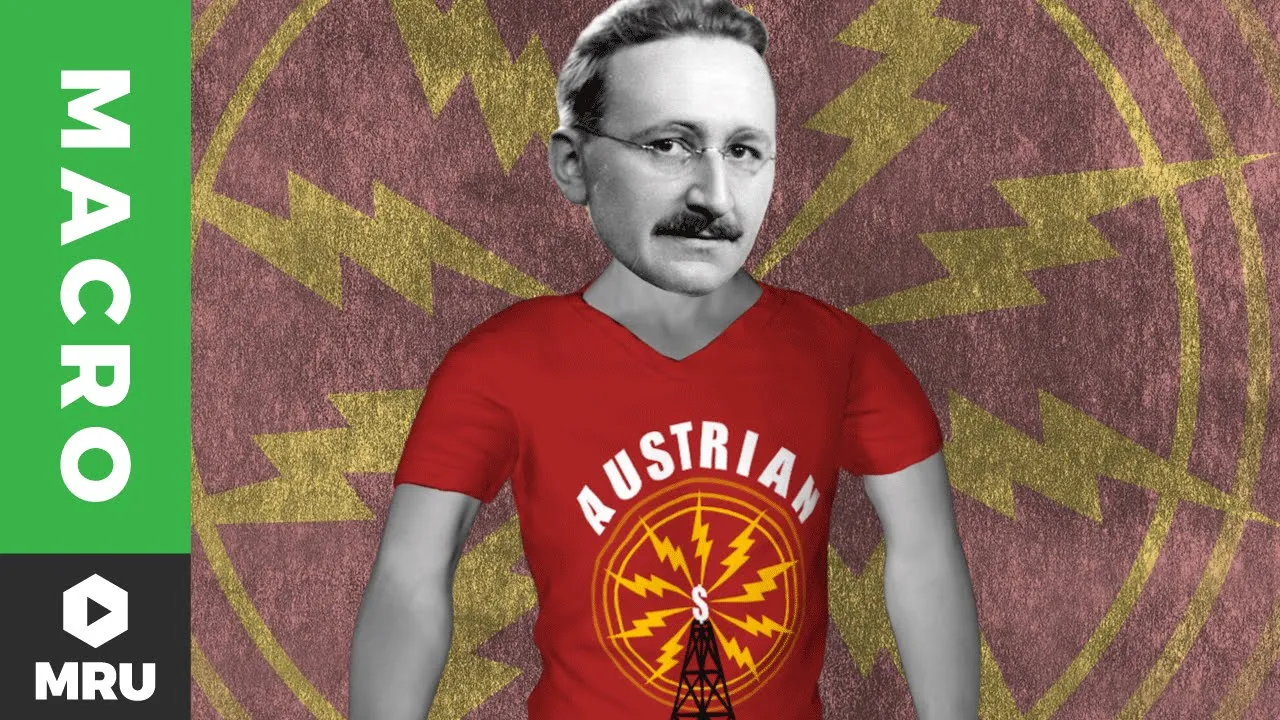


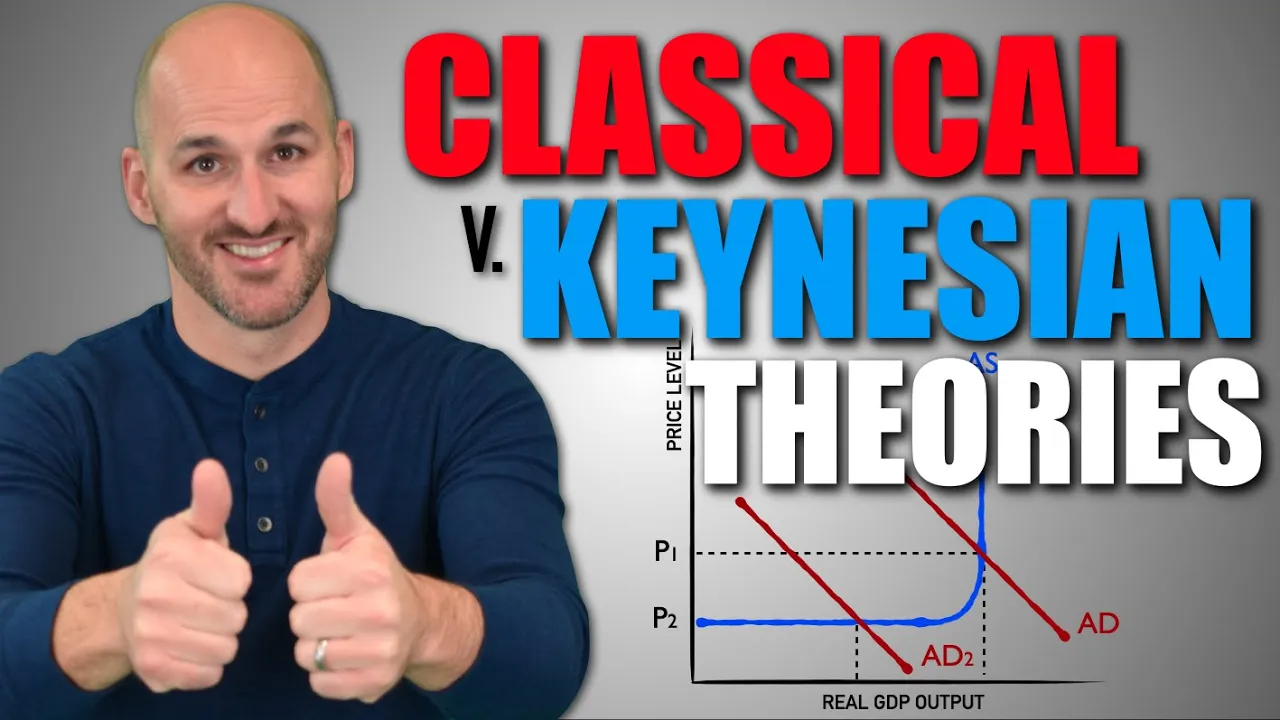
This video presents a hip-hop debate between Keynesian and Austrian economic perspectives on government intervention during recessions. Keynes argues that government spending stimulates demand, creates jobs, and helps economies recover from downturns, using World War II as evidence that wartime spending ended the Great Depression. Hayek counters that government intervention creates moral hazard, distorts market signals, and that the economy is an organic system that self-corrects best through free markets. The debate centers on whether economic recovery should come from top-down government stimulus or bottom-up market mechanisms.
Keynes vs Hayek: The Fiscal Policy Debate | Economics Rap
Added:Basic understanding of fiscal policy, specifically how government spending and taxation are used to influence the economy.
The concept of Aggregate Demand and how economic downturns, such as recessions, impact employment and production.
The historical context of the Great Depression, which served as the primary catalyst for modern macroeconomic debate.
The fundamental philosophical distinction between free-market capitalism (laissez-faire) and state-interventionist economic models.
Analysis of real-world economic crises, such as the 2008 Great Recession and the COVID-19 pandemic, to see how Keynesian and Hayekian policies were applied in practice.
An exploration of Monetarism and Milton Friedman's critiques of both Keynesian fiscal policy and Austrian business cycle theory.
The phenomenon of 1970s stagflation, which historically challenged Keynesian dominance and led to a resurgence of market-oriented policies.
A deep dive into the Austrian Business Cycle Theory (ABCT) regarding how central bank manipulation of interest rates can lead to malinvestment.
110.8K views2.2Klikes10:10Original Release: 2011-04-30
I'm watching you lord lord kaines wow it's it it it's it's such an honor indeed sir please just go just go right on [Music] through whoa whoa identification please Heek nope haek like um High explosives high high explosives we have a 1066 HQ I repeat we have a 1066 copy that Mike a 1066 that was just an example of how to pronounce my ladies and gentlemen members of the committee we are here today to consider the impact of government spending on our economy we're fortunate to have two world-renowned economists to offer their testimony on a matter I see it took a detour down the road to surom talk about the end of La Fair she well Shake It Off ready I'm not pulling any punches in there I'm ready are you prep prepare for the return of the master John Maynard KES fa H round two round 2.0 same Economist same beliefs new microphones new mustaches here we are peace out Great Recession thanks to me as you see we're not in a depression recovery the knee if you follow my lesson Lord can's here I come line up for the procession we brought out the shovels and we're still in a ditch and still digging don't you think it's time for a switch from that Hair of the Dog Friend the party is over the long run is here it's time to get sober are you kidding my cure works perfectly fine have a look the Great Recession ended back in ' 09 I deserve credit things would have been worse all the estimates prove it I'll quote chapter and verse econometricians they're ever so biased are they doing real science or confirming their bias their Keynesian models are tidy and neat but that top- down approach is a fatal conceit which way should we choose more bottom up or more tuck down the Fight Continues ging High ex second round it's time to win more from the to or from the ground let's listen to the great down we could have done better had we only spent more too bad that only happens when there's a World War you can carp all you want about stats and regression do you deny World War II cut short the depression wow one data point and you're jumping for joy the last time I checked Wars only destroy there was no multiplier consumption just shrank as we use scarce resources for every new tank pretty perverse to call that Prosperity ration meat ration butter a life of austerity when that war spending ended your France cried disaster yet the economy thrived and grew faster faster f f you two only see what you want to see the spending on war clearly Goose GDP unemployment was over almost down to zero that's why I'm the master that's why I'm the hero creating employment's a straightforward craft when the nation's at War and there's a draft if every worker was staffed in the Army and Fleet we'd have full employment and nothing to eat nothing to eat nothing to eat nothing to eat which way should we choose most bottom up more down the fight contines G in high ex second round it's time to win we from the to or from the ground let's listen to the B High it going down jobs are a means not the ends in themselves people work to live better to put food on the shelves real growth means production of what people people demand that's entrepreneurship not your central plan my solution is simple and easy to handle it's spending that matters why is that such a scandal money slashes through the pipes and the sloes revitalizing the economy's juices it's just like an engine that stalled and gone dark to bring it to life we need a quick spark spending's the life blood that gets the flow going where it goes doesn't matter just get spending CL you see slack in some sectors as a general blood but some sectors are healthy only some in are run so spending's not free that's the heart of the matter too much is wasted as cronies get fatter the econom is not a car there's no engine to stall no expert can fix it there's no it at all the economy is us we don't need a mechanic put away the wrenches the economy's organic which way should we choose B them up M down the Fight Continues gon High ex second round it's time to win walk from the to or from the ground let's listen to the b s High it going down what would you do to help those unemployed this is the question you seem to avoid when we're in a mess would you have us just wait doing nothing until markets equilibrate I don't want to do nothing there's plenty to do the question I Ponder is who plans for whom do I PL for myself or leave it to you I want Plans by the many not by the few let's not repeat what created our troubles I want real growth not a series of bubbles stop bailing out losers let prices work if we don't try to steer them they won't go berserk come on are you kidding don't Wall Street gyration challenge a worldview of self-regulation even you must admit that the lesson we've learned is more oversight's needed or else will get burned oversight the government's long been in bed with those Wall Street execs and the firms that they've LED capitalism is about profit and loss you bail at the losers there's no end of a cost the lesson I've learned it's how little we know the world is complex not some circular flow the economy is not a classic can master in college to think otherwise is the pretense of [Music] knowledge down the Fight Continues gon High ex second round it's time to win or from the to or from the crow let's listen to the High going you get on your high horse and you're Off to the Races I look at the world on a Case by case basis when people are suffering I'll roll up my sleeves and do what I can to cure our disease the future's uncertain our outlooks are frail that's why free markets are so prone to fail in a volatile world we need more discretion so State intervention can counter depression people aren't Chessmen you move on a board at your whim their dreams and desires ignored with political incentives Discretions a joke those dials are twisting just mirrors and smoke we need stable rules and real market prices so Prosperity emerges and cut short the crisis give us a chance so we can discover the most valuable ways to serve one [Music] another which way should we choose BT up more down the Fight Continues G in high ex second round it's time to W from the to or from the ground let's listen to the Bri [Applause] down which way should we choose most bottom up for more top the Fight Continues K and I ex second round it's time to win more from the top or from the ground let's listen to the great [Applause] down come get your EC [Music] stor Make some noise St yo CH say what say [Music] what I don't need to be subjective but this my Austrian perspective down yo where you at shout out to [Music] [Music] oh [Music]
Up Next

102:36
Overlapping Generations Model: Full Lecture on Macro Basics
@WirtschaftstheorieMakro
25.1K views•2018-12-08
5:07
Impact of Yuan in Indo-Russian Trade Amid Sanctions
@WION
261.9K views•2022-07-01
10:33
Behavioral Economics Explained: Rationality, Nudges, and Risk
@crashcourse
1.1M views•2016-03-12

113:18
The Age of Easy Money: Fed & Inflation | Full Documentary
@frontline
21.2M views•2023-03-15
Related Study Plans & Knowledge Roadmaps
Structured learning paths in Economics
economics
Sovereign Debt: Defaults, IMF & Restructuring
01Introduction to Sovereign Debt & Government Bonds
02Debt Sustainability & Credit Ratings
03Anatomy and History of Debt Crises
+ 2 more learning modules
12h5 modules
Explore Roadmap
economics
Market Design: Matching Theory & Gale-Shapley
01Introduction to Market Design and Price-Free Markets
02Two-Sided Matching & The Gale-Shapley Algorithm
03School Choice Systems and Mechanism Design
+ 2 more learning modules
10h5 modules
Explore Roadmap
economics
Impossible Trinity: Forex, Capital & Policy
01Introduction to Monetary Policy and Central Banking
02Exchange Rates and International Capital Flows
03The Mundell-Fleming Model
+ 2 more learning modules
8h5 modules
Explore Roadmap
economics
Healthcare Economics: Market Failures & Systems
01Introduction to Healthcare Markets and Market Failure
02Asymmetric Information and Adverse Selection
03Moral Hazard and Insurance Design
+ 2 more learning modules
12h5 modules
Explore Roadmap