









![[ASMR] Teaching You Biochemistry On My iPad ✨🧪🧬(background rain 🌧️ sounds)](https://i.ytimg.com/vi/ksKlzZvRq1M/sddefault.jpg)





![Fluorescence Lifetime Imaging Microscopy [FLIM] - Overview](https://i.ytimg.com/vi/u175Ua2WCns/sddefault.jpg)








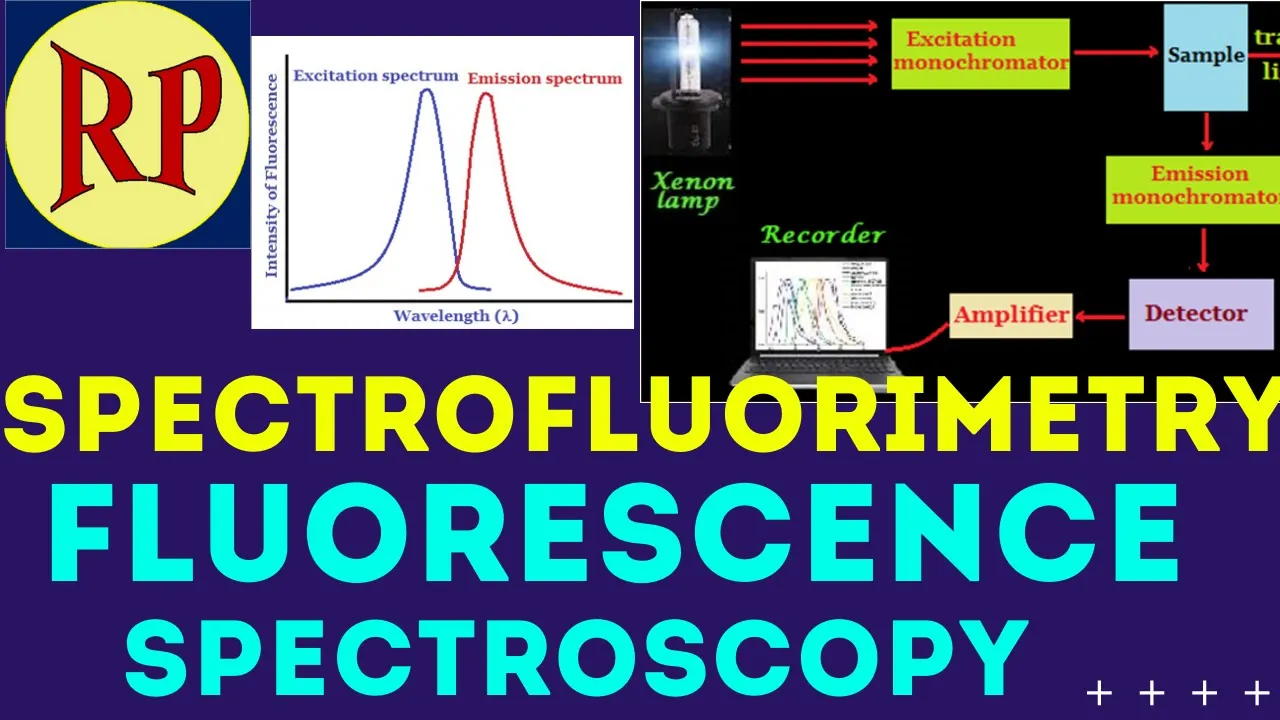

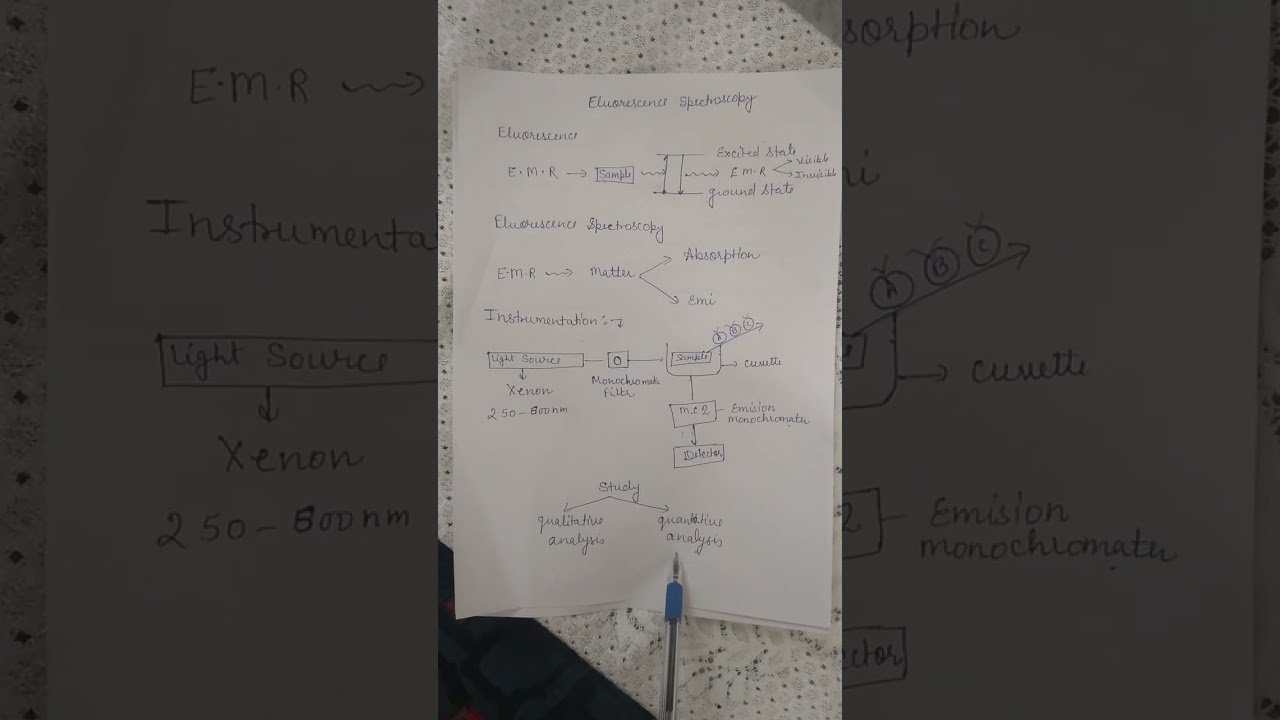
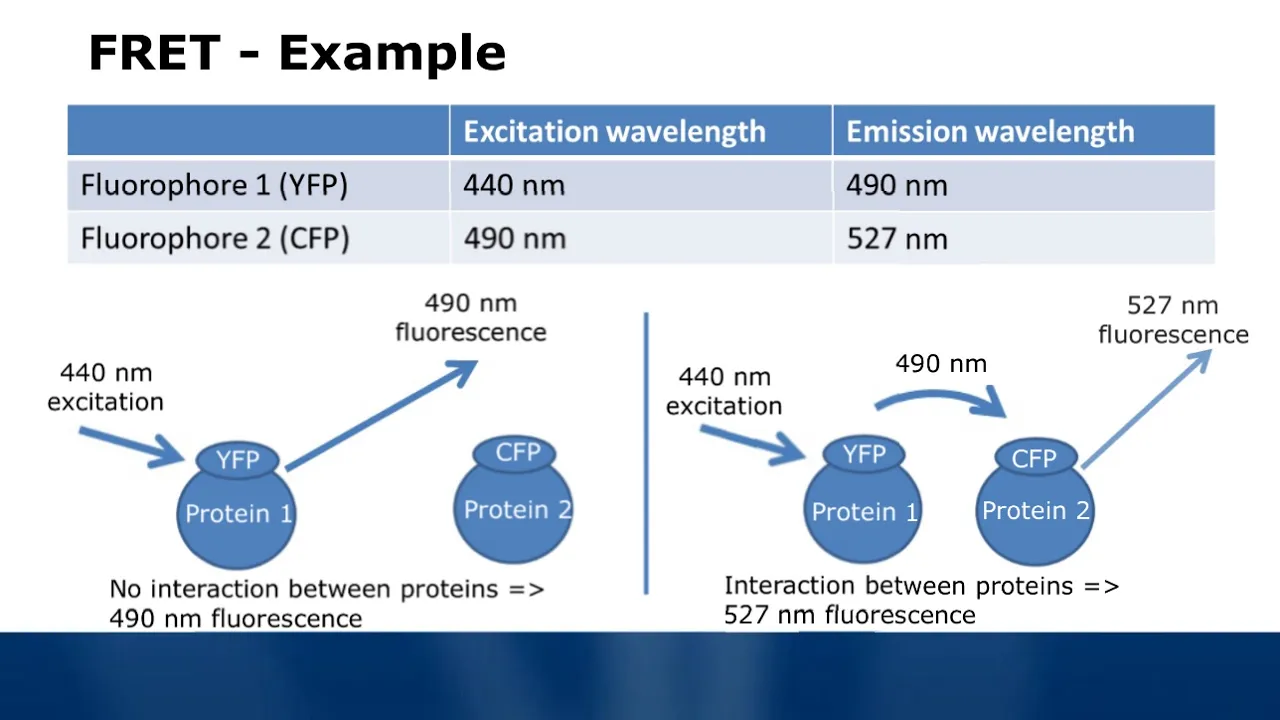
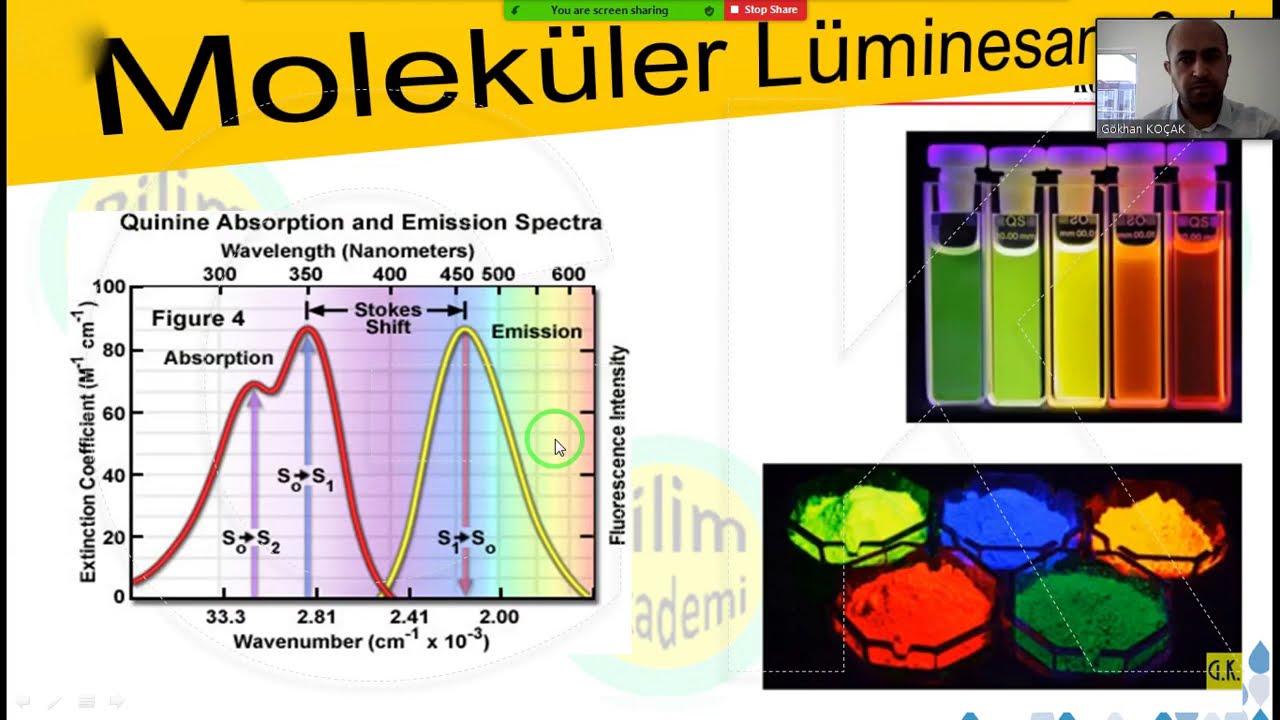
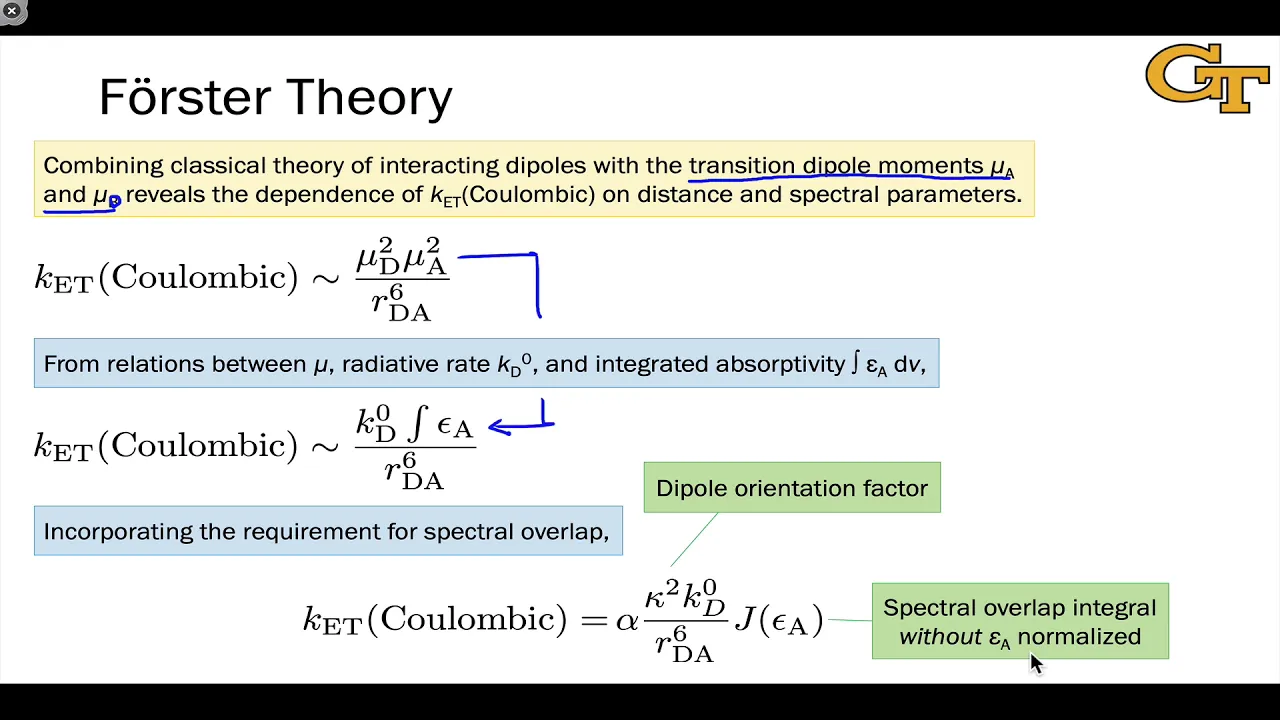
Fluorescence is a radiative de-excitation process where molecules return from an excited singlet state (S₁) to the ground state (S₀), emitting light at longer wavelengths than absorbed due to rapid vibrational relaxation (~10⁻¹² s) occurring before fluorescence emission (~10⁻⁹ s), creating the Stokes shift; the fluorescence lifetime (τ) is determined by the sum of radiative (k_r) and non-radiative (k_nr) rate constants (τ = 1/(k_r + k_nr)), while the fluorescence quantum yield (φ_f) equals k_r/(k_r + k_nr), and environmental factors such as solvent polarity, viscosity, temperature, and molecular rigidity significantly affect fluorescence properties, with tryptophan being the primary intrinsic fluorophore in proteins whose spectral characteristics reveal conformational changes during folding/unfolding processes.
Understanding Fluorescence: Jablonski Diagrams, Lifetimes, and Quenching Effects
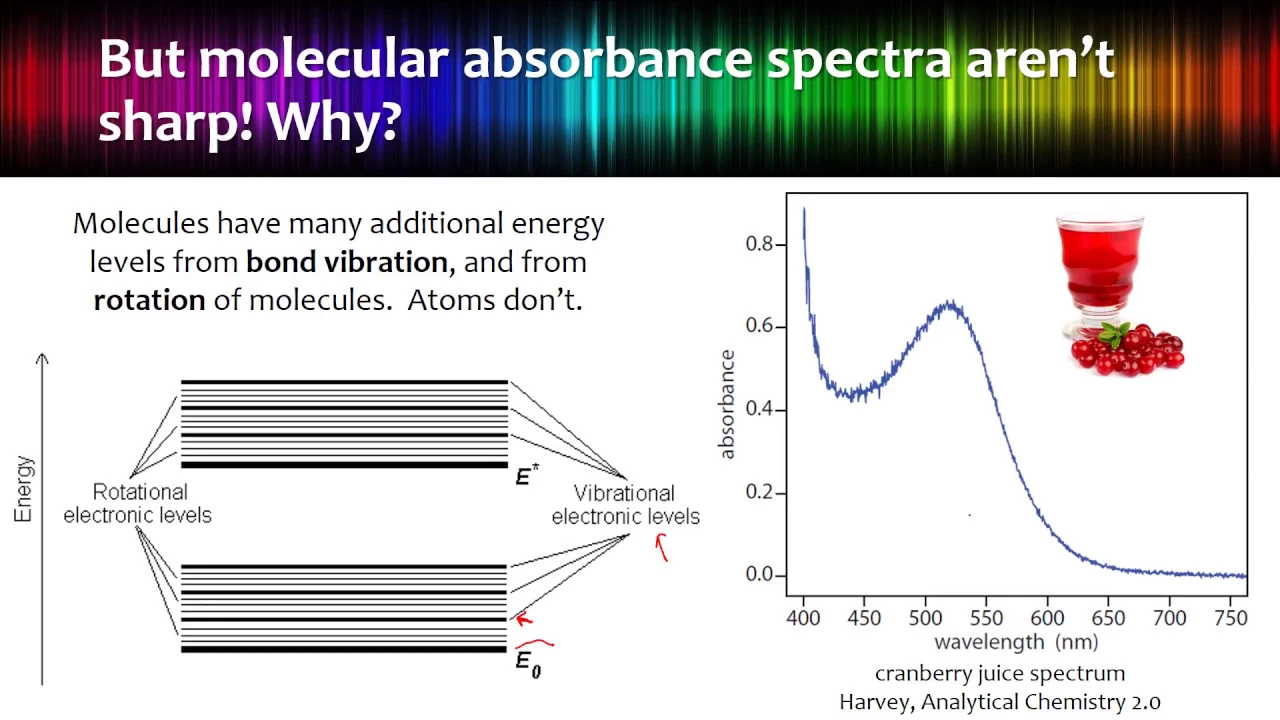
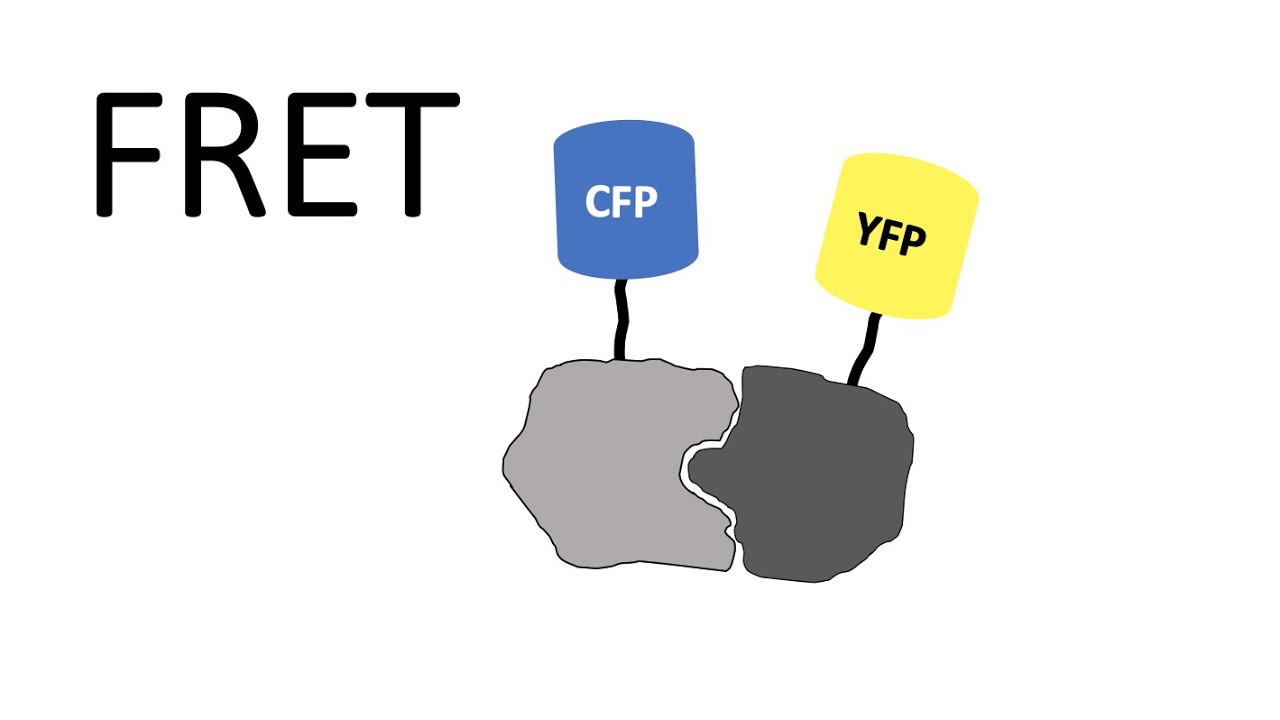
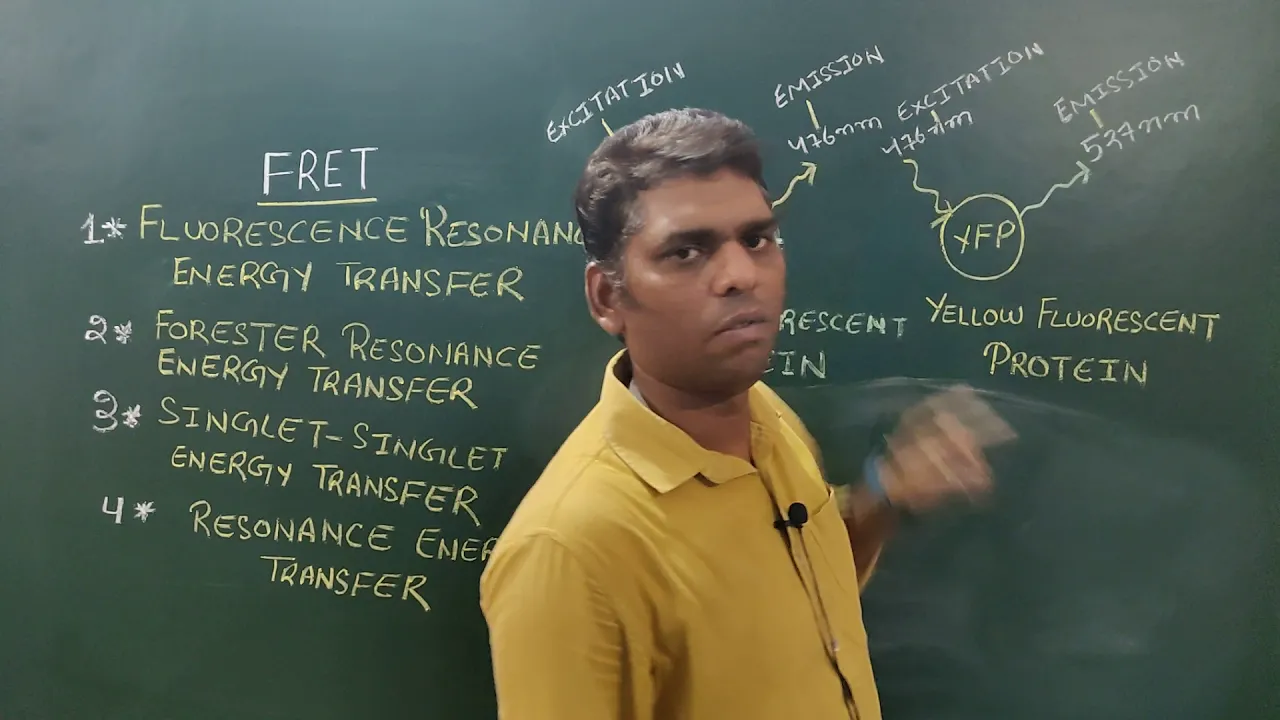
Added:[Music] so let's carry on with our discussion on fluorescence last class we started looking at the jablonski diagram in some details right we talked about obviously we have talked about absorption before fluorescence we started talking about fluorescence and before going to fluorescence we talked about some of these non radiative d excitation pathways right like internal conversion in the system crossing vibrational relaxation all these things right now just before i go forward i will make a point and then come back to it later so the point is if you would remember that the vibration relaxation occurs in a time scale of 10 to minus 12 seconds right now that is much faster than a normal fluorescence lifetime and i will show you ah just based on a very simple ah expression the fluorescence lifetime is in the order of nanoseconds or so on average right that means turn the minus nine seconds so you can understand that the vibrational relaxation would be happening much faster than a fluorescence process would be happening that means the fluorescence de-excitation so then what would happen is if you would just consider two states s zero and s one right not even s two i am not considering s two right now so if you would excite to a higher vibrational level of s one what will happen is even before even before your fluorescence is happening what is happening your vibration relaxation is happening when vibrational relaxation happens vibrational relaxation is occurring within the vibrational manifold of the excited state s1 right so how far will it relax it will relax to a point where it is v is equal to zero of the excited state s one so think about it you have made some transitions like this to vibration levels right of the higher excited state s one but when the transitions are coming from s 1 to s 0 in most of the cases because of this time difference what you are having is or the time scale difference what you are having is they are coming from v is equal to 0 to different vibration states in s 0. so you can understand a small ah thing the small thing is initially it was taken from v is equal to zero in the ground state to vibration manifold in the excited state reverse case it is happening from v is equal to zero in the excited state to the vibration manifold in the ground state but this because v is equal to zero is less i mean v because v is equal to zero has a lower energy than the excited v is equal to one v is equal to two v is equal to the ah s one manifold or the existed manifold then what is happening is you can see that you have already lost some energy right because you have lost some energy what has happened is losing energy means you are going towards a higher wavelength isn't it the moment you have lost some energy now you can understand if this was the absorption and this is where your fluorescence is happening so you always have a gap in between your absorption band and your fluorescence band and that gap is referred to as what it is referred to as a stroke shift you know that's what ah stroke shift generally refers to right it's the gap between the absorption band and the fluorescence band okay so this can be explained based on the jab landscape diagram so that's what we just did right now i thought i would just mention this and come back to this again because we are on this diagram now then we moved forward and we talked ah started talking about the lifetime and we even ah we even came across or even derived some expression so the expression last time we derived was we started from ah something like this so last class we started some from something like this right it was a i said it was a delta function excitation delta function means it is a very fast excitation that's essentially what you mean by that right and then from coming from laser pulse and this is how decay is occurring k r plus k n r these are the two broadly defined ah you know general rate constants now remember when we are talking about k n r when we are talking about k n r then what i can write is which i did not write yesterday here i can write that k n r is the sum of the rate constant of all your non radiant pathways right all your non rare pathways so just to make the point i can write this as k i c plus k i s c plus whatever else you have so k i c is the rate constant for what internal conversion k i s is a rate constant for what indus system crossing and so on if you have any other de-excitation pathway which does not read or which does not lead to fluorescence or radiative transition then they are clamped in k n r ok then they are clamped in k n r now ah we we went on with this derivation and finally we came to an expression like this so this expression look like this ah number five where the decay would be happening according to this exponential relation and tau is given by one by k r plus k n r okay so this is your fluorescence lifetime and this essentially tells you the time it takes to go to one by e of its original fluorescence intensity ok so fluorescence like exponential ah relaxation time in this case is the one by e the time it takes to reach one by e of its original fluorescence intensity that is the one it started with at t is equal to zero right okay so this was ah tau for us and then and then what we also said was we define another parameter called phi f which is the fluorescence quantum wheel and we say that five is you know k r over k r plus k n r okay which is essentially the number of photons emitted over the number of photons absorbed ok and this is a very important criterion or parameter if you would be choosing a die or if you were choosing a fluorophore for anything this is something you will have to have the information about you have to have it in your hands before you can go ahead and do an experiment because this is ah one single parameter which is possibly of utmost importance or the most important sort of fluorophore right now let us you know move forward from here so what i will write down is if you remember this tau the way we defined tau was one by k r plus k r right but there was also another tau we defined before do you remember so that tau was tau radiative which is essentially tau r what was it equal to one by was it a two one where a was your spontaneous emission coefficient so that was the tau radiative ok no similar dimension here right so then what i can write is then what what i can write is k r is equal to one by tau radiative ok k r that means k radiative is equal to one by tau radiative k r being the rate constant for the derivative process now this can be further written like this ok now remember what was a to one when we considered eight to one we said it is a spontaneous emission from excited state two to excited state one but see that time we were starting our discussion on spectroscopy and we did not consider any other levels what we said was only state one and state two but now you know you know even if you have electronic state one electronic state two within that state you will be having many vibration levels right so then when you are talking about a when we are talking about a it should not only be two one what it means is it should also be from the respective vibrational levels of excited state two to respective vibration levels of excited state one so then what we should envelop or we should have is the envelope of all the transitions that is happening from the exterior state to the ground state right so then what you do is you do a summation that means your summation of all rate constants you have so the way you write this very simple you take a summation over what so this is a and remember we just described or we just discussed that because vibration relaxation is much faster than your fluorescence then most of the emissions would be taking place from what the v is equal to zero state of your upper exterior state which is s one so what i can write is if a is a spontaneous emission coefficient i can write it is coming from upper state to lower state so i can write u which is the upper electronic state u then i write zero what does this zero mean that means the zero vibration level of the upper electronic state right and then you are going to lower state right the lower electronic state but in this electronic state you can have a series of vibration levels then you write m ok so you can see what is the parameter which is ah now varying for you or the summation is over what m because u and l are just upper and lower states zero is defined for you ok and this is what it stands out to be so are you clear about this expression so essentially what it means is it is a spontaneous emission coefficient of whatever transition you have from your ground vibrational state in the upper electronic state to the vibrational manifold of your low electronic state right ok now this this is proportional to now also remember this if you are talking about spontaneous emission whatever emission is going to happen it is going to depend finally on the vibrational overlap integral remember that frank or an overlap so if we have the way we define fan current overlap if it was the probability of a transition happening as say absorption fluorescence is essentially also the same thing right just the reverse of that so then in this case also that one should play a role that means your a should be having a relation or should be in a certain way proportional to that transition probability or transition moment so then what you can write is there is a proportional relationship we will not look at that what we will just write is that this is proportional to psi l then mu psi u square ok just with the small change if you would have remembered the way we had written this transition moment integral for absorption for absorption we were going from the ground state to the upper state right that means the lower state to upper state so your operator was acting on what the lower state so in that case what we had is what we had the mu and the extreme right we had what psi lower and then we had psi apple because it was going to circle but now you are talking about the reverse process so what do we have is you have mu then the extreme right it is operating on what psi upper and after that it is going to psi load which is coming here right so this is the way it is normally represented now you can understand why it is the way it is represented is the final state comes before then the operator then initial state right now initial state for absorption is a ground state for ex ah you know d excitation or the other way emission is your upper state okay and the the reason this happens is because say for adsorption if you take the example of absorption only after your operator operates on the ground still do you go to the excited state and you know the operator acts on what not to the left but to the right of it and that is the reason why you maintain this ah you know arrangement rather this sequence in the integral ok so this is how it is maintained if you if people are talking about transition mount integrals in spectroscopy please stick to this you will not get wrong if you revert it its not nothing is going to happen right but its just that it is good to go by the fundamentals so that means you understand how the process is happening right so again you can see that this this is proportional to this square and if you remember that frank condon overlapped the square was the frank cordon factor and that determines the intensity of the transitions the same thing is going to happen here okay so that was one and the next thing is will not derive it but i will just give you another relation so what i can write is the tau radiative it can be derived from whatever we have is generally or approximately can be written as 10 to the minus 4 by epsilon okay and this is max so let ah not writing any equation numbers but if i write this to be one this to be two this to be three then i can write this to be four so what it is telling you is that the radiative lifetime can be approximately calculated as by this ratio which is ten to the minus four over epsilon max epsilon max is what epsilon max is the maximum extension coefficient to have for a given molecule right now this is for you just to estimate even before you do something if you know the epsilon what the fluorescence lifetime might be i am not saying that it will be this because remember this is tau radiated you always have competing pathways what do you have you have the non variety transitions and you never measure tower radiative what you measure is actually the tau which is equal to one by k r plus k n r because non very transitions are always there to a certain extent depending upon experimental conditions depending upon the molecule depending upon your solvent conditions right ok but anyway just to have the flavor of it because i said that vibrational relaxation happens in the minus twelve seconds ah this one happens ah sorry the fluorescence happens in order to minus nine seconds so you can see if if epsilon max lambda says ten to the power minus five mole inverse centimeter inverse ok if thats what it is then you can see the tau radiative would be equal to what sorry this would be ten to the power plus five make it plus five this should be ten to the power nine minus nine seconds so one nanosecond ok so this is just an approximate ah i mean this is ballpark idea you know this can be derived let me tell you this can be derived okay we are not just going to the derivation the based on certain equations this can be derived and that is how you know that a fluorescence lifetime is typically in the order of a nanosecond also ok without doing any experiments right so you know this was what you need to know about fluorescence at least in terms of the de-excitation pathways and all these things now listen there is one more thing possibly you guys would realize when you are doing any experiment say you are doing fluorescence experiment i am talking about because here we are discussing fluorescence when we are doing a fluorescent experiment no matter what we do depending upon the solvent you always have some dissolved oxygen in it ok now oxygen oxygen is a quencher of your fluorescence ok it is also a question of phosphorous but since you are discussing fluorescence lets stick to that it is a quench of fluorescence now what it will what will happen is so when i wrote before d of one a star over d of t see what we wrote was k r plus k n r right that these are the two ways it can depopulate that an excise state can depopulate but now think about this this is another factor suppose your suppose your ah solvent has dissolved oxygen on the order of millimolar level right that's typically what it is in some of your solvents then what will happen is this oxygen would collide with the fluorescent molecule the moment it would collide with the fluorescent molecule it would take away some of the energy and that those photons rather that ex that energy will not be available to you in terms of a radiative photons right that means you are losing those photons in a separate non varied pathway this non-related pathway is coming because is due to the collision of oxygen with your fluorophore so this is so there here oxygen is referred to as something known as quencher that means it quenches the fluorescence of your fluorophore so there therefore if you have dissolved oxygen i can write it as plus k q times concentration of q one a star where q is a concentration of quencher and here we are talking about dissolved oxygen as a quencher ok here we are talking about dissolve oxygen expansion ok so that means apart from k r and k n r you have another rate constant which is coming in so now what will the fluorescence quantum will be the expression it will still be the same only with what k r over k r plus k n r plus k q times q isn't it because this is the extra process you have and simple it is k q times q because you have the rate constant which depends upon the concentration of oxygen right that is why you have and k r plus k n r always in terms of time that means inverse of time so k q what is a well what is the unit of k q now obviously it would be time inverse that means second inverse or whatever what is the other concentration inverse two right because dimensionality has to abandon and that is why you have k q times q so the concentration cancels out ok so you can now realize if you have an additional ah collisional quenching term what would happen is quantum would further decrease ok now this brings us to a very important point the point is that your dissolved oxygen obviously is always there so the way what you can do is you can try to remove dissolve oxygen that means you can purge your ah sample solution with argon nitrogen or whatever and try to remove that ok that is one way of doing it now i am not sure whether you have heard of this concept of fluorescence quenchers so there are some compounds which are quenchers now we have talked about one type of quenching not exactly in terms of quenching but inter in in terms of in the system crossing we talked about the effect what what what effect was that we talked about heavy atom effect right now heavy atom effect remember there were two types one was internal internal means iodide i rather this was a part of the molecule itself and the other one was external external means it was with the solvent right like iodine or something like that we said now similar to that but not exactly similar suppose you have a fluorophore suppose you have a fluorophore in a solution right and you add potassium iodide right and let me tell you that the fluorophore is a charged molecule ok now when you add potassium iodide what will happen is potassium iodide is also charged and say the fluorophore is positively charged so this iodide will have an affinity for the charge species anyway now you also know that iodide favors what spin orbit coupling so it will favor what in the system crossing and the more it favors in the system crossing what would happen what will happen is the fluorescence quantum will decrease right so essentially thats what happens is that you can use iodide as a fluorescence quencher so here we talked about oxygen but exactly in the same way other fluorescence quenches other quenches so other one is your iodide ion so people use potassium iodide the other one is a compound known as acrylamide the other one is a compound known as acrylamide ok so these have been ah very i mean these are very commonly used quenches you can understand a difference iodide is charged right acrylamide by the way is neutral it is not charged so if you have if you have a scenario where you do not have much charge charge interactions out there that means that means you are talking about an environment say a protein where the interior is essentially hydrophobic so because it is non polar iodide would find it very difficult to access the interior of the protein so if you would like to look at a quenching of a tryptophan residue which is in the interior of a protein you would not use iodide what would you use you would use acrylamide because acrylamide does not have a charge it is neutral and in that sense it would possibly having a little more accessibility to or for the tryptophan or further fluorophore inside the protein ah hydrophobic side ok so this leads to ah completely separate chapter on ah quenching and this can be referred to as stone full more kinetics or plots stern former kinetics of plots ok right i mean just know this we will not discuss it right now ok so now let us go back to the slide we have talked about fluorescence at you know ah a bit let us talk about the other radiative process which is phosphorescence right so we are talking about phosphorescence now so it is a radiator the excitation from t one to s zero right the transition is spin forward but spin orbit coupling again allows the transition to happen right the radiative rate constant is very low remember it is forbidden right so the radius rate constant is low and hence is very prone to d excitation by non variative means now try to understand the significance of this we just said that a fluorescence lifetime is on the order of nanoseconds in the minus nine seconds now let me tell you if you remember a table which i ah which we had discussed last time the phosphorus lifetime is in the order of micro seconds or so above ok so you can see there is a huge gap between fluorescence and phosphorous so which state is long leaved is it fluorescence or is it phosphorescence phosphorous senses now suppose you have these two suppose you have these two states right hypothetical situation you have a fluorescence you have a phosphorus right you know that this one is going to come down first and then this one would follow now i take this in a system where i have many quenches available say oxygen say oxygen right or any other quencher which would quench both oxygen quenches both now tell me which one would be more affected well how many of you are for phosphorescence one two three four five six seven eight nine ten eleven man and the rest of our fluorescence because this is the other half of the class ok you know this is a collisional ah quenching with oxygen so it will depend upon diffusion right if you remember that molochewski is ah you know diffusion uh relation what we had said so it is typically in the order of nanoseconds remember its typically under nanoseconds right ok the collisional quenching constant rate constant so you think about this your fluorescence has almost the same rate constant as that of your quenching ok so depending upon which one happens faster if fluorescence is happening faster than the quenching then quenching will not be able to affect it that much if the fluorescence is slower then the diffusion of the quencher molecules then obviously fluorescence would be affected so that means in fluorescence you have a chance of it not getting that effective but it will get affected but not getting that effective because now you are competing between two similar rate processes right just start with but think about phosphorus now does phosphorus have any other option it starts from micro second because it is always there right so no matter what it is your quencher molecule is always going to hit the molecule the phosphorous and state before it can come back so essentially what it does is essentially what it does is it decreases the quantum meal of phosphorus do you understand why now it decreases the conditional of phosphorous because it is longer left and because it is longer left it is more prone to collisions with what your quenching molecules that's why phosphorus is actually very hard to have a very high quantum metaphosphorescence this is the reason if you have to have a high quantity of phosphorus there are two ways a couple of ways you can do it one is you reduce the diffusion that means say you go to higher viscosity or you remove the quenching molecules by some by bubbling gases some way or the other okay so that is why phosphorous is always more affected as compared to fluorescence ok so thats what we mean by this so thats ah now this is the other thing i was telling you phosphorus quantum meal can be increased at low temperatures or rigid medium where collision rate is reduced so essentially if you reduce collision rate by one way or the other then you can increase the phosphorus quantum yield ok one more thing so that was ah first persons for you lets talk about the stoke shift right so this is what we said we said that you have these this is excited state this is a ground state right you do excitations so it goes from the ground state to here ok so this is absorbing energy so which is nu ac is its new a new a means in wave number ok your energy or absorbance but then before it can come down from here what it does is it does a vibration relaxation to here and then it starts coming down from here ok so you can what what has happened is you can already see that this energy nu a is higher than nu f so then what will happen is there will always be a gap always be a gap between the absorption maximum and a fluorescence maximum especially in the condensed phase if you go to the gas phase see you would not be having these many interactions so vibration relaxation would be reduced and they would be far closer to each other ok so the stroke shift arises from the fact that you have rapid vibration relaxation before the molecule can come down to the ground state from the excited state okay and that is why this you can see this difference as it is said here at the bottom is referred to as your stoke shift okay and generally stroke shift is referred in terms of refer to in terms of wave numbers ok because stoke shift always has something in terms of energy and i tell you why i will tell you why because where did you hear stroke shift ah from first when you were doing spectroscopy did you hear from fluorescence or did you hear it from some something else raman right we have stokes lines and nanty strokes lines so stroke strength is what stroke science is where it moves to a lower energy as compared to your rayleigh scattering so you know that's essentially how the strokes comes around so your emission is always at a lower wavelength than the absorption right that is your stroke shape that happens because of this now there are many other reasons why your emission can be at a much lower wavelength than absorption right now anyway this is the difference this this is the one you have always have to keep in mind okay now if you if i give an example well first the stroke shape is the gap between the maximum of the first absorption band and the maximum of the fluorescent spectrum expressed in wave numbers so this is what i said now if the dipole moment of a fluorescent molecule is higher in the excited state than in the ground state the stroke shift increases with solvent polarity ok now just keep this in mind i will show you a diagram where you would understand how solvent affects fluorescence and then you would see that how this stroke shed will depend upon the polarity of the medium right because stroke shift will not be constant it will depend upon some factors one of these factors being the solvent polarity so as i said it is used in the estimation of polarity of the corresponding solvent so for example if you would take a ah fluorophore you would take it in ah solvent a and solvent b if you take in solvent a if you would see that the stroke shift is small and in solvent b if you see the stroke shift is huge then you would say that the solvent b is more polar than solvent a and that that is how you can estimate it ok and there are other scales too right so this is an example so this is of a derivative of this compound it is called benz oxygenon derivative now you can see out here the absorption is at 488 right this is the absorption out here and this is the emission peak at 590 nanometers and the stock shift is of the order of 3540 centimeter inverse you know thats not bad thats pretty huge try to realize this try to realize this what will happen is this is a case where your fluorescence is pretty well separate from the absorption spectrum ok so suppose you are going to excite somewhere here say suppose you are going to excite here right that means you have excited this benzo oxygen derivative because z7 at this 480 nanometer right because here it absorbs the most now because you excited it now you can see effectively effectively you can collect the fluorescence you can collect the fluorescence from any point from any point say only the fluorescence which is exclusive fluorescence from any point say here because here the absorption is tailing down but keep one thing in mind there is in this case there is a small overlap between your absorption spectrum your fluorescence spectrum can you see that so this is the absorption spectrum which is coming down and this is your fluorescent spectrum so this shaded area is the overlap between the absorption and the fluorescent spectrum ok now this is a huge consequence when you you know especially have you are doing fluorescence resonance energy transfer and all these things because this really matters but anyway the point is that instead of this if you had a compound which had a smaller stroke shift right what would happen suppose suppose you take another benz oxygen on derivative which is still absorbing at four eight but it has a smaller stroke so where will it go so this one would move on this side towards this side right because it would move toward this side what would happen a larger amount of fluorescence would overlap with your absorption now that is always not welcome ok right now i cannot go into the details but this is just the these are just the ramifications of having a larger stroke shape or a smaller stroke shift okay so what are the factors affecting fluorescence one is the rigidity of structure the other one is temperature solvent effects polarity viscosity dissolve oxygen this we have discussed ph concentration and many other factors ok but these are ah you know the broadly defined factors that we can look into if you look at the first one the rigidity of structure look at these two compounds one is biphenyl and one is fluorine ok now before giving you the answer on the slide itself tell me which one is supposed to have a higher quantum yield the first one or the second one second one any other thoughts well the other thought will be the first one anyway right no one going for the first one none ok excellent all of you are right now tell me why more is it well its written rigidity of structure ok its more rigid ok then what happens if its more rigid conjugation will be more but its not about conjugation i am talking about its about something else what is the difference between a flexible molecule and a molecule which is rigid think about in terms of your di excitation rates which one is more functional which one is more flexible by phenyl so it will move a lot like this right so before because it will it will have a large amount of motion it would be having higher chances of colliding with some other stuff because it has higher chance of colliding with other stuff which one would have a higher chance of coming down without radiating photons the biphenyl one that means the one which is more flexible the one which is rigid does not have too many ways to go around right so it is you know pretty much stuck so this is your rotational mobility essentially you are talking about right this is what your rigid radio structure is so as you said the biphenyl has a fluorescence quantum will have a point two fluorine has a fluorescence quantity about zero point seven ok so this is one very important factor so that means if you would take two molecules of similar structure one which is more flexible than the other even by closing your eyes without doing any experiments you can say which one would be having a higher quantum meal and which one you would rather take for doing some fluorescent studies if you have to use one of those the next one is effect of temperature now what do you think the effect of temperature would be would it increase the fluorescence quantity would decrease it would decrease the fluorescence quantum value why because with temperature what will happen right your collision frequency would increase right that exactly what happens so increase in temperature in general results in a decrease in the fluorescence one million lifetime because non weighted processes influenced by thermal agitation which are collisions with several molecules inter molecular vibrations and rotations are more efficient at higher temperatures right now phosphorescence look at this sentence phosphorus is more strongly affected because of the long leaved triplet states which are efficiently deactivated by correlations with solid molecules right now you can understand as we were discussing before which one is more effective phosphorus or fluorescence phosphorus because phosphorus is more long left right so if you have to increase the condenser phosphorous what you would do is this if molecules are in a frozen solvent or a rigid matrix ok that means they are not moving around a lot collisions collision frequencies decreased you decrease the temperature you decrease the temperature what will happen is you can see by cooling that means decreasing the temperature the phosphorous and squanderable can be increased by about 1000 times as compared to fluorescence which is only affected about 10 times or more so right so this is how phosphorous is much more sensitive than your temperature quenching right or even other collisional quenching as compared to fluorescence just because of the fact that it occurs at a much later time it is a delayed radiative process now oxygen quenching as i said can be avoided by bubbling nitrogen or argon in the solution the most efficient method used particularly in phosphorous studies is to perform a number of freeze pump though cycles that means you freeze the solution you thought you freeze it again you thought you do it four to five times and that's one of the best ways of getting rid of all dissolved gases you can have in the system and then you use it okay now this is also something which is normally done for ah you know specially done by groups who really have to worry about this oxygen quenching right ok now the solvent effect i was talking about the solvent effect see what happens suppose you have a ground state molecule right so this is a ground system molecule now do not worry about the extracted right now this is a ground state molecule say your solvent molecule you have taken as a dipole right so the way at equilibrium before doing any excitation your water molecule say you have taken it in water or any solvent your solid molecules will also orient them cells along with the dipole to stabilize the system to give it the lowest energy so there is a ground state electronic energy right along with the vibration levels now think about this the issue is you make a transition the moment you make a transition you bring about electron redistribution right and in many cases there is a large enough change in dipole moment say for example if you take tryptophan which we have you know talked about we have heard about a lot tryptophan has about a change of four to five device when it goes from the ground state to the excited state it increases ok now because it increases tell me the ground state there was not much of a charge separation now the charge separation is increased in the excited state right now because there is increase in the excited state now see what is happening when it increase when it when it is excited the solid molecules have not been able to respond why because this was 10 minus 15 seconds and we said the nuclei follow much later than the electronic excitation now you are talking about solvent molecules which will be even later right because these are kind of much heavier than the electron so but because you have given rise to non equilibrium situation what will happen is a solid molecule will finally equilibrate to the new situation and solvate it now the way you solve it is because it goes up like this this is your absorption remember this is absorption which is happen before any solvent reconfiguration has taken place right but after equilibrium this level slowly comes down here why because you have a charge separation the solid molecule depending upon the polarity of the solvent save its water it will reorient to stabilize this and it will decrease the energy of this electronic state now this is the equilibrium at the electronic state that means after your solvent reorganization has taken place are you with me up till this point so you understand so here when no solvent relaxation no solid reorganization the energy is pretty high after that the solvent stabilizes the excited electronic state which has a change in dipole moment it comes here right because this you know polar interactions so now tell me your absorption was from here to here your ground state has not changed ok just keep it like that this one has been stabilized more right so what will happen to the fluorescence now is it of high energy or low energy it is a low energy right now remember stoke shift i said it will also depend on solvent polarity so what would happen depending upon the solvent polarity the more polar the solvent is the more it will stabilize this electronic state so the more it will come down to a lower energy the lower the solvent polarity is the less it will stabilize the electronic state so the higher the energy of that stabilized state would be so that means the solvent polarity would be having a telling effect a defining effect on the observed stoke shift is it clear or not ok so that means solvent polarity is a very important issue that's why you will see that if you take dyes if you take dyes especially if you take tryptophan i will show you tryptophan and that's how we will end the class you would see that if you change solvent say if you say if you take a die in ah say hexane which is a non polar solvent you go to water which is a very polar soil you see that stroke shift that gap between the absorption and fluorescence has changed a lot right then in many cases remember absorption spectrum is not that affected in some cases it is affected ok so that thing you also will have to keep in mind but whatever discussion we are having right now is we are taking the assumption that the absorption spectrum is not affected that much ok so then thats what i said so you can see here initial equivalence situation your solvent dipoles were reconfigured in equilibrium along with the molecule dipole you go to the excited state now it says you have the excited state of florida four this is excited for four its dipole direction has changed you see ok because it is a new dipole its in a different direction but the solvent molecules because they are massive they have not been able to respond to it they are still pointing in the same direction so it is a high energy state its a non equilibrium situation now what will happen is you have given time the solid molecules will try to reorient so now you can see this is the next stage where it is fully reoriented so the energy has decreased now this process is referred to as you can see out here it is referred to as something known as solvent relaxation ok this is a very interesting topic okay it has been i mean ah people have looked at it like anything people are still looking at it so solvent has brought down the energy of the excited state the initial accelerated state to a lower energy level and now your fluorophore is taken from here to the fluorescence to the ground state so this difference which is your stroke shift then will depend upon your solvent polarity so this is how your fluorescent spectrum is affected because of solvent polarity ok now the other thing is viscosity your fluorescence can be affected by viscosity how would viscosity play a role viscosity would possibly increase the quantum yield why because it would decrease the collision rate right so thats how viscosity replaces right and very simply speaking ok now lets end the class by looking at some of your protein fluorescence right and so that you can have some feel about how people use these things in their biophysical studies now this is you know i've generally taken i mean taken these pictures from these figures from this book on fluorescence spectroscopy by lacquivice this is a really good book if you are interested in fluorescence you should definitely have a copy of that and look at look that up now what you can see here this is a tryptophan fluorescence on this side is your absorption spectrum which is epsilon to the left times 10 to the power minus 3 that means whatever epsilon value you have in terms of remember what was a unit mole inverse centimeter inverse wasn't it right that was the unit times from the minus three so if you look at the 280 was the peak right of tryptophan so see if this is 280 i don't know what is two eight i guess this say this is two eighty nanometers you can see it corresponds to something close to five what was the epsilon ah max of tryptophan do you remember wasn't it fifty five hundred fifty six hundred or so so that means here it is kind of five point six times ah ten to the power three times around the minus three which is giving you five point six right so that's why it says epsilon times to the minus three okay now this is your spectrum as absorption spectrum now look this is the emission spectrum this is this is emission spectrum of tryptophan in water in water at ph seven equal to seven ok now immediately you can realize can you see the shift between the absorption maximum and the fluorescent maximum ok so this is essentially your stroke shift ok good now let us look at the other one this is tyrosine tyrosine the absorption maximum was where two seventy four ok so this is a challenge written out here now you can see here if you observe properly the stroke sheet of this is actually not as high as that of tryptophan right and possibly you can understand that i said tryptophan has a high dipole moment change of about four d by units five d by units tyrosine might not be having that that much of a change so that's why the structure might not be that large right but anyway so this is the fluorescence of tyrosine when you are exciting in the absorption spectrum the other one is phenylalanine okay now one thing you can realize phenylalanine is not used that much because first of all its epsilon value is really low and its fluorescence quantum yield is also not that high ok so i forgot to write down the fluorescence quantum is out here but for tryptophans in water it is like zero point it is close to zero point two zero point one five zero point one six like that ok so it has the highest among all the amino acids right so these are the three typical fluorescent spectra along with absorption spectra of the amino acids that we are concerned with when we are talking about spectroscopy of proteins and remember these are parts of your proteins so these are called intrinsic fluorescence intrinsic fluorescence means it is already a part of the protein it is internal to the protein you do not have to add fluoresce from outside ok now lets take this case remember we talked about solvation when we talked about solvation what did we talk we talked about the polarity of the environment right and if you talk about if you are talking about the polarity of the environment now think about the situation you are given four proteins in one protein i do not know whether this visible it one protein you have a tryptophan is the red one is a tryptophan in one protein so in number one the twitter fan is buried you can see it is very much inside the hydrophobic core so that means it is inside and is surrounded by all the protein residues so it is very its not actually its not accessible to water because its inside now if it is not accessible to water then what is the interior environment hydrophobic ok good now look at number two so here this is number one this was number one you can see it is very much sitting in the interior let us look at number two so number two is a little less buried the number one so this is what we are talking about this is number two now look at number three number two is kind of one interface a part of it is buried a part of it is not buried right so this is number three and number four what is happening is fully open so you have four situations four situations where you have four dif vary of four different degrees of polarity right the buried case has the lowest polarity because it is mostly hydrophobic right almost fully hydrophobic the open case which is fully exposed to what is the one which is facing the most polar environment right so then if you think about if you then if you think about that stroke shift just think about the stroke shift which one would be having the highest amount of stroke shift four and the one which is lowest would be number one so lets hope this is maintained when you do an experiment right so let us look at the spectra right now now see does it follow what we had predicted look at number one number one is the one which is most buried right this is the one which is the lowest wavelength what does it mean by lowest wavelength means highest energy that means the energy gap between the ground and excited state that means the relaxed excise state is higher ok and four is the one which is the lowest ok also if you try to realize one thing because we are already here though we are not talking about this you know feature of the spectrum too much but tell me another very important difference between say four and one looking at the spectrum broadening very good what is this broadening due to huh exposure so diet exposure to solvent molecules right so now you can understand that because it is in four because it is so exposed to solvent molecules you will be having so many different types of interactions hydrogen bonding interactions and all these things hence the number of different transitions would be a lot higher and is the spectrum becomes broad so this is called broadening ok this is called broadening and obviously if the same fluorophore is inside the in the interior of a protein or rather it is in interior of a protein then it would not be accessible to the solid molecules so you not be having that many collisions with the solar molecules and hence its broadening would be less ok so thats typically how a fluorescent spectrum would vary right if you take a tryptophan in the interior of a protein and if you take the tryptophan and put it on the surface of a protein this can easily be figured out ok now guys think about this suppose i start with a protein where the tryptophan is in the interior like a case which is one so that means it would be having a very ah blue shifted fluorescence that means a fluorescence which is at a low wavelength ok now i start denaturing the protein when i start denaturing the protein what am i doing and slowly opening it up if i am opening it up what is happening to this fluorophore is it getting more exposed or less supposed to solvent more exposed so if it is getting more exposed to solvent what is going to happen so it is the fluorescence maximum is going to shift is going to go over towards the red side so this is typically what you would see if you take up any protein ok so that means if you are unfolding a protein this is a general case if you are unfolding a protein this is what what you what you would observe ok so see this is what you observe here one is this is a protein called azurin right there is a protein called azurin so you can see there is a one tryptophan here this one tryptophan protein this protein azurin in its native state so this is the native state in its native state what has happened is you can see it was very similar to what we had before it is close to what like three zero five or so something like that but the moment your denature with six monologue and hydrochloride see how much it is shifted by it is shifted by a huge amount right now guys remember all those stop flow kinetics we talked about and we talked about the certain change in signal spectroscopic signal right now think about the kinetics and think about an experiment you are doing suppose you are looking at the re folding of is urine right if you are looking at the re folding of israelite you can do it in two ways two ways you can do it is that means when a zero is fully re unfolded say in a high concentrated denaturant its emission maximum would be close to what here so this is about say 3 52 nanometers or so now the moment you refold it as a function of time what would happen to this this intensity at 352 would decrease because it is moving slowly toward the left right so what you can do is you can monitor this change in intensity at 352 nanometer of the protein as a function of time that means you mix it by stop flow continuous flow whatever and then you tell your detector to monitor the change in intensity for me at 352 nanometers because thats where the unfolded state was so what will happen is its fluorescence as a function of time at 350 nanometer would decrease right and the last point decreases where which is equivalent that means you have reached the folded state what is the other way of looking at it observing the so the other way right so the other way is i can look at this one isn't it one is i looked at the decay or the decrease in intensity at the denatured state fluorescence the other way is i can look at the increase in fluorescence intensity of the folded state which is at three zero five so in that case your fluorescence intensity would increase and finally stop when you have so this is exactly what people do right and that is why you have to know fluorescence before you can do that because you have to know that at what point i have i will have to absorb or rather observe ok and you select out always the emission maxima you select out always the maximum because these are the places where the changes because these are maxima right so the changes are happening to the most at this places that's why it will always help you a lot in terms of a signal to noise because under a given set of conditions at the maximum point you always have the maximum number of photons coming out and that's where it is going to help you a lot is it clear how the software fluorescence studies are done so this is how stuff flow process is done okay so if you have a change in fluorescence you park your detector you say you detected to take the fluorescence from this wavelength of this wavelength that you decide depending upon the system and then you monitor the change as a function of time okay now there is one more ah thing in this figure if you look at this spectrum this blue one right if you look at the blue one what is going to happen is this the first two that means the first two spectra you can see the lambda excitation this lambda excitation is two ninety two nanometers ok now lambda excitation is 298 nanometers means i am using the steady state fluorometer i am heading the sample with an excitation light which is the wavelength of 292 nanometers now why have i selected 290 nanometers can you tell me we have done this before to excite only what tryptophan because tyrosine at that place if you look at the absorption spectrum is very low intensity so that means exclusively it would be exciting tryptophan so whatever emission you would monitor is from tryptophan okay now if you would do the same excitation at 275 here what would happen though is you would be exciting both that means you would be exciting both tyrosine and both tryptophan if you will be exciting both of these now do you realize where this one is coming from so this one is here tryptophan pick and this one is your tyrosine ok so for a protein having tryptophan and tyrosine if you change your excitation wavelength like this right and scan for your emission these are the changes you are going to observe okay and there is that is why people selectively use 290 or 295 so that they can look at tryptophan only okay right so i think ah that's pretty much what ah i had to discuss ah you know there are a lot of other things that can be done with fluorescence ah the good thing about fluorescence is fluorescence is very sensitive ah you can do experiments with low concentration of samples right so if you would be doing an absorbance remember absorbance would typically involve taking con protein concentration very high level but if you would do fluorescence fluorescence can be done at very low levels right so micro mole level ah little higher micro mole and so on now what it helps is in this one is obviously your sample consumption is very low ok no problem the other issue is there is a phenomenon known as protein aggregation ok so if you have very high concentration of proteins they have a tendency to aggregate so that means if you are doing any absorbance measurements where you need high concentration of proteins that means you also have a high chance or a decent chance of that protein aggregating for you if the protein is aggregating then its no use doing the experiment because your sample is already bad that means you cannot use the sample anymore for your experiment okay so your results would not be conclusive because you also have contribution from protein aggregates but fluorescency if you are doing it at say one micro mole of five micro mole or so most of the proteins in general most most of the proteins in general would not be aggregating at that lower concentration and hence you can easily do fluorescence without without wondering about this computing process which can which can have effect on your experimental data you
Up Next
CSIR NET Chemical Kinetics PYQ 2011-2025 | Part 5 Solved
@sejalsetia1356
239 views•2025-12-03
Biocatalysis and Catalysis in Islatravir Synthesis | Merck Webinar
@SCIwheresciencemeetsbusiness
675 views•2020-10-08
Ligand Field Theory Explained: Bonding & Magnetism
@iit
38.7K views•2014-01-08

Edible Water Bottles: A DIY Guide to Sodium Alginate Spherification
@ryan
10.5M views•2019-06-21
Related Study Plans & Knowledge Roadmaps
Structured learning paths in Chemistry