













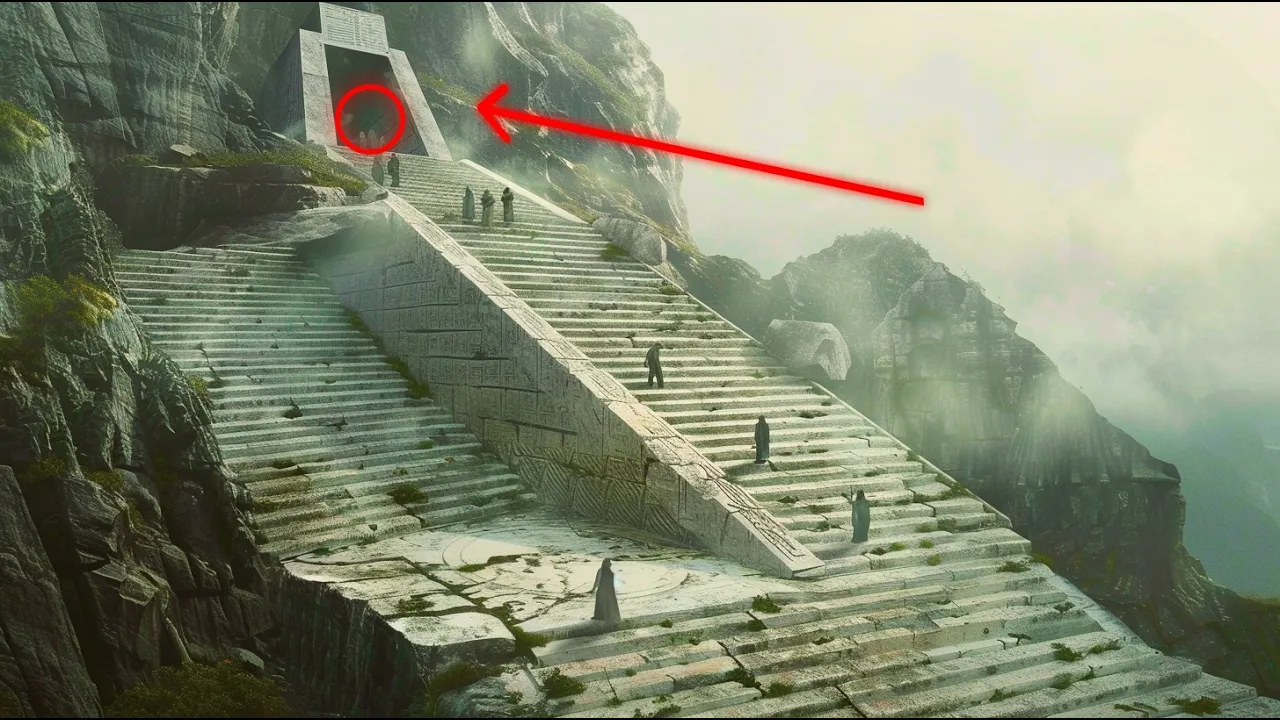



Throughout human history, groundbreaking discoveries have repeatedly challenged established narratives about our past, revealing that ancient civilizations possessed sophisticated technologies, complex social structures, and diverse cultural practices that were previously unknown or misunderstood. From Denisovans, a third human species discovered through a single finger bone, to the Antikythera Mechanism, an ancient computer from 2nd century BCE, these findings demonstrate that our understanding of history is constantly evolving as new evidence emerges. The video explores discoveries spanning multiple fields including human evolution (Denisovans, Homo Naledi, Hobbit humans), ancient technology (Antikythera Mechanism, Al-Jazari robots, Roman self-healing concrete), and cultural practices (female Viking warriors, Neanderthal cave art, vegetarian gladiators), each revealing that the past is far more complex and interconnected than previously believed.
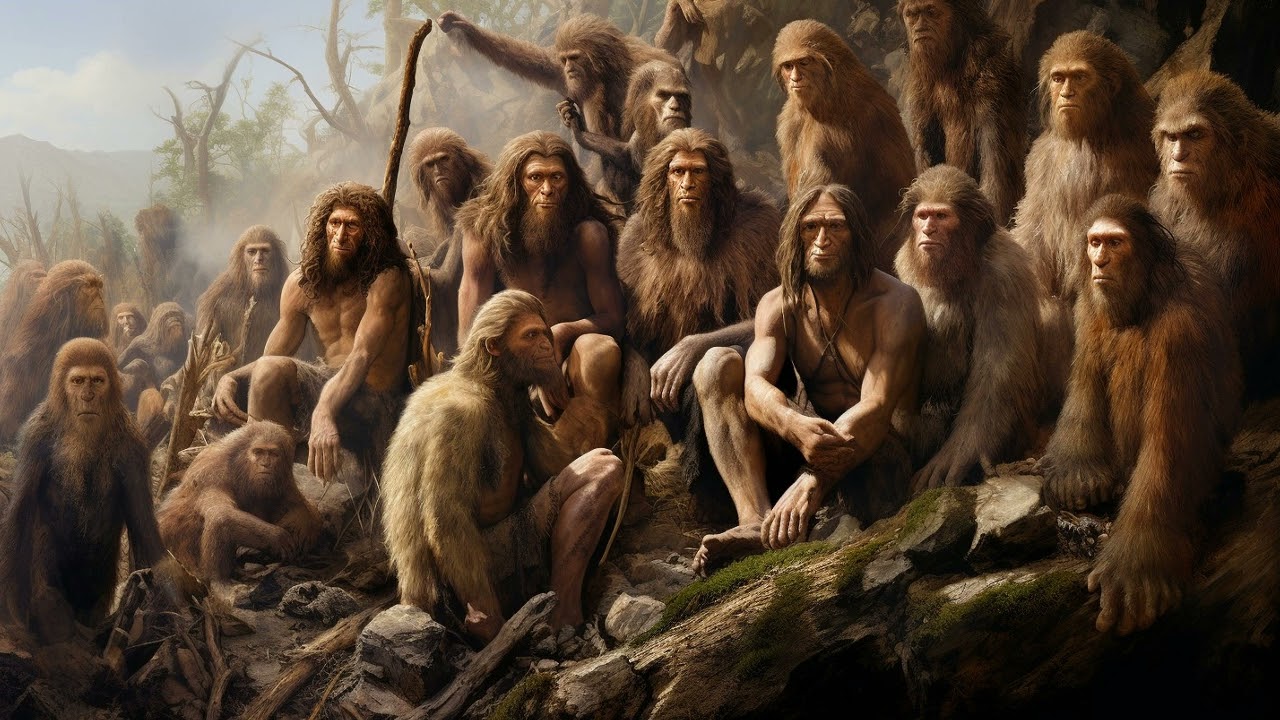
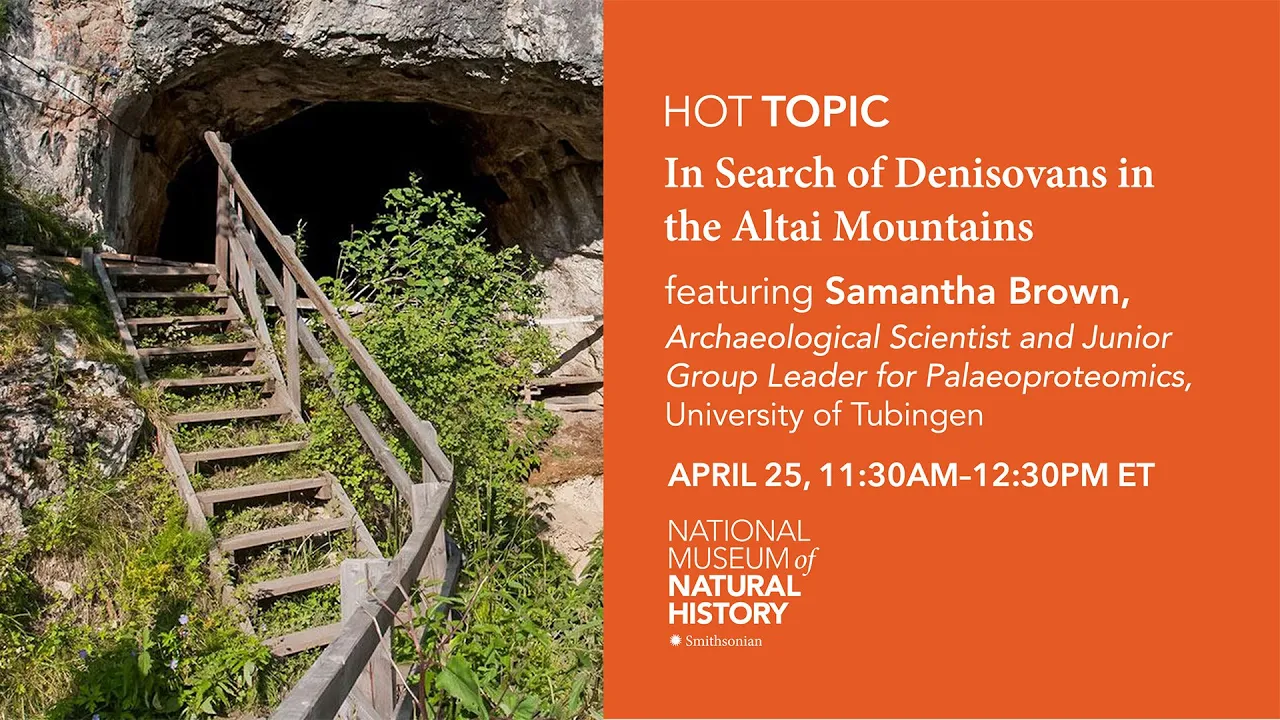
Scientists Discovered a Third Human Species: The Denisovans
Added:Denisven, a finger bone no bigger than a grain of rice, forced scientists to redraw the entire human family tree.
Until 2010, the textbook story said only two kinds of human walked through the late ice age. Modern people like us and the Neanderthalss.
That tidy pair was supposed to cover everyone in Europe and Asia in the chapter just before our species took over.
Then a Russian team working in Dennisova cave in Siberia handed a chip of fossilized pinky to a German genetics lab and the genetic code inside refused to match either group. A third human had been hiding in plain sight, leaving almost nothing in the rock record except this single splinter.
The reason the gap took so long to fill is that this third group was incredibly small in number and the cold acid soils of most of Asia destroyed bones before anyone could find them.
Dennisova Cave was unusual. Its dry chambers preserved tiny scraps that anywhere else would have crumbled. Once the genome came back, researchers had a reference to compare other strange fossils against, and pieces from Tibet and Laos suddenly made sense. The Dennisovvens, named after the cave, had ranged from Siberia to tropical Southeast Asia for hundreds of thousands of years. Then came the second shock.
Modern people from Tibet, the Philippines, and the islands of Melanesia carry stretches of Denisovven ancestry in their cells today. Our ancestors did not just meet this lost cousin. They had children with them. And those children had children all the way down to the present moment.
The high alitude gene that lets Tibetan herders breathe thin Himalayan air came directly from a Dennisovven partner thousands of generations ago.
A pebble of bone rewrote a chapter we thought was finished. It is a reminder that the past is not really gone, only waiting in pieces too small to notice yet.
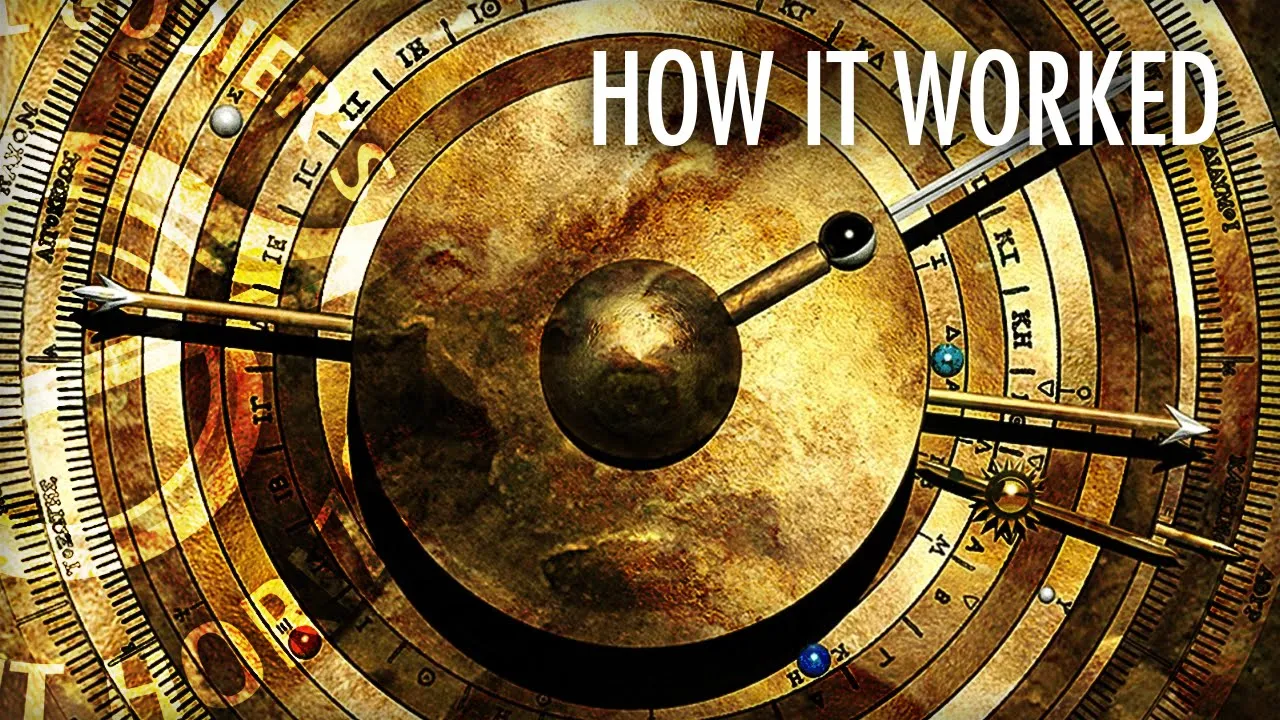
Antither mechanism. In 1901, sponge divers fishing off a tiny Greek island were the first humans in nearly 2,000 years to touch what would later be called the oldest computer on Earth. The lump they hauled up looked like a corroded brick of green rock, easy to overlook among the marble statues from the same wreck. For decades, that brick sat in a museum drawer, while historians stuck to the established view that gears, dials, and programmable machines belong to Renaissance Europe at the earliest. Ancient Greeks were brilliant philosophers. The thinking went, but they did not build precision machinery.
The brick suggested otherwise, and it took most of the 20th century to prove it. The tools needed to study the object without breaking it did not exist when it was discovered.
Only when researchers ran modern imaging scans through the remaining fragments could they finally peer inside.
What appeared on the screens stunned everyone who had assumed the artifact was a fancy lock or a ceremonial bowl.
Hidden under the crust were more than 30 interlocking bronze gears fitted together with the precision of a mechanical watch and inscribed with tiny Greek text describing the constellations.
This was the antitherra mechanism, a handc cranked device built around the second century before the common era to predict the position of the sun, the moon, and the five planets visible to the naked eye.
Turn the crank and the dials advanced, forecasting solar eclipses, lunar phases, and even the 4-year schedule of the ancient athletic games.
Nothing remotely as complex would appear in surviving European technology for another 1,400 years. The story it tells is uncomfortable.
It means an entire tradition of skilled mechanical engineering existed and then vanished, leaving only one battered example to prove it had ever happened.
Easter Island bodies. Postcards of Easter Island show a lonely lineup of stone heads sticking out of the grass.
Brooding chins jutting forward, eyeless and serious. For most of the world, that postcard image is the whole story. The heads are the heads. Then in 2012, photographs began circulating from the Easter Island statue project showing teams of archaeologists carefully digging down beside the famous moai.
Below the soil attached to every head were full carved bodies, shoulders, arms, and hands resting against the lower belly.
The icons of the South Pacific had been buried up to their necks for centuries, and almost no one outside the island had realized.
The reason for the confusion is simple.
Erosion.
Over more than 500 years, dirt and ash from the volcanic slopes washed down again and again, slowly burying the lower portions of statues that were originally meant to stand fully exposed.
The heads happened to be the only part still visible above the modern surface.
Generations of visitors photographed what they could see, and that image became the global default, while the rest of the carving sat hidden under several feet of earth. When excavators finally lifted that earth away, they found something even stranger than the bodies themselves.
The backs of the buried statues were covered in delicate engravings, including elaborate ring patterns and arched lines that may represent canoes, tattoos, or sacred symbols.
Red pigments still clung to some of the surfaces.
Whoever raised these monuments did not stop at the head. They carved entire sculptures with hidden artwork, knowing most of it would never be seen.
The lesson is humbling.
The single most photographed mystery in the Pacific had its lower half waiting in plain dirt the whole time, and the world simply stopped looking down.
American footprints pressed into the cracked white gypsum of New Mexico. A trail of bare footprints walked across the floor of an ice age lake bed and continued under a layer of rock. When park rangers and scientists at White Sands first measured the prints in 2021, they realized something close to impossible. The footprints were between 21,000 and 23,000 years old. That was thousands of years before any human was supposed to have set foot in North America.
The famous Clovis people, the toolmaking culture every textbook called the first Americans, had crossed from Asia at the end of the ice age around 13,000 years ago. These tracks predated them by almost a full ice age. The Clovis first idea was so dominant for so long that researchers who proposed earlier dates were quietly mocked at conferences.
The story went that the route through Alaska only opened when glaciers retreated, so nobody could have walked into the Americas before Clovis without a magic boat.
The White Sands trackway was unwelcome news. It showed teenagers and small children walking through soft mud, sometimes in the company of giant ground sloths and mammoths more than 20 millennia ago. They were not Clovis.
They were here a long, long time before.
Skeptics fought back, arguing the seeds used to date the prince had absorbed old carbon from the lake. So in 2023, a different team redated the layers using ancient pollen and quartz crystals. Two completely independent methods. Both came back at the same age.
The dates held. The peopling of the Americas now has a longer prologue than anyone planned for. Before there was a Clover spear, before a glacia opened, somebody small and barefoot was already walking across what is now New Mexico.
Tuten Kamun meteorite dagger. When Howard Carter unwrapped the linen bandages of Tutenkun in 1925, he found a slim dagger pressed against the boy king's thigh. The handle was gold. The sheath was gold, but the blade itself was iron. That last detail was already strange.
Tuten Camun died around 1323 before the common era, more than a century before the Iron Age was supposed to begin in Egypt. Smelting iron from the ground required furnaces and chemistry the ancient Egyptians did not yet possess.
The presence of a working iron blade fitted neatly into a royal funeral kit had no easy explanation. For nearly 90 years, the dagger sat in a museum case while curators offered guesses no one could prove. The pieces fell into place in 2016 when Italian and Egyptian researchers brought a portable instrument called a fluorescent spectrometer up to the case.
The device fires harmless rays at a metal surface and reads back the exact recipe of elements inside.
The blade did not behave like ordinary iron. Its alloy contained roughly 11% nickel and almost half a% cobalt in tightly fixed proportions.
Earthly iron ores almost never carry those numbers.
The match was instantly recognizable to anyone who studies meteorites because that is the chemical signature of iron forged in space.
The blade had not been mined. It had been chipped or hammered out of a chunk of nickel iron meteorite that fell out of the sky and was retrieved by ancient hands.
Surviving Egyptian texts even use a phrase that translates roughly as iron from the heavens, suggesting the source was understood at the time.
A Bronze Age pharaoh was buried with the rarest weapon imaginable. Not magic, not legend, but a knife forged from a fallen star.
Cahokia. If you stood at the top of a flat earth pyramid in the year 1050 looking out over the Mississippi flood plane, you would have been at the heart of the largest city north of Mexico. Its name is now Cahokia. And at its peak, it housed perhaps 20,000 people, more than London at the same moment in history.
For a long time, American school textbooks treated North America before European contact as a thinly settled continent dotted with hunter gatherer bands.
The idea that an indigenous metropolis with planned districts, public plazas, and engineered earthworks once stood near modern St. Louis simply did not fit the story.
The problem was visibility.
Cahokia was built almost entirely from packed dirt. The largest structure called Monk's Mound rises 100 ft from the plane and covers more ground at its base than the Great Pyramid of Giza.
But because dirt mounds do not gleam like marble, settlers in the 1700s and 1800s plowed straight through the smaller pyramids without realizing what they were.
Several were leveled to make farmland before archaeologists thought to look closely.
When researchers finally mapped the site with airborne lasers and ground penetrating radar, the scale snapped into focus.
Cahokia had a grand plaza the size of dozens of football fields, a woodpole circle astronomers compared to a calendar and trade goods in its tombs from as far away as the Gulf of Mexico and the Great Lakes.
Lead isotope studies on bones revealed migrants drawn in from across the continent.
This was an indigenous capital with a hinterland, an economy, and a skyline.
Kahokia was abandoned by around 1,400 for reasons still debated.
By the time French missionaries arrived, the surviving descendants no longer told stories of the city. North America had a forgotten metropolis hiding under the corn.
Female Viking warrior. The grave called Burka Chamber. 581 was excavated in 1878 on a small island in Lake Maloran west of Stockholm. Its occupant had been buried sitting upright, surrounded by two horses, a sword, an axe, a spear, two shields, 25 arrows, and a full set of game pieces of the kind used to plan tactical military moves. Looking at that funeral kit, Swedish archaeologists wrote down what seemed obvious to them at the time. This was a highranking Viking commander. They wrote the warrior down as male. The skeleton itself was carefully recorded, but never seriously questioned because everyone already knew who got buried with weapons in the 9th century. The bones sat in a museum collection for more than a century. Then in 2017, a Swedish team revisited the skeleton with modern genetic tools. They sequenced the genetic markers from two of the warriors mers. The results were unambiguous.
The body in chamber 581 carried only female chromosomes.
The most decorated Viking warrior in any known burka grave had been a woman. The discovery did not just rewrite one tomb.
It forced a reread of every Viking saga that mentions shield maidens. For generations, those stories had been treated as poetic license, the literary equivalent of unicorns.
Now, there was a real burial of a woman armed exactly like the Saga heroins.
Other Scandinavian graves were checked, and a small but real share of weapon graves turned out to belong to women, too. The historical record had simply been prefiltered through modern assumptions about who fights. The lesson reaches beyond the Vikings. For more than a century, the contents of a grave were enough to assign a sex without ever testing the bones. One woman with a sword undid that.
Hobbit humans. In a deep limestone cave called Leang Bua on the Indonesian island of Flores, an Australian Indonesian team uncovered a skeleton in 2003 that nobody believed at first. The bones belong to an adult, but the adult had stood only about 3 and 1/2 ft tall and carried a brain about the size of a chimpanzees.
The popular nickname stuck immediately, Hobbit.
Officially, the species was named Homo Floresensis.
The find demolished a comfortable assumption that human evolution had been a simple climb toward bigger bodies and bigger skulls.
A tiny human with a tiny brain had been making sophisticated stone tools and hunting pygmy elephants on a tropical island as recently as 50,000 years ago.
Critics tried hard to explain the skeleton away. The first theory was that this was just a modern human with a developmental disorder, perhaps microphille.
But more individuals were excavated from the same cave. All sharing the same proportions, the same wristbones, the same retained primitive features.
A diseased modern human cannot be a population.
The skeptics quietly stepped back and the species was accepted.
What followed was an even harder puzzle.
The Leang Bua hobbits used flakes of stone with cut marks on butchered animal bones. They controlled fire. The mystery of how such small people built such tools needed a new answer. The trick may be that brain size is not the only ingredient in intelligence. Their brain was small but reorganized with regions associated with planning preserved while less critical areas shrank. Living in island isolation may have selected for this dwarfism the way other Flores animals had also shrunk to fit limited resources.
The hobbit over overlapped in time with our own ancestors.
Modern humans and a much smaller human cousin shared the planet and we never realized.
Gobecepe, a windswept Turkish hilltop, hides limestone pillars older than any pyramid, older than any ununiform tablet, older than the wheel. Their Turkish name is Gobeclete, which means potbelly hill. Carved from solid stone and arranged in massive rings, these tall stone pillars weigh up to 20 tons each and predate the invention of farming until they were excavated in the 1990s.
Every textbook said the same thing about how civilization began. People settled down, learned to grow crops, accumulated surplus food, and only then could they spare labor for religion and monumental architecture.
Gobeci runs the sequence in reverse.
The site sits in modern southeastern Turkey near the city of San Leurfa. It was raised about 11,500 years ago by people who hunted gazelle and gathered wild grasses. They had no domesticated grain, no pottery, no metal. And yet somehow they organized hundreds of workers to quarry, drag, and erect carved pillars depicting foxes, vultures, scorpions, and snakes in fine detail.
Then even more strangely, they buried the entire complex on purpose layer by layer, sealing it under tons of fill that preserved it almost perfectly until German archaeologist Klaus Schmidt began digging in. 1994, the implication has shaken historians and biologists alike.
Hunter gatherers were not supposed to have the social structure for projects like this.
Some scholars now suspect the order ran the other way. People gathered first to build a sacred place, and the sheer logistics of feeding workers across many seasons may have pushed them to start growing grain on the surrounding hills.
In other words, religion may have invented agriculture, not the other way around.
A windy hill in Turkey turned the standard origin story of civilization upside down and we are still working out what to put in its place.
Sang Sing Dwi bronzes. In 1986, two brick factory workers in the Chinese province of Sichuan struck their shovels against jade. They had been digging clay for kils. Within hours, they had stumbled into the first of dozens of sacrificial pits filled with what looked like another planet's idea of art.
Towering bronze masks with eyes that bulge out on stalks.
A bronze tree nearly 4 m tall hung with sacred birds.
A life-sized standing figure with hands outstretched as if holding something the ages had eaten away.
None of it matched any known Chinese style of the same era. Until the pits opened, no respectable historian believed a major Bronze Age civilization had ever existed in the Sichuan basin at all. The standard story of early China placed all the credit on the Yellow River cultures of the north. Sichuan, mountainous and remote, was supposed to have been a backwater that received its art and writing later.
The pits at Sang Sing Dooi blew that map apart.
Carbon dating placed the strange bronzes between 3200 and 2800 years ago. They were contemporaries with the famous Shang dynasty, but stylistically alien to it. The masks had no parallel in any other ancient society.
Even gold leaf appliques in the pit went directly against the conventional rule that Bronze Age China did not use much gold.
Excavations resumed in 2020 and six new pits opened. They produced more masks, more golden objects, and silk thread fragments that pushed the date of organized silk production back centuries.
Yet there is still no written evidence of who these people were, what language they spoke, or why they chose to bury their treasures in pits. A whole civilization with its own face, its own gods, and its own sense of beauty is staring back at us, and we still cannot read its name.
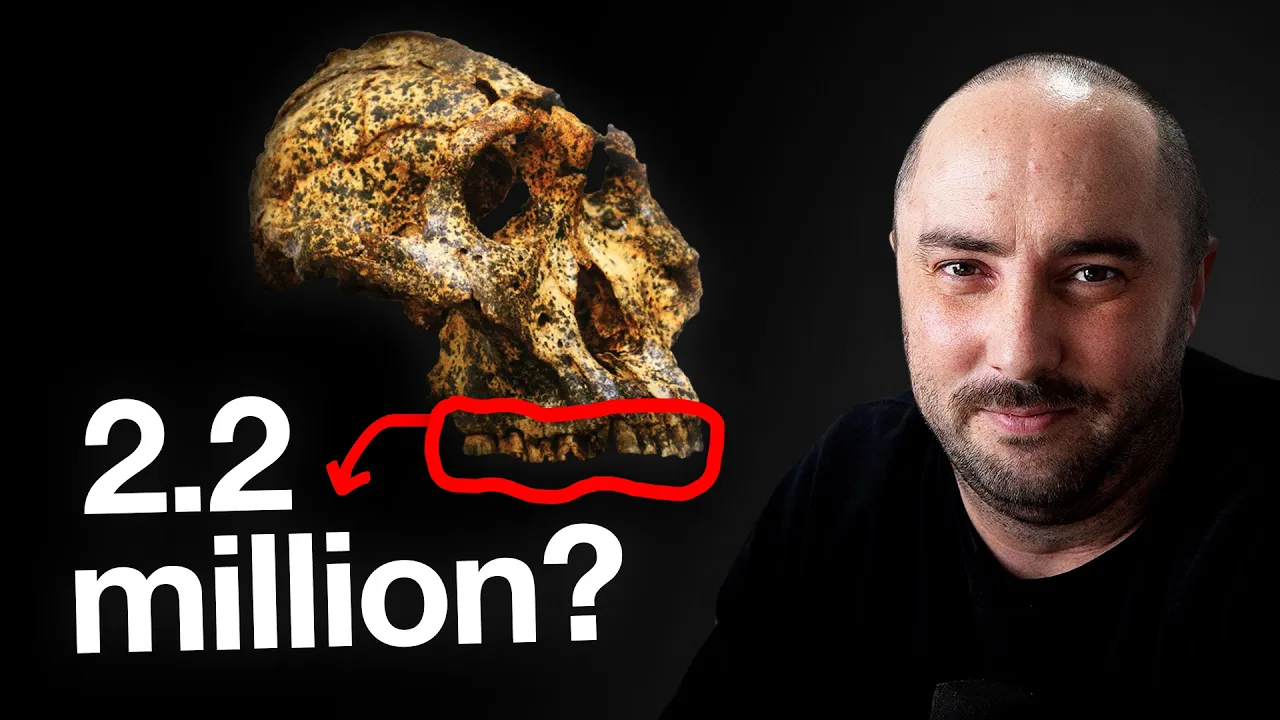
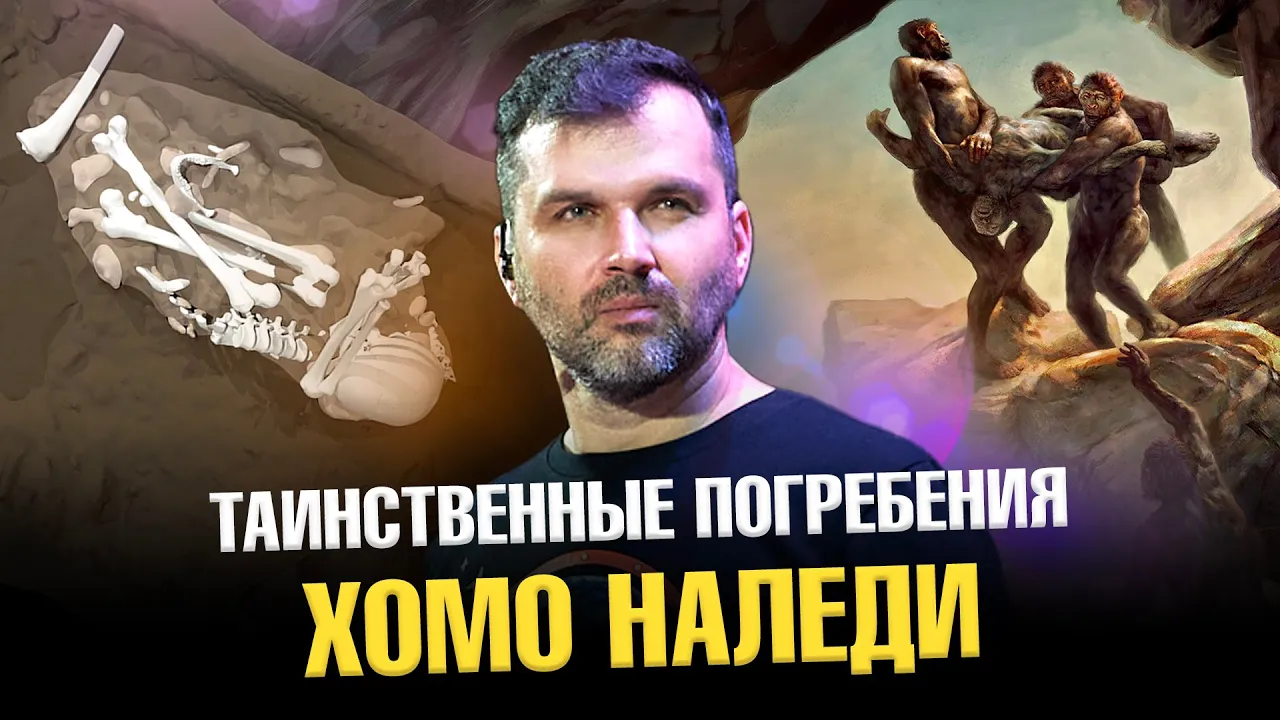
Homonetti burials. Deep inside the rising star cave system in South Africa, beyond a chamber called the dragon's back, lies a vertical chute only 7 in wide at its narrowest. In 2013, a paleontologist named Lee Burger advertised online for slim fossil hunters who could squeeze through.
Six women answered. What they reached at the bottom was a chamber filled with hundreds of bones from at least 15 individuals.
The species turned out to be unknown with a brain roughly the size of an orange, primitive curving fingers good for climbing, and feet built for walking upright.
They were named Homonady, and their existence quietly broke a rule scientists had relied on for a century.
Big brains were supposed to be the line that separated thinking humans from everything else. The bones did not get into that chamber by accident. There is no evidence of flooding, no carnivore tooth marks, no sediment that washed them in. The most defensible explanation is that other Nei carried their dead in again and again, possibly using torches to navigate the pitch darkness. that puts intentional burial behavior in the hands of a species with a brain a third the size of ours. Then in 2023, the team announced something even more contentious.
Charcoal traces on the chamber walls and what may be deliberate scratched markings, including a possible hashtag like cross. If those marks are real and NDI made them, then symbolic engraving was happening hundreds of thousands of years before the human lineage was supposed to have invented art.
Other researchers want stronger proof, and the debate is still hot. Either way, an orang-ized brain seems to have managed to honor its dead in the deepest hidden chamber of a cave. The exclusive club of Mourning got a smaller member than anyone planned for.
Mansamusa.
12,000 servants in silk. 80 camels each carrying about 300 lb of pure gold dust.
And a single Malian king moved across the Sahara in 1324 on his way to Mecca.
His name was Mansamusa, ruler of an empire stretching from the Atlantic coast deep into the Sahel.
When he passed through Cairo, he handed out so many bags of gold to the poor and to courtiers that the metal lost a measurable share of its value across the entire Mediterranean economy. Egyptian markets did not fully recover for at least a decade. Until that pilgrimage, most European map makers had no idea that a black African ruler controlled some of the richest gold fields in the medieval world.
The reason Mansamusa is missing from so many Western textbooks is straightforward. The Mali Empire's wealth came from gold mines and salt routes that medieval Europe never saw.
News of his caravan reached Europe through Arabic and North African accounts. And within a generation, a Catalan map of 1475 drew him on the African continent holding a giant golden nugget. To medieval cgraphers, the depiction was a warning of how much they did not know about the world south of the Sahara.
His full reign also funded a wave of construction.
Mansam Musa brought back architects from Cairo who designed the Jinguareba Mosque in Timbuktu, helping turn the city into a global center of Islamic scholarship for the next two centuries.
The libraries that grew there preserved Greek, Persian, and West African knowledge that would otherwise have been lost.
Modern economists working in inflation adjusted dollars often place Mansamusa above any other figure in recorded history for personal wealth. The richest man who ever lived was not a railroad baron or a tech founder. He was a 14th century West African.
Self-healing Roman concrete. Roman peers built 2,000 years ago still stand in the salt of the Mediterranean.
Modern concrete peers, by comparison, often need replacing within 50 years.
The Pantheon's unreinforced concrete dome remains the largest of its kind on Earth, even though no engineer alive could have agreed it would last a century or two without rebar.
For decades, scientists assumed the secret was simply the volcanic ash called potana that the Romans mixed into their batches.
Potana helped. But in 2023, a team at the Massachusetts Institute of Technology found a much stranger ingredient hiding in plain sight. When researchers cut samples of original Roman concrete and looked at them under powerful microscopes, they saw small white lumps scattered through the matrix. Earlier scholars had treated those white lumps as flaws, evidence of sloppy mixing. The new analysis showed they were not flaws at all. They were intentional reservoirs of reactive lime called lime clasts made by a process called hot mixing in which quick lime is added directly to the wet concrete at high heat. When a tiny crack later forms and water seeps in, the water hits a lime clust dissolves it and the calciumrich solution flows into the crack and recristallizes sealing the gap. That self-healing chemistry explains why a Roman seaw wall can shrug off centuries of waves while a modern parking garage starts to flake after one harsh winter. The Romans did not know molecular geology, but their hands-on craft baked an automatic repair system into the material itself. Every wave that hits an old harbor wall is partly fixing it. Modern engineers are now reverse engineering the recipe.
The future of lowcarbon cement may turn out to look very much like the past.
Mixed hot in a wooden trough by Italian masons before the year zero.
Pirate democracies. Hollywood pirate captains snal swing cutlesses and rule by terror. The actual pirate ships of the early 1700s operated more like floating constitutional democracies than like dictatorships.
When the wreck of the wider galley was raised off the Cape Cod coast in 1984, divers brought up not just gold, but written articles signed by the crew.
Combined with similar pirate codes from other ships, the documents painted a picture nobody had quite expected. These were the same outlaws governments hung in iron cages as a warning to others.
Each new captain was elected by majority vote of the crew, and a captain could be voted out at any moment for cowardice or unfair behavior.
The quartermaster, who handled discipline and divided plunder, was elected separately, so no single person held all power.
Loot was split into shares posted in advance and almost equal across ranks.
Common pirates received one share. The captain typically received two. Compare that to a Royal Navy of the time where a captain could pocket 25 times what an ordinary sailor earned and where flogging was the standard answer to descent.
The codes also included the first known disability compensation programs in the Atlantic world. Loss of a right arm was worth a fixed sum in pieces of eight.
Loss of an eye, a smaller sum.
Cruz welcomed escaped enslaved Africans as full members with a vote decades before any European nation considered such a thing. None of this made pirates gentle. Many of them were brutal in a battle. But on board they had reinvented forms of democratic government their respectable home countries would not match for another century.
The lesson is awkward.
The first place an ordinary worker in the Atlantic could vote for his boss and get health pay was the deck of a so-called criminal ship.
Painted Greek statues. Walk through any major museum's collection of Greek and Roman statues and you will see white marble, pure ivory faces, pure pale drapery, pure stone limbs. The clean white look has been the basis of European notions of classical beauty for over 500 years. Ever since Renaissance artists studied weathered ancient pieces and began copying them in unpainted stone.
The whole aesthetic of neocclassical architecture from European parliaments to American memorials rests on this image. The image is wrong. Almost every classical statue once blazed in vivid color. The evidence has been there all along, but it took specialized equipment to see. When researchers began shining ultraviolet and infrared light on ancient marble in the late 1990s, faint pigment traces invisible to the naked eye lit up under the lamps.
Egyptian blue clung to a horse's mane.
Vermilion red filled the folds of a c's robe. A Greek archer from the temple of Aya stood revealed in patterned trousers, painted lions on his quiver, eyes deliberately picked out in dark stones.
The famous Augustus of Prima Porter, whose pristine white surface inspired centuries of cold marble copies, was in fact dressed in saturated reds, blues, and yellows. So why do we keep imagining ancient sculpture as colorless?
Centuries of weathering wore the pigments off the marble that survived.
By the time Renaissance scholars rediscovered the works, the paint was already gone. They built an entire ideal of refined classical beauty around an accident of decay, and museums kept polishing the statues clean for two more centuries to make them match the ideal.
The actual classical world was loud and bright.
The cool white statue is a modern dream layered onto a missing color photograph.
Every textbook image of pristine white temples is a half-remembered fragment of something far gaudier.
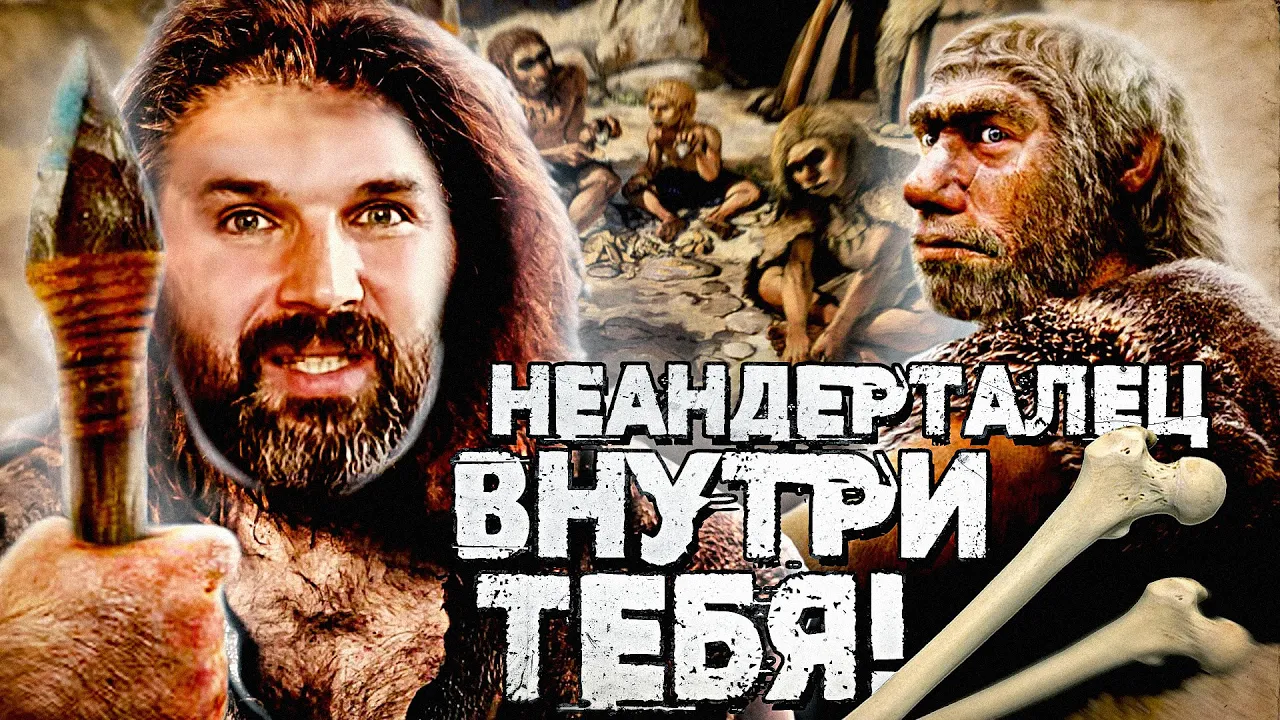
Neanderthal cave art. Three Spanish caves, La Paci, Maltrao, and Ardales, hold faint red ladders, hand stencils, and stippled lines that look unremarkable next to the dramatic bison paintings of Lasco. For decades, they were filed under the loose category of early modern human art, of mild academic interest, but not headline news. Then in 2018, a team using improved uranium thorium dating measured the calsite crusts that had grown over the pigments.
The numbers came back at 65,000 years before the present. That was at least 20,000 years before our species was supposed to have arrived in Western Europe.
Whoever painted the markings could not have been us. The only humans living in Iberia at that time were Neanderthalss.
The classic story said Neanderthalss were brutish, lived hard, short lives, and lacked the symbolic mind that made cave art possible.
That tidy contrast had already been wobbling.
Earlier finds had shown Neanderthalss using pigments, wearing eagle feathers, perhaps even wearing painted shell beads. The new dates closed the case.
They were artists. The implication crosses a boundary scholars had been protecting carefully.
Symbolic thought, the ability to use a mark on a wall to stand for something not actually present, was not unique to our line. It existed in another human species over half a million years after the two lineages split.
Either both groups inherited the cognitive capacity from a common ancestor or both invented it independently.
Either answer makes the line between Neanderthal and modern a lot blurriier than it used to be. A red hand stencil pressed onto a Spanish cave wall is the kind of mark a child makes today on a frosty window. The hand that made the original belonged to someone we used to call a different species.
We may need a different word.
Sushuta plastic surgery. 26 centuries before a single anesthetic was developed in Europe, an Indian physician named Sushuta was writing detailed instructions on how to reconstruct a missing human nose. His manual, the Sushuta Samhita, survives in copies and translations and includes more than 300 surgical procedures. cataract removal, cesarian delivery, reduction of broken bones, extraction of arrows.
Among the most striking sections is a step-by-step technique for taking a flap of skin from the patient's forehead, leaving a thin bridge attached so the blood supply continues to feed it, swinging the flap down to cover the area where a nose has been amputated, and stitching it into place. The technique is recognizably the modern forehead flap rhinoplasty.
For most of European medical history, this knowledge sat in Sanskrit texts that nobody outside India could read.
Then in 1794, an article appeared in a London medical journal describing how a local craftsman in India had used exactly the same flap procedure to rebuild the nose of a man whose face had been mutilated as punishment.
British surgeons traveled to study the technique.
By the early 1800s, it had been imported into European practice as Indian rhinoplasty, often without credit to its origin.
The modern field of plastic surgery traces its lineage straight back through that import.
Sushuta also taught using non-human models for practice. Aspiring surgeons cut on gourds, leaves, dead animals, and water-filled bladders before they touched a living patient. Sterilization of instruments was practiced through fire and herbal washes.
Pain was numbed with wine. None of these were standard in Europe until the 1800s.
The next time someone says modern medicine is a western invention, the forehead flap is a useful counter example. It was perfected in the Ganges Valley while Athens was still a small town.
Hat Shepsuit erased in the towering memorial temple at Dare El Bahari on the west bank of the Nile near Luxor.
Somebody once moved through with a chisel and tried to erase a person from history. Faces were knocked off statues.
Names were ground out of cartes.
Even the giant figures of an Egyptian ruler shown in a king's beard and headdress were systematically defaced.
For most of the 1800s, archaeologists assumed the original ruler had been a heretic or usurper despised by later kings.
Then in 1903, a methodical rereading of partial inscriptions and surviving statue fragments revealed the truth.
The erased ruler was Hatshepsut, a woman who had reigned as pharaoh for over 20 years. Hatepsut took the throne around 1479 before the common era. She had been queen consort, then regent for her young stepson, and then quietly assumed fullionic titles. To make the role visually familiar, official portraits showed her with a stylized king's beard, but the inscriptions still used female grammatical endings. Under her watch, Egypt prospered. Trade expeditions reached the land of Punt, returning with myrr trees, ivory, and live animals.
Her temple architecture pioneered terrace design that would influence builders for centuries.
The chisels came out about 20 years after her death. Her stepson Thutmos III had inherited the throne and at some late point ordered her image and name removed from public monuments.
Scholars argue about why.
Personal grudge, dynastic legitimacy, or maybe simply the desire to keep his own son's claim unambiguous.
Whatever the motive, the campaign worked well enough that her existence was a footnote until modern excavation pieced her back together.
Today, Hatchepsut is recognized as one of Egypt's most successful pharaohs.
The man who tried to delete her ended up preserving her because the harder you scratch a name into stone, the more obvious it is that someone was there.
Dogland. Trollwers fishing in the gray North Sea sometimes drag up the wrong things in their nets. Mammoth tusks, bone harpoons, worked flint blades, human teeth. The objects are not relics from drowned ships. They come from a country that the sea swallowed whole.
The country has a name now, Dogland. And at the height of the last ice age, it was a low rolling landscape of rivers, marshes, and oak forests stretching across what is now the seabed between Britain and the Netherlands. For a long time, the standard British origin story said the islands had always been islands.
Stone Age hunters were imagined as people who arrived by raft.
Then in the early 2000s, oil and gas companies prospecting under the North Sea began sharing their seabed surveys with archaeologists.
Hidden under hundreds of feet of mud and water lay an entire ancient drainage system with river banks, lake basins, and ridges where settlements had once stood.
Sample cores brought up pollen from oak, hazel, and pine alongside tools made by hunter gatherers who had walked between Britain and continental Europe on dry ground.
Dogland did not vanish in a single dramatic event.
Sea levels rose for thousands of years as the ice sheets melted, slowly drowning the lands.
The killing blow came around 8,200 years ago when an underwater landslide of Norway called the Stoga slide sent a tsunami racing south. It scoured the surviving islands.
Whatever villages still clung to high ground were probably wiped away in a single afternoon.
After that, the rising sea finished the job. A coastline we think of as permanent is in fact a fresh page. There were people in Britain before there was a Britain, and the bones in the fishing nets are their last surviving postcards.
Spartan baby myth. Generations of school children have learned that Spartan elders inspected newborns and threw the weak ones off a cliff into a pit called the apothee.
The story comes mainly from Plutarch, a Greek biographer writing 400 years after Sparta's golden age, far enough removed that he was working partly from rumor.
Modern textbooks repeated the tale as fact because it fit a clean, dramatic image of a militaristic society.
The image stayed intact for nearly 2,000 years before someone finally went to look in the actual pit. In 2007, a team of Greek anthropologists climbed into the chasm of Kiadas in the cliffs above ancient Sparta.
The Kyadas was the prime candidate for the legendary Apothei, the spot where unwanted children were supposedly hurled. The team excavated layer after layer, lifted out hundreds of bones, and ran the standard age and sex analyses.
The results contradicted the famous story almost completely. Every set of remains belonged to an adult, ranging from about 18 to 35 years old. Almost all were male. Most showed signs of violent ends consistent with execution.
The Kyadas was a punishment site.
Convicts, war traitors, and prisoners of war from rival cities were thrown in.
There was no infant skeleton at the bottom and not a single juvenile that fit the supposed practice of disposing of frail babies.
Whatever rituals Sparta did or did not perform on newborns, mass infant exposure into this gorge was not one of them. Plutarch had repeated the wrong story. This is the kind of myth that rides on its own force. The image is too vivid to die. But Sparta's reputation for ruthless infant culling now rests on a chasm that when finally inspected contained only the bodies of grown men.
Al Jazari robots 8 centuries before the first industrial robot word on a Detroit assembly line. A Muslim engineer in northern Mesopotamia was sketching machines that could pour wine, wash hands, and play music without a human touching them. His name was Ismael al- Jazari and he served the Artukid dynasty in what is now southeastern Turkey.
In 1206 he completed a manuscript called the book of knowledge of ingenious mechanical devices illustrated with detailed diagrams of more than 50 working machines. For most of European history that book sat in Eastern libraries almost unknown to the west.
While textbooks credited the rise of automation to clock makers in Renaissance Italy and inventors in Industrial Revolution England, among the machines Al Jazari documented was a peacock-shaped fountain that handed soap and a towel to a guest after washing their hands, triggered automatically by the flow of water. He designed a humanoid waitress that floated on a small pond and refilled drinking cups when emptied.
He built a four-piece programmable musical band on a boat with cams that could be reset to play different tunes, arguably the world's first programmable machine. His water clocks moved astronomical figures across painted skies on the hour with bells, doors, and small dancing puppets to mark the time.
Engineers reading Alazari today recognize features now considered fundamental to mechanical engineering.
Crankshafts that convert rotary motion into linear motion. Cam shafts that synchronize multiple actions, suction pumps, segmented gears.
Many of these elements would not be reinvented in Europe for centuries.
Modern reconstructions built straight from his diagrams actually function.
exactly as he described them. The story of robotics has a longer prologue than most engineers learn. Before silicon, before steam, there was a man in a desert workshop sketching machines that bowed, served, and played music on their own. Cheddman dark skin. Tucked inside Guff's cave in the Cheddar Gorge of Southwest England lies a skeleton roughly 10,000 years old. The most complete prehistoric human ever found in Britain.
Cheddaman, as the bones came to be called, was unearthed in 1893 and quickly absorbed into the standard image of the earliest Britons.
Museum reconstructions for over a century gave him fair skin, light hair, and the general appearance of a modern Northern European because that was what everyone assumed the original islanders had looked like. The bones themselves were mute on the question, and nobody had a way to read pigment genes from a skull.
That changed in 2018 when researchers at the Natural History Museum in University College London managed to extract usable ancient genetic material from the Petrus bone behind the ear. They sequenced the varants that determine skin color, hair color, and eye color in living Europeans.
The numbers came back unambiguously.
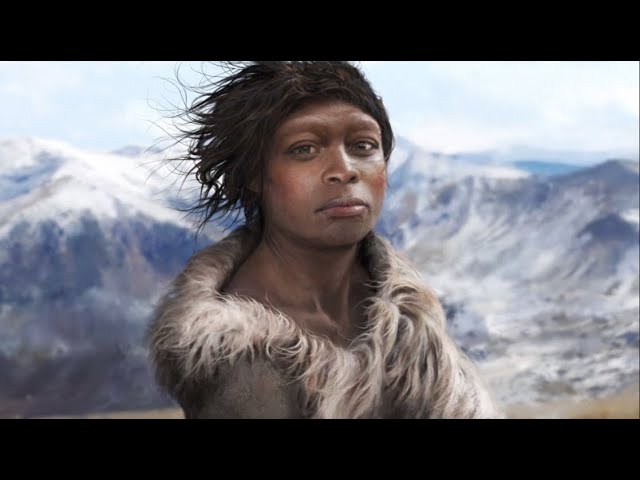
Cheddar man had dark to black skin, dark, tightly curled hair, and pale blue eyes. The combination shocked the British public, but it matched what geneticists had been quietly predicting for years. Pale skin in Europe is a relatively recent adaptation, spreading widely only after farming arrived from the Near East. The implication runs further than one skeleton.
Most living British people share some ancestry with later farming migrants who brought lighter pigmentation.
The original hunter gatherers who walked into post ice age Britain looked nothing like the cartoon image of pale ancient kelts. They were dark skinned, blueeyed, fishing and hunting along forested rivers as the glaciers retreated.
A new bust of Cheddman now stands in the museum. His features modeled directly from his genome. The face that greets visitors is a quiet correction of more than a century of confident guessing about what an ancient European looked like.
Carol. 5,000 years ago, while pyramid builders worked along the Nile and city dwellers stacked mud bricks in Mesopotamia, another civilization was rising in a dry river valley 120 mi north of modern Lemur. Its largest city was called Carral. And at its peak, it covered roughly 150 acres with six stone pyramids, sunken circular plazas, and residential complexes for thousands of people. For decades, archaeology textbooks said the Americas had no urban civilization that early. The standard story placed the first New World cities thousands of years later after the rise of maze farming.
Carral predated the wheel in the region, predated pottery, and predated any known writing. The site was first noted in 1905, but its significance went unrecognized because the pyramids had eroded into hills and the surface was littered only with stones.
Serious excavation by Peruvian archaeologist Ruth Shady began in 1994.
Carbon dates from preserved reed bags called shikras used to carry stones up the platforms came back at around 2900 before the common era.
That made Carral a contemporary of the oldest Egyptian pyramids and the earliest Sumerian temples and the oldest known city in all of the Americas.
Even stranger than the dates was what Carral lacked.
No defensive walls, no depictions of warriors, no weapons.
Among hundreds of excavated burials, none showed clear signs of a violent death. The economy ran on cotton, anchovies traded inland from the coast, and a shared ceremonial life centered on music. Archaeologists recovered bone flutes carved from condor and pelican wings, dozens of them, far more than any weapon.
A peaceful musical city built pyramids while Stonehenge was still being raised.
The cradle of civilization in the New World was older, quieter, and gentler than the textbook had room for.
Viking America, half a millennium before any Spanish caravl reached the Caribbean, Norse sailors built houses, repaired ships, and forged iron nails on the northern tip of Newfoundland. The settlement is now called Lonome Meadows and its existence was confirmed in 1960 by a Norwegian husband and wife team Anne and Helga Ingstad who followed clues from medieval sagas.
What they uncovered, sodwalled long houses arranged in a pattern instantly recognizable to any Scandinavian archaeologist, demolished centuries of insistence that Columbus had been the first European to reach the Americas.
The Vikings had already done it around the year 1001, give or take a few seasons.
For decades, even after the find, scholars debated whether the settlement was a brief accidental landing or a deliberate base. The decisive evidence came in 2021.
A team examined wood from the site that had been chopped with metal tools, something the local indigenous peoples did not yet have. By matching tree rings to a precisely dated solar storm in the year 93, they could pin the felling year to 1021.
That places Norse boots on Newfoundland soil exactly 471 years before Columbus.
The Greenland saras describe trips farther south to a region called Vinland, full of grapes and tall trees.
Whether that means the St. Lawrence Valley or somewhere along the New England coast remains an open question.
What is no longer in doubt is that the Norse explored, traded with locals, occasionally fought with them, and eventually withdrew.
The settlement was small, the climate was harsh, and the surrounding peoples were many. Columbus deserves credit for opening sustained contact across the Atlantic, but he was not first.
A handful of Norse families had already wintered on a North American shore, while medieval Europe still imagined the Western Ocean as empty.
Vegetarian gladiators, bone chemistry from a Roman gladiator graveyard in Western Turkey, overturned a Hollywood image that had held for a century.
In 2014, an international team of anthropologists examined the skeletons of 53 combatants buried at a gladiator cemetery near Ephesus. The chemical signatures locked inside the bone collagen, revealed that these warriors had been eating an almost entirely vegetarian diet, mostly barley, beans, and dried fruit. Roman writers had even given them a nickname for it, hordiari, which translates roughly as the barley eaters. The reasoning behind this diet was practical rather than philosophical.
A thick layer of subcutaneous fat acted as armor in the arena. It absorbed cuts before they reached muscle and nerves, meaning a fighter could bleed dramatically for the crowd without taking a fightending wound. A starch-heavy plant diet builds that fat layer faster than meat does while still providing enough energy for long training sessions. The bone analysis also showed elevated strontium levels, consistent with people drinking a calcium supplement made from bone ash, perhaps to repair fractures from constant combat.
The skeletons themselves carried the evidence of their craft. healed cut marks along the arms told of blocking strokes.
Specific dental wear patterns matched bites from the leather strap of a fighting helmet. Several skulls had a single neat hammer hole, the standard mercy stroke given to a defeated combatant after a thumbs down verdict.
The story written into these bones did not match the lean carnivore image at all. The next time a Sandals epic shows muscled gladiators tearing into roast meat the night before a fight, picture instead a softbellied man finishing a bowl of barley porridge.
Survival in the arena rewarded fat and starch, not the dramatic protein feast of cinema.
Stonehenge stones dragged. Each blue stone at the inner ring of Stonehenge weighs about 4 tons and once stood in a rocky outcrop nearly 200 m away in Wales. For most of the 20th century, scholars argued that prehistoric people could never have moved such weight over land and proposed instead that glaciers had carried the stones part way or that the builders had floated them on rafts down rivers and along the coast. The dragged by hand theory sounded romantic but impractical.
That picture began to crumble when geologists matched the chemistry of the blue stones to specific quaries in the Precelli Hills. And then archaeologists found the quarry sites themselves complete with stone wedges and discarded blocks. The key digs were published in 2015 and 2019 at Khn Gerdog and Craig Rose I failin workers had clearly split pillars from the natural rock face along ready-made vertical joints leaving telltale stone hammers and hearths radiocarbon dates from charcoal at the quarry place the work at around 5,000 years ago matching the construction phase at Stonehenge itself. self. There was no longer any need for glaciers.
Real human teams had quarried these stones in Wales and somehow moved them across hill, river, and forest to the chalk plane of southern England.
In 2024, a separate team showed using replica wooden sledges and grease timber rails that a crew of around 20 people could comfortably drag a 4-tonon block several miles a day across rolling country.
Multiplied across many crews working in shifts, the journey from Precelli to Salsbury plane becomes a feasible multi-season project rather than a fantasy. The builders were not weaker than us. They had time, organization, and a cultural reason to move sacred rock across an entire country. The mystery is no longer how they did it, but why it mattered enough to try.
Iron pillar of Delhi. Standing in a courtyard outside the Kutbam Minina complex on the southern edge of Delhi is a slender column of solid iron over 23 feet tall that has refused to rust in any meaningful way for 16 centuries.
Tourists touch it for luck.
Metallergists touch it for clues. The pillar was forged around the year 400 during the Gupta dynasty. Originally erected as a flagpole for a Hindu temple and later moved to its present location for most of the modern era. European historians could not reconcile its survival with what they knew about ancient Indian metal working.
The standard view held that mass production of high purity iron only became possible in the west during the industrial revolution more than a thousand years later when researchers from the Indian Institute of Technology finally analyzed the pillar in 2002.
They discovered the secret was not that the iron was ordinary. It was extraordinary.
The metal was almost 98% pure rot iron deliberately combined with a high content of phosphorus.
Instead of weakening the metal, the phosphorus reacted with the surrounding atmosphere to form a thin protective layer of crystalline iron hydrogen phosphate hydrate across the surface.
That layer is barely a tenth of a millimeter thick, but it has acted as a perfect rust barrier ever since. The forging itself was equally remarkable.
The pillar was assembled from many smaller heated lumps of iron hammered together while red hot, a process called forge welding.
To produce a single column of this size and uniformity required dozens of skilled smiths working in close coordination with no visible welds or seams in the finished product. A technology that European industry only matched in modern times was running smoothly in fifth century India. The pillar still stands. Weather and centuries shrugged off a tall iron correction to a confident assumption.
Aboriginal continuous culture across northern Australia in a sandstone shelter called Majid Baby. layers of ochre and stone tools have been quietly dated to 65,000 years before the present. That single number established in 2017 by an Australian and Indonesian team makes Aboriginal Australian culture the oldest continuous human culture on Earth by a wide margin.
For most of the 20th century, textbooks treated Aboriginal Australians as a recent arrival, perhaps 40,000 years old at the outside, and Aboriginal oral histories of deep time were dismissed as myth. The Majid Baby dates pushed the arrival back 25,000 years and confirmed what elders had been saying all along.
What makes the continuity so striking is not just the duration, but the lack of rupture. The same song lines, ceremonies, and stories about the formation of specific landforms have been passed down across roughly 3,000 human generations.
Several of these stories accurately describe the rising sea levels that drowned ancient coastlines after the last ice age, events that took place 10,000 years ago.
Linguistic and oral history specialists have matched parts of those narratives to known geological records of inundation.
Genetics confirm the same picture.
Aboriginal Australians carry a genetic signature distinct from later waves of human migration, descending from the very first people to leave Africa and travel east. There has been continuous occupation of the continent ever since with technological changes layered on top rather than replacing what came before.
Boomerangs, grounded edge axes, and complex fire management practices were all in use long before farming was invented anywhere on Earth. What the textbooks missed was a living archive of human deep time. The oldest stories on the planet were not in stone tablets or scrolls. They were in songs sung at evening fires by people whose ancestors had been there since before the last glacias melted.
Lost golden city of a 10en buried under 3,400 years of shifting luxur sand was the largest ancient city ever uncovered in Egypt and almost no one had known to look for it. In 2020, an Egyptian team led by archaeologist Zahi Hawas began excavating what they thought might be a morttery temple on the west bank of the Nile. Within weeks, the trenches had widened into streets, walls, ovens, jars, and a planned residential grid stretching across acres of desert. By the public announcement in 2021, the site had a name, Aten, the rise of Aten. Founded by Pharaoh Ammon Hotep III around 1,400 before the common era, it was instantly the most important Egyptian discovery since the tomb of Tutank Camun.
The puzzle was that no major textbook had even hinted such a city could exist.
Aman Hoteep III's reign was famous for art, for diplomacy, for monumental temples, but his administrative center had always been imagined as a quieter place. Aten turned out to be a thriving industrial capital with workshops for jewelry, mass-roduced pottery, dried fish, and the molded mud bricks needed to build the rest of New Kingdom Egypt.
Streets ran past bakeries with intact ovens still holding ash. A wall enclosed neighborhoods stamped with the official seal of the king himself.
The mystery deepens with what came next.
Ammon Hotep's son and heir, the famously eccentric Akenatan, abandoned this entire complex and moved the royal court hundreds of miles north to a brand new city he built from scratch.
Eton was sealed up and walked away from.
Why a working capital was vacated remains an open question, possibly tied to religious revolution or to a coming plague.
An entire urban archive lay buried where everyone had been walking for centuries.
Egypt is still capable of producing surprises on an imperial scale.
Female hunters. High in the Peruvian Andes, a grave dating back 9,000 years held a young woman buried with the full toolkit of a big game hunter. The site is called Willeria Patcher and the discovery was published in 2020 by an American team.
Beside her body lay projectile points, a knife for slicing meat, scrapers for hides, and a polished cobble for breaking bones to extract marrow.
Stable isotopes in her bones showed a diet rich in large mammal protein. She had been hunting and butchering vuna and deer in life, and her community had honored that role in death.
The find punched a hole in a story that had dominated archaeology for nearly a century. That story was simple and intuitive.
Men hunted, women gathered.
Generations of museum diaramas showed it that way. When the Willamia Patcher team noticed how unexpected their burial seemed, they checked every other published pleaene burial in the Americas with associated big game hunting tools.
The result startled them. Out of 27 such graves, 11 belong to females, roughly 40%.
The pattern was statistical, not exceptional. The authors suggested that early hunting in the Americas was probably a community activity in which everyone able-bodied participated.
With weapons like the atlatal, a spearthrower used to bring down animals from a distance. raw upper body strength mattered less than skill and coordination.
Children grew up with the tools in hand regardless of sex, and women hunted into adulthood as a normal part of life. The rigid sexual division of labor was a much later invention.
A single skeleton high in the Andes pried open a question hidden in plain view inside hundreds of museum drawers.
Half the hunters who fed the first Americans had been written out of their own story.
Polynesians in South America. Genetic samples from more than 800 living people across Central Polynia and the western coast of South America delivered a result in 2020 that nobody had been able to confirm with bones or pottery alone.
There was a clear genetic signature shared between Pacific Islanders and indigenous Colombians dated by molecular clocks to roughly the year 1200.
That meant Polynesian sailors had reached the Americas, met local people, exchanged children, and sailed home centuries before Columbus left port.
For most of the 20th century, mainstream archaeology had treated the idea of pre-Colombian Polynesian American contact as fringe speculation.
The earlier evidence had been circumstantial but stubborn. The sweet potato is native only to the Americas.
Yet by the time Europeans arrived in Polynia, it was already a staple crop across the islands, called by names linguistically related to the Ketwa word for the same vegetable.
Chicken bones in pre-Colombian Chilean mittens had genetic ties to Polynesian birds.
Stone fish hooks of distinct Polynesian style turned up on the Chilean coast.
Each clue was easy to dismiss alone, but the new genetic study connected them into a coherent picture.
The most likely scenario involves Polynesian voyaging canoes, double hulled vessels capable of crossing thousands of miles of open ocean using stick charts and stellar navigation, reaching somewhere on the Pacific coast of South America. They picked up sweet potatoes, possibly chickens, perhaps a few new family members, and returned to seed those imports across the islands.
The exchange was small but lasting.
Easter Island, the easternmost outpost of Polynesia, may have been one of the staging points. The history of who reached the Americas first, now has more than two answers.
Long before any European, sailors from the open Pacific had already pulled their canoes onto a South American beach, traded what they had, and slipped back over the horizon.
Bog bodies. When peak cutters in Northern Europe slice into the soft black soil of an ancient bog, they sometimes uncover a face that looks freshly asleep, the stubble on a chin still visible, the expression calm, the eyelids closed. These are bog bodies.
Iron Age men and women preserved by the chemistry of Pete for 2,000 years or more. Looking far less like skeletons than like people who recently fell into a deep nap. The most famous Toland man was found in Denmark in 1950 by two brothers digging fuel. They thought at first they had stumbled onto a recent murder victim and called the police. The preservation is the doing of the bogs themselves.
Spagnum moss releases a tanning compound that pickles the skin like leather. The cold oxygen pore acidic water stops decay almost entirely. Hair, fingernails, even the contents of the last stomach meal can survive for millennia.
Toland man's gut held barley porridge with seeds of 40 different wild plants.
The leather rope still circled his neck.
For a long time, scholars assumed the bog bodies were criminals or runaways quietly dumped in a remote swamp. Closer study shifted that view. Many of them were healthy, well-groomed, fed on the rich foods of the elite, and showed no defensive wounds. They had been killed deliberately, often through some combination of strangling, throat cutting, or blunt force, and laid carefully in the bog. The pattern points to ritual sacrifice rather than ordinary murder. They may have been offerings made to the gods of the wet places during a time of crisis or ceremony.
The bogs are time machines that remember individual people in detail.
A young man's eyebrows still arc above his eyelids. He was selected for a violent end on a specific morning in the Iron Age, and we can almost hear him breathing.
India invented zero. Try to write the year 1900 in Roman numerals, and you will reach for letters, but never for the small round symbol that anchors modern arithmetic. The Romans had no zero. Neither did the Greeks. Neither did most of the great early civilizations.
Without a placeholder for nothing, multiplication of large numbers was tedious. Algebra was nearly impossible.
And the calculations behind navigation, banking, and astronomy crawled slowly forward.
The breakthrough that finally cracked the problem came from India, and it changed mathematics in every culture it later touched.
The oldest known written zero appears in a manuscript called the Bakshali found buried in a field in what is now Pakistan in 1881.
Recent radioarbon dating placed parts of the document at the 3rd or 4th century of the common era. By around 628 the Indian mathematician Brahma Gupta had written down the first systematic rules for treating zero as a number in its own right.
He defined what happens when you add zero to a positive or negative number, what happens when you subtract it, and what happens when you multiply by it.
The only operation he did not solve cleanly was division by zero. A question still treated cautiously today. From India, the concept traveled west with traders and scholars into the Islamic world where it was refined further by Persian mathematicians like Alquarismi.
From there it crossed into Europe through translations made in 12th century Spain. European merchants finally adopted the Indian numerals complete with zero by the late Middle Ages and the rest of mathematics promptly accelerated.
Every time someone reads off a temperature, a bank balance, or a distance to the moon, they are using a tool built in ancient India, a simple round symbol for nothing turned out to be one of the most consequential inventions of all time.
Triillia mega cities.
6,000 years ago, on the rich black soil of what is now western Ukraine, settlements were already housing as many as 15,000 residents at a time with planned streets, shared public buildings, and concentric rings of twostory homes.
The culture is called Cucateni Triilia by archaeologists and at the time it was thriving. The standard story said the world's first cities were just beginning to emerge in Mesopotamia and the Indis Valley. The vast plains north of the Black Sea were imagined as thinly settled step. The Tripilia mounds when they were finally mapped using aerial photography and ground penetrating radar in the 2000s made nonsense of that picture. The homes were laid out in giant rings around an empty central plaza, sometimes more than a thousand structures in a single settlement.
Each house had been built using the same template with painted plaster walls and decorated pottery inside.
Children's clay figurines turned up alongside spindle whs, grinding stones, and the remains of cattle.
There is no evidence of a king's palace, a temple complex, or any structure standing visibly above the rest. These appear to have been deeply egalitarian early cities.
Every few generations, the inhabitants did something even more puzzling. They burned the entire town. Layers of intentional ash and collapsed plaster show that whole cities were reduced to fire and rebuilt in nearly identical form on the same spot or just beside it.
Theories range from religious renewal cycles to pest control to social reset rituals.
None has fully won the argument. A forgotten urban tradition older than most of what made it into our school books kept lighting itself on fire and rising again. The earliest cities of Europe were not where anyone thought they would be.
Pyramid workers truth. Skeletal evidence from a worker cemetery found in the sand south of the Great Pyramid of Giza in the early 1990s dismantled one of the oldest myths in popular history.
For most of 2,000 years, almost everyone assumed that the pyramids of Egypt had been built by enslaved people driven by whips dying in the desert in their thousands.
The Hebrew Bible had attached its Exodus narrative to the building projects.
Hollywood ran with the imagery.
Even respectable historians repeated the line.
Then a team led by Egyptian archaeologist Zahi Hawas and American Mark Lena began excavating a burial ground used by the men and women who had actually built the monuments.
What the bones revealed was strikingly different from the slave story. The workers had been fed an extremely rich diet, including substantial amounts of beef, fish, and bread baked from highquality grain. Their skeletons showed signs of orthopedic surgery, including healed fractures of arms and legs that had been carefully set by physicians.
Several bodies had survived amputations and lived for years afterward. They were buried in formal stone tombs with their tools and bread offerings beside them, which is not how prisoners are honored anywhere in the ancient world.
Further excavation of nearby barracks turned up bakeries, breweries, and kitchens producing enough food for thousands of skilled laborers at a time.
Tax records from later periods describe similar arrangements.
Egyptian peasants worked on royal building projects in rotation, like a national service obligation in exchange for food, beer, medical care, and a share of social prestige. They were not slaves. They were paid laborers participating in what they understood as a sacred national task. The pyramids were not raised at the end of a whip.
They were raised by Egyptian villagers eating grilled beef on the king's payroll.
Linear be cracked. For more than 50 years, after the British excavator Sir Arthur Evans pulled clay tablets out of the ruins of Nosus on Cree, the script written across them, known as linear B, refused to yield its secrets. Evans himself believed the language hidden behind the symbols was a lost pre Greek tongue spoken by the Menowans, a sophisticated palace culture predating the Greek world by centuries. He guarded the tablets jealously and most of them sat unread in the museum at Heracleion.
The dominant view through the first half of the 20th century was that the symbols would never be deciphered because no living language was related to them.
Then an English architect named Michael Ventress, who had been obsessed with the script since boyhood, attacked the puzzle in his off hours during the early 1950s.
He built grids that showed which symbols could share consonants or vowels, then made a bold guess. He tried reading certain words as the names of known cretan towns. The trial slot of letters fit. The language behind linear B was an early form of Greek itself. Written down 400 years before Homer composed the Iliad.
The announcement in 1952 stunned the field. It meant the Myinian Greeks had been literate scribes, not the illiterate warriors imagined by classicists who assumed Greek writing began with the alphabet borrowed from the Phoenetians much later. The tablets turned out to be inventory lists of grain, sheep, weapons, and slaves managed by sprawling palace bureaucracies.
Greek civilization had a backstory of clarks and ledgers as well as heroes.
Ventress died in a road accident only 4 years after his breakthrough. But his decipherment opened a door that has never closed.
A young man with no formal training in linguistics found the entrance to a thousand-year older Greek world simply by being patient with a grid of guesses.
Ancient lifespan myth. An average life expectancy of around 30 years gets quoted constantly when people compare modern lifespan to the ancient world.
The number sounds grim, but it hides what is actually going on inside the math. Pull out the deaths of infants and small children, and the picture changes completely.
An ancient Greek who reached his 40th birthday could reasonably expect to live another 25 years.
Egyptian elites who survived childhood often made it past 60.
Many of the philosophers, generals, pharaohs, and Roman senators we read about in school lived well into their 70s and even 80s.
The high average mortality came almost entirely from babies and small children dying of infections that modern vaccines and antibiotics now prevent. Historical demographers have repeatedly run the numbers and arrived at the same conclusion.
Once a person made it through the dangerous first 10 years of life, their adult mortality curve started to look surprisingly close to ours. Sophocles wrote plays into his 90s. Kato the Elder studied Greek in his 80s. Ramsy's II ruled Egypt for 67 years and died around 90.
The myth of the universally short lifespan was reinforced by a trick of arithmetic. If half the population dies before age 5 and the other half lives to 75, the mathematical average is around 40. That number gives a misleading impression that everyone in the past died young. In reality, the world was full of long lived elders who functioned as living libraries, repositories of practical and political memory used by entire communities.
The ancient world looked older than people imagine. Gray hair and creaky knees were familiar at any major gathering. The miracle of modern medicine was not that it stretched the human lifespan, but that it brought far more children into adulthood to enjoy it.
Viking sunstones.
Cloudy and foggy weeks at high northern latitudes should have made open ocean navigation impossible for the Vikings since the sun and stars were often invisible for days at a time. Yet Norse crews routinely sailed from Norway to Iceland, from Iceland to Greenland, and from Greenland onto Newf Finland without compasses, maps, or any tool that mainstream historians of seafaring would have considered adequate. The Icelandic sagas mention a mysterious tool called the sunstone.
A translucent crystal that could find the position of the sun even when the sky was overcast.
For most of the modern era, this was treated as poetic license rather than a real device. Then in 2011, a French-led research team studied a calsite crystal recovered from the wreck of an English warship sunk in the English Channel in 1592.
The crystal was a clear piece of Iceland spar, the kind of mineral the saras had been describing.
Optical tests showed that holding such a crystal up against an overcast sky and rotating it produces a distinct dark band when its inner axis lines up with the polarization of light from the hidden sun. A trained eye can pinpoint the sun's actual location within a few degrees.
Replicas in the hands of modern researchers worked exactly as advertised.
Even in heavy fog, a navigator with a sunstone could establish a course accurate enough to keep a long ship pointed in the right direction across days of bad weather. The sunstone was not a magical artifact. It was a lump of common Icelandic crystal employed as a precise polarization filter, a quietly brilliant piece of practical optics.
Vikings reached the new world partly because they carried in their kit a piece of polished mineral that turned a featureless gray sky into a usable compass. The legend turned out to be physics.
Taran dress, a linen dress that sat folded inside a pile of dirty tomb rags excavated at Tarkan in Egypt in 1913, waited more than 60 years before anyone realized what it was.
The British archaeologist who recovered it, Flenders Petri, sent the bundle to a museum in London. There, the rags went unstudied until 1977 when a conservator turning the bundle over noticed creases that could only have come from a wearer. Once cleaned and laid flat, the fabric revealed itself as a long-sleeved V-neck dress, narrow at the chest, cut to fit a young adult of slim build. Wear marks at the armpits and elbows showed that someone had actually worn it before being buried. In 2016, researchers at Oxford ran fresh radioarbon analyses on a tiny sample of the linen fibers themselves.
The dates came back at between 3,400 and 3,100 years before the common era. That made the taran dress the oldest known woven garment on Earth, predating the unification of Egypt itself.
5,000 years ago, somebody at the dawn of fionic civilization had stitched together a dress that any modern tor would recognize as a finished fitted garment.
The craftsmanship runs deeper than the seams. The linen was spun extremely fine with thread counts close to those of highquality modern fabric. Pleing along the sleeves required careful preparation while the cloth was still wet. A garment of this complexity implies a longestablished weaving tradition behind it with thousands of years of skill development that left almost no other surviving examples.
A single dress lost in a mound of stained rags for most of a century jumped the calendar of fashion history back into deep antiquity.
People at the dawn of writing were already dressing themselves with care.
Peaceful Indis civilization.
Across an area larger than ancient Egypt and Mesopotamia combined, the Indus Valley civilization built planned cities of 40,000 residents with grid streets, sewer drainage, public granaries, and uniform brick sizes from one settlement to the next. Mohenjo, Daro, Harappa, Dolivera, and dozens of other towns flourished between roughly 2600 and 1900 before the common era. What none of these cities had, despite a century of excavation by archaeologists looking carefully, were palaces, royal tombs, or visible armies. The Indis people apparently built one of the great ancient civilizations without showing off a king and without leaving behind clear evidence of warfare. The lack of weapons stands out the most. Bronze weapons from the same era are common in Egypt, China, and the Near East, where city walls bristle with arrowheads and warrior tombs glitter with swords. Indis craftsmen knew how to work bronze beautifully, but they used it mostly for tools, jewelry, and small figurines.
There are no battle scenes in their stone seals, no fortification rings layered with arrowheads, no mass burials of slain combatants.
A few defensive walls exist around some cities, but they may have been flood barriers or status markers rather than military structures.
The scripts these people left behind have not yet been deciphered, so we cannot read their politics. But the physical record suggests a society organized around trade, craft, and shared standards rather than around conquest.
Standardized weights and measures across the entire region imply a common rule for fair exchange that any merchant could rely on.
A quiet, possibly egalitarian civilization with sewer systems and bathouses ruled the Indis plains for 700 years.
The dominant ancient story may not always be told by the loudest empire.
Egyptian women legal rights. An Egyptian woman in the New Kingdom could buy land in her own name, file a lawsuit against her husband, run a business, sit on a jury, and walk away from a marriage with about half of the joint household property. Compare that to her contemporaries in classical Athens who could not vote, could not legally own significant property, could not appear in court without a male guardian speaking for them, and were often confined to a back room of the house when male guests visited.
The contrast was so stark that Greek visitors to Egypt actually wrote home in shocked tones about the strange independence of Egyptian wives.
For most of European history, the Athenian model was treated as the natural state of ancient women.
Surviving Egyptian legal documents fill in the picture. Marriage contract spelled out exactly what each partner brought into the union and what they would take out if it ended. A common clause guaranteed the wife a yearly allowance and food rations paid by her husband even after divorce.
Women appear in the records as litigants in their own right, suing for damages, defending against claims, and inheriting estates from their fathers and mothers.
Some held religious offices that owned land and employed staff. The practical consequences were visible in everyday life. Egyptian women worked as scribes, doctors, brewers, weavers, traders, midwives, mourners, perfumers, and overseers of grain stores. Several rose to the throne, ruling as full pharaohs.
Tomb paintings show women dining at banquetss next to men rather than serving them. The same culture that built the pyramids quietly maintained one of the most equal legal systems in the ancient world. The shorthand image of universal patriarchy in antiquity collapses around the Nile.
Egyptian women were not asking for rights. They already had them. And the rest of the Mediterranean would take 3,000 years to catch up.
Ancient brain surgery survivors. Skulls excavated from Neolithic burial sites across Europe, the Andes, and Central Africa routinely show neat round holes drilled into the bone, sometimes the size of a small coin, sometimes larger.
The procedure is called trepation, and it was being performed on living patients 7,000 years ago. For most of the modern era, scholars assumed the holes were ritual mutilations of corpses or the gruesome final acts of executioners.
The bones themselves told a different story. The edges of those holes are smooth and rounded, indicating bone regrowth.
That regrowth only happens if the patient survives the operation and lives for months or years afterward.
The survival rate by modern measure was astonishing.
A study of more than 400 tree pan skulls from Inca period Peru showed that roughly 80% of patients recovered enough to live well past the surgery.
By comparison, similar operations performed in European hospitals during the American Civil War killed more than half the patients due to infection.
The ancient surgeons working without microscopes, antibiotics, or any modern theory of germs were producing better outcomes than 19th century military doctors. The motivations seem to have been medical rather than mystical. Many of the Treean skulls show evidence of head injuries from falls, blunt force trauma, or in some cases, warfare.
Drilling a hole over a skull fracture relieves the deadly pressure of bleeding inside the cranium. It is the same logic neurosurgeons use today when they perform a cranotomy.
Tools recovered from the same graves include polished stone or copper blades clearly designed for the task and there is evidence of careful aspsis using herbal washes and honey. A stone age patient with a head wound had a better chance of walking out of surgery alive than a Victorian one. The deepest tools of medicine were already in human hands long before we wrote down what they could do. Pompei fast food counters.
Walk down a street in the buried city of Pompei and every other shopfront opens onto a tile counter inset with deep ceramic jars. These were the thermopoleia, the Roman fast food counters that served hot meals, wine, and stew to the city's busy working population.
Archaeologists had identified scattered examples for over a century. But for most of that time, scholars assumed eating out had been an occasional indulgence rather than a daily habit.
Roman literary sources from the elite tended to look down on people who ate from street stalls and modern historians took those sneering passages as the whole story.
In 2020, a fully preserved thermopoleium emerged from new excavations at Pompei, frescoed and stocked exactly as it had been on the day Vuvius erupted in 79 of the common era. The counter still held jars containing the carbonized remains of duck, pork, fish, and snails.
A painted dolphin and a peacock decorated the front. Nearby graffiti named the proprietor and complained about the customers.
Across the city, more than 80 similar establishments have been cataloged.
That density implies that the typical Pompean, like a modern office worker, often did not cook at home and instead grabbed lunch from the corner counter.
The menus were varied and the price is low. Food remains from many counters include fava beans, lentils, cheese, olives, bread, and the famous fermented fish sauce called garam used as a salt substitute.
Wine was served warm in winter and chilled in summer, sometimes mixed with honey and spices.
The modern instinct to grab takeout on the way home is not modern. It was the daily routine of a Roman city of 15,000 people served from tilelined counters 2,000 years ago by cooks whose ovens were still hot when the volcano went off.
Violent Maya civilization.
Stone glyphs at Maya temples carved a thousand years ago describe kings capturing rival lords, torturing them, beheading them on stepped platforms, and rolling their severed heads down the staircases like sacred game balls. For most of the 20th century, this evidence was either ignored or actively suppressed by Mayanists who had built a romantic theory of the Maya as gentle astronomer priests. peacefully measuring the stars from quiet jungle observatories.
The decipherment of Maya hieroglyphic writing across the 1970s and 1980s pulled the rug out from that picture entirely.
Once scholars could finally read what the inscription said, the Mer turned into one of the most marshall civilizations of the ancient world.
Cities fought each other for dominance across centuries and royal monuments were essentially propaganda walls listing victories, captives, and ritual sacrifices.
The famous king known as 18 rabbit was decapitated by a rival ruler in 738 of the common era. Other kings were displayed bound, naked, and humiliated in carved scenes intended for public viewing. War was not a rare interruption.
It was a central engine of Maya politics.
Archaeological evidence backs the texts.
Mass graves at sites like Elm Miridor and Canwen have produced dozens of skeletons showing fatal blade wounds, decapitations, and signs of ritual heart removal. Painted murals at Bonmpac depict captured nobles having their fingernails torn out. Fortification walls and burned palaces dot the lands.
The collapse of classic Maya civilization in the 9th century may itself have been driven by intensifying warfare and resource competition between rival kingdoms.
The peaceful stargazer image was an invention of modern scholars who wanted a clean counter example to European brutality.
The actual Maya were brilliant, urbane, and frequently violent much like every other major ancient civilization on the planet.
Ancient pet dogs. Among the human bones laid in a 14,000year-old grave near the German town of Bon lay a small puppy that had been buried with care alongside its keepers. The dog was no ordinary stray. Tooth and bone analysis showed it had been seriously sick for weeks before death, suffering from canine distemper, an illness that would normally have killed an animal in days unless someone fed it, kept it warm, and hand watered it through the worst of the symptoms.
The puppy lived through several rounds of fever before finally succumbing, and when it did, its people buried it with a man and a woman as if it were family.
The Bon Obercastle grave is now the oldest unambiguous evidence of true domestic dogs sharing emotional life with humans. For decades, the question of when dogs became companions rather than just useful work animals had been treated as unanswerable.
The puppy answered it. By 14,000 years ago, somebody in glacial Europe was nursing a sick dog with the kind of care normally reserved for a human child.
More recent genetic studies suggest the partnership runs even deeper. Wolves began splitting from the lineage that became dogs at least 20,000 years ago and possibly closer to 40,000 years ago.
That places the friendship at the very edge of the last ice age when small bands of human hunters were still sharing landscapes with mammoth and cave lion. The dogs that walked with them helped track game, guarded camps, and slept warm beside their humans.
The modern habit of treating a dog as a member of the family is not a soft modern invention. It is a stone age practice quietly preserved across countless generations.
The leash in your hand is 14,000 years long.
Neanderthal cooking. Hardened plaque scraped from the teeth of Neanderthal skeletons in Iraq, Belgium, and Spain contained microscopic starch granules that had been chemically altered by heat. The starches matched cooked barley, lentils, wild grasses, and date palm. Soot from cooking fires turned up on charred plant remains at Shannidar Cave in northern Iraq. For most of the 20th century, the textbook caricature of Neanderthalss was a hulking ice age caveman gnoring raw mammoth meat in a smoky den. The dental plaque published across a series of studies in the 2010s made that picture obsolete.
Neanderthalss were complex eaters who knew how to cook. The sophistication kept growing as more sites were studied.
Burnt residues showed evidence of seasoning with bitter herbs added to roasted meat, much the way modern cooks add rosemary to lamb.
Some plant remains had been smoked, others boiled, others toasted.
Stone tools used for grinding seeds turned up beside hearths, suggesting flour was being prepared.
There is even evidence that Neanderthalss foraged for medicinal plants like yrow and chamomile, which have no nutritional value, but soothe stomach pain and inflammation.
This cuisine demanded the kind of forward planning and shared knowledge that scholars used to reserve for our species alone. Cooking grains requires harvesting at the right time, threshing, drying, grinding, and timing the cook so the dish does not burn.
Each step has to be taught to the next generation.
The brain that managed this menu was clearly capable of cultural transmission across generations.
The rough Neanderthal hunter is a modern caricature drawn against poor evidence.
The real Neanderthal sat by the fire with a herbcrusted leg of meat, a side of toasted seeds, and a stomach soothing tea afterward. They were people dining with care in a world we have only begun to understand.
Otsie acupuncture tattoos. 61 small dark crosses, parallel lines, and short bars are tattooed across the body of a 5,000-year-old man whose corpse melted out of an alpine glacia in 1991.
The world knows him as Otie the Iceman, and his frozen body has been studied more closely than any other ancient human ever found.
The placement of his tattoos turned out to be the most surprising part. Each cluster sits over a joint or along a spinal segment that modern medicine recognizes as a sight of chronic strain.
Even more striking, the locations correspond closely to the acupuncture meridians described in Chinese medical texts written more than 2,000 years later. Otsie's body confirmed the match.
Examination of his bones showed advanced arthritis in his lower back, knees, and ankles, exactly the regions his tattoos covered. The marks had been made by rubbing charcoal into shallow cuts in the skin, a technique that is essentially permanent skin marking with a therapeutic intent. He was not decorated for show. He was treated for pain. The implication reaches across continents and centuries.
Either the basic principles of acupuncture were independently discovered in two corners of Eurasia or some shared knowledge of pain relief through specific body points had spread far enough to reach a hunter living in what is now the Italian troll long before any written medical tradition.
Either possibility forces a rewrite of the standard history of medicine which had treated acupuncture as a uniquely Chinese invention dating to roughly the 2n century before the common era. A bronze age herder walking through the Alps was already wearing the clinical map of his own aching joints in ink under his skin.
The oldest medical chart we have ever found is tattooed onto the body of a frozen man.
Women cave artists. Hand stencils painted on cave walls across France and Spain by Ice Age artists were assumed for more than a century to be the work of male hunters. The reasoning was casual and never really tested. Hunters were imagined as the people who would have spent time deep in caves and hunters in 1900's Europe were almost always male. So the painters of Lasco, Chauveet and El Castillo were quietly assigned a sex on the basis of nothing more than convention.
Then in 2013, an American archaeologist named Dean Snow ran a measurement that nobody had bothered to do before. Snow used a published rule of thumb from Forensic Anthropology, namely that male and female hands differ in the relative lengths of their index and ring fingers.
He applied that rule to dozens of the best preserved cave hand stencils, the ones blown in red and black ochre against the limestone.
Roughly 3/4 of them measured female. The supposed male hunters were not even mostly men. They were predominantly women, some of them young. The finding fits a pattern that has been emerging across many fields. Women in deep prehistory were not waiting at home.
They were on the cave wall, in the hunting party, behind the loom, and at the heart of the symbolic life of their bands.
The lonely male artist, crouched in torch light, brush in hand, was a Victorian fantasy projected back onto the Stone Age.
The actual painters of Europe's most famous caves were a mixed group, and women may well have been the majority.
A simple ratio of fingerlengths overturned a story that had been retold for generations.
The hands on the wall belonged to people we had never bothered to recognize, even though they had literally signed their work.
Great Zimbabwe. Massive stone walls rising 30 ft high without mortar enclosed the ruins of an African city that medieval Europeans flatly refused to believe Africans had built. The site is called great Zimbabwe lying in the highlands between the Zambesi and the Limpopo rivers. At its peak between roughly 1100 and450 of the common era, it was the capital of a wealthy kingdom that traded gold, ivory and copper as far as China.
Tens of thousands of people lived in the city itself, surrounded by carefully fitted granite blocks laid in elegant courses.
When European treasure hunters and colonial administrators reached the site in the late 1800s, they could not accept the obvious local origin. They invented theories of lost Phoenicians, wandering Israelites, and biblical kings as the supposed real builders. The colonial Rhodesian government in the 20th century actively suppressed evidence pointing to the African origins of the city.
Archaeologists who insisted on the truth were quietly fired or forbidden from publishing.
The propaganda worked well enough that the racist version of the story persisted in popular books well into the 1970s.
The science was never in real doubt.
pottery styles, gold work, soapstone bird carvings, and surviving oral traditions all linked the site directly to the ancestors of the modern Shona people.
Carbon dating of building materials placed construction firmly in the medieval African era with no evidence of Mediterranean visitors. The great enclosure alone contains nearly a million stone blocks, all set without mortar by African hands. The nation of Zimbabwe took its name from these ruins after independence in 1980, partly to set the record straight on the continent's own architectural achievements.
The walls are still standing. They were never anyone's secret, but the colonists who needed them to belong to someone else.
Stone Age fashion. Two children buried side by side in the Russian perafrost about 34,000 years ago wore clothing decorated with more than 10,000 individually carved mammoth ivory beads.
The site is called Sungeear on the outskirts of modern Vladimir.
The graves were excavated in 1964 and the sheer richness of the burial took years to fully document.
Each bead had been drilled by hand from a fragment of mammoth tusk, polished smooth, and sewn in tight patterns onto leggings, jackets, hats, and shoes that had long since rotted away. The placement of the beads against the bones traced out the original outlines of the garments.
Until sun was published, the standard view of upper paleolithic clothing was that of crude fur wraps tied with sineu.
The beaded outfits at Sungeear made it obvious that ice age communities were producing what can only be called fashion. A single bead represented around an hour of skilled work.
The clothing of one child therefore embodied roughly 5,000 hours of artisan labor, the equivalent of multiple crafts people working full time for years just to outfit one young person for burial.
Other ice age sites confirmed that sir was not unique, only better preserved.
Ivory needle eyes, bones, and the impressions of woven cordage in fired clay show that complex tailoring was widespread across the late ice age.
Hunters and gatherers were not waiting on the invention of farming to start dressing themselves elaborately.
They were spinning, weaving, beading, and dying 30,000 years ago. The runway of human style runs much deeper than recorded history. Long before there were palaces, before there were cities, before there were written languages, there were children buried in clothing that would have been the envy of any modern jeweler. Mongol religious tolerance. While medieval European kings were burning heretics and ordering uniform religious belief from their subjects, the Mongol Empire of the 13th century operated under a strict imperial policy of religious tolerance for everyone within its borders. Genghaskhan declared that Buddhism, Christianity, Islam, Daoism, Judaism, and shamanism would all be respected by the imperial administration.
Clergy of every tradition were exempted from taxes and forced labor.
Religious leaders were welcomed at court, often debating each other in the Khn's presence on points of theology.
For most of European history, the Mongols were portrayed only as bloodthirsty conquerors, and this remarkable institutional pluralism was almost completely ignored. The scale of the policy was unprecedented.
The empire stretched from Korea to Hungary at its height, touching every major religious tradition of Eurasia.
Mongol rulers consciously chose religious neutrality as a tool of statecraft.
Persecuting any faith would have alienated entire populations of skilled administrators, traders, and crafts people the empire needed.
Tolerance was not just an ideal. It was good government in a multilingual, multi-religious empire larger than any that had come before. Kubla Khn ruling from the Chinese capital kept Buddhist monks, Neestoran Christian priests, Muslim astronomers and Confucian scholars on staff at the same court.
Marco Polo described their interactions with mild astonishment.
The Mongol postal system, the Yam carried letters between Christian monasteries and Islamic madrasas across the same network.
When the great Persian Muslim historian Rashid Alin wrote his world history under Mongol patronage, he had access to Chinese, European and Indian sources because the empire had unified the access channels.
The stereotype of medieval barbarians who only destroyed leaves out the very real openness they enforced across a continent.
Long before the European Enlightenment argued for tolerance as a virtue, the Mongols had built it into the laws of their empire by simple decree.
Mongol religious tolerance. While medieval European kings were burning heretics and ordering uniform religious belief from their subjects, the Mongol Empire of the 13th century operated under a strict imperial policy of religious tolerance for everyone within its borders.
Genghaskhan declared that Buddhism, Christianity, Islam, Dowoism, Judaism, and shamanism would all be respected by the imperial administration.
Clergy of every tradition were exempted from taxes and forced labor.
Religious leaders were welcomed at court, often debating each other in the Khn's presence on points of theology.
For most of European history, the Mongols were portrayed only as bloodthirsty conquerors, and this remarkable institutional pluralism was almost completely ignored. The scale of the policy was unprecedented.
The empire stretched from Korea to Hungary at its height, touching every major religious tradition of Eurasia.
Mongol rulers consciously chose religious neutrality as a tool of statecraft.
Persecuting any faith would have alienated entire populations of skilled administrators, traders, and crafts people the empire needed.
Tolerance was not just an ideal. It was good government in a multilingual, multi-religious empire larger than any that had come before. Kubla Khn ruling from the Chinese capital kept Buddhist monks, Neestoran Christian priests, Muslim astronomers and Confucian scholars on staff at the same court.
Marco Polo described their interactions with mild astonishment.
The Mongol postal system, the Yam carried letters between Christian monasteries and Islamic madrasas across the same network.
When the great Persian Muslim historian Rashid Aldin wrote his world history under Mongol patronage, he had access to Chinese, European and Indian sources because the empire had unified the access channels.
The stereotype of medieval barbarians who only destroyed leaves out the very real openness they enforced across a continent.
Long before the European Enlightenment argued for tolerance as a virtue, the Mongols had built it into the laws of their empire by simple decree.
Herculanium scrolls decoded carbonized lumps of papyrus pulled from the buried library of an aristocratic Roman villa near the Bay of Naples, sat unreadable for almost three centuries, brittle as charcoal, and impossible to unroll without crumbling them into dust.
The library belonged to the villa of the papyrie at Herculanium, the seaside town buried alongside Pompei by the eruption of Vuvius in 79 of the common era.
Hundreds of scrolls were preserved when the ash sealed them airtight. But the same heat that saved them also turned them into fragile black cylinders.
Generations of scholars tried slicing, peeling, and chemically softening the scrolls.
Most attempts simply destroyed them. The breakthrough finally arrived between 2023 and 2024 through a public competition called the Vuvius Challenge.
Researchers placed intact scrolls inside highresolution particle accelerator scanners and produced detailed three-dimensional images of the scrolls without touching them. A young computer science student named Luke Farator wrote a machine learning program that could recognize tiny ink shadows in the scans where ancient letters once sat.
Working with two collaborators, he became the first modern person to read a complete word from one of the scrolls, the Greek term meaning purple. Later that year, the team read entire passages of an unknown work of Greek philosophy hidden inside the scrolls written by an Epicurion named Philus.
The text discusses the relationship between pleasure, music, and what makes a life worth living.
Hundreds of scrolls remain unread, and the rest of the buried villa has not even been excavated.
A library that classical scholars assumed lost forever is being slowly opened, page by page, by software trained to spot the ghost of ink on burned paper.
The lost letters of the ancient world are coming home, and we are reading them on screens.
Clean Vikings. An 11th century English chronicler complained bitterly that the local women were drifting toward Danish men because the Vikings bathed every Saturday and English husbands did not.
The remark sounds like a joke from a tavern, but it accurately captured a broad cultural fact. Vikings were obsessively clean people, far cleaner than most of their contemporaries in medieval Europe. And the surviving evidence is consistent across sites from Iceland to Russia. Combs, tweezers, ear scoops, nail cleaners, and razors are among the most common personal items recovered from Viking graves.
The old Norse word for Saturday, laadagore, literally translates as washing day. Households heated water in cauldrons and used wooden tubs for full body bathing. Hot springs in Iceland served as natural communal baths. Hair was carefully combed, often braided and oiled. Beards were trimmed regularly.
Skin was washed with a primitive but effective soap made from animal fat and lie. Archaeological digs at York and Dublin have uncovered Viking era delous combs by the hundreds, often elaborately decorated.
Chroniclers who watched Viking diplomats arrive at foreign courts noted with surprise the fidiousness of these men.
An Arab traveler named Iben Fadlan, who met a band of Norse traders along the Vular River in the early 900s, described their grooming routines in detail.
Although he was less complimentary about their other habits, the reputation of the bearded barbarian came mostly from the panicked perspective of monks whose monasteries had just been raided. The actual Vikings spent most of their time at home, and at home they bathed. The ruffhorned helmet stereotype was Victorian theater set design, not history.
The real Viking went to the local hotring on a Saturday, washed his hair with soap, combed it out carefully, and looked rather better than the man writing the angry chronicle.
Monkey stone age. Wild Capichin monkeys living in northeastern Brazil have been smashing nuts open with carefully selected hammerstones for at least 3,000 years.
Archaeologists working at a site called Sarah Dapivara have excavated layers of stone tools that show the same shape, size, and wear pattern as those used by capucans today. The deepest layers carbon date to the time of the early Egyptian pyramids.
For centuries, scholars treated the stone age as something only humans had experienced, a chapter in the history of the human family.
Capichin tools push that chapter sideways into another species entirely.
Long-tailed macaks on islands off the coast of Thailand show the same pattern.
They use stone hammers and anvils to break open shellfish along the beach, leaving behind discarded tools that an archaeologist could easily mistake for human work.
Studies published in 2016 and 2019 cataloged these monkey tool sites and pointed out that the technology has been refined across generations through cultural transmission.
Younger monkeys watch elders copy them and improve on the technique.
Chimpanzees in West Africa, our closest living relatives have stone tool sites going back more than 4,000 years. Sea otterters off the California coast use stones to crack open clams and muscles, and they passed the skill carefully from mother to pup. The line that supposedly separated humans from every other animal turned out to be much wider and softer than anyone wanted to admit. We are no longer the only species with our own archaeology to dig and date. Other lineages have stone tool histories that stretch across many generations and produce real artifacts a researcher can hold in a gloved hand. The Stone Age, it turns out, was a crowded room with several different species banging away at nuts.
Younger Dryus impact around 12,800 years ago. The climate of the Northern Hemisphere snapped abruptly back into ice age cold within a single human lifetime. And the giant mammals of North America vanished almost overnight.
Mammoths, mastadons, dire wolves, saber-tooththed cats, giant ground sloths, and at least 35 other megapora species disappeared from the continent in what biologists call the late pleaene extinction. Decades scientists assumed the cooling event called the younger Dryus was caused by sudden melt water pouring out of glacial lake Agasses into the North Atlantic. That story explained the chill but not the speed of the extinctions.
In 2007, a team of geologists proposed something stranger. Suggested that a fragmenting comet or asteroid had exploded in the air over the North American ice sheet, spreading fire across the continent and triggering the climate crash. Critics dismissed the idea as a fringe hypothesis.
Then the chemical evidence began to accumulate.
A thin black matte layer running through soils across North America at exactly the right depth contained tiny diamonds called nano diamonds, melted spherials of glass, and a sharp spike of platinum.
All signatures of a high energy impact event. More recent work has found the same chemical fingerprint at sites across Greenland, Europe, the Middle East, and even Chile. Whatever happened, it happened on a hemispheric scale.
Younger drius impact remains controversial, but the evidence has steadily moved it from fringe theory towards serious scientific candidate.
The end of the ice age may have come with one bad day from the sky. The more we look at the past, the more it surprises us. Even something as familiar as the end of the last ice age may have been triggered by an event no eyewitness lived to describe. The story of how knowledge changes is itself the longest discovery of
Up Next
The Black Death: History, Myths, and Medieval Impact
@DrawnofHistory
271.4K views•2020-09-03

The Great Schism of 1054: Causes and Consequences
@SacredCathedrals
113.5K views•2026-02-19

The Geopolitics of the Ukraine War and the Rise of Global Autocracy
@JordanHarbingerShow
468K views•2025-04-19

Understanding the Cold War: Superpower Conflicts and the Road to Détente
@OverSimplified
46.1M views•2019-01-24
Related Study Plans & Knowledge Roadmaps
Structured learning paths in History