![[경제학 기본강의 2] 제1장 경제학의 개요(2) - 합리적선택과 기회비용 + PPC + 한계변환율 (P.26-34)](https://i.ytimg.com/vi_webp/vfxiIknyOco/maxresdefault.webp)

![[강남인강] ★원픽★ 합리적 선택, 편익_ 최승 선생님](https://i.ytimg.com/vi/maq_yGSzPi0/maxresdefault.jpg)













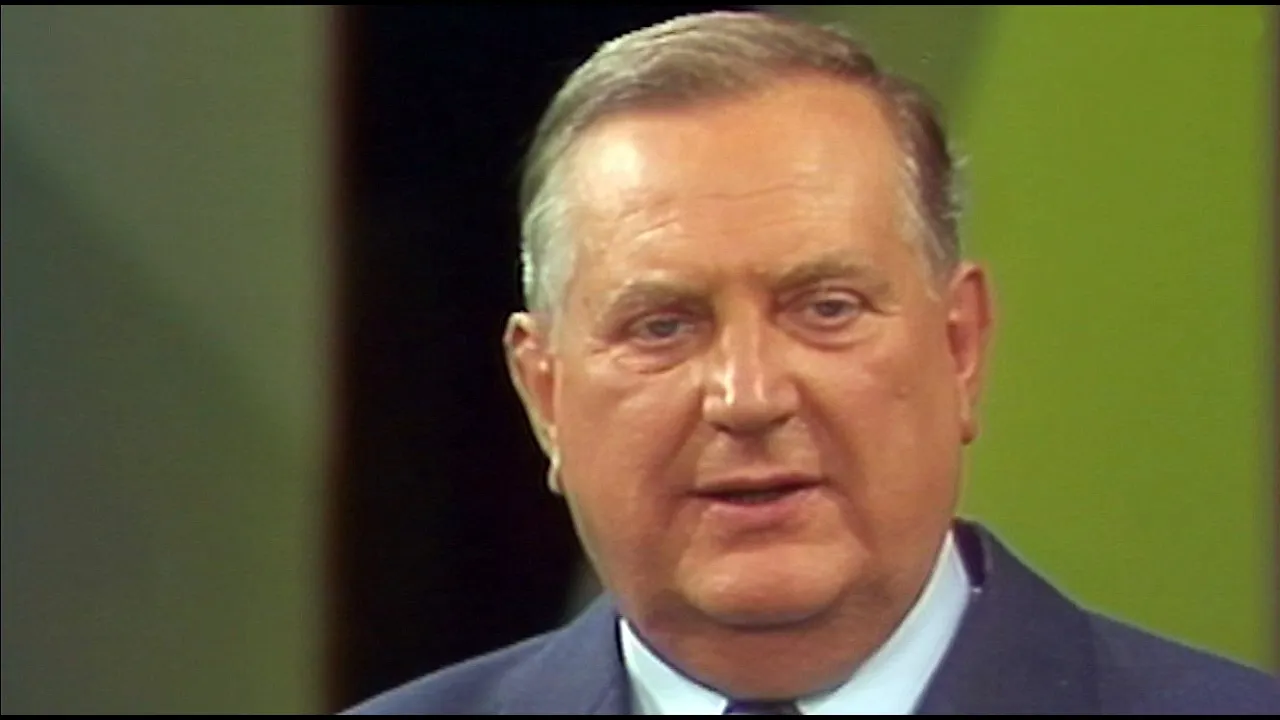





Civil wars are driven by both greed (the quest for loot and control over natural resources) and grievance (injustice, exclusion, and inequality), which are not mutually exclusive but rather mutually reinforcing—greed creates oligarchies and kleptocracies that generate grievances, which in turn create opportunities for greedy leaders to exploit discontent, making simple econometric models inadequate for understanding complex conflicts.
Greed vs Grievance: The Economics of Civil War Explained | Economics of War & Peace Ep. 3
Added:The basic concepts of microeconomics, particularly rational choice theory and the role of opportunity costs in individual decision-making.
An introductory understanding of the 'Resource Curse' (or Paradox of Plenty) and how natural resource abundance can affect developing economies.
The distinction between state-level institutions and non-state actors, including the role of governance and state capacity in maintaining stability.
Familiarity with the historical context of post-colonial state formation, particularly in regions like Sub-Saharan Africa (e.g., the Democratic Republic of the Congo).
The Collier-Hoeffler Model: A deep dive into the landmark World Bank study that quantitatively pits economic opportunities (greed) against political/social injustices (grievance).
Economic policy and design of international interventions, such as the Kimberley Process for conflict diamonds and transparency initiatives for extractive industries.
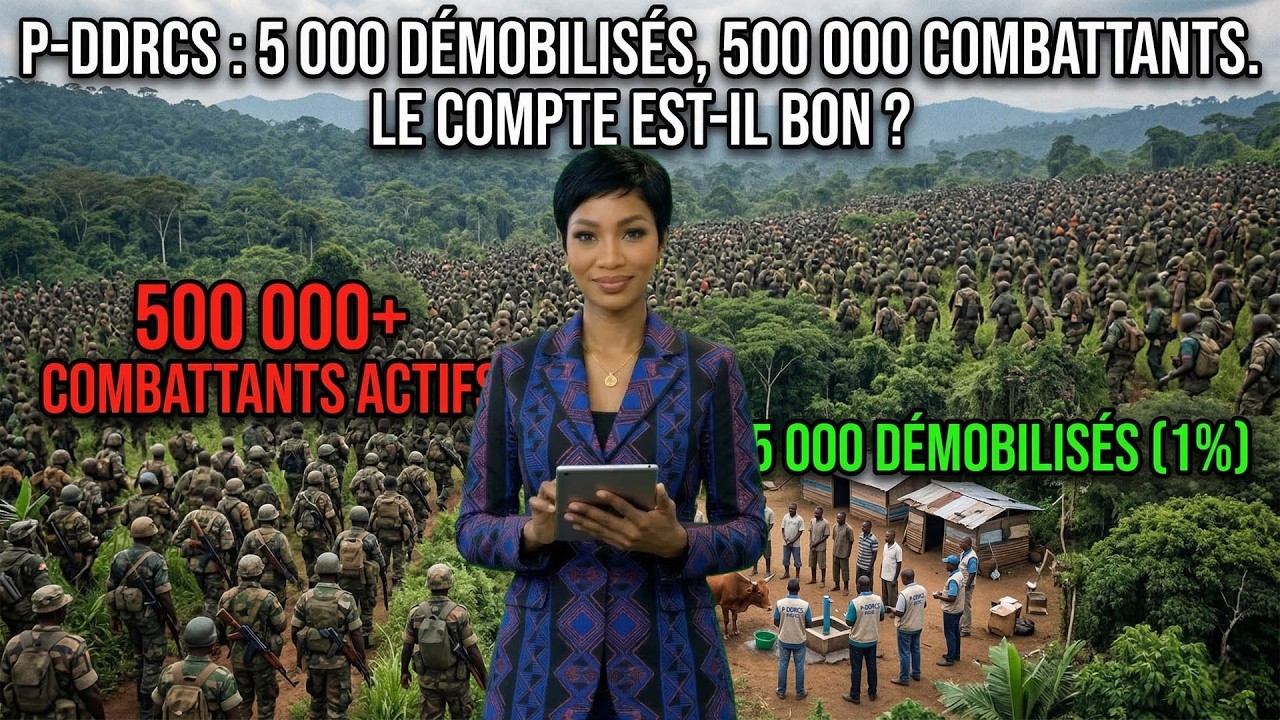
The economics of post-conflict reconstruction, including Disarmament, Demobilization, and Reintegration (DDR) programs and foreign aid effectiveness in fragile states.
Advanced behavioral economics of conflict, exploring how non-rational factors like identity, trauma, and ethnic polarization challenge conventional rational-actor models.
11.8K views357likes17:21Original Release: 2024-10-30
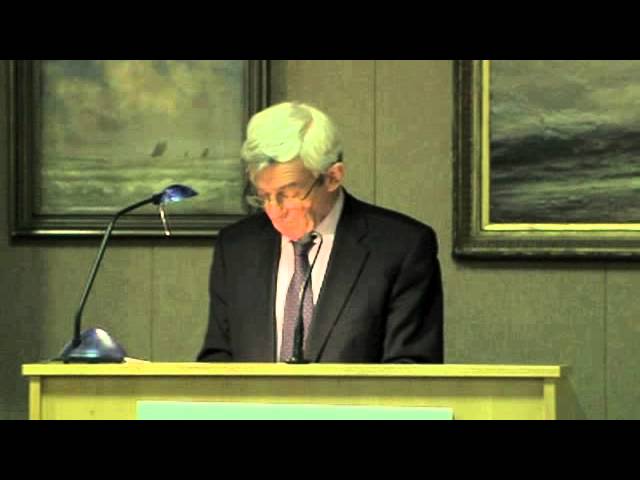
the end of the Cold War opened up space for not only economists but for policy makers as well to think more deeply about the causes of Civil War the approach during the Cold War was sometimes summed up with the aphorism he may be a son of a [ __ ] but at least he's our son of a [ __ ] applied to various dictators human rights abusers generals and kleptocrats around the world by policy makers both in Washington and in Moscow rather than regarding them merely as proxy conflicts between the United States and the Soviet Union instead it became possible to start looking more critically at the quality of governance in countries of Africa Asia Latin America that were receiving substantial quantities of external assistance from the superpowers in the multilateral institutions like the World Bank and the regional development Banks good governance became part of the development assistance agenda and so you began to lift up topics and open the door on topics that had been more or less swept under the rug or ignored during the Cold War itself [Music] in the late 1990s the World Bank launched a research program on the economics of civil war led by the Oxford Economist Paul ker the idea that economics could have something to do with the causes of Civil War was an advance over what had been up until then the prevailing wisdom in many quarters for example the idea that the cause of Civil Wars was a icient ethnic hatreds that Were Somehow erupting after the restraining hand of the superpower rivalry had been lifted that had become fashionable as an explanation for example of the Balkan Wars and of course the old notion that the Civil Wars could be entirely explained as International conspiracies by the Communists or anti-communists as the case may be uh fell out of uh relevance as well so it became possible to think about well what else would explain the origins and Persistence of these ongoing conflicts there were some limitations however in the approach that was taken or at least initially adopted by the World Bank research program the possible role of economics in explaining Civil Wars was partitioned into two more or less mutually exclusive categories one of which was labeled greed and the other of which was labeled grievance greed was seen as a way to explain conflict as being driven by the Quest for loot rational but socially perverse Behavior individually rational that is but having perverse effects from a social standpoint in which what motivates the Waring parties is a struggle for control over minerals oil or other riches in the initial econometric studies undertaken to test the roles of greed in the Genesis of Civil Wars a proxy variable that was used and found to be quite significant as it turned out was the share of uh primary Commodities and in particular minerals and oil in a country's economy and exports the interpretation put upon this was that it was the availability of these resources this natural wealth Bounty that prompted competing actors to engage in struggles violent struggles for control of those resources in the interest of their own personal enrichment and to provide glue or oil for their own political careers that finding helped to motivate some useful uh interventions including for example the efforts undertaken under the opes of the United Nations to curtail the trade in what were called blood diamonds and the trafficking of diamonds out of parts of subsaharan Africa where the diamond trade was providing both a fuel for conflict and a motive for its perpetuation more generally the policy prescriptions that flowed from the greed diagnosis of the causes of Civil War was that that what's needed is a strengthening of the rule of law and good governance these were useful insights but in framing greed as the driver of conflict rather than as one piece of a larger story it not only oversimplified but also uh sometimes led to downplaying the importance of other causes the other main cause in the bank's initial framework was grievance here the story it's sort of an alternative economic story centered on Injustice exclusion High degrees of inequality as a driver of discontent rebellion and ultimately Civil War and so here the policy prescriptions focused on distributional Justice inclusion Equity as policies that would help to head off the risk of violent conflict one of the major weaknesses of the world bank's approach was that it posed these really as an either or set of Alternatives it was either greed versus grievance it could be one could be the other but the idea that these could actually be involved in some sort of mutually reinforcing interplay and interaction was not really Central to the agenda a second major weakness was that the econometric analysis used to measure the role of grievance was one specific measure of inequality the one that's most convenient uh because it's most widely used by economists and that is the genie coefficient of income distribution measuring the distribution of income from the top to the bottom from the rich to the poor which is a useful measure but far from the only useful measure of the degree of inequality in a so Society among the problems with the income Genie are that income inequality itself is notoriously poorly measured especially for purposes of international comparisons and secondly that inequalities in other variables apart from income like wealth assets as opposed to the income flow or political power um or um land ownership for example these things may also be important dimensions of inequality but they're not uh well captured by income alone and finally and perhaps most importantly the genie only measures vertical inequality as to say between rich and poor and doesn't measure what is sometimes called horizontal inequality that is to say inequalities amongst social groups defined on some non-income basis so instead of defined on the basis of Rich versus poor they're defined on the basis of variables like race ethnicity religion region language or even gender these are inequalities that are ubiquitous in fact very common in many societies but the genie coefficient doesn't measure those it's just measuring the difference between rich and poor regardless of the social categories to which people belong the importance of inequalities in that horizontal sense inequalities between different groups has long been apparent I think to anyone perhaps except some economists looking at Civil Wars and the way they play out the great late Jamaican musician Bob Marley captured the idea in his ballad war which began until the philosophy which hold One race Superior and another one inferior is finally and permanently discredited and abandoned everywhere is war in fact of course greed and grievance are not mutually exclusive both can be part of the same story of conflict in the same time and place indeed they can be mutually reinforcing greed can help to give rise to oligarchies kleptocracies highly concentrated wealth and power in the hands of a narrow class of people often from one particular race or region or ethnic group and of course most often men and at the same time grievances that result from that concentration of wealth and power can create opportunities for opportunists greedy individuals leaders to capitalize on that discontent in the name of rectifying these injustices to proceed to uh take the uh opportunity to line their own pockets in the process of mobilizing War so greed and grievance can in fact go together and indeed they often do simple econometric models which pit one variable against the other aren't necessarily well suited to testing for that they're good for testing preconceived uh hypothesis or or preconceptions but they're not necessarily good for Illuminating any as complex as the causes of Civil Wars in real times and real places for that purpose case studies can be more revealing and indeed in a second phase of the World Bank project they proceeded to carry out a number of case studies and the results from those helped to bring out that in fact there is an interaction between greed and grievance and provided the beginnings of a richer understanding of what what going on a good example of the greed and grievance interactions that was in one of the case studies that the bank commissioned what was up until the mid90s called zier and later became known as the Democratic Republic of Congo or DRC During the 32-year period of the rule of Joseph Mutu an army figure who was installed in with the help of the United States about a year after the DRC became independent when the initial president Patrice lumumba was overthrown and assassinated Mobutu ruled the country as a dictator resource extraction and wealth creation proceeded a pace but virtually none of that wealth trickled down as the saying goes to the ordinary people on the contrary per capita income declined uh for most people and by the 1980s about 70% of the country's population was living below the poverty line meanwhile Mutu himself was becoming one of the richest men in the world my colleague Lance induk kumana and I have estimated that the total amount of capital flight from zier that's unrecorded outflows of Foreign Exchange amounted to 12 billion or when you add imputed interest earnings on that money to $18 billion which exceeded the country's total foreign debt at the time of mobutu's overthrow which was about 14 billion Mobutu himself invested some of this money in extravagant ways he built a huge Palace in his home uh Village complete with a runway for his own Concord supersonic airplane that he he could use to travel non-stop from his village to meet his patrons in Washington DC during the Cold War he had a Chateau in the French Riviera complete with a heliport for his helicopter and gold fitted bathroom fixtures this was a prime example of what became known as kleptocracy rule uh by a thief the violent Rebellion that ultimately drove Mutu from power in the the mid 1990s was Unleashed by grievances against the regime that were seized upon by some of the leaders of the Rebellion who were pursuing their own greed agendas and this ignited massive Bloodshed that has I'm sorry to say continued up to the present day it's estimated that since mutu's overthrow roughly 6 million people have died in the DRC conflict making it the deadliest war since World War II with an even larger number of people displaced from their homes in the course of this war one thing that's been quite visible has indeed been the role of natural resource plunder as fuel for arms purchases and maintaining armed forces and as a motive for contending parties some of whom are supported by outside actors from the region now to uh carry on the battle to maintain control the DRC has some very very rich reserves not only of traditional minerals like gold and copper and diamonds but also of minerals that have now become very important in the new economy including Cobalt which is used in batteries colon which is used in cell phones and laptops also Rich resources in Timber these resources provide both a motive and a means to finance uh conflict transnational firms and neighboring countries are deeply involved both in the trade in these resources and in the conflict itself and in the recent book that my colleague Leon cumana and I co-edited called on the trail of capital flight from Africa the takers and the enablers my colleagues collab orators and I have called these networks that link transnational actors with um national uh combatants transnational plunder networks these are entities that span borders uh and that involve a mutually beneficial interaction mutually beneficial that is for the plunderers that takes place at the expense of everyone else in the society the result has of course been massive suffering and deprivation in a land richly endowed with natural resources an example of what sometimes is called the Paradox of Plenty or the resource curse the idea that actually instead of being a blessing as one might imagine natural resources would be they can turn out to be a curse for the people of a country particularly if those resources attract predators plunderers and kleptocrats who proceed to make their lives a living hell and the DRC and elsewhere war is not only about economics but economics does play an important role and given the importance of economic forces including greed and grievance as drivers of conflict as well as the enormous costs that conflict creates for the economy and for the people of the country where the conflict is taking place the irresponsibility and insufficiency of the shrug and smug responses of conventional economics becomes ever more apparent
Up Next

9:32
Nudge by Thaler & Sunstein: Behavioral Economics Explained
@PeteJudo1
67.1K views•2023-03-24
5:07
Impact of Yuan in Indo-Russian Trade Amid Sanctions
@WION
261.9K views•2022-07-01
10:33
Behavioral Economics Explained: Rationality, Nudges, and Risk
@crashcourse
1.1M views•2016-03-12

113:18
The Age of Easy Money: Fed & Inflation | Full Documentary
@frontline
21.2M views•2023-03-15
Related Study Plans & Knowledge Roadmaps
Structured learning paths in Economics
economics
Sovereign Debt: Defaults, IMF & Restructuring
01Introduction to Sovereign Debt & Government Bonds
02Debt Sustainability & Credit Ratings
03Anatomy and History of Debt Crises
+ 2 more learning modules
12h5 modules
Explore Roadmap
economics
Market Design: Matching Theory & Gale-Shapley
01Introduction to Market Design and Price-Free Markets
02Two-Sided Matching & The Gale-Shapley Algorithm
03School Choice Systems and Mechanism Design
+ 2 more learning modules
10h5 modules
Explore Roadmap
economics
Impossible Trinity: Forex, Capital & Policy
01Introduction to Monetary Policy and Central Banking
02Exchange Rates and International Capital Flows
03The Mundell-Fleming Model
+ 2 more learning modules
8h5 modules
Explore Roadmap
economics
Healthcare Economics: Market Failures & Systems
01Introduction to Healthcare Markets and Market Failure
02Asymmetric Information and Adverse Selection
03Moral Hazard and Insurance Design
+ 2 more learning modules
12h5 modules
Explore Roadmap