


















![The strange case of Michelle O'Keefe [True Crime Documentary]](https://i.ytimg.com/vi_webp/6XVN9gK9bvw/maxresdefault.webp)
Effective police interrogation relies on psychological techniques rather than intimidation; treating suspects with dignity and using environmental cues like blank walls, strategic seating, and food observation helps build rapport and increases the likelihood of obtaining truthful confessions, as guilty subjects are often more curious about what investigators know and therefore more likely to waive their rights.
Criminal Interrogation Techniques: Inside the Houston Homicide Box
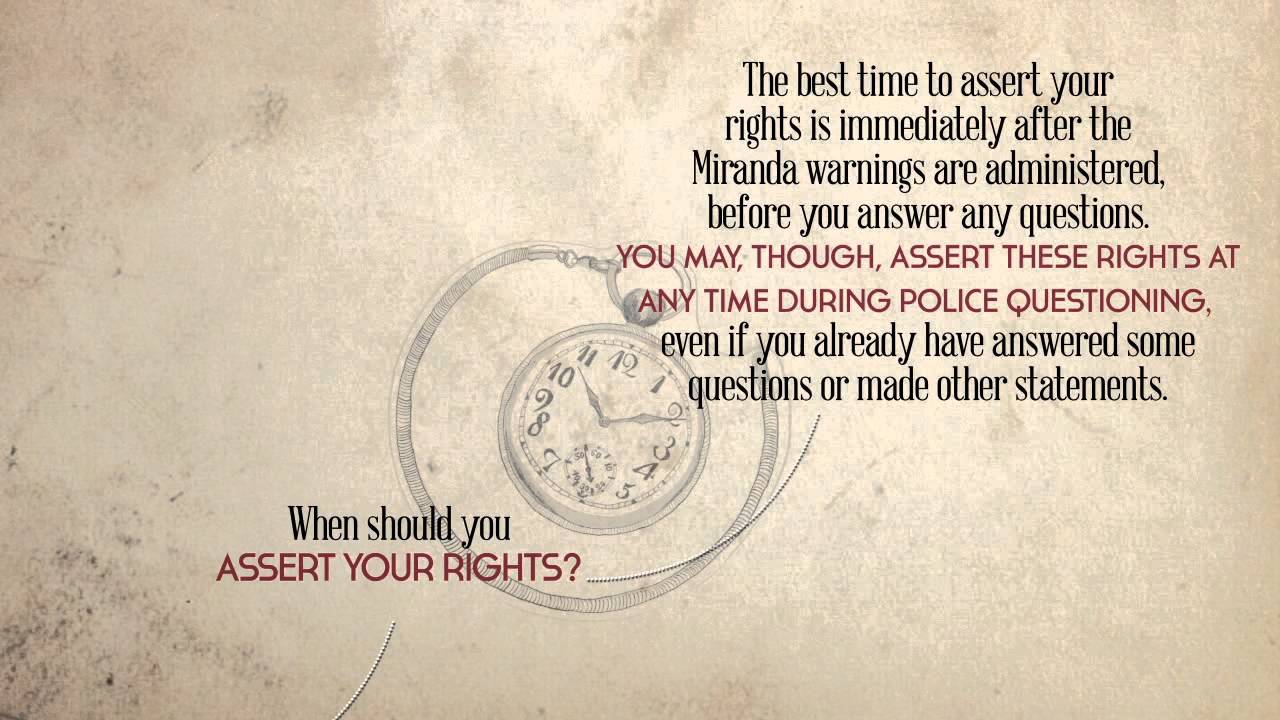
Added:Understanding of the constitutional rights of suspects, particularly Fifth and Sixth Amendment protections (e.g., Miranda warnings) governing custodial interrogations in the United States.
The conceptual distinction between investigative interviewing (information-gathering) and interrogation (confession-seeking).
Basic principles of behavioral psychology, specifically how cognitive load, stress, and anxiety manifest in verbal and non-verbal communication.
An overview of the standard criminal investigation pipeline, identifying where interrogation fits relative to evidence collection and crime scene analysis.
The study of false confessions, analyzing the psychological mechanisms (such as compliance and internalization) that lead innocent individuals to confess.
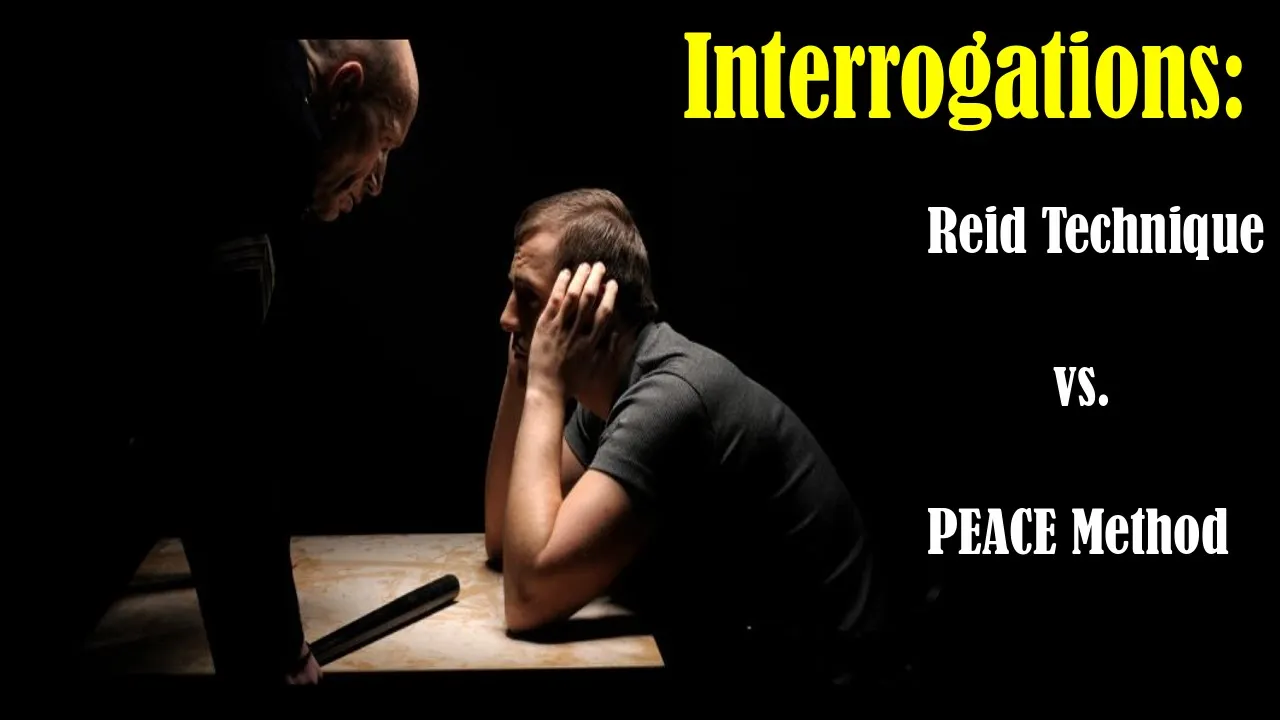
Comparative analysis of interrogation methodologies, such as the accusatory Reid Technique versus the information-gathering PEACE model.
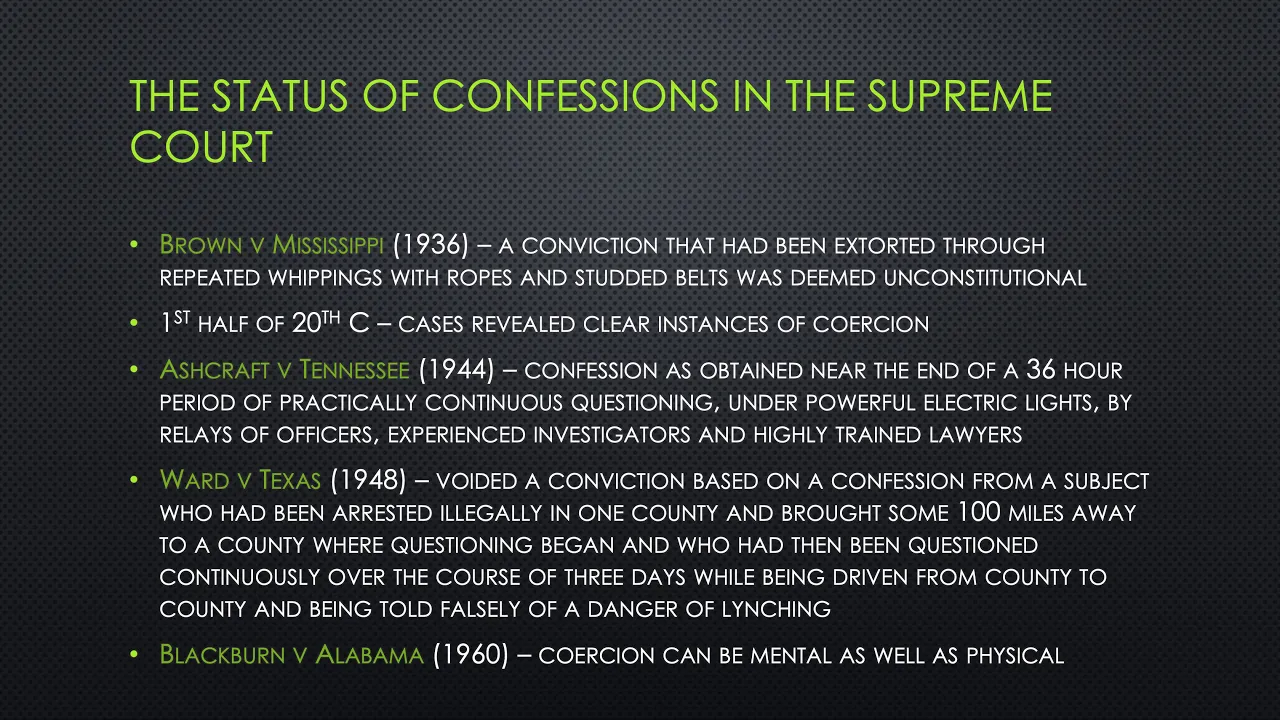
The legal admissibility of confession evidence, exploring how courts evaluate the voluntariness and reliability of statements obtained during interrogation.
Advanced cognitive interviewing techniques used to enhance eyewitness memory recall without introducing bias or false information.
210K views653likes7:24Original Release: 2010-09-01
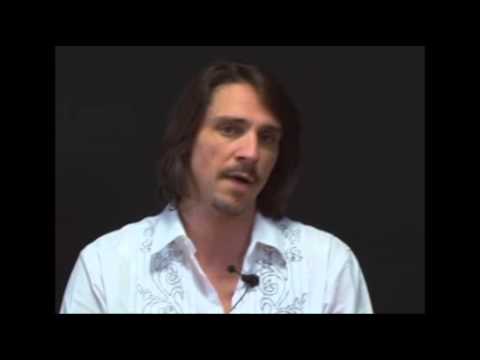
in any police investigation you have victims suspects evidence and then there's what happens in the interrogation room the box in there is a masterful game of cat and mouse where the goal is supposed to be the truth now you may have seen interrogations play out in some TV cop show but you've probably never seen the real deal until now I always wanted to be a police officer from the streets work in the big city Houston homicide detective Sergeant Brian Harris knows the streets there'll be another entrance on the back side he knows how to fire a pistol and he knows how to work a crime scene his Eric have a friend named am Berto but his real talent comes out here in the interrogation room or as the cops call it the Box this is the Box what does this place mean to you this is the place where it all happens can save a lot of families a lot of Heartache it makes sense out of all the nonsense of craziness of some of the deaths that we deal with Harris is the grand Inquisitor of Houston homicide he teaches his technique at the HPD Academy and to other departments around the country how important is what happens in the Box in a courtroom when a jury sees videotape or a written confession it's the most damaging I think kind of evidence that there is the police interrogation has been a staple of TV cop shows for Generations so what you tell yourself so you can sleep at night but while the belligerent in your face style might work in Hollywood tell me the truth yelling at him smacking them making them feel like a like a piece of dirt at least here in Houston Texas it's not going to work Harris is known for a decidedly different technique say whatever you can to keep them in that chair what do you think it is about you that makes you effective I treat them with dignity and even when you wanted to divorce you still took care of her not many men would do that Jim if they can see me as a person that views that with dignity the chances of communication are starting to open up and certainly prime time has been granted unprecedented access to explore how Harris Plies his trade by examining three murder investigations which highlight his skill case number one August 16th 2002 police are called to check on 73-year-old Patty Fay mccan neighbors say newspapers have been piling up on her doorstep I walked in the house with HPD and um that's when we found my aunt laying face down on the couch and realized she she was gone an autopsy revealed murder this is one of my favorite pictures her sister leavon and niece carol immediately suspected her estranged husband James mccan you could pick up on Vibes that he wanted to get rid of my sister just look mean and hateful at her just daggers had come out of his eyes at her Harris invites McAn down to the station I'm Brian Harris I needed to speak to Jim mccan because at this point in the investigation I had very little physical evidence case number two August 9th 2006 police are called to a local park and discover the body of 15-year-old Jose Lorenzo he was a beautiful and handsome boy he was and he is my angel Jose cell phone records indicate that just before the murder he had received numerous phone calls from a friend 15-year-old Frank Spencer who's brought in as the prime suspect police think the murder is Gang Related Frank is part of a gang and uh the gang asked Frank to help kill his friend case number three July 18th 2003 four young people are shot dead in the Tranquil suburb of Clear Lake after years of dead ends police receive an anonymous tip leading them to this woman Christine Pilla a close friend of the female victims Rachel kudus and Tiffany RL somebody who some would say looks very innocent how could this young girl you know do such Anil act heol liila has fallen a long way since being voted Miss Irresistible by her High School classmates when she's in the interview room here very manipulative girl uh the manipulative uh liar before an interview begins Harris makes sure the box is set up in a way that gives him a psychological Edge the walls are kept blank when people are under a lot of anxiety their mind can wander and focus on posters or pictures instead of focusing on you the suspect's chair on straight legs while the interrogators is on rollers because I may start off being 3 to 4 ft away but the right about to confess I may be within inches of them and usually just as he enters the room Snickers bar food is huge Harris likes to run a little experiment if they have food in front of them you don't want any of your food anymore and they don't eat or they're having a hard time eating that tells me I might have a shot at this person they have a conscience they have a soul because how many of us when we've been so upset tried to eat a meal we'll come back I'm Payola for one didn't even touch her drink take some water and I'm keenly aware that she's not touching the water so perhaps her stomach's in that knot perhaps there is a soul inside there and she's going to confess notice there are no lawyers in the room that's because Harris has either talked his suspects into sitting down voluntarily we told you before you were not under arrest okay or talk them out of invoking those all important Miranda rights I'm going to you what's called your legal warning Texas is Miranda on steroids uh we go overboard with with our statutory warnings so how do you talk around that issue without giving them a good idea of asking for a lawyer I'll say you know Chris I want to talk to you and I want to share some things with you but in order for me to do that I have to read what's called your legal warning do you understand me you have to wave that means give up your right so I can hear what's going on what happened do you understand a little manipulative though I want to hear your side of the story but for me to hear your side you have to wave this it's a little manipulative that's the truth curiously Harris says guilty subjects are actually more likely to wave their rights than the innocent did you see that dude man he just that sucker went down man the people who end up talking to us are more curious to find out what we know and that's why they wave their rights I'm just a cop they think they're smarter than me and perhaps they are he's an extremely cunning man he's very manipulative the interrogations have begun for James mccan Frank Spencer and Christine Pilla now the game is on a cat and mouse game true cat KN game [Music]
Up Next

89:34
False Memories and Eyewitness Testimony: Elizabeth Loftus Interview
@TheOriginsPodcast
19.4K views•2020-01-27

68:32
Cognitive Skills for Differentiated Instruction | Teacher PD
@BrainWareLearning
631 views•2017-12-17

9:55
Thinking, Fast and Slow: Daniel Kahneman Animated Book Summary
@FightMediocrity
2.3M views•2015-06-05

6:40
The Nocebo Effect: How Beliefs Can Cause Real Harm
@CGPGrey
10.4M views•2013-12-23
Related Study Plans & Knowledge Roadmaps
Structured learning paths in Psychology
psychology
Neuroscience of Creativity: Networks & Training
01Foundations of Creative Cognition
02The Cognitive Neuroscience of Insight & Fixation
03The Triple Network Model of Creativity
+ 1 more learning modules
15h4 modules
Explore Roadmap
psychology
Imposter Syndrome: Etiology & CBT Framework
01Defining the Imposter Phenomenon
02Socio-Developmental Etiologies
03CBT Fundamentals & Thought Distortions
+ 2 more learning modules
15h5 modules
Explore Roadmap
psychology
Adult ADHD: Executive Dysfunction & Scaffolding
01Neurobiology of the ADHD Brain
02The Core Triad of Executive Deficits
03Executive Dysfunction and Emotional Regulation
+ 2 more learning modules
12h5 modules
Explore Roadmap
psychology
Loneliness: Evolution, Neurobiology & CBT
01Evolutionary Origins of Human Connection and Loneliness
02The Neurobiology and Physiology of Chronic Loneliness
03Maladaptive Social Cognition: The Psychological Loop
+ 2 more learning modules
12h5 modules
Explore Roadmap