
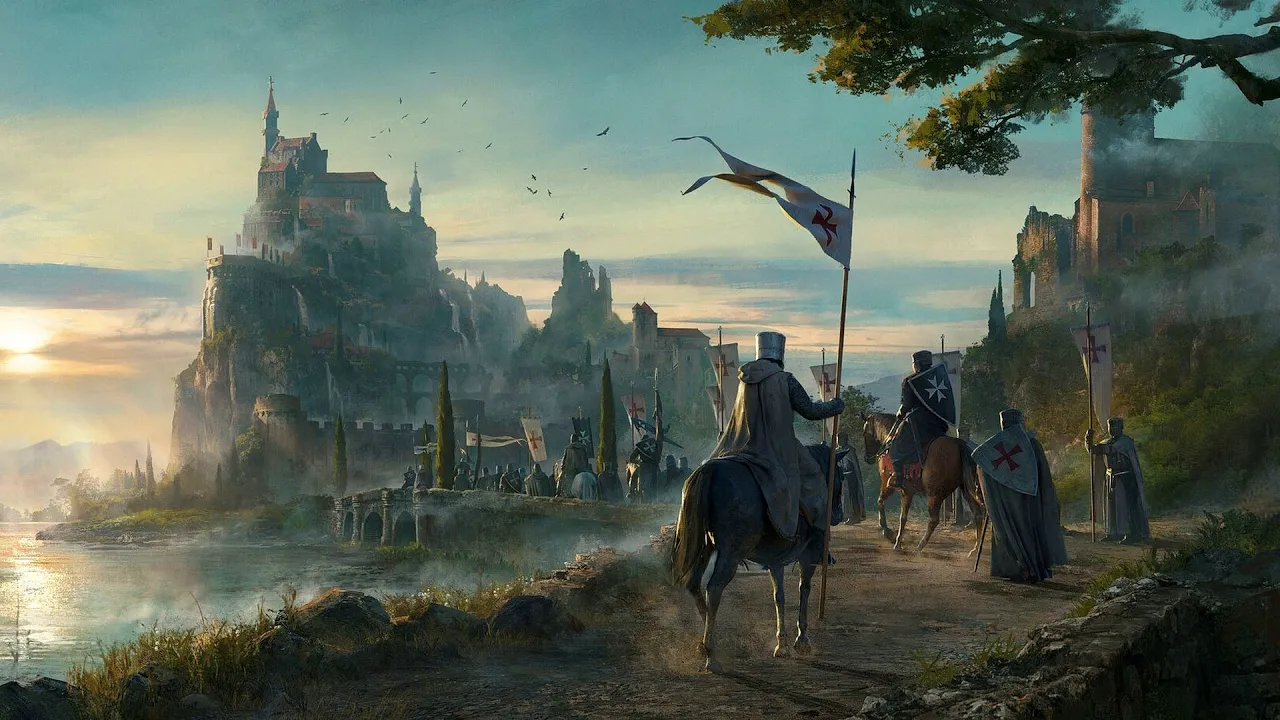


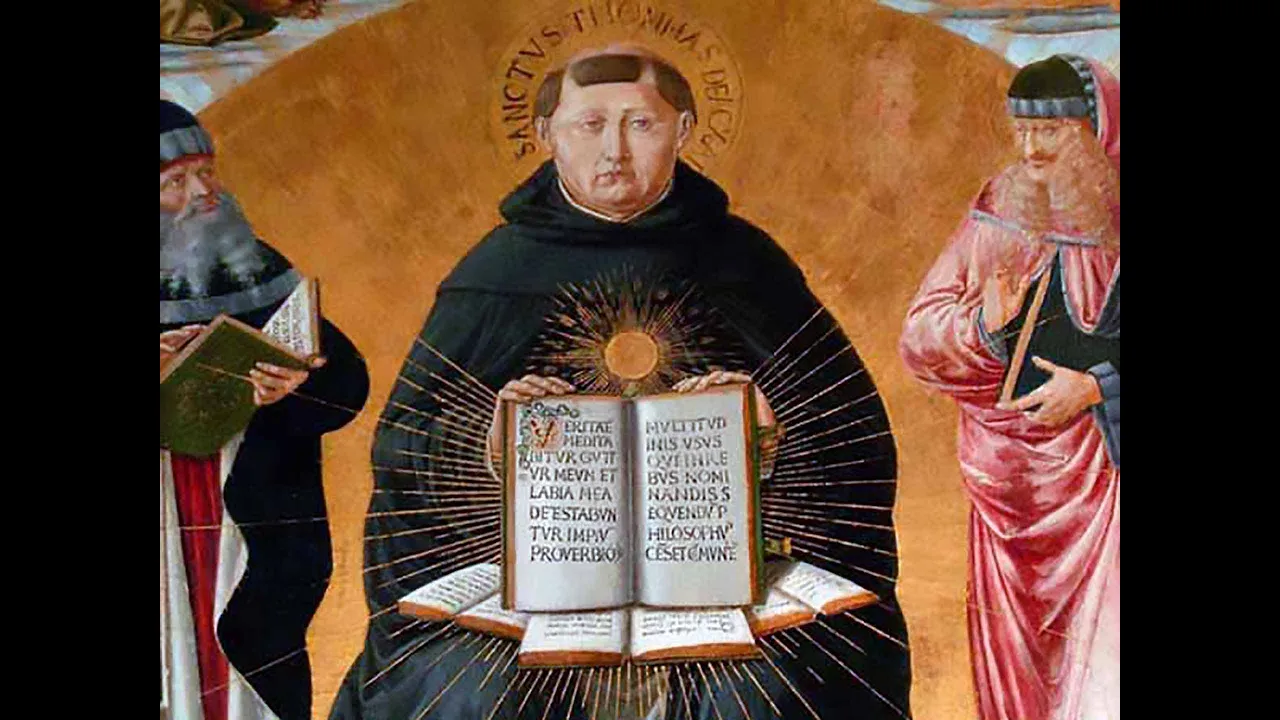


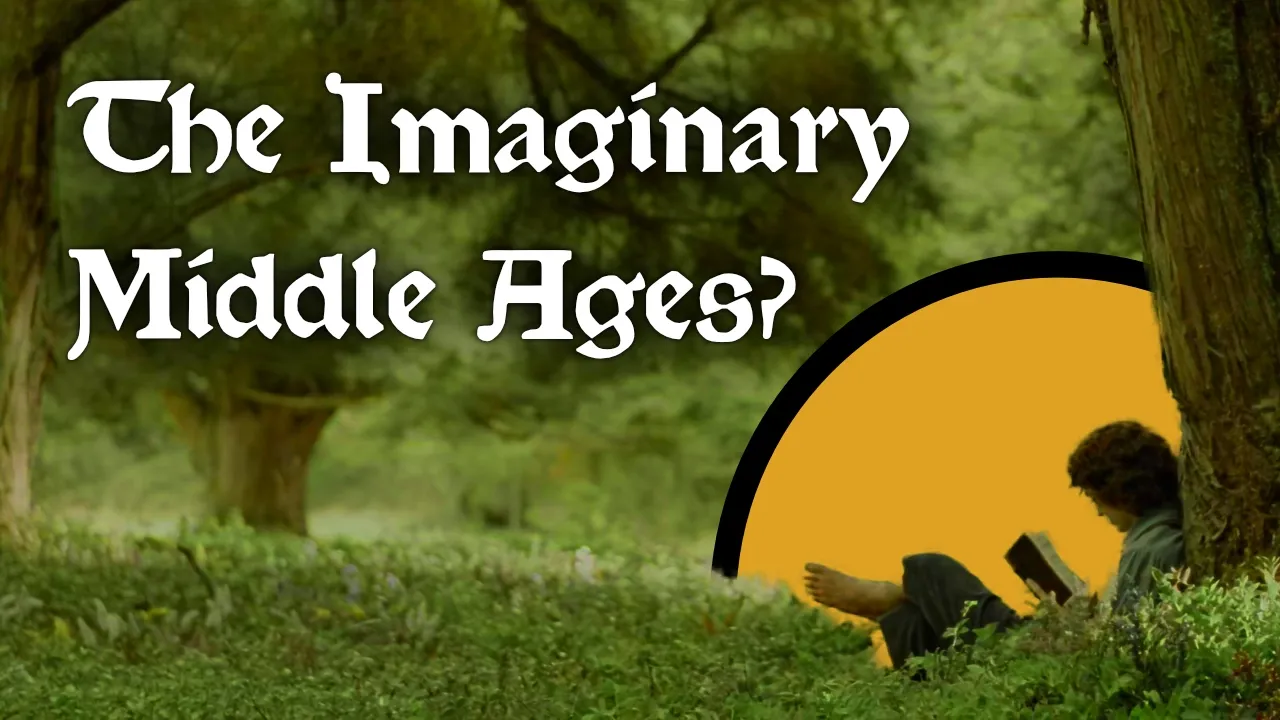













Medievalism—the cultural imagination of the Middle Ages created by modern scholars, artists, and authors—can be analyzed through three key concepts: (1) the author's attitude toward the Middle Ages (sympathetic/unsympathetic), (2) the assumed didactic authority of the work (high/low), and (3) the relationship with the canonical medieval imaginary (resisting/challenging). These metrics help us understand how modern works shape our collective memory of the medieval past, as demonstrated through examples like Tolkien's Lord of the Rings (sympathetic, low authority, eventually canonical) versus Monty Python's Holy Grail (unsympathetic, low authority, satirical).
Analyzing Medievalism: 3 Key Concepts in Cultural Memory
Added:Basic historical understanding of the European Middle Ages (approx. 500–1500 CE) to distinguish actual history from later cultural myths.
The fundamental distinction between 'Medieval History' (the study of the actual medieval past) and 'Medievalism' (the study of how post-medieval societies have recreated and imagined that past).
Familiarity with the concept of 'cultural memory'—how societies collectively construct, inherit, and transmit narratives about history.
Basic literary and cultural theory concepts, such as representation, reception theory, and historiography.
Investigating 'Neomedievalism' and how medieval tropes are simulated and consumed in digital media, video games, and modern fantasy literature.
Analyzing political medievalism, specifically how medieval symbols, myths, and crusader rhetoric are co-opted by modern political and nationalist movements.
Exploring 'Eco-Medievalism' and the projection of modern environmental anxieties onto idealized, pre-industrial medieval landscapes.
Applying medievalism frameworks to the study of physical heritage, such as Gothic Revival architecture, Victorian medievalism, and living history tourism.
2.5K views330likes29:44Original Release: 2026-02-27
We have for the last 500 years, ever since the medieval period ended, been creating a cultural imagination of the Middle Ages, a phenomenon that we call medievalism. The Middle Ages existed, but we're the ones who study it, remember it, misremember it, adapt it, and create it. in medievalism, a new version of the Middle Ages that exists as an object within our cultural memory that may only have a tenuous relationship with that historical object. So, if we have a relationship with the medieval past and well, we've already spent a bunch of time studying the medieval, maybe it's time to also consider what is it that we're bringing to the table. Hi, I'm Dr. Gavin Davis and in this video I'm going to continue our conversation about medievalism, the cultural imagination of the Middle Ages.
We as a people of scholars, artists, authors, a community of people who are invested in medieval cultures, we've been creating our own shared cultural imagination of the Middle Ages and we can't access the authentically medieval except from our perspective now and through this cultural memory of the Middle Ages that we have constructed.
Medievalism is self-evidently a modern invention, writes Tom Shippy. He says one cannot have a middle without two ends and the very phrase the middle ages implies a prior and later period to frame those ages. Now medievalism is the study of the cultural imagination of the middle ages. Not the middle ages as it was but our memory of the middle ages and that includes everything from reimaginations of that medieval past and working culture today to even scholarship about the middle ages itself. We are all shaping the medieval past. So in this video, let's look at different structures, tools, language that we can use to describe the different postures, positions, relationships that we can have with the medieval. Now, the critical language for this video isn't my own. It comes from the work of Tom Shippy, a scholar you very well may have heard of before. He's a philologist medievalist by training, and he's published serious academic work in that field. However, it's more likely you've known him for his work on Tolken studies. And in this book, Medievalism Key Critical Terms by Elizabeth Emory and Richard Us, Tom Shippy writes the chapter on modernity. As Tom Shippy explains in the very beginning of this essay, medievalism is self-evidently a modern invention. Whatever the Middle Ages was, that there's no getting around the fact that we are the ones who have created medievalism. In this chapter, Tom Shippy postulates three factors that might be considered when triangulating an author or a creator's relationship with the Middle Ages, whether or not a work has a positive or negative relationship with the Middle Ages, whether a work has a high didactic authority or low didactic authority.
I'll get into what that means later, and thirdly, the degree to which a work is or isn't engaging with a sense of the canonical middle ages. Now, there are strengths and weaknesses to this model.
A major strength of Shippy's work here is he introduces language to be able to much more precisely describe what a medievalism is doing beyond a general sense of uh it seems a bit different from this other thing. However, there are some shortcomings to how he develops his model over the course of these seven pages. For one, he relies pretty heavily on describing them according to a three-dimensional model that he has in his head. But he doesn't call them by their x, y, or z axes. and he doesn't exactly define which end of each axis represents what. So, in my humble opinion, this essay falls very much so into the genre of a very smart person's relatively disorganized thoughts. That's no fault to Shippy. And honestly, I don't think he'd mind that I say that.
He says right here that this is just the first suggestion. It's some generalizations. Also, over the course of these pages, Shippy moves fluidly between a bunch of different example medievalisms rather than taking and defining each of these axes in turn. So in this video, I want to do that. I want to take each of these terms, identify them with a bit more precision, maybe develop them a little bit more, at least for our purposes, and then apply them to a bunch of examples. So that way we can develop our critical language for describing with more precision the relationship between a medievalism and the medieval past. Right? With that, let's begin with the first of these metrics, which Tom Shippy describes as the author's own attitude towards the Middle Ages itself. either contemptuous versus agilatory or put differently, the Middle Ages viewed negatively or the Middle Ages viewed positively.
This seems to me like a reasonable enough place to start. If we just finished watching a movie together and I were to ask you what you think, the first question I'd ask you' be like, "Well, what do you think? Did you like it?" And there definitely are many medievalisms that criticize or celebrate the Middle Ages to some degree or another. The example that Shippy uses is Mark Twain's a Connecticut Yankee and King Arthur's Court. Mark Twain hated the Middle Ages, or at least he hated what the Middle Ages was doing to the aristocracy in the South. Mark Twain imagines Arthur's court as being, despite its trappings, extremely uncivilized, being a backwards kind of culture. And Mark Twain absolutely privileges his own moment, the sense of modernity in opposition to the contemptuous relationship that Mark Twain's a Connecticut Yankee King Arthur's Court has with the Middle Ages.
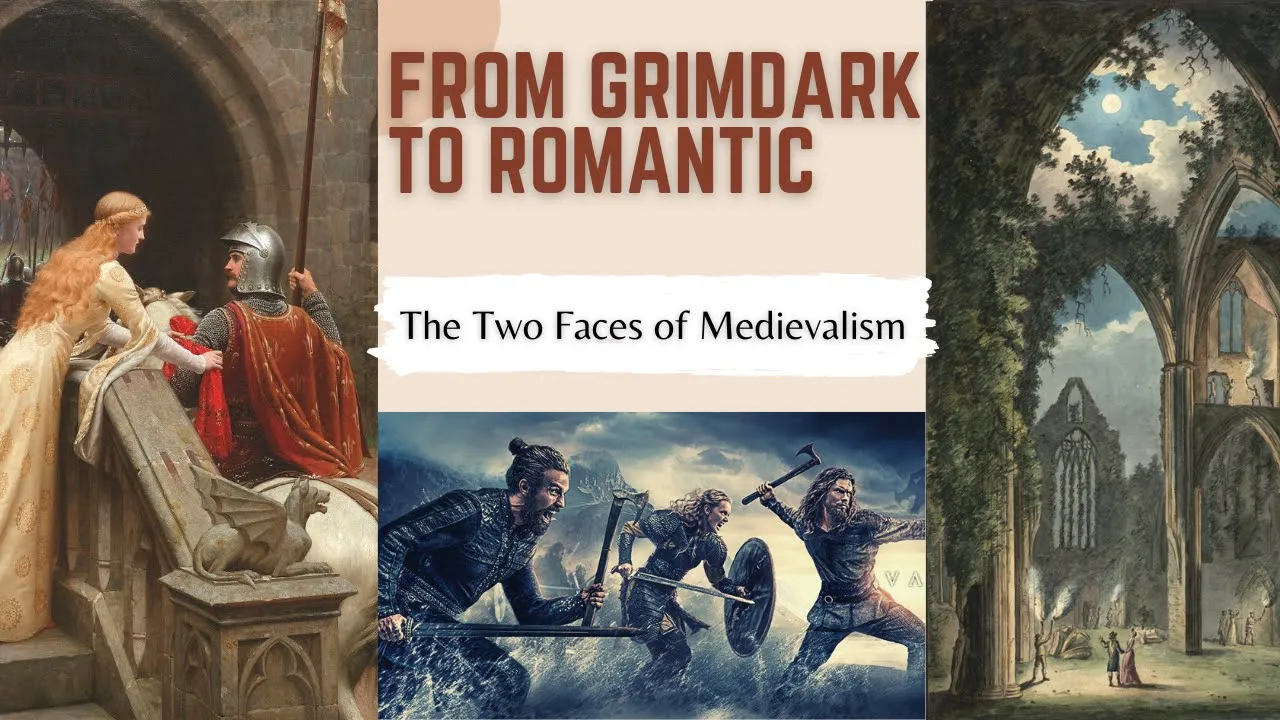
the other end of the spectrum we might have something like well th White's once and future king and that's not to say that it loves everything about the middle ages but it has many things within the middle ages that it finds especially beautiful or valuable from this kind of romanticized view of the middle ages we get the ideal of the night in shining armor what they're supposed to represent now this spread of the positive view of the middle ages versus the negative view of the middle ages the contemptuous versus the agilatory I think this is a good starting point but if we're really leaning into it. These are really simple terms to describe a very complex relationship, especially when on top of that, we already have the metric of the grotesque versus the romantic middle ages, which we talked about in my last video. David Matthews in his medievalism of critical history develops the terms the grotesque middle ages and the romantic middle ages to describe the dark, unpleasant, backward, univilized middle ages and the overly romanticized, idealized, beautiful and aspirational kind of middle ages. Both of these are misrememberings in their own way, but they do seem to look an awful lot like what Tom Shippy is describing here. a very positive view of the Middle Ages and a negative view of of the Middle Ages. But here's the thing. David Matthews, the grotesque Middle Ages and the Romantic Middle Ages, those are describing the medievalism. What we want to do is describe the work or the author's relationship with the medieval past and they aren't grotesque or romantic. So what if instead of the positive view of the Middle Ages and the negative view of the Middle Ages, what if we developed this a little bit further and called it a sympathetic view of the Middle Ages and an unsympathetic view of the Middle Ages, right? So what are other examples we can use to flesh this out? I think the first thing that comes to mind for a lot of us might be just like insert your Disney fantasy of choice. A lot of these movies, many of which are classics for us now, uh, present profoundly sympathetic characters living in a medieval past.
And we could have a conversation as to whether or not the medieval world that they're living in is a romantic middle ages or a grotesque Middle Ages.
Remember, in a lot of these stories, there's an evil witch that will come along and do something terrible to you.
And that's that's an element of the grotesque Middle Ages. I think nevertheless, in a lot of those Disney stories, we're invited to view its characters very sympathetically. For example, take Merida from Brave. Pretty overwhelmingly a positive view of the Middle Ages, right? And it's inviting us to sympathize with her and the relationship she has with her mother.
And it's envisioning a medieval Scotland where a princess can embody agency and self assuredness and independence.
Another example of a medievalism that views the Middle Ages positively or is very sympathetic towards the Middle Ages is the medieval world imagined by the Princess Bride. Not only is the story a kind of idealization of a medieval past, but we are coached through our experience of this medieval world by the kindly old grandpa narrator figure. And on top of this, there's this contrast between the rich warm colors of Wesley's quest to find Buttercup and the cold unpleasantness where the boy in the modern age is the one who is sick and lying in bed. This is a medievalism, an imagination of the medieval past that has idealized and romanticized and is especially sympathetic towards its memory of the Middle Ages. Now, for the other side of this metric, we would be looking for a negative or unsympathetic view of the Middle Ages. And while yes, the clearest cut example might very well be a Connecticut Yankee and King Arthur's Court, but another slightly more upto-date and certainly more well-known piece of satire that has a very similar relationship with the Middle Ages would be Monty Python in the quest for the Holy Grail. Yeah, this movie is hilarious. It's doing it for laughs and to be funny and for biting political satire, and it is not kind to its memory of the Middle Ages. At its basis, the quest for the Holy Grail imagines a King Arthur, a paragon of English identity as dumb and the knights who surround him as dumber. It is a movie of backwards witch trials and rather irreverent takes on medieval faith. And all of this is serving to satarize an overly romanticized view of England's past that Monty Python is trying its damnedest to undercut. Right.
So much for metric one. For metric 2, Tom Shippy shifts from thinking about the author or works relationship with the Middle Ages to thinking about how the author's relationship with the readers or with the audience can change how the work functions as of medievalism. Okay, bear with me here.
This one is by far the most complex of the three factors, but it's genuinely my favorite and I think the most interesting. In Tom Shippy's words, this is the author's attitude to his her imagined readers. at one extreme superior hortutoatory ready to deliver information not expected to be challenged at the other tentative or ingratiating. Okay, so in one sense you can think of this as the author or work's confidence level in presenting to you their vision of the Middle Ages. But to be the most precise with this, the term that I would like to use, the phrase that I think represents what Tom Shippy is getting at is the author or works assumed didactic authority. And didactic here just means teaching or intending for instruction. Let me give you two examples. A professor of medieval history delivering a lecture in their classroom telling you how the Middle Ages was. That is somebody who is shaping your memory of the Middle Ages, a medievalism, with high dididactic authority versus Disney's Robin Hood, the one with all the animals. This is also a medievalism. It's shaping our memory of the Middle Ages like the classroom, but it is doing so with low dididactic authority. It is not making any claims towards saying, "Here's how the Middle Ages actually was." Both of these situations are themselves medievalism in that both are creating, refashioning, adapting our memory of the Middle Ages.
However, one is doing so from claiming a place of high authority. Here's how it actually was. And another one is doing so unintentionally. Even though that particular world is not making any claims about being historically accurate, it still was no less a medievalism and still impacted a lot of our memories of the Middle Ages. So with these two ideas at least representing the ends of the spectrum, you can probably think of a bunch of different examples that fit within here. Think of historical fiction works that are supposedly a very well researched by the author. There's a bunch of movies that fit somewhere along the spectrum as well. So if we've got one end of the spectrum that is very high didactic authority, things like really really historically accurate movies, documentaries, people who are telling you the Middle Ages are what it actually is, right? Works that are making a very strong claim to no here is here's how the Middle Ages actually was. What would the opposite of that be? Well, medievalism takes all kinds of shapes and forms, and so it' be really easy to gesture broadly towards like, let's say, any kind of medieval fantasy. This is where you get the separation of, oh, it's clearly medieval in that it's a medievalism that's creating part of the idea of the medieval past, but it's not it's not trying to tell us how the medieval world actually was. But a particular medium that might be worth paying attention to actually is games or video games. Now, there certainly are historically accurate games or video games, right? Very famously, Kingdom Come: Deliverance pushed very, very hard to being as accurate a representation of the medieval world as possible. And of course, you can also always have the good luck of having a dungeon master who is some kind of medieval historian. But more often than not, these are going to be fantasies, imaginations of a medieval world that is not making any kind of claim towards historical accuracy. Think Baldersgate, Skyrim, The Witcher, The Legend of Zelda series, but even on top of their subject matter, the worlds narratively that they've created. Video games as a medium put you, modern person, in the driver's seat to get to tell your own story. And because of this, as a medium, I would say they tend towards having relatively low didactic authority. Even if a video game is a simulation of a medieval world, you dear modern person are imposing your own thoughts, feelings, narrative, will, action, choices into this world than making it your own, which is a very different experience from a professor who says, "No, no, that's not that's not how the Middle Ages was. It looked completely different. It looked like" and then they proceed to tell you how they thought the Middle Ages looked. Now for this particular metric that's describing how a work functions as medievalism it is important to note that the didactic authority that is being wielded here it's being assumed put on by the work or author or whatever it is which might be very different from actual authority. Bonafide experts in their fields who have all this research and data to back them up will present their arguments very conservatively which can read as tentative because they're saying here is what the evidence suggests that maybe the medieval world looked like now that I've said this thing here's all the qualifiers right now that is good scholarly practice that's being very limited in your claims and grounding it in a kind of basis and research but as a medievalism how something like that is going to shape our cultural imagination of the Middle Ages. Think about how differently that wielded authority is going to impact than let's say a YouTuber who says this is absolutely how the Middle Ages was.
That YouTuber may or may not have credentials in the field. But the way that this platform interacts with its audience means that people, let's say, teaching in public facing education are going to try and be claiming or aspiring towards a very high didactic authority.
Here's the thing. You didn't know about the Middle Ages as opposed to the scholars who have actual authority who because of their conventions and the ethics of scholarly practice need to present their arguments very carefully.
Now, having said this, with very good reasons, you might be looking at me and going, "Gavin, aren't you talking about yourself? You're a public-f facing educator talking on YouTube." Yes, I am.
Hello. I am profoundly aware that I am myself a medievalism in that I am interacting with and shaping our shared collective understanding of the middle ages which is what I want to be doing but I also am very much so aware that I am assuming a level of dactic authority both assumed in that I hope you'll believe me and also assumed in that I am leveraging the tools of this medium how to build a studio how to edit video to try and facilitate the process of me communicating the methodologies information the kinds of things I'd be responsible for teaching in a university. Figuring out how to translate those to you over this platform. It's not something that's unique to me. It's something that every medieval YouTuber does. And for what it's worth, believe you me, I know better than anyone that I have a PhD that is very green and fresh that I'm very new to YouTube. And imposter syndrome is a profoundly impactful phenomenon when it comes to let's say keeping one's ego in check. All right.
So, so far we've talked about well metric one the author's relationship with the middle ages either positive or negative or sympathetic or unsympathetic. Metric two talked about the author's relationship with their audience which can have either high dactic authority telling you exactly how the Middle Ages was or low didactic authority suggesting maybe how the Middle Ages might have been or imagined.
The third metric that Tom Shippy describes is the author's relationship with the imagined middle ages itself, especially as he puts it, the well-developed general awareness of the medieval imaginary in which crusades, friars, Robin Hood, Normans, and Saxons, and much else exist in a permanent anacronistic stew. I really like this third and final metric because it draws attention to the cultural middle ages as something that exists as distinct from each of us individually as well as the Middle Ages itself. But right off the gate, we do kind of have to push on this metric at least a little bit in how it's described. Shippy is especially interested here in the idea of anacronism in our memory of the Middle Ages. And that's observant and accurate, too. The medieval period as we know it roughly 500 to500 is a thousand years of history. And so since the Renaissance, literally the the beginning of the idea of the Middle Ages itself, people have assumed or conflated one end of the Middle Ages with another. And this collapsing of history is readily identifiable in very famous medievalisms that were very very handwavy about exactly what time period they were reproducing. And while I appreciate Shippy's emphasis on anacronism, I think what he's really getting at is the sense of the medieval cannon as it exists as a cultural memory, which is itself anacronistic more often than not. Think of it this way. If we could somehow take a net average of what everyone thinks the Middle Ages was, we would probably have something that's both very very recognizably medieval and yet not distinct to any one period and probably not that historically accurate. Anyways, literary cannons or cultural cannons are a helpful tool for thinking about this kind of thing because on the one hand they don't exist because we just make them up. And on the other hand, they exist because we make them up. We kind of collectively decide as a culture that there are certain things that are recognizable or authoritative. There is this authoritative mainstream that shapes our cultural awareness, our cultural imagination. And this very much so exists within our cultural imagination of the Middle Ages. It looks like Ivanho. It looks like King Arthur.
The picture of the Middle Ages that comes to my mind is profoundly from these books by Howard Pile. Howard Pile was an American illustrator of very anacronistic in Victorian tales of chivalry, romance, heroism, and adventure. And I bet a lot of these images are recognizable to a lot of us.
if nothing else, at least the tropes, themes, and vibes of these images, if not the actual content itself. Even if you're not familiar with the name Howard Pile or have read this particular book, you're familiar with the ideas behind these images because this is close to the cultural cannon of the Middle Ages.
It looks authoritative even though it is anacronistic and well, historically unmed. It's largely existing independently of the facts because it's shaped by culture and media and Hollywood and YouTube as much as it is the the history itself. So for this third axis then we can talk about to what degree is an author or medievalism resisting or challenging this cultural imagination, this cultural cannon of the Middle Ages. It may be that they're not challenging it, that they're just going along with the flow to tell the story that they're trying to tell, right?
Another example of very, let's say, canonical medieval movies would be like maybe a lot of the ones by Ridley Scott, his Robin Hood, for example, is fine. Is it exactly historically accurate? No.
Would just about anybody watching this probably go, "Wow, that looks pretty medieval." Absolutely. When this came out, it was probably sitting exactly in the center of here's what a realistic medieval world could look like according to a cannon of the medieval imaginary rather than a history book. And in opposition to this are the medievalisms that challenge or resist this medieval cannon, right? What this historical world looks like according to popular culture. My favorite example of this is what HEA is trying to do or historical European martial arts. Now, historical European martial arts or HEA is as best as we can figure out the study of historical sword fighting, historical swordsmanship. But even though what it's studying is the history itself, it is as an entity that exists, especially as one that is increasingly becoming a kind of combat sport. It is constructing an idea of what the Middle Ages looks like. And so, it is itself a medievalism. But so much of what it's trying to do and what the genre of sort YouTube tries to do is take these myths that exist within the received historical cannon of the Middle Ages and resist them or challenge them.
They're going to resist something that says, "Ah, here's what sword fighting in the Middle Ages looks like according to Hollywood." They would try and resist this received cultural imagination of the Middle Ages and try and figure out specifically here's what an unarmored judicial long sword duel would look like in 15th century Germany. And this metric that analyzes the cultural imagination of the Middle Ages, this cannon, if you will, that has become historically unmed. Well, this is where we can have the conversation about historical accuracy. An example of this that comes to mind is really Scott's Kingdom of Heaven. I think it fits pretty squarely within our cultural imagination of the Middle Ages. But what Ridley Scott is doing with this movie, I think, is less engaging with the historical past.
Ridley Scott's made pretty clear that he doesn't care so much for the actual history. He's trying to tell his own story. No, I think what he's doing with this is engaging with our cultural memory of the Crusades and the West's involvement in affairs in the Middle East. And he's trying to say something about this through his depiction of many different characters coming from many different ideologies in his imagination of the Middle East. And perhaps the strongest flavors of this are the barbaric Christian crusaders and the more civilized Muslim world. Another phenomenal example of a creative resistance to the cultural imagination of the Middle Ages would be this book Matrix by Lauren Grath. This beautiful work is very much so historical fiction.
It's not trying to make claims about how the Middle Ages actually was. Lauren Grath doesn't come at you with the Middle Ages with a high degree of dactic authority. But what this book does is it resists our overly masculine idea of the Middle Ages. And to resist this idea, Lauren Grath pays attention to the very female world of a woman's convent. And in my personal opinion, I think this book is beautiful. And as a medievalism, it's creative and distinct because she departs from a imagination of the medieval past that is so homogeneous and masculine that is so overburdened with just layers upon layers of baggage and inaccuracies. Even just to imagine in a creative work, how can a women's space of a medieval condent explore issues of gender, sexuality, and spirituality? So there you have it. Three metrics provided for us by Tom Shippy and refined by us to help articulate and define a modern work's relationship with the medieval. Metric one, which assesses a work's sympathetic or unsympathetic with the medieval itself. Metric two that measures a work's relationship with the audience by assessing how its assumed didactic authority affects how it operates as a medievalism. And finally, a third metric which assesses a work's relationship with the canon of the Middle Ages as it exists in our cultural memory today. So there's one final thing to do then, which I think would be to take a single work and put it through all three of these metrics and to see how it does. And for that work, why not pick something that's familiar to me and probably familiar to you and well familiar to Tom Shippy as well. Tolken's Lord of the Rings. Of course, the Lord of the Rings is probably the most foundational medieval text for probably more than a few of us.
And regardless of whatever historical elements may or may not be present in this medievalism, we can with this metric try and define what its relationship as a modern work is with the Middle Ages. Metric one, a positive or sympathetic or a negative or unsympathetic view of the Middle Ages. I think it'd be relatively uncontentious to say that this is a positive or sympathetic view of the Middle Ages.
Now, even though for the most part this conversation has felt like we've been comparing dichotoies, things on different ends of the spectrum, remember that a particular work can exist somewhere along the spectrum, right? Or even particular moments or characters.
And Tolken's really interesting because he has a diversity of characters and moments within his story. The characters within the Lord of the Rings that we can most easily identify with are for the most part the hobbits and they're not they're not the most medieval people, but they're existing within a medieval world. And by using these characters to bridge our modern experience with this medieval world, I think Tolken is trying to connect us more sympathetically with unimagination of the medieval past.
What's the Lord of the Rings relationship with its readers? Does the Lord of the Rings have a high didactic authority or a low didactic authority?
Well, this is kind of interesting because I would argue that in fact the Lord of the Rings has a pretty low didactic authority. The Hobbit begins.
Well, once in a hole there lived a hobbit, a little person who lives in a hole in the ground. The Fellowship of the Ring begins with a birthday party, and there are witch kings and fell beasts and giant spiders. Tolken is not making claims as to what the Middle Ages actually was in this. Tolken is very much so writing in fantasy, and he's comfortable writing in fantasy. The escapist departure from our material reality was an important part of fantasy to him. So, I think it's safe to say that he's actually speaking with low didactic authority. He's not telling us this is an imagination of the Middle Ages, which is incredible considering his own personal authority as a medievalist. Even though Tolken has so much authority, he does not wield it to say that the Lord of the Rings is what the Middle Ages looked like. Even though so many of us have adopted the Lord of the Rings as our cultural imagination of a Middle Ages. And to that point, what's Tolken's relationship with the medieval canon, right, with the received imagination of the Middle Ages? Well, and that's where it's interesting.
Canons can shift, right? And Tolken's has shifted over time. And so far as I'm aware, his imagination of the Middle Ages was pretty non-cononical in the beginning. It was pretty groundbreaking.
Yeah, there were Victorian conceptions of the medieval world and Tolken is telling a very heroic story almost in that kind of tradition in some ways, but Tolken's not writing in that tradition.
He's writing his own thing rooted very much in his very professional awareness and love of a vision of the medieval past. So, it wasn't canonical at the beginning and then it became so. The Lord of the Rings has shifted over the course of its lifespan to become like perhaps the canonical foundational text to medieval high fantasy today. So there you go. The Lord of the Rings, I think it is fond of the Middle Ages, has relatively low didactic authority and even though it wasn't very canonical at the beginning, it became foundational to the medieval cannon as we have it today.
Do you agree? If not, fantastic. I'd love to hear your thoughts in the comments below. And on top of that, I think these are only some of the means of thinking carefully about the medieval. What are other metrics we could consider for assessing and identifying medievalism? We can talk about how medievalism can map onto different ideology. To what degree medievalism is aware of itself as a medievalism or not? All of these, of course, are just part of a larger and continuing conversation. I have a PhD in English literature and I wrote a dissertation on swords as ideologically contested objects in old English literature. And this channel is where I want to put all the cool stuff I found.
Education in the humanities shouldn't be confined to just the university. And even though resources on studying actual medieval literature and thinking carefully about medievalisms can be tough to find, I'm trying to fix that here on this channel. If you're interested in this content, old books with swords in them or stories of, from, and about the Middle Ages, be sure to subscribe. I'd love to have you along.
And if you're interested in supporting this project, this channel is pretty dang new. It's still in its formative stages, and the only reason it can keep going is because of a fledgling Patreon that's got just a few supporters on there. If you're invested in education and old books with swords in them and wouldn't mind throwing me a few dollars a month, that's where you can support me and that's how we can keep this thing going. Medieval Literature's for everyone. This channel is about old books with swords in them. I'm Gavin the Medievalist and I'll see you next time.
Up Next

22:31
Medievalism Basics: Understanding the Middle Ages in Modern Culture
@aliciamckenzie8466
1.4K views•2021-09-04

33:02
The Great Schism of 1054: Causes and Consequences
@SacredCathedrals
113.5K views•2026-02-19
91:57
The Geopolitics of the Ukraine War and the Rise of Global Autocracy
@JordanHarbingerShow
468K views•2025-04-19
17:05
Understanding the Cold War: Superpower Conflicts and the Road to Détente
@OverSimplified
46.1M views•2019-01-24
Related Study Plans & Knowledge Roadmaps
Structured learning paths in History
history
Byzantine Iconoclasm: Theology, Art & Politics
01Foundations of Byzantium and Early Christian Images
02The First Iconoclasm: Leo III and the Crisis of Images
03Empress Irene, Nicaea II, and the Second Iconoclasm
+ 2 more learning modules
9h5 modules
Explore Roadmap
history
Iranian Revolution (Causes, Events & Legacy)
01The Pahlavi Dynasty and the Roots of Discontent
02The Spark of Rebellion and the Rise of Khomeini
031979: The Fall of the Shah and the Climax of the Revolution
+ 2 more learning modules
8h5 modules
Explore Roadmap
history
Mali Empire: Mansa Musa, Trade & Timbuktu
01Foundations of the Mali Empire
02The Trans-Saharan Gold and Salt Trade
03The Reign and Pilgrimage of Mansa Musa
+ 1 more learning modules
6h4 modules
Explore Roadmap
history
1947 Partition: Politics, Borders & Legacies
01Foundations of British India and the Divide
02The Political Negotiations and the Mountbatten Plan
03Drawing the Boundary: The Radcliffe Line
+ 2 more learning modules
8h5 modules
Explore Roadmap