






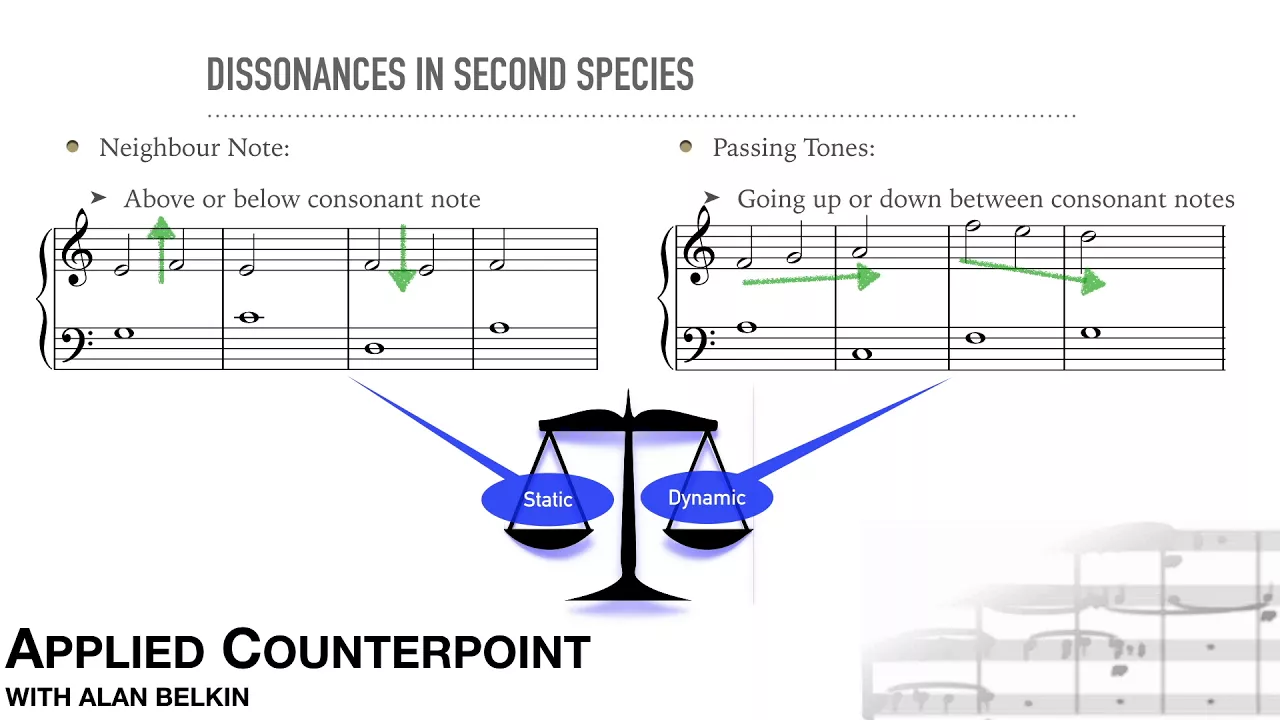






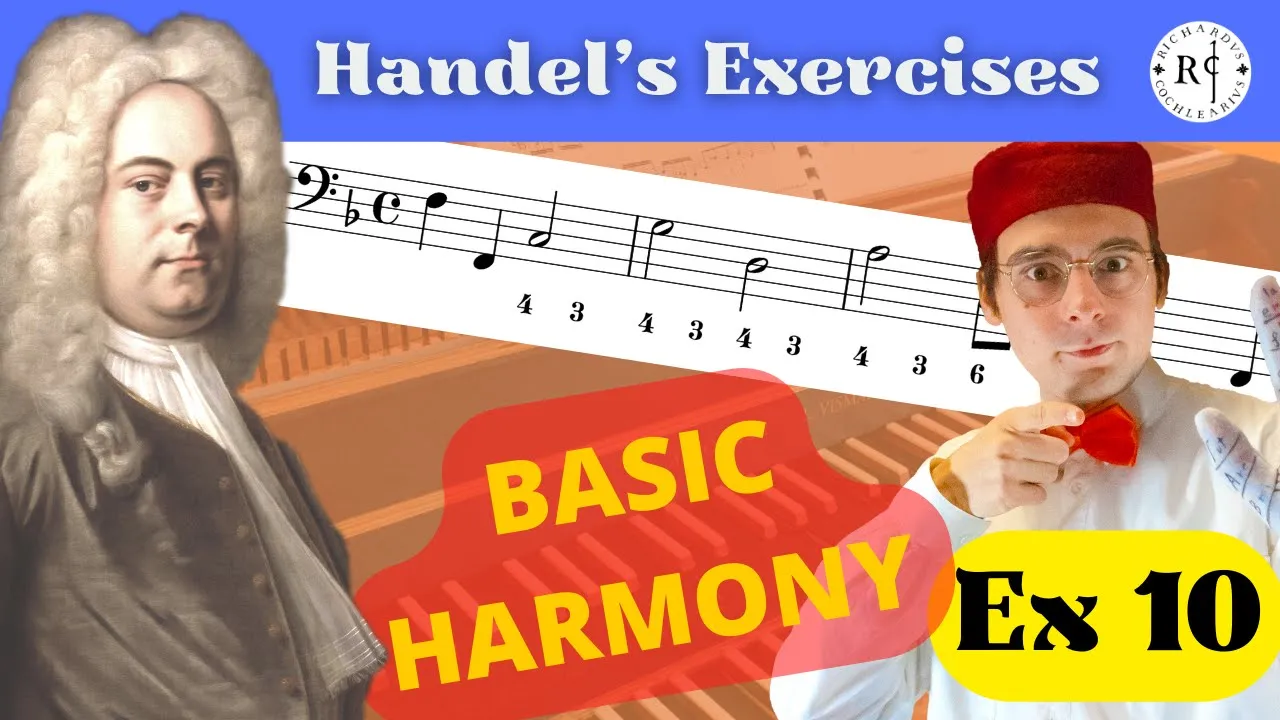

A 4-3 suspension is a musical device where a dissonant fourth interval (the suspension) resolves to a consonant third interval (the resolution), creating tension that resolves smoothly; suspensions must be exited by stepping (not leaping) and are labeled with two numbers representing the dissonant interval first and the consonant interval second, such as 4-3, 7-6, and 9-8.
Understanding the 4-3 Suspension in Counterpoint
Added:Understanding basic musical intervals, specifically how to identify major/minor thirds and perfect fourths.
The concept of consonance and dissonance as defined in traditional, strict counterpoint.
The basic three-step structure of a suspension: the Preparation, the Suspension, and the Resolution.
Familiarity with the fundamentals of species counterpoint, particularly second species where syncopation begins to be introduced.
Identifying and labeling other common upper-voice suspensions, such as the 7-6 and 9-8 suspensions.
Learning how to construct bass-line suspensions, specifically the 2-3 (or 9-10) suspension.
Studying ornamented or decorated resolutions, where extra notes are inserted between the suspension and its resolution.
Applying suspensions in multi-voice (3-part and 4-part) writing and analyzing their use in Baroque literature, such as Bach chorales.
321 views4likes4:02Original Release: 2025-03-20
Okay, let's look at the different kinds of suspensions and how we label them.
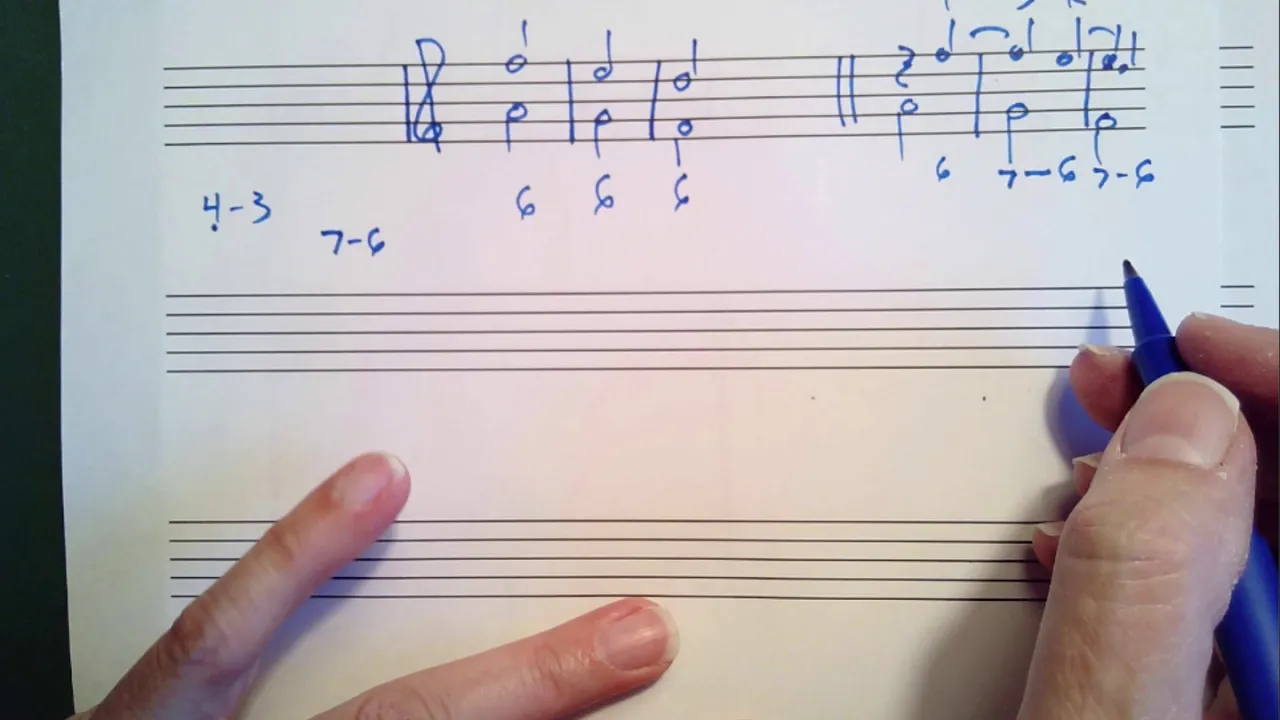
Let's just zip out to here somewhere and let's add some notes. Let's do oopsy. Let's say our counterpoint was an F and then a C. I'm just going to do two bars. Imagine this is like right in the middle of a counterpoint. And then we had something like a D. So we've got a sixth. And then let's do a suspension there. And then the resolve it like that. Now here, this is different than the previous thing I was just talking about about the going downhill thing because this isn't part of a sequence of suspensions. I can step or skip into a suspension. That's okay. I have to step out of it though. I can't skip or leap out of it, but I can step or and I think you can leap into a suspension if you want to. Maybe not. I might have to look that one up.
Um, leaping into a suspension seems odd, but you can definitely skip into a suspension like this. So, this is all aok. Okay, now let's look at what our intervals are here.
So first let's label our preparations actually.
So this is going to be this actually is going to be our preparation. This is going to be our suspension and this is going to be our resolution.
Okay. And we don't have a label for this note. Um, it's just kind of what it is.
Next, let's look at our intervals. So, this interval is a sixth. This interval is an [Music] octave. This interval now is a fourth and this interval is a third.
Okay, that gives us the answer we want on how to label this suspension because uh suspensions are labeled usually with two numbers side by side like so. Like let's do let me just write it up here. So we would call this a 43 suspension. That's what this kind of suspension is. And the reason is the suspension is on a fourth and it resolves to a third. So 43 suspension is a fourth resolving to a third. And it has a particular sound.
Let's hear [Music] it like that. See how it wants to resolve even more. But that is a 43 suspension. A fourth resolving to a third.
So for all of these, remember that the suspension is going to have to be called by a number that is a dissonant interval first and then a consonant interval second because that's how it works. The suspension has to be a dissonance. The resolution has to be a consonance and they have to be a step away, right? So all of our labels for suspensions are going to be a number and then one number lower because it has to be a step away.
And the first one's going to be a distant interval and the second one is going to be a consonant interval. They all have to work that way by definition.
That's how suspensions have to work. So let's look at the other two now. 76 and 98.
Up Next

9:46
Suspension Resolution Riff: Piano Chord Inversions Practice Guide
@MisterMusicarta
462 views•2013-03-26

10:20
Mozart's Musical Dice Game Explained: History, Rules, & Fun
@webpianoacademy
5K views•2023-03-13

47:36
Understanding Diatonic 7th Chords in Major Keys | Music Theory Tutorial
@GracieTerzian
54.7K views•2022-03-02
10:49
Understanding John Coltrane's Giant Steps: A Music Theory Analysis
@Vox
10.4M views•2018-11-12
Related Study Plans & Knowledge Roadmaps
Structured learning paths in Music Theory
music-theory
Composing Galant Music: Partimento & Schemata
01Foundations of Figured Bass and Keyboard Harmony
02The Rule of the Octave (Regola dell'Ottava)
03Galant Schemata: The Building Blocks of Form
+ 2 more learning modules
30h5 modules
Explore Roadmap
music-theory
Decoding Overtone Series: Tuning & Drone Music
01Acoustic Foundations: The Physics of the Overtone Series
02Tuning Systems: Equal Temperament vs. Just Intonation
03Microtonality and Spectralism: Beyond Standard Pitches
+ 2 more learning modules
24h5 modules
Explore Roadmap
music-theory
Impressionist Harmony: Scales, Planing & RPGs
01Foundational Music Theory: Keys, Intervals, and Seventh Chords
02Impressionist Color: Chord Planing and Parallel Harmony
03Whimsical Textures: Pentatonic Cascades and Whole-Tone Scales
+ 1 more learning modules
14h4 modules
Explore Roadmap
music-theory
Negative Harmony: Axis Reflection in Indie Pop
01Music Theory Foundations: Scales, Intervals, and Triads
02Functional Harmony and the Circle of Fifths
03Demystifying the Negative Harmony Axis Reflection
+ 2 more learning modules
16h5 modules
Explore Roadmap