



![Ch.10:[L-3]: Young's double slit expt./ Wave optics/XII physics/ Silvervalley public pu college / NR](https://i.ytimg.com/vi/X7g0DhP_h5M/maxresdefault.jpg)






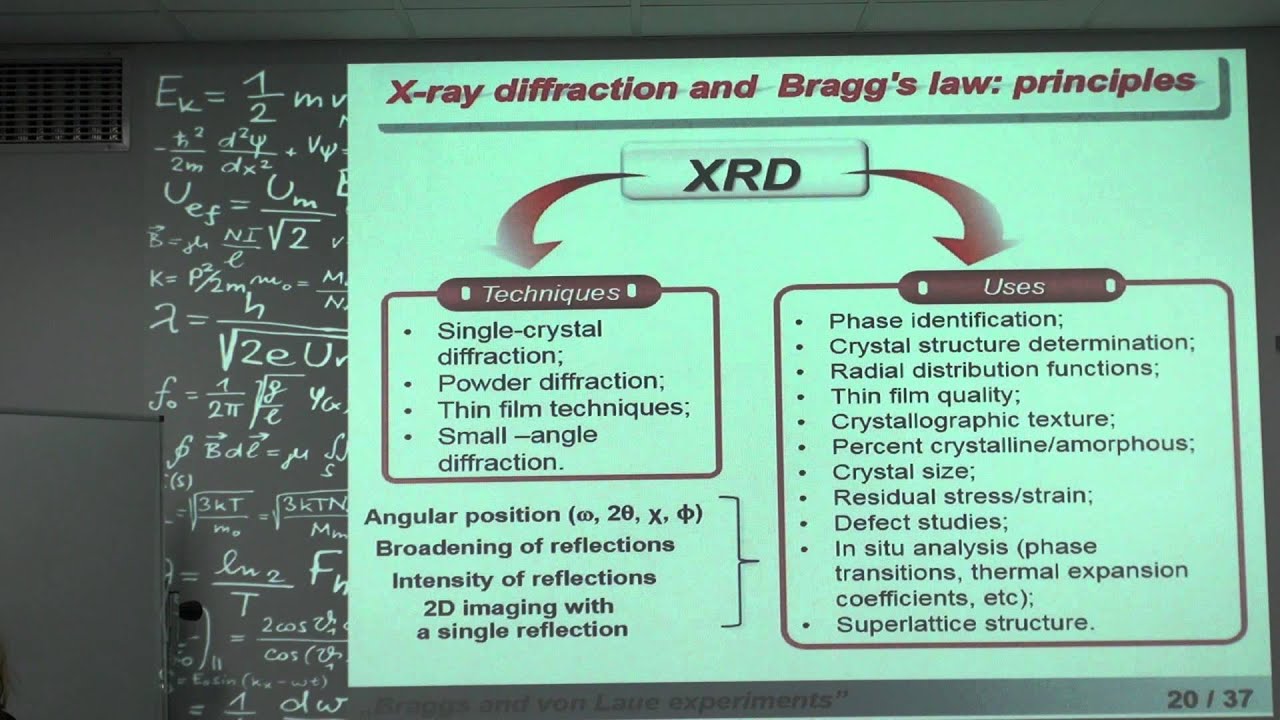
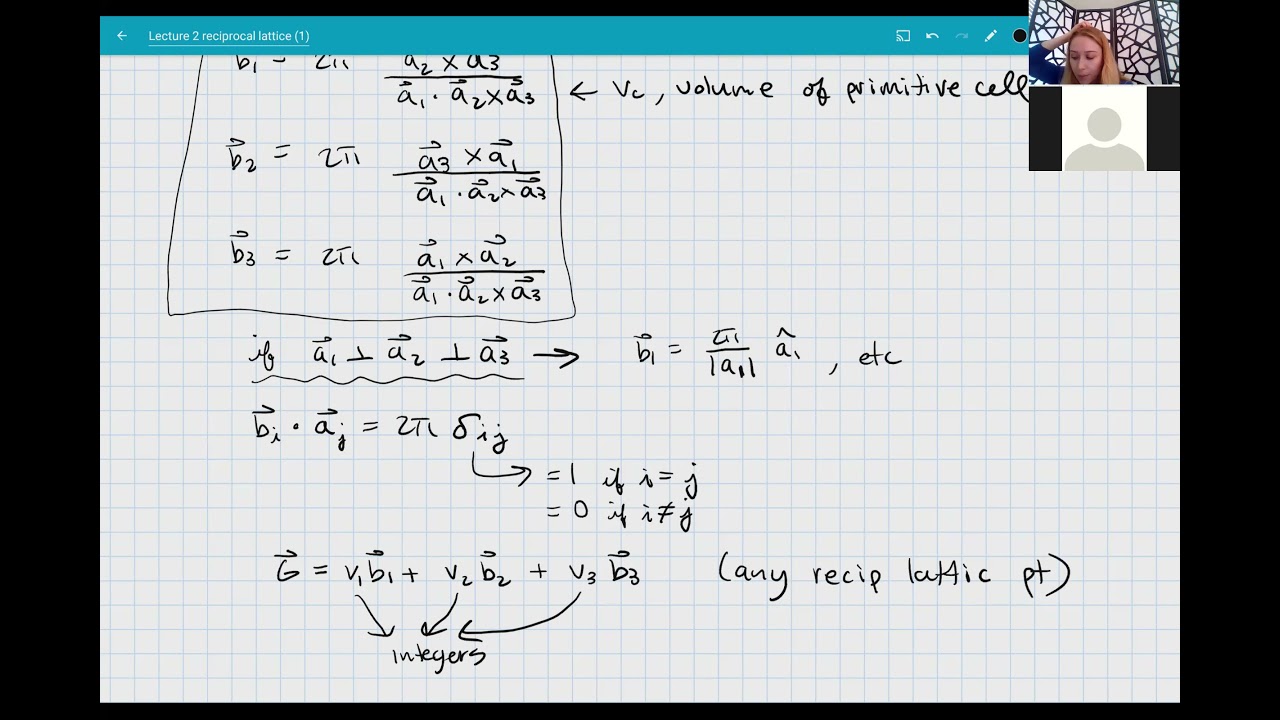


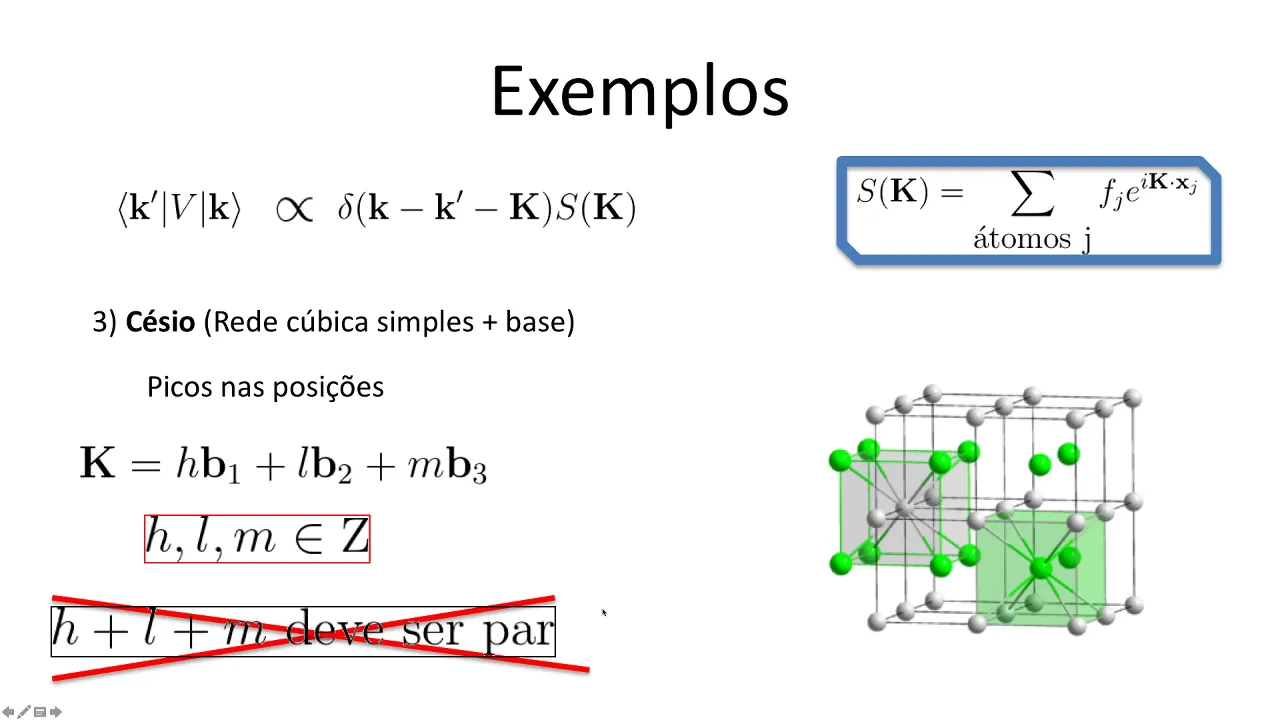





Bragg's Law (nλ = 2d sinθ) describes the condition for constructive interference in X-ray diffraction, where X-rays reflecting off parallel atomic planes in a crystal produce peaks when the extra path length (2d sinθ) equals an integer multiple of the wavelength (nλ); this occurs because radiation passing through successive atomic planes travels additional distances that must be integer multiples of the wavelength to remain in phase and constructively interfere.
Derivation of Bragg's Law in X-Ray Diffraction | Crystallography
Added:Basic wave mechanics, specifically the principles of constructive and destructive interference.
Fundamental geometry and trigonometry, including the sine function and calculating geometric path differences.
The concept of crystal lattices, unit cells, and interplanar spacing (d).
The nature of X-rays as electromagnetic radiation with wavelengths comparable to atomic dimensions.
Experimental techniques in X-ray Diffraction (XRD), such as the Powder Diffraction Method and the Laue Method.
The concept of the Structure Factor and systematic absences, which explain why some diffraction peaks do not appear.
How to determine and index crystal structures (e.g., FCC, BCC, HCP) using XRD peak positions.
Real-world applications of XRD in material characterization, geology, and structural biology (like protein crystallography).
159.9K views1.3Klikes12:08Original Release: 2014-10-28
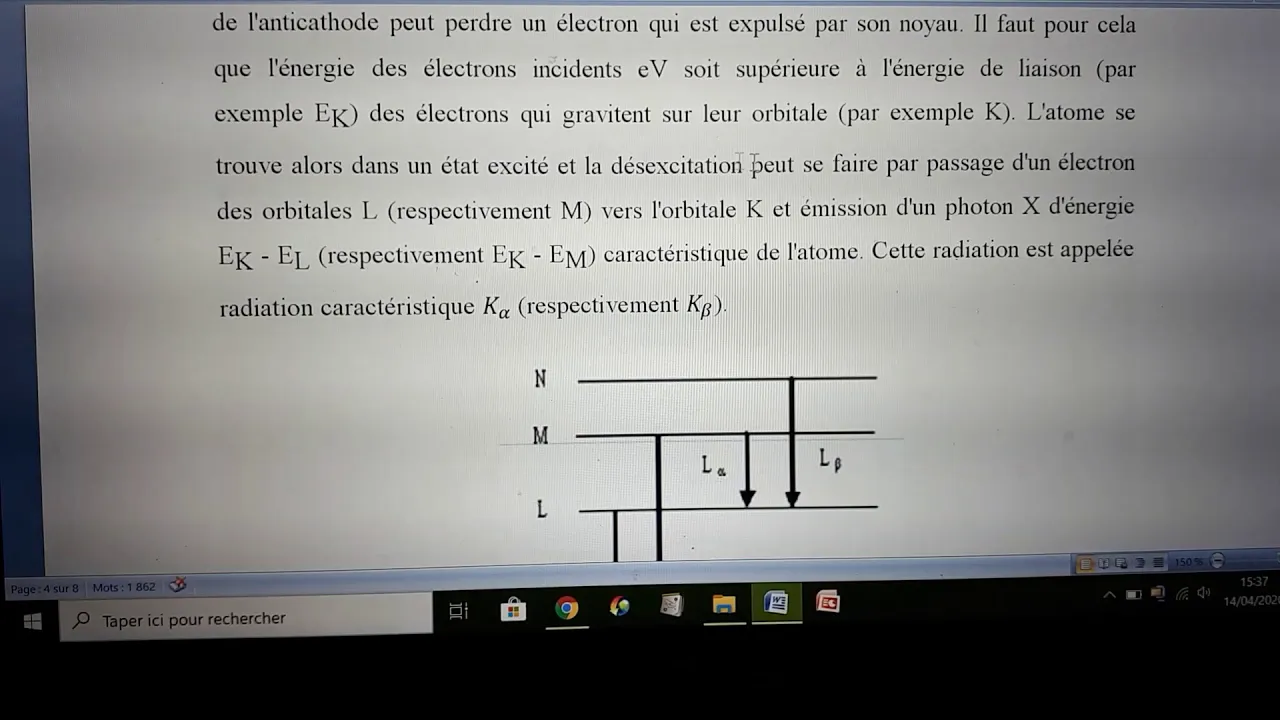
okay so we're going to look at x-ray [Music] defraction specifically we want to derive brags law okay that's what we're going to look at so let's um let's start here with a little sketch so we know that there's going to be an X-Ray source often it's a copper Source there's a electron transitions in energy and then um oops there's a going to be some um radiation released from that it hits a sample that's I was going to draw over here sample and it hits this sample and it reflects off the sample or interacts with the sample a little bit and goes to an x-ray detector detector there we go okay so it comes in instant there and there's actually an angle it hits the sample at does something with the sample so we're going to want to understand what exactly is going on there and then the detector picks up the radiation and then tells us the intensity of the radiation and it gives us this plot of intensity that is how bright is the radiation versus the angle the angle actually by for historical reasons is plotted as 2 Theta so what happens is there's some radiation that's quite low in intensity not very much as getting to the detector and then at certain values of two Theta certain angles we get these Peaks and it might look something like this so there's these certain these particular angles that are giving us these Peaks and so what we'd like to do is we'd like to understand what it is that's causing these Peaks why what what's going on what is it that's happening something has to be happening here in the sample to cause that so what we should do is look at more detail here this little region of the sample to try to understand that okay so I'm doing a little call out here as best I can with my limited artistic ability ities and here's a couple of planes on the surface of the sample and what I'll do is I'll just try and cartoon depiction of some some atoms so what we can see now is at the surface of the sample there's Atomic planes that are revealed to the surface there certain planes that are parallel to the surface okay so these are um like I said these are Atomic uh planes and what you you might also know from uh from crystallography um or crystalographic planes and directions is we could we could name these sort of a mathematical notation uh using Miller indices HK andl there's a certain specific plane that we're looking at HK onl and then what I mean here by this next one down is that that the next plane is the same plane it's it's parallel to the first but just translated in space so uh for for example example only we could be looking at say if this is a cube cubic system well we could be looking at the the top plane of a cube and the next plane down just just a simp a simple cubic situation here this plane right those could be the planes that we're we're looking at and so of course you'd realize that this is the 001 that is H K andl are 0 and one and this again 01 as well just is an example so don't really get too hung up over where these atoms are in space I'm just drawing a cartoon depiction of the atoms and then some radiation comes in and hits the the sample and some of the radiation though bypasses that first layer and hits the second plane down and what we what we know is that the radiation coming um coming out of the source here has a wavelength and these two beams that I've depicted beam one and we'll call it beam two are um in Phase with with one another so here let me just Define the wavelength for you okay wavelength they have a defined wavelength Lambda and the two of them are in Phase with one another that means the peak of one corresponds to the peak of another and the trough of one corresponds to the trough of another it's worthwhile just to spend a a moment's more time describing that so here we go if we have beam one and beam two and clearly they they're starting off at the same point like this well if we sum those two up up the result will be a waveform with should be the same wavelength so I tried as best I could to draw the same wavelength Lambda there that's a bad looking Lambda isn't it let's let's erase that try to do a better Lambda there we go and the amplitude though amplitude a is now doubled so now the amplitude is 2 a and this is what we call um constructive interference and this occurs when the two waves are in Phase with one another the Peaks correspond to the Peaks and the troughs to the troughs in fact this is going to give us a high amplitude this gives us a high intensity so really what we're saying is our Peaks are occurring when we have constructive interference so what we'd really like to do is we' like to understand when these two waves here are going to be in Phase with one another and give constructive interference and we can figure that out with a little bit of simple geometry if I draw a perpendicular line there to the um the beam number two and I draw identify a point here call it point a well by the time beam has traveled to point a it's travel the same distance as beam number one they're parallel to each other they have the same wavelength so they will be in Phase with one another but then beam 2 you'll see has to travel this additional distance to point B and then again additional distance to point C of course geometry will tell us that line segment AB is equal to BC so wave number two or or ra beam number two has had to travel the distance AB twice longer than beam number one and we want to know when that extra distance is going to leave beam number one and beam number two in Phase with one another so let's take a a look at another situation actually let me just draw this over here for you so say this is beam number one now and I'm going to draw beam number two so beam number one again there it is coming along and what about though if I hold back be number two so I get it to start back here well what if if it has been held back by this certain value specifically the wavelength well then it starts at its next cycle exactly the same place as the first and they're back in Phase with one another so when beam number two is held back or is out of phase by a multiple of the wavelength whether it's one wavelength or you could even have two wavelengths if you continued it up to the left right you continued and you said well instead we started it back here then or we could start it out here three * Lambda by the time it gets to this point they will be in Phase so what we need to do is we need to say okay when this extra distance AB plus BC is equal to a multiple of the wavelength they will be in Phase with with one another so let's look at this little triangle here I'll sketch that for you right here and we can just about wrap up our discussion so here's point a point a here's point B and we said BC is the same as AB so what we need to do is we need to discover how long AB is well if we look at our sketch here and we see that this angle is Theta well if that's this is going to be 90 minus Theta so therefore this has to be Theta again so I can add that to this angle this is Theta and then of course you can see well if we only knew this distance here the hypotenuse we would know that the hypotenuse times sin Theta would be equal to line segment AB but we do know that distance or we could describe it because we know it's the distance between planes with Millar indices h k and l so it's a distance we're going to call it d it's dhkl right the pl spacing between planes with the Miller indices HK andl so then like I said this is going to be sine Theta times I'll write it out this way actually dhkl time sin Theta that's what this extra dist that's what that distance AB is equal to so see if we can wrap this up here beam 2 travels two times the line segment AB further than beam 1 well if that extra distance that beam 2 travels right here is equal to a multiple of the wavelength if two * AB equals an integer of the wavelength then it will be constructive and if it's constructive like we said up here it will give us a peak so what we're doing is we're saying well the condition for that Peak is the special geometry special um angle giving the extra distance um equal to a multiple of a wavelength and that is essentially brags law so let's just summarize it and that's an integer okay so Bragg's law then just equates those it says an integer multiple of the wavelength let's try that again I'm having a lot of trouble with Lambda today is going to be equal to 2 * AB which we said was D hkl sin Theta fantastic so that is in fact brags law and it's just based on the condition for constructive interference
Up Next

62:38
Condensed Matter Physics: Bragg's Law Part 2 & Structural Factor
@PravegaaEducation
1.5K views•2023-09-15

12:53
21cm Hyperfine Transition in Neutral Hydrogen: Radio Astronomy Basics
@AaronRobertParsons
12.4K views•2011-10-13

32:32
NMR Spin Physics I: Zeeman Effect, Resonance Condition & Larmor Frequency
@nptel-indianinstituteofsci8064
2.3K views•2024-01-17

27:14
Entropy and the Second Law of Thermodynamics Explained
@veritasium
27.5M views•2023-07-01
Related Study Plans & Knowledge Roadmaps
Structured learning paths in Physics
physics
Nuclear Physics (Decay, Fission & Reactors)
01Atomic Structure and the Binding Force
02Radioactive Decay and Half-Life
03Nuclear Fission Mechanics and Chain Reactions
+ 2 more learning modules
12h5 modules
Explore Roadmap
physics
Soft Matter (Polymers, Colloids & Rheology)
01Foundations of Soft Matter & Thermal Forces
02Polymer Physics and Macromolecules
03Colloids, Surfactants, and Self-Assembly
+ 2 more learning modules
38h5 modules
Explore Roadmap
physics
Analytical Mechanics: Lagrangian & Hamiltonian
01Mathematical Foundations: Calculus of Variations
02From Newtonian Mechanics to Constraint Dynamics
03The Principle of Least Action & Lagrangian Mechanics
+ 3 more learning modules
28h6 modules
Explore Roadmap
physics
General Relativity (Spacetime & Cosmology)
01Foundations of Relativity: Special Relativity
02The Geometry of Spacetime: Equivalence Principle & Curvature
03Einstein's Field Equations: The Mathematics of Gravity
+ 2 more learning modules
55h5 modules
Explore Roadmap