








![فيزياء السادس العلمي || الأطياف الذرية والليزر || المحاضرة [ 2 ]](https://i.ytimg.com/vi/NcomfRaqFG0/maxresdefault.jpg)
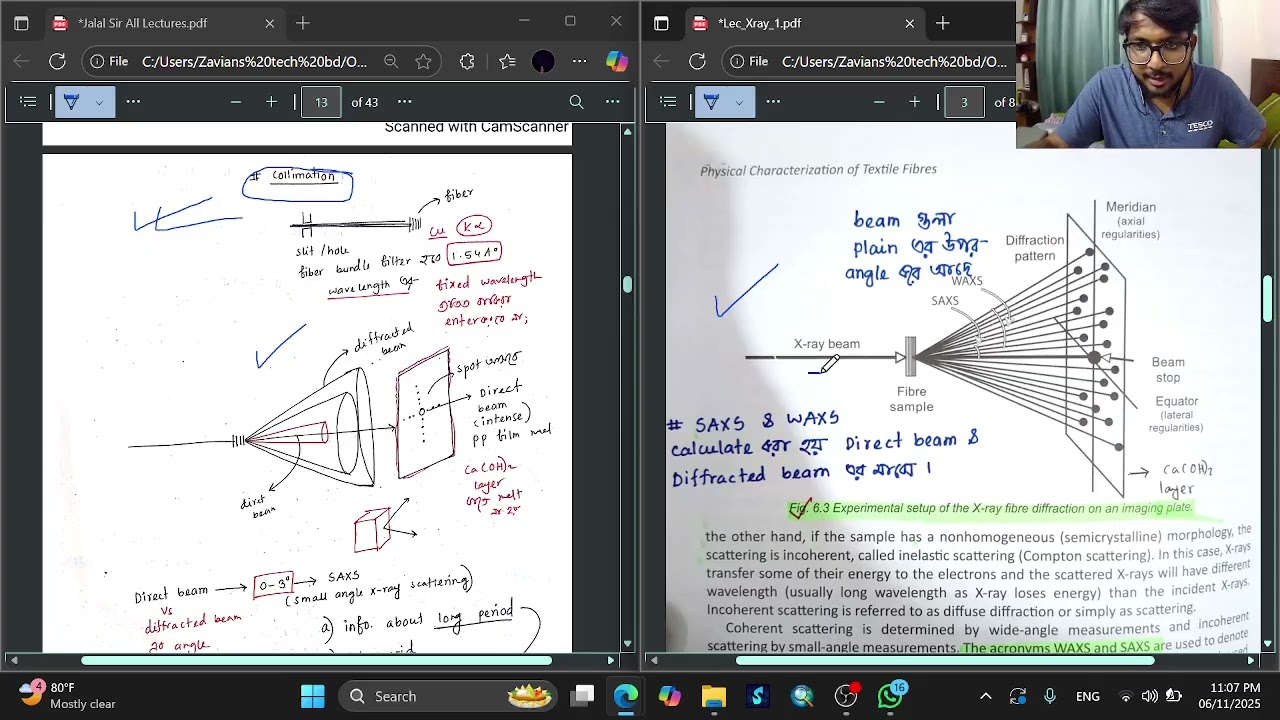





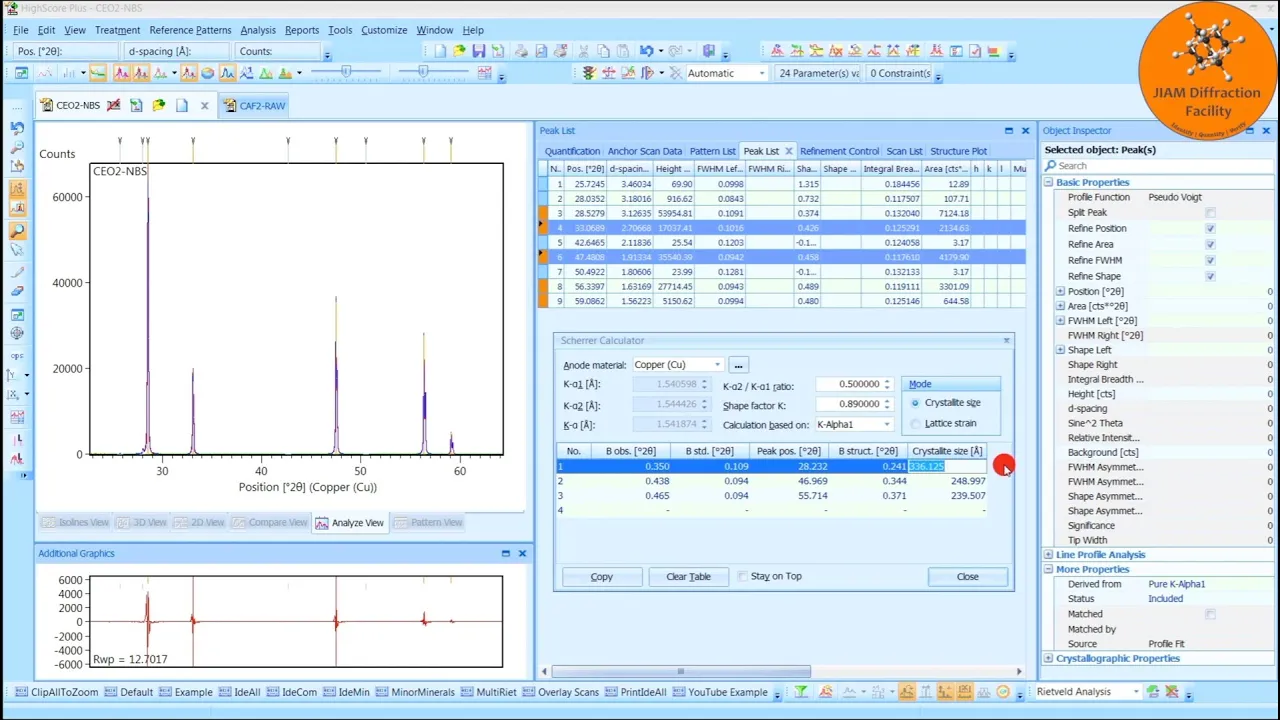
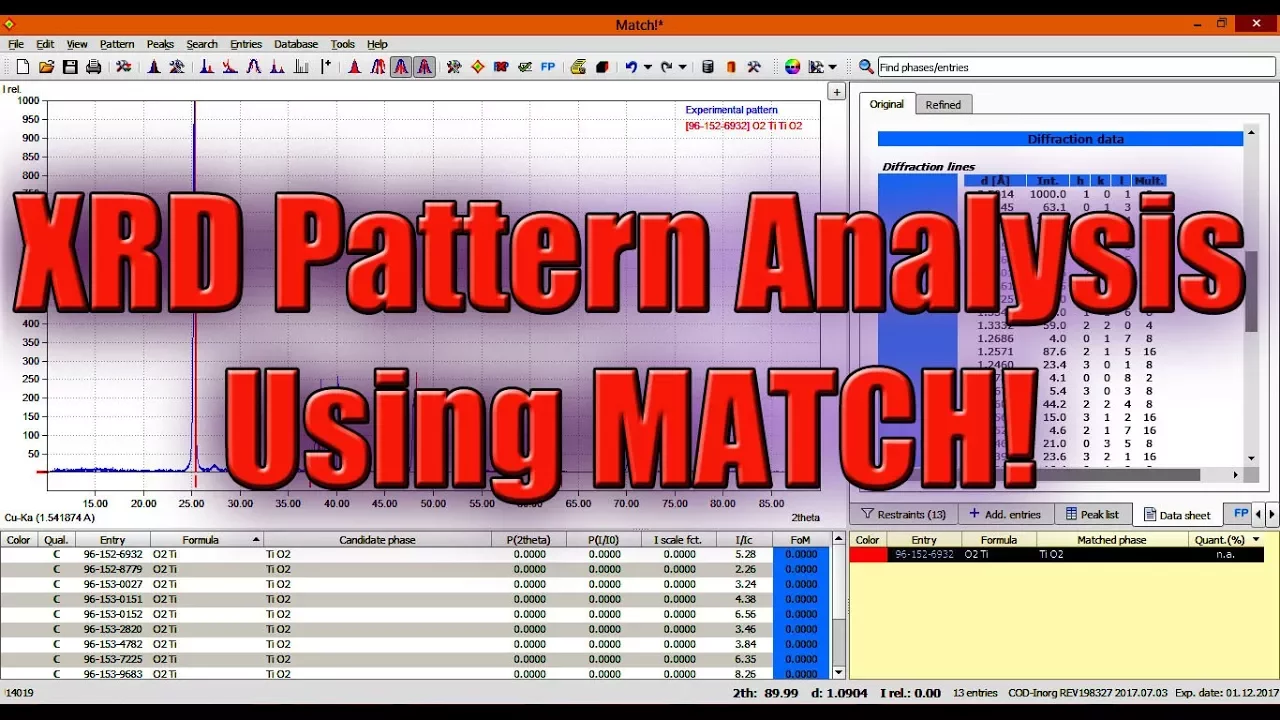
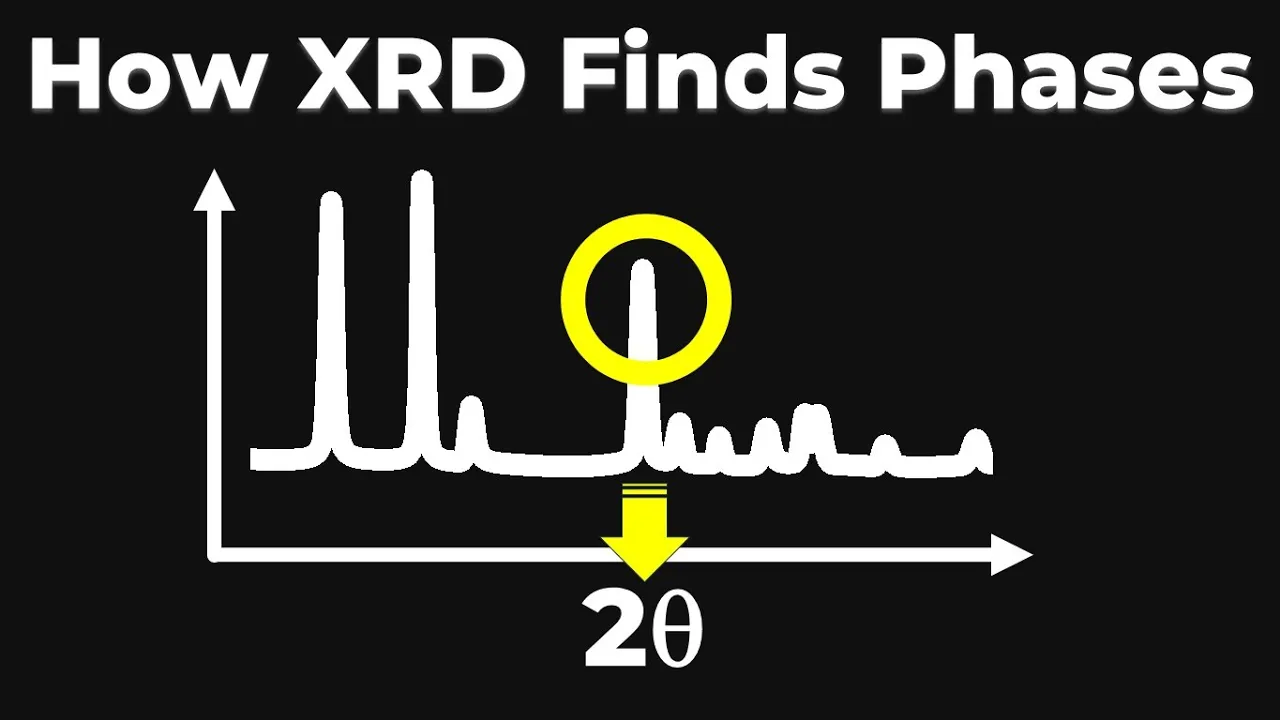


X-ray diffraction is a powerful technique for determining crystal structures by analyzing diffraction patterns; by applying Bragg's law (nλ = 2d sinθ) combined with Miller indices and selection rules (simple cubic allows any indices, body-centered cubic requires even h+k+l, face-centered cubic prohibits mixed odd-even indices), researchers can identify crystal symmetry and calculate lattice constants from peak positions, while Moseley's law (√ν ∝ Z-1) established that atomic number determines periodic table ordering rather than atomic mass.
X-ray Diffraction Techniques II | Solid-State Chemistry
Added:Understanding of crystal systems, Bravais lattices, unit cell parameters, and Miller indices (hkl).
The physical principles of wave interference and the derivation/application of Bragg's Law (nλ = 2d sinθ).
Fundamentals of X-ray generation, electromagnetic radiation properties, and how X-rays interact with atomic electron clouds.
Introductory concepts of X-ray diffraction (such as XRD Part I), including basic experimental setups and reading a simple diffractogram.
Structure solution and refinement methodologies, specifically the Rietveld refinement method for analyzing complex powder diffraction data.
Advanced diffraction techniques, including Single-Crystal X-ray Diffraction (SCXRD) for absolute 3D structure determination.
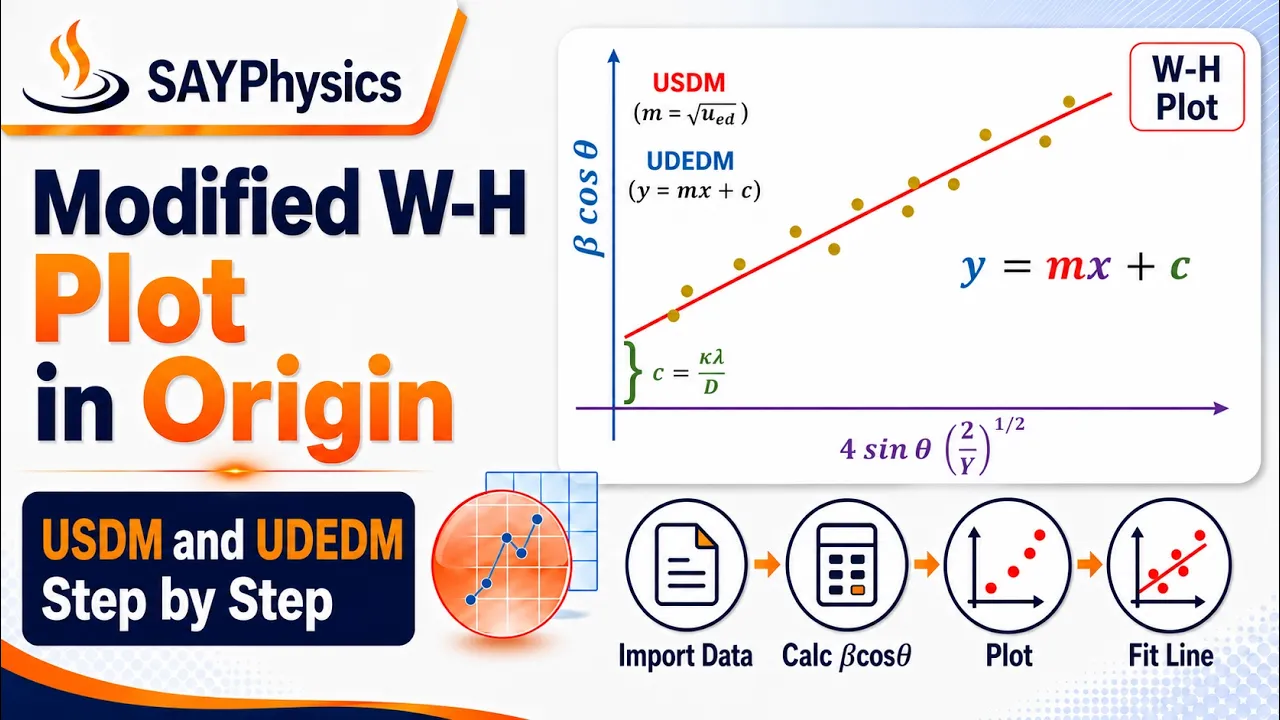
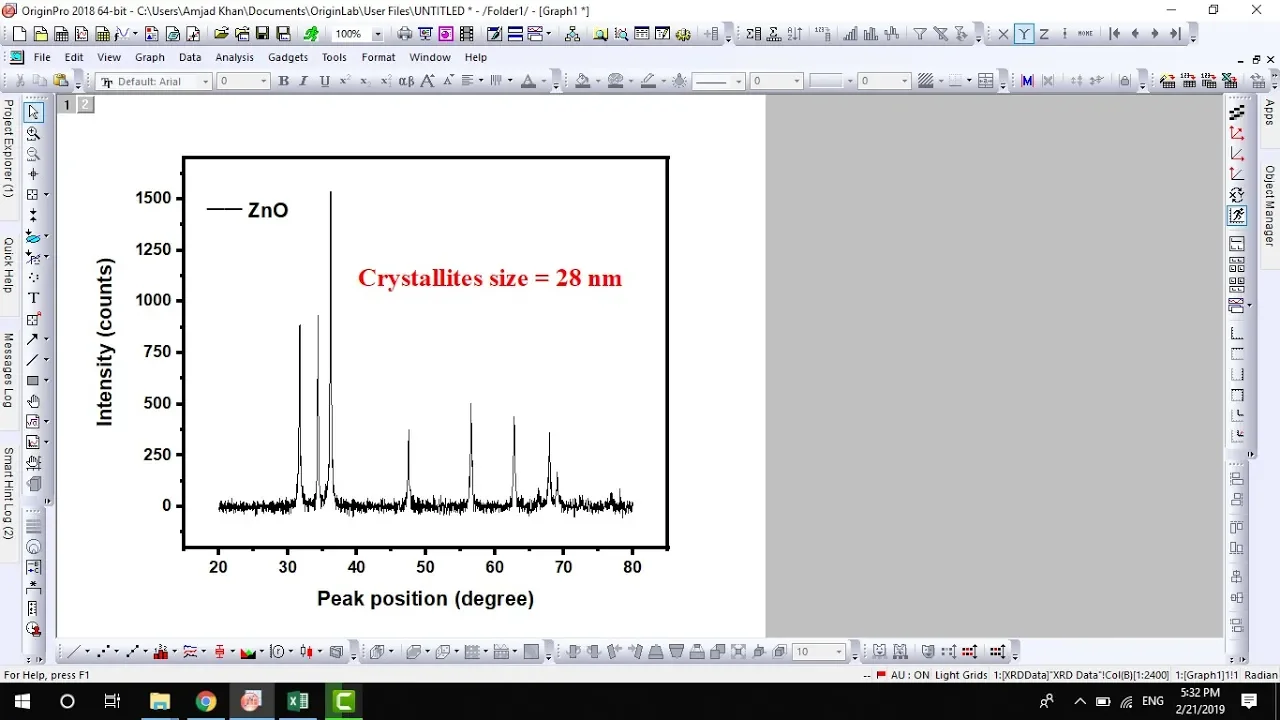
Utilizing the Scherrer equation and Williamson-Hall plots to estimate crystallite size, microstrain, and lattice defects in nanomaterials.
Practical applications of XRD in material science, such as phase identification using the ICDD PDF database and in-situ high-temperature diffraction studies.
37.8K views708likes48:09Original Release: 2020-12-07
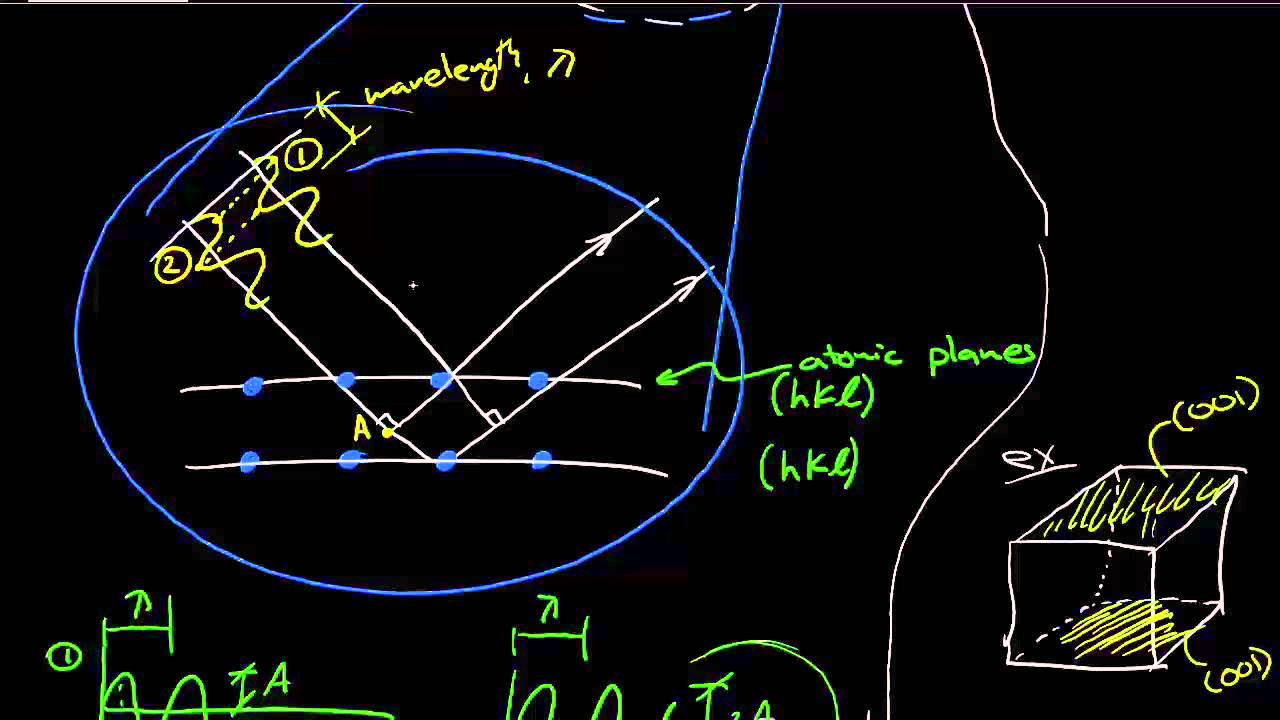
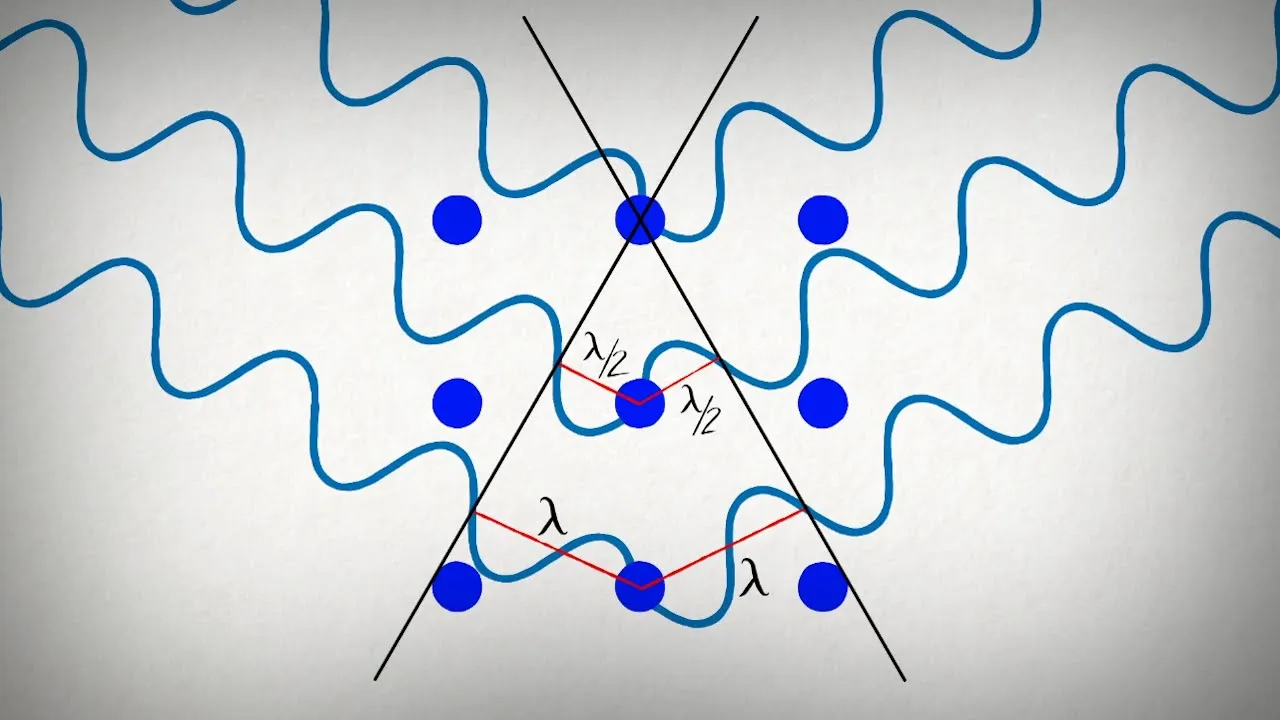
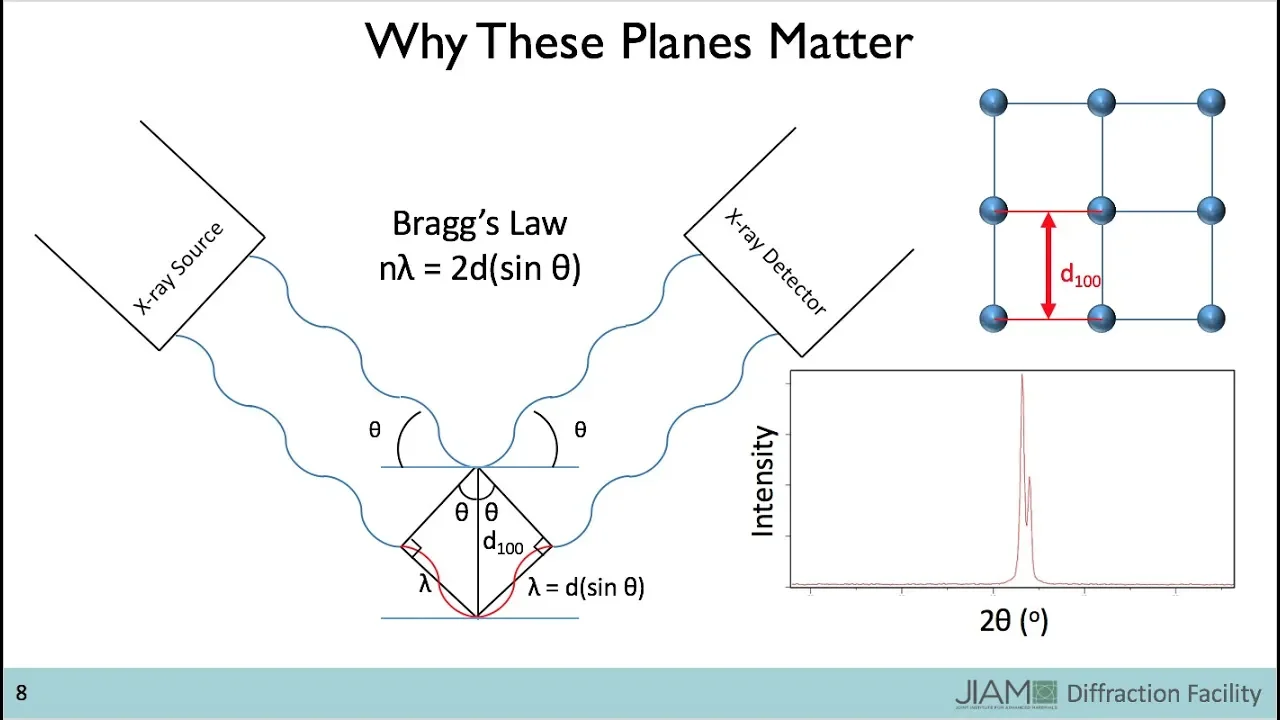
happy friday how is everyone [Music] cool cool i am excited we're we're doing more we're gonna we're gonna keep talking about xrd today we're gonna pick up where we left off so i filled in some numbers and then we're going to fill out this chart and really get to a deep understanding of xrd i'll also talk about mosley's law and and a little bit about another type of xrd that that is done now where were we oh okay we were here so on wednesday uh and i wanna before we fill this chart out i want to go back and make sure we kind of get this right we talked about the bragg condition and we talked about um how you know the the unique thing about about x-rays is that their wavelengths are right in that in that you know in that sort of precious distance regime of the spacing of atoms in a crystal and so if i if i shine them on the crystal then they can diffract and they can have constructive and destructive interference but only if they sort of line up right and that's what the brag diffraction tells us it tells us the condition the brag condition for when they line up and in particular this is a a pretty nice uh image okay so you can see here's one ray coming in one x-ray coming in and it's a wave it's a wave so it's going to be a wave that goes like that and it bounces off this surface now a second one doesn't bounce off that top surface it bounces off of the one beneath it okay and they're separated by a distance d so this could be any set of planes right so if you take this so here are my planes now so so these black atoms are are one plane right but these yellow ones are another one that's another plane that you could see remember one of the assumptions of the bragg condition is that these planes are like mirrors so we lose a sense of where the atoms are exactly and we just write a mirror there we say it's reflecting off the mirror so where's the next one right you can take the orange ones that's another plane the red ones and so forth right so that's what you're you're now you're you have a wave on top okay you've got a wave on top and you've got a wave coming down and bouncing off the one beneath it and for those to constructively interfere so that you pick up a signal in the detector right there's only one way for that to happen and that's if this distance plus that distance is equal to a multiple of the wavelength right and that is the bright condition you can see why it comes off why doesn't it you know it has to come all the way down to here which makes that theta equal to that theta you see that because they've gone up to this point up to that line they've gone the same distance so they're waving together right and it's that point where now this is the extra that the one that bounces off of this plane that's the extra distance it goes that's the bragg condition okay that's the practitioner remember in this class okay so it could be any uh multiple but but here we're just gonna assume n equals one because it's in the easiest case okay good that's the brag condition now um then we did something beyond just just that because that tells us you know what the wavelength has to be to get a spot to get something the detector can see because it constructively interferes everything else is destructive no signal right but we did one more thing right we also said that d for some set of planes remember this hkl is just telling me which one of these i'm talking about that's what hkl is i'm saying we're going to pick one of these planes and the distance between them is d h k l okay good and and what we know from before from our miller times we know that that is equal to the square root of a squared plus k squared plus l squared for the cubic lattices we're talking about right so you see it's kind of brag plus miller brag plus distance miller right miller cubic that's what we're really combining here the distance given by this formula when we talk about miller planes that combined gave us this lambda over 2 a squared equals sine squared theta h k l over h squared plus k squared plus l square and all i've done is you know substitute and square okay and we did one more thing on wednesday and we talked about constants and we said well if something's equal to a constant then it's a constant right that's some good math that's some good math and so we said well that's the whole beauty of these characteristic x-rays because if you take like a k-alpha line from copper it's always 1.4 1.54 sorry angstroms it's always lambda equals 1.54 that's what's so nice about it doesn't depend on anything else just the the metal you put in there is the target it's called a target because you're you're targeting it with electrons so the copper target k alpha lambda constant lattice constant that's built into the name constant constant equals the angle and the plane it's reflecting off of and so our our job then in crystallography and doing x-ray diffraction our job is to figure out how to keep this thing a constant the same constant all right that's what constant means okay that's our job and that's that's where we left off and we say okay well let's take this to the next level let's do an actual experiment now how do you do experiments well you have equipment and this is what a really cool xrd machine looks like this is what happens when you don't have any money and so this is what's in my lab but you see it's true you can come see it but you see the the point is they do the same thing we don't need fancy equipment at mit no we can it's the ideas that matter that you're putting into this thing but that's kind of cool still i like the way that looks same thing right source sample detector that's hard to see but source sample detector from the 60s ish okay all right but so now it's easier of course you can understand i mean some of these things have different ways of doing but you can understand like changing the angle is going to be easier to move that sample right and then maybe the detector moves but you might keep the the source x-rays fixed and what happens well you do this and you generate a spectrum right so so you're changing the angle you're keeping this fixed and you're saying what do i got okay well here in this case i'm telling you what i got i got aluminum i put aluminum in there and i shot x-rays and i have to you cannot if anybody gives you an xrd pattern they got to tell you what kind of uh x-rays they use right that's really important or at some point you got to know this this is pretty important the lambda is from a copper target and the k alpha lines is 1.54 angstroms and this is the spectrum and i'm being asked to get the crystal structure of aluminum and the lattice constant and i can get that because look i can simply read off peaks and those are the peaks and i've kind of highlighted them there two theta right two theta remember we for more for historical reasons you you take two theta measurements even though in the bragg condition it's just theta okay we can divide by two right and so here are those first four peaks now i've just listened to them here peak one two three four here one sine squared of you know half of that goes in tight okay there it is and then we have our recipe and i gave you this recipe as a way to keep this constant right it's an easier way to do it if you if you scale and clear fractions it's just easier right so that's why i've given you that recipe so let's do that so first would normalize what does that mean well you have the smallest value of sine squared theta i'm just going to divide everything by that okay so that's where we left off 1 because that's what i'm normalizing by and then this one would be 1.33 and this one would be 2.67 and this one would be 3.67 and so that's good but i don't want fractions it's going to be easier for me to think about this as integers and so we clear fractions what does clear fractions mean that clear the fractions get rid of them make it integers how do you do that find what you multiply this by so that they're all integers okay i got an idea how about three times three in this case times three equals three okay good and in this case well i don't need to i don't mean okay anyway times three equals four times three don't multiply by a different number right i'm clearing the fractions for the whole table i'm multiplying by the same number okay good eight and this is times three equals 11. so i've got 3 4 8 11 and that's what i need to work with that's what i need to work with because now you see it's now you know and i hope it's kind of starting to make some sense if this if i can get this to be h squared plus k squared plus l squared well then i've done my job i've kept this constant that's the trick right i've done my job i've just made the math easy if i can get h squared plus k squared plus l squared to equal these things right then i'm keeping a count so let's see what what would that be well here it would be so this has to be h squared let me just write it here plus k squared plus l squared okay i want those to be an a squared plus k so if i do that well this looks a whole lot like one one one that works and for four two zero zero okay and for eight two two zero and finally for eleven three one one oh it's a beautiful thing i've gone from angles to planes these are planes h k and l mean one of these they it means one of those that's what it means a set of those right and i have found now which ones literally which ones give me each peak this peak is the 1 1 1 plane it's x-rays bouncing off of that reflecting off of that and the one below it and the one below it and seeing where it gives you constructive interference and gives you the back condition and therefore a peak okay all right now hold on hold on now okay have we determined have we determined the crystal structure have we determined the crystal structure can anybody who how do we get the crystal structure from this from these peaks how do we get well let's see okay um it could it let's see could it be um could it be bcc what else did we learn on wednesday right what else did we learn on wednesday we learned about selection rules you got to remember the selection rules those factor in so let's write those down here let's remind ourselves of okay that's important right now i mentioned how this came about i don't need you to uh know how to derive the selection rules but i did talk about why they come about right because you could for some of these cuts you could have a plane in between that destroys the signal okay depending on which which crystal structure it is and which plane you're talking about and when it comes down to it for simple cubic it's anything goes anything oh polonium and for bcc it's adds to an even number and for fcc no mixing no mixing of odd and even those are the selection rules you don't need to know how to derive them but i do want you to know what they are those are the so now we can see well okay hold on if this were a bcc crystal and they had to add to even one plus one plus one is three bam it's not bcc right yeah okay good but but but now hang on if it's no mixing on even did i handle that one okay yeah odd even even odd this looks like an fcc crystal than me all right this looks like an fcc crystal and i can go even further i can calculate the lattice constant i can calculate the lattice constant because it's right here it's right here right so that's the lattice constant that's a number that's a constant lambda so i could take any one of those planes any one of those any one of these four peaks and i and if i if i did this right if i did this right they better give me the same lattice constant and that's actually the last step in the recipe did i put the right yes all right this is the recipe i gave you on on wednesday to for you all to become crystallographers x-ray de fractioners that's okay we'll make it work you're x-ray diffractioners and and the thing is you got to remember how powerful this is how powerful this is because you we've learned about perfect crystals and now we've just gotten the single most one the single most important way to figure out which one we have we shine x-rays on it and we look for diffraction peaks that's it this is a very powerful tool and it is used all over the place in in materials chemistry physics you name the field x-ray diffraction is a starting point for characterizing the crystal and so the last sanity check that you want to do here because it'll help you make sure you did these points correctly is compute these values because you know this this is it right sine squared over a squared plus k squared plus l squared better be a constant if it's not then you've done something wrong in this analysis right you can just calculate the lattice constant for each peak and they also better agree and so i won't do that but it turns out we did it right for each one of these that is indeed a constant we have achieved our goal with great power comes great responsibility how you use xrd how you use xrd well let's see let's use it to figure out what phase of material we have but this is why does this matter right well i have why this matters but but there's multiple reasons for why this matters the as as i think we've talked about you know the properties of a material depend on the chemistry and the material but they also depend on the structure of the material and we're making solids so those structures are crystals until next week when we destroy the crystals by putting defects in them but for now they're these perfect crystals and they have this kind of repeating pattern don't worry about hcp bcc ah we're comfortable fcc comfortable bcc now this is called a phase diagram this is called a phase diagram phase diagrams will be on the quiz next week i'm kidding they're not going to be on the quiz because this isn't a class about phase diagrams but but i want you to know i want you to know what a phase diagram is it is a map of materials it is a very important it is like a treasure map literally because you find i need iron to have a different property oh if i go to this pressure and that temperature aha it can have a different property why because it has a different crystal structure so the crystal structure of something in this case it's iron depends on the pressure and temperature and and the properties depend on the crystal structure so we've got a way now to change materials same element i'm just changing its structure i love this one this is water now dude you know don't worry about how complex this is actually the whole point is it's complex this is the phase diagram of water now this doesn't even have them all there are 17 current phases of ice 17 different crystalline structures of ice that is incredible right now you you can actually imagine why from your knowledge in this class already those are hydrogen bonds they're kind of strong but they're not too strong there's a lot of ways that those water molecules could form a solid and they do 17 to date and counting but see and this tells you which one you have now earth's operating conditions are right around here and that's a really good thing because there's a liquid phase and there's ice one is here i h is ice one and it's a really good thing because of the fish because if you if it weren't ice one then when it freezes it wouldn't have you know a different density and the ice wouldn't float to the top and the fish could still live which they do in the winter because you don't freeze from the bottom you freeze from the top that's because it's ice one and not ice eight it would be terrible right but yet we know about these and how do we know we know because of crystallography we know because of xrd we can figure out yeah if you're out and maybe this is it's a friday night so maybe this is a good idea it's a good time to mention it you might get ice in your water out at a restaurant how do you know which kind of ice it is talk about xrd as the only real way to figure out which one of these you really have okay so for example if i were to uh think of other types of problems you might get well here's a good one okay here's a good one so um so this is a an x-ray diffraction spectrum and i give it to you and i don't even tell you what it is why is it here's a pattern that i put something in there and i measure these peaks and i tell you the source it's the k alpha line of copper so that's the wavelength of the source first thing is what what lattice what symmetry does this does this correspond to is this is it simple cubic body centered cubic or face centered cubic can we get that we can get that because of the exact same thing that we just talked about right there this this cannot be if it were simple cubic you'd see the peaks but no whether some peaks are forbidden so they don't show up right and you only get peaks that look like an fcc according to our selection rules no mixing odd even that works so this is an fcc crystal so i've already learned that and then i say well what's the okay use the 1 1 1 peak to calculate the lattice constant okay oh we can do that right so if i if i were to uh the one one one peak is even labeled there it's 38 degrees ah 38 degrees and so so 2 theta is 38 degrees so that means that theta okay i can do this one is 19 degrees okay now oh from brag lambda equals 2 d sine theta but look label label the plane this corresponds to a plane so some distance between some planes corresponds to some angle that gave me constructive interference for those planes let's pass this around so you guys can look at these planes they're beautiful things now that means that if i if i look at the first peak i know what late well i i've labeled them here in the last one i didn't and you want to find those here i'm giving you the planes so if i do that then d one one one equals lambda over 2 sine theta 1 1 1 which equals 2.37 angstroms okay have i answered the question i haven't answered the question yet because you see the the question says what's the lattice constant well but but i'm very close the lattice constant the lattice constant is related because of miller the miller plane's equation for lattice lattice constant distance between any planes oh this is all just coming together and so d one one one is equal to a over root three and so a equals four point one angstroms oh you could go even further yeah you could figure out now that you know it's fcc it's a single atom basis fcc crystal you could actually figure out the atomic radius i got a and i know the closed pack direction right i could actually figure out the atomic radius and i could go into my periodic table and figure out what i have just from the the atomic radii listed in the periodic table and the crystal structures fcc atomic radius which one is it it's gold it's gold so this is the kind of thing that you guys now have the power to do you have the power to do this you can go back and forth between you know based on your knowledge of crystals and now your knowledge of x-rays and how x-rays interact with crystals you can do this um now uh oh that went too far now okay so now i'm gonna get to the the why this matters um right so so there's two different uh sources two different targets remember we call them sources or targets and and notice okay copper has they both have this continuous radiation and and i will talk about that the bring stroll them we'll end with a discussion a little bit on what you can do with that um but for now let's keep focused on on these lines these discrete characteristic lines so there's the k alpha for molybdenum there's the k alpha for copper okay now mosley henry mosley was a brilliant scientist and he was working with rutherford and others um and and he was really interested in looking at the trends and so so he took all of these elements so from calcium all the way to zinc 20 to 30 and he said i want to look at the k alpha lines of all of these i want to look at the k alpha lines of all of these and what he found was extraordinary he did more he did more 38 in total but i'm just gonna show you his data for these okay and what he did was was absolutely profound um because what he noticed there are the lines these are actually his measurements okay these are his k alpha lines and what he noticed in going from calcium down to oh brass okay we'll talk about that in a minute it's supposed to be zinc isn't it why is it z well why is it not zinc let's think about that later but for now he noticed that this has a square root relationship to the energy so so mosley came up with in night he was working on this in 1912 okay you gotta remember 1913 right 1912 is when rutherford did the gold foil experiments it had been 44 years since mendeleev put his periodic table to to paper right and published that so for 44 years we had a periodic table but but to see the thing is there was a huge problem with the periodic table because i mean mendeleev had this sort of brilliant realization that the periodicity periodicity was related to both the atomic mass and remember we talked about this and the properties the chemical properties that chemical properties that allowed him to create an ordering of the elements and ordering of the elements that is still the ordering essentially that we have today that but the problem is why did they have that ordering i didn't really tell you why sometimes he was like well the properties win yeah okay maybe the mass well no no properties win properties need to be aligned in this column so i'm going to move those over like that's what he did but he didn't know why except that it made sense to him mosley's experiments told us they gave us the why oh it was so important um and and mosley's law mosley's law was essentially him thinking about the bohr model for these x-rays for these characteristic x-rays so he said that um h nu so that's the frequency for some k alpha line okay is equal to 13.6 e v oh that looks familiar times z minus one squared and then he did the difference in energies just like we've done now a number of times in this class that's what he did and this is three-fourths why this well let's talk about that in a second so 13.6 ev times three fourths times z minus one squared two things about this right one is why is it three why is it one over one squared minus one over two squared well that's because they knew or at least they they were pretty confident that you had this this positive charge in the middle here that's the the protons and the nucleus and then you have these electrons right so you had like the two the 1s electrons and then you had another shell out here okay and and so they knew okay 2s maybe that's combined with 2p so it goes on so so what happens in the x-ray experiment well what happens is you shoot an electron in rent can just crank the voltage up so high that an electron could come and knock that out right and so this one that's that's the that's what did it and so now one of these can cascade down there and give off a k alpha photon right this is this is nothing new we've talked about this but you see it here in the equation you see it in two ways first we're going from two to one one squared minus one half squared three-fourths right but second and this was critical the z minus one the z minus one told us that this the all these positive charges in here all these positive charges are screened perfectly by one electron this one that was left and it works he assumed perfect screen so there's one see there's one so what do all these see they see z minus one they see z minus one if z is related to the atomic number now here's where this was so powerful because when you put you can't read this don't worry about that i just want to show you that it is a perfectly straight line when you plot the k alpha transitions these are different elements right these are his different elements and if you plot the square root of the frequency if you plot the square root of the frequency versus element it is a perfect line that holds and and so what mosley wrote in the paper is we have here a proof in 1913 that there is in the atom a fundamental quantity a fundamental quantity which increases by regular steps as one passes from one element to the next this quantity can only be only b the charge on the central positive nucleus of the existence of which we already have definite proof now we know about that we know right from the experiments that rutherford did that that nucleus had the positive charge but they didn't know that it was connected to the position in the periodic table in fact years later um people talking about those experiments at this time and said people didn't even take rutherford's experiments as seriously until mosley's work came along 44 years had come since mendeleev but mosley gave it the foundation that it needed periodicity is because of atomic number periodicity is atomic number that was not known that z gives you the periodicity right and that gives you also the number of protons this was a time when they didn't know what was going on why did the mass change so much the neutron wasn't discovered until 1932 20 years later but this gave the grounding that was needed to the chemistry of the periodic table it's a very important discovery very very important discovery so that's my why this matters and it's it's um it's a real it's it's really tragic because um he died tragically in world war one at age 27 and many the nobel prize was not given in 1916 for either physics or chemistry he died in 1915 and most people at the time believed that he would have won it at age 28.
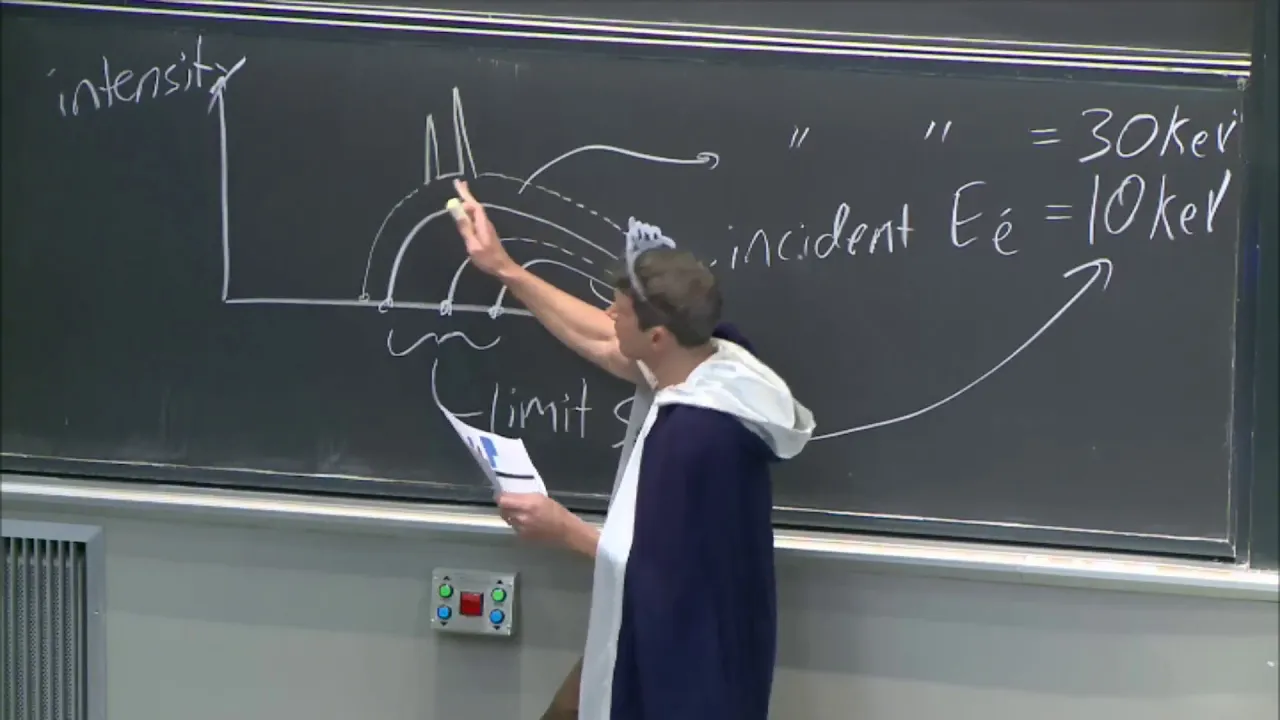
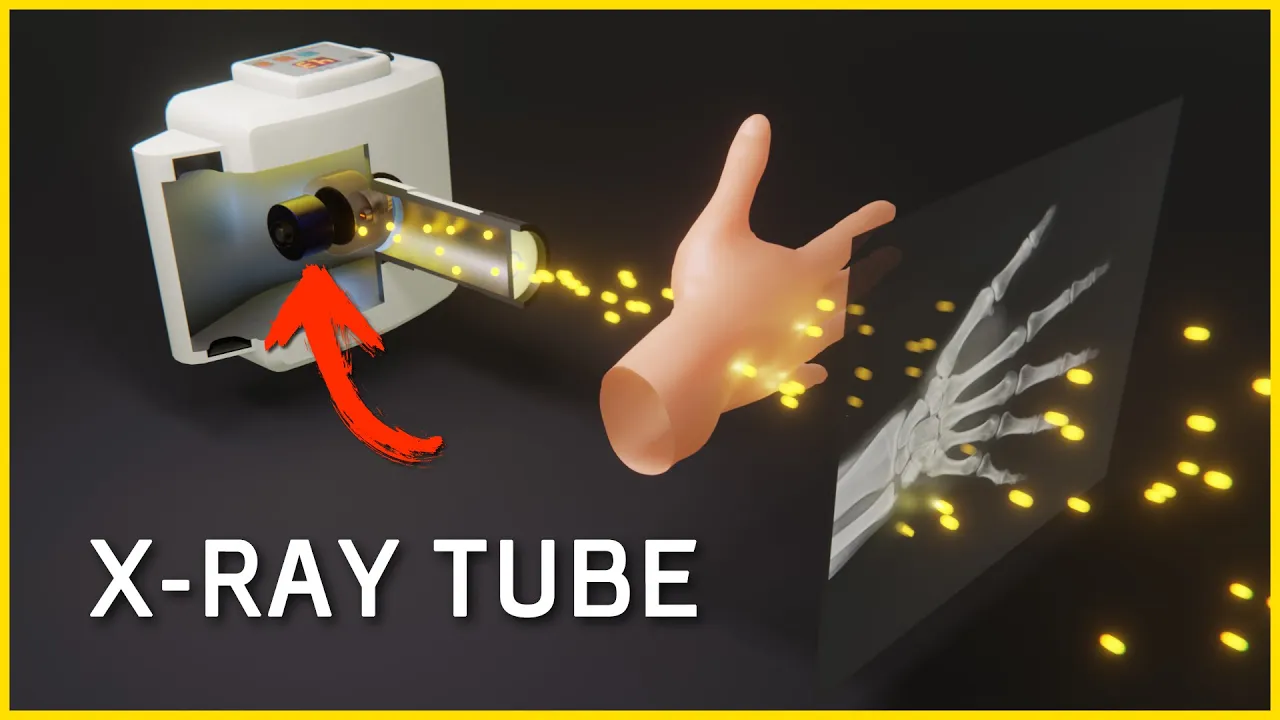
um that's how important that discovery was okay let's go back to brass i gotta go to brass what's going on here what is going on with brass right any ideas why didn't he just put zinc there dude it looks so good until brass what is going on well here i'll give you a hint okay the melting temperature let's see brass okay zinc melts around 420c brass which equals zinc and copper melts at around 900 c or or more greater than 900 c that's a hint because if we go back to the video let's go back oh the sound is on those are the electrons small portion of the top let me let me set that up the electrons are because i'm doing in the middle the electrons are coming off of cathode because rankin has cranked the voltage way up and pumped all the air out so those electrons are coming off with thousands and thousands of kev okay they're coming out and that's what's on the right here there there is shaped to focus the electrons onto a small portion of the target which increases the intensity of the x-rays produced the target is typically a piece of tungsten or molybdenum which may be embedded in a stationary water or oil-cooled rod or on a rotating disc the high speed electrons collide with the target and rapidly lose energy there are two x-ray producing interactions between the incident electrons and the atom oh look at the power you can feel the power coming into that tiny little piece of metal right you know and now some of the some of the time you get the the transition that we talked about you knock an electron out and you emit a photon a k alpha photon or maybe an l beta photon right uh and sometimes you slow the electron down so you get the bremsstrahlen yeah but but but there's so much energy being pumped into this material and a lot of times those electrons just collide and heat up the metal that metal is getting extremely hot and in these experiments either you cooled it or you might rotate it quickly right so that it gets to cool down it gets a little break right or you do both or you just throw up your hands and you say you know what i'm just gonna go for an alloy that's got some zinc in it but won't melt every time yeah it was a good idea so you put brass in okay you're gonna get the copper lines but you'll get the zinc lines you'll get the zinc lines right now that and then that that was why he used brass and that's why you can see you get extra lines in the case of brass all right okay good all right now i'm very excited about mosley he you know it allowed us to actually understand this not just because look at this mendeleev was like you know what cobalt and nickel can't be swapped hey all you people who just think about mass you're not going to put them in the order you think i'm changing that right i'm changing it because properties matter mosley said no you're changing it because it's the right order because of the blue numbers you're changing it because there is an actual count here that matters and that is why your periodic table is what it is absolutely critical it put the lanthanides in the right place it allowed the prediction of elements you know like hafnium and a number of others uh that hadn't been discovered yet um and it set it all on this much more solid uh grounding so that is the contribution of moses i i can't help it i gotta i'm very excited so i brought t-shirts i knew i was talking about mosley now i'm going okay all right there and in the middle and over there and over there and over there oh that that's a bad arm [Applause] and up there and uh hold on hold on now okay there there and this is all for mosley this is all for mosley [Applause] all right now okay now uh a part apart from me um showing off i don't have much of an arm one thing i'd like to say is if you did already get a t-shirt please just hand it off to a friend or somebody you know let's let's share sherry is always caring now um there's another type of x-ray i want to talk about and um see actually this is much less used today i i hope you've gotten a sense of how powerful these characteristic x-rays are you know exactly what the wavelength is um but in the very earliest xrd experiments it was the bremsstrahlung radiation that was used and that was by von lawy so i want to just tell you about that and and so here's an example of an mo target now let's remind ourselves what we're looking at these are x-rays these are x-ray intensities versus wavelength and and this corresponds to 5 10 15 20 that corresponds to the kilo electrons that's the thousands of electron volts of the incoming electron that electron that came in here and knocked this out from the cathode right okay now that electron if it comes in and we talked about this already but let me remind you if it comes in at a kind of low energy well you're still going to get this continuous spectrum this continuous spectrum oh why does it look like that beyond the scope of what we need to know but but in case you're wondering it has to do with very complicated effects that happen when things when x-rays come off and then are reabsorbed right by the same material you can imagine that that could lead to all sorts of interesting cascades of absorption and emission that's what leads to the shape but we don't need to know those details what we need to know is that as you increase the power of those incident electrons you're going to get more and more intensity of x-rays and this goes down this wavelength of the the minimum wavelength or maximum energy of the continuous spectrum the maximum energy goes up because the maximum energy you can get in the continuous spectrum is equal to the incident electron itself so it's set right remember the duane something limit dwayne hunt okay we talked about that already how to get that value yeah but then you get to this certain point and look all of a sudden the characteristic lines appear right and those are the k alpha lines for molybdenum why all of a sudden well because you got over the amount of energy needed to kick out a 1s electron from molybdenum that's exactly why before that you had enough energy to produce x-rays but not enough to kick out the 1s electron it's kicking out the 1s electron that gives you characteristic peaks okay good this is all reminder stuff but i want to get back on that page but see now okay this continuous part is also used and it was used like i said by von lauer and von um was again a really really smart uh smart cookie and he he he used the brag condition okay to prove that the x-rays and the space lattice structure of crystals can be interfered with each other to make this diffraction but what he did was was different okay so the nobel prize was given for this epoch making discovery and i'm actually very happy that the people that worked with him also shared the nobel prize right walter and paul what they did was different though they took this continuous spectrum and instead of having so instead of fixing the angle and the lambda i'm sorry instead of varying the angle but having a fixed lambda they did the opposite because the cons the continuous spectrum has all lambdas right and so you can imagine how this works right you can imagine how this works so in in the lawyer version of xrd you shoot uh the x-rays which have all the wavelengths in them at a crystal that's fixed i'm not changing the angle okay i'm not changing the angle and what you get are still diffraction peaks you get spots all right so in laway xrd in lao xrd you have a single crystal it's got to be the same everywhere in this case you have a single crystal theta is fixed right you don't move it around but lambda varies continuously okay and the pattern that you get reflects the symmetry pattern reflects the crystal symmetry how is that possible well you can actually see this uh um by thinking about the do i have another picture i just have his one you you can see this by thinking about that that model which is somewhere out there in the sea where is the model i don't see it yeah ah all the way in the back waving around um if i if i see if i can draw this let's see if i if i shoot i'm not gonna try if i shoot x-rays that have a fixed lambda in but i vary the angle then as we've been talking about there's gonna be you know certain angles where you get constructive interference now if i if i keep the thing fixed and i shoot all lambdas into it well take a look at the crystal imagine that i'm holding that structure right now okay well i'm going to see this set of planes here so so i'm going to see this set of planes maybe there's a 100 planes i don't know all right and i'm going to bounce off of that and constructively interfere maybe if i've got the right lambda but see if i'm looking at the crystal and it's fixed i'm going to see also there's another set of planes like that you see there's another set of planes like that and if i'm a different wave like not the same one but a different one i might constructively interfere with those but you can see that the angle that i make would be different and so i'll put a spot in a different place you see so so i've got all the wavelengths there and and as they constructively interfere with different planes that they see they make different spots they make different spots and that's what those are in those spots it's it's more complicated to get crystal structure from those spots it's more complicated you can get symmetry fairly easily but you but but getting the structure itself is is a little bit more complicated and can be tricky um and and and for that and other reasons most of most work today is done with characteristic characteristic peaks xrd um but but this was this happened before and so i wanted to show it to you and this this resolved actually in in one of lowe's very famous papers it resolved the structure of zinc sulfide it was very important work and those are the spots there's a look at that pattern there see the thing that you could get is the symmetry oh by the way by the way we will only test i'm not going to test you on lowe i'm only talking about it for five minutes here right so so in this class i want you to know about about you know using characteristic peaks and all the things we've been talking about laoway is just on the side for knowledge we won't test on this but i want to end by telling you a story this this tells you something about crystal symmetry what is symmetry well it just means if i rotate it is it the same or if i translate it is it the same give me just give me just one minute because this is actually a really interesting story that's translational symmetry we looked at this picture already there's no rotational symmetry to get back to this picture i'd have to rotate the whole thing by 360 degrees but see there are crystals that actually have only rotational symmetry and no translational symmetry and dan sheckman was the one who discovered these in the 1980s nobody believed him his advisor told him to go back and read the book and you know who wrote the book linus pauling linus polling wrote the book on chemical bonds literally the book was called the chemical bond and linus pauling took the lead he won two nobel prizes not one he took the lead in attacking shekman shekman had discovered quasi crystals shechman had discovered quasi crystals but nobody he was fired his papers were published and for ten years nobody believed him linus pauling said famously there are no such things as quasi crystals only quasi scientists that's how bad it was but shechman had his day he won the nobel prize and he had his day and he was proven right and these quasi crystals are absolutely fascinating rotational but no translational symmetry have a great weekend you
Up Next
7:10
Capillary Electrophoresis: Migration Time & Corrected Peak Area Explained
@FrancisChongYY
27.7K views•2019-02-25
83:56
Biocatalysis and Catalysis in Islatravir Synthesis | Merck Webinar
@SCIwheresciencemeetsbusiness
675 views•2020-10-08
6:57
Ocean Acidification Chemistry | MIT Solid-State Chem
@mitocw
5.5K views•2020-12-07

17:31
Edible Water Bottles: A DIY Guide to Sodium Alginate Spherification
@ryan
10.5M views•2019-06-21
Related Study Plans & Knowledge Roadmaps
Structured learning paths in Chemistry
chemistry
Nuclear Chemistry: Decay, Meds & Fuel Cycle
01Introduction to Nuclear Structure and Radioactivity
02Decay Dynamics and Kinetics
03Radiation Interaction and Detection
+ 2 more learning modules
24h5 modules
Explore Roadmap
chemistry
Supramolecular Chemistry: Forces & Machines
01Foundations of Chemical Bonding and Intermolecular Forces
02Introduction to Host-Guest Chemistry
03Thermodynamics and Dynamics of Self-Assembly
+ 2 more learning modules
16h5 modules
Explore Roadmap
chemistry
Photochemistry: Excited States & Reactions
01Foundations of Light-Matter Interactions
02Molecular Orbitals and Electronic States
03Photophysical Processes and Jablonski Diagrams
+ 2 more learning modules
18h5 modules
Explore Roadmap
chemistry
Coordination Chemistry: Bonding & Properties
01Introduction to Transition Metals and Ligands
02Crystal Field Theory (CFT) and Geometry
03Magnetic Behavior and Spin States
+ 2 more learning modules
14h5 modules
Explore Roadmap