




![[강연] 세포는 외부 신호를 어떻게 감지할까? _ by최희정 ㅣ 2021 가을 카오스강연 '과학의 희열' 4강](https://i.ytimg.com/vi/UyYdgrGi5ug/maxresdefault.jpg)










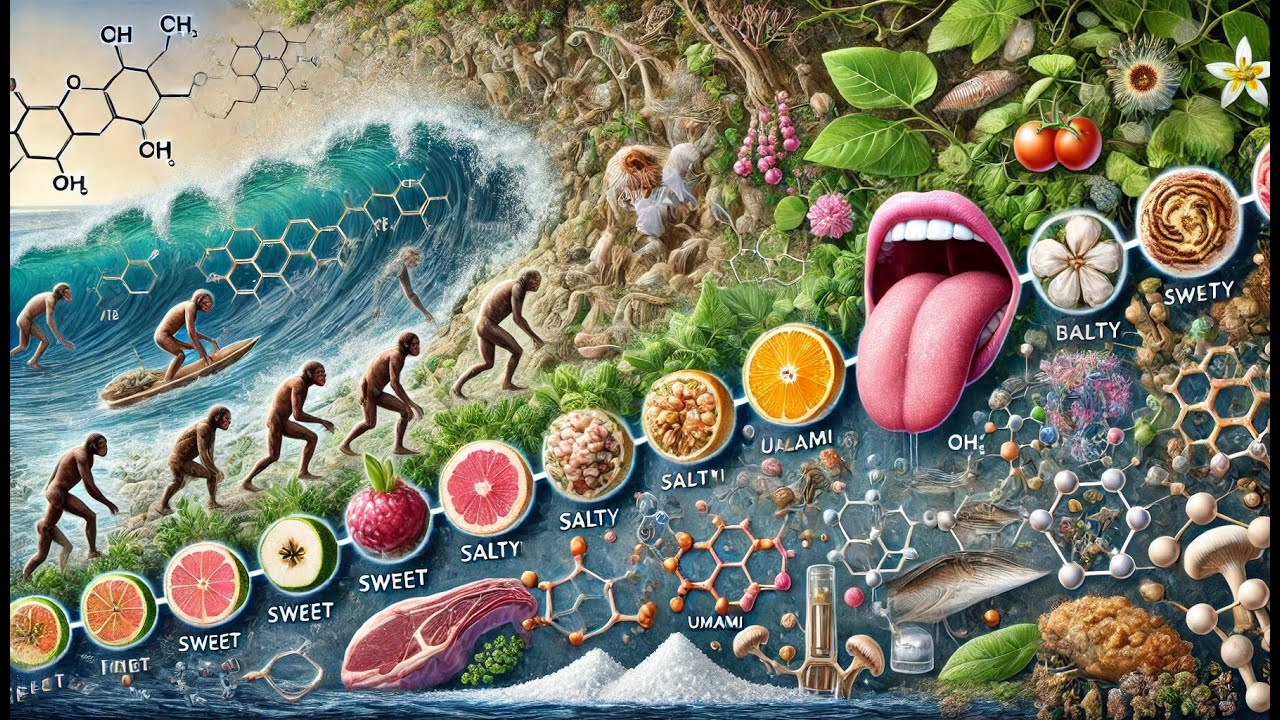





Human taste perception involves five distinct chemical detection mechanisms—sweetness (sugar detection), saltiness (sodium ion detection), umami (glutamate detection), sourness (hydrogen ion detection), and bitterness (poison detection)—each working through specialized receptors on taste cells that convert molecular interactions into neural signals sent to the brain; sweetness, umami, and bitterness use lock-and-key receptor proteins that change shape when binding specific molecules, while salt and sour detection use ion channels that allow charged particles to pass through cell membranes, triggering electrical signals that the brain interprets as specific tastes.
Taste of Protons: The Science Behind Sourness and Sensory Perception
Added:Basic acid-base chemistry, specifically the definition of acids, hydrogen ions (protons), and the pH scale.
Cellular biology concepts, particularly cell membranes, ion channels, and receptor-ligand interactions.
Fundamentals of the nervous system, including how sensory receptors convert physical or chemical stimuli into electrical signals.
The traditional classification of human senses (the classical five senses) and basic tongue anatomy.
Multisensory integration and flavor perception, exploring how taste, olfaction, and trigeminal sensations combine in the brain.
The evolutionary biology of taste, analyzing why organisms evolved to detect acidic/sour substances as safety or nutritional cues.
Advanced neurobiology of other non-classical senses, such as nociception (pain), proprioception (body position), and thermoception (temperature).
Clinical implications of taste disorders, such as ageusia or dysgeusia, and how neuropathies affect sensory pathways.
349.4K views27.1Klikes12:19Original Release: 2021-06-18
- In this video, I want you to think about taste in a completely different way to how you normally do.
These five tastes that we sense with our tongues are actually five different chemical detection mechanisms that help us to survive.
Take sweetness, for example, that's our sugar detecting mechanism.
Or to put it in survival terms, it's our energy molecule detection mechanism.
Sugar molecules are full of energy that we can easily access.
So it makes sense from an evolutionary point of view to be able to detect these molecules when we put them in our mouths.
It's really important for the correct functioning of the chemistry that goes on inside our cells to have the right level of salt in there.
So it makes sense from a survival point of view that we can detect salt that we're putting in our mouth hence our ability to taste salt.
What about savoriness, sometimes called umami?
It's called umami because Japanese scientists were looking at this stuff way before anyone else and umami is their word for it.
It roughly translates to deliciousness.
Well, umami is our protein detecting mechanism.
Humans need protein in their diet.
Actually we're not detecting proteins directly with that taste, we're actually detecting molecules called glutamates, and you tend to find glutamates in foods that are high in protein.
So it's a proxy mechanism.
Do you know what, it's such a strange taste to experience in pure form 'cause glutamate is used as an additive a lot in Chinese cuisine.
At least in the UK it is.
So to my palette, it tastes like some essence of Chinese food.
Like some element of Chinese cuisine has been distilled into crystal form.
By the way, if you like MSG, don't worry about it.
The MSG scare was not founded on scientific research.
It was founded on speculation.
And subsequently there has been no good evidence to link the consumption of monosodium glutamate with all these side effects like headaches and stuff.
Sour taste is our acid detecting mechanisms.
Scientists aren't completely sure why we have it but some believe it helps us to figure out whether fruit is ripe or not.
And finally, bitterness is our poison detecting mechanism.
That all makes sense, but it gets weird.
Like there are taste receptors in our guts, for example, what the hell are they doing there?
Wait, what the fu... And there are plants that can trick our sense of taste and make us do things for the plant.
And we get nothing in return.
I'll get to all that eventually but first I wanna talk about how these different chemical detection mechanisms work because they're really clever.
Let's look at sweetness first.
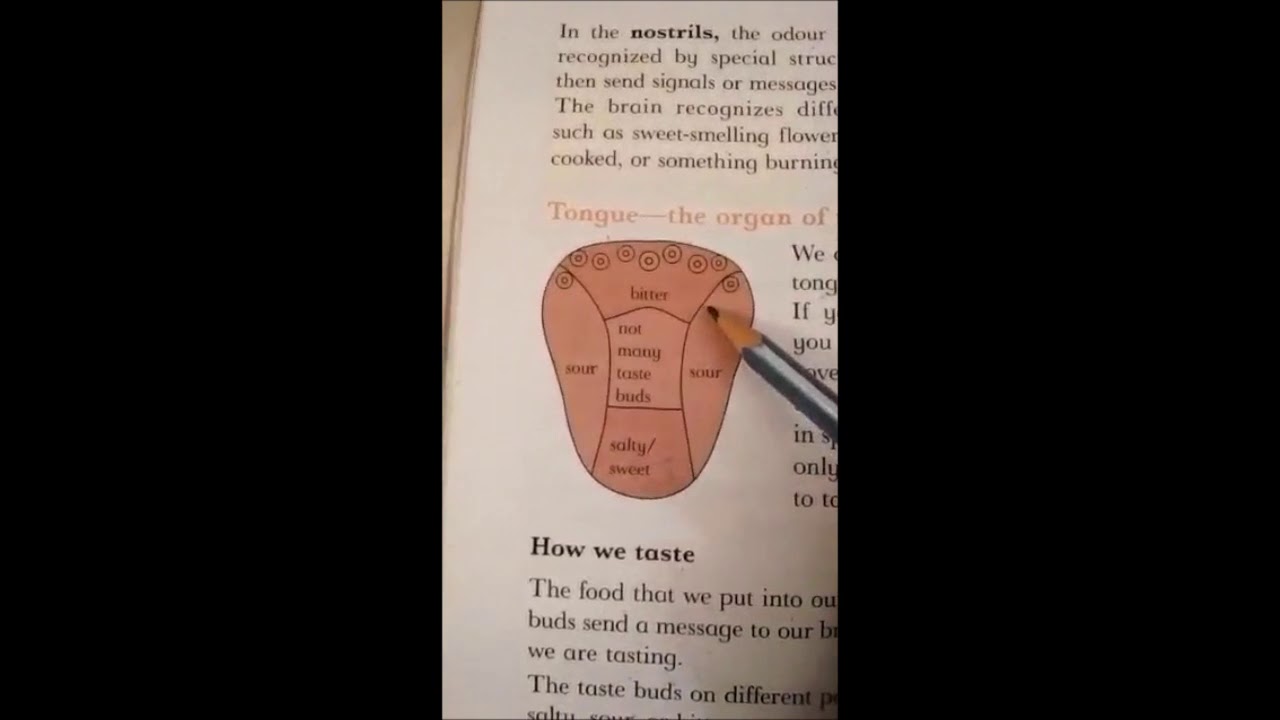
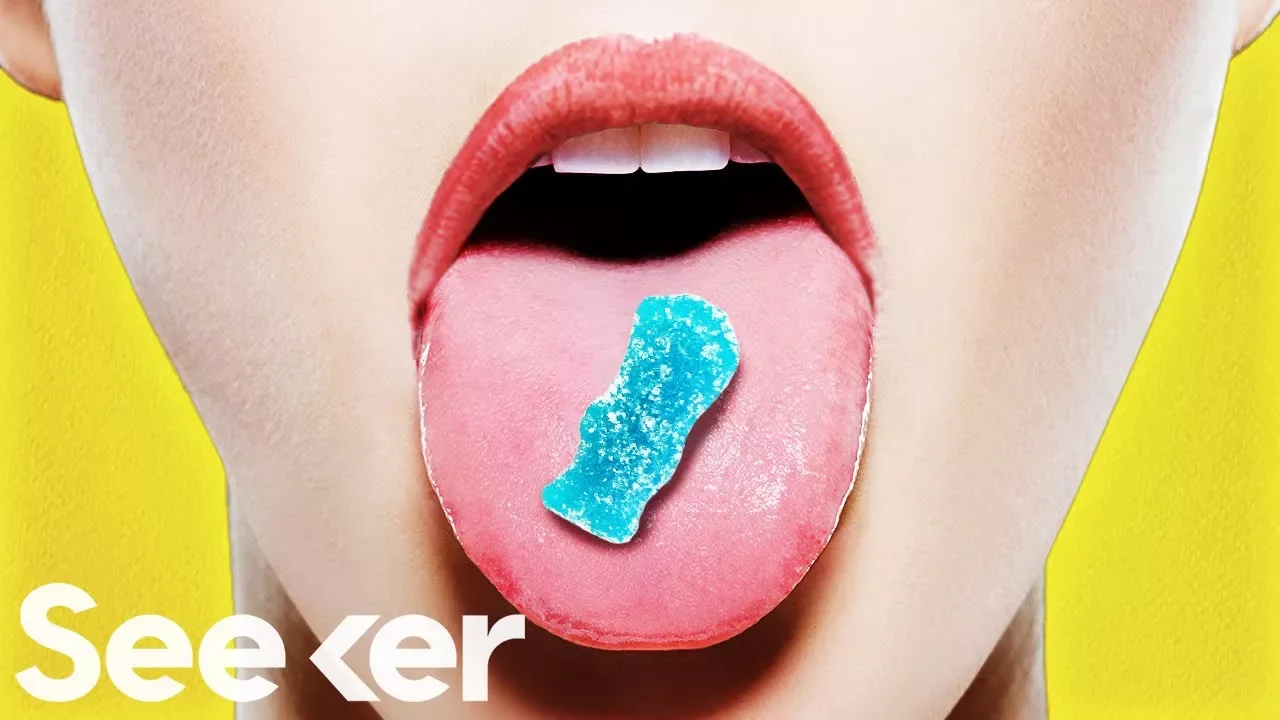
On your tongue there are these lumps called papilla and each papilla contains several taste buds, and each taste bud contains several taste cells or gustatory cells.
And look at the top of those cells where the cell comes into contact with your saliva, there're all these little hairs.
Let's zoom in on one of those hairs.
We're looking at a cross section through the cell membrane that phospholipid bilayer.
And look here's a molecule that straddles the bilayer.
There's a bit on the outside and a bit on the inside.
And you'll notice that the outside has a very specific shape.
It's the old lock and key analogy.
When a molecule comes along, that's just the right shape, it fits into that protein and a confirmational change happens.
The shape of the protein changes and that causes a change on the inside as well.
And that leads to some chemical reaction which ultimately leads to a signal being sent down nerves to the brain and you register that as something sweet.
Umami works in the same way except that instead of detecting sugar molecules it detects glutamate molecules.
Bitterness works in the same way as sweetness and umami, but it is different.
With sweetness you're detecting sugar molecules, with umami you're detecting glutamates, but with bitterness you're detecting a whole range of chemicals.
So instead of this one receptor that detects specifically sugar or one receptor that detects specifically glutamates, humans actually have 25 different bitterness receptors.
Because, of course, there are all these poisons out there.
This variety of receptor molecules is driven by the evolution of plants.
Plants that don't want to be eaten.
They're coming up with novel poisons all the time and so we have to evolve to keep up with that.
So it's not that certain chemicals happen to taste bitter, it's that our bodies have evolved this aversion response to molecules that harm us.
Your salt detecting mechanism works differently to sweet, umami, and bitter.
It still happens on the gustatory cells with those little hairs, but instead of it being this lock and key type receptor proteins that straddle the membrane of the cell, and the sugar molecules can attach to.
Instead you get these tube-shaped proteins that create essentially a hole into the cell through which certain things can pass.
In this case, sodium ions.
When salt dissolves in your saliva, the sodium and the chlorine separate.
The sodium ends up with a positive charge and the chlorine ends up with a negative charge.
And it's these positively charged sodium ions that can pass through these tube shaped proteins in the membrane of the gustatory cells.
The special tube-shaped protein called a sodium channel allows sodium ions into the cell and nothing else.
And as the sodium ion concentration increases in the cell, that leads to a cascade of chemical reactions that ultimately leads to a signal passing down the nerves to your brain, and you experienced that as saltiness.
Your acidity detecting mechanism, in other words, your sour taste receptors work in a similar way.
Something is acidic if it has a high concentration of hydrogen ions.
So the gustatory cells in charge of your ability to detect sour things must be able to detect hydrogen ions.
And again, it's a tube-shaped protein that allows ions into the cell but this time it allows hydrogen ions, not sodium ions.
And once again, that increase in concentration in hydrogen ions, inside the cell leads to a signal passing to your brain that you experience as sourness.
But wait a second, what is a positive hydrogen ion?
You might know that a positive ion is an atom where an electron has been stripped away leaving it with a positive charge.
What does that look like for hydrogen?
Well, the nucleus of hydrogen is just a proton.
It's the simplest of all the atoms and it has a single electron and an orbital around it.
So to make it into an ion, you strip away that electron, then, of course, all you're left with is a proton.
A hydrogen ion is just a proton.
So when you taste something sour you're tasting protons.
Protons tastes sour.
Isn't that wild?
Who would have thought a subatomic particle could have a taste?
This lock and key mechanism used by sweetness, savoriness, and bitterness.
Actually your body uses that mechanism all over the place.
For example, with hormones, like if you get a spike of adrenaline, those adrenaline molecules attach to receptors on the outside of your cells changing the way those cells behave in preparation for a fight, or in preparation for you to run away.
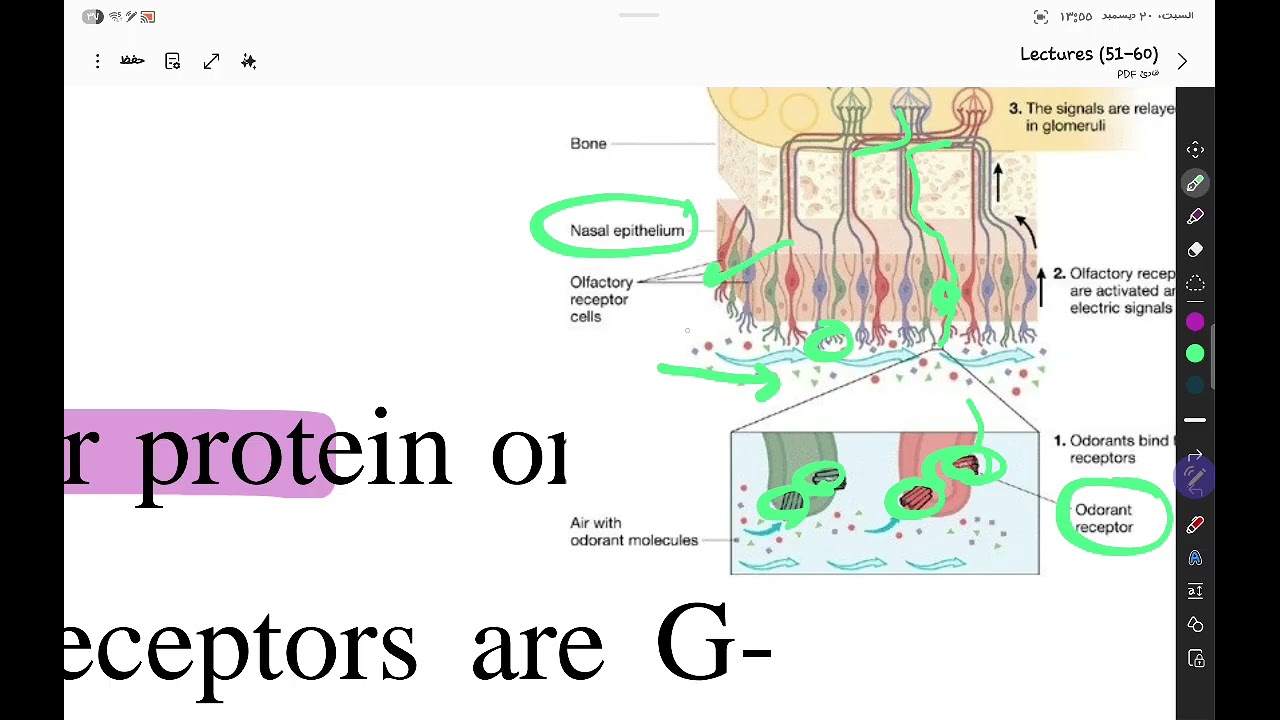
The same mechanism is used by your sense of smell.
You have all these receptors in your nasal cavity as well.
All this raises a philosophical question for me which is why I've sat down.
It's just a bit more, like how many senses do we have?
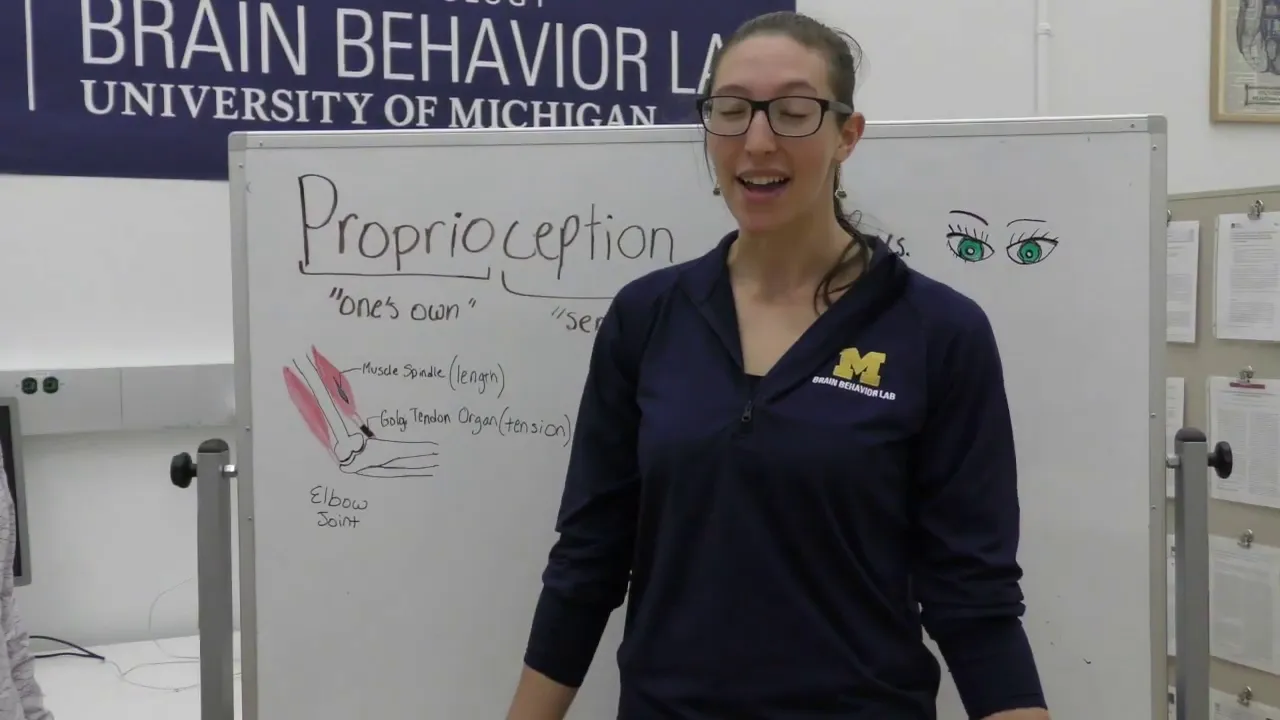
There's the traditional five senses from Aristotle that are still taught in schools today despite the fact that no scientist thinks that we have five senses.
Like obviously, we have way more than that.
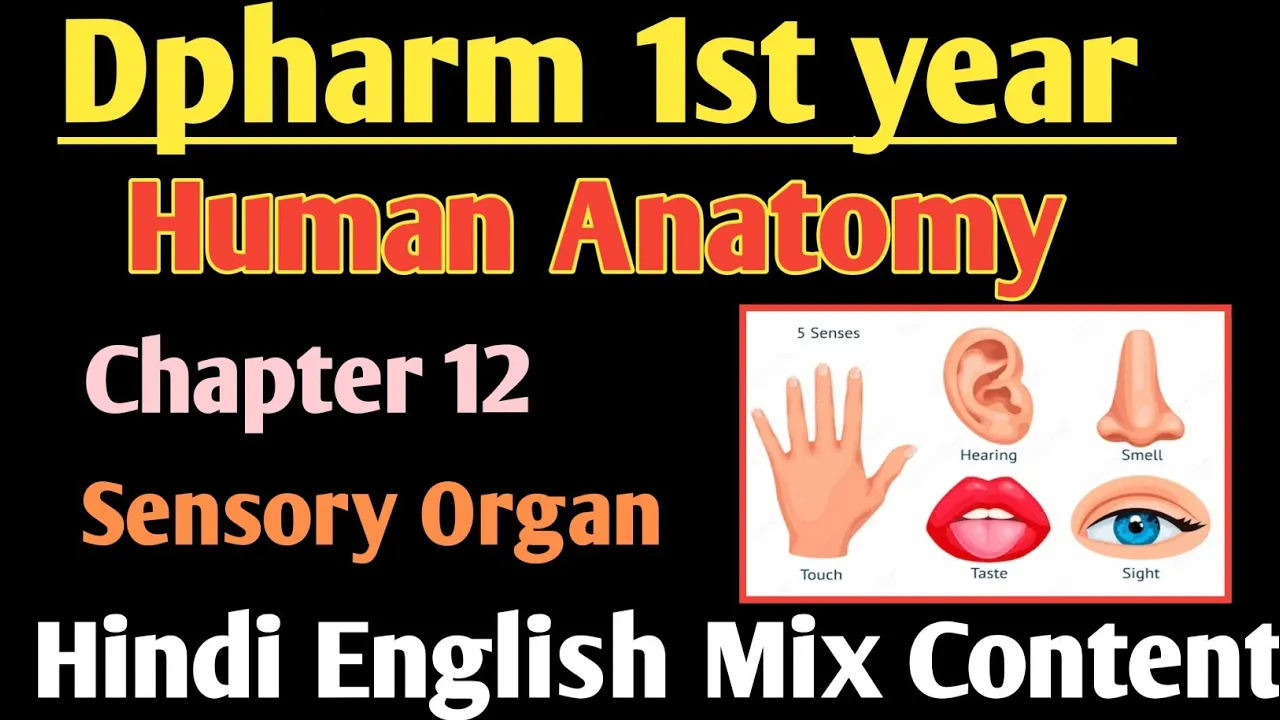
In addition to touch, taste, smell, sight, and hearing, we can also sense the temperature of our environment.
Thermoception we know when something is hot and that's clearly distinct from our sense of touch.
We can also sense the orientation of Earth's gravitational field.
Otherwise we'd fall over all the time.
That's our sense of balance or equilibrioception.
That's managed by our inner ear but it's clearly distinct from our sense of hearing.
In addition to that, some people say we have a sense of thirst and a sense of hunger and there are a few more like that but I wouldn't want to call those senses because they're not telling us about our external environment.
They're telling us about ourselves, and semantically that doesn't seem like a good definition for a sense for me.
But anyway, the point I wanted to make was maybe we should be splitting up the five tastes that we sense on our tongues into five different senses because they detect five different things, they elicit five different responses, and they serve five different purposes.
These five tastes are all examples of chemoreception, our ability to sense the chemicals in our environment.
And we've chosen to group them together.
So maybe we should group together all our chemoreception, but then actually our number of senses goes down by one because we're lumping in our sense of smell with our sense of taste.
It's all chemoreception.
But maybe it makes sense to split them up because they're on different organs.
You've got the nasal cavity and that's separate from the tongue.
You could also say, well, taste is about molecules dissolved in saliva and smell is about molecules in the air.
Okay, but what about molecules in the stomach?
Because remember we have taste receptors in our guts, our airways and our urinary tracts, are they three separate senses because they're three separate organs as well?
Or maybe they're not senses at all because we're not consciously aware of their function.
And maybe that's part of the definition of a sense.
So the answer to the question, how many senses do we have is: it depends.
And that's interesting in itself.
I wanted to talk about what the taste receptors in your gut are doing, 'cause it's really interesting.
Also the evolution of taste is really interesting.
And I promised I'd talk about this plant that tricks us into helping it.
Actually it tricks gorillas, not humans.
But anyway all that stuff together is quite a neat package.
So I'm gonna make a separate video about all that stuff.
If you're interested, make sure you've subscribed and consider clicking the notification bell as well.
I've got some more Skillshare course recommendations for you.
Skillshare is sponsoring this video.
I always tell people, if you want to learn something new like you can muddle through on your own with Google but it's much better if you can, to front load the learning experience with real quality time at the beginning, even just an hour or so with someone who really knows what they're doing, an expert.
And that just supercharges the learning experience after that.
I've lost count of the number of times that I've done that with Skillshare.
So I've got a few more course recommendations for you that I think you'll like.
Build beautiful websites faster and easier with Bootstrap 4.
If you've got an idea for a website, you wanna get it out there.
You don't want to worry too much about how it looks but you also don't want it to look bad.
Then Bootstrap is your friend.
And this is a great course for that.
The Complete Notion Course 2020 still relevant in 2021.
I use Notion for so much stuff now.
It is a complicated tool with lots of features.
So it's definitely worth doing of course at the beginning and then you're a power user after that.
Presentation Designed for Smart People.
I've recommended this one before because I don't know there's some bad presentations in the world.
Can we just do better presentations?
Let's all agree to do nicer presentations.
knife Skills because you need to be handled with the steel.
Know what I mean?
Earn your keep.
I made that joke before, but it's a good one.
So I did it again.
The first 1000 people to go to my special URL skl.sh/stevemould03211 will get one month of Skillshare, absolutely free, no strings attached.
The link is also in the description so start exploring your creativity today.
Thank you to Bi Cheng Wu for the idea for this video.
I hope you enjoyed it.
If you did, don't forget to hit subscribe and the YouTube algorithm thinks, you'll enjoy this video next week.
(classical music)
Up Next

62:25
Phase Transitions in Cooking: Dumplings & Science Explained
@harvardengineering
326 views•2024-03-06

12:53
21cm Hyperfine Transition in Neutral Hydrogen: Radio Astronomy Basics
@AaronRobertParsons
12.4K views•2011-10-13

32:32
NMR Spin Physics I: Zeeman Effect, Resonance Condition & Larmor Frequency
@nptel-indianinstituteofsci8064
2.3K views•2024-01-17

27:14
Entropy and the Second Law of Thermodynamics Explained
@veritasium
27.5M views•2023-07-01
Related Study Plans & Knowledge Roadmaps
Structured learning paths in Physics
physics
Nuclear Physics (Decay, Fission & Reactors)
01Atomic Structure and the Binding Force
02Radioactive Decay and Half-Life
03Nuclear Fission Mechanics and Chain Reactions
+ 2 more learning modules
12h5 modules
Explore Roadmap
physics
Soft Matter (Polymers, Colloids & Rheology)
01Foundations of Soft Matter & Thermal Forces
02Polymer Physics and Macromolecules
03Colloids, Surfactants, and Self-Assembly
+ 2 more learning modules
38h5 modules
Explore Roadmap
physics
Analytical Mechanics: Lagrangian & Hamiltonian
01Mathematical Foundations: Calculus of Variations
02From Newtonian Mechanics to Constraint Dynamics
03The Principle of Least Action & Lagrangian Mechanics
+ 3 more learning modules
28h6 modules
Explore Roadmap
physics
General Relativity (Spacetime & Cosmology)
01Foundations of Relativity: Special Relativity
02The Geometry of Spacetime: Equivalence Principle & Curvature
03Einstein's Field Equations: The Mathematics of Gravity
+ 2 more learning modules
55h5 modules
Explore Roadmap