












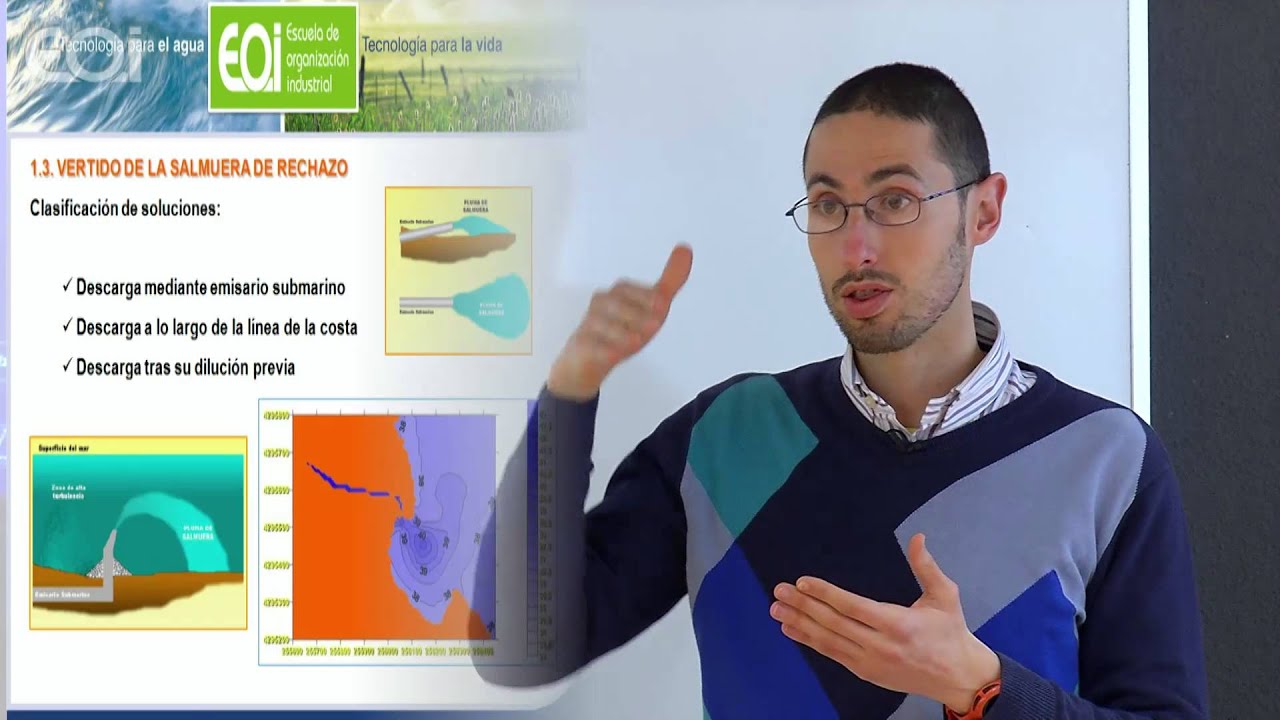














A three-year study by Dr. Marion Cambridge from the University of Western Australia investigated the effects of desalination brine on Posidonia australis seagrass in Geograph Bay, WA. Through field surveys and mesocosm experiments, the research found that desalination brine (containing high salinity and chemical additives) causes more severe stress responses in seagrass compared to seawater of equivalent salinity, including reduced photosynthesis, altered water relations, and ion accumulation. However, seagrass seedlings demonstrated remarkable tolerance, surviving 50 days in 100% brine concentration and recovering when returned to natural seawater. The study concluded that while brine discharge poses greater environmental risk than equivalent salinity seawater, the overall ecological footprint appears relatively small, with seagrass communities showing resilience to brine exposure.
Desalination Brine Effects on Posidonia australis Seagrass | UW Research
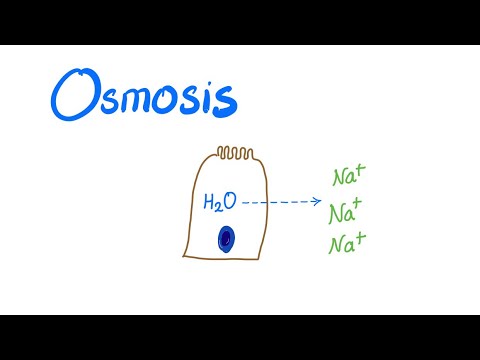
Added:so this is a talk about a three-year study that's actually yes and it is prompted by a Newton plant that we that was built on the west coast of West Australia now there are six desalination plants around the southern half of Australia they're all big ones and the one that we were taught that we were dealing with was just this one here about 200 kilometres south of Perth and state-of-the-art uses reverse osmosis but what is reverse osmosis well it's the process of forcing seawater through membranes and you end up with absolutely pure water no contaminants no viruses bacteria hormones heavy metals just water and governments love this because you can see the best the most efficiently everything but it has one downside that you end up with 60% brine at the end of the process you have to do something with it and what's in this brine well salty water which can be anything from 50 to 70 parts per thousand so normal seawater that's nearly it's almost double seawater and there's also lots of chemicals which and these are things like coagulants anticoagulants biocide things to clean the membranes and you see the whole list here but it's not some of them aren't very friendly chemicals now most of the desalination plants are on the coast so they're disposing of that effluent into the near shore and old-fashioned desalination plants used to boil the water so it's hot water coming out but the new ones the reverse osmosis there's not really a change in the temperature very much so the water tends to spread out over the sea floor depending on the density and the temperatures and this mass of salty water can pose a threat to the benthic fauna and of course sea grasses and one of the ways to get rid of this is through big diffuser arrays so here's one of the risers from a diffuser array in our first desalination plant in Coburn Sound and they were testing it with rhodamine dye which is why it's pink usually it's not and you can see it shooting upwards and behind the hulking diver there's some dilution going on but it may not be all that much so this the desalination plant we were dealing with was going to be releasing brine into an area called Geograph Bay which has got vast seagrass meadows about a hundred and twenty kilometers of them and they they go down to 50 metres deep and here are some of the environments that in somewhat shallower water so you've got that you've got Posidonia Australia sand and fibulas you've got reef pavement with these big sponges great big things like this and he's one of our quadrats so the question that we were posing would this desalination discharge harm the bent sauce the environment etc etc so we use two approaches to answer this first of all a huge benthic survey along 70 kilometres of the coastline and there were eight sites six transits at each site five quadrats meter collecting benthos invertebrates six seagrass quadrats and this was sampled before and after the start of discharge so I'm just going to show a really brief thing of this there was an effect near very near the dissemination discharge point up here so that's the red arrow on the seagrass so the density was lower and the the plants were smaller but was that due to all the disturbance that was going on during the construction of the pipeline because they had to blast it out turbidity all sorts of things going on or was it due to the discharge of brine so not a clear answer from that and we also did multivariate analysis for the invertebrates and a very big study and there were differences in the invertebrates at near the discharge site but after so that was the first year the second year when we came back there had been huge winter storms this is a really wave exposed Coast waves up to eight meters high during typical winter storms and the sites near the discharge point had been covered with one meter of sand so rock pavement with in with invertebrates and sea grasses became sand which is a big problem if you're doing a multivariate now so our conclusion from that was that establishing causal relationships between Brian discharge and the environment was very difficult so we took a second approach which was to look at the brains and salinity and under control conditions in a series of Mesa cousin experiments so here were the first ones in tanks and we looked at all of those things survival growth photosynthesis was my regulation water relations iron accumulation and osmolytes so sugars and amino acids and we did this for two weeks comparing Brian and salt water and this this was to answer the question is Brian more damaging than the equivalent salinity so the Brian comes out at fifty four parts per thousand is salt water that's fifty four parts per thousand does that elicit the same response so to do this we standardized responses to the controls so what you can see in this graph here so this is just growth leaf growth per day the red is just the salinity so these are the controls here and then 46 parts per thousand is equivalent to 50% Brian and the 54 is 100% Brian and you can see that there was a huge response with Brian and quite a bit less so with that just the salty water the leaves they are showing signs of salt scorch with the next one same set up results percent change standardized to the controls and you can see that photosynthesis not much response for the 50% brine but quite a big response at 100% Brian and osmoregulation this is the I'm just showing osmotic potential we measured other things for this but this is the increase in osmotic potential which ensures that water does not flow out of the cells and dehydrate to the plant and you can see that there is a significant response about 100 percent brine but not really 50 percent which is 46 parts per thousand so it's pretty salty so the answer to the question are the effects of increased salt and chemicals in brine additive it's a big yes we also tested pasado Nia in just salty water so that's increased salinity for six weeks because we hadn't had a lot of response at two weeks and this has already been published in that paper so I'm not going to go through the results of those but just say that the responses were dependent on the salt concentration and the length of exposure and my last one my little seedlings which we put into brine for 50 days and you can see that the ones that were in the hundred and then we put them in recovery for 20 days and so this photo shows after 20 days recovery and you can see the ones that were in brine for 50 days that even started growing again so they are one tough plant and so we did really sinks about five so the the conclusions to the study were that the discharge was probably small the footprint was probably small brian is more than salty water and stealing's are very tolerant so if you take that to management implications and not in any particular order regulators want to be able to put things you know in our state in three zones so we've got the high impact zone where quite a lot of change is allowed the medium and the low so this is an all diagram from the Coburn sound plant how far a reality check how far from the outfall would you find 50% or a hundred percent Brian how would you relate our results to real discharge if you were looking for biomarkers what would you choose from the experiments to inform the regulator about what to look for and I'm still thinking about that so I'm leaving it as a question if you have for some time for a few questions go ahead yes please [Applause] I don't think you could tell it was that it's highly variable the event sauce there and like many of the things in Australia they're growing in there in a low-nutrient environment and you get a very strong replacement of species over short distances I think there are lots of there's corals and sponges and mosques and calcareous algae and the sediment is a mixture of recycled silica from the land and calcium carbonate generated in situ from from the fauna so it's it's not as higher calcification as you get further towards the tropics but it's still a lot I don't know if that answers your question that the range of species was immense my question I think they do in Coburn sound and it's not because of you know responses to salt but its responses to deoxygenation and they but that's there there's no sea grass in the Coburn Sound area where they dispose of the effluent I don't I think where they put the plant at Benning up is probably the ideal place to put one because of this massive dispersion and it's really different to Adelaide where it's going into very calm waters I'm off the hook which is they are tiny spheres let's take Marion again
Up Next

Environmental Conventions Part 2 | UPSC CSE Prelims Foundation | Day 11
@aicscctn
11.2K views•2024-08-08

Life in Biosphere 2: Sustainable Ecosystems & Human Survival
@TED
334.9K views•2009-06-16
Microplastics Everywhere: How Plastic Impacts Our Lives
@TEDx
100.9K views•2018-05-08
Ice Stupa Artificial Glaciers: Solving Ladakh's Water Crisis
@SonamWangchuk66
3.2M views•2015-05-03
Related Study Plans & Knowledge Roadmaps
Structured learning paths in Environmental Science